
There is a dish they make across Aragón and Navarra in the north of Spain that takes the cheapest ingredients imaginable, a chicken, some peppers, an onion, a few tomatoes, and turns them into something you would happily serve to anyone. It is called pollo al chilindrón, and the whole magic of it is in the sauce, a slow, deep, red braise built almost entirely from peppers cooked down until they melt into something far greater than the sum of a few vegetables. It is Sunday food and grandmother food, the kind of unhurried one-pot dish that fills a kitchen with a smell that pulls people to the table, and it has been feeding families along the Ebro valley for generations.
What follows is how the dish actually works, the pepper that gives it its name and soul, and a recipe simple enough for a weeknight but good enough for a Sunday.
What Chilindrón Actually Is
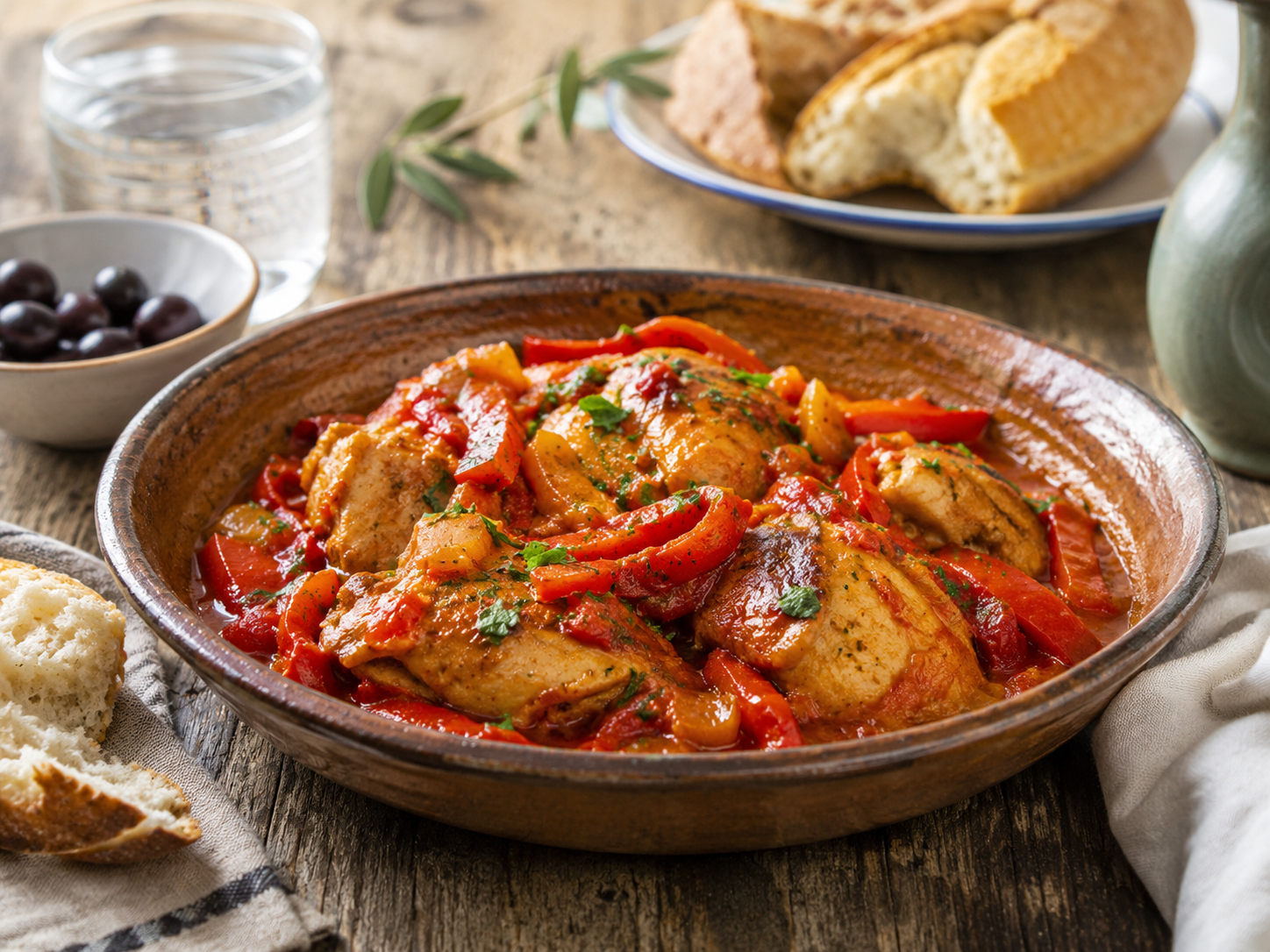
Chilindrón is not really the name of a dish so much as the name of a sauce, a method, a way of cooking meat slowly in a rich stew of peppers, tomato, onion, and garlic. You will meet it wrapped around chicken most often, as pollo al chilindrón, but the same red braise is used for cordero, lamb, and for rabbit and pork too, because the sauce is the star and the meat is really just the thing it is generous enough to share the pot with. The word itself is thought to come from an old card game, a homely bit of kitchen history that suits a homely, generous dish.
At its heart the sauce is about peppers cooked past the point of holding their shape, until they surrender into a thick, sweet, faintly smoky red mass that coats the meat. Fresh red and green peppers do the bulk of the work, softened slowly in olive oil, while tomato brings acidity and body and onion and garlic build the base. The long, slow softening is the whole secret, because a pepper cooked properly down turns sweet and silky in a way a barely-cooked one never does. The single ingredient that makes it truly Spanish, and truly chilindrón rather than just a pepper stew, is dried ñora or choricero pepper, the sweet dried red peppers whose soaked flesh is scraped into the pot to give the sauce its unmistakable depth and colour.
The Pepper That Gives It Its Soul
If there is one thing that separates a real chilindrón from a merely nice chicken-and-pepper stew, it is those dried peppers, and they are worth understanding. The choricero in Navarra and the ñora further south and east are dried sweet red peppers, not hot ones. Their job is flavour and colour rather than heat, giving the sauce the same deep red soul they lend to a good chorizo. Traditionally you soak them in warm water until soft, then scrape the softened flesh from the skin with a spoon and stir that concentrated pepper paste into the sauce, where it dissolves and transforms the whole thing.
For a cook outside Spain who cannot find them, there is an honest and genuinely good substitution, which is a spoonful of the sweet paprika the Spanish call pimentón, or the ready-made choricero pepper paste sold in jars in Spanish shops and online. It will not be quite identical to scraping fresh-soaked peppers, but it carries the same sweet, deep, smoky-red character, and a chilindrón made with good pimentón is a dish worth eating rather than a compromise to apologise for. Chase the dried peppers if you can find them, but do not let their absence keep the pot off the stove.
The Meat It Loves Beyond Chicken
Because chilindrón is really a sauce, it happily wraps itself around almost any meat, and knowing that turns one recipe into a small repertoire. The most celebrated version after the chicken is cordero al chilindrón, lamb braised in the same red pepper sauce until it falls from the bone, a genuine special-occasion dish across Aragón and a fixture at autumn tables. Rabbit, conejo, takes the sauce beautifully too, its lean meat soaking up the sweetness of the peppers, and pork works just as well for a cheaper, everyday pot.
The method barely changes from one meat to the next, which is the quiet gift of the dish. You brown the meat, build the pepper sauce, and braise the two together, adjusting only the cooking time to suit whatever you are cooking, longer and gentler for lamb, a little less for rabbit or chicken. Learn the chicken version below and you have effectively learned all of them, since the sauce is the constant and the meat is simply the guest you invite into it, which makes chilindrón one of the most useful things a home cook can have in their hands.
Why It Belongs to the North
Pollo al chilindrón is the food of Aragón and Navarra, the inland north of Spain along the great Ebro river, and the dish tastes of exactly where it comes from. This is a land of hot summers and cold winters, of vegetable gardens along the river growing the peppers and tomatoes the sauce depends on, and of a hearty, unfussy country cooking built to feed people who worked hard in the fields and the vineyards. The chilindrón is peasant cooking elevated only by patience, taking the cheap late-summer glut of peppers and preserving their sweetness into a sauce that carries the memory of sun into the colder months.
There is a seasonal logic to it that the ingredients themselves make plain, because it is at its best when peppers are cheap and ripe, late summer into autumn, exactly when a garden or a market is drowning in them. Making a big pot of chilindrón is one of the great ways to use a pepper harvest, and like most such dishes it is even better reheated, which made it a natural for a farming family cooking once and eating twice. Eat it in September in Zaragoza and you are tasting the turn of the season on a plate.
What to Put on the Table With It
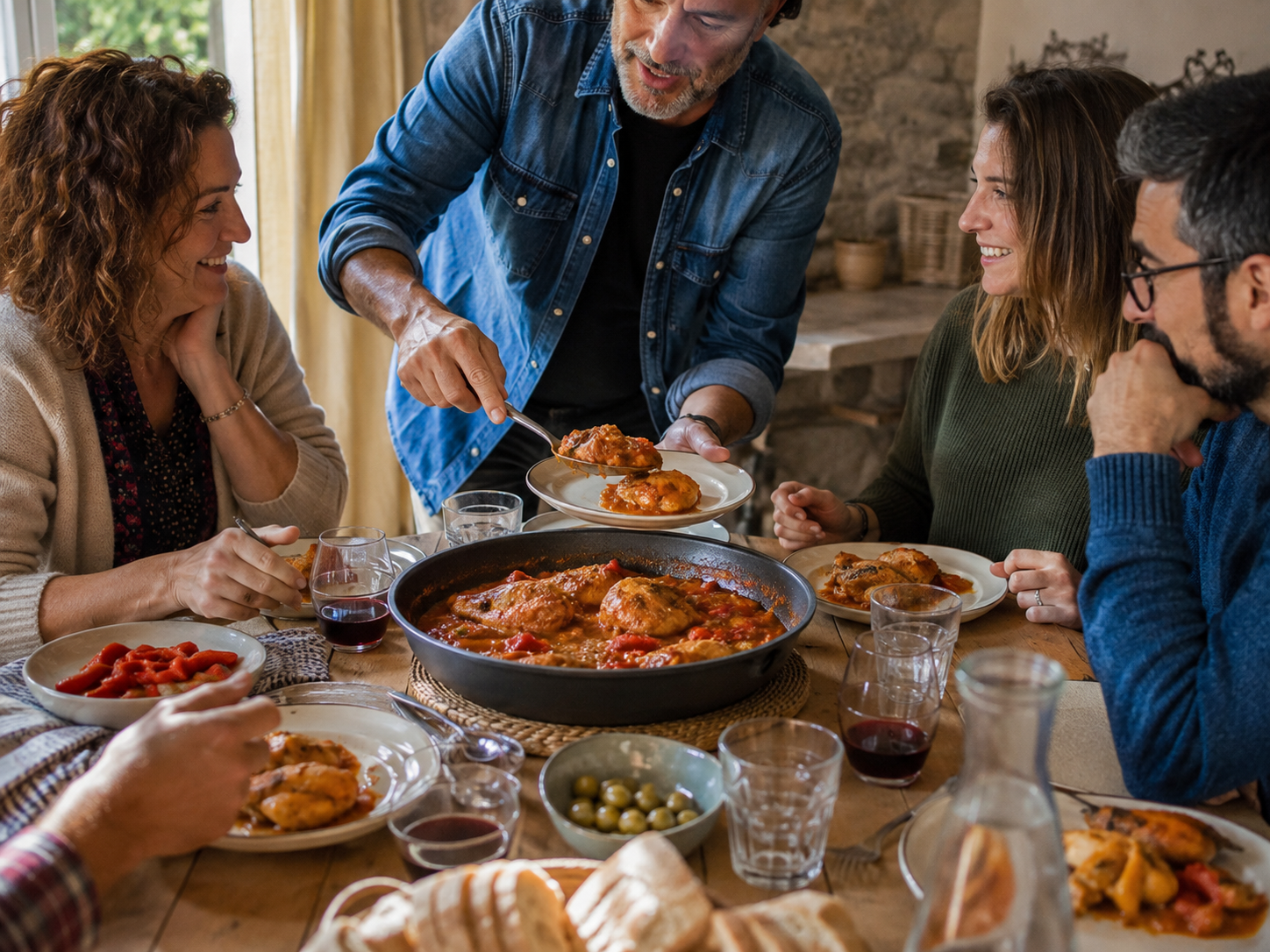
Pollo al chilindrón is a generous, saucy dish, and what it asks for above all is something to catch that sauce, because leaving any of it on the plate would be a small tragedy. Bread is the classic and the best answer, a good rustic loaf torn and dragged through the red sauce, and in many homes that is the whole accompaniment it needs. Plain white rice or simple boiled or fried potatoes work beautifully too, each of them a quiet canvas for the sauce to shine against rather than a competing flavour.
For wine, stay in the region and reach for a red from Navarra or from the great Rioja vineyards just downriver, since the same land that grows the peppers grows the grapes that suit them, a robust red standing up happily to the depth of the sauce. Beyond the bread and the wine, the dish wants nothing clever done to it, and that plainness is part of its appeal, a whole satisfying meal built from cheap ingredients and a little time. Make more than you need, because it reheats into something arguably even better the next day, the flavours settling and deepening overnight. Cold from the fridge and gently warmed through, the sauce turns almost jammy and the chicken takes on even more of the pepper sweetness, which is why so many families deliberately cook a double pot and count the leftovers as half the reason to make it at all.
Cheap Ingredients, a Little Time
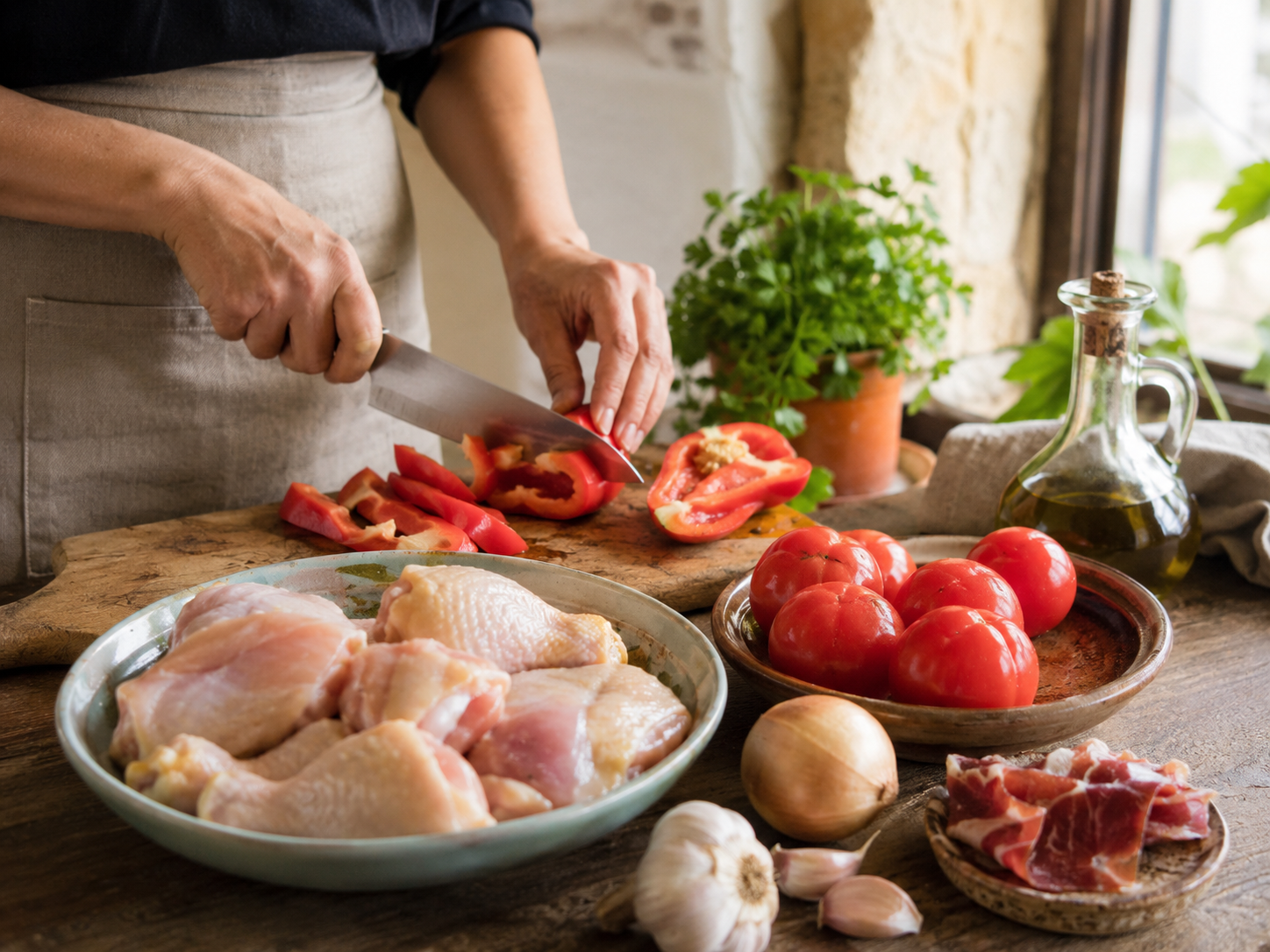
What makes chilindrón worth knowing today is the same thing that made it valuable a century ago, which is how much it wrings from almost nothing. A chicken, a few peppers, an onion, some tomatoes, and a little olive oil are among the cheapest things in any shop, and the dish asks for no expensive cut, no fancy technique, and no equipment beyond a heavy pan. The only real ingredient it demands in quantity is time, the unhurried half-hour that lets the peppers collapse and the sauce deepen, and time is the one thing a Sunday tends to offer freely.
That is why it survived as family food along the Ebro rather than fading into a restaurant curiosity. A dish that feeds a table generously for the price of a chicken and a bag of peppers earns its place in the everyday rotation, and the fact that it tastes far richer than its cost suggests is exactly the kind of small kitchen alchemy that peasant cooking specialises in. Make it once and you understand why the north of Spain never let it go, because few dishes give back so much for so little.
Two Things That Make the Difference
Two small things lift a chilindrón from good to memorable, and neither is difficult. The first is browning the chicken properly at the start, taking the time to get real golden colour on the skin before the sauce goes anywhere near it, because that browning builds a savoury depth the slow braise then spreads through the whole pot. Do not crowd the pan and do not rush this step, since a pale, steamed chicken makes a paler dish.
The second is patience with the peppers, letting them cook down slowly and fully rather than hurrying them, because the entire character of the sauce comes from peppers surrendered completely to soft sweetness rather than left crisp and raw-tasting. Give them their twenty unhurried minutes to collapse, and season near the end once the sauce has reduced and concentrated so you are tasting the finished thing. Beyond those two, chilindrón is a forgiving, one-pot affair, which is exactly what you want from a dish invented to feed a working family without fuss.
Making the Chilindrón
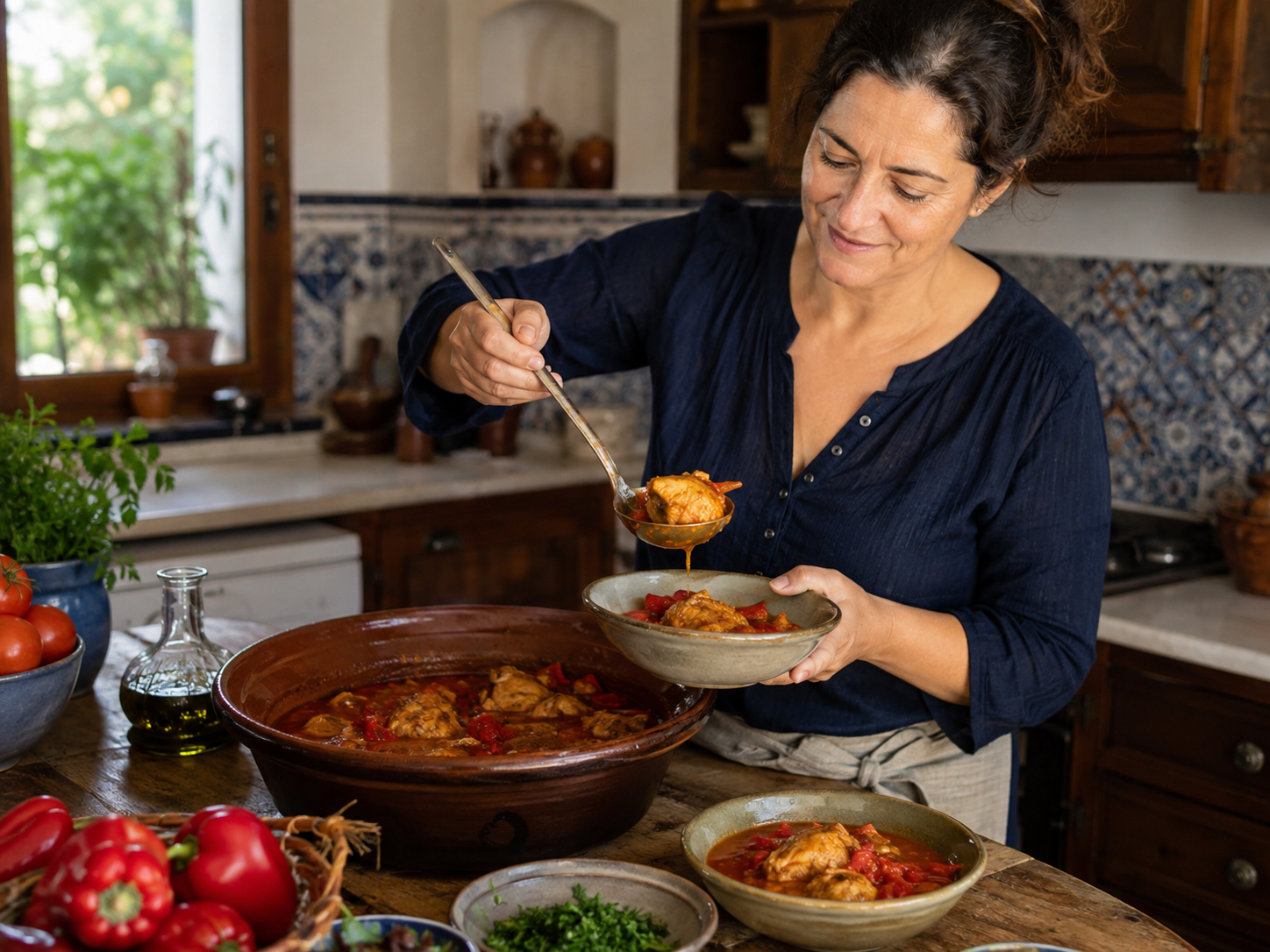
Here is a straightforward version that serves four generously, takes a little over an hour, most of it hands-off, and rewards you even more the next day. It uses pimentón in place of the harder-to-find dried peppers, so anyone anywhere can make it tonight.
Ingredients
- 1 whole chicken, cut into 8 pieces, or 8 bone-in thighs, about 1.5 kg or 3.3 lb
- 3 red bell peppers, sliced, plus 1 green bell pepper, sliced
- 1 large onion, finely chopped
- 4 garlic cloves, sliced
- 400 g tinned chopped tomatoes, about 14 oz
- 1 tablespoon sweet pimentón, or 2 soaked choricero peppers, flesh scraped
- 100 g cured ham or a bit of chorizo, diced, about 3.5 oz, optional but traditional
- 120 ml dry white wine, about 1/2 cup
- 4 tablespoons olive oil
- Salt and black pepper, to taste
- 1 bay leaf
Instructions
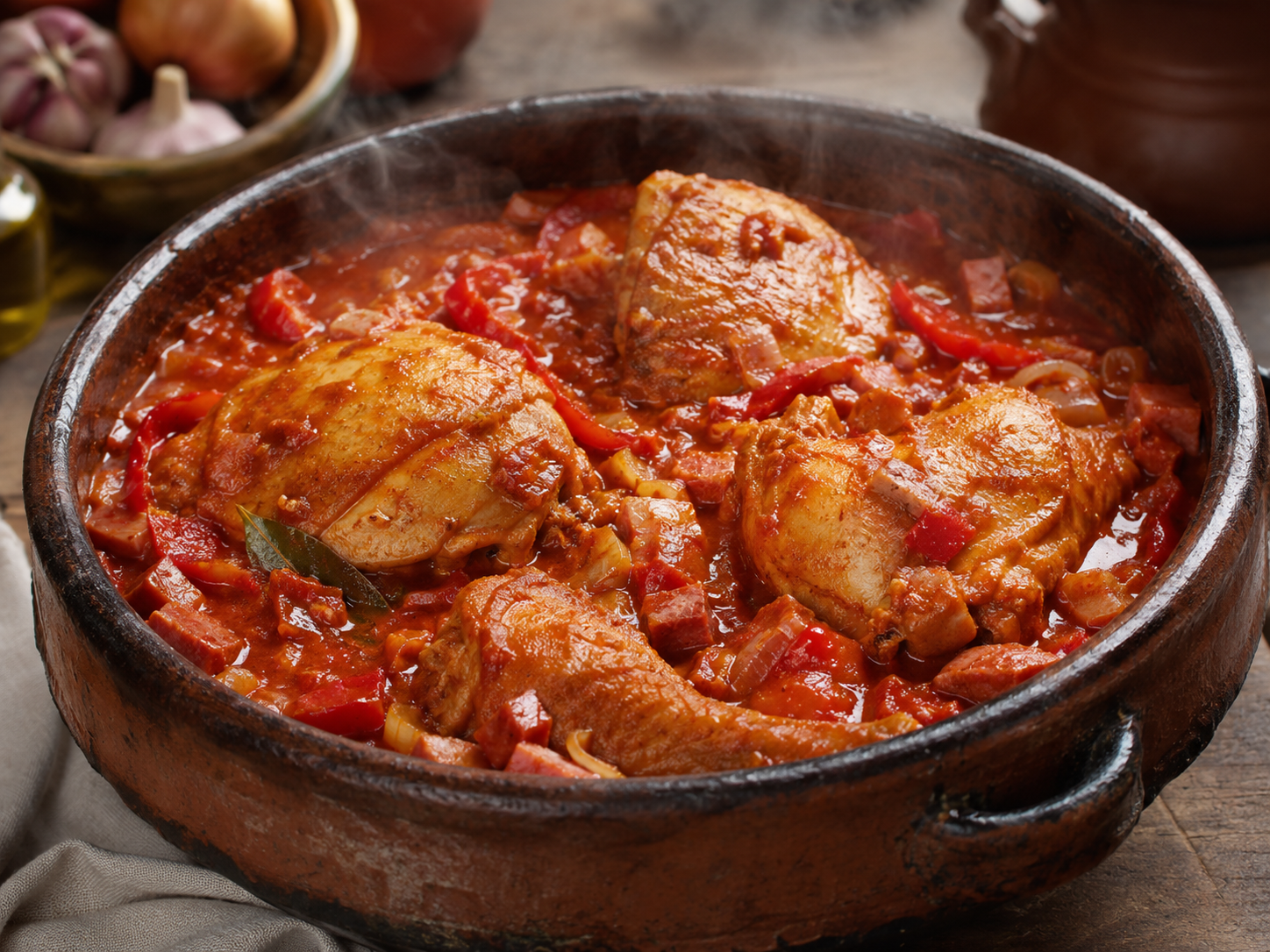
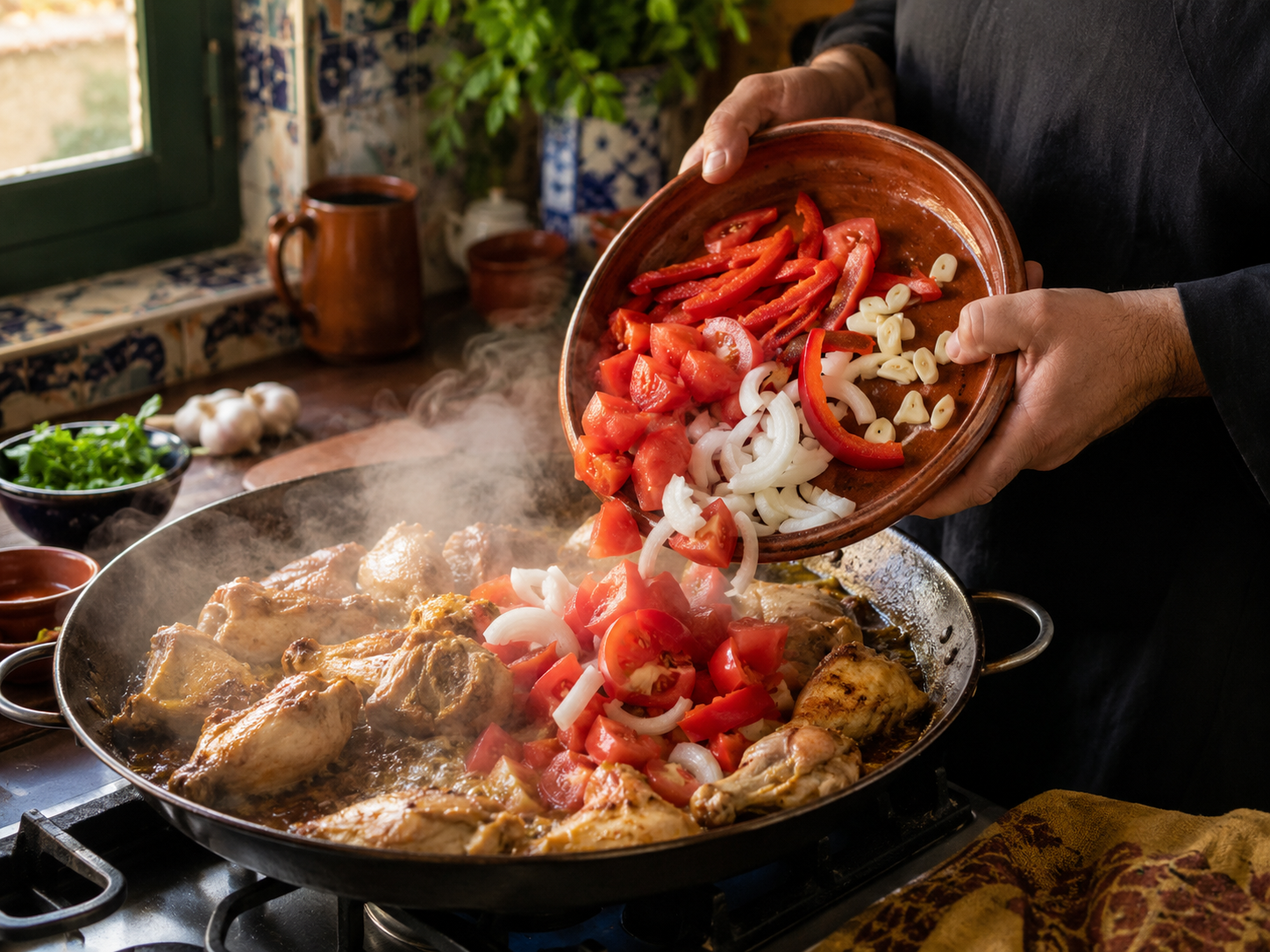
- Season the chicken pieces with salt and pepper. Heat the olive oil in a wide, heavy pan and brown the chicken well on all sides over medium-high heat until deep golden. Do this in batches so the pan is not crowded, then lift the chicken out and set it aside.
- Lower the heat to medium. In the same pan and its flavored oil, add the diced ham or chorizo if using and cook for a minute, then add the onion and the sliced peppers with a pinch of salt.
- Cook the peppers and onion slowly, stirring now and then, for about 15 to 20 minutes, until they have softened and collapsed and the onion is sweet and golden. Add the garlic and cook for another minute until fragrant.
- Stir in the pimentón or the scraped choricero flesh and let it cook for just a few seconds, then pour in the white wine and let it bubble and reduce by half, scraping up any browned bits from the bottom of the pan.
- Add the chopped tomatoes and the bay leaf, stir well, and return the chicken to the pan along with any resting juices, nestling the pieces down into the sauce.
- Cover partly and simmer gently for about 30 to 35 minutes, turning the chicken once, until it is cooked through and tender and the sauce has thickened and turned a deep red. Taste, adjust the salt, discard the bay leaf, and let it rest a few minutes before serving very hot with plenty of bread.
And of course, once you know the dish it is yours to shape, since every family along the Ebro makes its chilindrón a little differently, with more pepper here or a bit of ham there, so treat the amounts above as a starting point and cook the pot the way your own table likes it best.

About the Author: Ruben, co-founder of Gamintraveler.com since 2014, is a seasoned traveler from Spain who has explored over 100 countries since 2009. Known for his extensive travel adventures across South America, Europe, the US, Australia, New Zealand, Asia, and Africa, Ruben combines his passion for adventurous yet sustainable living with his love for cycling, highlighted by his remarkable 5-month bicycle journey from Spain to Norway. He currently resides in Spain, where he continues sharing his travel experiences with his partner, Rachel, and their son, Han.