
There is a fruit that shows up in Spanish markets in October looking like a lumpy, fuzzy, yellow-green cousin of a pear, and most people walk right past it. That fruit is the quince, and it is the reason Spanish autumn tastes the way it does. Raw, a quince is inedible, hard as wood and mouth-puckeringly astringent, but cooked slowly with sugar it transforms into membrillo, a deep amber paste with a texture between jelly and fudge and a flavor like honeyed apple with a floral edge. It is one of the small miracles of the Spanish kitchen.
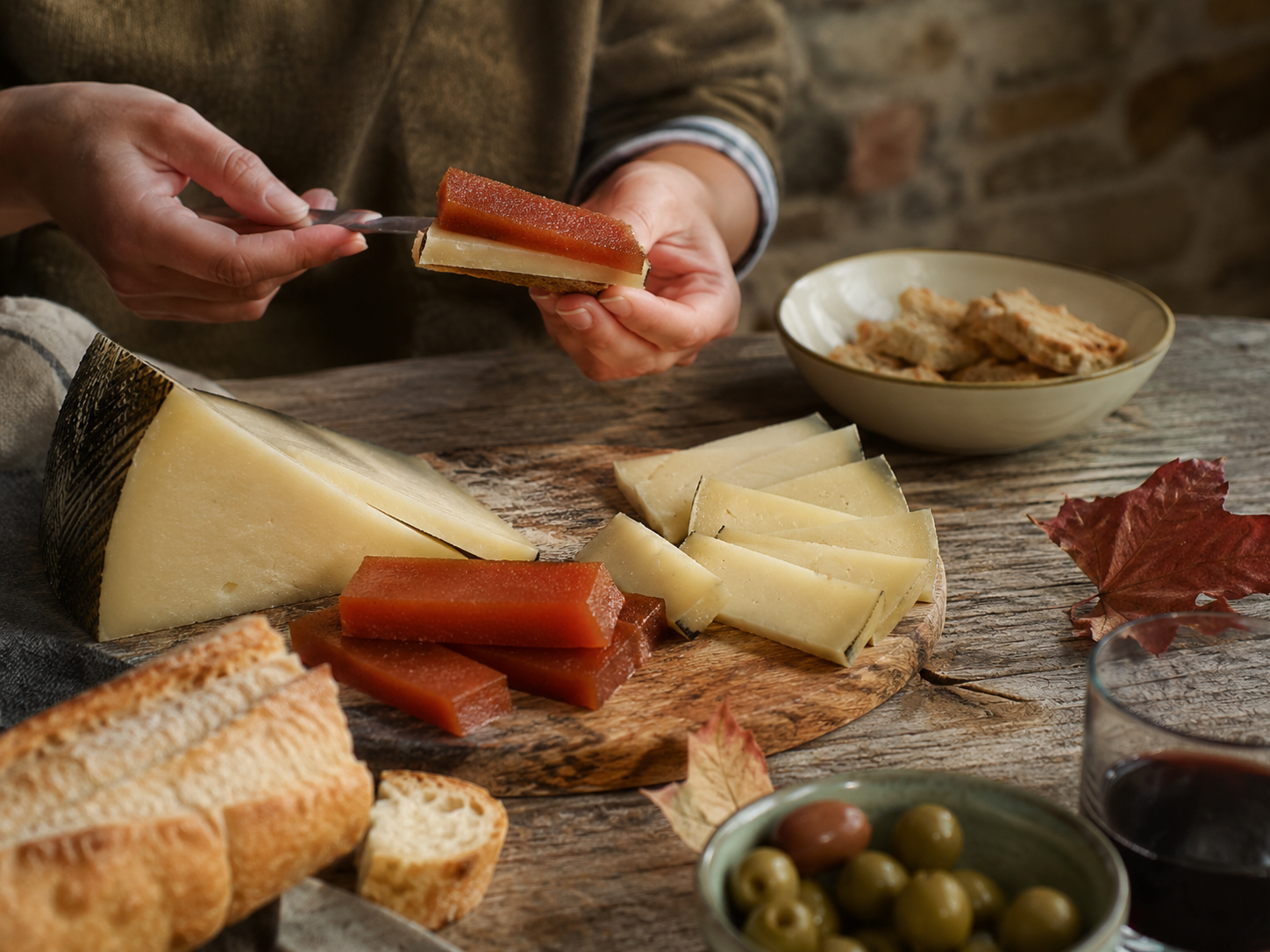
You have almost certainly eaten it without knowing the name. That slab of rosy-red paste served alongside a wedge of Manchego, the classic pairing Spaniards call a marriage, is membrillo, and it is astonishingly easy to make at home. What follows is everything you need, from what the fruit is and how to choose it to the handful of mistakes to avoid and a simple recipe that takes an afternoon of mostly hands-off cooking. By the end you will have a glowing slab of it in the fridge and a new autumn habit.
A Fruit Older Than Most of Europe’s Cooking
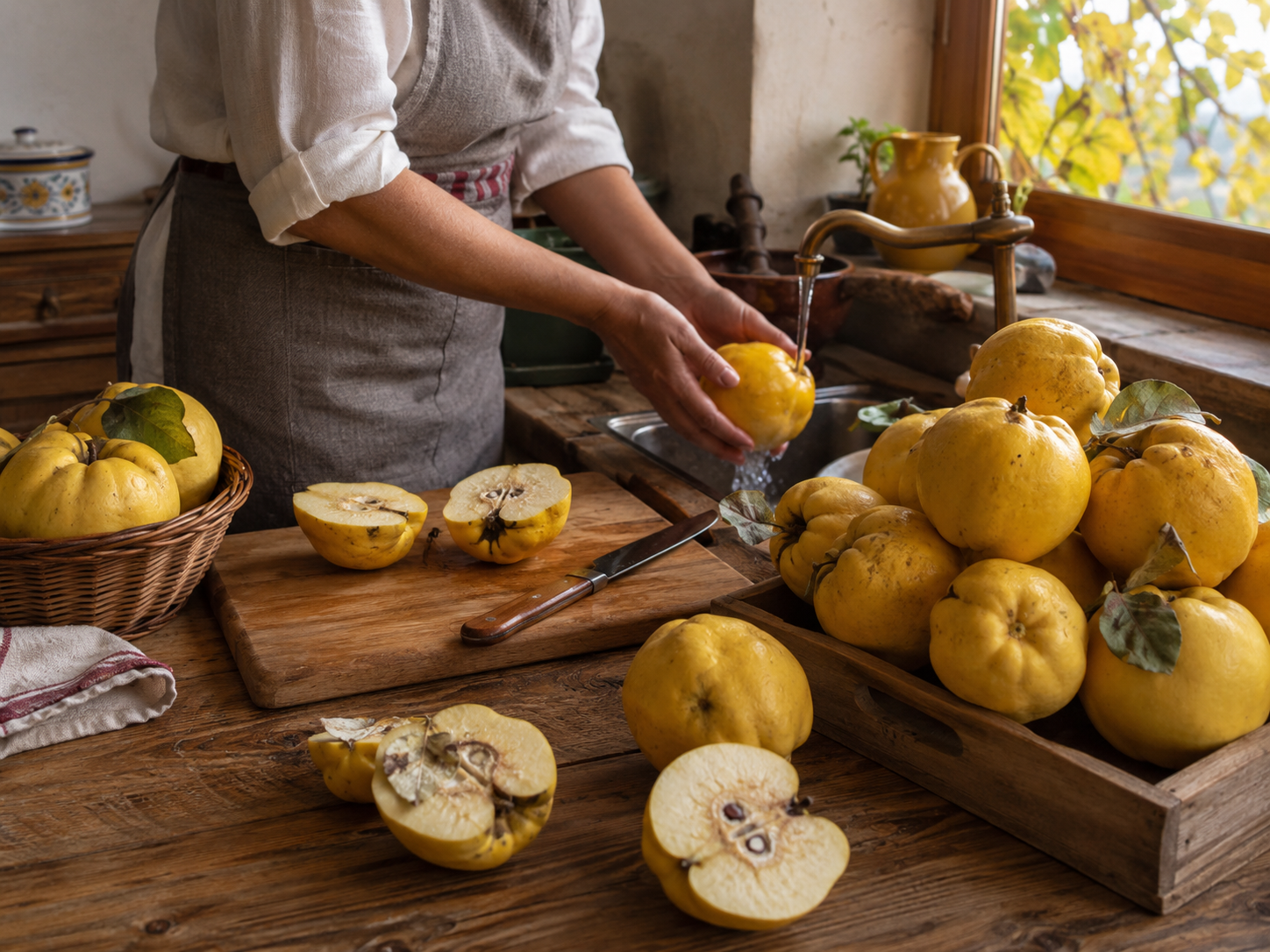
The quince is ancient, and membrillo is nearly as old, which is part of why it feels so deeply Spanish. Quinces were cultivated around the Mediterranean thousands of years ago, prized by the Greeks and Romans long before apples and pears took over the orchard, and the Romans cooked them with honey into a preserve called melomeli, the direct ancestor of today’s paste. There is romance in the fruit’s history too, because the quince was sacred to Aphrodite, many scholars think the golden apple of Greek myth was really a quince, and brides in ancient Greece ate one before the wedding for good fortune.
The name traveled and mutated along the way. The Portuguese word for quince is marmelo, their quince paste is marmelada, and that is where the English word marmalade was born, before it drifted over to oranges centuries later, so every jar of marmalade in the world is quietly named after this forgotten autumn fruit. Spain, meanwhile, kept the fruit at the center of its autumn table when much of Europe let it fade, which is why membrillo still feels like a living tradition here rather than a museum piece.
It is genuinely everyday food, not a delicacy. You will find it in ordinary supermarkets year-round in a plain plastic tub, made at home by grandmothers each October, and sold at markets in rough-cut slabs, and that ordinariness is part of its charm, a centuries-old preserve that somehow never became precious.
What Membrillo Actually Is
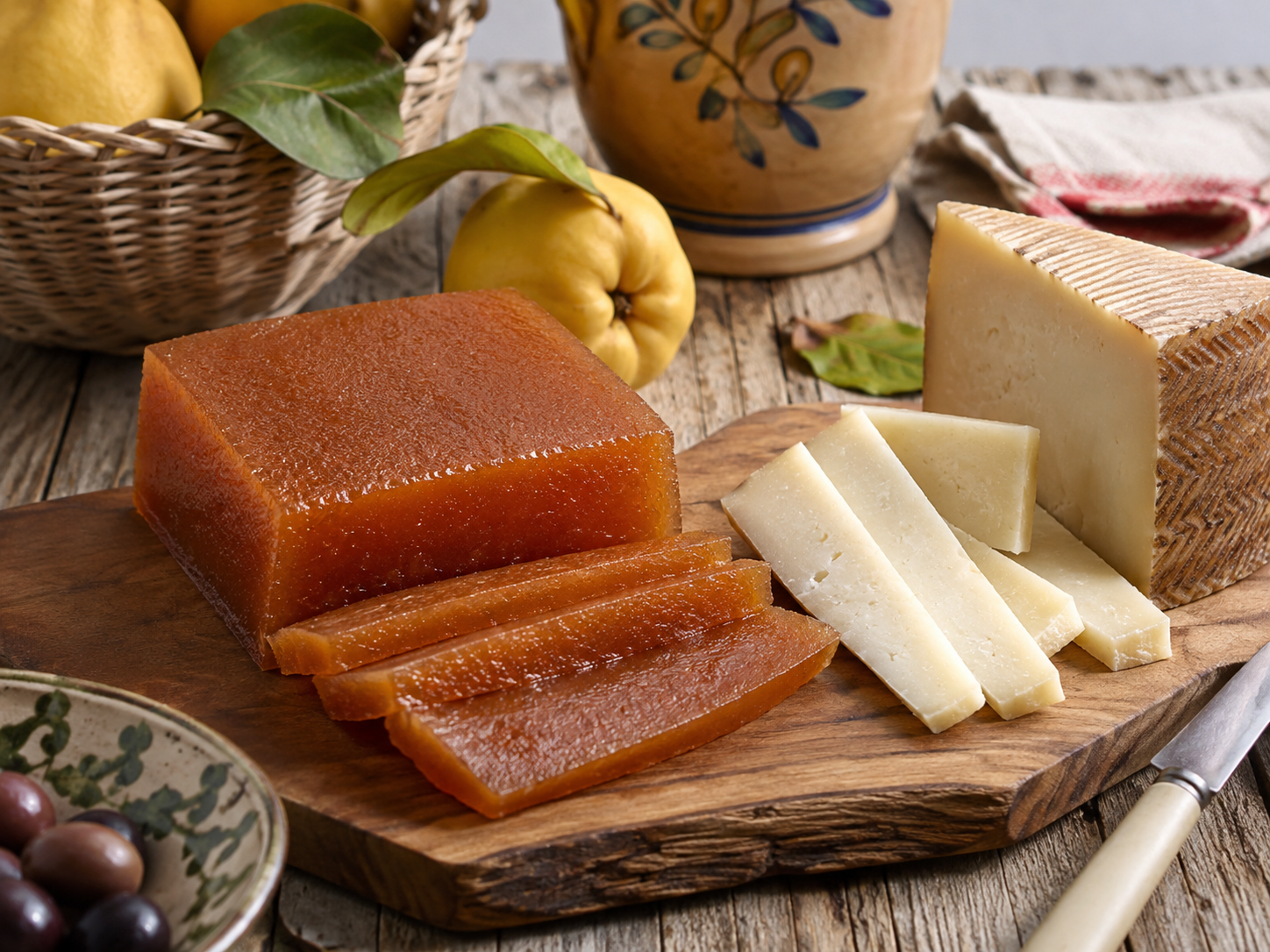
Membrillo is quince paste, and the word is simply the Spanish name for the quince fruit itself, so you cook the fruit down with sugar until it sets firm enough to slice and you have it. It belongs to a whole family of European fruit pastes, cousins to the French cotignac and the Portuguese marmelada, and although the English marmalade wandered off to oranges later, it started here, with this fruit.
In Spain, membrillo is autumn food. Quinces ripen in October and November, the paste gets made in big batches while they are cheap and abundant, and it keeps for months, so a good supply carries a household through winter. You will find it under a few names on Spanish shelves, since dulce de membrillo is the full term, sometimes shortened to carne de membrillo, literally quince meat, for its dense sliceable texture, and all of it is the same thing.
Its natural partner is cheese, and above all Manchego. The firm, salty, slightly nutty sheep’s cheese and the sweet, dense, floral paste are a genuinely perfect pairing, the kind that makes you understand why some flavor combinations become traditions. If you want to go deeper on the cheese side of that marriage, our guide to Manchego and its DOP rules is the companion to this one.
Why It Is Worth Making Yourself
You can buy membrillo, and the shop version is fine, but making it yourself is worth the afternoon for a few reasons. The homemade version tastes brighter and more of the fruit, because you control the sugar and can keep it from being cloying, where commercial pastes often lean very sweet and yours can let the quince’s floral tartness come through. It is also absurdly cheap to make, since quinces cost little in season, sugar costs little always, and a couple of kilos of fruit yields enough paste to last months and to give away in wax-paper parcels that make people think you are far more sophisticated than you are.
Best of all, the process is mostly waiting. There is no skill to master, no candy thermometer to fear, and no technique that can go badly wrong, because you cook fruit, you add sugar, you stir occasionally, and you let time and heat do the transforming. There is a quiet pleasure in it too, the kind of slow autumn kitchen task that fills the house with fragrance for an afternoon, and the smell of quince cooking down is one of the great seasonal scents, somewhere between baking apples and honey and flowers, that makes a grey October afternoon feel purposeful.
A homemade batch is also generous. A couple of kilos of fruit makes enough to keep a slab for your own cheese boards all winter and still wrap up several parcels to give away, which is exactly how membrillo travels from house to house in Spain each autumn.
The One Thing to Know Before You Start
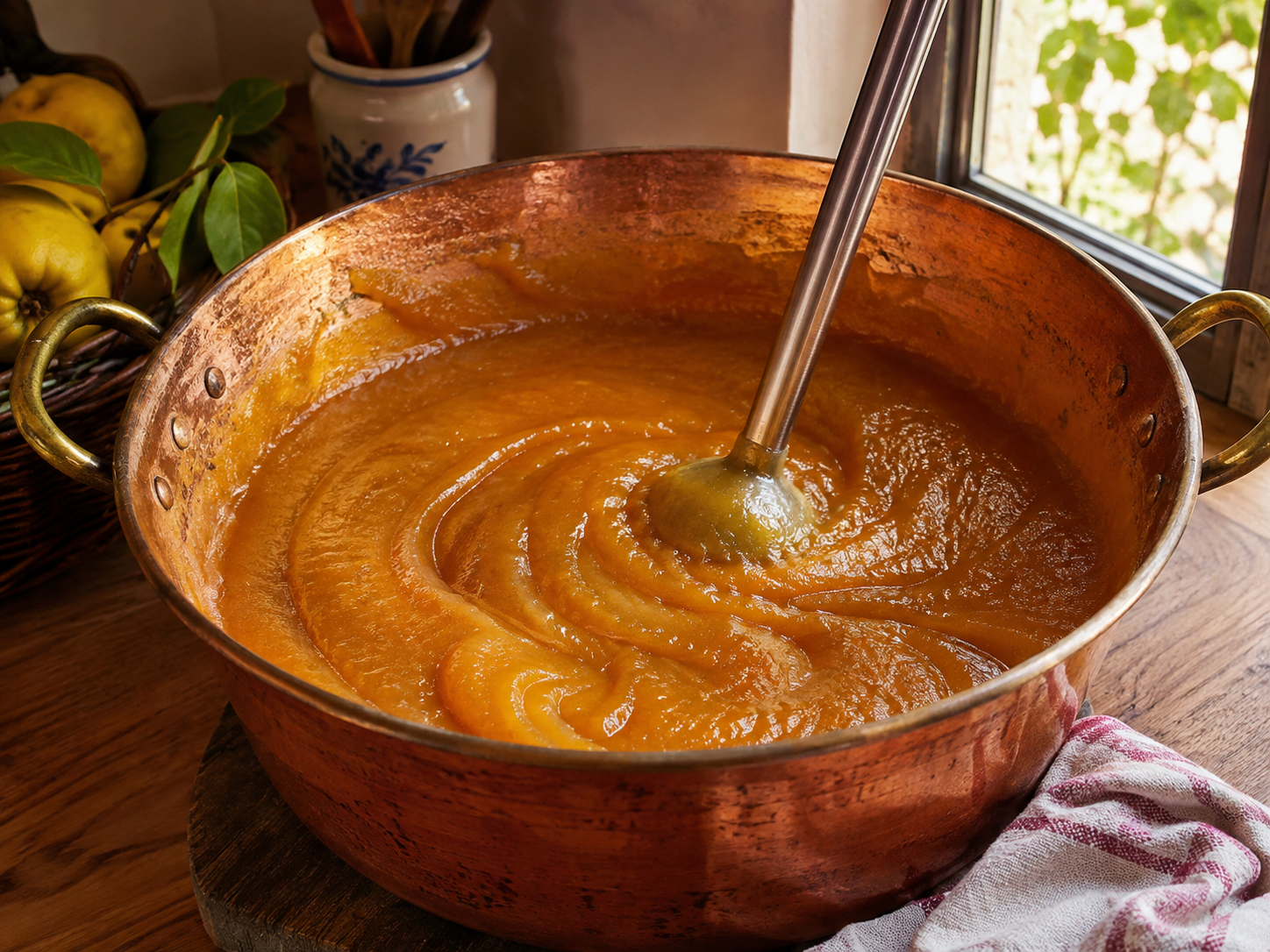
Quince has one quality that surprises first-timers, and knowing it in advance saves a lot of confusion. As it cooks with sugar, the pale flesh slowly turns color, from cream to pink to a deep ruby-amber, and that color change is not a sign of burning or of anything going wrong. It is the whole point, a natural reaction as the fruit’s compounds cook, and the longer and slower you cook it, the deeper and more beautiful the red, so do not panic when your pot shifts from beige to brick. You are not scorching it, you are making membrillo, and the color is the reward for patience.
The science behind it is worth a sentence. The color develops through the same broad family of reactions that brown any slowly cooked fruit or sugar, drawn out over a long gentle simmer, which is why a fast, hot cook gives a duller paste and a slow one gives that glowing ruby, so time is the ingredient that makes it beautiful. The other thing to know is that quince flesh oxidizes and browns fast once cut, like an apple but quicker, so keep cut pieces in water with a squeeze of lemon until you cook them, and work at a reasonable pace.
How to Serve It Once You Have It
Membrillo is far more versatile than the cheese board suggests, though the cheese board is where it shines. The classic serve is simple, a thin slice of membrillo on a slice of Manchego, perhaps on a cracker or a piece of bread, ideally with a few marcona almonds nearby. It also loves blue cheese, aged cheddar, and fresh goat cheese, so it is not loyal only to Manchego. Beyond cheese it works spread thinly on toast with butter for breakfast, folded into a cheese toastie, spooned beside roast pork or lamb where its sweetness cuts the richness, or baked into pastries and tarts.
A little goes a long way, since it is intense, so a small slab lasts a long time on a busy kitchen shelf. In Spain you will meet it in unexpected places too, tucked into a bocadillo with cheese, served after dinner as part of a cheese course, or given as a homemade gift wrapped in wax paper at the holidays. Stored properly, wrapped and refrigerated, a batch keeps for months, which is exactly why Spanish households make it in autumn and eat it all the way through to spring.
The pairing with Manchego deserves one more word, because it is not just tradition, it is a kind of chemistry. The cheese is salty, fatty, and firm, while the paste is sweet, soft, and bright, and each one makes the other taste more like itself, since the salt lifts the fruit and the sweetness rounds the cheese, which is exactly what a great pairing is meant to do. Try them together once and the centuries of Spanish devotion to the combination make immediate sense on the tongue.
Choosing and Storing Your Quinces
Getting good fruit is the only part of this that rewards any attention, and even that is simple. Look for quinces that are mostly yellow rather than green, which means they are ripe, and that smell fragrant, because a ripe quince perfumes a whole room with a scent between apple, pear, and roses, and that fragrance is the sign you want. A little grey fuzz on the skin is normal and washes off, so you are really just avoiding fruit that is bruised, blackened, or soft in patches, since firm is good here and quince is meant to be hard.
They store beautifully, which is part of their old appeal. Left in a bowl they keep for weeks and go on perfuming the kitchen, and in the fridge they last well over a month, so you can buy a batch when you see them and make the paste when you have an afternoon. One practical tip is to keep quinces away from other fruit you want crisp, because like apples they give off ethylene and will ripen their neighbors faster.
How many to buy depends on your ambition. A kilo of fruit, three or four large quinces, makes a modest slab that will last a small household a couple of months, and you can double or triple it if you want to give parcels away, since the effort barely changes with the batch size and the fruit is cheap in season. If you cannot find quinces at the supermarket, look at farmers’ markets, Middle Eastern and Turkish grocers, or ask a neighbor with an old garden tree, because quince trees are common and often go unpicked by owners who do not know what to do with the hard, sour fruit.
The Mistakes That Ruin a Batch
Membrillo is forgiving, but there are three ways people go wrong, and all three are easy to avoid once named. The first is undercooking, because if you pull it off the heat too early it never sets firm and stays a soft spread rather than a sliceable block, and the cure is patience and the trail test, waiting until a spoon leaves a clear path across the pan bottom. The second is scorching, since once the sugar goes in and the paste thickens it can catch and burn on the bottom and add a bitter note, so keep the heat low, use a heavy pot, and stir more often as it thickens, especially near the end.
The third is too much sugar. The old rule of equal weights of sugar and pulp makes a paste many modern palates find cloying and it buries the fruit, so dropping to around three-quarters of the pulp’s weight in sugar lets the quince’s floral tartness survive, which is the whole point of making your own. Avoid those three and it is genuinely hard to fail, because the fruit does most of the work.
A fourth, gentler tip helps the set, which is leaving the skins and cores in during the first simmer. Quince holds most of its natural pectin there, and pectin is what makes the paste firm enough to slice, so cooking the fruit whole and straining afterward gives a better set than peeling first, and it is the traditional way and the easy way at once. If your finished paste ever comes out softer than you wanted it is not ruined; scrape it back into the pot and cook it down further, and it will firm up as more water leaves, since membrillo is one of the few recipes you can simply keep cooking until it behaves.
Variations Worth Trying
Once you have made the basic paste once, there is room to play, and a few variations are worth knowing. For a spiced membrillo, add a cinnamon stick, a couple of cloves, or a strip of orange or lemon zest to the pot while the pulp and sugar cook, since the warm spice suits the autumn mood and pairs beautifully with a strong cheese. For a firmer or softer set, adjust the cooking time rather than the recipe, cooking longer for a paste firm enough to cut into clean cubes or stopping a little earlier for a softer, spreadable paste closer to the Portuguese style.
You can also make a paler, milder version from hard tart apples or a mix of apple and quince when quinces are scarce, and while it will not have the deep ruby color or the floral perfume of true membrillo, it makes a pleasant cheese-board paste in a pinch. If you want to lean fully traditional, some Spanish cooks add nothing at all beyond quince, sugar, and a little lemon, trusting the fruit entirely, and that purist version is the one this recipe follows, because the quince genuinely needs no help.
One more idea for the adventurous. A pinch of sea salt stirred in at the end, or a splash of brandy, deepens the flavor and makes the paste taste a little more grown-up, which suits it well on a cheese board with a glass of red, and while neither is traditional and neither is necessary, both are lovely. Whatever route you take, the base method below stays the same, so master the plain version first and the variations are all just small detours from it.
The Recipe
Here is the method, stripped to its simple bones. It takes an afternoon, but most of that is unattended simmering, and the active work is perhaps twenty minutes total.
Ingredients
- 1 kg quince (about 3 to 4 large fruit), roughly 2.2 lb
- Granulated sugar, weighed after cooking, roughly 700 to 900 g depending on the pulp
- 1 lemon, juiced
- 250 ml water, about 1 cup, for the initial simmer
Instructions
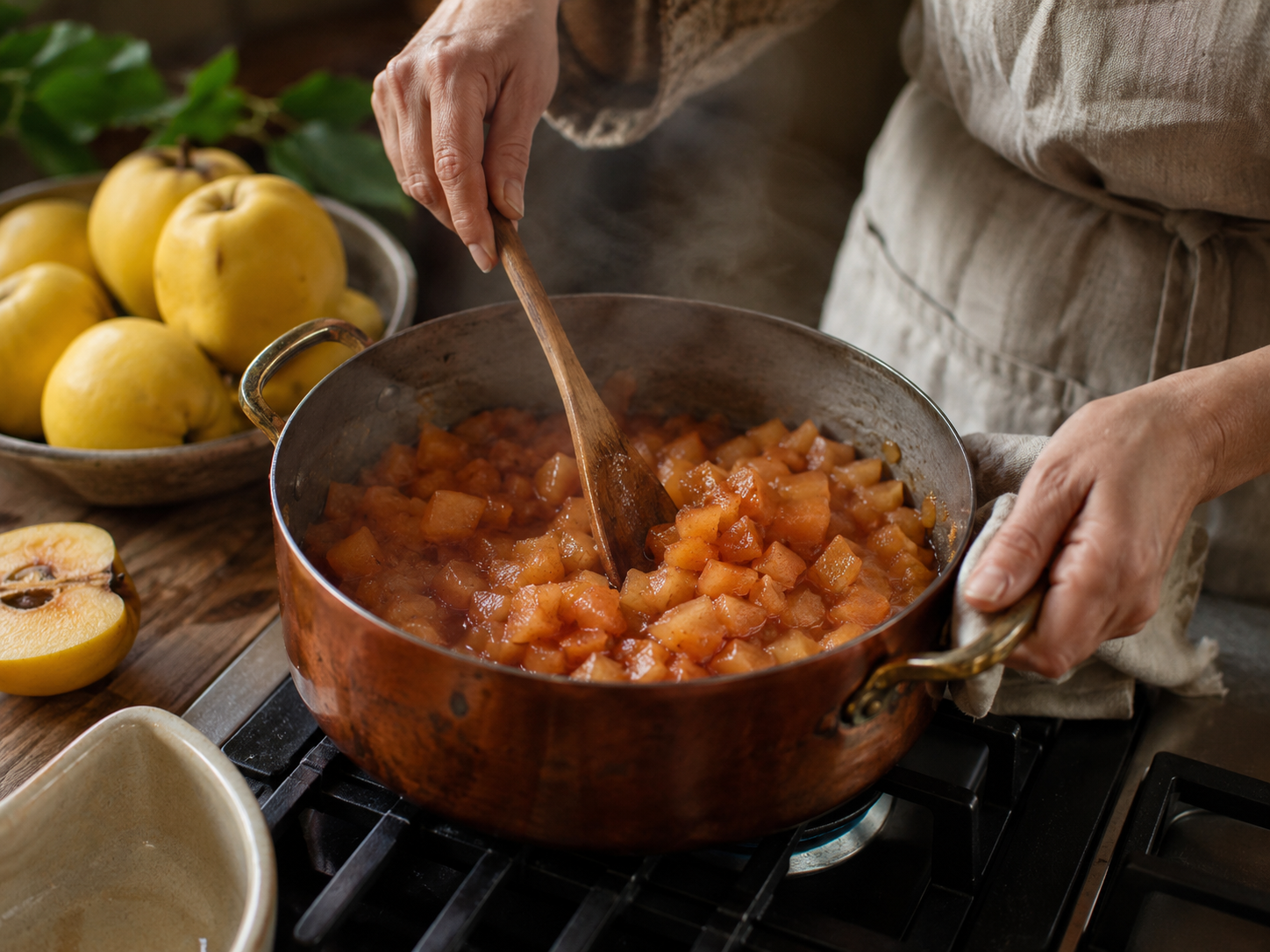
- Rub the fuzzy down off the quinces under running water, then quarter them. Leave the skins on and the cores in for now, since both hold pectin that helps the set. Put the quartered fruit in a large pot with the water and the lemon juice.
- Bring to a simmer, cover, and cook gently for about 30 to 40 minutes, until the quince is completely soft and a knife slides through with no resistance. The pieces may already be turning pink.
- Let it cool slightly, then pass the cooked fruit through a food mill or sieve, or peel and core it and blend the flesh to a smooth purée. Discard the skins and cores. You now have quince pulp.
- Weigh the pulp, then weigh out sugar equal to about 75 to 90 percent of the pulp’s weight. Less sugar gives a brighter, tarter paste; more gives a sweeter, firmer one. Return pulp and sugar to the pot.
- Cook over low to medium-low heat, stirring often so it does not catch, for about 60 to 90 minutes. It will darken steadily from beige to deep amber-red, thicken dramatically, and start to pull away from the sides of the pan. When a spoon dragged across the bottom leaves a clear trail that holds, it is ready.
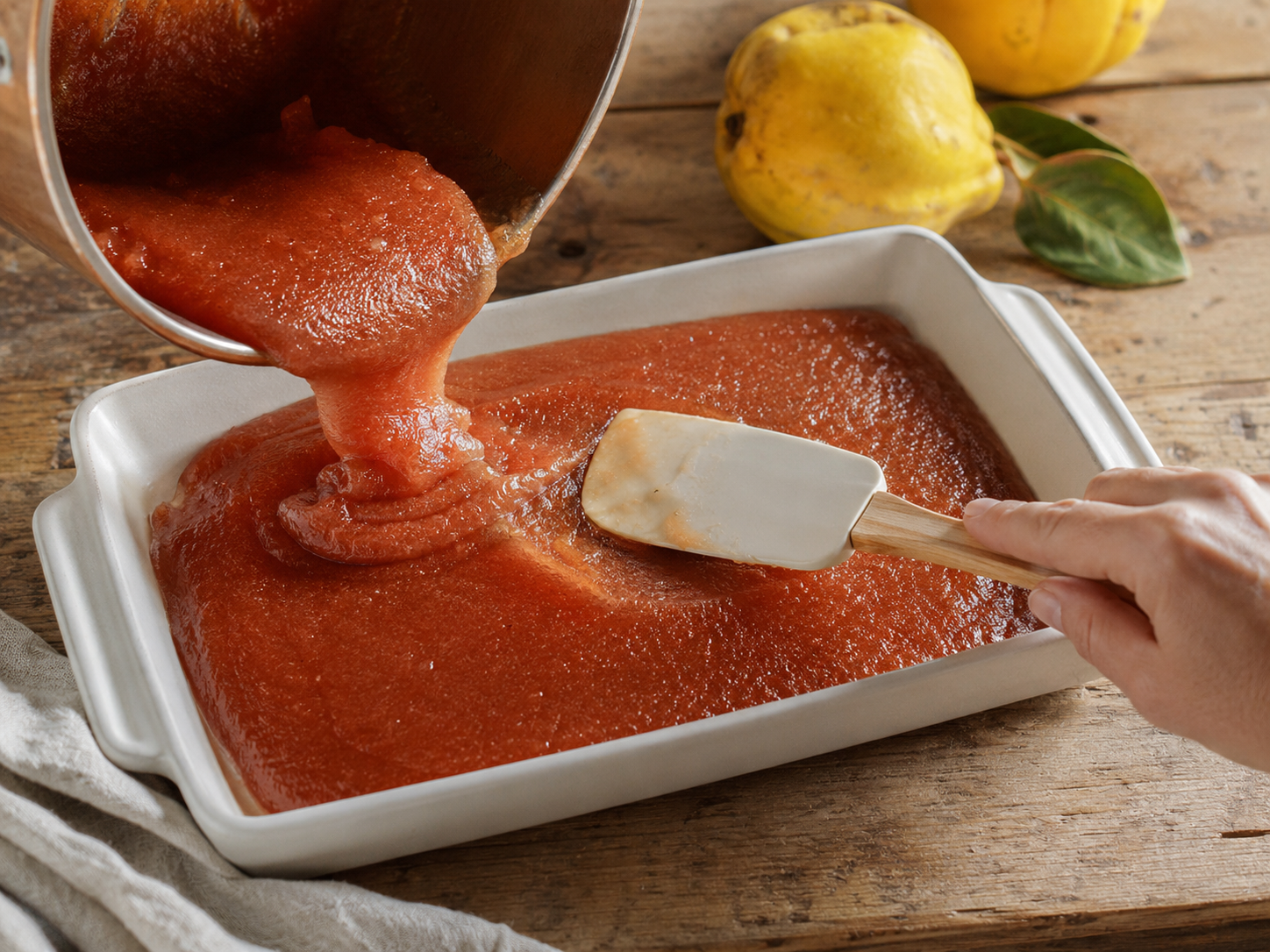
- Line a shallow dish or small loaf tin with baking paper and scrape the hot paste in, smoothing the top. Let it cool completely at room temperature, then refrigerate uncovered for a few hours until fully set and sliceable.
- Once firm, turn it out, wrap in fresh baking paper, and store in the fridge. Slice thin to serve, and it keeps for two to three months.
And do remember that quince is genuinely seasonal and can be hard to find outside autumn, so this is a recipe to make when you spot the fruit rather than one to chase year-round. There is no good fresh substitute for it, though hard, tart apples cooked the same way give a paler, milder paste that is pleasant enough in a pinch, and beyond that the paste is yours to make your own, sweeter or tarter, plain or spiced, however your own cheese board likes it.

About the Author: Ruben, co-founder of Gamintraveler.com since 2014, is a seasoned traveler from Spain who has explored over 100 countries since 2009. Known for his extensive travel adventures across South America, Europe, the US, Australia, New Zealand, Asia, and Africa, Ruben combines his passion for adventurous yet sustainable living with his love for cycling, highlighted by his remarkable 5-month bicycle journey from Spain to Norway. He currently resides in Spain, where he continues sharing his travel experiences with his partner, Rachel, and their son, Han.