
There is a week in September, usually the one after the first properly cool evening, when the cooking of an entire continent quietly changes gear. The salads and cold plates and grilled things of summer go back in the drawer, the big heavy pots come out, and across Europe the same instinct takes hold at almost the same moment: it is stew weather now. Every country has its own answer to that first chill, a slow, warming, one-pot dish built to fill a kitchen with steam and a family with comfort, and the five below are among the finest. Think of this as a small tour of how Europe braces for autumn, one pot at a time.
None of these are complicated, and all of them are better the second day, which is exactly what you want from the food that carries you out of summer.
1. Spain: Cocido Madrileño
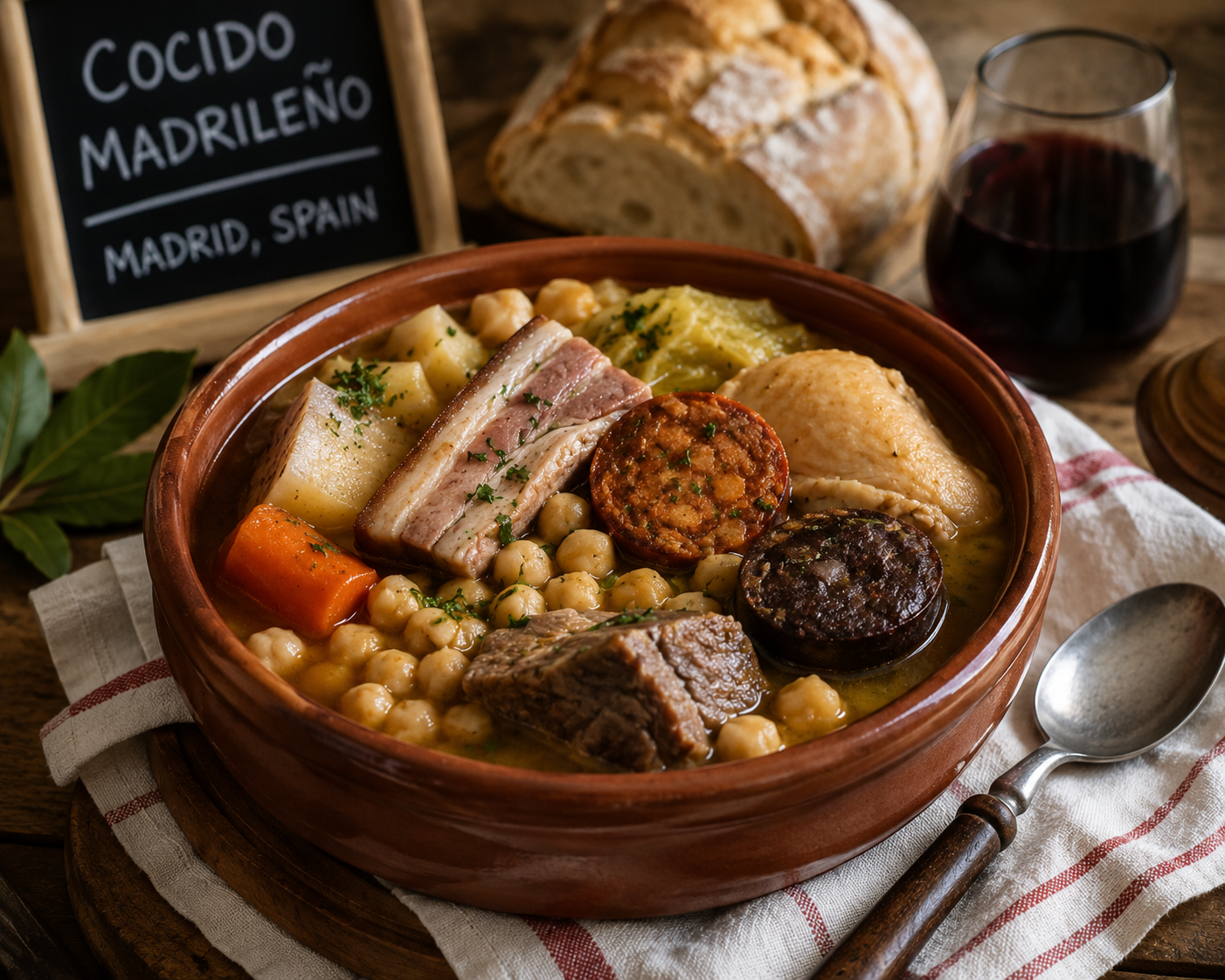
The great autumn pot of central Spain is cocido madrileño, a chickpea-and-meat stew so beloved in Madrid that it is less a recipe than an institution. At its heart are chickpeas, slow-simmered until creamy, cooked with a generous assortment of meats and cured pork, from beef shin and chicken to chorizo, morcilla blood sausage, and a piece of tocino or salt pork, all of it enriching a deep, golden broth. Vegetables like cabbage, carrot, and potato go in too, so the finished pot holds nearly a whole meal’s worth of ingredients in one place.
What makes cocido special is not just the flavor but the ceremony of how it is eaten, because it is traditionally served in stages the Spanish call vuelcos, or overturnings. First comes the broth, poured over fine noodles as a restorative soup, then the chickpeas and vegetables arrive as the second course, and finally the meats come to the table as the third, so a single pot becomes a leisurely three-act Sunday lunch. It is exactly the kind of long, warming, unhurried meal that suits a cold Madrid afternoon, and it is the dish a madrileño grandmother reaches for the moment the weather turns.
There is a thrift built into it as well, since the leftover meats are often shredded the next day into a second dish, and a big cocido easily feeds a family across a weekend. Many Madrid restaurants build their entire midweek reputation on a single day’s cocido, and regulars book the table that serves it, which tells you how seriously the city takes its great pot. Cook it once and you understand why, because few dishes give back so much warmth and so many meals for so little effort beyond patience.
2. France: Cassoulet
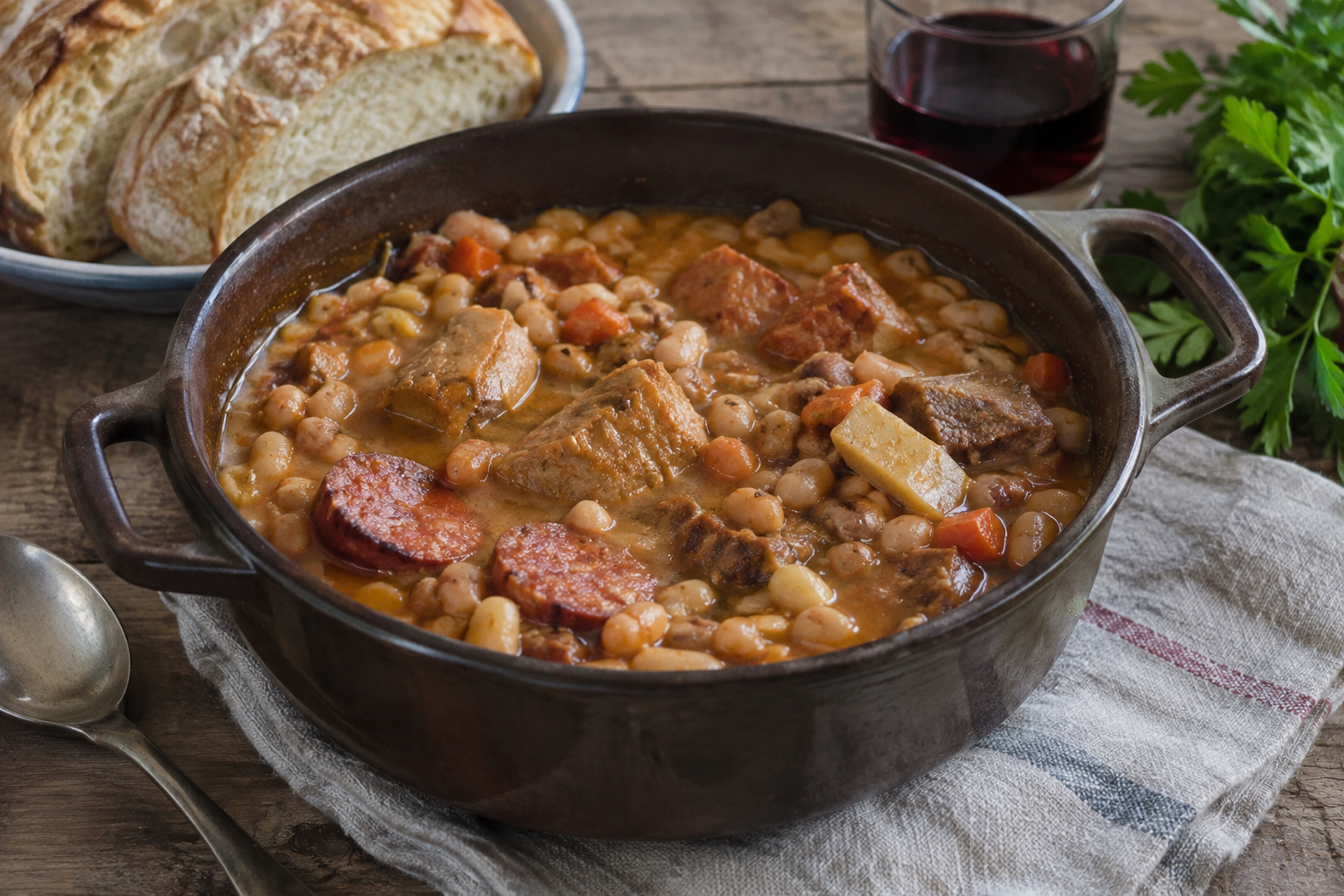
From the southwest of France comes cassoulet, the rich, slow-baked bean stew of the Languedoc that is perhaps the ultimate autumn comfort dish. Its foundation is white haricot beans, cooked slowly with confit duck or goose, pork, and garlicky Toulouse sausage until everything melds into something deeply savory and unapologetically hearty. The dish takes its name from the cassole, the earthenware pot it is traditionally baked in, and the towns of Castelnaudary, Carcassonne, and Toulouse still argue fiercely over whose version is the true one.
The signature of a proper cassoulet is the crust that forms on top as it bakes low and slow for hours, a golden skin that traditional cooks break and stir back into the beans several times during cooking to build layers of flavor and texture. It is not a quick dish and it was never meant to be. It belongs to the tradition of food that cooks gently all day and rewards the whole house with its smell, and it is precisely the sort of substantial, fortifying meal that the first cold snap of a French autumn seems to call for. Serve it with bread and a robust red from the same region and you have the definition of a cold-weather feast.
Cassoulet is unapologetically a project, the sort of thing you make on a free autumn Saturday rather than a weeknight, and that is part of its appeal in a hurried age. The beans want soaking the night before, the confit and sausage want browning, and the whole assembly wants hours in a low oven, so making one is a small act of devotion to the season. But it rewards the effort like almost nothing else, filling the house with its smell for an afternoon and then feeding a crowd generously, with leftovers that only deepen, which is exactly the trade autumn cooking is built on.
3. Italy: Ribollita
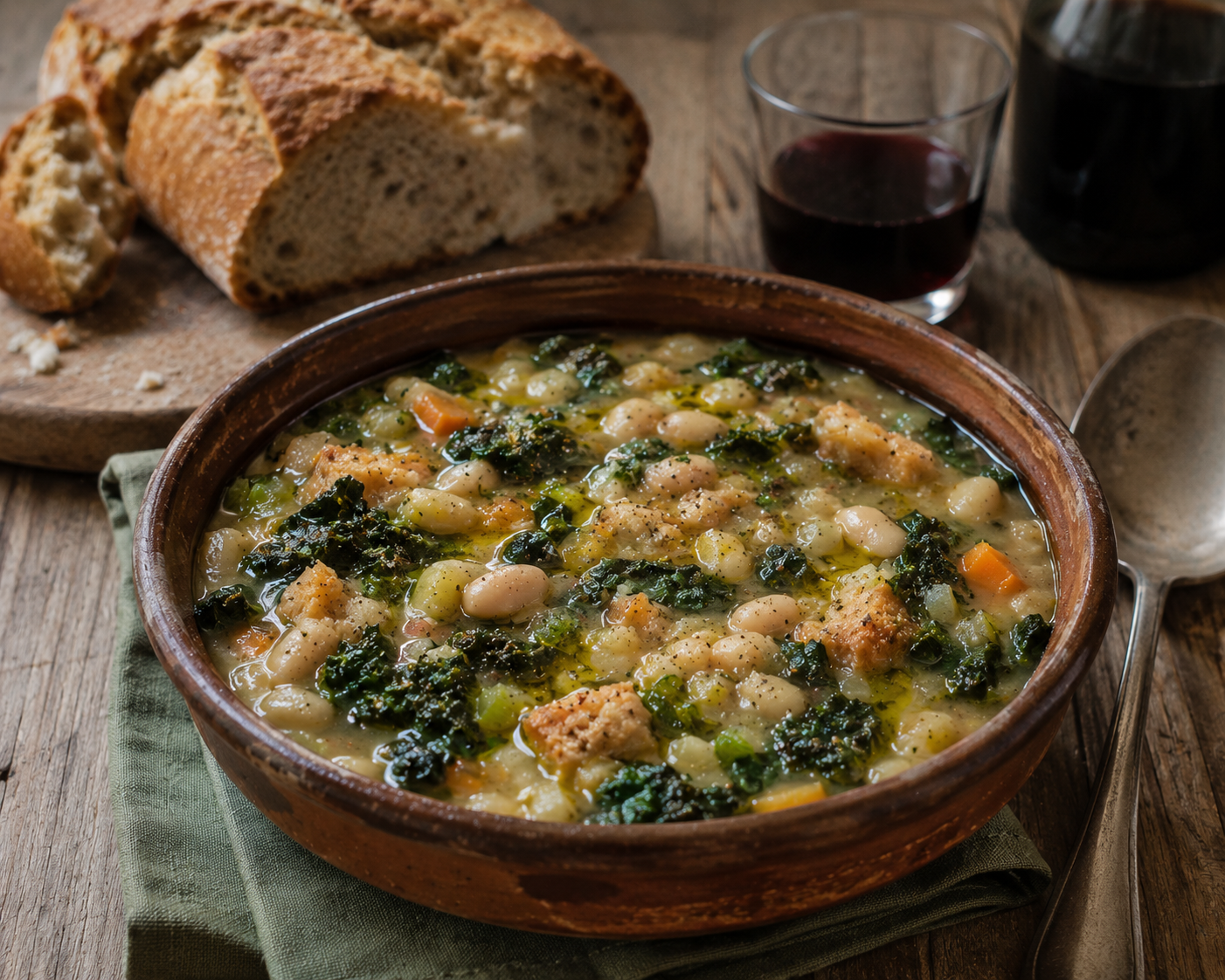
Tuscany’s answer to the autumn chill is ribollita, a thick, humble, bread-thickened vegetable stew whose name literally means reboiled, a clue to its thrifty peasant origins. It is built on cannellini beans and cavolo nero, the dark Tuscan kale that comes into its own in the cold months, along with plenty of other vegetables, all simmered together until soft. Then it is thickened not with meat but with stale bread, which soaks up the broth and turns the whole thing into something you can almost stand a spoon in. It is vegetarian by heritage rather than by trend, born of poor kitchens making a filling meal from beans, greens, and yesterday’s loaf.
What makes ribollita so distinctive is that it is deliberately made to be reheated, since the name itself refers to reboiling the leftovers, and the dish genuinely improves as the bread breaks down further and the flavors deepen over a day or two. It is the essence of Tuscan cucina povera, poor cooking, the art of turning almost nothing into something deeply nourishing, and a bowl of it under a thread of good olive oil on a grey October evening is one of the quiet pleasures of Italian autumn. Cheap, green, and warming, it is exactly the pot Tuscany reaches for when the salads of summer no longer feel right.
The timing of it is tied to the garden as much as the calendar, because cavolo nero is a cold-weather green that many Tuscans swear tastes better after the first frost, its leaves sweetening as the temperature drops. That is the quiet logic behind so much autumn cooking, that the ingredients themselves arrive exactly when the appetite for warm, slow food does, and ribollita simply catches that moment in a bowl. Finish it the traditional way, with a generous thread of raw olive oil poured over the top just before eating, and a humble pot of beans and bread becomes something genuinely memorable.
4. Ireland: Irish Stew
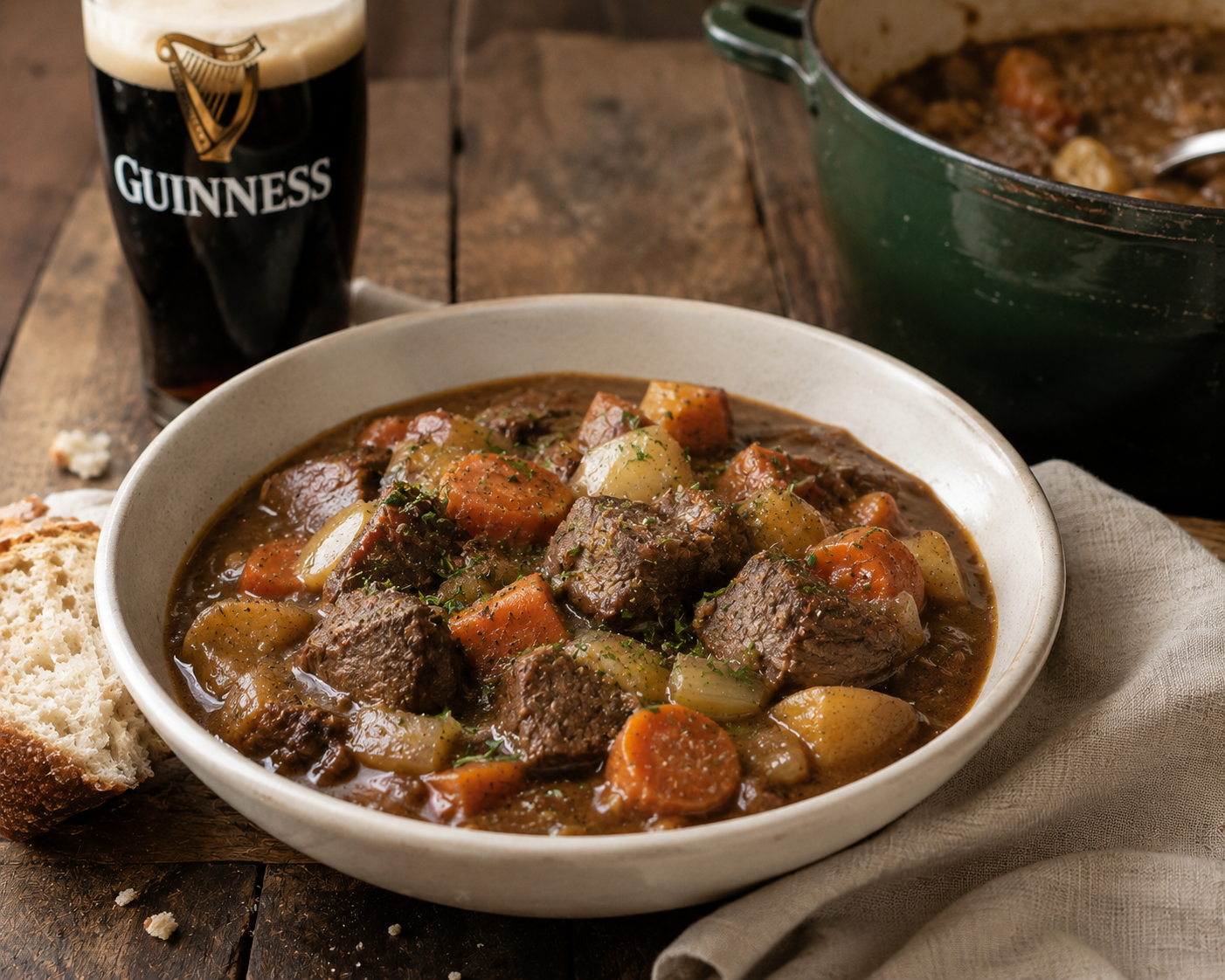
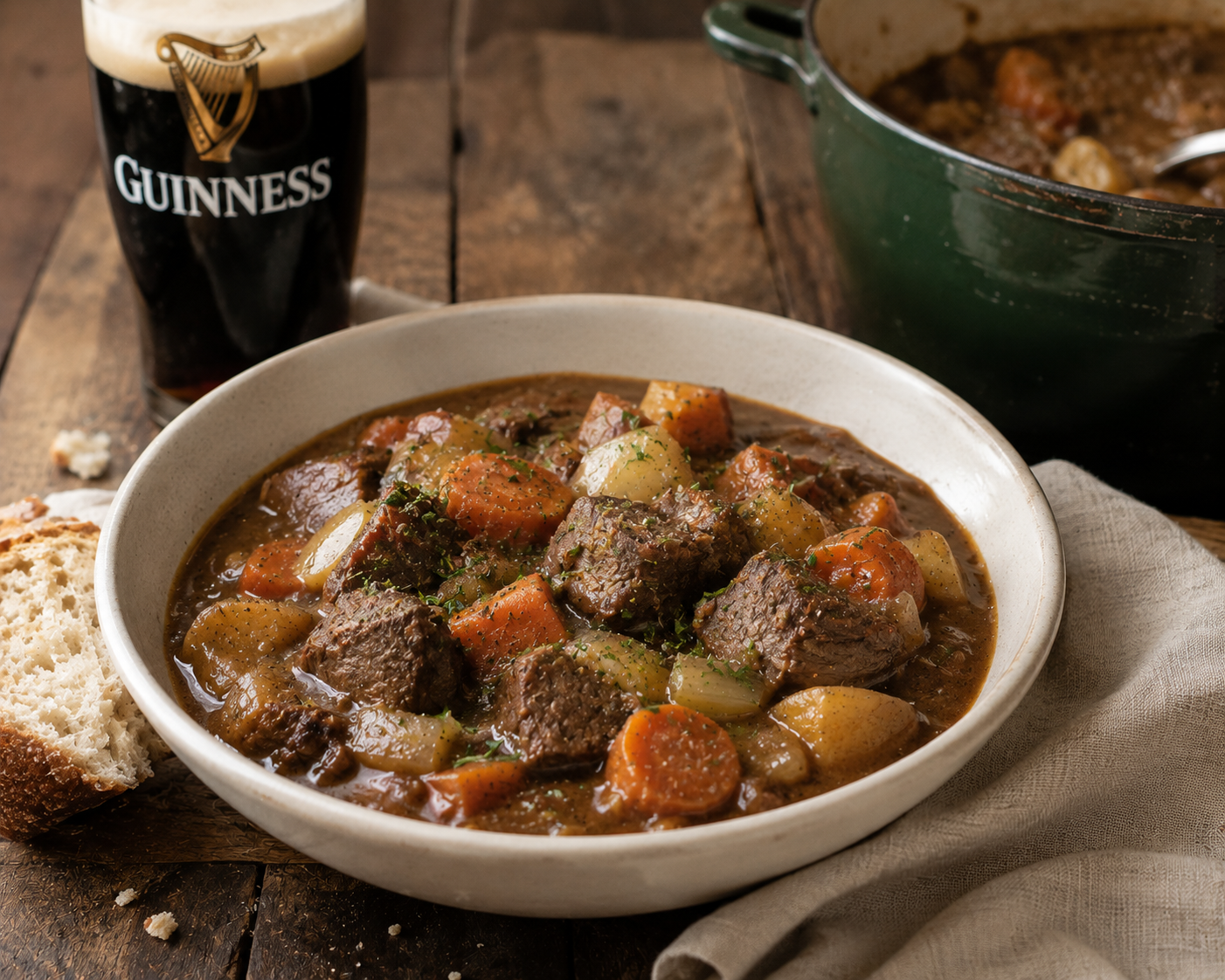
The classic pot of the cold, wet Irish autumn is the plainest on this list, and proudly so, because Irish stew is a study in how few ingredients a great dish actually needs. Traditionally it is little more than lamb or mutton, potatoes, onions, and water, simmered slowly until the meat is falling apart and the potatoes have partly dissolved to thicken the broth into something silky and substantial. Some modern versions add carrot and a little barley or a splash of stout, but the purest form keeps to the humble trinity of lamb, potato, and onion, and asks for nothing more.
The beauty of Irish stew is exactly its restraint, since it was the food of a country that historically had little and made warming, sustaining meals from what the land and the flock could give. It is the perfect answer to a raw, drizzly Irish evening, a bowl of soft lamb and melting potato that warms you from the inside and needs only a hunk of soda bread alongside. There is real wisdom in its simplicity, a reminder that a stew does not need a long ingredient list to be one of the most comforting things you can eat when the wind turns cold.
The one genuine debate among Irish cooks is whether carrots belong in it at all, with purists insisting the true dish is only lamb, potato, and onion and everyone else quietly adding a carrot or two anyway. Traditionally it was made with mutton, the meat of an older sheep, which needed the long slow cooking to grow tender and gave a deeper flavor than the lamb most people use today, so the modern version is a little milder than the original. Either way it wants nothing more than a hunk of soda bread and a raw, drizzly evening to feel completely right, which Ireland supplies in abundance.
5. Hungary: Goulash
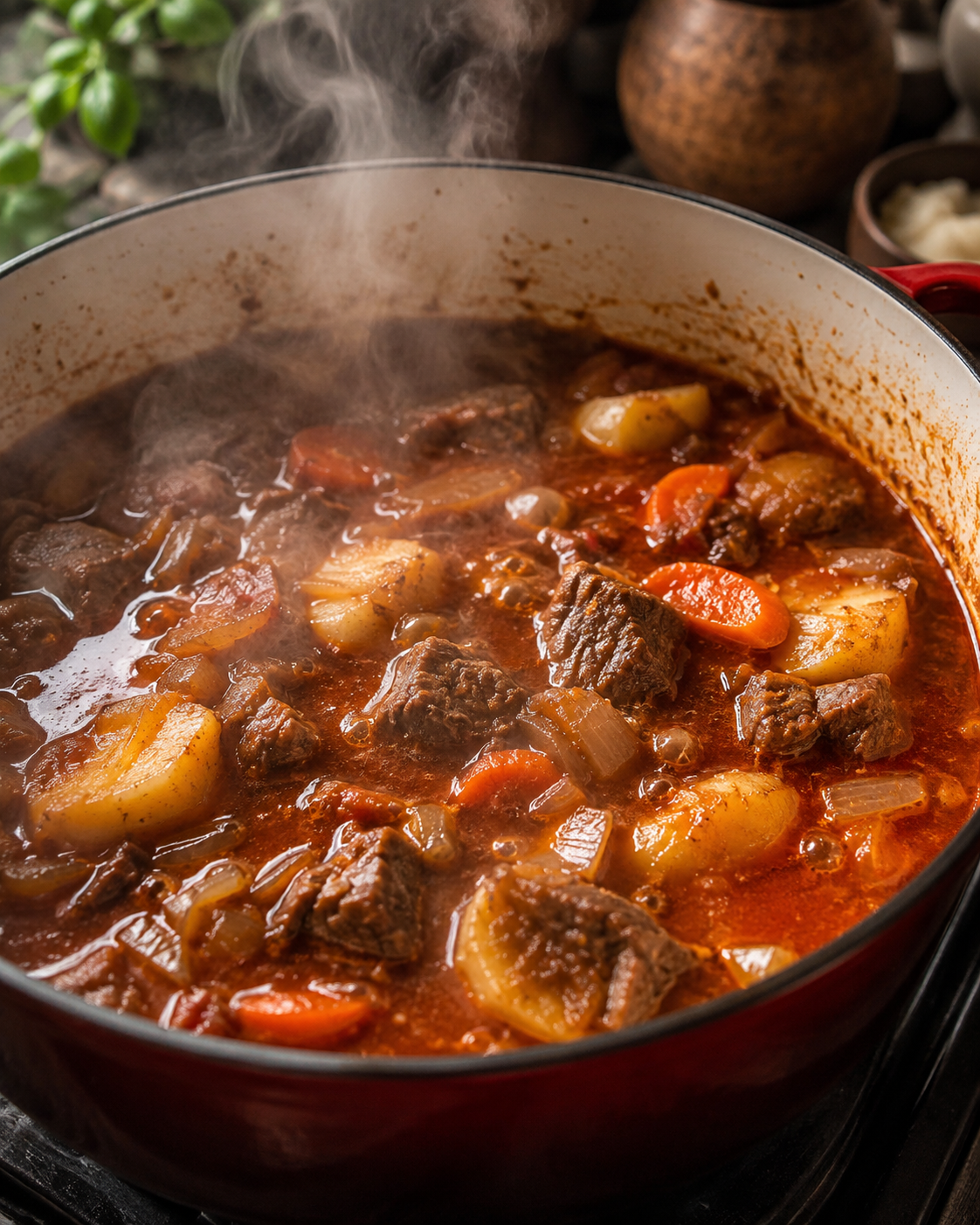
From central Europe comes goulash, or gulyás, the great paprika-scented stew that Hungary gave the world and that warms half the continent once the cold arrives. Despite how many countries have adopted it, the original is a relatively brothy stew of beef, onions, and vegetables, defined above all by generous quantities of Hungarian sweet paprika, which gives it its deep red color and its warming, faintly smoky soul. The name comes from the Hungarian herdsmen, the gulyás, who cooked it in a cauldron over open fires out on the plains, which is exactly the rugged, outdoor, cold-weather origin the dish still tastes of.
What sets goulash apart from the western stews on this list is that paprika rather than wine or beans carries the flavor, giving it a character unmistakably its own and unmistakably central European. It sits somewhere between a soup and a stew in its traditional form, brothier than a French daube but heartier than a broth, and it is the dish a Hungarian kitchen turns to the moment autumn bites. Ladled over a few boiled potatoes or served with crusty bread and a spoon, it is warmth in a bowl, and its spread across so many countries is simply proof of how well it does its one job.
One thing worth clearing up, since it confuses so many visitors, is that the thick, dark, meat-heavy dish served as goulash across much of the world is often closer to what Hungarians call pörkölt, a separate stew, while true gulyás is brothier and soupier, closer to a hearty soup than a stew. Many Hungarian cooks add little pinched dumplings called csipetke to the pot, and the whole thing is built to simmer long and slow the way the herdsmen once cooked it. However you meet it, its warming paprika heart is unmistakable, and it is the pot central Europe has leaned on against the cold for centuries.
Real Goulash Is a Soup, Not the American Casserole
The first thing to understand is that the word goulash has been stretched across two completely different dishes, and knowing which one you are making saves a great deal of confusion. American goulash is a one-pot comfort dish of ground beef, tomato, and pasta, genuinely tasty in its own right but a distant cousin at best of the original. True Hungarian goulash is a stew, or more precisely a thick, rich soup, made with hearty cubes of beef simmered slowly in a paprika-laced broth, with no pasta and no ground meat anywhere in sight.
There is a second point of confusion even within Hungary, and clearing it up marks you instantly as someone who knows. The thick, meat-heavy stew often served abroad as goulash is really closer to pörkölt, a separate and drier Hungarian dish, while genuine gulyás is soupier, brothier, somewhere between a hearty soup and a light stew. The name itself tells the story, because gulyás means herdsman, and the dish was the herdsmen’s soup, cooked thin enough to stretch and to sip from a bowl at the end of a long day. So when you make real goulash, you are making a soup you eat with a spoon and a hunk of bread, not a thick stew you pile onto a plate, and getting that expectation right is half of getting the dish right.
The Paprika Is the Whole Point
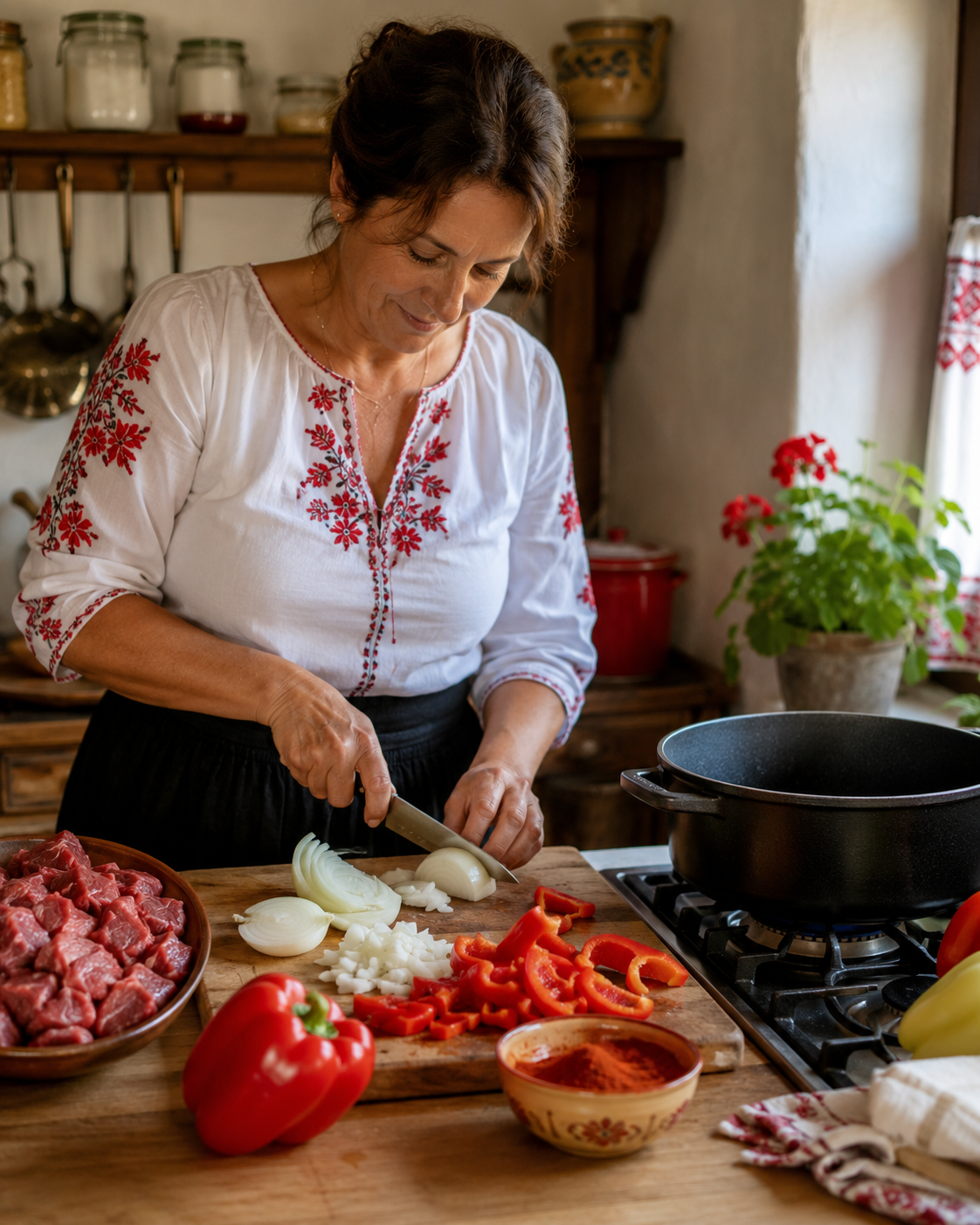
If goulash has a soul, it is paprika, and everything else in the pot is really just a vehicle for it. This is not a dish where paprika is a background seasoning shaken in from an old jar; it is the defining ingredient, added in what looks like an alarming quantity, and it is what gives goulash its signature deep red color and its warm, gently smoky flavor. A proper pot uses a genuinely generous amount, on the order of a quarter cup for a family-sized batch, so this is the moment to buy a fresh tin rather than reach for the tired supermarket sprinkle.
Quality and type both matter enormously here. You want sweet Hungarian paprika, the kind sometimes labelled édesnemes, which is fragrant and vivid rather than hot, and Hungarians will tell you that imported Hungarian paprika genuinely makes a difference you can taste. Old, dull, faded paprika will give you a muddy, lifeless goulash no matter what else you do right, because the spice is doing so much of the work that its freshness is not optional.
Beyond the paprika, the supporting cast is small and humble, a mountain of onions, some garlic, caraway seeds for their earthy, faintly aniseed note, a bay leaf, and good beef. That restraint is deliberate, because goulash is a dish that proves how much flavor a few honest ingredients can make when paprika leads and time does the rest.
The One Rule You Cannot Break
There is a single technique in goulash that separates a magnificent pot from a ruined one, and it is worth tattooing on your memory: never add the paprika to a scorching hot pan. Paprika burns easily, and the instant it scorches it turns bitter and acrid, souring the entire pot in a way no amount of later seasoning can fix, so the traditional method is to pull the pan off the heat, or turn it right down, before the paprika ever goes in. You soften your onions, take the pot off the flame, stir the paprika through until everything is stained a deep red, and only then return it to the heat and add the liquid.
This one habit is the difference between the goulash that makes people close their eyes and the one they politely finish and never mention again. Everything else about the dish is forgiving, since the long simmer smooths over small imprecisions and tough cuts only grow more tender, but the paprika step punishes carelessness immediately and permanently. Get that right, keep the heat gentle, and give it time, and it is genuinely hard to make a bad goulash. Rush the paprika into a hot dry pan and no amount of care afterward will save it, which is why this is the one place in the whole recipe to slow down and pay attention.
Born in a Cauldron on the Plains
Goulash is old, and its origins are written into how it is still cooked. It comes from the Magyar herdsmen who tended cattle on the Great Hungarian Plain, the vast grassland where they cooked their meals outdoors in a bogrács, a cauldron hung over an open fire, which is exactly the rugged, portable, cold-weather origin the dish still carries in its bones. The herdsmen would cook cubes of beef with onions and, once the spice arrived in Hungary, paprika, adding water to make a soup that could be stretched to feed many and eaten hot at the end of a day in the wind.
That history is why goulash tastes the way it does and why it belongs so completely to the cold months. It was built to warm people who worked outdoors in hard weather, to turn cheap cuts and cheap onions into something deeply sustaining, and to be made in a single pot over a fire, and all of that comfort survives in the modern kitchen version. Cooking a real bográcsgulyás outdoors in a cauldron is still a beloved tradition in Hungary, a social event as much as a meal, and even made on a stovetop the dish keeps that generous, feed-the-crowd spirit. When you make it, you are cooking something the plains have handed down for centuries, which is a large part of why it satisfies far beyond what its simple ingredient list suggests.
Csipetke and What Else Goes in the Bowl
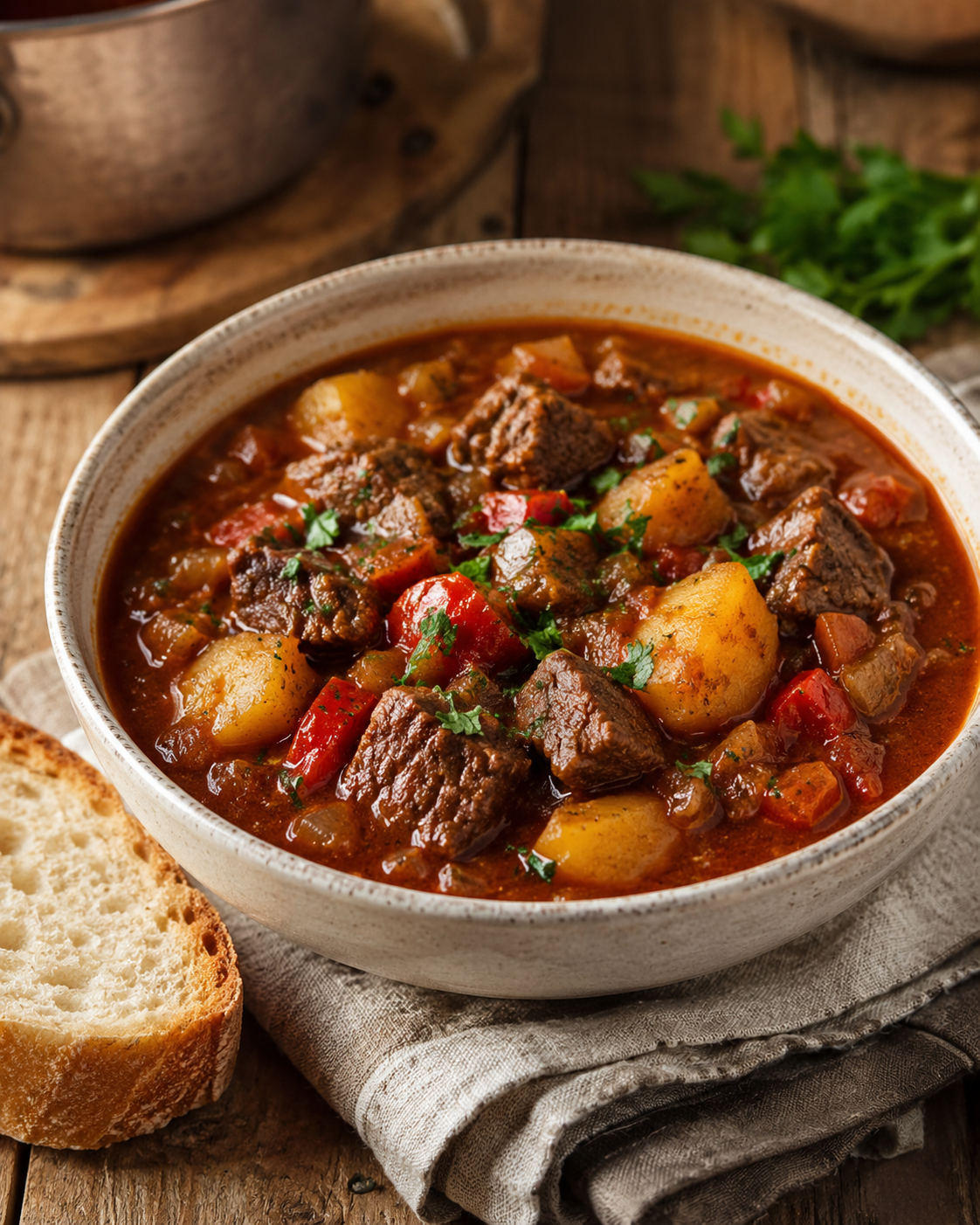
A bowl of goulash needs little alongside it, but a few traditional companions turn it from a soup into a proper meal. The most authentic addition is csipetke, tiny pinched noodles made from nothing more than flour and egg, whose name comes from the Hungarian word for pinch, since you pinch small, bean-sized pieces of stiff dough straight into the simmering soup to cook for a few minutes. They are entirely optional, and goulash is hearty enough without them, especially if you serve it with bread, but they are the genuinely traditional touch and they are simple to make if you want the full experience.
Beyond the noodles, goulash asks only for good bread to tear and dip, and a robust setting for a cold evening. Some people add a dollop of sour cream, though purists will point out that this leans toward other Hungarian dishes rather than classic gulyás, so treat it as a personal choice rather than a rule. Potatoes and carrots are standard in the soupy plains version and make it more of a meal, going in partway through the cooking so they turn tender without collapsing.
Serve it very hot in deep bowls with bread and, if you like, a glass of sturdy red wine, and you have the whole warming ritual, which is exactly the pot central Europe reaches for the moment autumn turns cold. In Hungary a bowl of goulash is often a whole meal in itself rather than a starter, filling and complete, and it is the kind of food that draws a family to the table by its smell alone as it simmers. If you want the wider tour, this is one of five great autumn stews we gathered in our roundup of the pots Europe turns to when summer ends.
Tips for Getting It Right at Home
A handful of small habits will take your goulash from good to genuinely memorable. Choose the right beef, a well-marbled cut like chuck or shank that rewards long slow cooking by turning meltingly tender, rather than a lean cut that stays dry and tough, and cut it into generous cubes so it holds its texture through the simmer. Brown the meat and soften the onions properly at the start, since that early color is where a lot of the deep savory flavor is built, and do not rush it.
A word on the onions is worth adding, because they are the quiet second star of the dish. Traditional goulash uses a genuinely large quantity, often close to the weight of the meat itself, and as they cook down slowly they melt into the broth and give it much of its body and sweetness, which is exactly why real gulyás needs no flour to thicken it. Do not be tempted to cut the onions back, since they are not a background aromatic here but half the foundation of the soup.
Keep the heat low once everything is in the pot, because goulash rewards a long gentle simmer and punishes a hard boil, which toughens the meat and dulls the flavor. Resist the urge to thicken it with flour, since real gulyás is not a thick, floury stew but a rich soup whose body comes honestly from the onions cooking down and the meat and paprika enriching the broth. And like every stew on our autumn list, it is better the next day, so make a big pot, because the flavors deepen overnight and a goulash reheated on the second evening is often the best bowl of the batch. Above all, buy good fresh Hungarian paprika and add it off the heat, and the rest of the dish will quietly take care of itself.
Making the Goulash
Here is a faithful, family-sized recipe for a true Hungarian gulyás, the soupy, paprika-rich original. It serves six generously, takes a little over two hours of mostly hands-off simmering, and tastes even better the next day.
Ingredients
- 1 kg beef chuck or shank, cut into 3 cm cubes, about 2.2 lb
- 3 tablespoons lard or vegetable oil
- 3 large onions, finely chopped, roughly equal in weight to the meat
- 4 garlic cloves, minced
- 4 tablespoons sweet Hungarian paprika, about 1/4 cup
- 1 teaspoon caraway seeds, lightly crushed
- 2 green peppers or 1 red bell pepper, sliced
- 2 tomatoes, chopped, or 1 tablespoon tomato paste, optional
- 2 carrots, sliced, about 200 g
- 500 g waxy potatoes, peeled and cubed, about 1 lb
- 2 litres beef stock or water, about 8 cups
- 2 bay leaves
- Salt and black pepper, to taste
For the optional csipetke noodles:
- 100 g plain flour, about 3/4 cup
- 1 egg
- A pinch of salt
Instructions
- Heat the lard or oil in a large, heavy pot over medium heat. Add the chopped onions with a pinch of salt and cook slowly, stirring often, for about 10 minutes, until soft and golden. Add the garlic and cook for another minute.
- Add the beef cubes and cook, stirring, until the meat has lost its raw color and taken on a little brown, about 8 to 10 minutes.
- This is the crucial step. Take the pot off the heat entirely, then stir in the paprika and the caraway seeds, coating the meat and onions and letting the paprika stain everything deep red. Do not let the paprika scorch, or it will turn bitter.
- Return the pot to low heat. Add the sliced peppers, the tomatoes or tomato paste if using, the bay leaves, and the stock or water, stirring to lift any browned bits from the bottom of the pot.
- Bring to a gentle simmer, cover partly, and cook slowly for about 1 hour and 30 minutes, until the beef is beginning to turn tender. Keep the heat low and top up with a little hot water if it reduces too far.
- Add the carrots and potatoes and continue simmering, uncovered, for another 30 to 40 minutes, until the vegetables and the beef are both fully tender. Season generously with salt and pepper to taste.
- For the csipetke, if using, mix the flour, egg, and salt into a stiff dough, kneading briefly. Pinch off small, bean-sized pieces and drop them straight into the simmering soup for the last 5 minutes of cooking, until they float and are cooked through.
- Discard the bay leaves and let the goulash rest off the heat for a few minutes. Serve very hot in deep bowls with plenty of good bread, and a dollop of sour cream on the side if you like.
And of course, once you know it the pot is yours to shape, since every Hungarian family makes its gulyás a little differently, thicker or soupier, with potatoes or without, so treat these amounts as a faithful starting point and cook it the way your own table likes it best.
What They All Ask of You in the Kitchen
For all their differences, these five pots ask for almost exactly the same things from a cook, which is good news if you want to make them. The first is time rather than skill, because every one of them is built on a long, gentle simmer that does the real work while you do something else, and none of them rewards rushing. Turn the heat too high to hurry a stew and you get tough meat and a thin, harsh flavor, where the same pot left to murmur quietly for hours turns silky and deep, so patience is the one technique they all genuinely require.
The second thing they share is that the humble, cheaper ingredients are the point, not a compromise. Tough cuts of meat, dried beans, root vegetables, and stale bread are precisely what slow cooking transforms best, since the collagen in a cheap cut melts into richness over hours and dried beans drink up a broth in a way tinned ones never quite manage. Reach for the expensive tender cut and you have wasted both the cut and the method, because a stew is designed to rescue the humble ingredient, which is exactly why these dishes were born in poor kitchens.
The third shared truth is that they all improve overnight, so the smart move with any of them is to make far more than you need and eat it across several days. The flavors settle and marry, the textures deepen, and a stew that was merely good on the first evening is often genuinely excellent by the third, which turns a single afternoon of cooking into most of a week’s warm dinners. That make-ahead generosity is the whole spirit of autumn cooking, and it is the habit worth carrying into the season more than any one recipe.
The Thread That Ties Them Together
Look at these five pots side by side and a pattern emerges that is really the whole point of the tour. Every one of them is slow, one-pot, and built for cold weather, and almost every one leans on cheap, humble ingredients, beans and stale bread and tough cuts and root vegetables, turned into something far greater than the sum of its parts by nothing more than time and gentle heat. That is not a coincidence, because these are all peasant dishes at heart, invented by people who needed to make warming, filling meals from little, and that honest thriftiness is exactly why they have lasted.
They share one more quality worth noticing, which is that all of them are better the next day, made in big batches to be returned to through the week. That, more than any single ingredient, is the real signature of autumn cooking across Europe, the shift from the fresh and immediate food of summer to the slow, generous, make-ahead pots that carry a household through the colder months. So when that first cool September evening arrives wherever you are, you now have five ways to answer it, one from Spain, one from France, one from Italy, one from Ireland, and one from Hungary, each of them a country’s own recipe for comfort when the weather turns. Pick whichever one matches your mood and your cupboard, make a big pot of it on a free afternoon, and you will have carried a little of that continent-wide instinct into your own kitchen for the season.
Whichever pot you start with, treat these as starting points rather than strict rules, since every one of them is cooked a hundred different ways across its home country, and the best version is always the one adjusted to your own table and whatever the season has left in your kitchen.

About the Author: Ruben, co-founder of Gamintraveler.com since 2014, is a seasoned traveler from Spain who has explored over 100 countries since 2009. Known for his extensive travel adventures across South America, Europe, the US, Australia, New Zealand, Asia, and Africa, Ruben combines his passion for adventurous yet sustainable living with his love for cycling, highlighted by his remarkable 5-month bicycle journey from Spain to Norway. He currently resides in Spain, where he continues sharing his travel experiences with his partner, Rachel, and their son, Han.