
There is a date printed inside every passport, and most travelers naturally assume it means exactly what it plainly says, that the document is good right up until that day. For international travel, this assumption is quietly, expensively wrong. Many countries will not admit a visitor unless the passport is valid six full months beyond the trip, which means the real, usable expiry date is six months earlier than the one stamped in the book. A passport that reads as expiring in August may be worthless for a July trip to the wrong country, and the cruelest part is that the traveler often discovers this at check-in, bags packed, when the airline refuses to board them. Understanding this hidden rule, and the way its cousins differ from country to country, is one of the most important pieces of travel knowledge there is, because getting it wrong does not cost a fee or a delay, it costs the entire trip. A brief note before we begin, entry requirements change often and vary by destination, so this is a general explanation rather than a guarantee, and any traveler should confirm the exact rule for their specific destination before booking.
With that said, the good news is that this is an entirely preventable disaster, one that costs a traveler nothing to avoid beyond a few quiet minutes of checking before a trip is ever booked. The rules are knowable, the categories are clear once explained, and a traveler who understands them will never be caught out at the gate. So here is how passport validity really works, why the printed date is not the date that matters, and how to make sure a passport never quietly betrays a long-awaited trip. It is the kind of dull administrative detail that travelers skip right over, yet it sits behind a startling number of ruined holidays every year. The traveler who takes ten minutes to understand it joins a small and fortunate group who never once face the sinking feeling of being turned away at the desk while everyone else in the queue moves on toward the gate.
The Expiry Date That Lies
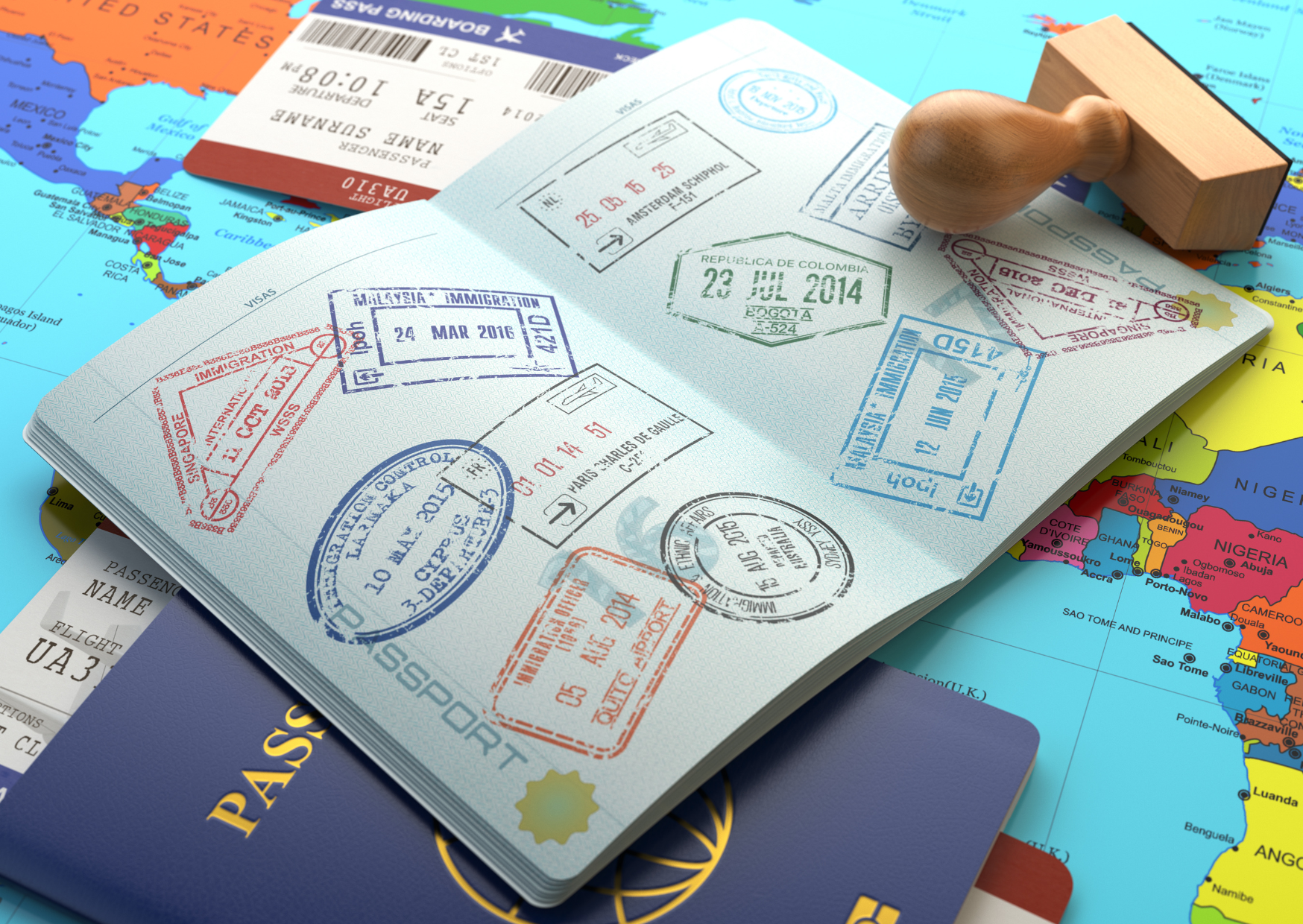
The single most important thing to grasp is that the expiry date inside a passport is not, for many trips, the date on which the passport stops being useful. The truth is stranger and stricter than that.
The real deadline comes earlier. Because so many countries demand that a passport remain valid for six months after the traveler arrives or departs, the practical expiry date for international travel is six months before the printed one, so a passport is functionally dead for many destinations long before its official date. This gap between the printed date and the usable date is exactly what catches travelers unaware. A passport is one of those documents people rarely look at closely between trips, glancing only at the year of expiry and filing it away as good for years to come. That glance is precisely the problem, because the number that matters is not the year on the cover but the gap between the trip and that date, and a passport with a year still to run can be useless for a trip booked too close to the end of it.
It feels deeply unfair, and it is real. Travelers reasonably assume that a valid passport is a valid passport, and the discovery that months of apparent validity count for nothing is a genuine shock. Yet the rule is entirely real and rigidly enforced, so understanding it is not optional for anyone crossing a border. There is no appealing to fairness at the check-in desk, no explaining that the passport plainly still has months to run. The agent is simply following a rule that leaves them no discretion, and the traveler who arrives unaware has no recourse but to rebook, renew, and hope to salvage what they can of the trip. The unfairness, real as it feels, changes nothing at all about the outcome, and the only protection is to know the rule in advance and never test it.
The Three Kinds of Rule
Passport validity requirements are not one rule but three, and knowing which one applies to a given destination is the whole game. Confusing them is what sends travelers home from the airport.
Three categories cover almost everything. Broadly, countries fall into three groups, those demanding six months beyond the trip, those demanding three, and those needing validity only on the day of entry or for the duration of the stay. Each destination sits in one of these buckets, and the safe traveler knows which applies before they book.
The safest assumption is the strictest. Because the six-month requirement is the most demanding and the most widely applied, keeping six months of validity beyond any trip satisfies nearly every country at once. a permanent six-month cushion removes nearly all the worry about finer distinctions. It is far easier to hold a single safe rule in mind, always keep six months, than to research three different standards and their measuring points for every destination on a complex itinerary. The cushion does the work automatically, quietly covering the strict countries and the lenient ones alike, so a traveler need never gamble on getting the details exactly right. For a frequent traveler in particular, treating the passport as something to renew well ahead of time, rather than at the last possible moment, is simply good practice. A document with a comfortable stretch of validity left is one less thing to think about on every trip, and the modest cost of renewing a little early buys a great deal of peace of mind.
Where the Six-Month Rule Bites

The six-month requirement is not evenly spread across the world but concentrated in particular regions, and knowing where it applies helps a traveler judge their risk. Some of the most popular destinations are among the strictest.
Asia, the Middle East, and Africa lead. The six-month rule is most consistently enforced across large parts of Asia, the Middle East, and Africa, China, Thailand, Indonesia, the United Arab Emirates, and Turkey regularly turn travelers away for insufficient validity. Well over seventy countries apply some version of this rule. That is a large enough share of the world that a well-traveled person is almost certain to encounter it sooner or later, whether on a business trip to the Gulf, a beach holiday in Southeast Asia, or a safari in East Africa. The rule is not some obscure trap confined to a handful of unusual nations, but a mainstream requirement across a huge swath of the most-visited countries on earth. Because it is so widespread, the wise traveler simply assumes it applies unless they have confirmed otherwise, rather than the reverse. Treating six months as the default expectation for any international trip, and checking only to find the rare exceptions, is a far safer mindset than assuming a passport is fine until proven otherwise.
Popular holiday spots are included. Beyond the obvious, many sun-and-sea destinations that travelers treat casually also enforce six-month validity, including Brazil and various Caribbean nations, catching out casual beach travelers. the rule turns up in exactly the relaxed destinations where travelers least expect it. Nobody researching a laid-back week in the sun expects to be tripped up by bureaucratic fine print, and that very casualness is what makes these trips so vulnerable. The traveler heading somewhere they consider serious tends to check everything carefully, while the one booking a spur-of-the-moment beach escape often checks nothing at all, and it is the second traveler who ends up stranded at the desk.
The Airline Stops You Before the Border

A crucial and widely misunderstood point is that the traveler is usually stopped not by a foreign immigration officer but by their own airline, at check-in, before they ever leave home. This is where the trip really ends.
Airlines check, and they check strictly. Airlines verify validity at check-in against an industry database of every country’s rules, and they routinely deny boarding to anyone whose passport falls short. Because the airline bears the cost of flying a rejected passenger back home, it often enforces these rules more strictly than the destination’s own border officers.
Some airlines are stricter still. To be safe, some carriers apply a blanket six-month policy across all routes, whatever the destination requires, which can stop a traveler even when the country itself would have admitted them. This is an airline policy rather than a national law, but it has exactly the same effect of leaving a passenger stranded at the desk. Arguing with the agent that the destination itself does not require six months gets a traveler nowhere, since the airline is enforcing its own rule to protect itself from the cost and penalty of carrying someone who might be refused entry. The only winning move is to meet the strictest requirement in play, which in practice means the airline’s, long before reaching the airport.
The Schengen Trap Nobody Explains
Europe operates on a different and much-misunderstood standard, and travelers who assume the six-month rule applies there can be tripped up in a way that makes no sense until it is explained. The European rule has two separate parts.
Three months, measured from departure. The Schengen area requires only three months of validity, but crucially it measures that from the date of departure from the zone, not from arrival, so a passport can hold plenty of validity and still fail if the return date sits too close to the expiry. a traveler can be denied over a passport with many months left, measured against the wrong date. A passenger might glance at a passport with eight months of validity and feel entirely safe for a European trip, only to be refused because the return flight sits just inside the three-month window measured from the departure day. The figure that felt comfortable was simply the wrong figure, measured from the wrong point, which is exactly why the plain six-month framing misleads so many people about Europe.
The ten-year issue trap. Europe also insists the passport was issued within the previous ten years, so an older passport can fail at a European border even while it still shows time left on it. check not only the expiry date but the issue date, which almost no one thinks to examine. This particular trap caught out large numbers of travelers whose older passports had once been issued with a little extra validity added on, pushing the true age of the document past ten years even while the expiry date still looked fine. The safest habit is simply to glance at both dates whenever a European trip is on the horizon, and to treat any passport approaching ten years of age as due for renewal regardless of the validity it appears to hold.
Measuring Against the Right Date
Part of what makes these rules so treacherous is that they measure validity from different points, and the same passport can pass for one country and fail for another on the same trip. The date you measure from is everything.
Arrival, departure, or stay. Depending on the country, the window may be counted from arrival, from departure, or from the length of stay, and this varies from one destination to the next. A traveler visiting several countries on one journey may face a different measuring point at each, so the strictest one effectively governs the whole trip.
One passport, different outcomes. This is why one passport can pass check-in for one destination and be rejected for another days apart, purely because the two countries measure validity differently. Understanding that there is no single universal deadline, only a set of destination-specific ones, is the key to never being caught out. For a multi-country trip this means the itinerary must be checked as a whole, since the harshest requirement anywhere along the route effectively sets the standard for the entire journey. A traveler flying through a strict hub on the way to a lenient destination can be stopped at the very first check-in by the transit country’s rule, a possibility that surprises even seasoned travelers who thought only the final destination mattered. The safest approach for any complex trip is to check the requirement for every country the journey touches, including any where the traveler merely changes planes, and then to satisfy the strictest of them all. It takes only a few extra minutes and closes off the last remaining way to be caught by surprise.
How to Never Get Caught

The reassuring truth is that avoiding this entire category of disaster is simple and cheap, requiring only a little foresight before a trip is booked. A few small habits remove the risk almost entirely.
Check both dates, early. Before booking any international trip, check both the expiry date and the issue date against every country on the itinerary, ideally using an official or airline validity checker. Doing this at the booking stage, rather than the packing stage, leaves ample time to act if there is a problem. The whole disaster hinges on discovering the issue too late, and the simple discipline of checking before any money is spent on flights removes that risk entirely. A five-minute look at the passport at the moment of booking is the single most valuable habit an international traveler can build, turning a potential catastrophe into a mere non-event that never even registers as a close call.
Renew with room to spare. The simplest protection of all is to renew a passport well before it runs low, renew once it drops below six to nine months, since renewals can take weeks and a cushion covers even the strictest destinations. As a final reminder, because these requirements genuinely change and differ by country, every traveler should verify the current rule for their exact destination with official sources before relying on anything here, and renew in good time rather than gambling on a printed date that may mean far less than it appears.

About the Author: Ruben, co-founder of Gamintraveler.com since 2014, is a seasoned traveler from Spain who has explored over 100 countries since 2009. Known for his extensive travel adventures across South America, Europe, the US, Australia, New Zealand, Asia, and Africa, Ruben combines his passion for adventurous yet sustainable living with his love for cycling, highlighted by his remarkable 5-month bicycle journey from Spain to Norway. He currently resides in Spain, where he continues sharing his travel experiences with his partner, Rachel, and their son, Han.