
Somewhere in Spain right now, a village is stringing lights across its main square, a brass band is warming up, and a community is preparing to throw itself into days of music, food and dancing deep into the summer nights. This is the fiesta, the annual celebration that every Spanish town and village holds in honor of its patron saint, and it is one of the warmest and most joyful traditions in all of Europe. For a visitor, stumbling into a village fiesta can feel like crashing a private party, but here is the wonderful secret at the heart of it, you are not crashing at all, because everyone is invited, including you. The whole point of a Spanish fiesta is that the community and anyone lucky enough to be passing through celebrate together, from the smallest child to the oldest grandmother, until the dancing at the verbena finally winds down as the sun comes up. Here are the rules of the Spanish village fiesta, not to keep you out, but to help you join in as gracefully and joyfully as if you had lived there all your life.
None of these rules are barriers, and that is the loveliest thing about them. They are simply the shape of a celebration that a whole community knows by heart, and understanding them lets a visitor slip into the rhythm rather than standing awkwardly at the edge. So whether you find yourself in a mountain hamlet or a small coastal town when the fiesta arrives, here is how to take part in one of the great communal joys of Spanish life.
Rule One: Understand What You Have Walked Into
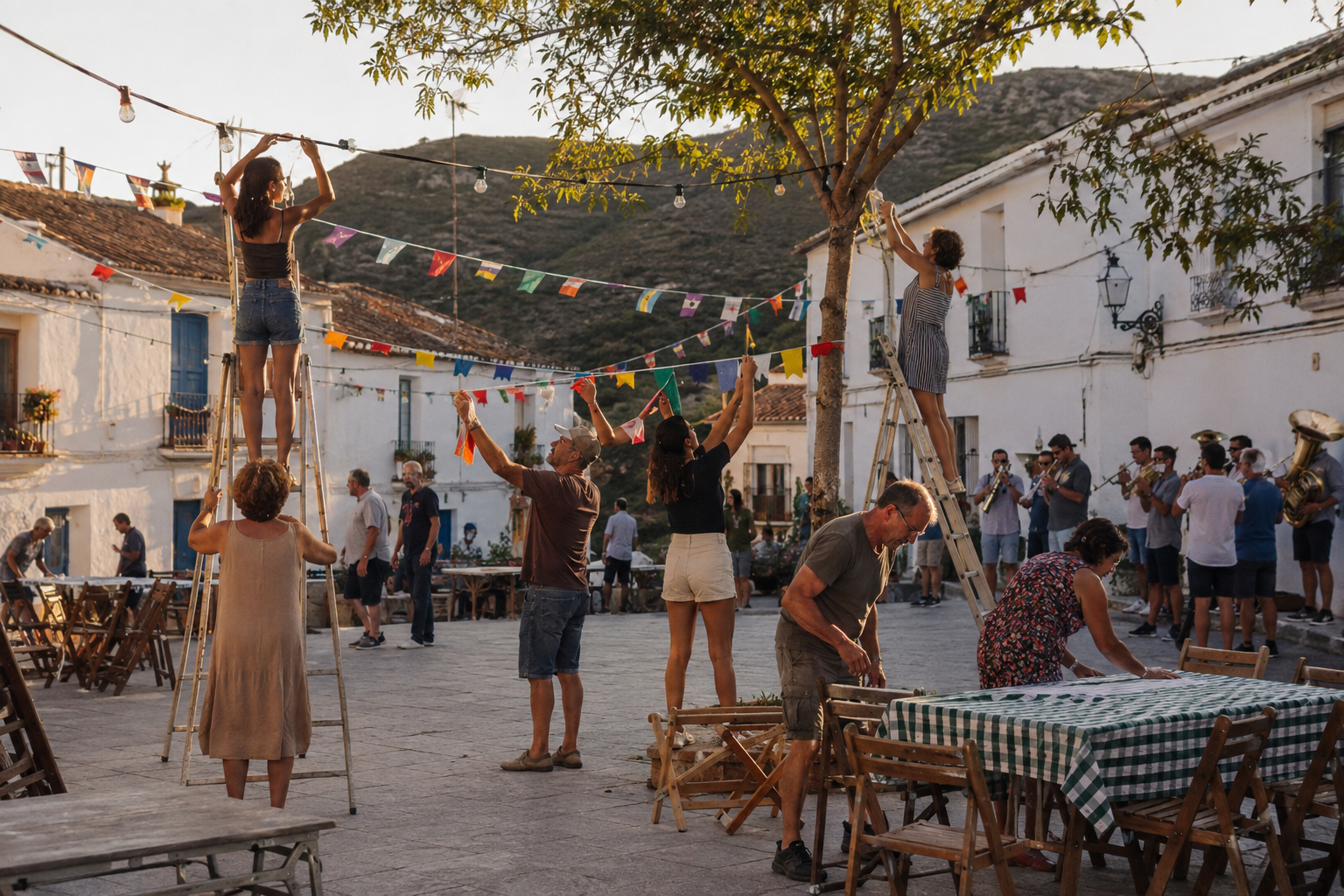
Before joining in, it helps to know what a village fiesta actually is, because it is far more than a street party thrown together for the summer. It has deep roots and a real purpose.
It honors the patron saint. Every town holds an annual fiesta patronal in honor of its own patron saint, a tradition that binds religious devotion, local pride, and pure celebration into a single multi-day event. The date is fixed to the saint’s day, and the whole community organizes its year around it, the fiesta is the beating heart of village life, not a casual add-on.
It lasts for days, not hours. A proper village fiesta is not a single evening but a sustained celebration across several days, sometimes the better part of a week, blending solemn religious rites with raucous late-night revelry. Knowing this in advance helps a visitor pace themselves and understand that there is far more to come than whatever they happen to catch first. The program of a fiesta typically opens with a proclamation or a rocket fired into the sky, a signal that the days of celebration have begun, and closes with fireworks and a final farewell. In between comes a dense weave of masses, processions, meals, games, concerts, and dances, and in many towns bull-related events as well, though these vary from place to place and a visitor is always free to seek out the parts that appeal and gently skip the rest.
Rule Two: Believe That You Really Are Invited
The single most important thing for a visitor to understand is also the hardest to believe, that a village fiesta genuinely welcomes outsiders with open arms. This is not a closed family affair.
Everyone is welcome, truly. Unlike a private party, a village fiesta is an open celebration where strangers are not tolerated but warmly welcomed, invited to eat, drink and dance right alongside the locals. Spanish hospitality is famous for a reason, and nowhere does it shine brighter, where a friendly outsider joining in is a pleasure, not an intrusion.
Join in as if you belonged. The right way to honor that welcome is not to hover shyly at the edges taking photographs, but to step in, follow the crowd, and take part, because that is exactly what your hosts hope for. A visitor who throws themselves into the fun, however clumsily, is embraced far more warmly than one who watches from a polite distance. The Spanish have a deep instinct for shared celebration, and to them a fiesta only truly succeeds when as many people as possible are swept up in it. A foreigner who tries a few words of Spanish, accepts a drink, and steps onto the dance floor gives the locals exactly the thing they most want, the sight of their beloved celebration delighting someone new. Far from feeling like an interloper, such a visitor often ends the night with a dozen new friends.
Rule Three: Follow the Rhythm of the Days
A village fiesta has a natural shape that repeats across its days, a daily rhythm of sacred and profane that a visitor does well to understand. The celebration breathes in and out.
Days and nights have different moods. The daytime tends to hold the more traditional and religious elements, the processions, masses and communal meals by day, and music, dancing and the open-air party by night, so the mood shifts dramatically as the sun goes down. A visitor who understands this can choose which parts to join and know what to expect at each hour.
There is a program, so find it. Most villages post a printed program of the fiesta, pinned up around town or handed out, listing everything from the opening ceremony to the fireworks, so a little effort to find it rewards a visitor richly. Following the program lets you catch the moments you most want to see rather than wandering in and out by luck alone. Ask a local, a bar, or the town hall if you cannot find one, and you will rarely be met with anything but helpfulness, since the village is proud of its fiesta and glad to see a visitor take an interest.
Rule Four: Respect the Procession
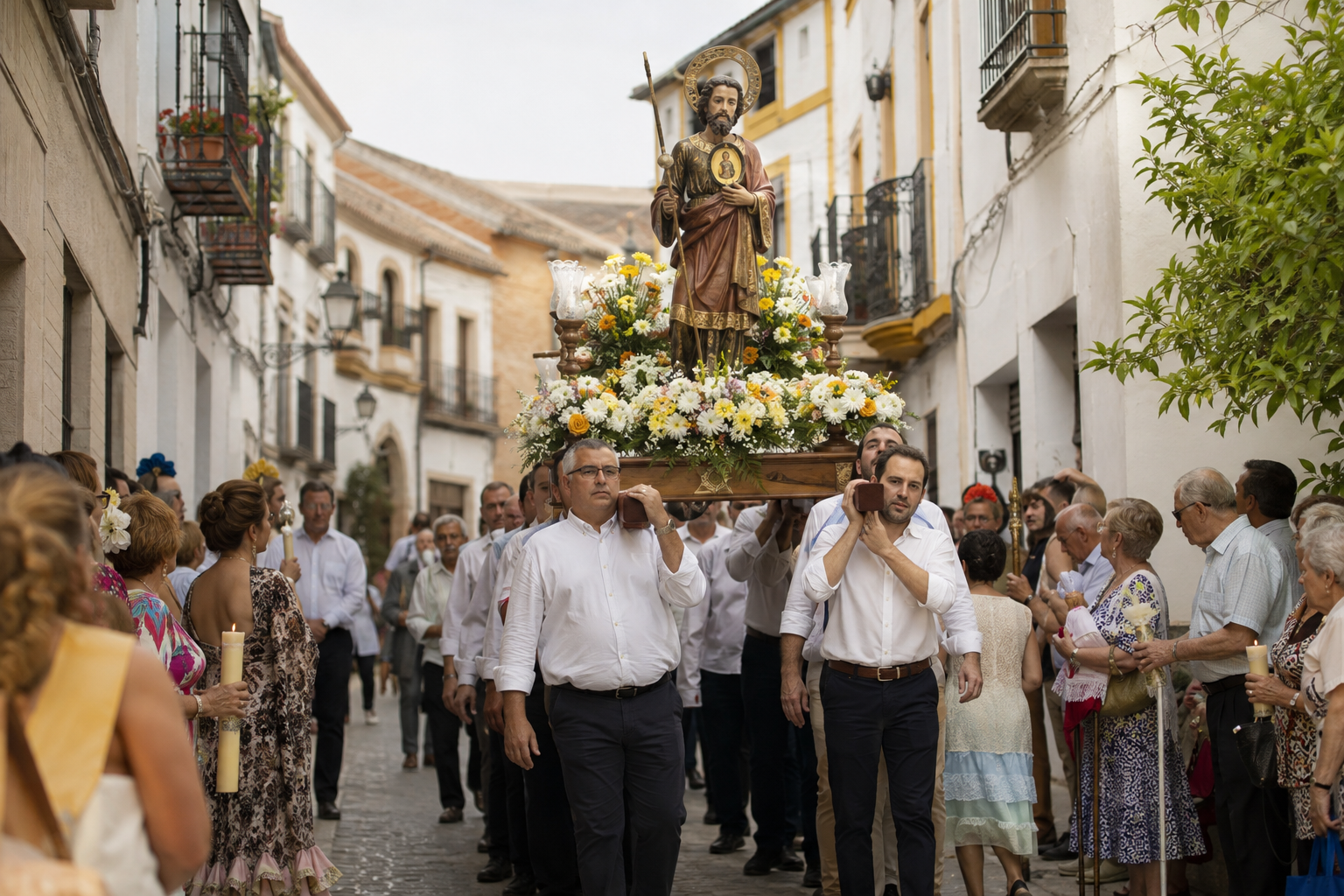
Amid all the revelry, there is a solemn heart to every fiesta, the religious procession of the patron saint, and here a visitor must shift their behavior to match the moment. Reverence is the rule.
The procession is sacred. At the heart of the fiesta, the image of the patron saint is carried through the streets in a devotional procession, however much partying surrounds it, so this is a moment for quiet respect rather than boisterousness. Watching solemnly, standing aside to let it pass, and lowering your voice are the marks of a considerate guest.
Read the room and follow the locals. The simplest rule for any part of a fiesta is to take your cue from the people around you, stay low-key when they are solemn, and join the fun freely when they are dancing. This one habit of watching and matching the local mood will carry a visitor gracefully through every part of the celebration.
Rule Five: Follow the Charanga Through the Streets
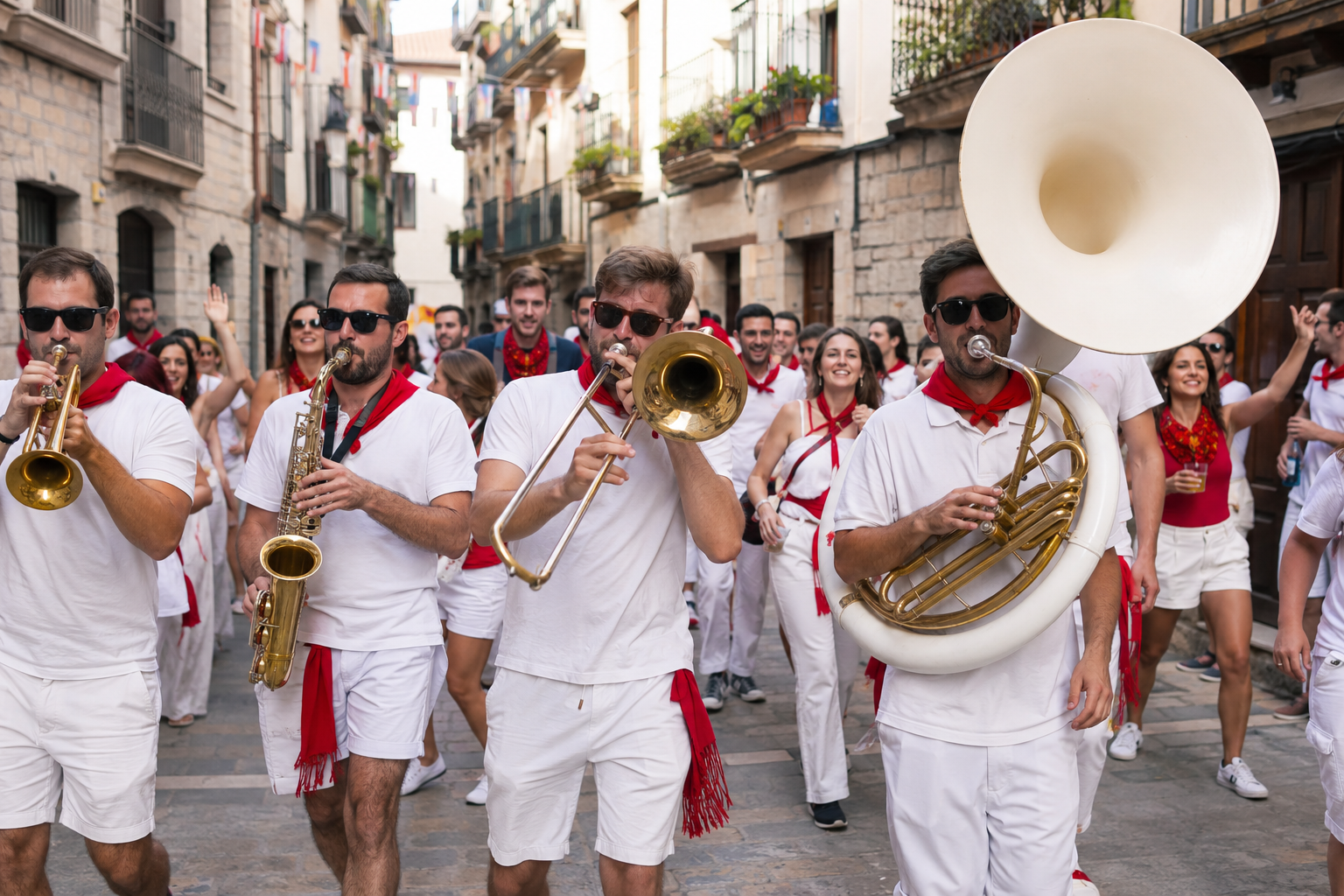
One of the great pleasures of a village fiesta is roving rather than fixed, a wandering brass band that pulls the whole town along behind it. Falling in with it is pure joy.
The band comes to you. A defining feature of the fiesta is the charanga or pasacalles, a lively brass band that parades past the houses, filling the whole village with music and gathering a dancing, singing crowd as it goes. There is no stage to find, because the party moves through the town, and the music arrives at your doorstep.
Fall in and follow along. The right response when the band comes marching down your street is to step out and join the procession of revelers behind it rather than watch from a window, letting the music carry you along. This roving, infectious celebration is the fiesta at its most spontaneous and communal, and joining the crowd behind the band is one of its simplest joys. There is something wonderfully democratic about a party that comes to find you rather than one you must buy a ticket to attend. The music sweeps through the streets, gathering people from their doorsteps and balconies, and by the time it reaches the square the whole village is moving as one. To be caught up in that tide is to feel, however briefly, entirely part of the place.
Rule Six: Eat at the Communal Table
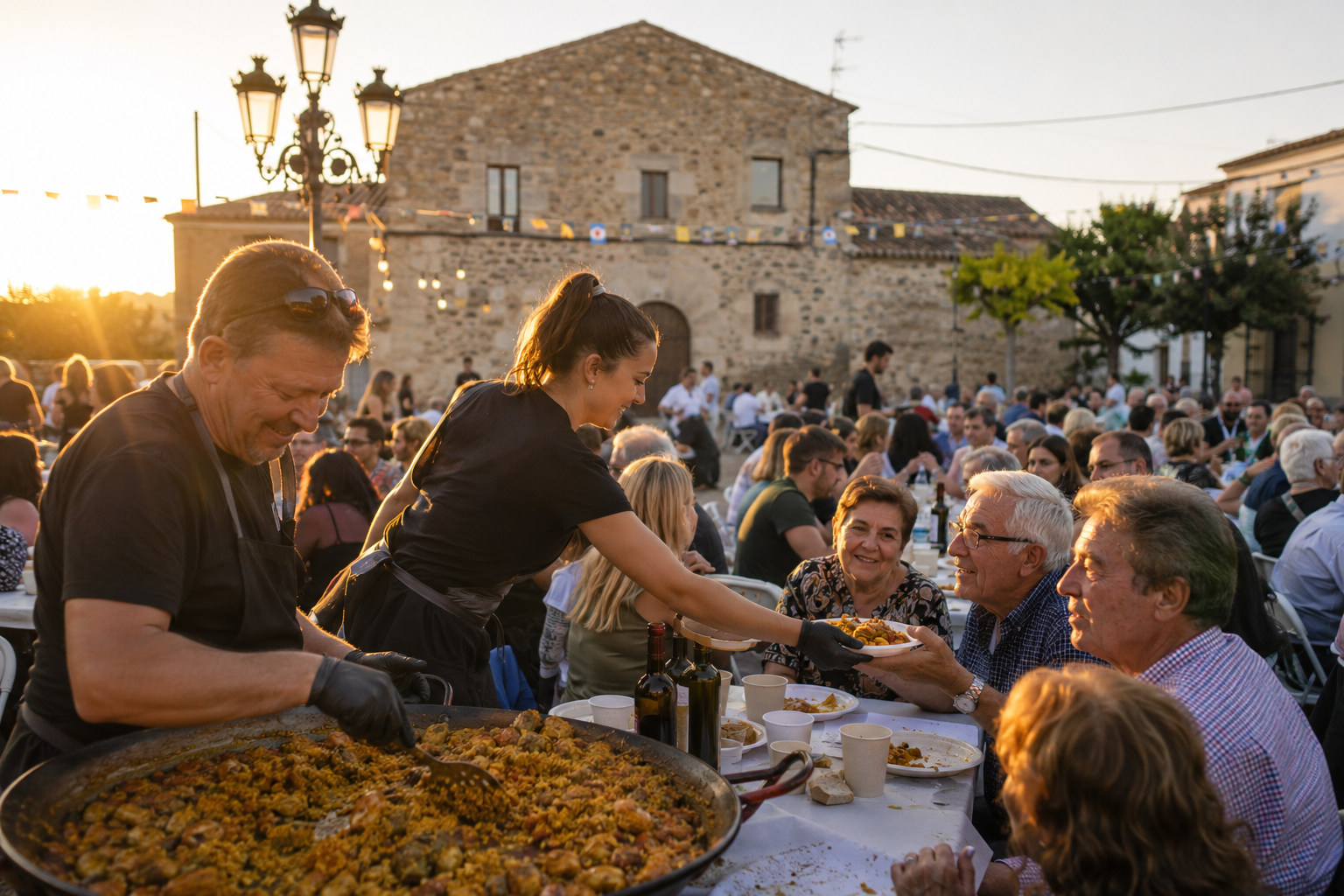
Food sits at the center of every Spanish fiesta, and much of it is cooked and shared in a way that turns the whole village into one great kitchen and dining room. Sharing the meal is sharing the community.
The feasts are communal. Many village fiestas feature great shared meals, from a long dinner for the whole town in the square to giant pans of open-air paella, so eating becomes a collective act rather than a private one. These communal feasts are among the warmest expressions of the fiesta spirit, and a visitor is very often welcome to join them.
Contribute where you can. If you find yourself invited to share in a communal meal, the gracious response is to accept warmly and, where appropriate, to offer to contribute something, whether a bottle of wine, a hand with the cooking, or simply your good company. Reciprocating the hospitality in some small way, even just with heartfelt thanks and willing help, deepens the welcome and honors the generosity behind it. In many villages these meals are cooked by volunteers and paid for by the community or the peñas, an act of collective generosity that a thoughtful guest recognizes and appreciates. You need not have brought anything to be fed, but a genuine offer to help clear a table or carry a tray speaks volumes and turns a guest into a participant.
Rule Seven: Find the Spirit of the Peñas
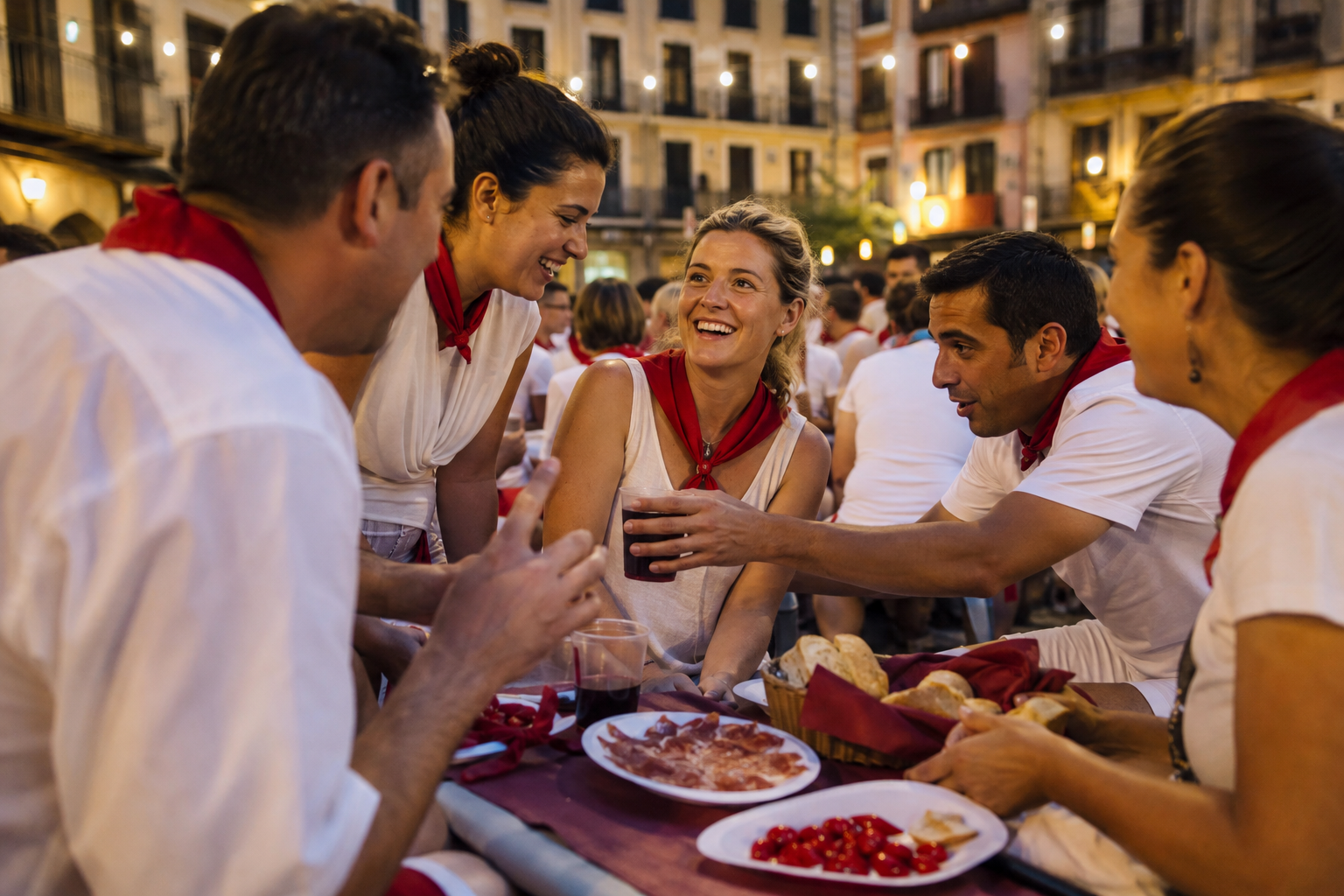
Much of the energy of a Spanish fiesta comes from its peñas, the social clubs and friend-groups that form its beating, colorful heart. Understanding them unlocks the party.
The peñas drive the party. Peñas are groups of friends or neighbors, often in matching shirts or neckerchiefs, who band together to organize, fund and above all animate the fiesta, taking to the streets in high spirits and keeping the celebration alive through the small hours. They are the engine of the fun, and their energy is what carries a fiesta through days and nights of revelry.
Their colors mark the celebration. Spotting the matching outfits and neckerchiefs of the various peñas is part of the visual joy of a fiesta, and their friendly rivalry and boundless enthusiasm set the tone for everyone. A visitor folded into a peña, even for a night, has found the very center of the celebration and will be swept along in the best possible way. Peñas are famously generous with newcomers, quick to hand a stranger a neckerchief, a drink, and a place in their number for the duration of the fiesta. If you are lucky enough to fall in with one, the safest course is simply to say yes to whatever they suggest and let their boundless energy carry you where it will. You may not sleep much, but you will see the fiesta as the locals see it.
Rule Eight: Dance the Verbena Until Dawn
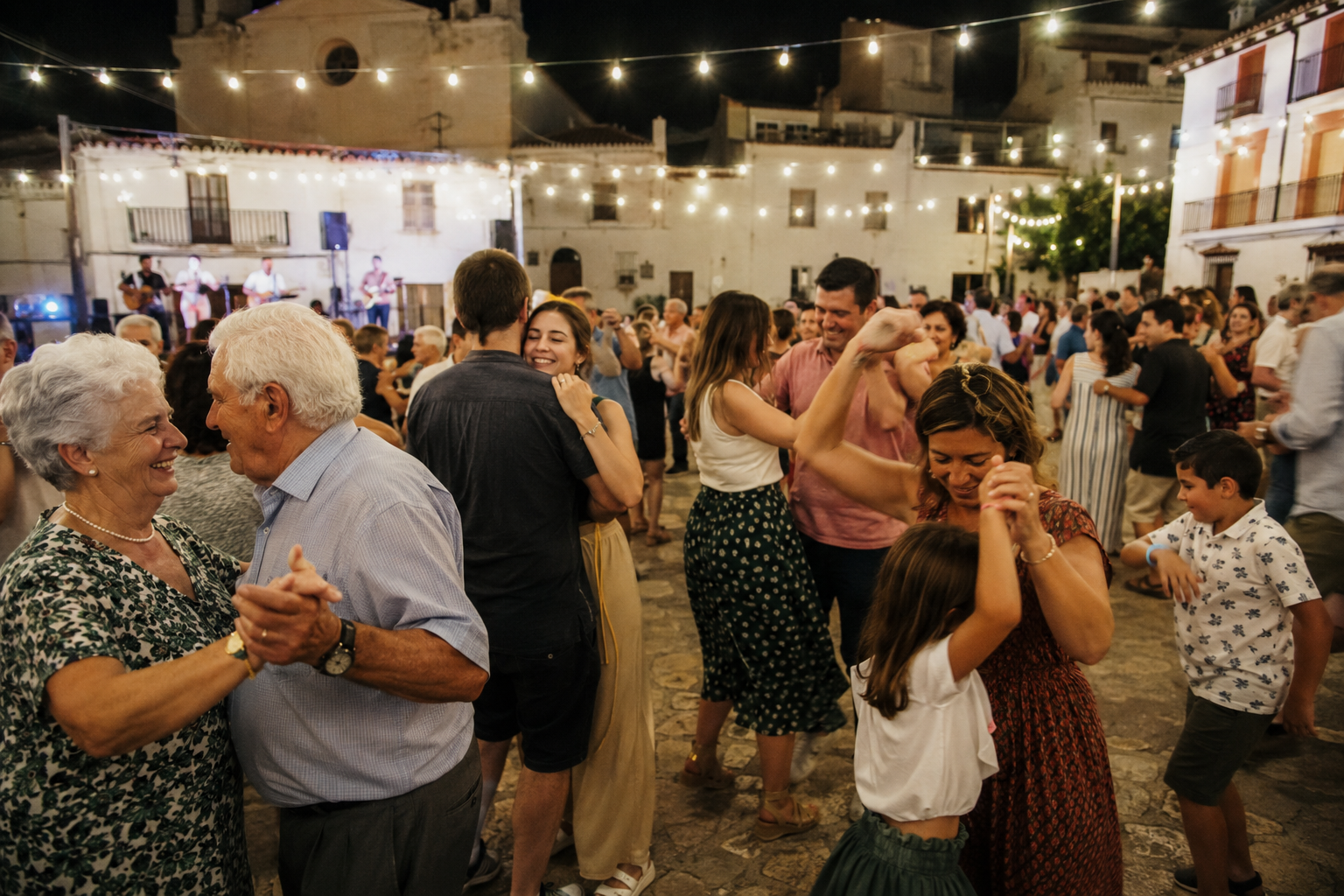
As night falls, the fiesta transforms into its most famous form, the verbena, the great open-air night dance that gives the celebration its late, glorious energy. This is where the party truly lives.
The verbena runs very late. When darkness comes, the village square or a set of streets becomes a vast open-air dance floor, where a live band or a DJ plays and the whole community dances together into the small hours and often right through to dawn, so this is a celebration built for the whole night. The Spanish think nothing of dancing until six in the morning, and the verbena is where they do it.
Everyone dances together. The magic of the verbena is that it is utterly multi-generational, with grandparents, parents, teenagers, and small children all dancing in the same square to the same music, so no one is too old or too young to take part. A visitor should simply join the throng and dance, because at the verbena there are no wallflowers and no outsiders, only one celebrating crowd.
Rule Nine: Mind the Small Courtesies
For all its open warmth, a fiesta still rewards a handful of small considerations from its visitors, easy courtesies that keep the welcome warm. A little thoughtfulness goes far.
Ask before you photograph. However tempting the spectacle, it is polite to ask before photographing people or solemn ceremonies up close, since a fiesta is a living tradition and not a show staged for tourists. A visitor who treats the celebration with this small respect, rather than pointing a camera at everything, is a far more welcome guest.
Pace yourself for the long haul. Because a fiesta stretches across days and its nights run until dawn, the wise visitor does not burn out on the first evening, but paces themselves to last the distance. Matching the impressive stamina of the locals is part of the fun, and it is a mark of respect for a celebration that they will sustain for days on end.
The Last Word on the Village Fiesta
Beneath all these rules lies a single, generous truth, that the Spanish village fiesta is one of the most welcoming celebrations on earth, built on the simple idea that joy is best shared as widely as possible. To take part is to be briefly folded into the life of a community that opens its arms to strangers.
So if you are ever lucky enough to find a village in fiesta, do not hesitate at the edge of the square wondering whether you belong. Step in, follow the band, share the food, respect the procession, and dance the verbena until the sun comes up. Do that, and you will discover that the warmest invitation in Spain is the one nobody has to send, because at a village fiesta everyone truly is invited, including you. Few travel experiences leave a deeper mark than a night spent celebrating shoulder to shoulder with a village that took you in as one of its own, and it is an invitation waiting in a thousand small towns across the country every single summer.

About the Author: Ruben, co-founder of Gamintraveler.com since 2014, is a seasoned traveler from Spain who has explored over 100 countries since 2009. Known for his extensive travel adventures across South America, Europe, the US, Australia, New Zealand, Asia, and Africa, Ruben combines his passion for adventurous yet sustainable living with his love for cycling, highlighted by his remarkable 5-month bicycle journey from Spain to Norway. He currently resides in Spain, where he continues sharing his travel experiences with his partner, Rachel, and their son, Han.