
The French bakery is one of the small daily glories of life in France, but for a newcomer it can also be a minefield of unspoken rules that reveal a tourist the moment they walk in. The bread is the easy part. The real challenge is the ritual around it, the way the queue works when there is no visible queue, the greeting that must come before anything else, the exact change that keeps the line moving, and the peculiar art of getting a warm baguette home without ever touching it. Get these wrong and you will draw the famous cool glance of a busy Parisian baker. Get them right and you will glide through the transaction like a local, bread under your arm, without a single awkward moment. This is a guide not to what to order, but to the mechanics of the boulangerie itself, the queue, the counter, the payment, and the walk home, so that the whole small daily performance runs as smoothly for you as it does for the neighbors who have done it their whole lives.
None of it is complicated once you understand the logic, which is really just efficiency dressed up as ritual, but almost none of it is obvious to an outsider. The queue in particular baffles visitors, who look in vain for an orderly line and find instead a loose cluster of people who all somehow know exactly whose turn is next. So here, rule by rule, is how to navigate a French boulangerie from the moment you step through the door to the moment you tear off the end of your baguette on the way home.
Rule One: Learn the Invisible Queue
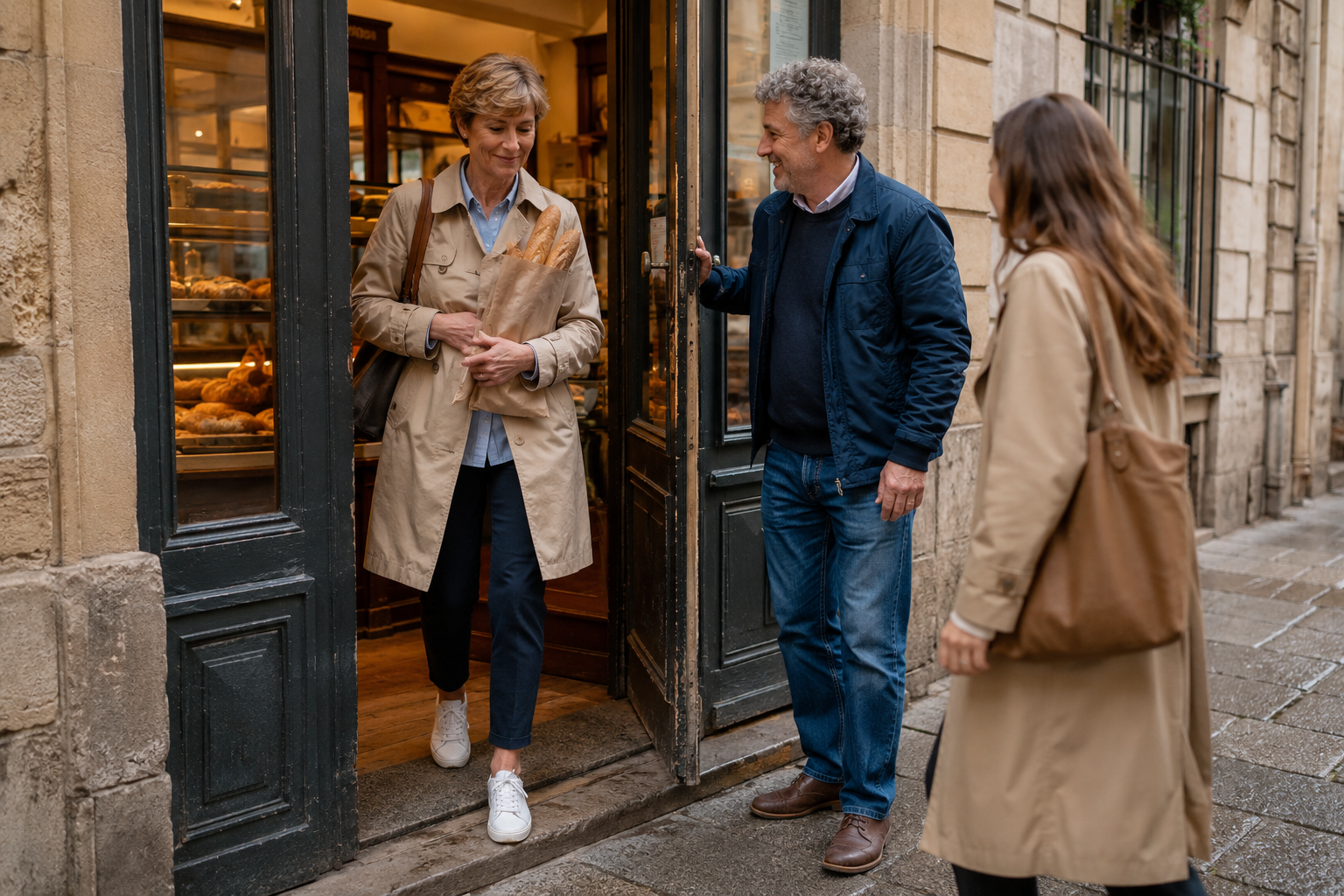
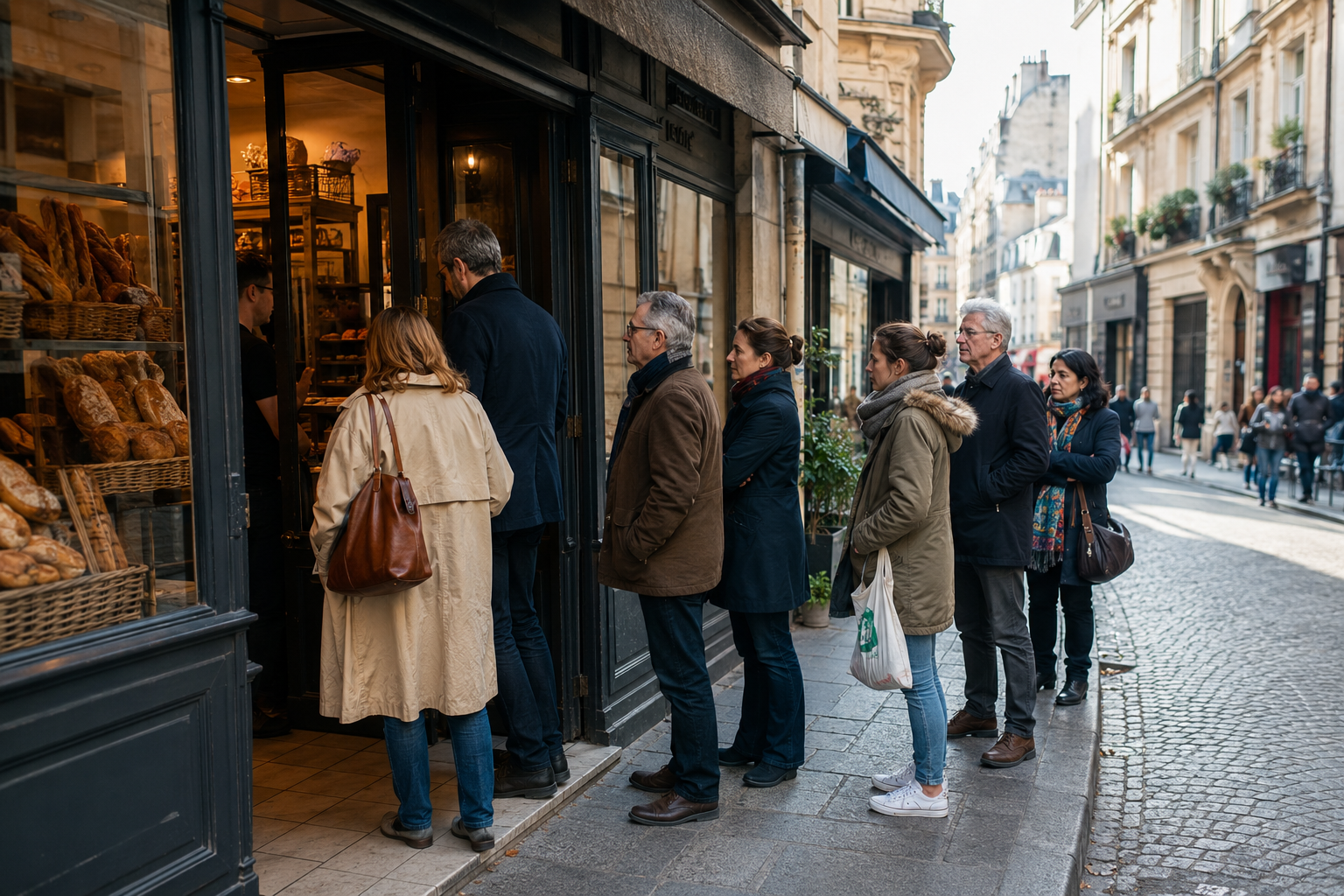
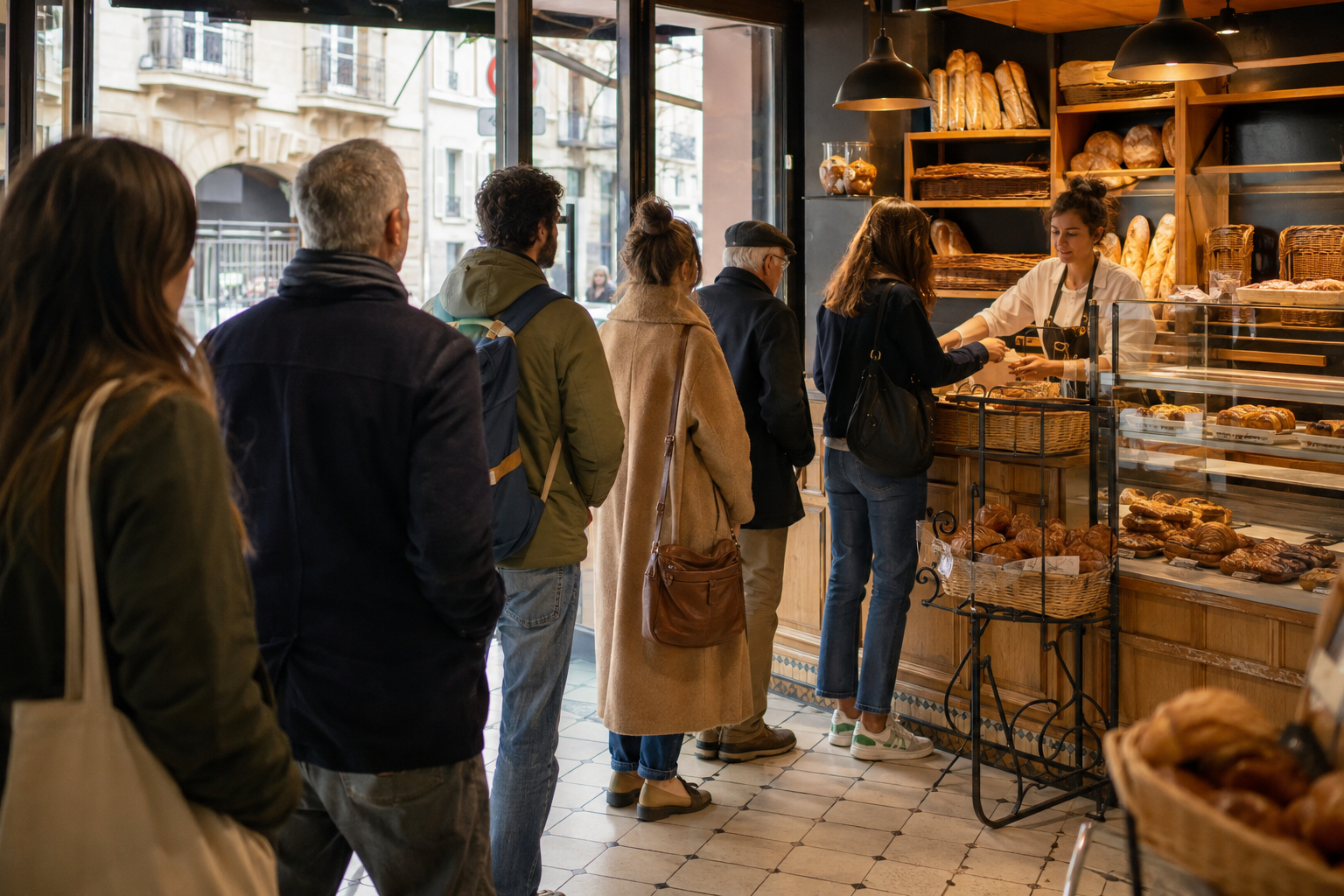
The first shock for many visitors is that French bakeries often have no visible, orderly line at all, yet everyone inside knows precisely whose turn is next. Understanding this hidden system is the foundation of everything.
The order is tracked in people’s heads. Rather than forming a neat single file, customers gather loosely near the counter while keeping mental track of who arrived first, so the queue exists entirely in everyone’s memory rather than on the floor. To an outsider it looks like chaos, but to the regulars it is a perfectly clear and fair system that simply happens to be invisible.
Watch who came in before you. The practical rule is to note who was already in the shop when you entered, since they all go ahead of you regardless of where they happen to be standing. Paying attention to arrival order from the moment you walk in is the single most important thing you can do to avoid an embarrassing mistake at the counter.
Rule Two: Know Your Turn, and Ask If Unsure
Because the queue is invisible, there comes a moment when the baker needs to know whose turn it is, and a guest who freezes at that instant marks themselves instantly. Being ready for it is essential.
The baker may ask who is next. In many bakeries the person behind the counter may simply ask aloud whose turn it is, with the French phrase meaning who is next, and at that point you are expected to know whether the answer is you. Hesitating or looking blank at this moment is the classic tourist stumble, so it pays to have been tracking your place all along.
When in doubt, ask politely. If you are truly not sure whether it is your turn, the correct move is not to push forward but to gesture and check with whoever arrived before you, using the simple French for is it your turn, which instantly marks you as someone who respects the system. Cutting in front of someone, even by accident, is a serious breach, so a quick polite check is always better than a wrong guess. The French take turn-taking seriously precisely because the queue is invisible, and the whole fragile system depends on everyone playing fair from memory. A visitor who is seen to check rather than barge is instantly forgiven any small uncertainty, while one who pushes ahead, even innocently, can turn a warm room cold in a heartbeat.
Rule Three: Greet Before You Say Anything Else
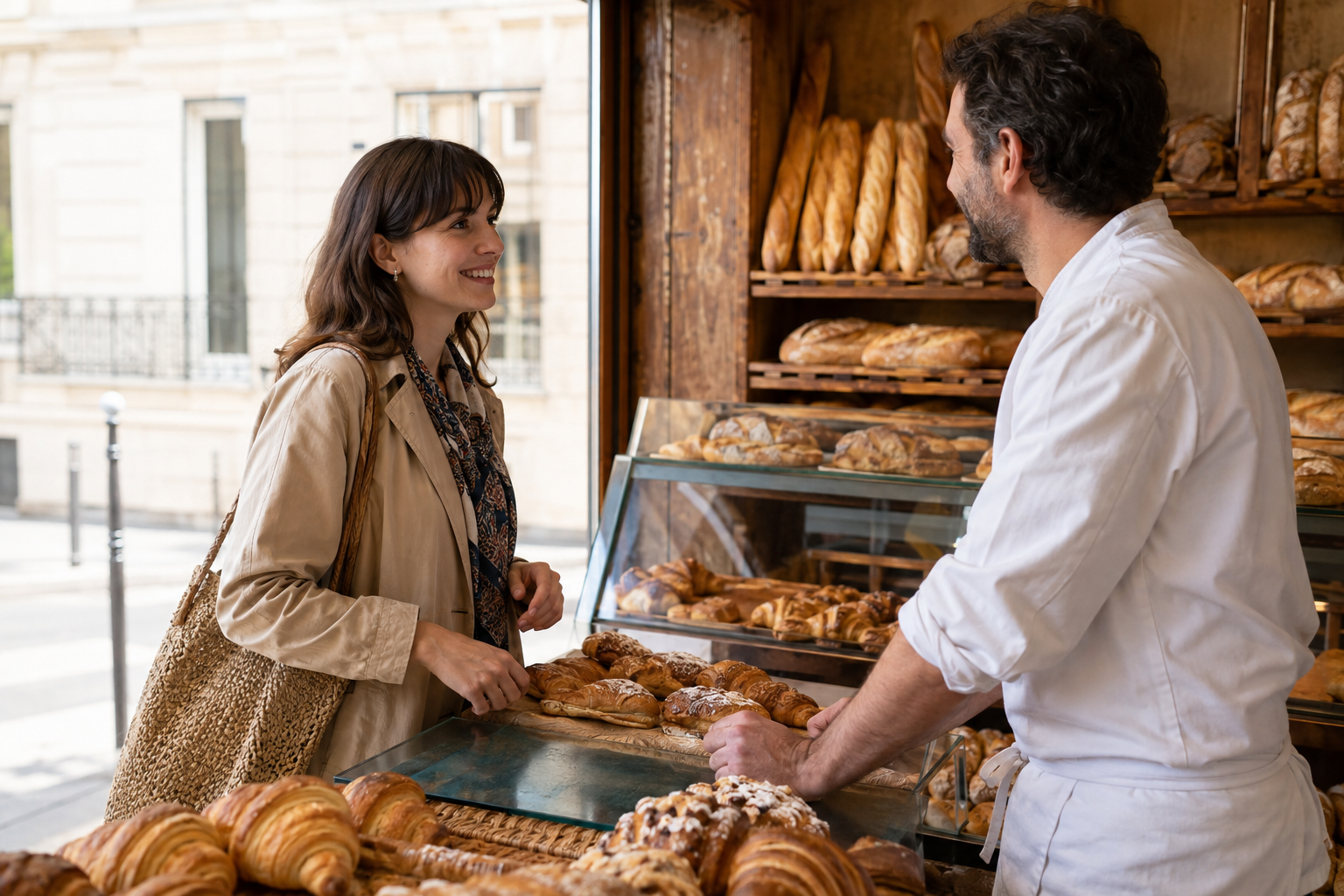
This is the most important rule in all of French shopping, and skipping it undoes everything else you might do correctly. The greeting is not optional and not decoration.
Bonjour comes first, always. Before you order, before you point, before you do anything at all, you must greet the counter with a clear bonjour madame or bonjour monsieur, because in France this exchange is a social handshake rather than mere politeness. Skip it and launch straight into your order, and the baker’s warmth will visibly cool, since to the French an ungreeted order reads as genuinely rude.
Return the greeting in kind. When the employee greets you, as they will, respond in the same form, matching their bonjour and their madame or monsieur, and note that madame is the safer choice for any adult woman, since the younger form can offend. This small exchange, treating the server as an equal rather than a servant, is the beating heart of French service culture and sets the tone for everything that follows. Many visitors who move to France report that their whole relationship with the local baker changes the day they start greeting properly, warming from cool efficiency to genuine friendliness. It really is that powerful a little word, and it costs nothing to offer.
Rule Four: Decide Before You Reach the Front
Once your turn arrives, the French expect you to know exactly what you want, because hesitation at the counter holds up the whole invisible queue behind you. Preparation is a courtesy.
Choose while you wait. Study the shelves and decide while you wait, not when you finally face the baker, so that when your moment comes you can order without pausing. A guest who reaches the front and only then begins to deliberate is committing a small but real discourtesy to everyone waiting.
Expect quick follow-up questions. Be ready, too, for the baker to fire back a quick question, such as whether you want your baguette well cooked or a particular style, and to answer without fuss. Knowing roughly what you want in advance means these quick exchanges feel smooth rather than flustering, and the whole transaction keeps its brisk, satisfying rhythm.
Rule Five: Order in One Clean Line
The French have a preferred rhythm for the actual order, a single smooth phrase that bundles the greeting, the request, and the politeness together. Matching it marks you instantly as someone who knows the dance.
Bundle it into one phrase. The ideal order flows straight out of the greeting, as in hello, I would like a baguette, please, delivered without hesitation, so the greeting and the request arrive as one smooth motion. This economical little formula is exactly how locals do it, and it feels natural after only a try or two.
Keep it brief and polite. There is no need for small talk or explanation, since the baker will not make small talk, but simply take your order and fetch it, so brevity is not coldness here but the expected form. A guest who understands that the exchange is meant to be short and courteous, not chatty, fits right into the flow. This brevity often reads as coldness to visitors from cultures where a little friendly chatter oils every transaction, but in France it is a form of respect for everyone’s time. The warmth is in the greeting and the closing, not in the middle, and once you accept that the efficiency itself is the good manners, the whole encounter clicks into place.
Rule Six: Have Small Change Ready
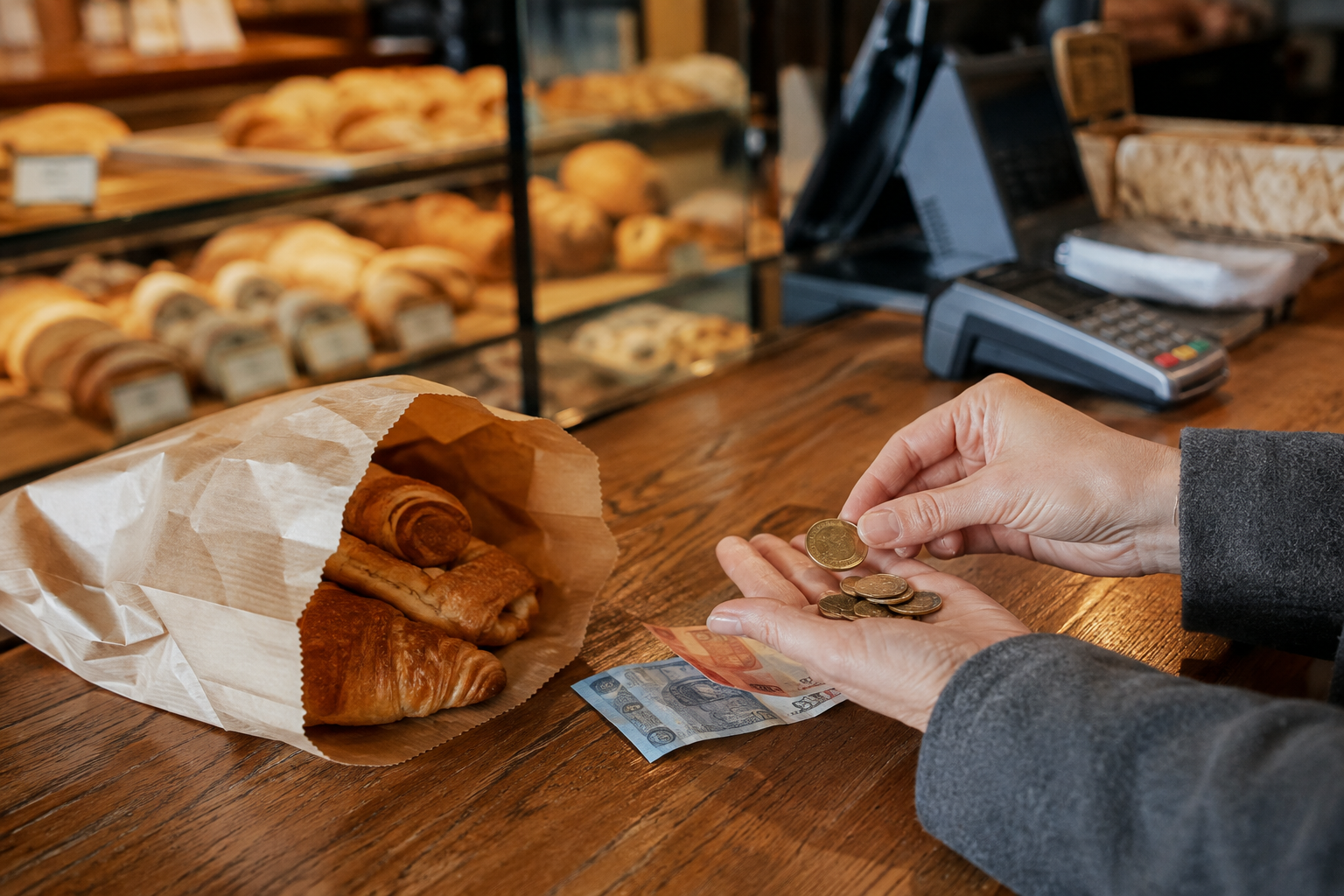
Payment is another moment where a prepared guest keeps the line moving and an unprepared one holds it up, and the French notice the difference. A little forethought pays off.
Exact change speeds everything. While cards are now accepted almost everywhere, having small coins and near-exact change ready is genuinely appreciated, because it keeps the busy morning line flowing quickly rather than stalling it while notes are broken. Fishing slowly through a wallet of unfamiliar coins at the front of a long queue is a classic way to feel the impatience of the room.
Take your receipt. One modern detail worth knowing is that French bakeries are now required to issue a receipt, so accept the little ticket you are handed rather than waving it away. It is a small courtesy that acknowledges the rule the shop is bound by, and it costs you nothing to take it. The same instinct that makes a good customer keep their change ready makes them accept the receipt without a fuss, since both are simply about not adding friction to a busy morning. Little frictionless habits like these are exactly what separate the practiced local from the flustered visitor at the counter.
Rule Seven: Never, Ever Touch the Bread
Here is the rule that catches out the most tourists, and breaking it draws an immediate and unmistakable frown. The bread is not yours to handle until it is paid for.
Point, do not grab. No matter how openly the loaves and pastries are displayed, and even if they sit within easy reach, never pick up or handle the bread yourself, but point and let the server use the tongs or a square of paper. Reaching out to grab your own baguette is one of the surest ways to mark yourself as an outsider who does not know the rules.
Do not ask for it sliced. A related trap is requesting that your baguette be cut into slices, sliced bread is the province of the supermarket, not the artisan bakery, and asking for it can earn a puzzled or disapproving look. The artisan baguette is meant to be bought whole and torn by hand later, and treating it otherwise misreads the whole spirit of the place. The reason for the no-touching rule is partly hygiene and partly reverence, since to a French baker the bread is a craft product to be handled with care, not pawed at like fruit in a bin. Watching the practiced way a server sweeps up a loaf with a twist of paper, you begin to see the whole exchange as a small piece of choreography, one it is a pleasure to learn your part in.
Rule Eight: Let Them Wrap It, and Bring a Bag
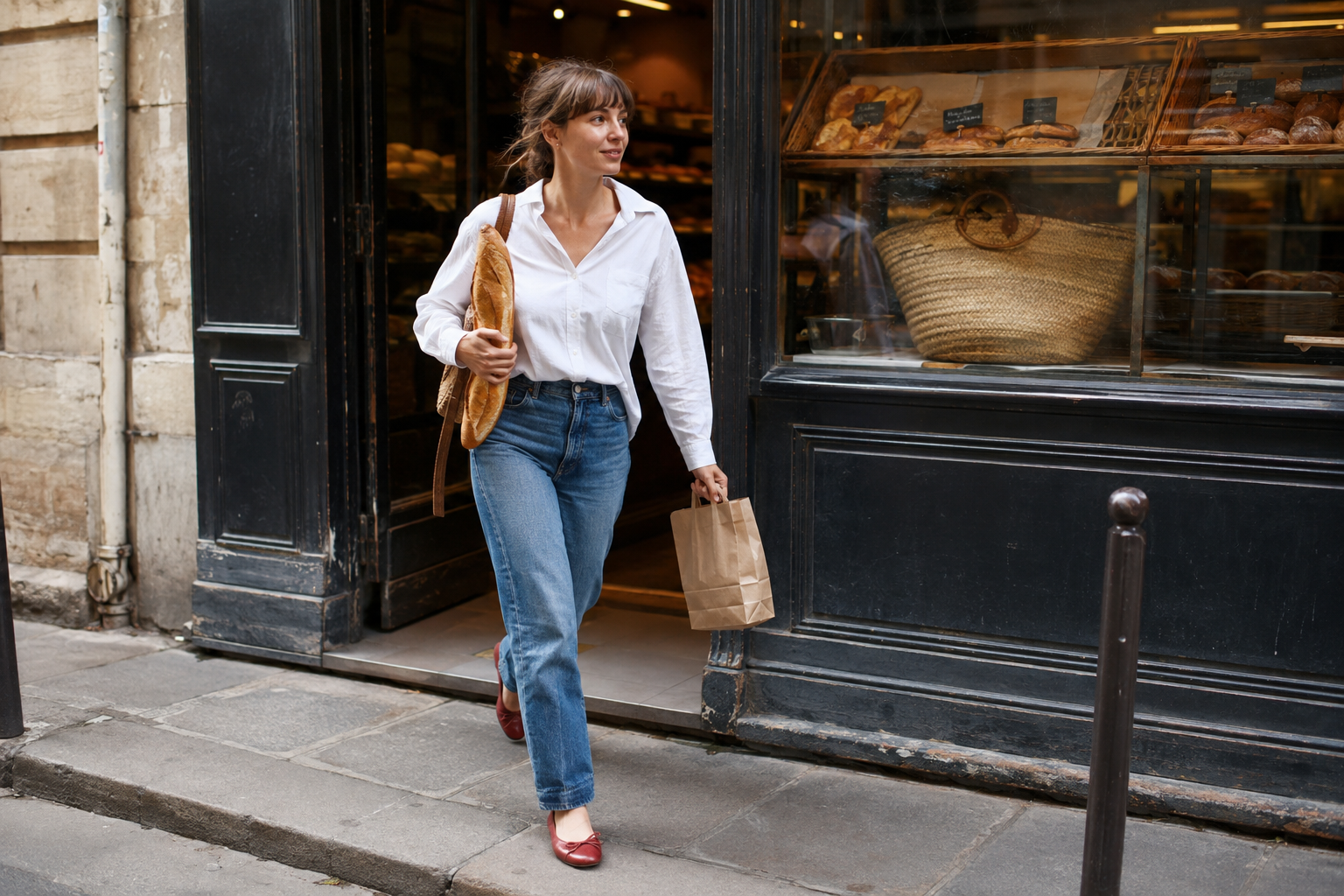
Getting your purchases from the counter to your home is its own small ritual, and the French have neat conventions for it that a prepared shopper works with rather than against. A little readiness helps.
Accept the paper and the twist. The baker hands you the baguette in a long thin bag or with a paper twist around its middle, giving you a clean place to hold it without touching the bread itself, so let them wrap it their way. Pastries, meanwhile, arrive tucked into little sacks or neat paper cones folded on the spot, all designed so your hands never meet the food.
Bring your own bag for a big order. Because a baguette in a paper twist and several small pastry packages are awkward to juggle at once, anyone buying more than a single item is wise to carry their own tote or basket. Regulars almost always arrive with a bag ready, and doing the same spares you the fumbling dance of trying to carry too many little parcels in two hands. A simple cloth tote or a basket is perfect, and it doubles as a quietly local touch, since the French have long shopped this way and the disposable plastic bag is increasingly frowned upon. Arriving prepared, greeting warmly, and leaving with your bread neatly stowed is the whole picture of a shopper who knows what they are doing.
Rule Nine: Tear Off the End on the Way Home
The final rule is less an obligation than a beloved tradition, and following it is the surest sign that a visitor has truly fallen into the rhythm of French daily life. It is also the most delicious of the lot.
Break the crust, do not slice it. A baguette is meant to be torn by hand rather than cut with a knife, and the French tear off pieces quite happily, especially when eating casually, so there is no need to hunt for a bread knife the moment you get home. The crackle of a hand-torn crust is part of the pleasure, and slicing a fresh baguette can even feel faintly wrong to a French eye.
Eat the end on the walk home. The single most cherished little custom is to tear off the crunchy heel of a warm baguette and eat it on the walk home, a small daily indulgence that generations of French people have quietly enjoyed. Though the French rarely eat while walking, this one warm scrap of fresh bread is the happy exception, and giving in to it is the moment a visitor stops being a tourist and starts, just a little, to belong.
The Last Word on the Boulangerie
Put together, these rules are really just a single idea expressed many ways, that the boulangerie runs on a quiet, efficient courtesy that everyone is expected to know and respect. Learn them and the whole encounter becomes a small daily pleasure rather than a source of anxiety.
Remember above all to close as you began, with a warm merci and au revoir as you leave, completing the ritual that started with your bonjour. Do that, track the invisible queue, greet before you order, keep your change ready, keep your hands off the bread, and tear off that warm end on the way home, and you will move through a French bakery with the easy grace of someone who belongs there. The baguette will taste all the better for it. There is a real satisfaction in mastering a small foreign ritual until it feels like second nature, and few are as pleasant to learn as this one. Do it a handful of times and the anxiety falls away entirely, leaving only the simple daily joy of warm bread bought well in a country that takes its bread seriously.

About the Author: Ruben, co-founder of Gamintraveler.com since 2014, is a seasoned traveler from Spain who has explored over 100 countries since 2009. Known for his extensive travel adventures across South America, Europe, the US, Australia, New Zealand, Asia, and Africa, Ruben combines his passion for adventurous yet sustainable living with his love for cycling, highlighted by his remarkable 5-month bicycle journey from Spain to Norway. He currently resides in Spain, where he continues sharing his travel experiences with his partner, Rachel, and their son, Han.