
There is a small, dark, almost black bean grown in the Basque town of Tolosa that the people of that region hold in a reverence bordering on the religious, and once you have tasted it slow-cooked into a deep, glossy stew, you understand exactly why. The Basques do not merely eat these beans, they venerate them. The town holds a festival in their honor, a brotherhood devoted to them cooks great vats to share in the street, and the traditional meats and vegetables alongside are known, only half in jest, as the sacramentos, the sacraments.
This is a dish that asks for almost nothing but patience and good ingredients, yet rewards that patience with one of the most comforting bowls in all of Spanish cooking. I make it on cold days when I want the kitchen to smell of slow, smoky comfort for hours on end, and every time it reminds me that the humblest ingredients, treated with respect, can become something close to sacred. This is how I cook alubias de Tolosa, black pearls and all, so that you too can bring a little of that same Basque devotion to your own table.
What I love most about this dish is that it is the opposite of clever. There are no tricks at all, no last-minute flourishes, only a good bean, a few honest meats, and the simple willingness to leave the pot alone for a long, slow afternoon while it works its quiet magic. The Basques understand that this restraint is itself the art, and that a great pot of beans is built on time and product rather than technique. So let me tell you about the bean, the reverence, the sacraments, and the patient method that turns them all into something worth gathering around.
It is a dish I have come to love especially in the cold months, when nothing satisfies quite like a deep pot of beans that has been quietly simmering half the day. There is a particular comfort in a meal that asks you only to be patient, and that repays that patience so generously, and few dishes I know embody it better than this one.
The Black Pearls of Tolosa
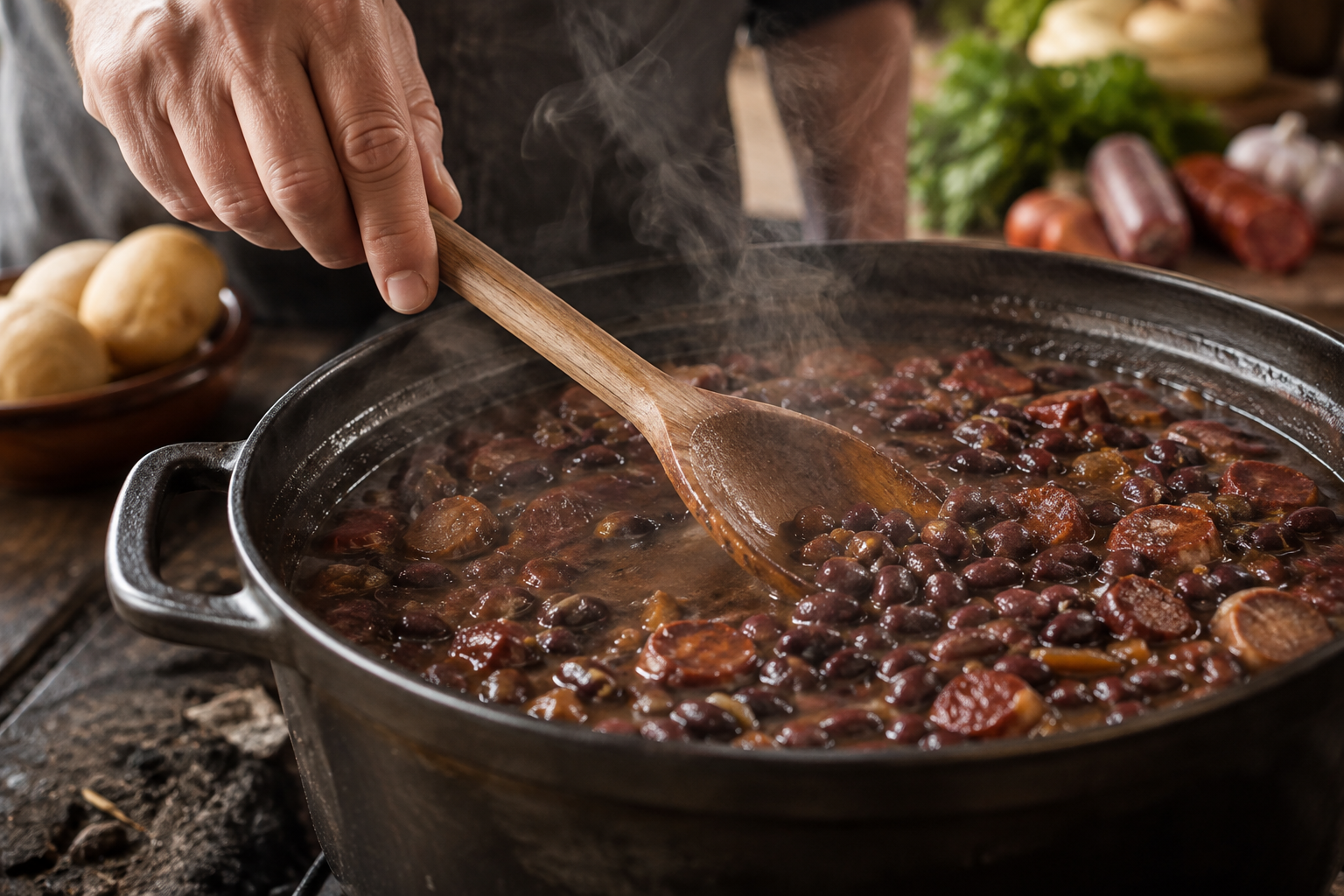
Everything begins with the bean itself, which is no ordinary legume but a prized and protected variety with a history and a following of its own. Understanding what makes it special is the first step.
They are small and almost black. The alubia de Tolosa is a small, dark bean, purple-black with a single tiny white dot, grown in and around the Basque town of Tolosa and celebrated there for centuries. Known affectionately as black pearls, these beans have been sold in Tolosa’s weekly market since the twelfth century, and the genuine article is a world apart from an ordinary supermarket bean. They grow through the summer and are harvested in autumn, which is precisely when the dish comes into its own, a warming pot of them arriving just as the weather turns cold. That seasonality is part of their charm, tying the dish to a particular time of year in the way the best traditional foods always are.
The real thing is worth seeking out. While you can make a decent version with ordinary dried red or black beans, the true Tolosa bean has a thin skin and a deep, creamy, almost sweet flavor, so it is worth hunting down from a Spanish supplier if you can. The difference these beans make is real enough that the Basques would never dream of using anything else for the proper dish. The genuine beans are grown to a protected standard by a dedicated association of local producers, and a true Tolosa bean carries a real cachet in Spain, commanding prices that would surprise anyone who thinks of beans as a cheap staple. That a simple legume can be prized like a fine wine tells you a great deal about how seriously this small corner of Spain takes its food.
Why the Basques Treat Them Like a Sacrament
The devotion the Basques feel for these beans is not a figure of speech but a genuine cultural passion, expressed in festivals, brotherhoods, and a near-religious care in the cooking. This reverence is part of the dish.
The beans have their own festival. Each autumn the town of Tolosa celebrates its beloved bean with a dedicated festival, and a local brotherhood devoted to the alubia cooks enormous quantities to share, treating the humble legume with the ceremony reserved for something far grander. To see a whole town honor a bean this way is to understand something deep about the Basque love of food. It is a devotion passed carefully from one generation to the next, and it lends the simplest bowl of these beans a weight of meaning that food rarely carries elsewhere.
Cooking is a serious joy here. The Basques are famous for treating cooking and eating as one of life’s highest pleasures, gathering in their gastronomic societies to cook dishes like this with enormous care, so a pot of alubias is always lovingly tended rather than thrown together. This deeply felt respect for good, simple ingredients is the spirit in which the dish should always be made. There is a lesson in it for any cook, I think, in the idea that reverence and patience can matter as much as skill.
The Basques have built one of Europe’s great food cultures not on fancy technique but on a near-devotional care for the quality of what they cook and the time they give it. Making alubias de Tolosa in that spirit, unhurried and attentive, is half of what makes the dish so good. It is the sort of cooking that rewards being present rather than rushing off, and there is real pleasure in giving an afternoon over to it. The reward is a pot that tastes of care as much as of beans and pork, and that is exactly the point the Basques have understood for generations.
The Sacramentos
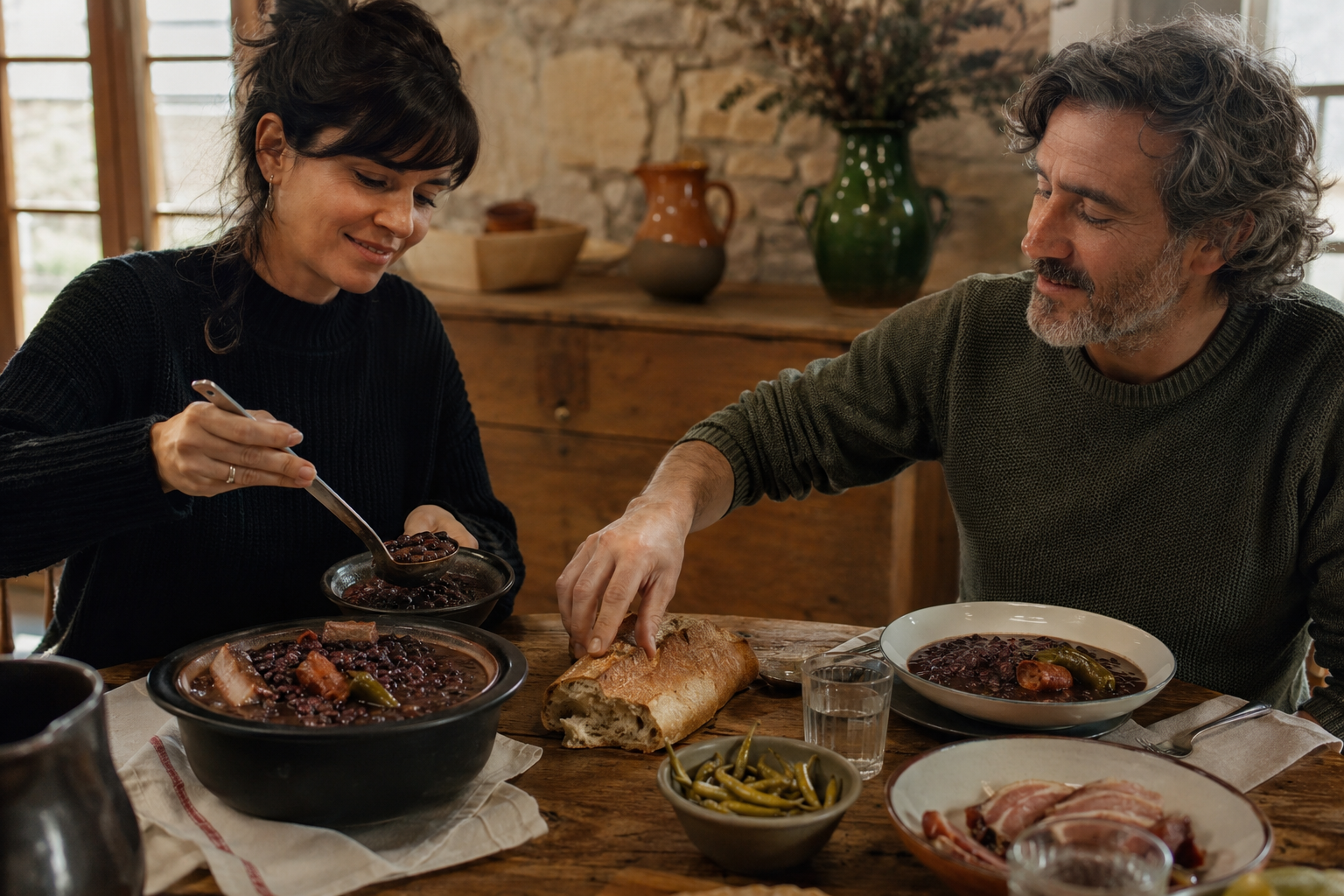
The name given to the traditional accompaniments tells you everything about how seriously this dish is taken, because they are called nothing less than the sacraments. They are what turn a pot of beans into a feast.
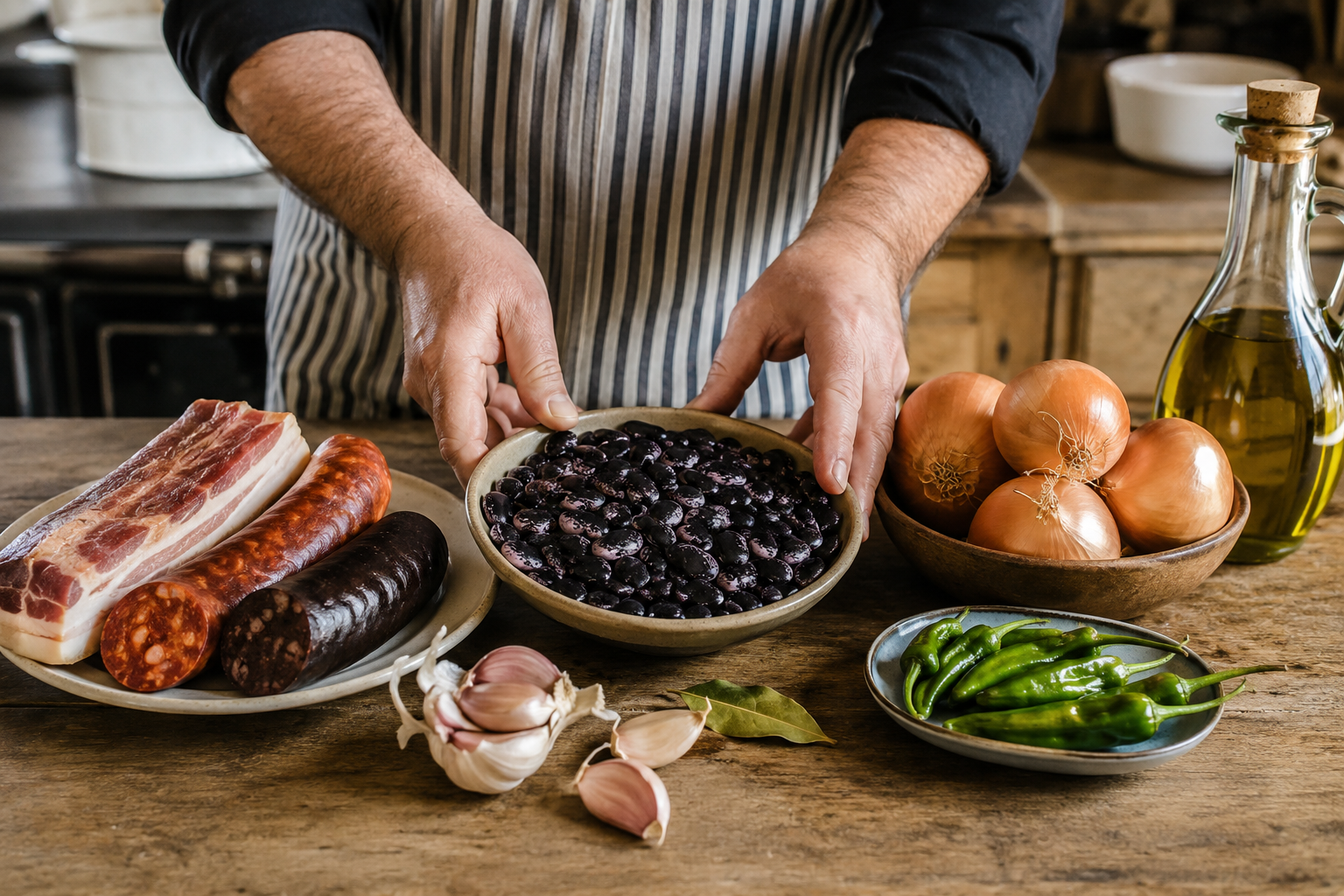
The meats are the sacraments. Alubias de Tolosa are traditionally served with a set of rich pork accompaniments known as the sacramentos, typically morcilla, chorizo, a piece of cured pork belly, and often some pork ribs, all of which lend the beans their deep, smoky richness. Cooked with or alongside the beans, these meats melt their fat into the pot, then are served as their own glorious course.
They make it a celebration. Calling these meats the sacraments is a wonderful, half-serious nod to how essential and revered they are, transforming a simple pot of beans into a generous, festive meal for a gathering. A plate of the sliced sacramentos beside a bowl of the beans is the heart of the whole experience, and no proper alubias de Tolosa is complete without them. The morcilla in particular, dark and soft and faintly sweet with onion, is for many the finest part of the plate, and it is worth seeking out a good one. Each of the meats gives something different to the pot, the chorizo its paprika warmth, the pork belly its silky richness, the ribs their deep, meaty savor, and together they turn a bowl of beans into a proper feast.
Patience Is the Only Real Technique
If there is a secret to this dish, it is not a technique at all but a virtue, the patience to cook the beans low and slow for hours and simply let them become what they are meant to be. Time does almost all the work.
Low and slow is the whole method. The beans cook gently over low heat for several hours, with the meats and aromatics in the pot, so that the fat renders slowly into the broth and cloaks every bean in a glossy, savory richness. There is no sautéing to fuss over and no clever step to master, only a long, quiet simmer while the kitchen fills with the smell of comfort.
The vegetables thicken it naturally. A lovely traditional touch is to cook an onion, a carrot, and a green pepper whole in the pot, then blend them and stir them back in, so they thicken the broth with no need for flour. This gentle, natural thickening gives the stew its wonderful body while keeping it entirely honest, and it is the closest thing the recipe has to a trick. Some cooks simply crush a few of the softened beans against the side of the pot instead, which achieves much the same effect, but I like the way the blended vegetables add a subtle sweetness along with the body. Either way, the aim is a broth that is thick and glossy rather than thin and watery, one that clings to every bean and to the bread you will inevitably use to mop the bowl.
Never Boil, and the Cold-Water Trick
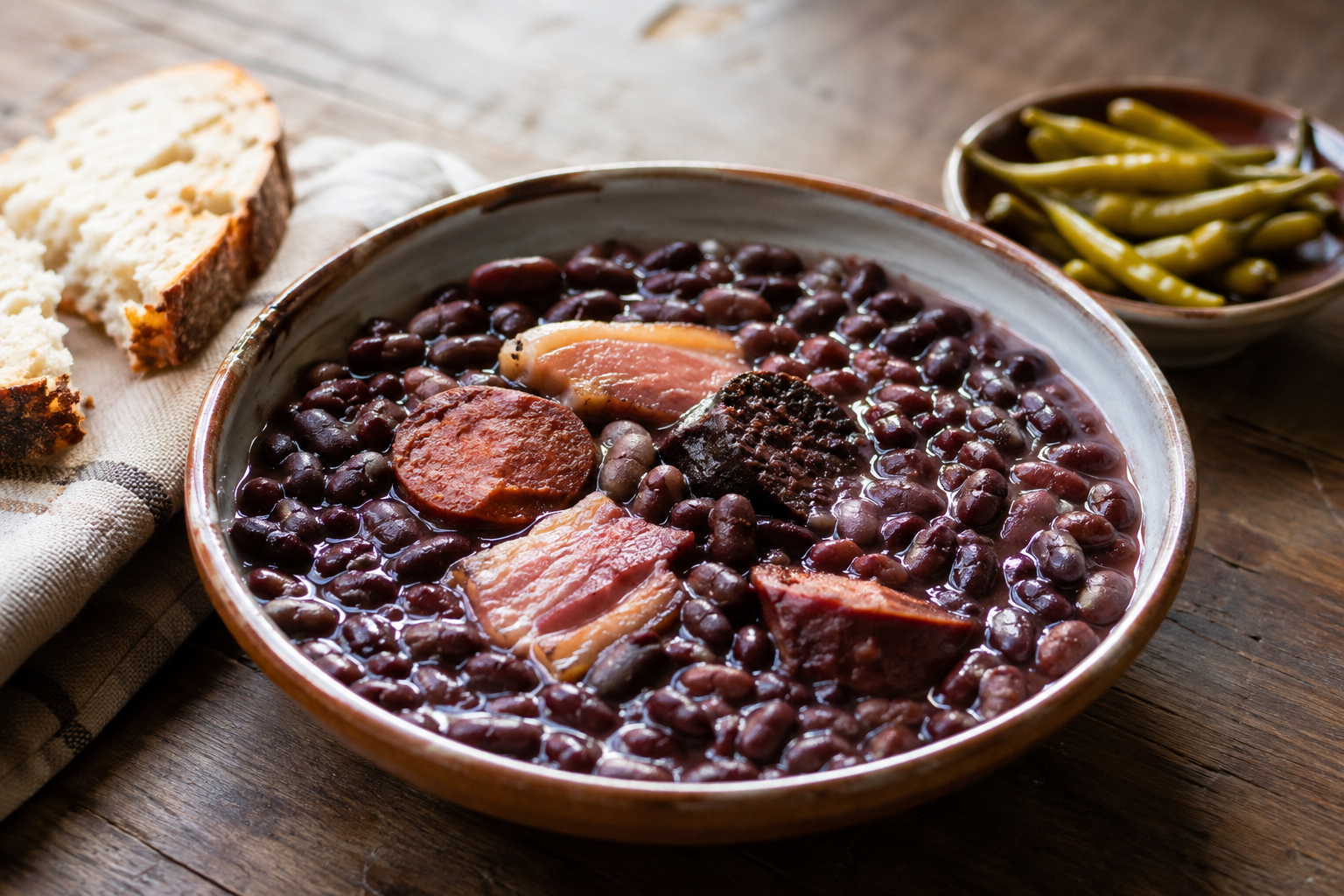
Within the long, slow cooking there are a couple of small pieces of wisdom that Basque cooks swear by, and following them is the difference between beans that stay whole and creamy and beans that fall apart. They are worth knowing.
A gentle simmer keeps them whole. The single most important rule is never let the beans boil hard, since a rolling boil breaks their skins to mush, so the pot should be kept at the barest, gentlest simmer throughout. This restraint is what leaves each bean tender and intact, swimming whole in its thick, dark broth rather than dissolving into paste.
Scare them with cold water. A charming old Basque trick is to add a splash of cold water to the bubbling pot, a technique the Spanish call scaring the beans, which is said to help them cook evenly and stay tender. Adding water this way as needed also keeps the beans always just covered, and it is one of those small rituals that makes cooking the dish feel like a proper craft. Whether or not the cold-water trick truly changes the chemistry, there is no doubt that keeping the beans gently covered and never letting them catch or dry out is essential. I find the periodic checking and topping up to be a quietly meditative part of the afternoon, a reason to stay near the kitchen and let the slow rhythm of the cooking set the pace of the day.
The Cabbage and the Guindillas
Two more elements complete the traditional serving of alubias de Tolosa, a simple green vegetable and a sharp pickled pepper, each providing a perfect foil to the rich, dark beans. They are not optional extras but part of the whole.
Braised cabbage brings balance. A side of cabbage, boiled tender and turned in a pan with garlic and olive oil, is the classic accompaniment, its mild green freshness cutting beautifully through the richness of the beans and the meats. This simple berza, as the Basques call it, is a humble but essential part of the plate. Cooking it separately rather than in the bean pot keeps its color and freshness bright, so it arrives at the table as a clear green counterpoint rather than something stewed into the mass. A little extra garlic in the pan does no harm at all, and a final drizzle of good olive oil over the cabbage just before serving lifts it beautifully.
Guindillas provide the spark. On the side always come guindillas, slender pickled green Basque peppers whose bright, sharp, mildly spicy bite is the perfect counterpoint to the deep, smoky stew. a forkful of beans with a nip of tangy guindilla is one of the great small pleasures, and no Basque table would serve the beans without them. If you cannot find guindillas, another mild pickled pepper will stand in, though the genuine Basque ones, often sold as piparras, are worth the search for their particular gentle heat and vinegar snap. Set out generously in a little dish, they invite everyone to punctuate their beans with sharp, bright bites throughout the meal.
Better the Next Day, and How to Serve It
A final piece of wisdom and a note on serving complete the picture, because how and when you bring alubias de Tolosa to the table is part of the tradition too. A little foresight rewards you richly.
They improve overnight. Like most great bean stews, alubias de Tolosa are even better a day later, once the flavors have deepened overnight, so cooking them ahead is not a compromise but an improvement. Making the pot a day early also lets you lift off any excess fat if you wish, and it takes all the pressure off the day you plan to eat. This makes the dish a wonderful one for entertaining, since the hard part, such as it is, happens the day before, leaving only the gentle reheating and the assembling of the plate for the day itself. A pot of beans that has rested overnight, then been warmed slowly and served with fresh cabbage and cold guindillas, is very often better than one eaten the moment it is done.
Serve it as a small ceremony. The traditional way to present the dish is to bring the beans in their own bowl, the sliced sacramentos on a platter, the cabbage alongside, so everyone can build their own perfect plate. Served this way, with good bread and a glass of Basque wine, a humble pot of black beans becomes what the Basques have always known it to be, a sacrament. A crisp, slightly fizzy txakoli from the Basque coast is the classic pairing, though any bright, everyday red will do the beans justice. However you serve it, the dish carries within it the whole spirit of Basque cooking, its patience, its generosity, and its deep respect for a humble ingredient, and to make it well is to share in a little of that devotion yourself.
Alubias de Tolosa Recipe
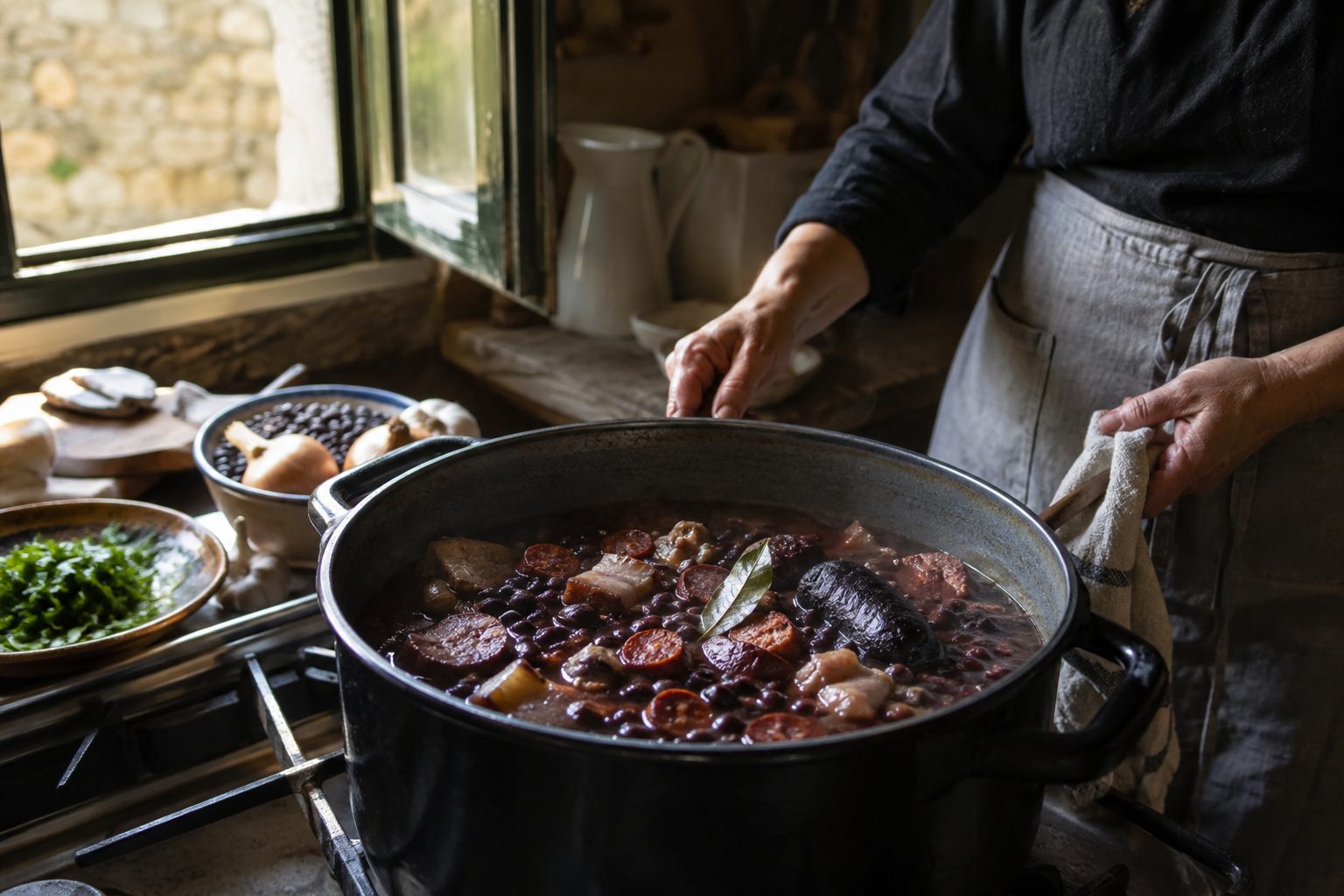
Serves 4 to 6
Ingredients:
- 400 grams dried alubias de Tolosa (or dried black or red kidney beans)
- 1 onion, peeled and left whole or halved
- 1 carrot, peeled
- 1 green pepper, halved and seeded
- 3 cloves garlic
- 1 soft cooking chorizo
- 1 morcilla (Spanish blood sausage)
- 200 grams cured pork belly (tocino) or pancetta, in a piece
- 2 pork ribs (optional)
- 1 teaspoon sweet paprika
- 2 bay leaves
- Extra virgin olive oil
- Salt to taste
For the cabbage:
- Half a savoy cabbage, finely sliced
- 2 cloves garlic, finely chopped
- 3 tablespoons olive oil
To serve:
- Pickled guindilla peppers
- Crusty bread
Method:
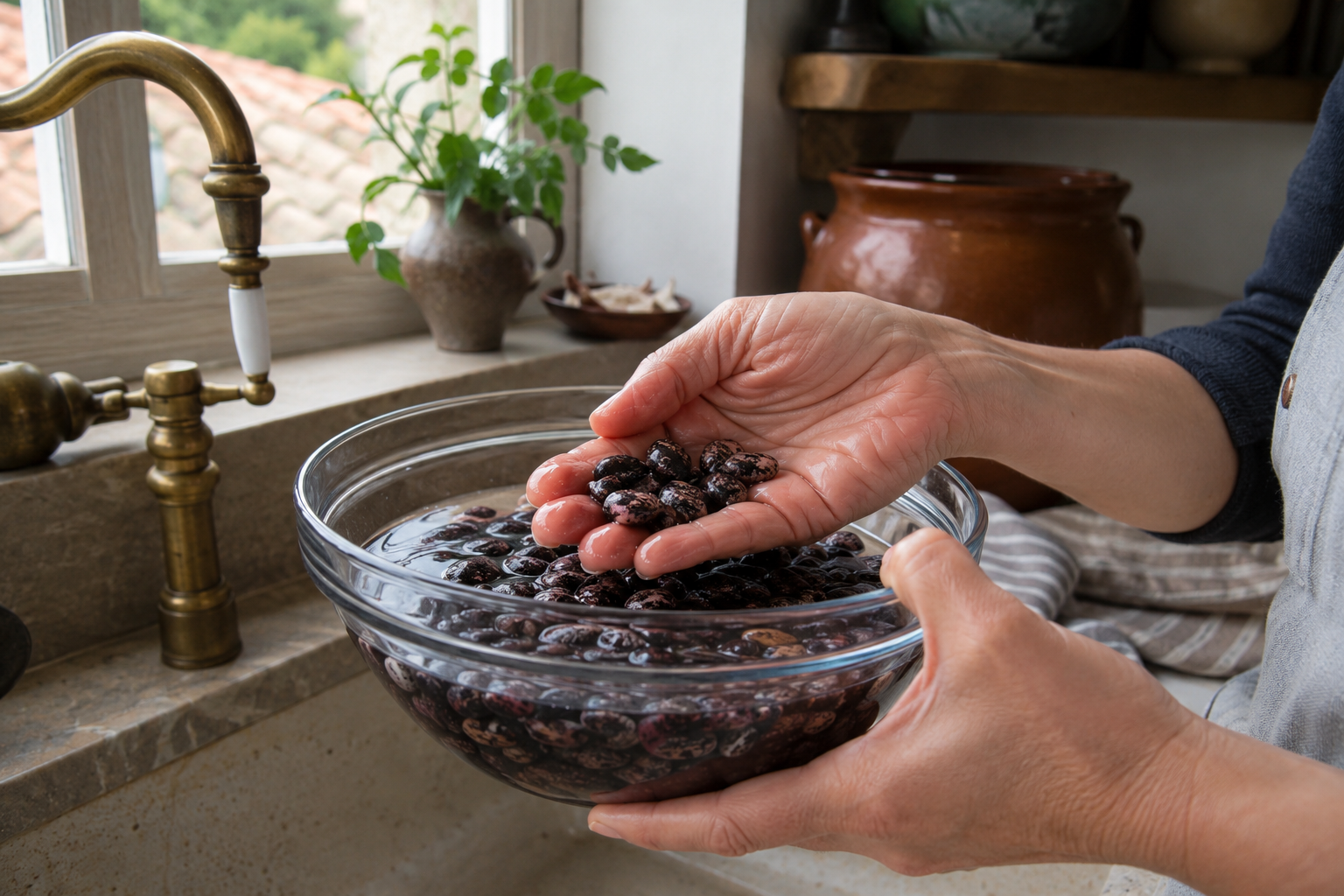
- Rinse the beans well. The true alubias de Tolosa are traditionally cooked without soaking, though if you are using ordinary dried beans a soak overnight will help them cook more evenly.
- Place the beans in a large, heavy pot. Add the whole onion, carrot, green pepper, and garlic, then tuck in the chorizo, morcilla, pork belly, and ribs if using.
- Sprinkle in the paprika and add the bay leaves and a good drizzle of olive oil. Pour in enough cold water to cover everything by a few centimetres.
- Bring slowly just to a simmer over medium heat, then skim off any foam that rises. Lower the heat until the pot is barely bubbling.
- Cook very gently, uncovered or partly covered, for 2 to 3 hours, until the beans are tender and creamy. Never let it boil hard. Add a splash of cold water now and then to keep the beans just covered and to help them cook evenly.
- Once the beans are tender, lift out the onion, carrot, and green pepper, blend them to a purée, and stir the purée back into the pot to thicken the broth. Season with salt only now, at the end.
- Lift out the meats, slice them, and keep them warm on a platter.
- For the cabbage, boil the sliced cabbage in salted water until tender, about 15 to 20 minutes, then drain and squeeze it dry. Heat the olive oil in a pan, gently fry the chopped garlic until golden, add the cabbage, and turn it through the garlic oil to warm.
- Serve the beans in a bowl, the sliced meats on a platter, and the cabbage alongside, with pickled guindillas on the side and plenty of bread.

About the Author: Ruben, co-founder of Gamintraveler.com since 2014, is a seasoned traveler from Spain who has explored over 100 countries since 2009. Known for his extensive travel adventures across South America, Europe, the US, Australia, New Zealand, Asia, and Africa, Ruben combines his passion for adventurous yet sustainable living with his love for cycling, highlighted by his remarkable 5-month bicycle journey from Spain to Norway. He currently resides in Spain, where he continues sharing his travel experiences with his partner, Rachel, and their son, Han.