
Here is a question that quietly separates people who love Italian food from people who truly understand it. When you make a pizza, which mozzarella do you reach for, the luxurious, tangy mozzarella di bufala, or the humbler fior di latte? Most people, if they know the difference at all, assume that the more expensive, more prestigious buffalo mozzarella must be the superior choice. It is richer, it is fancier, and it costs a good deal more, so surely it belongs right on top of your carefully made Margherita. And yet, in Naples, the birthplace of pizza itself, the answer is very often the opposite of what you would expect. Most Neapolitan pizzaioli reach not for the glamorous bufala, but for the modest, milky fior di latte. Understanding why is a small lesson in how great cooking really works, and it will change the way you top a pizza forever. Let me explain the real difference between these two beloved cheeses, why Naples chooses the one it does, and how to use each of them to its very best advantage.
What I love about this question is that the answer is so satisfyingly counterintuitive, a case where the humbler ingredient turns out to be the wiser choice for a specific job. It is not that one cheese is better than the other in some absolute sense, because both are wonderful, but that each has a place where it truly shines. Knowing which is which is the difference between a soggy, disappointing pizza and a perfect one. And the wonderful thing is that once you understand the principle, you never have to memorize a rule again, because it flows naturally from what the cheeses are. A wetter cheese for eating fresh, a drier one for baking, is not arbitrary trivia but simple common sense once you see the reason behind it. That is the kind of knowledge that makes cooking feel less like following instructions and more like understanding a craft. So let me walk you through what truly separates these two cheeses, and how to make each of them work for you rather than against you. By the end you will not only know which one to buy for your next pizza, but understand exactly why, which is the kind of knowledge that stays with you long after any single recipe is forgotten.
Two Cheeses, One Family Name
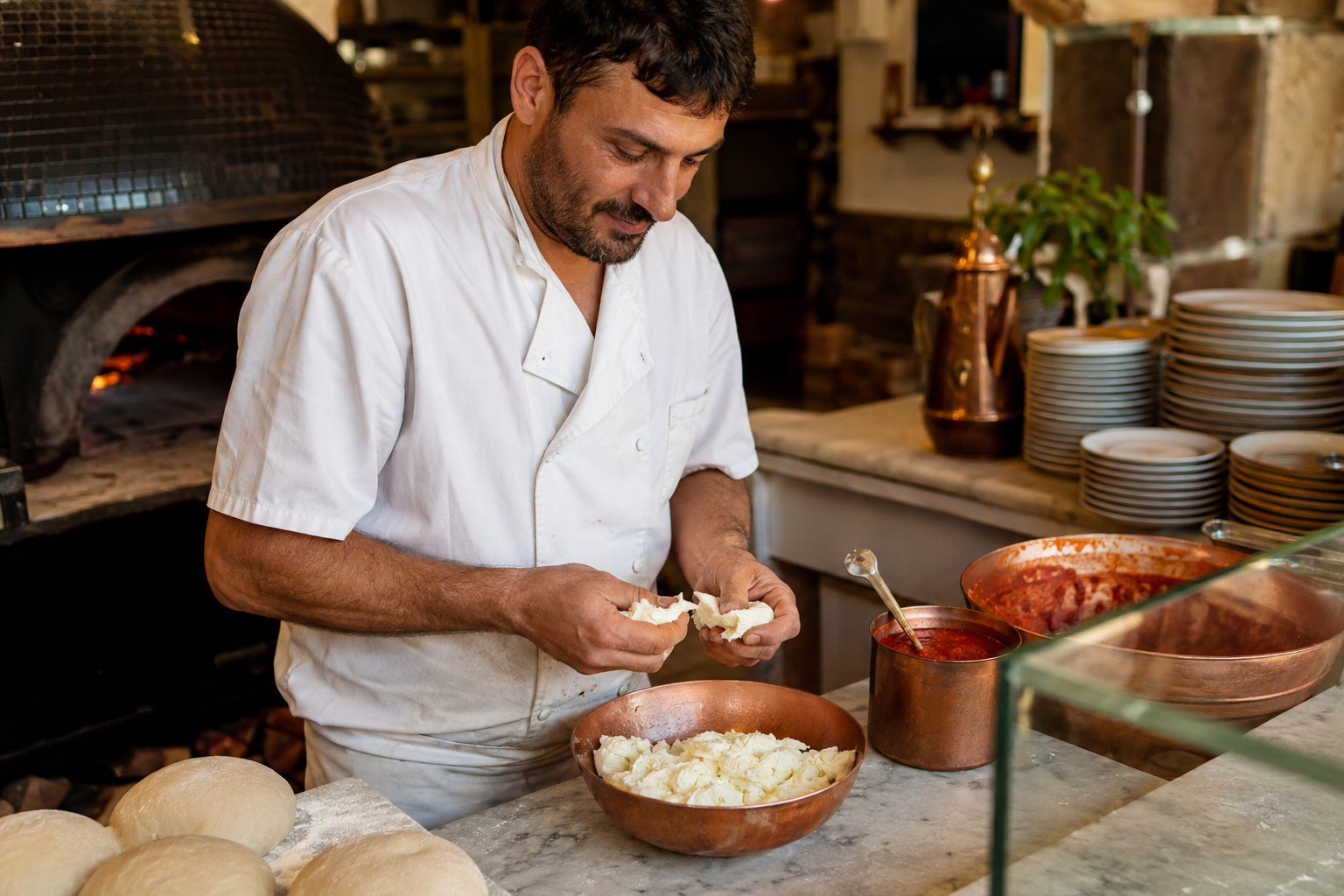
Before we can settle the pizza question, we need to be clear about what these two cheeses really are, because although both are called mozzarella, they come from entirely different animals. The distinction starts with the milk.
Bufala comes from buffalo. Mozzarella di bufala is made from the milk of water buffalo, raised around Naples in Campania, and it holds a protected designation that guarantees its origin and traditional method, so it is a specific and prized product. That buffalo milk is what gives the cheese its distinctive character, unlike anything cow’s milk can produce. Water buffalo are not the same creatures as the American bison people sometimes picture, but a domesticated animal long raised in the marshy plains of southern Italy, and their milk is a world apart from the cow’s milk most of us know. It is this milk, and the protected traditions around it, that make mozzarella di bufala campana a genuine specialty rather than just another cheese, one Neapolitans are rightly proud of.
Fior di latte comes from cows. Fior di latte, whose name means the flower of the milk, is fresh mozzarella made from cow’s milk, and it is what most people around the world picture when they think of mozzarella. It is more widely available and less expensive than bufala, the everyday fresh mozzarella of Italian kitchens. When you buy a soft ball of fresh mozzarella in water at most shops outside Italy, this is almost always what you are getting, even if the label simply says mozzarella. It is a humble, honest, useful cheese, the workhorse of the mozzarella family, and once you understand its qualities you will see exactly why it earns its place on so many pizzas. Far from being a lesser cheese, it is simply a different tool for a different job.
What Actually Separates Them
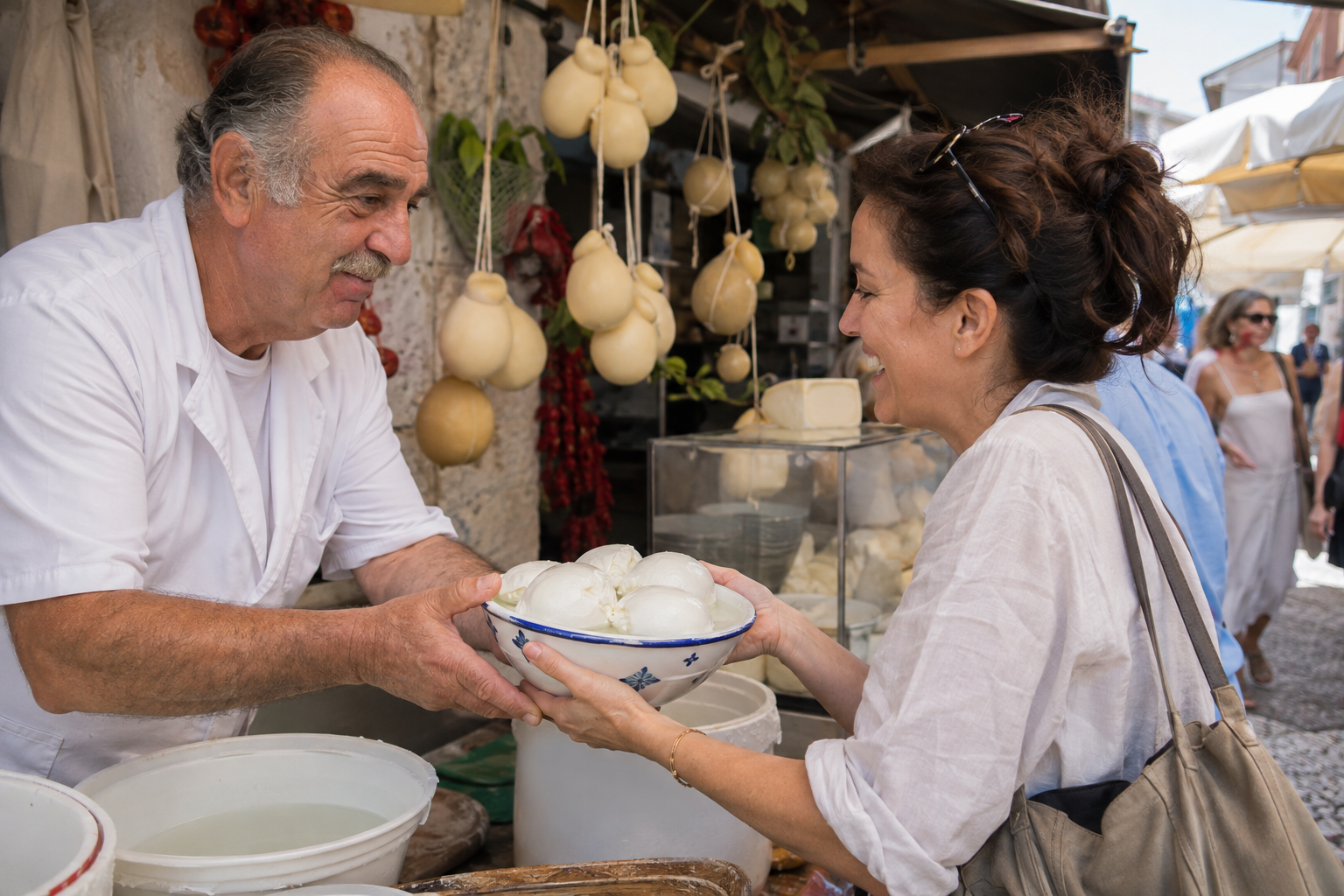
Once you know the milk is different, the differences in the cheeses themselves follow naturally, and they come down to a few key qualities that matter enormously in cooking. Fat and moisture tell the whole story.
Bufala is richer and wetter. Buffalo milk has roughly twice the fat of cow’s milk, giving bufala a rich, almost liquid center and a tangy, complex flavor, so it is a more intense and indulgent cheese. When you cut into a good ball of bufala, it often releases a little milky liquid, and its center can be so soft it is almost pourable. That is a joy on a plate, where the creaminess is the whole point, but it is a warning sign in the oven, where all that liquid has to go somewhere. But that richness comes hand in hand with a high moisture content, and that water is the crucial detail for a cook.
Fior di latte is milder and drier. Fior di latte, made from leaner cow’s milk, is gentler in flavor, firmer in texture, and significantly drier than bufala, so it is a cleaner, more restrained cheese. That lower moisture, which sounds like a disadvantage, is its secret weapon in the oven. Where bufala can flood a pizza, fior di latte melts into soft, golden pools and stays put, holding its shape and browning gently rather than dissolving into a wet mess. Its firmer body also means it can be sliced or torn cleanly and scattered evenly across a base, giving you control that the softer, wetter bufala simply does not allow. For cooking, and especially for baking, these are exactly the qualities you want.
The Question You Probably Get Wrong
Now we arrive at the heart of the matter, the assumption that trips up so many enthusiastic home cooks who reach instinctively for the premium cheese. The mistake is understandable but costly.
The premium cheese seems obvious. Because mozzarella di bufala is more expensive, more celebrated, and more luxurious, most people naturally assume it must be the best choice for their pizza, the ingredient that will make it truly special. It certainly feels like the generous, quality-conscious decision to splash out on the fancier cheese.
But moisture is the enemy of pizza. The trouble is that a pizza’s greatest enemy is excess water, which turns a crisp base into a soggy mess, and bufala, with all its lovely moisture, can release a great deal of liquid onto the dough as it melts. The very richness that makes bufala glorious on its own becomes a liability on a home pizza, which is exactly why Naples so often chooses differently.
Why Naples Reaches for Fior di Latte
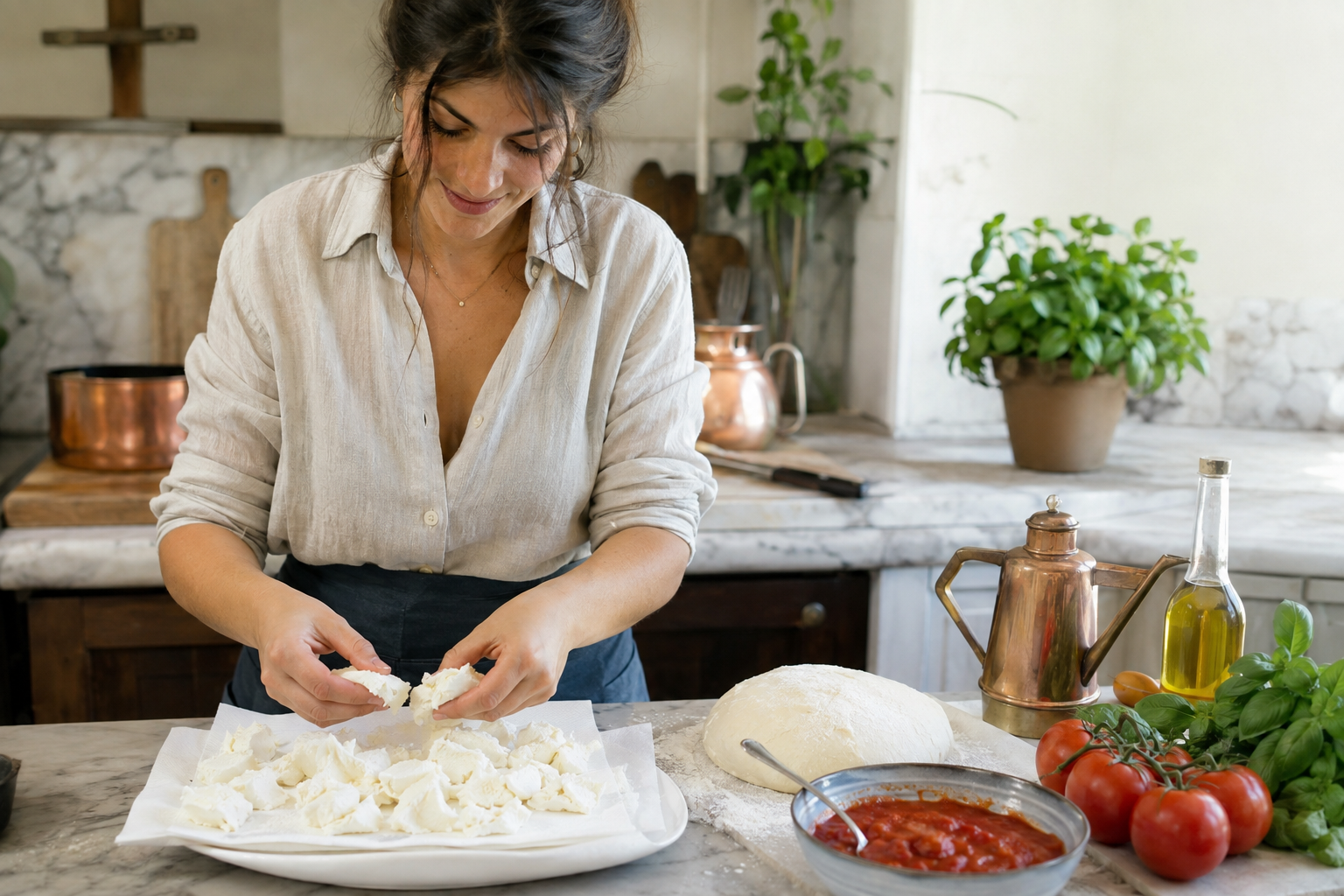
With the moisture problem in mind, the Neapolitan preference suddenly makes perfect sense, because the pizzaioli of Naples are solving for a great bake above all else. Their choice is about performance, not prestige. A pizzaiolo making hundreds of pizzas a day cannot afford a cheese that behaves unpredictably or floods the base, and generations of experience have taught them which cheese delivers a consistently great pie. When the people who invented the dish reach so reliably for one option, it pays to listen closely to what they know.
It keeps the base crisp. Because fior di latte contains far less moisture than bufala, it melts evenly without flooding the dough, protecting that all-important crisp base. For a classic Neapolitan pizza, that clean melt is precisely what you want, a cheese that behaves rather than weeps.
It lets the other flavors sing. Beyond the moisture, fior di latte’s milder flavor lets the tomato, the olive oil, and the crust come through clearly, rather than being overwhelmed, so it plays a supporting role beautifully. On a simple Margherita, where balance is everything, that gentle restraint is a virtue, which is why it is the pizzaiolo’s quiet default. A great Margherita is a study in harmony, with no single element shouting over the others, and a milder cheese lets that harmony hold. Bufala, for all its glory, has such a strong personality that it can tip the balance, pulling the whole pizza toward itself. On the classic pie, the pizzaiolo wants a cheese that supports the ensemble rather than stealing the show, and fior di latte does exactly that.
When Bufala Truly Belongs
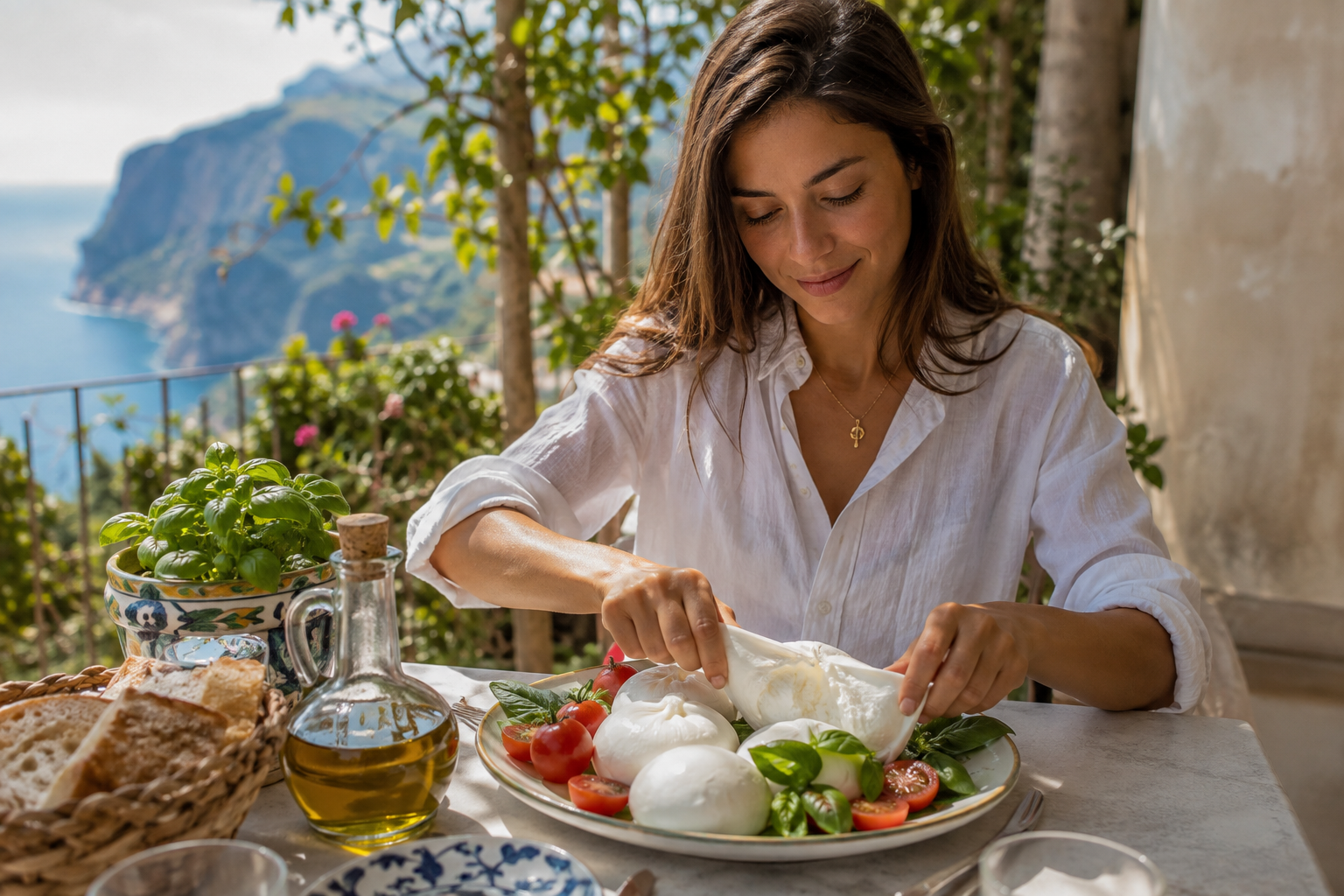
Bufala is in no way inferior, because in exactly the right setting it is one of the most sublime cheeses in the world, and knowing where it shines is just as important as knowing where it does not. Its moment is simply a different one.
It is glorious uncooked. Bufala is at its best eaten fresh and unheated, in a caprese with ripe tomatoes and basil, on an antipasto board, or simply torn over a plate and drizzled with good olive oil, so its creamy richness can shine unopposed. This is where that tangy, liquid-centered luxury becomes the whole point rather than a problem. Sitting a torn ball of bufala beside a ripe summer tomato, with a little salt, a few basil leaves, and a generous pour of olive oil, is one of the great simple pleasures of Italian eating, and no cooked application can match it. Here the very moisture that troubles a pizza becomes a virtue, the creamy liquid mingling with the oil and tomato juices into something you will want to mop up with bread. Eaten this way, bufala needs no help at all.
It suits gourmet, careful pizzas. Bufala can also crown a pizza wonderfully, but it needs to be drained well beforehand and often added toward the end or after baking, on a fresh-topped, higher-end pizza rather than a rustic classic. Given a screaming-hot oven and a little technique, its richness can be a spectacular finish, but it demands respect that fior di latte does not. Think of it as the difference between a reliable everyday workhorse and a temperamental thoroughbred. Fior di latte will forgive a slightly cooler oven or a heavier hand, while bufala rewards care and punishes carelessness. Both can be wonderful, but only one asks you to know what you are doing, which is worth remembering before you spend the extra money on the fancier ball.
How to Use Bufala Without Ruining the Pizza
If you do want that buffalo-mozzarella richness on your pizza, there are a few simple techniques that let you tame its moisture and enjoy the best of both worlds. The whole trick is managing the water.
Drain it, and tear it. The single most important step is to drain bufala thoroughly and tear it into pieces and letting it sit in a sieve or on paper towels for a good while to shed its excess liquid, so far less water reaches the base. This one habit prevents the great majority of soggy pizzas.
Add it late and bake it hot. It also helps to use the hottest oven you can manage, so remaining moisture flashes off quickly, and to add the bufala partway through baking or even after the pizza comes out, so it warms and softens without weeping all over the crust. With those tricks, even a home cook can enjoy bufala’s glory without sacrificing a crisp base. I learned this the slightly soggy way, wondering for years why my bufala pizzas turned out wet in the middle while the pizzeria’s did not. The answer was never the cheese itself but how it was handled, and once I started draining it properly and treating it with a little respect, the problem simply vanished. There is no need to give up on bufala entirely, only to stop treating it like the drier cheese it is not.
The Real Lesson of the Two Cheeses
The lasting takeaway from all of this is that there is no single best mozzarella, only the right cheese for the right job, and understanding that is what separates a thoughtful cook from a merely enthusiastic one. Both cheeses are magnificent when used well.
Match the cheese to the task. For a classic baked pizza where a crisp base matters most, fior di latte is the wiser, more reliable choice, while for fresh dishes and moments where pure creamy richness is the goal, bufala is unbeatable, so the skill lies in choosing deliberately. Once you think this way, you will never again reach automatically for the fancier cheese and wonder why your pizza went soft. It is a small shift in thinking, but it applies far beyond mozzarella, this idea that the best ingredient is not the most expensive one but the one suited to what you are making. Good cooking is full of these quiet lessons, where understanding an ingredient’s nature matters more than its price or prestige. The two mozzarellas are simply an especially delicious way to learn it.
It is about respect, not hierarchy. Rather than ranking one cheese above the other, the real wisdom is to respect what each cheese does best and use it accordingly, which is how the great cooks of Naples have always thought. That, in the end, is the answer to the pizza question, not that bufala is worse, but that fior di latte is often right, and knowing the difference makes you a better cook. Treat each cheese as the specialist it is, and both will reward you beautifully. Keep a ball of fior di latte for your pizzas and your everyday cooking, where its reliable, clean melt will never let you down, and save the bufala for those moments when nothing but pure, tangy, creamy indulgence will do, eaten fresh and unhurried. Do that, and you will get the best from each rather than being disappointed by using the wrong one in the wrong place. The two cheeses are not rivals to be ranked but partners to be understood, each waiting for its moment to shine.
Margherita Recipe
Ingredients
Pizza dough, one ball, at room temperature (a good bought dough is fine)
Fior di latte, 125 grams, for a reliable home bake, or drained mozzarella di bufala for extra richness
Peeled plum tomatoes or good passata, 150 grams
Fresh basil leaves, a small handful
Extra virgin olive oil, for drizzling
Salt, to taste
Semolina or flour, for dusting
Method

Heat your oven as hot as it will go, with a pizza stone or steel inside if you have one, for a full hour so it is thoroughly heated.
Tear the fior di latte, or well-drained bufala, into small pieces and set it on paper towels or in a sieve to shed moisture while the oven heats. This step matters most of all, especially for bufala.
Crush the tomatoes lightly with your hands or a fork, season with a little salt, and set aside. Do not cook them.
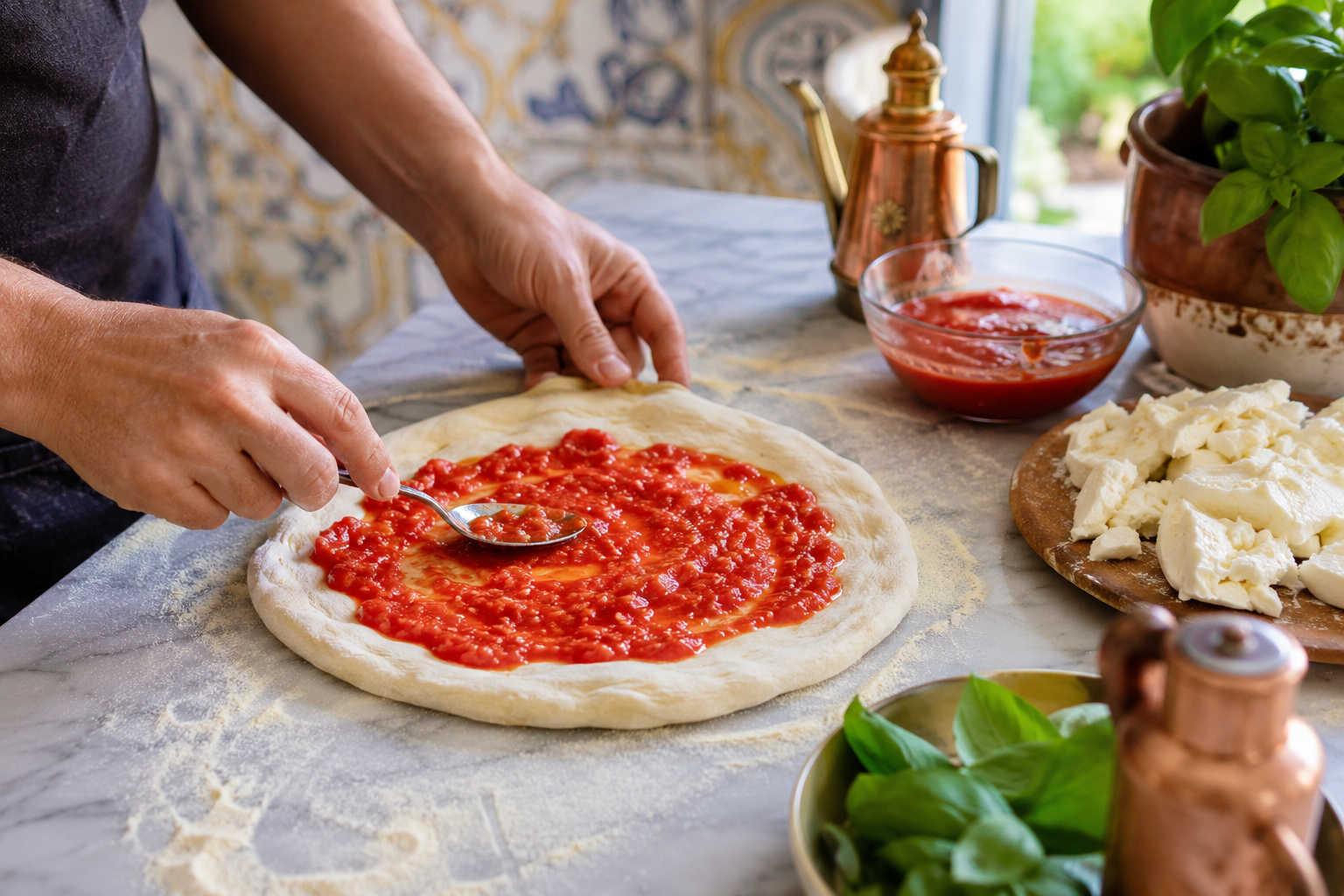
Stretch the dough gently by hand into a round on a lightly floured or semolina-dusted surface, keeping a slightly thicker rim and never using a rolling pin.
Spread a thin layer of the crushed tomato over the base, leaving the rim clear, then scatter the torn cheese sparingly across the top. Resist the urge to overload it.
Slide the pizza onto the hot stone or a tray and bake until the crust is puffed and blistered and the cheese is melted, usually just a few minutes at maximum heat.
If using bufala for a fresher result, add it partway through the bake or scatter it over the moment the pizza emerges. Finish with fresh basil and a thread of olive oil, and eat at once.

About the Author: Ruben, co-founder of Gamintraveler.com since 2014, is a seasoned traveler from Spain who has explored over 100 countries since 2009. Known for his extensive travel adventures across South America, Europe, the US, Australia, New Zealand, Asia, and Africa, Ruben combines his passion for adventurous yet sustainable living with his love for cycling, highlighted by his remarkable 5-month bicycle journey from Spain to Norway. He currently resides in Spain, where he continues sharing his travel experiences with his partner, Rachel, and their son, Han.