
You find the listing that seems perfect. A bright, well-located apartment in a very good neighborhood, at a fair and reasonable price, and best of all it is described as amueblado, furnished, which means you can simply move in with your suitcases and start your Spanish life without the expense and hassle of buying, moving and arranging furniture. Except that when you arrive, you discover the kitchen has no oven, there is no washing machine, the bedroom holds a bare bed frame but no wardrobe or other storage at all, and there is not a single towel, pot, or lamp anywhere to be found in the entire place. The apartment was, technically, furnished. It just was not furnished in anything like the way you assumed. This is the trap hiding inside the Spanish word amueblado, and it catches newcomers to Spain again and again, because furnished here does not reliably mean what furnished means back home. It is one of those cultural mismatches that seem small until you are living inside them, standing in an empty-feeling flat on your first night with nowhere to hang a coat and nothing to boil water in. The word promised a home ready to live in, and delivered instead a shell that technically satisfied its own loose definition while satisfying almost none of your expectations.
The problem is that furnished is a truly loose and unregulated description in Spain, one that can cover everything from a fully equipped, move-in-ready home to a place with little more than a bed and a sofa. Two apartments described with exactly the same word can differ enormously in what they really contain, so the label alone tells you far, far less than you might reasonably expect, and treating it as a firm promise is a recipe for an expensive and thoroughly stressful surprise on moving day. Understanding what amueblado really guarantees, and what it does not, is essential for anyone renting in Spain.
Here is what furnished really means in the Spanish rental market, the specific gaps that most often catch people out, the vocabulary you need to understand what you are really being offered, and how to protect yourself before you sign. This is practical information for navigating rentals rather than legal advice, and every landlord and region differs, but knowing the trap inside the word amueblado is the surest way to avoid moving into a home that turns out to be far emptier than you were promised.
The Loose Word Nobody Defines

The root of the whole problem is that in Spain, unlike in some other countries, the word furnished has no strict, agreed definition, so it functions as a loose description rather than a firm guarantee. This is the single most important thing to grasp before you rent.
Furnished is not a fixed standard here. In Spain, amueblado is a flexible term left largely to the individual landlord, so what one owner considers a furnished apartment may be quite different from what another does, and neither is doing anything wrong by their own lights. Where some countries legally define what a furnished rental must include, Spain leaves it open, which means the label alone commits the landlord to very little in concrete terms.
This is why identical descriptions can hide very different realities. Because there is no agreed checklist behind the word, one flat might come fully equipped down to the cutlery while another offers only the largest furniture, so you simply cannot know what furnished means for any particular property until you ask in detail or see it for yourself. The word is a starting point for a conversation, not a description you can rely on, and understanding that shifts how you approach every listing. Once you accept that furnished carries no fixed guarantee, you stop reading listings passively and start reading them as prompts to investigate. The relief you might have felt at the sight of the word is replaced by a more useful instinct: to find out precisely what stands behind it in this particular case, before that word costs you anything.
The Gaps That Catch People Out
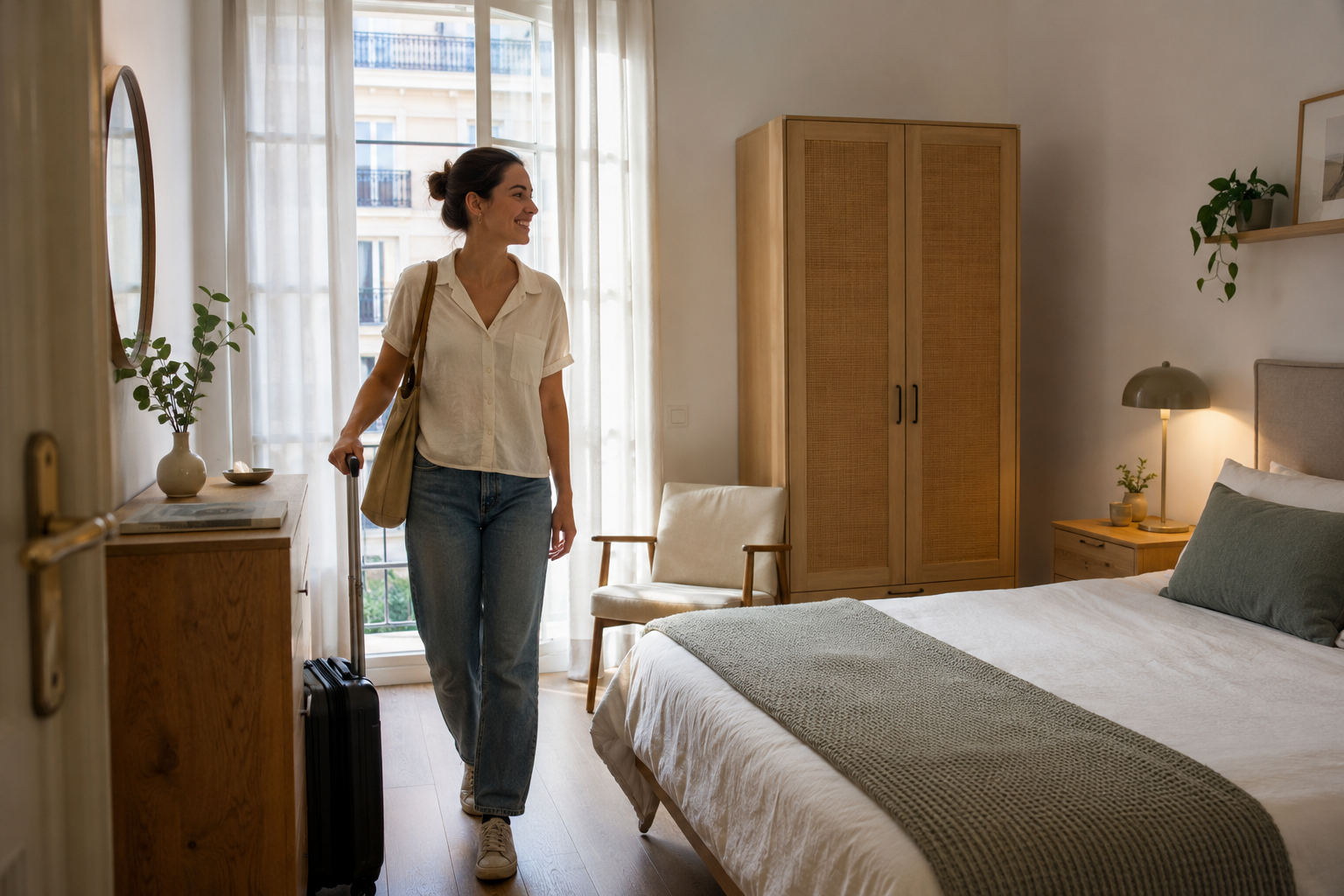
Within that looseness, certain specific absences trip up newcomers to Spain over and over, because they are things a foreigner simply assumes will always be present and quite often are not. Knowing these common gaps in advance saves a great deal of grief.
The kitchen is the first place to look carefully. Spanish kitchens do not always contain the appliances a newcomer takes for granted, and it is entirely possible to find a furnished flat whose kitchen has no oven at all, since ovens are not universal in Spanish homes, so the very appliance you assumed was standard may simply be missing. Checking exactly which kitchen appliances are present, rather than assuming, is essential. To a newcomer this can be quite disorienting, because the oven feels less like an amenity than a basic fixture of any kitchen, something no home could be without. In Spain that assumption simply does not hold, and plenty of perfectly normal flats manage with a hob and a microwave and nothing more. It is not a defect to be scandalized by, merely a difference to be checked for, and one that is far better discovered during a viewing than on the evening you had planned to roast your first dinner.
Laundry is the second classic surprise. While a washing machine is common, a clothes dryer is truly rare in Spain, where line-drying is the norm, so a newcomer expecting to find a dryer as a matter of course is very likely to be disappointed. And beyond the big appliances, the smaller things that make a home livable, the linens, towels, cookware and lamps are frequently not included even in a furnished flat, so you can find yourself with furniture but nothing to cook, sleep or clean with.
The Vocabulary That Tells the Truth

Because the headline word furnished is so unreliable, learning the more precise Spanish rental vocabulary is the key to understanding what you are truly being offered. These terms carry far more real information than amueblado alone.
Start with the furnishing levels. Beyond amueblado for furnished, you will meet semi-amueblado, meaning partially furnished, a genuine grey area that might include appliances but little furniture or the reverse, and sin amueblar or no amueblado for unfurnished, so recognizing these distinctions tells you roughly where a property sits on the spectrum. Crucially, an unfurnished Spanish flat can be very bare and may come with no appliances at all, so sin amueblar can mean completely empty.
Then learn the kitchen terms, which matter enormously. A cocina equipada is a fully equipped kitchen with the appliances, whereas a kitchen described only as having units or cabinets may have the cabinetry but not the oven, hob, or fridge, so this distinction is exactly the sort of detail that separates a livable flat from an empty shell. Learning to spot the difference between a kitchen that is merely fitted and one that is properly equipped is one of the most useful things a renter in Spain can do. The same care applies right across the listing, because Spanish rental descriptions tend to reward the reader who knows the vocabulary and punish the one who skims. A few precise terms, understood correctly, tell you more about a property than a paragraph of enthusiastic adjectives, and they are worth the small effort of learning before you begin your search in earnest.
Why the Trap Exists

It helps to understand that this looseness is not really a scam so much as a feature of how the Spanish rental market has always worked, shaped by local habits that differ from those elsewhere. Seeing why the gap exists makes it less alarming and easier to navigate.
Spanish renting has its own conventions. In Spain, it has long been common for even unfurnished long-term rentals to be genuinely empty, and for tenants to bring or buy a great deal themselves, so the whole culture around what a home comes with is different from places where rentals are expected to arrive fully equipped. What a newcomer reads as a suspicious omission is often simply the normal local expectation, understood by everyone who grew up in the system.
The mismatch is really one of expectations. A foreigner arrives assuming furnished means the same comprehensive thing it means at home, while the Spanish landlord is working from a looser and more local understanding of the word, so the trap is born from a gap in assumptions rather than bad faith. Recognizing that no one is necessarily trying to deceive you makes it easier to do the one thing that truly solves the problem, which is to ask precisely what is included.
The Questions Worth Asking

Because the burden of finding out falls on you rather than the listing, it helps to have a ready mental checklist of the concrete questions that cut through the vagueness of the word furnished. These are the specifics that turn an ambiguous promise into a clear picture.
Run through the essentials one by one. It is worth asking directly whether there is an oven, a hob, a fridge and a washing machine, and how the home is heated and, in hotter regions, cooled, since these are the items whose absence would most disrupt daily life and most surprise a newcomer, so confirming each removes the biggest risks. A landlord who answers these clearly and specifically is one you can begin to trust, while vague or evasive answers are themselves useful information.
Then probe the smaller things and the storage. Ask whether the furnished flat includes basics like lamps, curtains or blinds, and any kitchen equipment, and whether the bedrooms have wardrobes or other storage, since Spanish flats often rely on freestanding armarios rather than built-in closets and a room can arrive with nowhere at all to put your clothes. None of these questions is difficult to ask, and each one you ask in advance is a surprise you spare yourself on moving day, which is exactly the trade every careful renter wants to make. Landlords and agents deal with these questions constantly and think nothing of them, so there is no need to feel awkward about being thorough. The awkwardness of asking a few pointed questions during a viewing is nothing beside the misery of discovering, after you have signed and moved in, that the home you committed to for a year is missing the things you most needed.
How to Protect Yourself
The good news is that the trap inside amueblado is entirely avoidable with a little diligence, because the solution is simply to replace assumption with specific, confirmed knowledge before you commit. A handful of habits will keep you from any unpleasant surprises.
Ask for specifics and get them in writing. Rather than trusting the word furnished, ask the landlord or agent exactly what furniture and appliances are included, confirming the presence of the things you care about such as an oven, a washing machine, a fridge and heating, and so on, and make sure that list is recorded in the rental contract, so what you were promised is enforceable. A vague verbal assurance is worth little, while a specific written list protects you.
Insist on an inventory and view in person. Always request a detailed inventory, an inventario, listing everything the property contains and its condition, which protects both your understanding and your deposit when you eventually leave, and wherever possible view the property in person before signing so you see exactly what is and is not there. The inventory and the viewing together turn the loose promise of the word furnished into a concrete, verified reality. It is worth treating the inventory as seriously going in as you will wish you had going out, photographing the condition of what is there and noting anything already damaged, because the same document that records what the flat contains is the one your landlord will consult when deciding how much of your deposit to return. A careful inventory at the start is quietly one of the most valuable pieces of paper in the whole tenancy.
Reading the Word Correctly

The lasting lesson of amueblado is that in Spain a single word on a listing can conceal a wide range of realities, and that the safe approach is to treat furnished not as a guarantee but as an invitation to ask exactly what it means for that particular home. The word is not a lie, but it is not a promise either, and understanding the difference protects you.
What makes this so worth knowing is how easily the trap is sprung and how easily it is avoided. The newcomer who takes furnished at face value can end up moving into a home missing the very things they most needed, while the one who asks for specifics, learns the precise vocabulary, insists on an inventory, and views in person walks in knowing exactly what awaits them. The same word can lead to two completely different experiences, and the difference lies entirely in the preparation you were willing to do.
So the next time you see a Spanish apartment described as amueblado and feel the relief of imagining a ready-made home, pause before you celebrate and ask the questions that reveal what the word truly contains. Confirm the appliances, check for the oven and the washing machine, ask about the smaller essentials, get it all in writing, and see the place for yourself. Do that, and the trap inside amueblado disappears entirely, leaving you free to move into a Spanish home that is furnished not just in name, but in the way you really need it to be.

About the Author: Ruben, co-founder of Gamintraveler.com since 2014, is a seasoned traveler from Spain who has explored over 100 countries since 2009. Known for his extensive travel adventures across South America, Europe, the US, Australia, New Zealand, Asia, and Africa, Ruben combines his passion for adventurous yet sustainable living with his love for cycling, highlighted by his remarkable 5-month bicycle journey from Spain to Norway. He currently resides in Spain, where he continues sharing his travel experiences with his partner, Rachel, and their son, Han.