
There is a moment at every Greek table, just after the fish or the meat comes off the grill, when someone reaches for a small bowl of pale golden sauce and pours it generously over everything. That sauce is ladolemono, and it is one of those quiet miracles of Mediterranean cooking that transforms good grilled food into something you remember. It takes about five minutes to make, requires no cooking at all, and uses ingredients you almost certainly already have, yet it does more to elevate a piece of grilled fish, chicken or lamb than any elaborate marinade or fussy pan sauce ever could. Greek grandmothers have been whisking it together for generations, and once you learn it, you will wonder how you ever grilled without it.
The genius of ladolemono is its simplicity, because it is essentially just three things, olive oil, lemon and oregano, whisked into a bright, tangy emulsion that wakes up whatever it touches. Its name says exactly what it is, since in Greek ladi means oil and lemoni means lemon, and that pairing, sharpened with oregano and salt, is one of the foundational flavors of Greek cooking. What makes it magical is not complexity but the way that acid and richness together cut through and lift grilled food, turning something merely cooked into something alive.
Here is what ladolemono is, why it works so well on grilled food, exactly how to make it in five minutes, and all the ways to use it once you have. There is a real recipe below, the classic ratio Greek cooks rely on, so you can make it tonight. This is a simple pleasure of the Mediterranean table, and learning it may be the single highest-value five minutes you ever spend in the kitchen, because once this sauce is in your repertoire, no grilled thing you make will ever be plain again.
What Ladolemono Actually Is
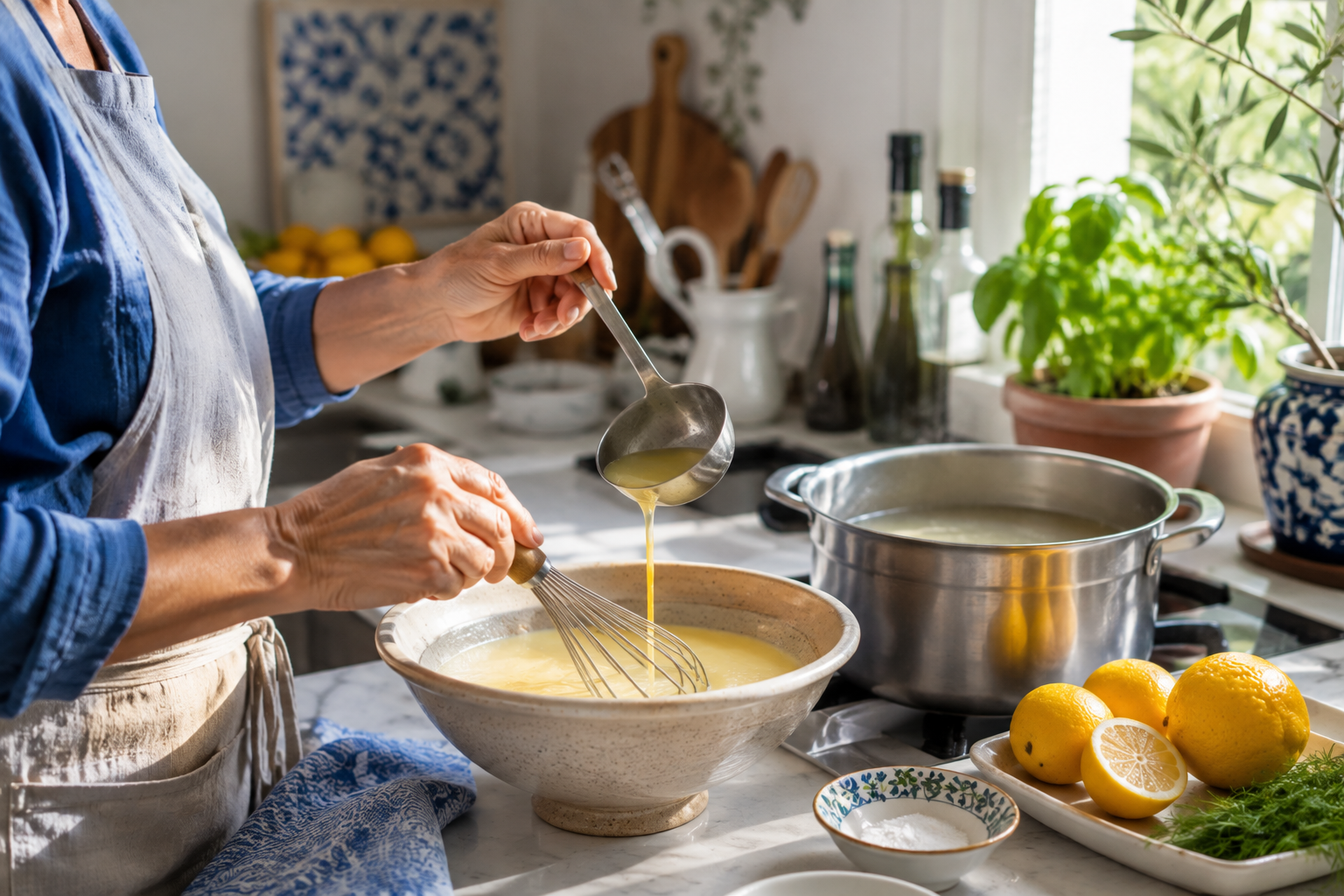
At its heart, ladolemono is a Greek olive oil and lemon sauce, an emulsion of extra virgin olive oil and fresh lemon juice, seasoned with dried oregano and salt, that serves as a dressing, a marinade, and above all a finishing sauce for grilled and roasted food. It is the Greek answer to the universal question of how to brighten rich, cooked food, and the answer turns out to be beautifully simple.
The sauce has deep roots in Greek cooking, where the combination of olive oil and lemon is ancient and fundamental. Greeks have dressed their food with olive oil and acidic brightness for thousands of years, and ladolemono is the distilled essence of that tradition, so ubiquitous that when Greeks grill fish or meat, dressing it with this sauce is simply what one does, as automatic as salt. It is less a recipe than a reflex, passed down without needing to be written. Ask a Greek grandmother for the recipe and she is as likely to shrug as to answer, because to her it is not a recipe at all but simply what lemon and oil and oregano do when they meet, a piece of knowledge so basic it barely registers as knowledge. That casual mastery is exactly the sort of thing worth capturing before it is lost.
What sets ladolemono apart from a simple vinaigrette is both its character and its purpose. Where a vinaigrette usually leans on vinegar, ladolemono uses the softer, more fragrant acidity of fresh lemon, and where a vinaigrette mostly dresses salads, ladolemono’s true calling is grilled and roasted food, whose richness and char it cuts and complements perfectly. It is a vinaigrette’s brighter, more purposeful Greek cousin, built specifically to finish food from the grill. There is a reason lemon rather than vinegar sits at the heart of it, and it is not accidental. Lemon brings an acidity that is bright without being harsh, floral and rounded where vinegar can be sharp and one-dimensional, and that gentler brightness is exactly what suits the delicate flesh of grilled fish and the richness of lamb. The Greeks, surrounded by lemon trees and olive groves, built their signature sauce from what grew around them, and the result happens to be perfectly matched to the food it dresses.
Why It Fixes Everything Off the Grill
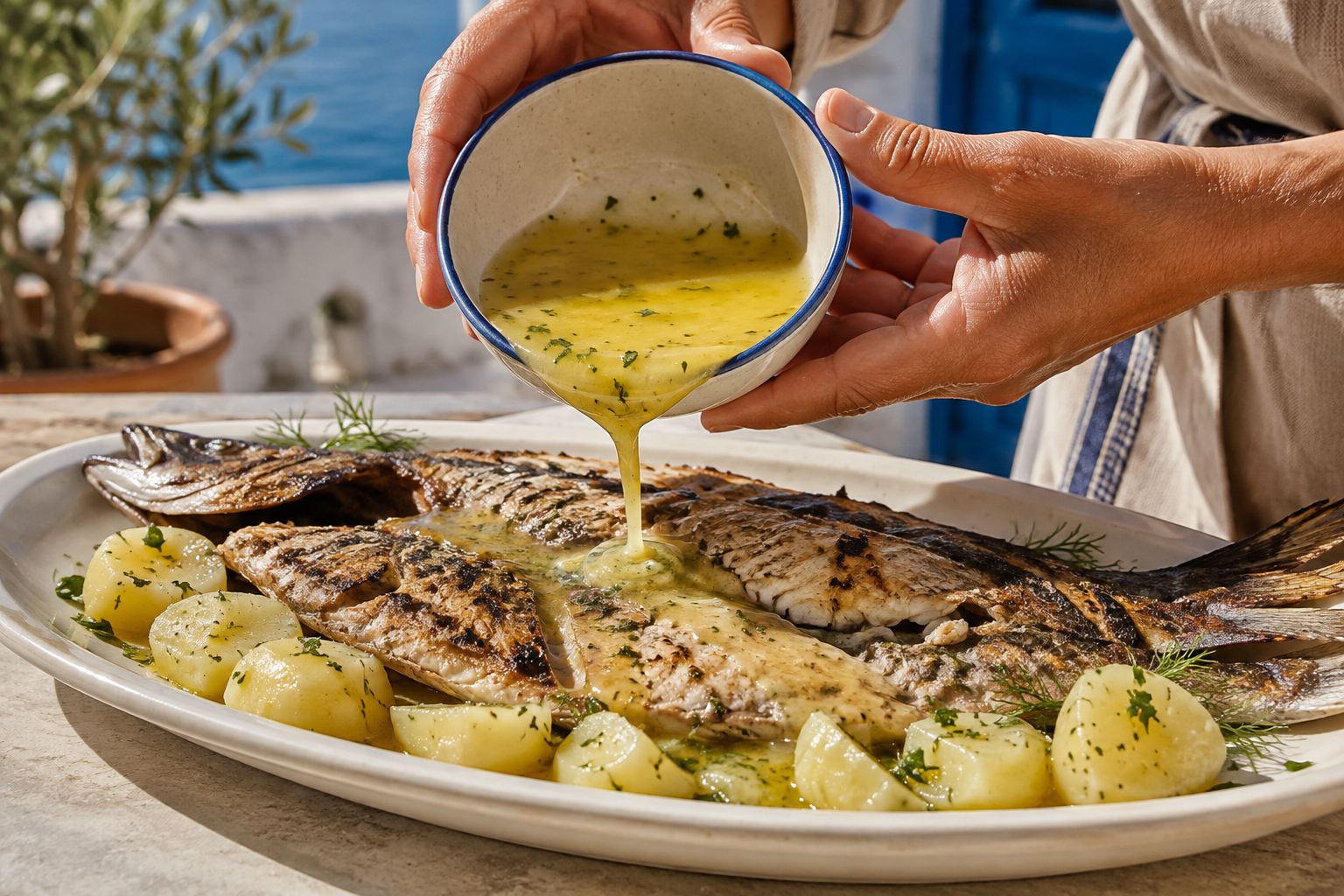
The reason ladolemono works such magic on grilled food comes down to a simple principle of taste, the balance between richness and acidity. Grilled meat and fish are rich, savory and often a little charred, and what such food craves is precisely the bright, clean lift that acid provides, which is exactly what the lemon in ladolemono delivers in abundance.
The chemistry of it is satisfying to understand. When you pour this lemony, herby oil over hot grilled food, the acid cuts through the richness and char while the olive oil carries and rounds the flavors, and the oregano adds a savory, aromatic note that echoes the smokiness of the grill, so the sauce and the food seem made for each other. Each element does a job, and together they turn a good piece of grilled food into a balanced, complete bite. It is worth appreciating how few sauces achieve this balance so effortlessly. Many rich sauces pile flavor on top of already rich food, which can overwhelm rather than complete it, but ladolemono works by contrast rather than addition, answering richness with brightness rather than more richness. That is why it never feels heavy no matter how generously you use it, and why it can go on nearly everything without ever becoming monotonous. It lightens as it flavors, which is a rare and valuable trick.
There is also a wonderful secondary effect worth knowing about. When ladolemono is poured generously over grilled fish or meat on a platter, it pools at the bottom and mingles with the juices the cooking has released, creating a bright, savory liquid that is one of the great pleasures of the Greek table, the kind you sop up with bread. This is why Greeks are generous with the sauce, because what collects beneath the food becomes almost as good as the food itself, and no one wants to waste a drop.
The Five-Minute Recipe
The best news about ladolemono is how absurdly easy it is to make, requiring nothing more than whisking a few ingredients together until they come together into a creamy sauce. The classic ratio Greek cooks rely on is roughly three parts olive oil to one part lemon juice, adjusted to taste, and here is the simple recipe.
Ladolemono (Greek Lemon and Olive Oil Sauce) makes about half a cup, enough to dress a meal for four
Ingredients:
- Extra virgin olive oil, one third cup, the best you can get
- Fresh lemon juice, three tablespoons, from about one large lemon
- Dried oregano, one teaspoon, Greek if possible
- Salt, a good pinch, to taste
- Black pepper, a little, to taste
- Optional: a small grated garlic clove, or a little lemon zest, for extra flavor
Method:
- Put the lemon juice, oregano, salt, and pepper into a small bowl, and let it sit for a minute so the salt begins to dissolve.
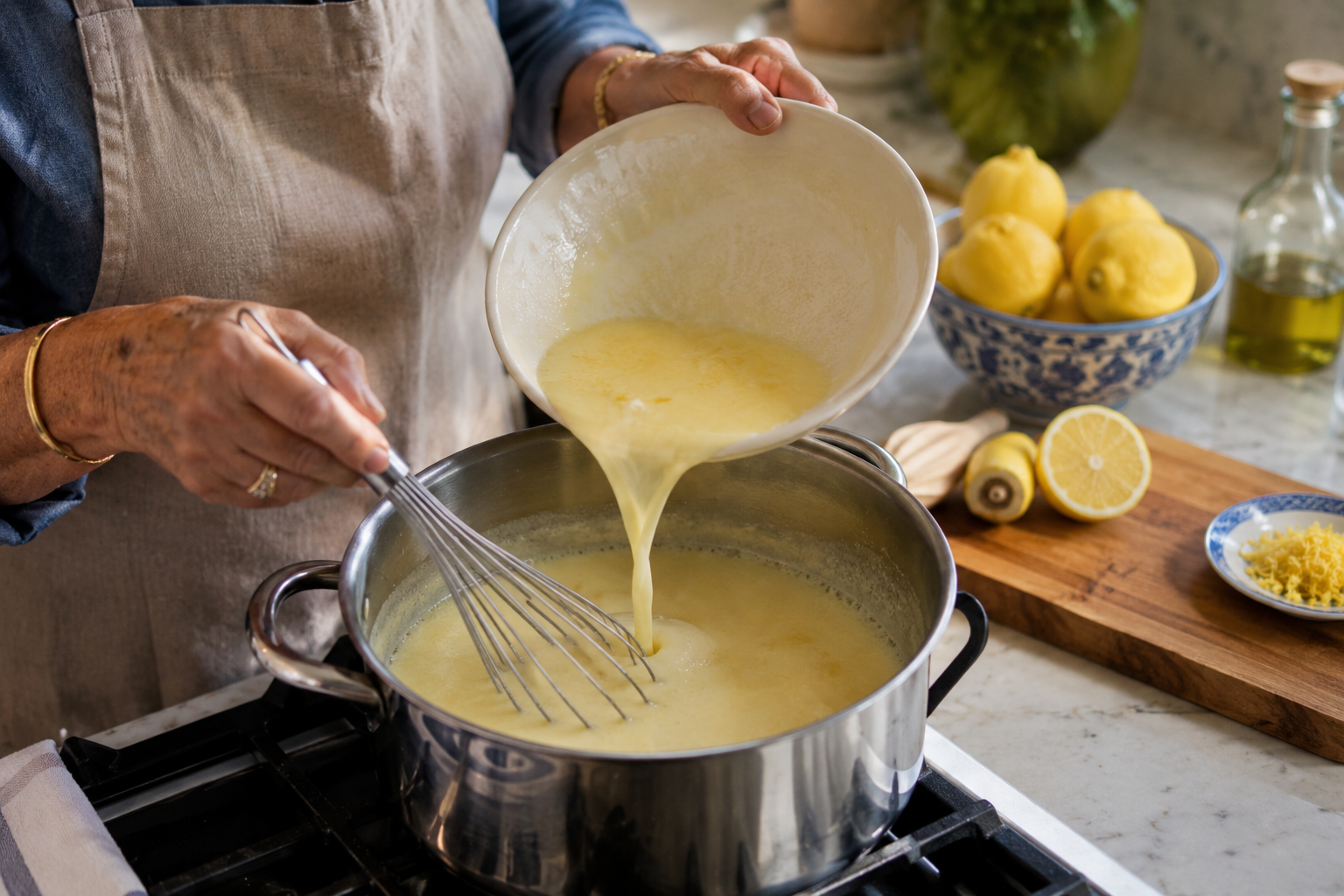
- While whisking the lemon mixture briskly with a fork or small whisk, drizzle the olive oil in slowly, in a thin stream.
- Keep whisking until the sauce thickens slightly and turns creamy and opaque, a pale cloudy yellow, which means it has emulsified.
- Taste and adjust, adding a little more lemon for tartness or salt as needed.
- Use right away, or whisk again just before serving since it will separate as it sits.
That is the whole thing, start to finish in about five minutes, with no heat and no skill required beyond whisking. A jar works too if you prefer, since you can simply add everything and shake vigorously until it emulsifies. The jar method has a small advantage worth mentioning for busy cooks, which is that a sealed jar is also how you will store any leftover sauce, so making it directly in the jar means one fewer thing to wash and a container ready to go straight into the fridge. Either way, the whole point is that this is not a sauce that demands planning or special equipment, but one you can throw together at the last minute while the grill does its work.
Getting It Right

Though ladolemono is nearly foolproof, a few small points make the difference between a good version and a great one, and they are all easy to honor. The first and most important is to use fresh lemon juice, never bottled, because the whole charm of the sauce is the bright, clean flavor of real lemons, which bottled juice cannot match and often tastes flat or slightly bitter beside.
The olive oil matters just as much. Since the sauce is mostly olive oil, its quality defines the result, so this is a place to use good extra virgin olive oil, ideally a fragrant Greek one, because a dull or rancid oil will make a dull sauce no matter how fresh the lemon. The two main ingredients each carry half the sauce, and both deserve to be the good stuff.
The technique, though simple, rewards a little care. Whisking the oil in slowly rather than dumping it in helps the sauce emulsify into that lovely creamy texture rather than staying separated and thin, and letting the salt dissolve in the lemon first means it seasons evenly throughout. None of this is difficult, but attending to these small things is what turns a passable ladolemono into the silky, balanced sauce that makes people ask what you did.
The Endless Ways to Use It
While ladolemono’s spiritual home is grilled fish, its uses extend far beyond, and once you have a bowl of it you will find yourself reaching for it constantly. Its classic and greatest role is over grilled or roasted seafood, where its bright acidity and the char of the fish are a match made in heaven, and Greeks would tell you that grilled fish without ladolemono is barely finished.
From there its reach is enormous. It is superb over grilled or roasted meats of all kinds, from chicken to lamb to pork souvlaki, wonderful drizzled over roasted vegetables where it lifts their sweetness, and transformative on roasted potatoes, which soak it up and turn magical. It makes a bright dressing for a Greek salad or a bowl of greens, a lively marinade for meat or fish before cooking, and a finishing sauce for grain bowls and lentils that need a spark.
The simple rule is that ladolemono improves almost anything that is rich, savory or grilled. Whenever you have cooked something and it tastes good but somehow flat, a spoonful of this bright, herby sauce is very often exactly what it was missing, and the more you cook with it, the more uses you will discover, until it becomes as basic to your kitchen as salt and pepper. It is the rare sauce that finds a home on nearly every plate.
A Few Practical Notes

A couple of practical details will help you fit ladolemono smoothly into your cooking. On making it ahead, the sauce is best fresh but keeps for a few days in a sealed jar in the refrigerator, where the oil and lemon will separate as they sit, so all you need to do is give it a good shake or whisk before using and it comes right back together.
Freezing is the one thing to avoid, since olive oil solidifies and changes texture when frozen, so ladolemono does not freeze well and is really meant to be made in small, fresh batches rather than stockpiled. Given how quickly it comes together, there is little reason to freeze it anyway, and a fresh batch is always better than a thawed one.
As for variations, the classic version needs nothing added, but Greek cooks do sometimes personalize it, so feel free to make it your own. A little grated garlic gives it depth, a touch of lemon zest makes it more intensely lemony, a spoonful of mustard helps it stay emulsified and adds a subtle tang, and other soft herbs like dill or parsley can join the oregano, though none of these is necessary and the pure original is wonderful exactly as it is.
Five Minutes to Better Grilling
The lasting lesson of ladolemono is that the most powerful tools in cooking are often the simplest, and that a sauce of three humble ingredients, whisked together in five minutes, can do more for your grilled food than hours of elaborate technique. It is the distilled wisdom of a cuisine that understood long ago how olive oil and lemon lift and complete rich, cooked food, and it hands that wisdom to anyone willing to pick up a whisk.
What makes it worth adding to your repertoire immediately is the extraordinary return on so little effort. For five minutes and a few pantry staples, you gain a sauce that will improve nearly everything that comes off your grill or out of your oven for the rest of your cooking life, which is about the best trade the kitchen has to offer. Few things you can learn to make repay the effort so quickly or so often.
So the next time you grill a fish, a chicken, or a plate of vegetables, whisk up a little ladolemono while the food cooks and pour it generously over everything the moment it comes off the heat. Let it pool on the platter, soak some bread in what gathers there, and taste how a five-minute sauce turns a simple grilled dinner into something worth remembering. The Greek grandmothers were right all along, as they usually are, and this small bright sauce may become the most useful thing you ever learned to whisk. Some kitchen lessons are elaborate and hard-won, and this one is neither, which is precisely what makes it such a gift to pass along.

About the Author: Ruben, co-founder of Gamintraveler.com since 2014, is a seasoned traveler from Spain who has explored over 100 countries since 2009. Known for his extensive travel adventures across South America, Europe, the US, Australia, New Zealand, Asia, and Africa, Ruben combines his passion for adventurous yet sustainable living with his love for cycling, highlighted by his remarkable 5-month bicycle journey from Spain to Norway. He currently resides in Spain, where he continues sharing his travel experiences with his partner, Rachel, and their son, Han.