
Somewhere in the early weeks of living in Spain, an American hits a wall of paperwork so bewildering that it stops them cold. A form that must be filed at one office, stamped at another, paid for with a specific code at a bank, and returned within a window nobody quite explains. It is at this moment that a Spanish friend says the magic words, just go to a gestor, and the American discovers a whole profession that does not exist back home, a licensed specialist whose entire job is to handle the administrative paperwork of your life. Once you understand what a gestor is, a great deal of Spanish life suddenly becomes manageable.
The gestor is one of those things that reveals how differently another country can organize itself, because Spain has taken the universal misery of bureaucratic paperwork and created a whole regulated profession to handle it for you. Where an American faces the tax forms, the vehicle registrations, the residency renewals and the government filings alone, a Spaniard, and a wise expat, simply hands the whole mess to a gestor, who knows exactly which form goes where and gets it done. It is a solution to a problem Americans endure without ever imagining there could be a professional answer to it at all.
Here is what a gestor actually is, what they do, how they differ from lawyers and accountants, what they cost, and why they are so valuable, especially to a newcomer. This is a practical explainer rather than legal or financial advice, and the details of any individual situation vary, but understanding this uniquely Spanish profession is one of the most useful things a person moving to Spain can do, because it unlocks a way through the bureaucracy that would otherwise consume enormous time and stress.
A Profession With No American Equivalent
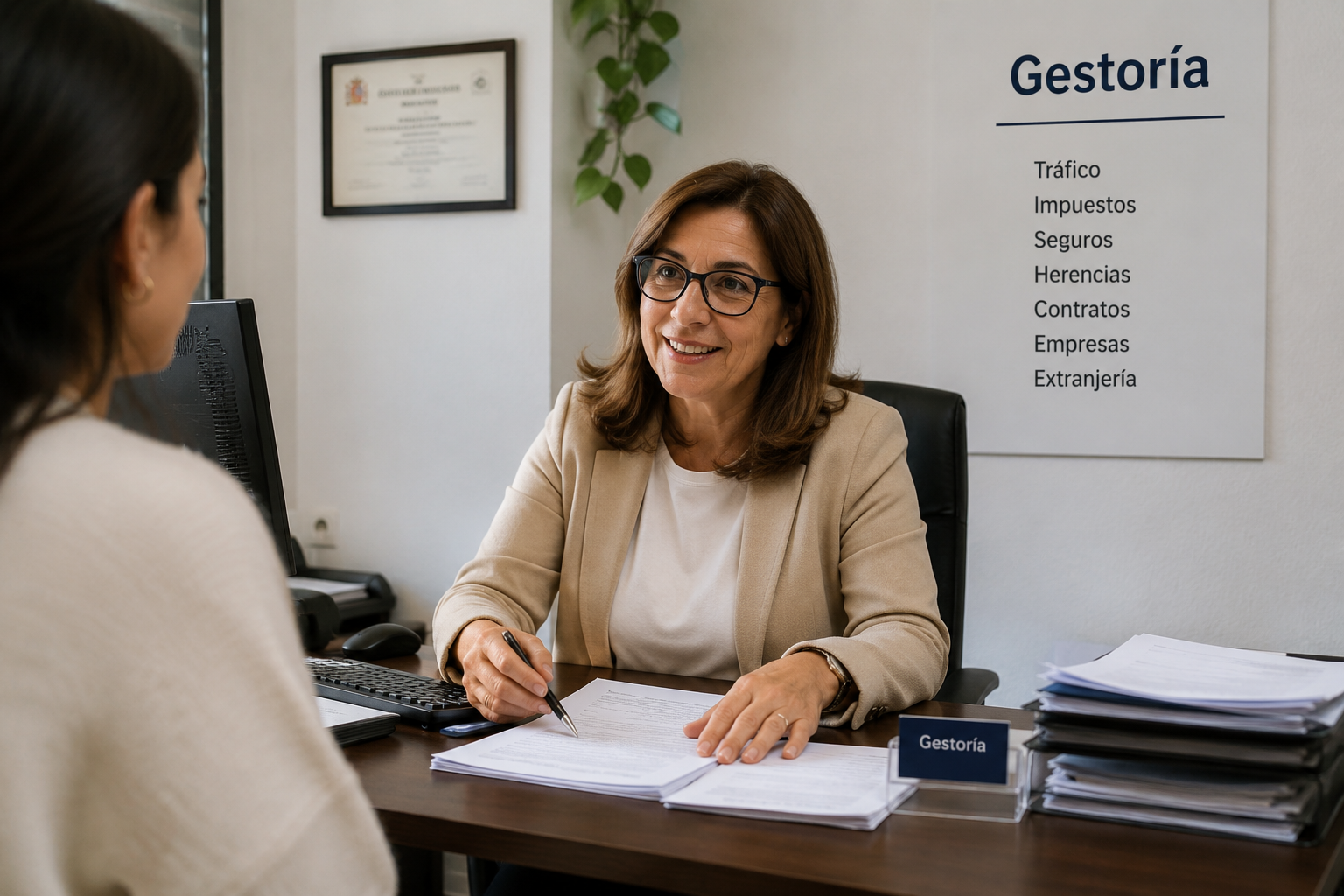
The first thing to understand about the gestor is that there is simply no direct equivalent in the United States or most English-speaking countries, which is exactly why the concept is so unfamiliar. A gestor administrativo is a licensed professional who acts as an intermediary between citizens and government agencies, handling administrative procedures and paperwork on your behalf, and no single American profession does quite this job.
The closest you can come to describing it is a combination of several American roles at once. Imagine rolling together an accountant, a tax preparer, and a professional agent who handles all your dealings with the government’s various offices, and you begin to approach what a gestor does, all in one person and usually for a modest fee. It is a role that America has simply scattered across several professions, or more often left to the individual to struggle with alone.
The profession exists because of a specific reality of Spanish life. Spain’s bureaucracy has historically been so complex and demanding that a professional class arose specifically to help people navigate it, formally established and regulated to serve as the bridge between citizens and the sprawling machinery of the Spanish state. The gestor is, in a sense, a monument to how much paperwork Spanish life involves, and a very practical solution to it. It says something that the profession is regulated at all, with its own official college and thousands of registered practitioners across the country. This is not an informal side trade but an established, licensed vocation with professional standards and liability insurance, which tells you how seriously Spain takes the business of helping people through its own bureaucracy. The state that created the paperwork also, in effect, licensed the profession that exists to tame it.
What a Gestor Does All Day
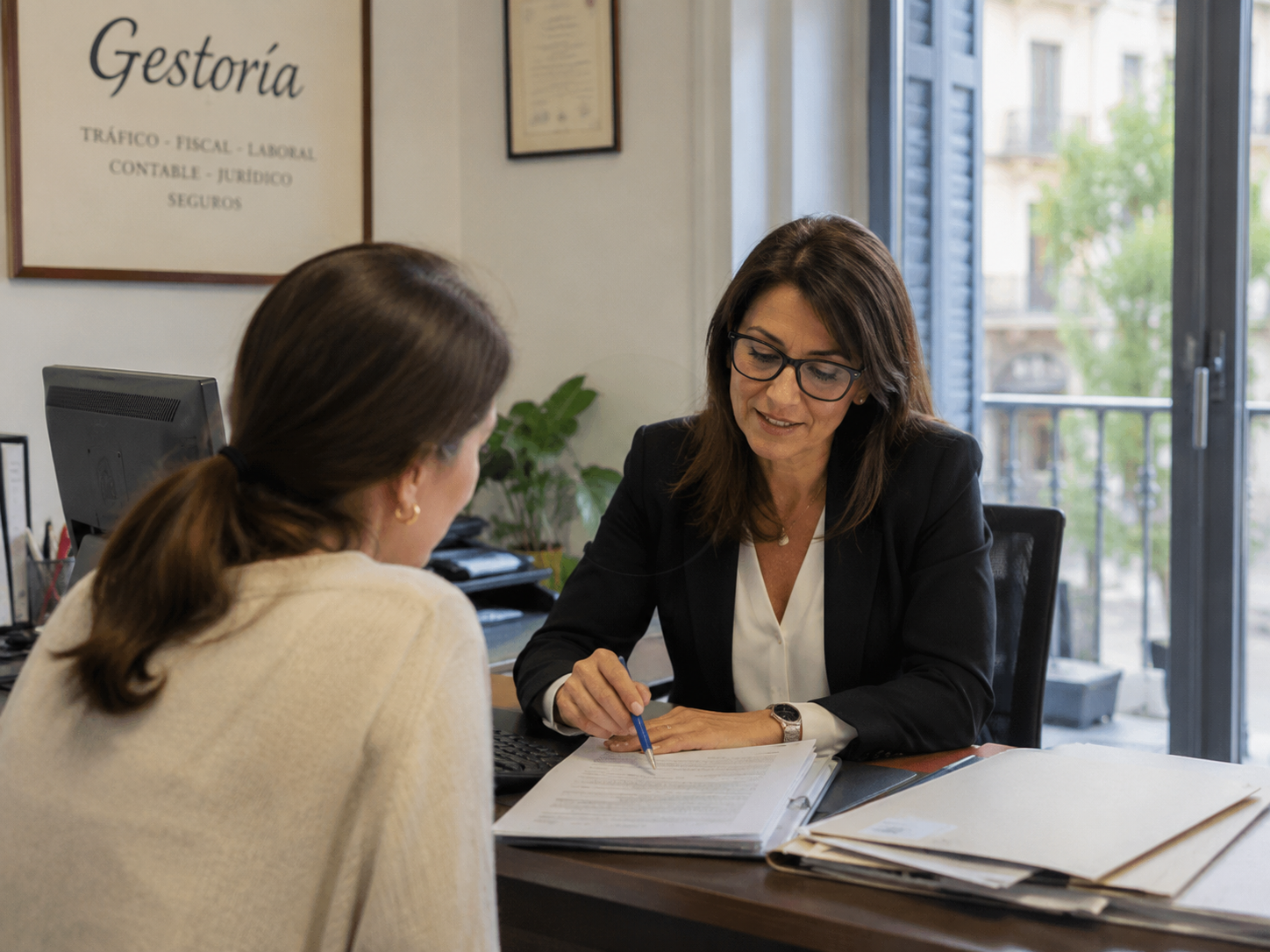
The daily work of a gestor is the handling of administrative procedures, the endless official processes that Spanish life requires, and the list of what they can help with is long and covers most of the bureaucratic touchpoints of ordinary life. They deal with the government agencies, fill in the forms, submit the documents, and follow the procedures through to completion, so you do not have to.
For a newcomer especially, the range is enormously reassuring. A gestor can help you obtain your NIE, the essential foreigner’s identity number, prepare and organize the paperwork for residency applications and renewals, handle your empadronamiento at the town hall, file your annual tax return, register you as autónomo if you become self-employed, transfer a vehicle into your name, and set up a company. These are precisely the procedures that overwhelm a newcomer, and the gestor handles them as routine.
The value lies in their knowledge of a system that is famously hard to navigate. A gestor knows exactly which form is needed, how to fill it in correctly, which office it goes to, in what order the steps must happen, and how to move it through the process as quickly as possible, which is knowledge that takes years to acquire and that a newcomer simply does not have. They turn a baffling, multi-step ordeal into a task someone else quietly completes. For a newcomer facing this in a second language, the relief of handing it over is hard to overstate, since what looks from the outside like a simple errand can hide a chain of dependencies, a document that must be obtained before another can be requested, a payment that must clear before a form will be accepted. It is worth being clear that a gestor usually cannot do anything a citizen could not, in theory, do for themselves, since the procedures are open to anyone. What you are paying for is not access but expertise, the knowledge of exactly how the system works and the time saved by not learning it the hard way, which for most people is well worth the fee. The gestor sells you a shortcut through a maze they have already memorized. For a great many people, especially those with better things to do than decode government forms, that shortcut is worth every euro.
Not a Lawyer, Not an Accountant

A crucial thing to understand, both to use a gestor well and to avoid confusion, is exactly where the gestor sits among the professions, because they are distinct from lawyers and accountants even though their work sometimes overlaps. A gestor is not a lawyer and is not an accountant, and knowing the boundaries saves you from asking them to do things outside their role.
The distinction from a lawyer matters most in legal situations. A gestor is not a qualified lawyer, cannot give legal advice, and cannot represent you in legal disputes or in court, which are the province of an abogado, the Spanish lawyer, so whenever a matter has genuine legal consequences or involves a dispute, you need a lawyer rather than a gestor. The gestor handles the administrative paperwork, while the lawyer handles the law itself.
The line with accountants is subtler but real. A gestor is not formally an accountant and does not provide the tax advice or financial planning that an accountant, a contable, would offer, though a gestor can and routinely does handle the practical filing of your tax returns and paperwork. In practice many gestorías offer overlapping services and can manage a great deal of your routine tax and administrative compliance, but for genuine tax strategy or complex financial advice, a specialist is the better choice. A simple way to hold the distinction in your head is to match the professional to the stakes. For routine administration and filing, the gestor is your first and best call, faster and cheaper than the alternatives, while the moment a matter turns on the law itself, a dispute, a contract, an immigration decision with real consequences, that is when a lawyer earns their higher fee. Knowing which one you need for a given problem is itself a useful piece of Spanish literacy.
What It Costs
One of the happiest surprises about the gestor is how affordable the service generally is, especially measured against the time and stress it saves. For most standard procedures, a gestor charges a modest per-task fee, so you pay a reasonable amount for each specific piece of work rather than anything extravagant, which puts the service well within reach of ordinary people.
The typical figures are reassuringly manageable. A single common procedure, such as filing a tax return, applying for an NIE, or transferring a vehicle, generally costs somewhere in the region of fifty to a hundred and fifty euros, depending on its complexity, while ongoing work has its own arrangements. For someone who is self-employed and needs regular help, a gestor is often retained on a modest monthly basis to handle continuing tax and administrative compliance.
The value proposition is what makes it so appealing. For a modest fee, you offload a procedure that might otherwise cost you many hours of confusion, several trips to different offices, and the real risk of making a costly mistake or missing a deadline, so the gestor frequently saves you far more in time and avoided errors than they cost. It is one of the rare services that proves cheaper than doing it yourself once the true cost of your time and the risk of error are counted.
Why Newcomers Need One Most
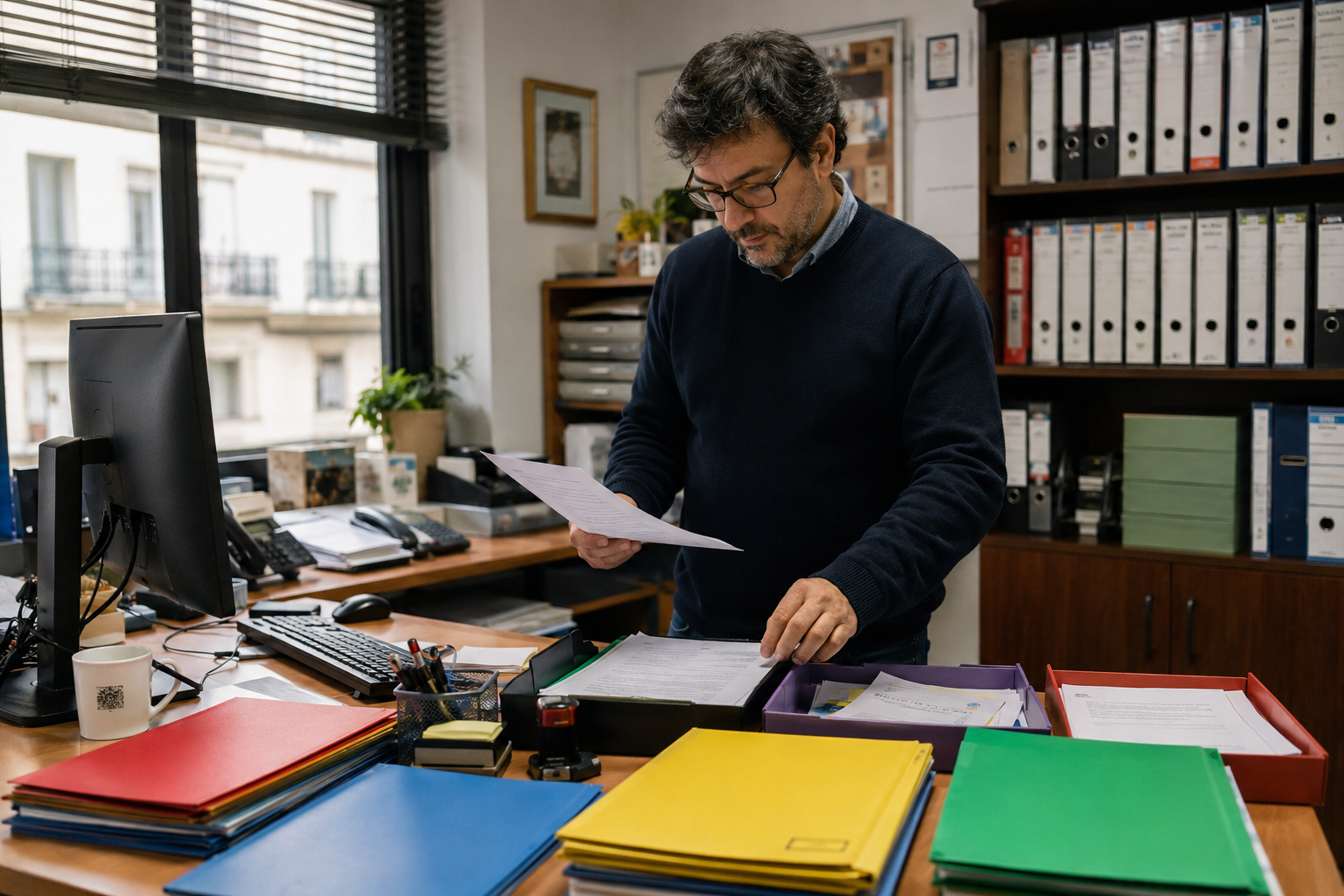
While Spaniards themselves routinely use gestores, the case for a newcomer, and especially a foreigner, is even stronger, because the newcomer faces every disadvantage the system can present at once. A person new to Spain confronts unfamiliar procedures, a language barrier, a lack of any prior experience with the system, and the highest-stakes paperwork of all, the residency and identity documents that their whole life in the country depends on.
For the newcomer, the gestor is often the difference between smooth settling and prolonged misery. The early bureaucratic tasks of establishing a life in Spain, the NIE, the empadronamiento, the residency paperwork, the first tax filing, are exactly the ones a gestor handles best, and getting them done correctly and promptly removes an enormous source of early stress and potential error. The gestor becomes the newcomer’s guide through the most daunting part of the move, the stretch where a single missed step can delay everything else.
There is also the simple matter of language and confidence. Navigating Spanish government offices and forms in Spanish, under unfamiliar rules, is hard for a newcomer, and having a professional who speaks the language of the bureaucracy fluently, who knows the staff and the procedures, and who can act on your behalf lifts a weight that is hard to overstate. For many expats, finding a good gestor is one of the first and best decisions they make in Spain. A good gestor often becomes a trusted fixture of a foreigner’s life in Spain, the person you return to year after year for the tax return, the renewal, the new procedure that inevitably arises. Because they come to know your whole situation, they can act quickly and head off problems before they start, so the relationship compounds in value over time. Many long-term expats speak of their gestor with real affection, as one of the people who made their Spanish life possible.
How to Choose a Good One

Because the gestor will handle important paperwork on your behalf, choosing a good one matters, and there are a few sensible things to look for. The single most important is that the gestor is properly licensed and registered, a member of the official professional body, since a licensed gestor administrativo is a regulated professional carrying proper insurance, while unlicensed advisers offer no such protection.
Watch out for a particular trap that targets newcomers. Some unlicensed operators market themselves as advisers to expats without the proper qualifications, and using one leaves you without the legal protections and professional standards that a real gestor provides, so it is worth confirming that anyone you hire is a genuine, registered gestor administrativo rather than an informal middleman. The regulation exists precisely to protect you, and it is worth insisting on.
Beyond licensing, fit and experience matter. Look for a gestor who has real experience with situations like yours, particularly if your needs are unusual or new, since some procedures, especially newer residency routes, require specific up-to-date expertise that not every gestor will have, and look for one accustomed to working with foreigners if you are one. A good gestor who understands your whole situation and communicates clearly is worth seeking out and keeping.
Letting Someone Else Carry the Paperwork
The deeper lesson of the gestor is that the endless administrative burden Americans simply accept as an unavoidable part of life is, in Spain, something you can largely hand to a professional. The whole weight of forms and filings and government offices that an American carries personally can, in Spain, be lifted onto the shoulders of someone whose actual job is to carry it, which is a rather different and rather civilized way to arrange things.
What makes the gestor so worth understanding is how much friction it removes from life. For a modest fee, the procedures that would consume your time, tax your patience, and risk your money are handled correctly by an expert, freeing you to get on with living rather than filing, which is exactly the kind of practical help that makes settling into Spain so much smoother than it would otherwise be. The gestor turns bureaucracy from a personal ordeal into a simple outsourced task.
So for anyone moving to or living in Spain, the gestor is one of the first pieces of local knowledge worth acquiring, a profession that quietly solves a problem Americans do not even realize has a solution. Find a good, licensed one, hand them the paperwork of your life, and discover the relief of having an expert navigate the bureaucracy on your behalf. It is one of the small ways in which Spanish life, for all its famous paperwork, turns out to be surprisingly well organized, and one of the best-kept secrets of settling in successfully. The paperwork will always be there, but in Spain, at least, you do not have to face it alone.

About the Author: Ruben, co-founder of Gamintraveler.com since 2014, is a seasoned traveler from Spain who has explored over 100 countries since 2009. Known for his extensive travel adventures across South America, Europe, the US, Australia, New Zealand, Asia, and Africa, Ruben combines his passion for adventurous yet sustainable living with his love for cycling, highlighted by his remarkable 5-month bicycle journey from Spain to Norway. He currently resides in Spain, where he continues sharing his travel experiences with his partner, Rachel, and their son, Han.