
Somewhere between the crash diets and the calorie apps, a quieter approach has been working for millions of people who never think about it at all. Across the Mediterranean, people tend to move through life at a healthy weight not by dieting but by living a certain way, following a handful of everyday habits so ingrained that nobody there would call them a plan. There is no tracking, no counting, no deprivation and no deadline panic. There is just a way of eating and moving and being that, over an unhurried span of weeks, tends to leave a body feeling lighter and better.
If September is your horizon, six weeks or more away, that is exactly the right kind of timeline for this, because the Mediterranean way is slow by design. This is not a crash to be survived before a date but a set of gentle habits to be eased into and, ideally, kept. Adopt them and any change arrives quietly, as a side effect of living well rather than the product of grim effort, and the pleasant surprise is how much better you feel long before you notice anything else. That order matters, and it is worth holding onto. The energy, the easier digestion, the steadier mood and the better sleep tend to arrive first, weeks before any visible change, which is precisely backward from how a diet sells itself. Here the feeling of wellbeing leads and everything else follows, so you are rewarded for the habits almost immediately rather than made to suffer for a distant payoff.
Here are six Mediterranean habits that support feeling lighter and healthier by late summer, none of which asks you to track a single thing. This is general lifestyle information rather than medical or nutritional advice, everyone’s body and needs are different, and anyone with specific health concerns, or a history of disordered eating, should talk to their doctor. But as a gentle, sustainable, pleasure-first way to feel better as the summer goes on, this is the approach a whole region quietly lives by, and it asks for no willpower you have to summon and no numbers you have to chase.
Walk, Every Single Day
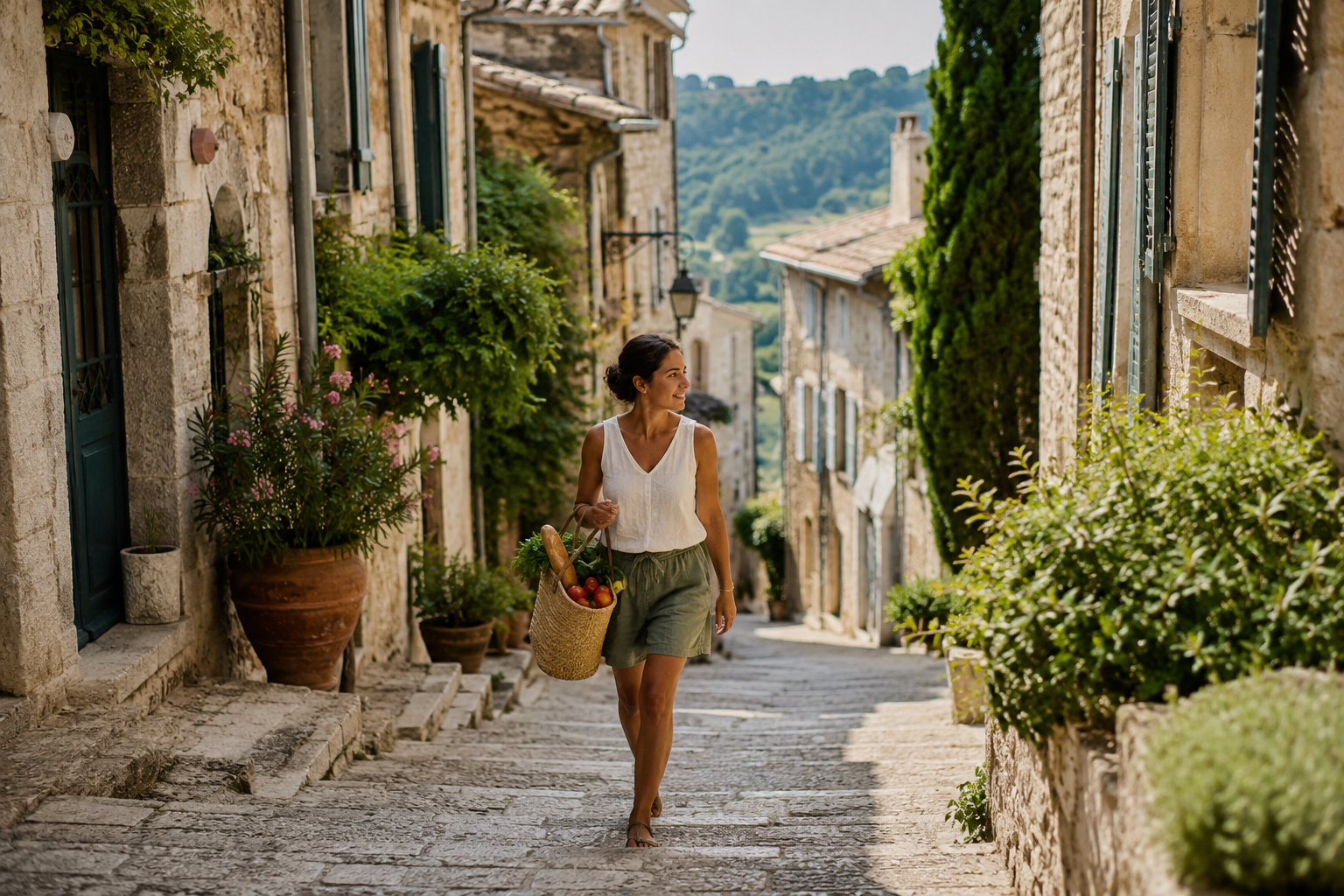
The first habit is the simplest and quietly the most powerful, which is to walk, daily and as a matter of course. In Mediterranean life, walking is not exercise to be scheduled but simply how people get around and how they spend their evenings, woven so thoroughly into the day that it never feels like a workout. They walk to the shops, they walk after dinner, they walk to see friends, and it adds up.
The beauty of it is that it costs no willpower. Where a gym routine demands motivation that fades, daily walking asks almost nothing, since it is folded into errands and social life and the simple pleasure of an evening stroll, which is why Mediterranean people keep it up for a lifetime while others abandon their resolutions by February. Movement that does not feel like exercise is movement you truly do.
A particularly lovely piece of the tradition is the walk after meals, the gentle evening paseo that follows dinner across Spain and much of the region. Strolling after eating aids digestion and settles the body, and it turns the end of a meal into a social, pleasant ritual rather than a slump on the sofa. You need not march or track your steps. You need only make walking a normal, daily, unremarkable part of your life, the way half the Mediterranean already does. It helps to stop thinking of it as exercise at all. The moment walking becomes a task with a target it joins the long list of things people mean to do and do not, whereas the moment it becomes simply how you get to the market or how you spend a warm evening, it stops requiring any decision. The trick the Mediterranean has mastered is not walking more on purpose but building a life in which walking happens anyway.
Eat Real Food, Mostly Plants
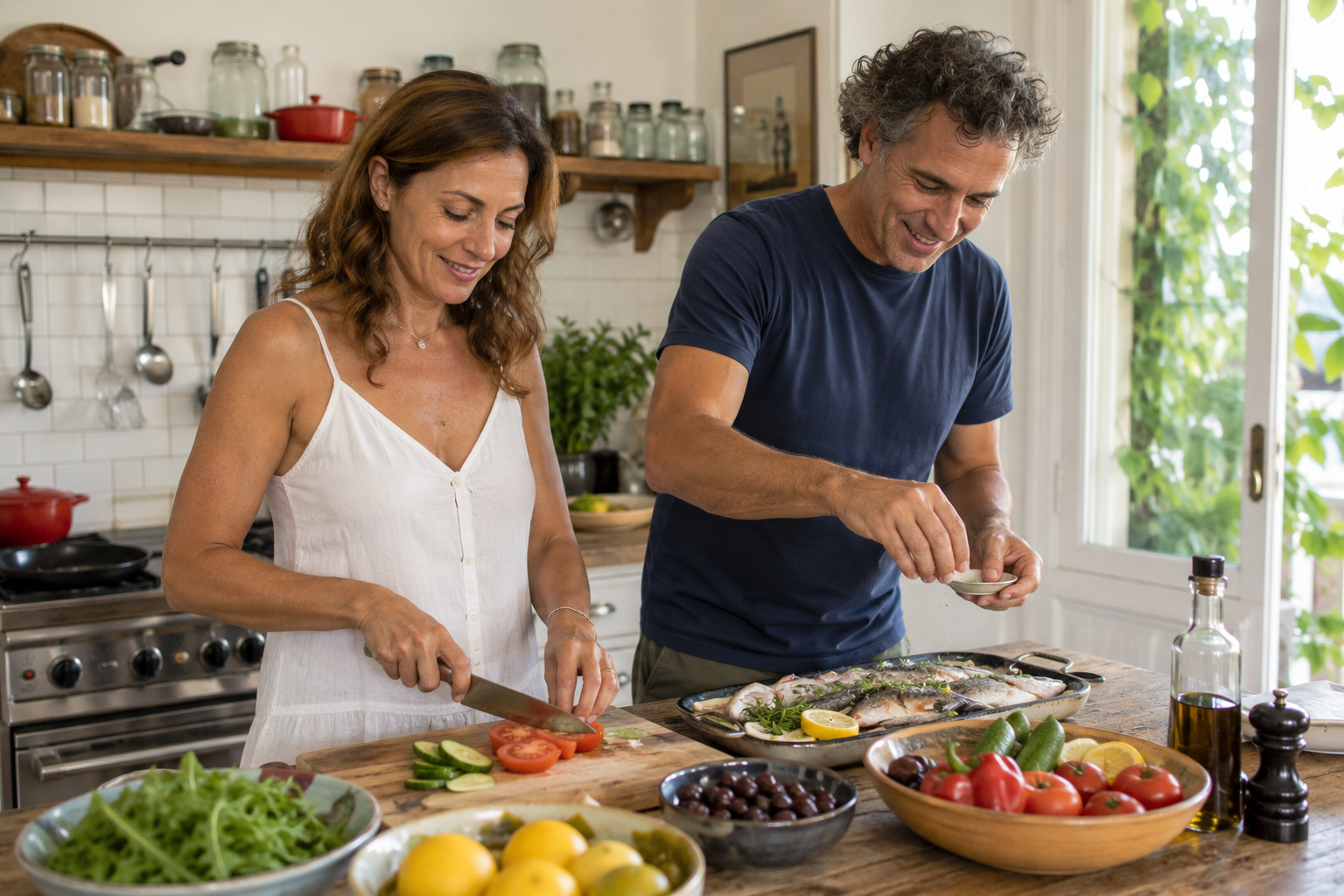
The second habit is about what fills the plate, and it is a matter of abundance rather than restriction. The Mediterranean way is built on real, whole, largely unprocessed food, with vegetables and fruit and beans and whole grains at the center, plenty of olive oil, fish and a little meat, and it is generous and satisfying rather than sparse. Nobody here is going hungry.
This is the opposite of a diet of denial. Instead of cutting and shrinking, the Mediterranean approach crowds the plate with good things, so much color and flavor and variety that the heavily processed food simply takes up less room by comparison, without anyone having to forbid it. You are not eating less so much as eating better, and the shift feels like gain rather than loss, which is precisely why it lasts.
The satisfaction is the secret. A plate of real, whole food, rich in fiber and flavor and substance, tends to leave you well satisfied in a way that processed food does not, so you are naturally content with what your body needs without any counting. Fill your days with vegetables and beans and good oil and fruit and fish, treat the heavily processed stuff as an occasional guest rather than a staple, and the rest tends to look after itself. There is no forbidden list here, which is part of why it works. Nothing is banned outright, and the occasional pastry or plate of fried food belongs in a Mediterranean life as much as anywhere, because a way of eating built on abundance and pleasure has room for treats without guilt. It is the everyday baseline that matters, and when the baseline is full of good things, the occasional indulgence takes care of itself.
Make Meals Slow and Social
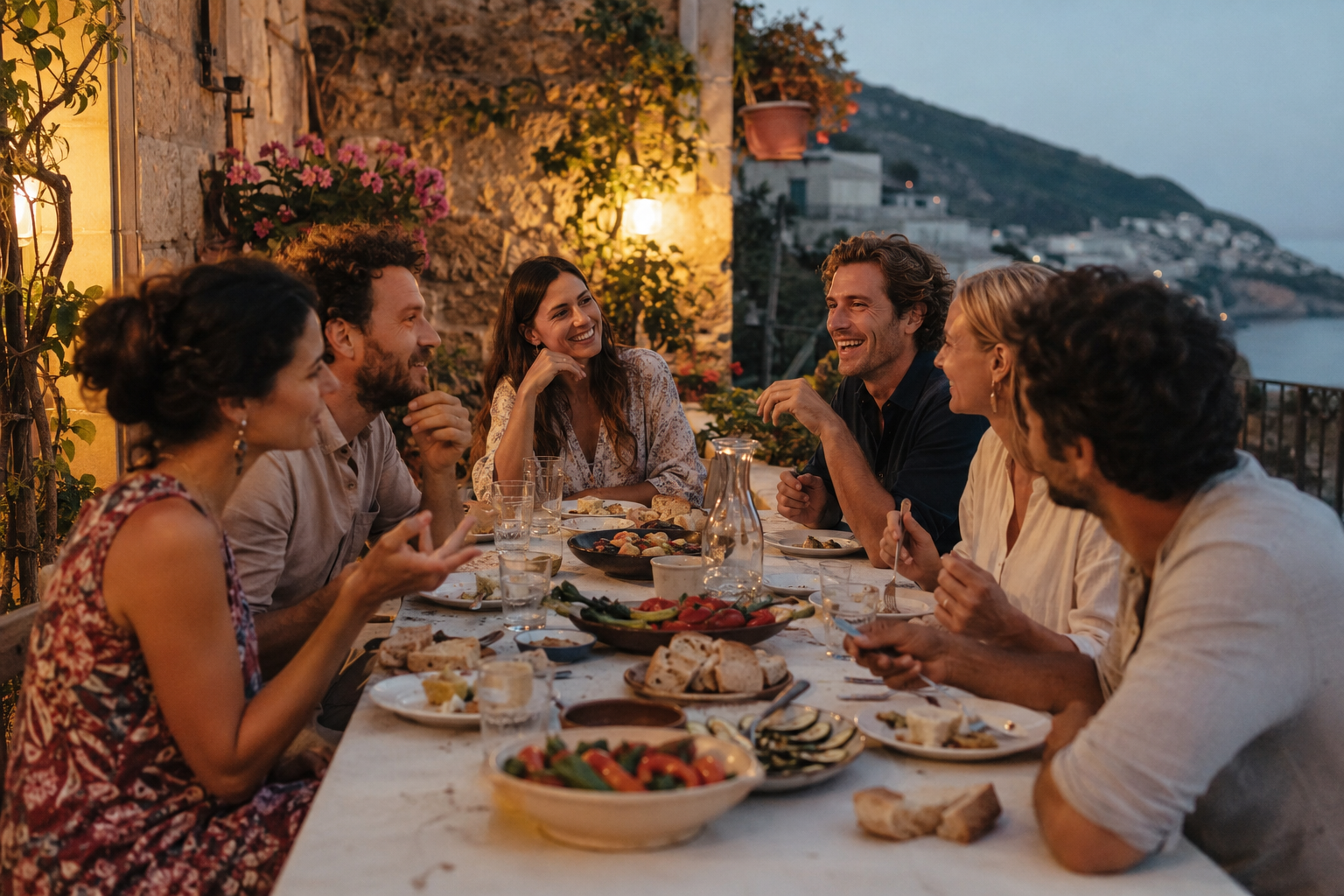
The third habit has nothing to do with what you eat and everything to do with how, and it is one the modern world has nearly forgotten. Mediterranean meals are slow and social, eaten at a table with other people, unhurried and enjoyed, stretched out with conversation rather than gulped alone in front of a screen. The meal is an event, not a refueling stop.
This slowness does quiet work on the body as well as the spirit. Eating slowly gives the body the time it needs to register fullness, which tends to arrive naturally when a meal is savored over conversation rather than rushed, so a person eating the Mediterranean way often stops when satisfied without ever deciding to. The pace does the work that willpower does elsewhere, gently and without strain.
The social side matters just as much. A meal shared with others, lingered over and enjoyed, nourishes connection and pleasure alongside the body, and that fullness of experience is part of why Mediterranean eating feels so satisfying and so sustainable. Sit down, slow down, eat with people when you can, put the screen away, and let the meal be a pleasure taken at leisure. The body tends to respond to being fed this way far better than to being fed in a hurry. This is one of the quiet tragedies of modern eating, that so many meals are consumed alone, fast and distracted, in ways that leave both body and spirit strangely unsatisfied. The Mediterranean table offers the opposite, and the fullness it produces is as much about company and pace as about the food itself. A sandwich eaten slowly among friends nourishes more completely than a feast gulped alone at a desk.
Cook at Home More Often
The fourth habit is cooking, the simple act of making your own food more often than not. Mediterranean life is built around home cooking, meals prepared from real ingredients in the kitchen rather than bought ready-made or ordered in, and this single habit quietly shapes everything a person eats. When you cook, you control what goes into your food.
The effect is powerful precisely because it is indirect. A person who cooks at home from whole ingredients naturally eats less of the excess sugar, salt and processed fat that fill restaurant and packaged food, not through any act of restraint but simply because those things are not in the pot, so home cooking gently improves the whole diet without any dieting at all. The kitchen is where the Mediterranean way is quietly made.
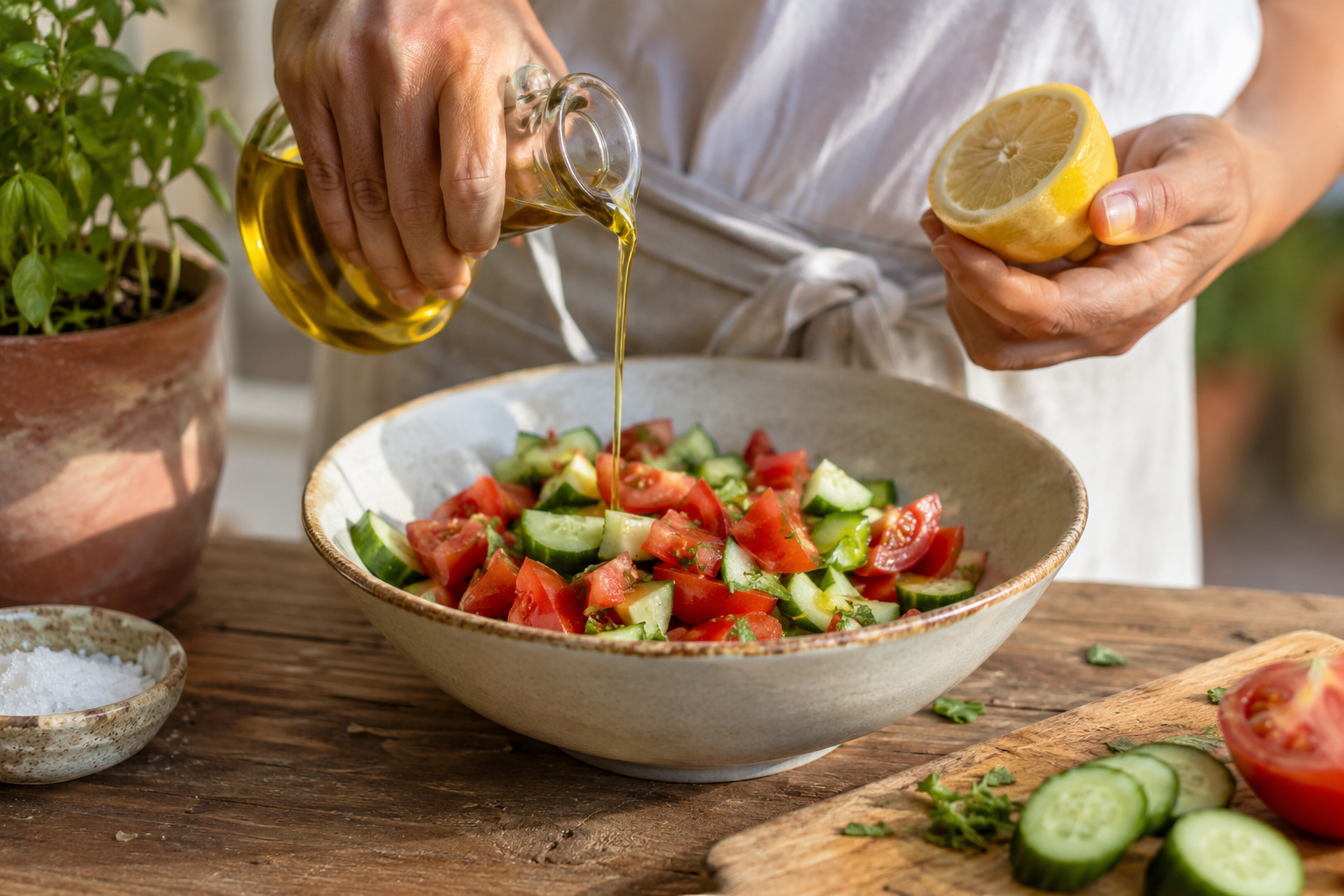
It need not be elaborate or time-consuming. Much of Mediterranean home cooking is gloriously simple, a pot of beans, a plate of vegetables dressed in good oil, a piece of fish, a salad, the kind of thing that comes together quickly from a few honest ingredients. Cook more than you order in, keep it simple, lean on real ingredients, and you shift the balance of everything you eat toward the better without ever picking up a calorie counter. Cooking also slows the whole relationship with food in a healthy way. When a meal takes a little time and effort to make, it is savored differently from something torn open from a packet, and the small ritual of preparing it reconnects a person to what they are eating. The pot of beans simmering on the stove is doing more than feeding you. It is restoring food to its proper place in the day.
Eat With Attention, Stop When Satisfied
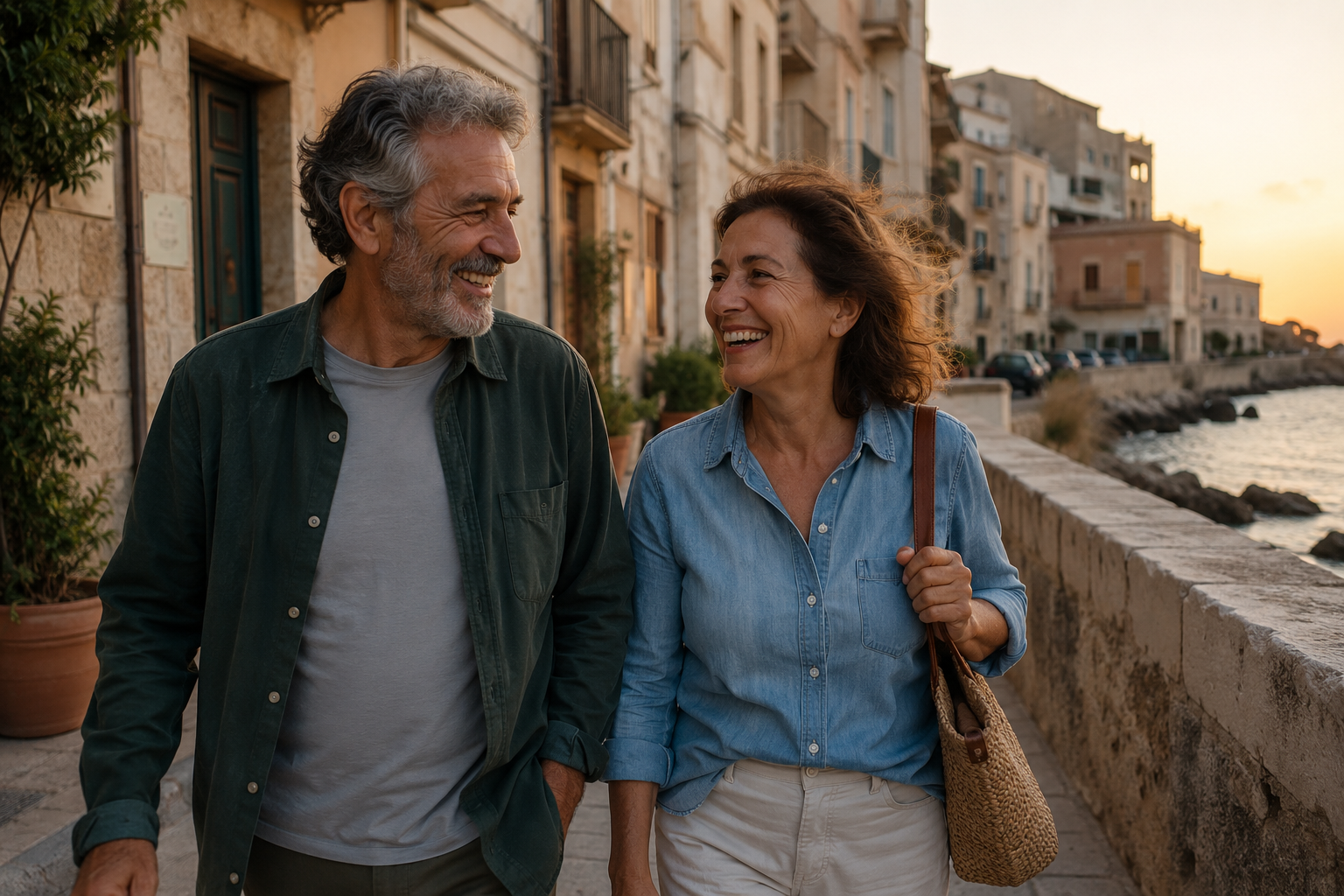
The fifth habit is a gentle awareness, the practice of eating with attention and honoring your body’s own signals rather than any external rule. Mediterranean eating tends to be attuned to real hunger and real fullness, an unforced attention to what the body truly wants, which stands in quiet contrast to both mindless overeating and rigid dieting alike. It is a middle path of trust.
This is not a technique to be practiced so much as an attitude to be recovered. When you eat with attention, tasting your food and noticing how you feel, your body’s own signals of hunger and satisfaction grow audible again, guiding you naturally toward what you need after years of being drowned out by distraction and rules. You stop needing to be told how much to eat because your body, listened to, tells you itself.
The key is to trust that signal rather than override it. Eat when genuinely hungry, stop when comfortably satisfied rather than stuffed, and let go of both the guilt of dieting and the autopilot of grazing, settling instead into the body’s own gentle wisdom about food. This is perhaps the least tangible of the six habits and one of the most freeing, a way of eating that asks for attention rather than control and gives back an ease around food that dieting never can.
Ditch the Tracking Entirely
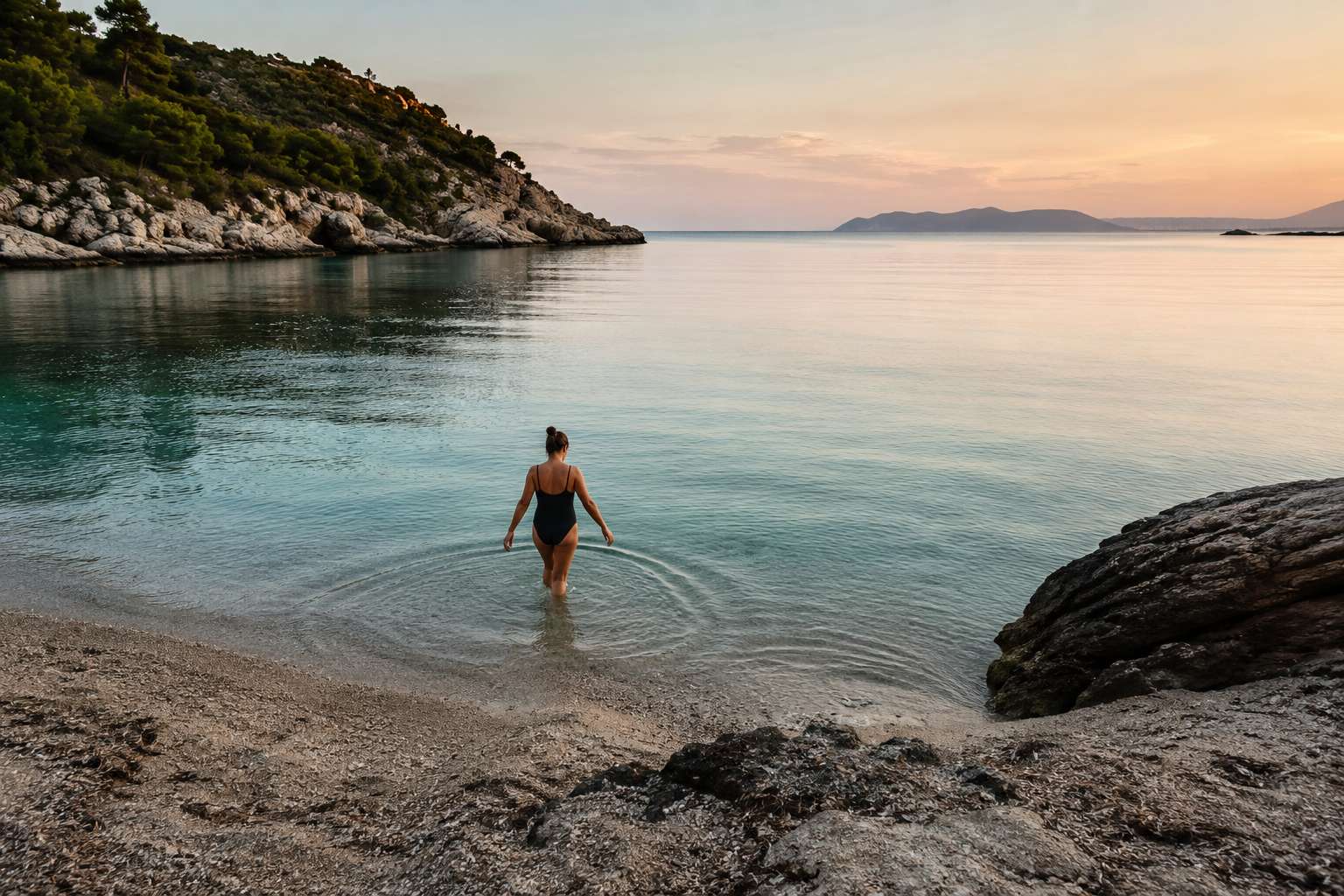
The sixth habit is the one that ties the others together, and it is a habit of not doing something, which is not tracking. The Mediterranean way works precisely because it is not a regime of counting and measuring and logging, but a way of living that needs no spreadsheet, and letting go of the tracking is part of what makes it sustainable and sane. Nobody in a Mediterranean village is logging their lunch.
The freedom in this is enormous and underrated. Tracking every bite turns eating into a chore and a source of anxiety, a constant low-grade accounting that most people cannot and should not sustain, whereas the Mediterranean approach replaces all of it with a handful of good habits that run on their own once established. You trade the exhausting vigilance of the diet for the quiet ease of a way of life. And that ease is not a small thing, because the anxiety of constant monitoring is itself a burden on wellbeing, one that the Mediterranean approach simply sets down. A mind freed from counting has room for the pleasures that make eating worthwhile in the first place.
This is why the approach can carry you gently toward feeling lighter by September without a single deadline or metric. Because it asks for habits rather than numbers, it works on a human timescale, unhurried and forgiving, with no date to dread and no figure to hit, only a steady drift toward feeling better as the weeks go by. Put down the app, adopt the habits, stop counting, and let a way of living do quietly what no diet ever manages, which is to last.
Why the Slow Way Wins
Step back from the six habits and the deeper logic becomes clear, which is that the Mediterranean approach works because it is livable. Diets fail overwhelmingly because they are temporary ordeals of restriction that no one can sustain, and the moment they end the old life and the old weight return, whereas a set of pleasant daily habits, once adopted, simply becomes how you live. Permanence is the whole advantage.
The realistic horizon is part of the wisdom too. Six weeks or more is not enough time for a crash and is exactly enough time to ease into new habits and feel their first effects, more energy, better digestion, a lighter and clearer feeling, well before any dramatic change, which is the sustainable order of things. The point was never to hit a number by a date but to start living in a way you will still be living in years from now. A deadline breeds panic and panic breeds the crash diets that fail, whereas an open horizon invites the calm, gradual, forgiving change that does last. Removing the deadline is not a loss of urgency but a gain of sanity.
And it is worth saying plainly that feeling lighter is only part of what these habits give. Walking daily, eating real food, sharing slow meals, cooking at home, eating with attention and dropping the anxious tracking are the foundations of a good life, and they nourish mood and connection and health far beyond the body. Adopt them for September if you like, but keep them because they make life better, which is the real Mediterranean secret. The region did not set out to be slim. It set out to eat well, move often, and share its table, and the lightness came along quietly for the ride. The lightness is a side effect. The life is the point, and it is a life you can keep long after September has come and gone.

About the Author: Ruben, co-founder of Gamintraveler.com since 2014, is a seasoned traveler from Spain who has explored over 100 countries since 2009. Known for his extensive travel adventures across South America, Europe, the US, Australia, New Zealand, Asia, and Africa, Ruben combines his passion for adventurous yet sustainable living with his love for cycling, highlighted by his remarkable 5-month bicycle journey from Spain to Norway. He currently resides in Spain, where he continues sharing his travel experiences with his partner, Rachel, and their son, Han.