
Last updated on October 20th, 2026 at 12:18 pm
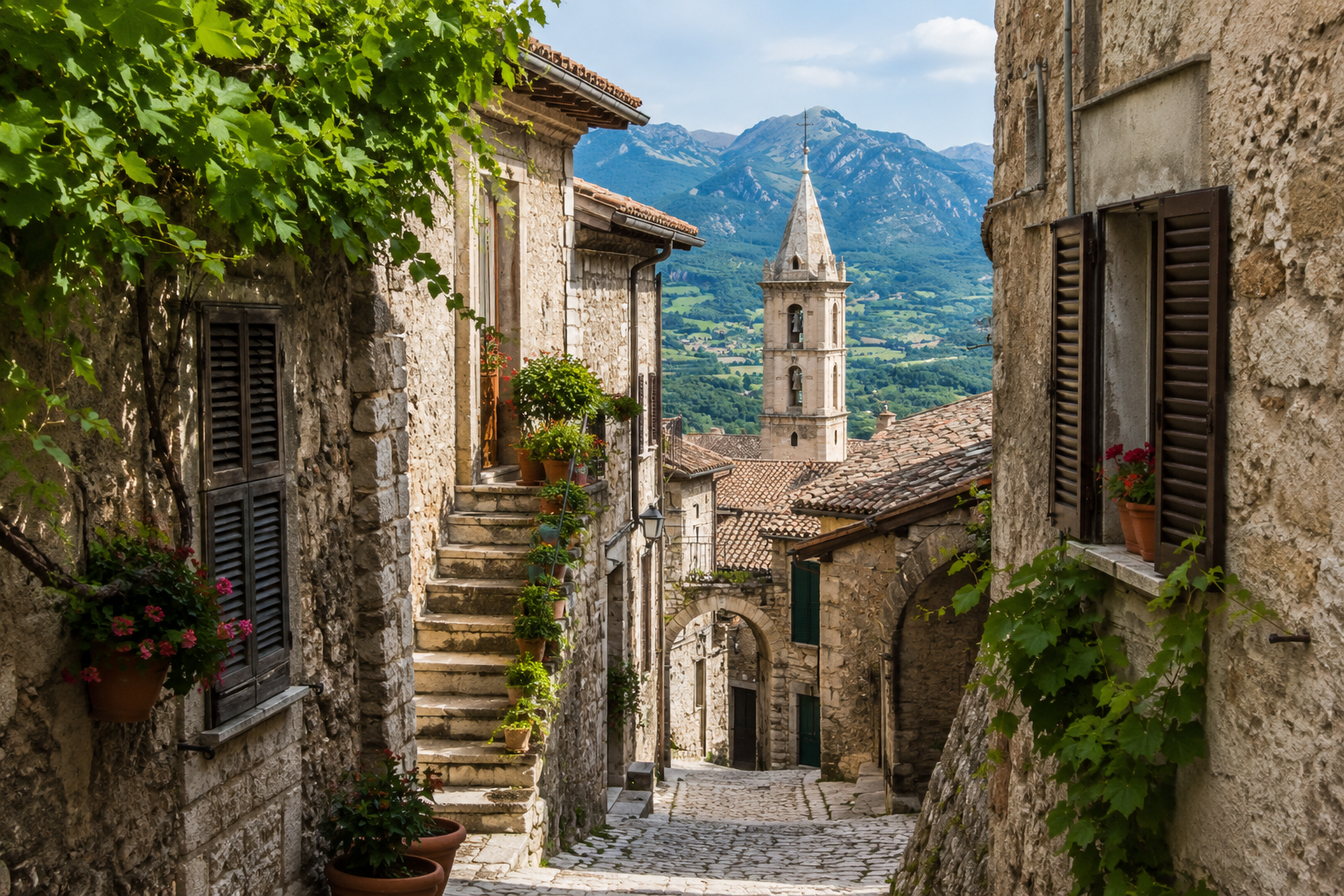
Ask an American to name an Italian region and you will hear Tuscany, then Sicily, then perhaps Puglia if they have been paying attention. Almost nobody says Abruzzo. Yet it sits barely two hours east of Rome by car, holds a remarkable share of Italy’s protected land, keeps bears and wolves in its mountains, runs down to the Adriatic on one side and up into ski country on the other, and sells houses in its medieval quarters for one euro.
That combination is strange enough to be worth explaining. A region this close to the capital, this beautiful and this cheap should be overrun, and instead it is one of the emptiest corners of the country, with whole historic centers standing dark and the town halls trying to give the buildings away. The €1 house is not a marketing gimmick here so much as a symptom, the visible edge of a depopulation that has been running for a century.
Here is how the €1 scheme really works in Abruzzo, what the region is really like, and why the emptiness that makes the houses cheap has proved so stubborn. This is general information rather than legal or financial advice, and every town sets its own rules that change from year to year, but the shape of the thing is clear.
The Region Nobody Mentions
Start with what Abruzzo is, because most people have no picture of it at all. It occupies the middle of the Italian peninsula, east of Lazio, with the Apennines running down its spine and the Adriatic coast along its edge, which means mountains and sea within an hour of one another. The highest peaks in mainland Italy south of the Alps are here, in the Gran Sasso massif.
The land is startlingly protected. Roughly a third of the region sits inside national parks and reserves, which has earned it a reputation as one of the greenest corners of Europe, and it shelters wildlife that has vanished from most of the continent, including the Marsican brown bear, wolves and chamois. In the same afternoon you can be walking in high wilderness and eating grilled fish on the coast.
The towns match the landscape. Stone villages sit on hilltops and mountainsides, medieval quarters wind through alleys built for donkey carts, and the food is famous within Italy even where the region is not, with its arrosticini skewers, saffron from the Navelli plain and some of the country’s most serious pasta. L’Aquila, the regional capital, is Italy’s Capital of Culture for 2026. None of which has made Abruzzo famous abroad. The obscurity is oddly specific. Italians know Abruzzo perfectly well, holiday in it, ski in it and eat its food with reverence, and the region is no secret within its own country. It is the international picture that never formed, so that a place ordinary Italians consider a treasure remains, to most foreign visitors, a blank space on the map between Rome and the Adriatic.
Two Hours From Rome
The proximity is the part that startles people most. From Rome, the A24 and A25 motorways run east through the mountains, and in roughly two hours you are in the Peligna Valley among the stone towns. Trains and buses connect the region to the capital as well, and Pescara on the coast has its own airport with flights around Europe.
This is not remote country by any reasonable measure. It is closer to Rome than the Hamptons are to Manhattan, closer than many American suburbs are to their own downtowns in traffic, and the drive is a spectacular one through mountain tunnels and high valleys rather than a slog. A person living in Abruzzo can be in the center of Rome for lunch and home again for dinner without hurrying. That proximity is what makes the emptiness genuinely puzzling rather than merely sad. Remote regions empty for obvious reasons, and nobody wonders why the far end of a mountain range loses its young. A valley within commuting distance of a European capital is a different case, and it suggests that distance was never really the problem here.
The contrast with the region’s obscurity is the whole puzzle. Tuscany built a global brand on hills and wine, Puglia on trulli and beaches, and Abruzzo, with mountains, coast, wilderness, food and Rome on its doorstep, somehow never entered the conversation. Being overlooked has kept it cheap and uncrowded, which the people selling €1 houses now regard as either the region’s tragedy or its opportunity, depending on the day. What it has not done is bring people back. A region can be undiscovered and still be emptying, and Abruzzo has managed both at once, holding onto its beauty and its wildness precisely because so few people wanted to live among them. The quiet that a visitor finds enchanting is the same quiet the town halls are trying to end.
The €1 Houses of Pratola Peligna
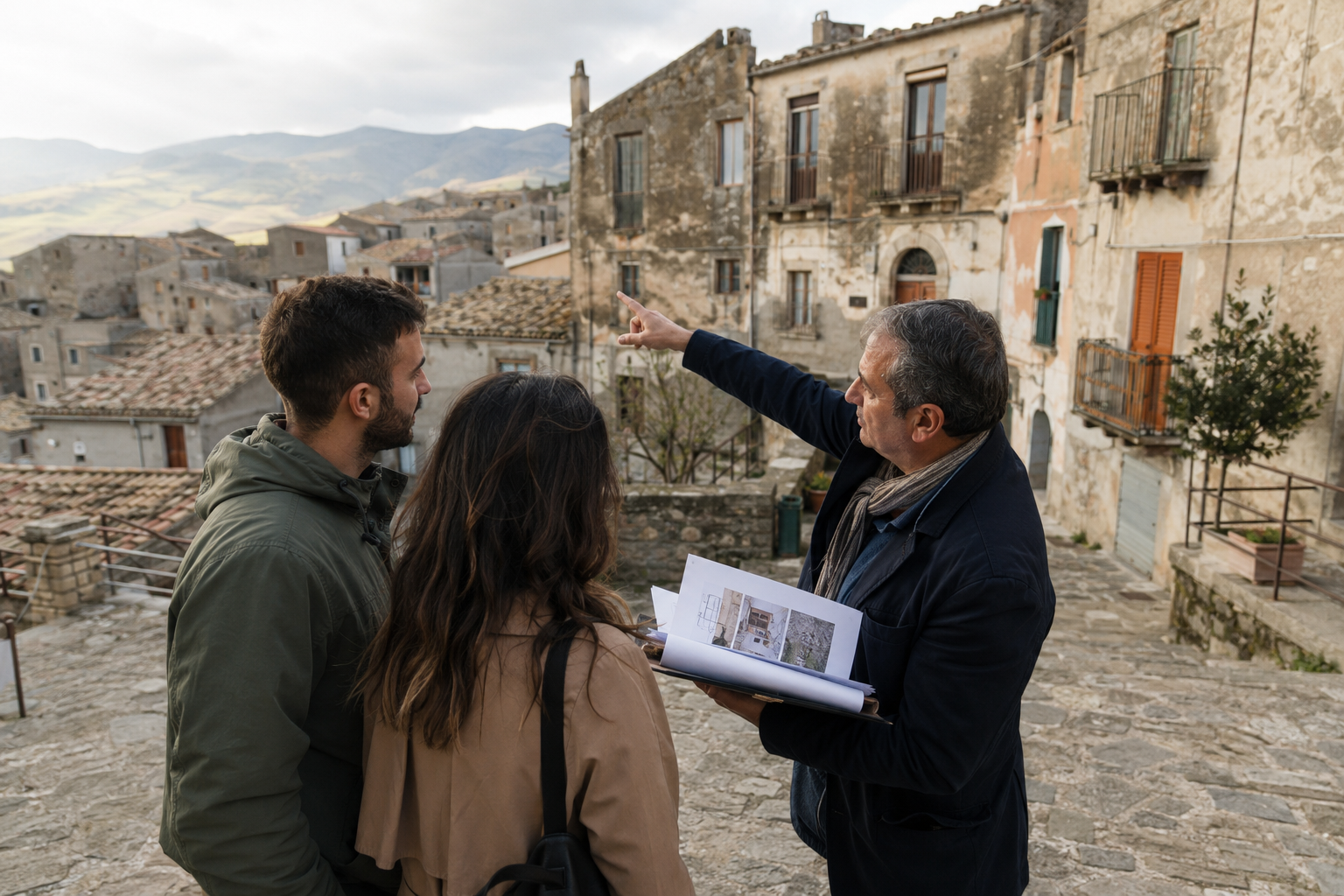
The town that broke Abruzzo into the €1 club is Pratola Peligna, in the province of L’Aquila, a place of about seven thousand people in a mountain valley near Sulmona and the ski slopes. Its medieval district is a maze of narrow stone alleys, and a great many of the houses in it are empty, some of them windowless ruins and others still holding furniture, as though the family had stepped out and never come back.
The scale of the emptiness is the striking part. The municipality surveyed its housing stock and identified roughly 630 degraded or abandoned buildings in the old town, of which local officials estimated as many as 250 could eventually be sold for a symbolic euro. That is not a handful of curiosities but a substantial share of an entire historic center standing vacant.
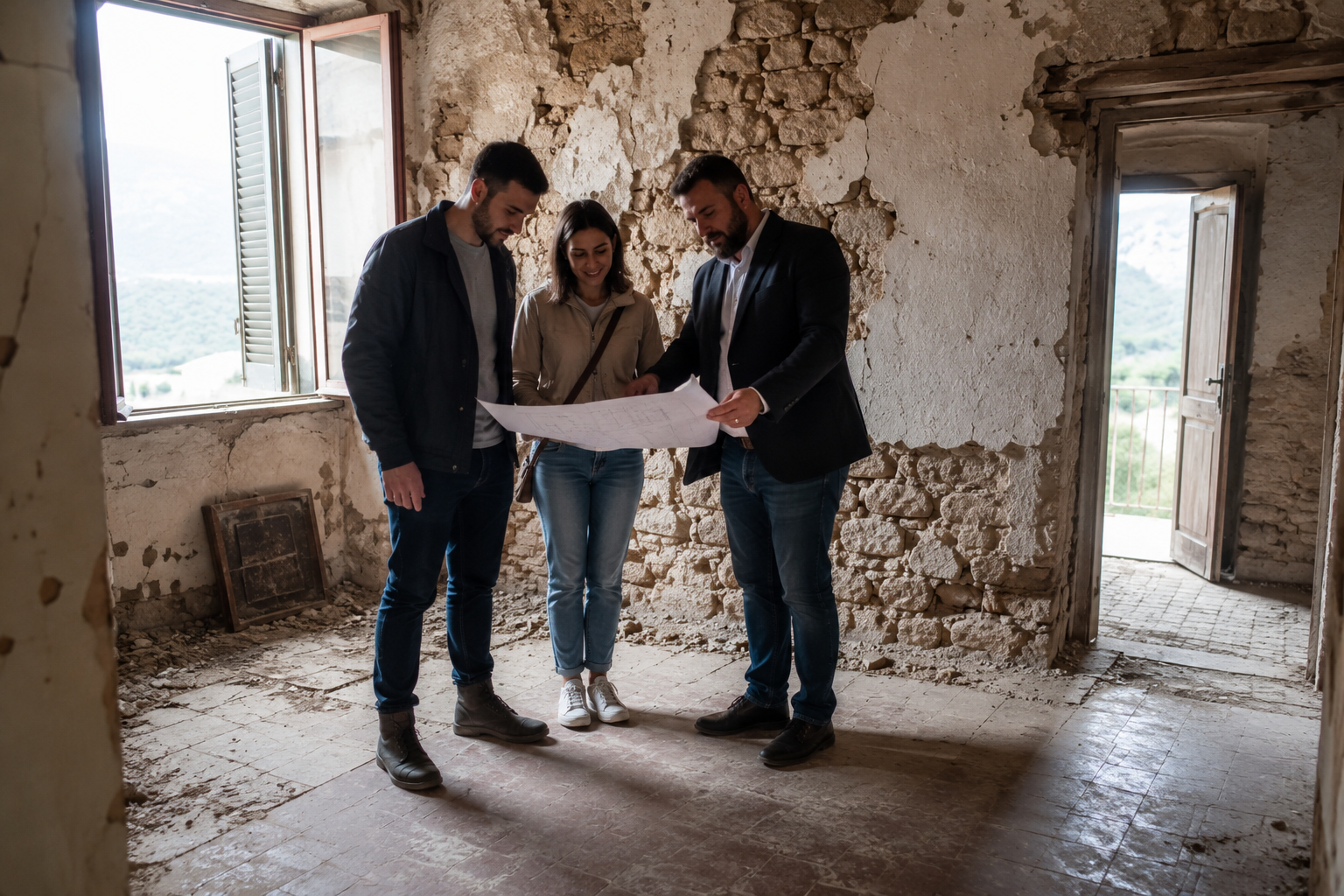
The mechanism is simple enough. The town acts as a broker rather than an owner, inviting residents who hold crumbling, unwanted property to put it into the scheme, and matching them with buyers willing to take it on and restore it. Many owners were glad to be rid of the burden, since an abandoned house is a liability that can collapse and must be secured, and the town had already issued dozens of collapse warnings on buildings in the quarter. That detail explains the whole economics of it. These houses are not assets being generously given away but obligations being transferred, from an owner who cannot afford to maintain or demolish them to someone willing to spend real money on the rescue. The euro is the price of taking a problem off somebody’s hands, which is why the town is so insistent that you truly solve it.
The Rules, and the Unusual Twist
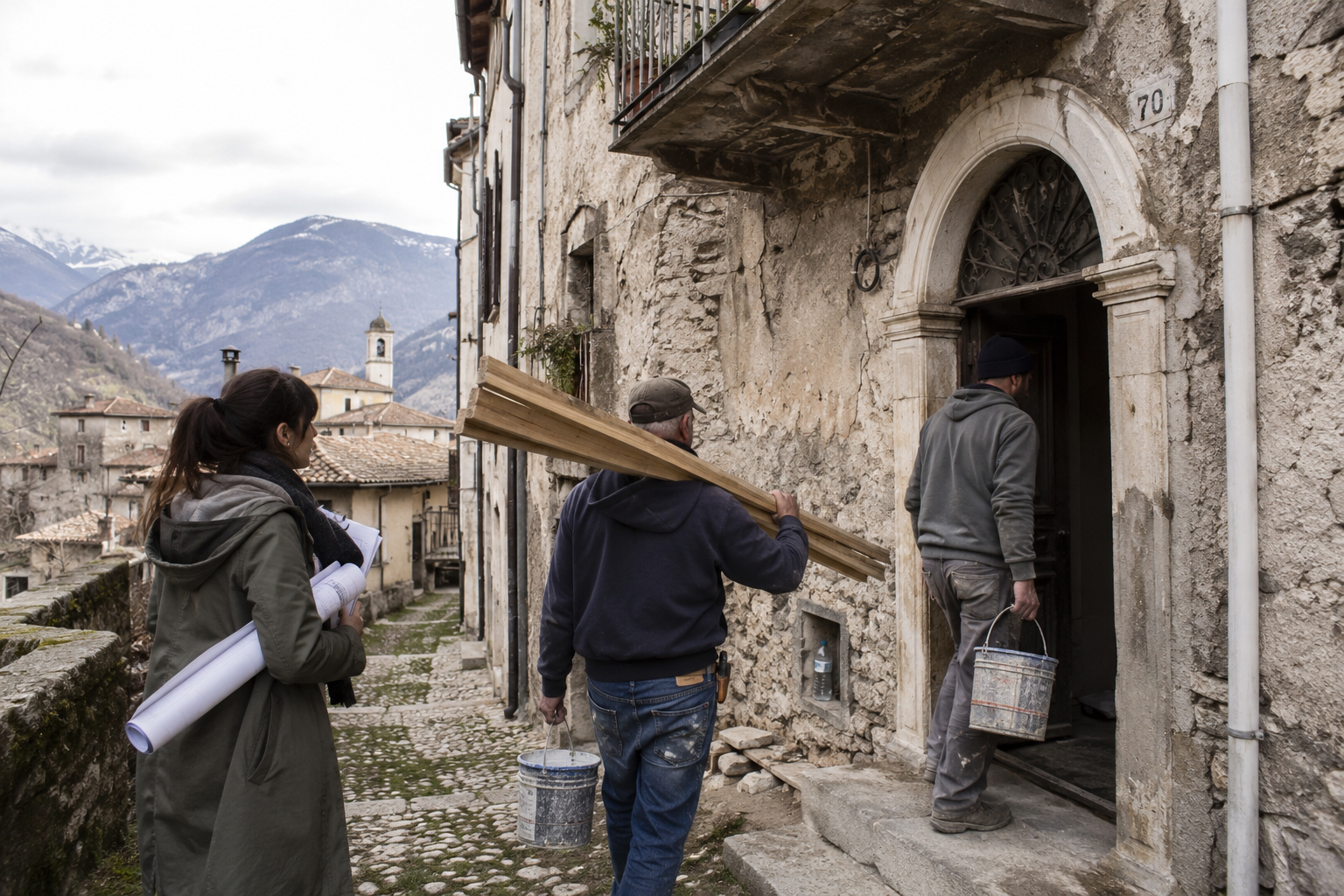
What makes Pratola Peligna interesting for a buyer is that its terms differ from the Sicilian template most people know. In most €1 towns you must lodge a deposit, typically €2,000 to €5,000, which the municipality holds and returns only when your renovation is finished, and forfeits if you fail. Pratola Peligna chose not to require that deposit at all.
Instead it uses a penalty. Buyers face a €10,000 fine if they fail to register a detailed plan of building works within six months of purchase, and the renovation itself is expected to be completed within about three years. The local councilor who drove the project described the fine as a worst-case measure, meant simply to ensure that buyers follow through rather than purchasing for a euro and vanishing.
The distinction matters more than it sounds. A deposit ties up your cash from day one and is refunded if you perform, while a fine costs nothing unless you fail, which lowers the barrier to entry but raises the stakes of missing the deadline. Either way the message is identical, and it is the message behind every €1 scheme in Italy, which is that the euro buys you an obligation rather than a bargain. Both models exist across Italy for the same reason, which is the fear of the speculator. Towns learned early that a symbolic price attracts people who will buy a ruin, do nothing, and wait for someone else to fix the neighborhood, and every deposit and fine and deadline in these schemes exists to make that strategy expensive. The rules are not there to trap the sincere buyer but to repel the insincere one.
Why the Emptiness Is So Stubborn
The houses are cheap because nobody wants them, and understanding why is the key to the whole region. Pratola Peligna counted about thirteen thousand residents in the 1930s and has roughly seven thousand today, a loss of nearly half its people, and that pattern repeats across the mountain towns of Abruzzo. The story is emigration, first abroad to the Americas and later to Rome and the industrial north.
The mountains that make the region beautiful also made it poor. Farming these valleys was hard, the land offered little, and for generations the way to a better life ran out of the village, so young people left and did not return, leaving the old quarters to age and empty. Italy calls these places the inner areas, the mountainous interior that drained while the coasts and cities filled.
Then there are the earthquakes, which shadow everything here. Abruzzo sits on active fault lines, and the 2009 L’Aquila earthquake devastated the regional capital and shook the towns around it, deepening a decline that was already underway and leaving a legacy of damaged and condemned buildings. A place that empties for economic reasons and then shakes is a place that struggles to fill again, and the vacant houses of Pratola Peligna are what that history looks like in stone. The €1 houses are therefore not a quirk but a confession. A town only gives away its historic center when it has concluded that the market will never clear it, that no ordinary buyer is coming, and that the choice is between symbolic sales and slow collapse. Behind every charming photograph of a stone alley in Abruzzo is a municipal calculation that grim.
The Rest of Abruzzo Follows
Pratola Peligna was the first, and it is no longer alone. The €1 idea has spread across the region, with towns in the provinces of Pescara and Chieti and L’Aquila launching their own schemes, from hill towns between the Maiella mountains and the sea to villages inside the national park where the wolves are. The 2026 lists of Italian €1 towns now include a healthy cluster of Abruzzese names.
Some places have tried other tools entirely. Santo Stefano di Sessanio, a fortified stone village in the Gran Sasso, became internationally known for its scattered-hotel model, turning empty houses into dispersed guest rooms, and later ran a grant scheme to attract new residents outright. Across Italy’s inner areas the experiments multiply, from symbolic sales to relocation bonuses, all chasing the same problem.
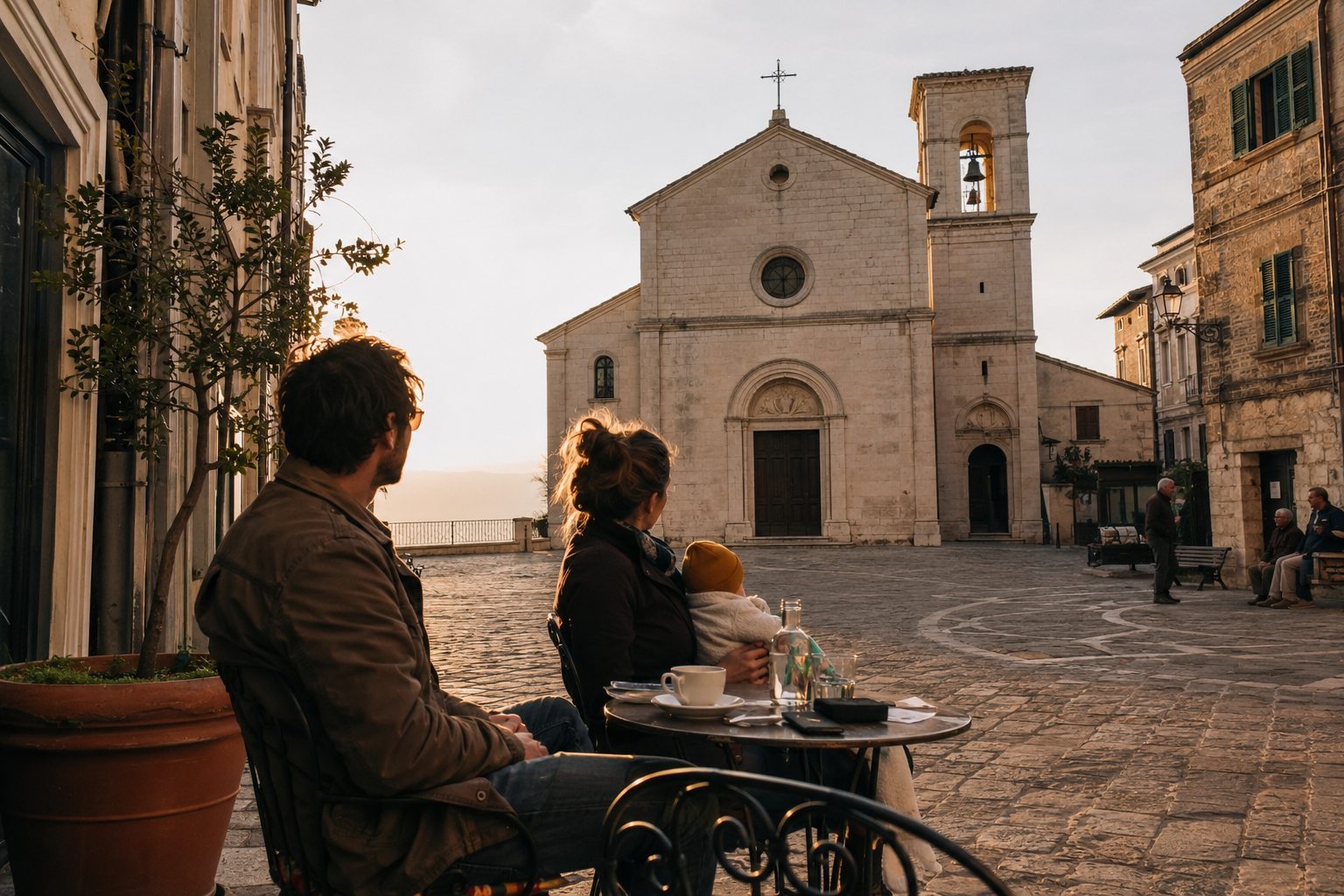
The results so far are modest but real. Buyers have come, some of them foreign, retirees from northern Europe and the occasional American, houses have been restored and a few families have moved in, and the towns keep publishing new lots. Nobody in Abruzzo is claiming the depopulation has been reversed. The claim is smaller and more modest, which is that the bleeding has been slowed in a few streets. It is worth respecting that modesty. A dozen restored houses will not repopulate a valley that lost six thousand people over a century, and no serious person in these town halls pretends otherwise. What the schemes do buy is time, attention and a handful of committed newcomers, plus the local building work their renovations pay for, which in a small mountain town is not nothing.
What a €1 Abruzzo House Really Costs
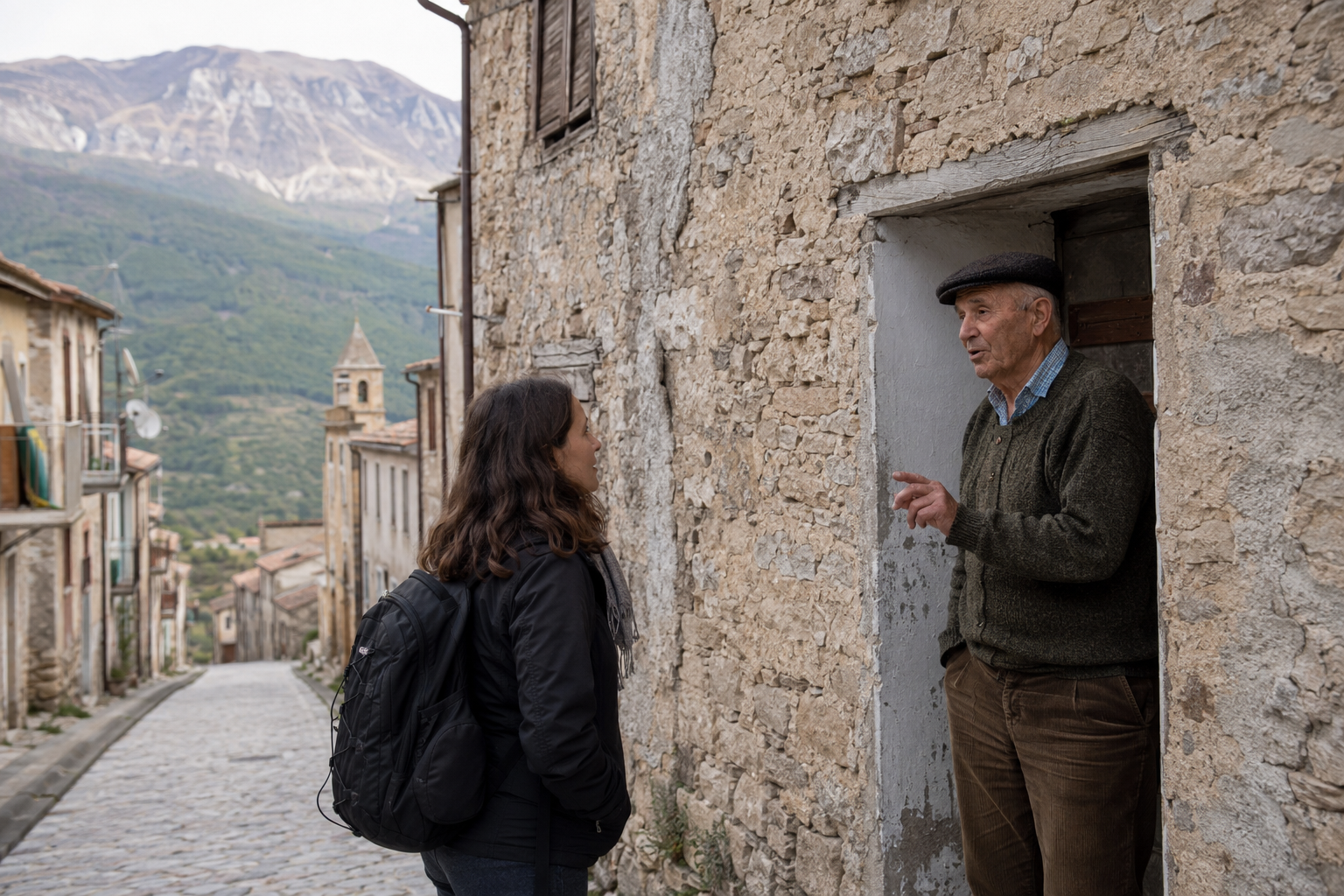
The euro is the least interesting number in the transaction, and anyone taking this seriously should start from that. On top of the symbolic price you pay notary fees, registration and transfer taxes, the cost of an architect or surveyor to draw up the plans the town requires, and then the renovation itself, which is where the real money goes. Buyers across Italy’s €1 schemes typically report total renovation costs running from tens of thousands of euros into six figures.
Abruzzo adds its own wrinkles. Building in a protected historic center means respecting the original materials and forms, which raises costs, and building in an earthquake zone means structural work is not optional. Italian renovation tax incentives can offset a real share of the spend, and towns often point buyers toward them, but the arithmetic still starts in the tens of thousands rather than at one euro.
The honest way to see it is as a swap. You are not buying a cheap house, you are accepting a ruin and a deadline in exchange for the chance to own a restored stone home in a beautiful, empty, wildly underrated part of Italy two hours from Rome, for a fraction of what the same thing would cost in Tuscany. Whether that is a bargain depends entirely on whether you actually want to do the work. The people who succeed at this tend to share a trait, which is that they wanted the project as much as the house. Buyers who fall for the price alone discover a deadline, a foreign bureaucracy and a building site, while those who came for the restoration itself, and chose Abruzzo because they loved it, generally finish. The euro filters for the wrong thing, and the work filters for the right one.
For all its emptiness, Abruzzo remains one of the strangest gaps in the American picture of Italy, a region with mountains, sea, wilderness, food and the capital within easy reach, and almost no international profile at all. The €1 houses are a symptom of that obscurity rather than a cure for it, the residue of a century of people leaving a place that the rest of the world never learned to notice. The towns are betting that a few outsiders will notice now, and the price of admission is one euro, a €10,000 promise and several years of work. Rome, meanwhile, stays two hours down the motorway, which is the detail that keeps pulling people back to the listings. What you get, if you finish, is a piece of the emptiest and most overlooked corner of Italy, which is either the worst investment imaginable or the last real bargain on the peninsula.

About the Author: Ruben, co-founder of Gamintraveler.com since 2014, is a seasoned traveler from Spain who has explored over 100 countries since 2009. Known for his extensive travel adventures across South America, Europe, the US, Australia, New Zealand, Asia, and Africa, Ruben combines his passion for adventurous yet sustainable living with his love for cycling, highlighted by his remarkable 5-month bicycle journey from Spain to Norway. He currently resides in Spain, where he continues sharing his travel experiences with his partner, Rachel, and their son, Han.