
Walk through a village on a Greek island and you will meet women in their seventies, eighties and beyond with skin that has clearly seen a lot of sun and a lot of life, and yet carries a kind of health and vitality that expensive routines rarely buy. Ask one of them about her skincare regime and she will look at you blankly. There is no ten-step ritual, no cabinet of serums, no acid or retinol. There is olive oil, a way of living, and not much else.
This is not a claim that these women have flawless, wrinkle-free faces, because they do not, and would not want to. It is that they age with a glow and a resilience that seems to come from somewhere other than a bottle. The things that stand in for a skincare routine are not really about skin at all but habits of eating, moving, resting and connecting that happen to leave their mark on the face as much as the body, and that a growing body of research links to healthier aging overall.
Here are eight of those habits, the daily practices that quietly replace the skincare aisle in the lives of older Greek women. None of this is medical or dermatological advice, and genetics and individual circumstances always play a large role, but the pattern is worth understanding.
Olive Oil, Inside and Out
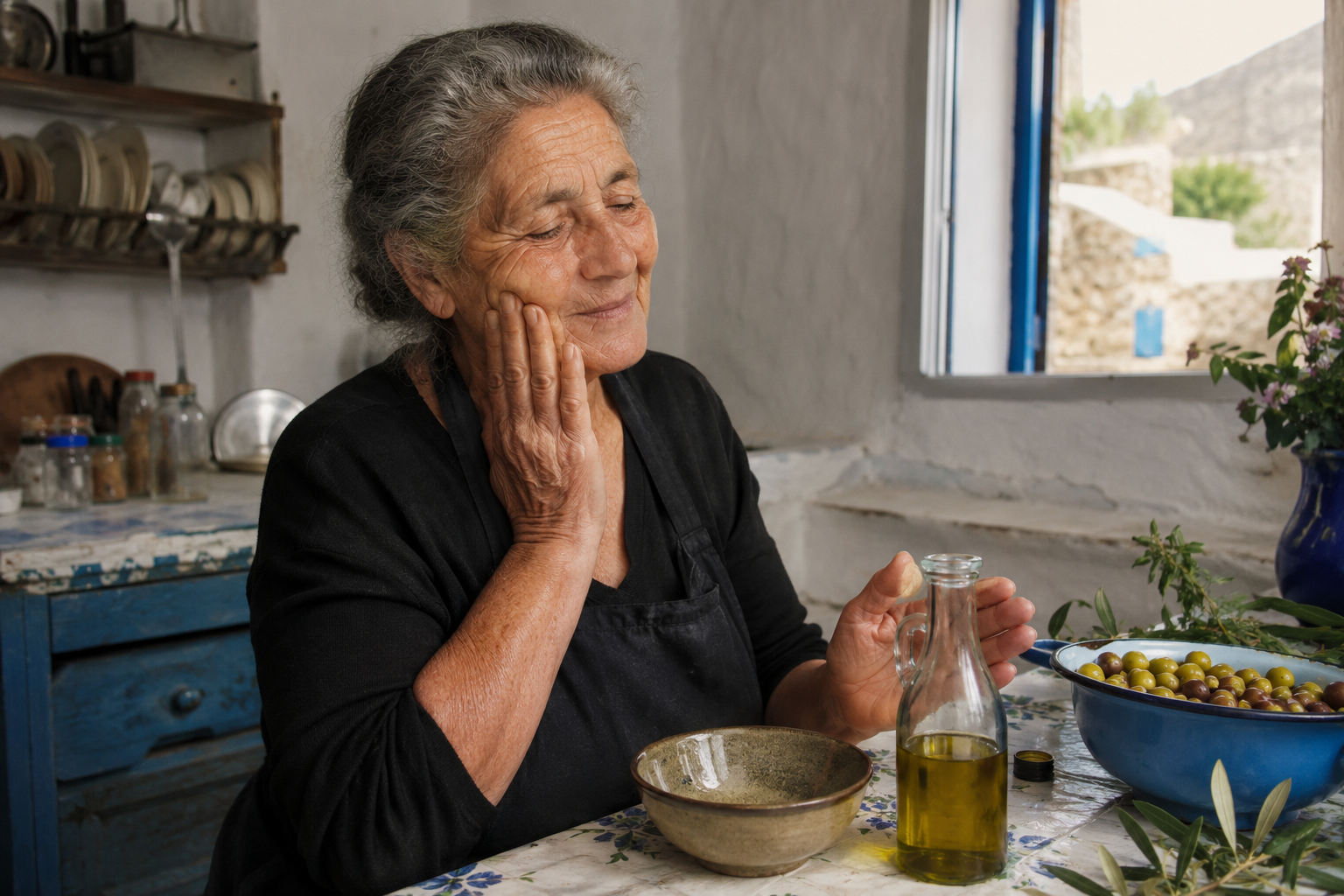
The one product these women do use is olive oil, and they use it lavishly, both in the kitchen and on the skin. Greece has among the highest olive oil consumption in the world, and it is the fat that everything is cooked in, poured over, and dipped into, meal after meal, a steady daily dose of monounsaturated fat and antioxidants.
Many older Greek women also use it directly on the skin, as their mothers and grandmothers did, smoothing a little onto the face, hands and hair as a simple moisturizer. Whether or not it matches a modern cream, it is gentle, natural and free of the harsh ingredients that can irritate aging skin, and it has been the Mediterranean moisturizer for thousands of years.
The deeper point is the dietary one. A diet built around good olive oil delivers a constant supply of the compounds that help the body manage inflammation, and since inflammation is bound up with how skin and the whole body age, that daily habit may do more for the face from the inside than any serum does from the outside. It is the single most Greek habit on this list, and the most important. The takeaway travels well beyond Greece. You do not need Greek genes or a Greek climate to cook with good extra virgin olive oil every day, or to reach for it rather than a chemical-heavy product when your skin feels dry, and it remains one of the oldest and gentlest beauty habits in the world.
A Plate Full of Plants and Fish
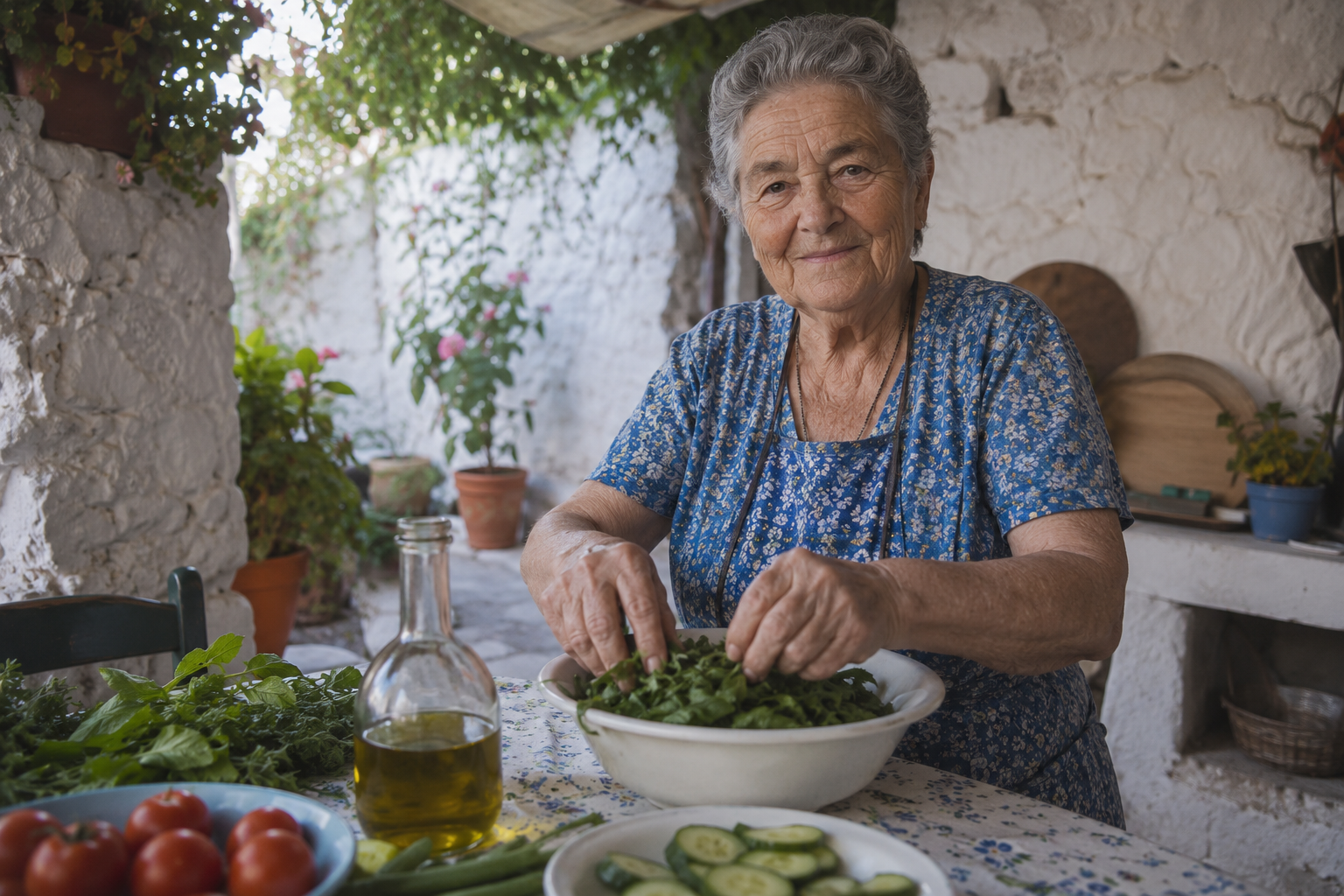
Beyond the oil, the traditional Greek diet is a machine for delivering the nutrients that support healthy aging. The plate is dominated by vegetables, wild greens, beans, herbs and fruit, with fish and a little meat rather than a lot, all of it fresh and in season. It is the Mediterranean diet in its original home, and it is dense with the vitamins and antioxidants that skin and body both need.
Those wild greens, the horta that older Greeks gather from the hillsides and boil with lemon and oil, are especially rich in the protective compounds that industrial food lacks. A lifetime of eating this way, rather than a lifetime of processed and sugary food, shows in the slow, healthy way these women age.
What is missing matters as much as what is present. There is very little ultra-processed food, very little refined sugar, and very little of the industrial diet that ages skin from within through inflammation and glycation. The Greek grandmother’s plate is essentially the anti-inflammatory diet that dermatologists now recommend, arrived at not through science but through tradition and what the land provides. Researchers who study the long-lived populations of the Mediterranean keep returning to this plate as a central reason for their health, and the point for everyone else is simple. A diet tilted hard toward vegetables and fish, and away from processed food, is among the most reliable things a person can do for how they age.
Staying Out of the Midday Sun
It would be easy to assume that women who have spent their lives under the Greek sun would have ruined their skin, and the interesting thing is how carefully traditional Mediterranean life manages the sun. The fierce midday sun hours are not for being outside but for the shaded courtyard, the shuttered house and the long afternoon rest, while work happens in the gentler cool of the morning and evening.
This rhythm, built to survive the heat, doubles as sun protection. Rather than lying out to tan, older Greek women have spent their lives seeking shade at the harshest hours, wearing hats and long sleeves in the fields, and treating the noon sun as something to shelter from. The result is far less of the cumulative sun damage that drives skin aging than a sunbathing culture would produce.
It is a useful correction to the idea that Mediterranean skin is simply weathered by sun. The traditional relationship with the sun is one of respect and avoidance at its strongest, not worship, and that lifelong habit of stepping into the shade is quietly one of the best things a person can do for the long-term health of their skin. The lesson for anyone is not to fear the sun entirely but to respect it, keeping the strongest midday hours for the shade and saving time outdoors for the softer light of morning and late afternoon. That single habit, kept over a lifetime, protects the skin more than almost any cream applied after the damage is already done.
Moving All Day, Every Day
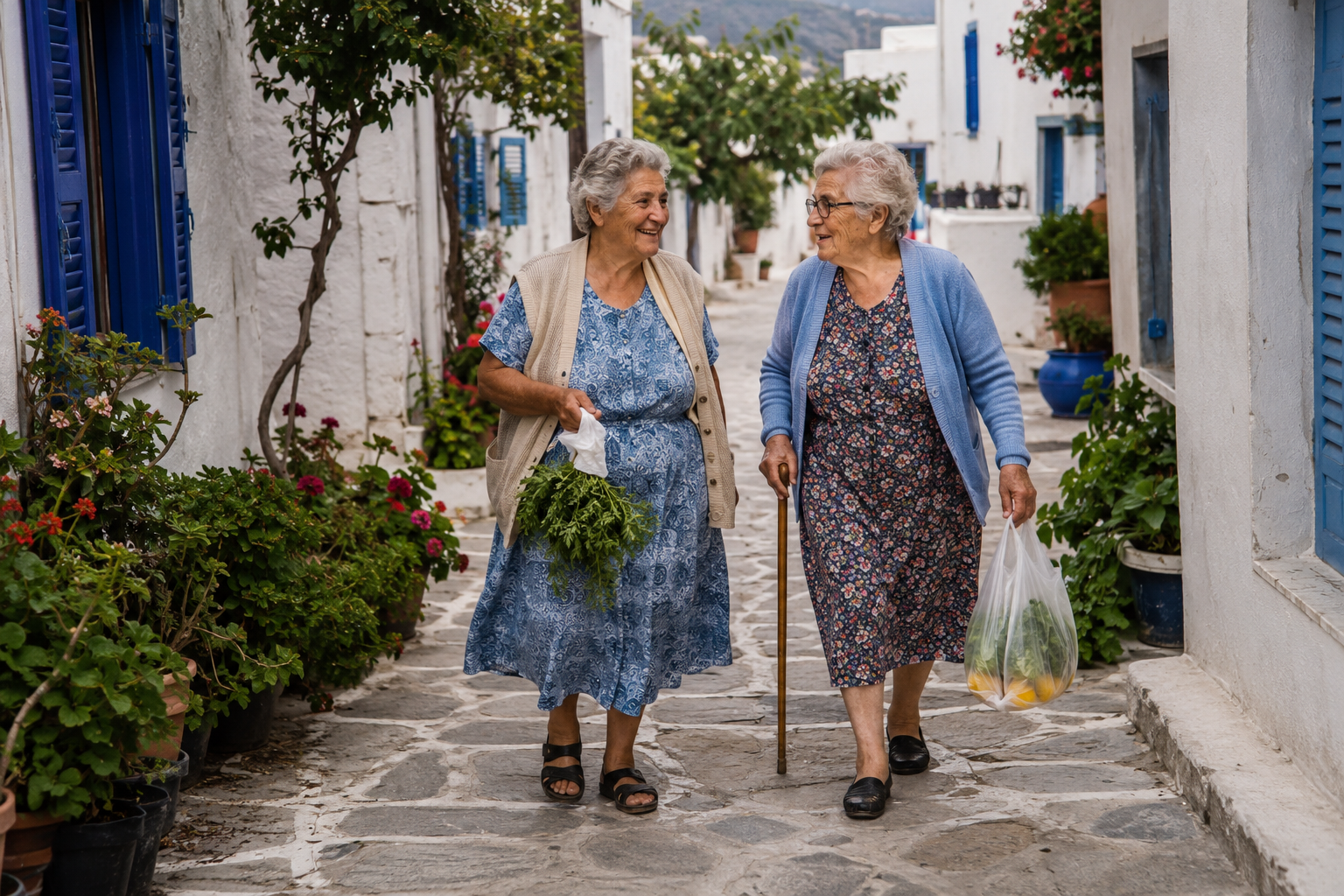
These women do not exercise, in the sense of going to a gym, and they never have. What they do instead is move constantly and gently throughout the day, in the ordinary business of a traditional life. They walk to the shops and to church, they climb the hills their villages are built on, they tend gardens and animals, they cook and clean and carry, from morning until night.
This all-day, low-intensity movement is exactly the kind of activity that research increasingly links to long, healthy lives, keeping the body strong and the circulation good without the strain of hard workouts. It is built into the shape of the day rather than added to it, which is why it lasts into extreme old age when formal exercise routines tend to fall away.
Good circulation and an active body show in the skin as much as anywhere, and a person who has moved gently all day, every day, for eighty years carries a vitality that a sedentary life cannot match. The habit is not a workout but simply a life lived on foot and in motion, and it may be one of the great secrets of Mediterranean aging. The practical version for a modern life is to build movement back into the ordinary day, walking where you would drive, taking the stairs, gardening, and staying on your feet, rather than saving all activity for a single hour at the gym. It is the constant gentle motion, not the occasional hard effort, that seems to matter most.
A Slow and Unhurried Pace
Chronic stress is one of the quiet accelerators of aging, driving inflammation and wearing on the body over decades, and the traditional pace of Greek island life is close to its opposite. Days unfold slowly, meals are long, the afternoon holds a rest, and there is an ingrained cultural resistance to rushing that visitors often find maddening and that may be doing more good than they realize.
The Greek relationship with time is famously relaxed, and while it can frustrate a hurried outsider, it means a life lived with far less of the grinding, cortisol-soaked stress that shadows modern working life. The long lunch, the unhurried coffee, the afternoon in the shade, and the evening spent talking are not laziness but a way of living that keeps stress low across a whole lifetime.
That calm leaves its mark. A face that has not spent decades clenched against deadlines and traffic and relentless hurry ages differently from one that has, and the serenity you see in these older women is partly the accumulated result of a life that never treated speed as a virtue. This is perhaps the hardest habit to import, since modern life is built around hurry, but even small doses of the Greek approach help. Protecting a real lunch break, refusing to rush every waking moment, and building true rest into the day are all ways of borrowing a little of the calm these women have lived with all along.
Deep and Constant Social Connection
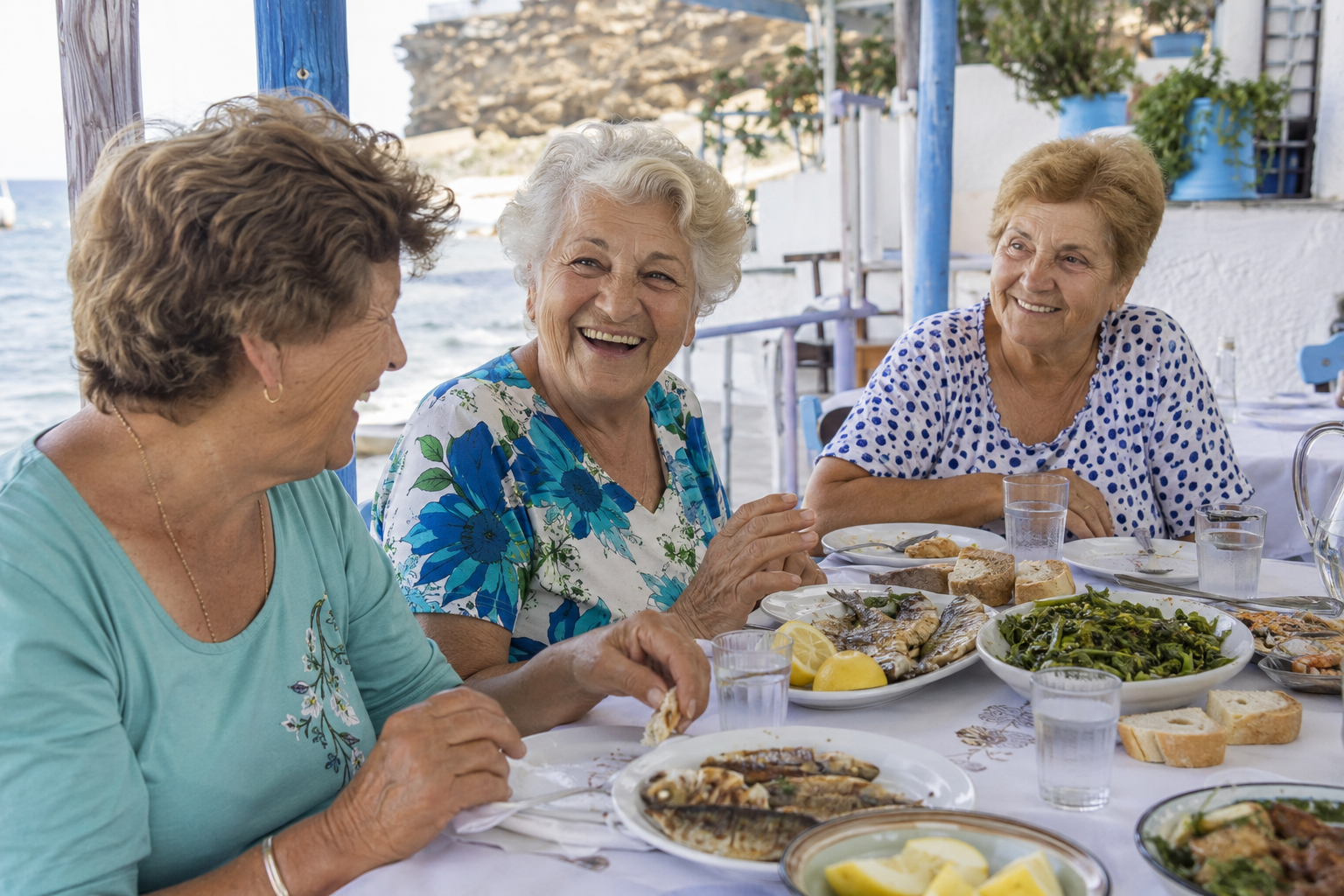
If there is one factor longevity researchers point to above almost any other, it is social connection, and the older women of Greek villages are embedded in it completely. They are surrounded by family, neighbors and lifelong friends, woven into a community where they are known, needed and never alone, and that connection is one of the most powerful protectors of health there is.
The daily texture of this is simple and constant. There are visits and shared meals, the gathering in the square, the conversations that fill the day, the grandchildren underfoot, and the church and its rhythms. A person living this way is rarely isolated, and the loneliness that quietly damages health in more individualist societies barely gets a foothold.
The link between strong social ties and long, healthy lives is one of the best-established findings in all of longevity research, comparable in its power to diet or exercise. It does not show up in a jar of cream, but it shows up in the face, in the animation and warmth of someone who has spent their life richly connected to others, and it may be the single most important item on this entire list. The implication is worth taking seriously, because social connection is not a soft or optional extra but one of the strongest predictors of a long and healthy life that researchers have ever found. Investing in friendship, family, and community in later life may do more for health, and for the face, than anything sold in a jar.
Simplicity Over Products
Part of what protects these women’s skin is simply what they do not do to it. There is no aggressive regimen of exfoliating acids, no harsh cleansers stripping the skin, no constant cycling through new products that irritate and inflame. There is soap and water, a little olive oil, and time, and the skin is largely left alone to do what skin does.
Modern skincare, for all its benefits, can sometimes overwork the skin, and a barrier constantly stripped and re-treated is not always a healthy one. The traditional approach of doing very little, of gentle cleansing and simple natural moisture, avoids that whole category of self-inflicted irritation, and for many people less genuinely is more.
There is a lesson in that restraint. The instinct to fix, treat and optimize the skin can work against it, while the old Mediterranean habit of leaving well enough alone, eating well, and trusting a little olive oil turns out to be surprisingly sound. Simplicity, here, is not neglect. It is its own kind of care. The modern reader can take real comfort in this, since it means the path to healthy skin need not be expensive or complicated. A gentle cleanser, a simple moisturizer, a bit of sun sense, and otherwise leaving the skin alone is closer to the Greek grandmother’s way than any twelve-step regimen, and often kinder to the skin besides.
Real Rest and Real Sleep
The last habit is the one modern life sacrifices first, and traditional Greek life protects fiercely, which is proper rest. The afternoon nap during the hottest hours is a genuine institution, and nights are for sleeping rather than for screens, so the body gets the deep, regular sleep it needs to repair itself day after day.
Sleep is when the body does much of its maintenance, on the skin as much as everywhere else, and a lifetime of decent, unbroken sleep and real afternoon rest gives the body the time it needs for that repair. The absence of the blue-lit, sleep-starved, always-on existence that erodes rest in the modern world is quietly one of the biggest advantages these women have.
Combined with the slow pace and the low stress, this deep respect for rest completes the picture. The body that eats well, moves gently, stays connected, avoids the harsh sun, and sleeps properly is a body set up to age well, and the face is simply the visible surface of all of it. For anyone hoping to age like these women, sleep is the least glamorous and most powerful place to begin. Protecting seven or eight hours of real sleep, and allowing genuine rest through the day, costs nothing and does more for the skin and the body than most of what fills the beauty aisle, a fittingly Greek note on which to end.
Taken together, these eight habits are not really a skincare routine at all, and that is exactly the point. Greek women over seventy age the way they do not because of what they put on their faces but because of how they live their whole lives, slowly and connectedly and close to the land, eating the food and keeping the rhythms their grandmothers kept. None of it is a guarantee, and genes and luck play their part, but the pattern is clear and quietly available to anyone. You cannot buy a Greek village or a lifetime of its rhythms, but you can borrow its lessons, eating more simply, moving more often, worrying a little less, and staying close to the people you love. The best thing you can do for your skin, it turns out, may have very little to do with your skin at all, and everything to do with the unhurried, connected, well-fed life behind it.

About the Author: Ruben, co-founder of Gamintraveler.com since 2014, is a seasoned traveler from Spain who has explored over 100 countries since 2009. Known for his extensive travel adventures across South America, Europe, the US, Australia, New Zealand, Asia, and Africa, Ruben combines his passion for adventurous yet sustainable living with his love for cycling, highlighted by his remarkable 5-month bicycle journey from Spain to Norway. He currently resides in Spain, where he continues sharing his travel experiences with his partner, Rachel, and their son, Han.