
A Spanish family meal does not end when the food does. The plates are cleared, or half cleared, and everyone stays. The talk keeps going, coffee appears, maybe a small glass of something, and an hour later the same people are still at the same table, in no hurry to be anywhere else. A lunch that began at two can run until five without anyone finding it strange.
For decades, researchers trying to explain why people around the Mediterranean live so long have trained their attention on the plate. The olive oil, the fish, the vegetables, the wine in moderation, all of it measured and praised and packaged into the Mediterranean diet that fills bookshelves and supplement aisles around the world.
But something else has kept surfacing in the data, something with nothing to do with what is being eaten. It is who is eating it, and with whom. The habit of eating together, slowly and in company, tracks with health and long life about as stubbornly as any nutrient on the plate, and it is the part almost nobody thinks to copy.
What the Diet Studies Kept Missing
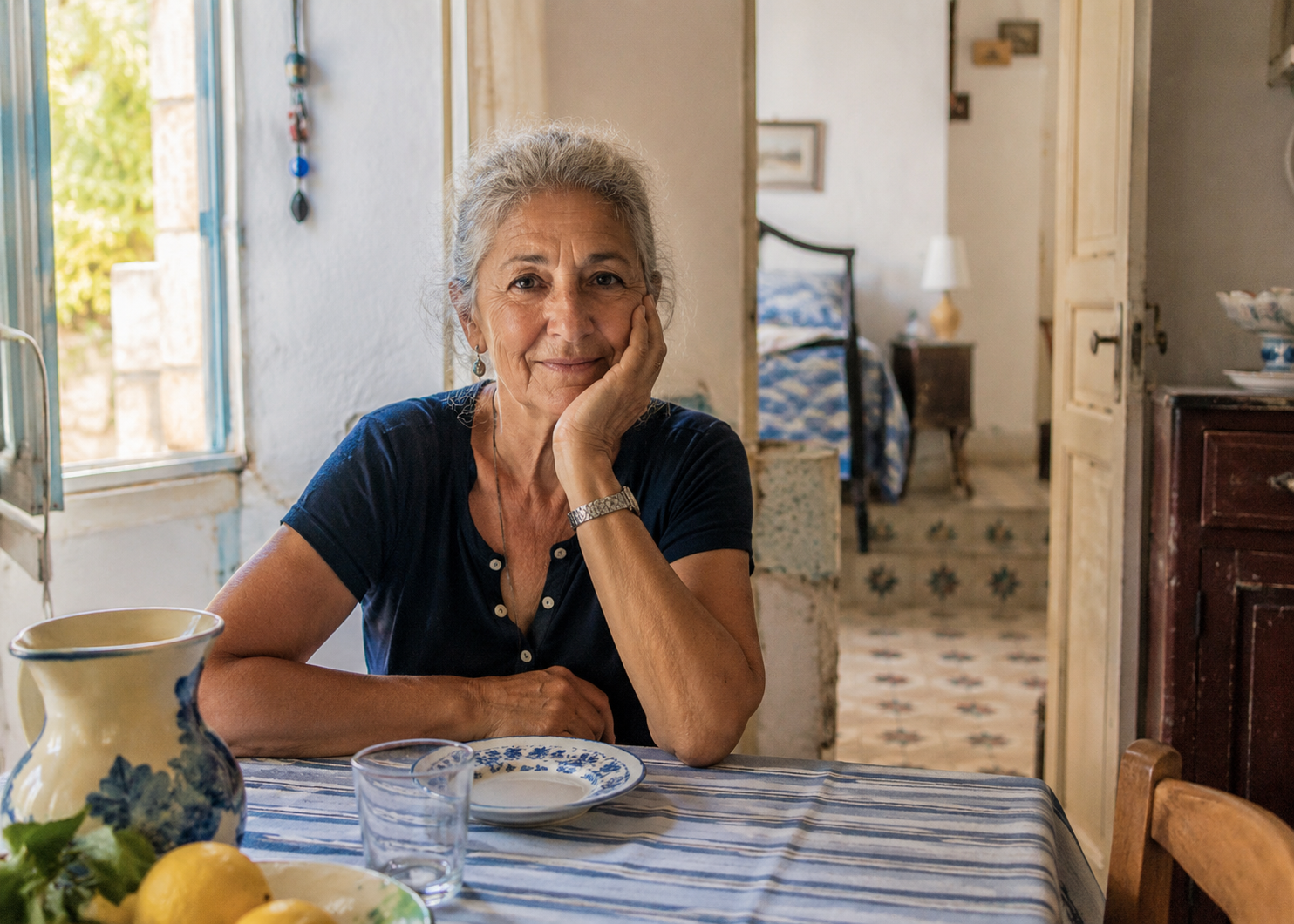
The Mediterranean diet is one of the most studied eating patterns in the world, and the case for it is genuinely strong. Populations that eat this way show lower rates of heart disease, and higher adherence to the pattern tracks with a reduced risk of dying from almost any cause, in study after study across decades.
The trouble with crediting the food alone is that the food never traveled by itself. In the places where the diet was first observed and admired, the mid-century villages of Greece, southern Italy, and Spain, the meal was a social institution before it was a nutritional one. People ate together, at length, every day, in families and among neighbors, and the food and the company arrived on the same table at the same time.
That makes the two nearly impossible to separate cleanly. When researchers measure the diet and find it healthy, they are measuring a package that also included daily companionship, unhurried meals, and a thick social fabric wrapped around every plate. Commensality, the plain fact of eating in company, is baked into the very populations the diet studies drew their conclusions from.
The food plainly matters, and the nutritional case for the pattern is real. The narrower, stranger claim is that the food has been collecting credit that partly belongs to the company it was always served in. You can put a nutrient in a capsule. You cannot bottle a table full of people, which may be exactly why one got the study grants and the other got overlooked.
Eating Alone Keeps Showing Up
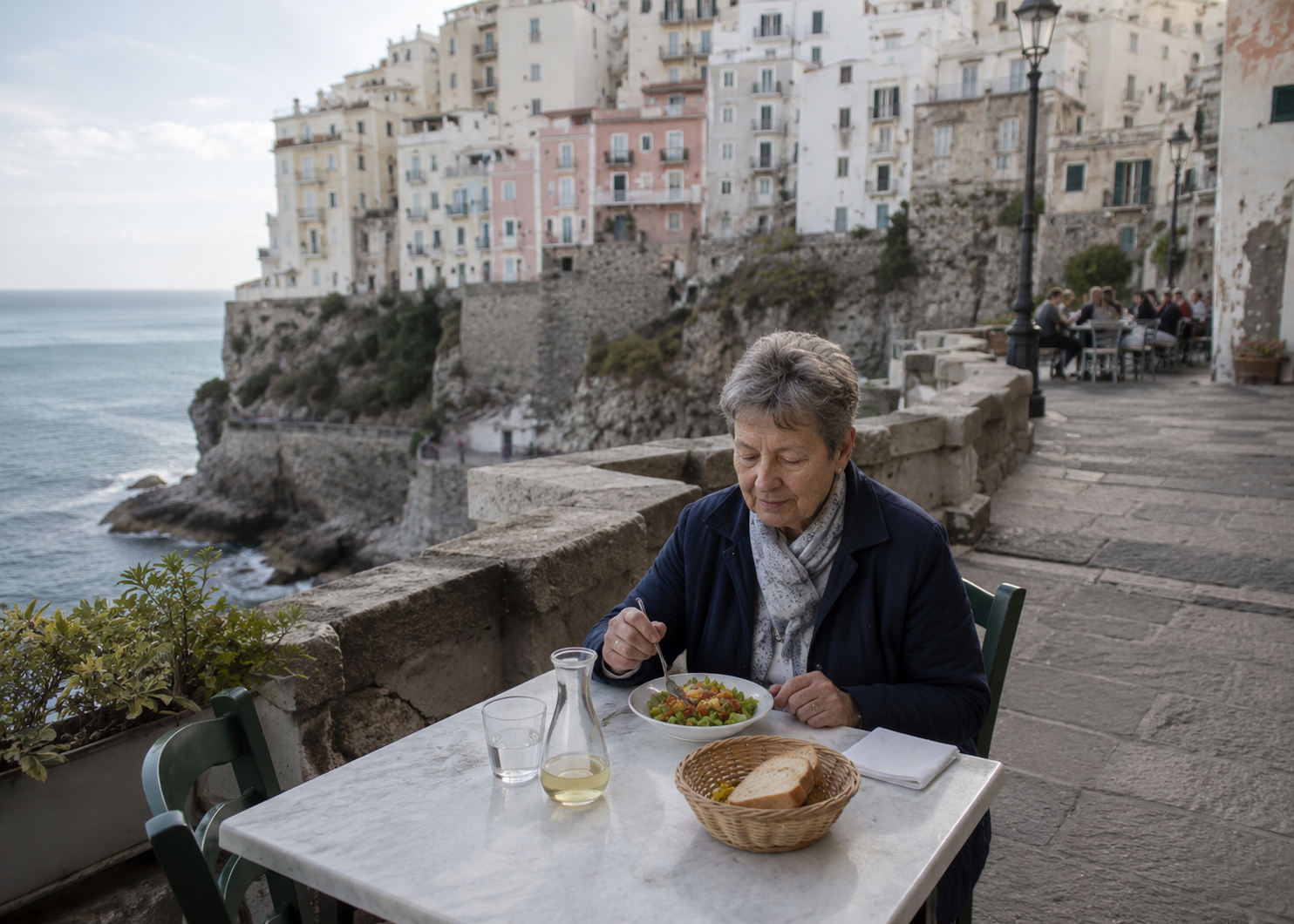
When researchers go looking specifically at eating alone, the results line up with unusual consistency. A study of adults aged 70 to 75 in Sweden found that both eating alone and the feeling that eating alone was a burden were linked to loneliness and to worse self-rated health. Older people who took most meals in solitude reported themselves less well, and felt it in the reporting.
In Japan, the large KAGUYA study of older adults found that those who ate alone, even when they lived with other people, had poorer health status than those who shared their meals. The distinction mattered a great deal. It was not simply living alone that hurt, but eating alone, the specific daily act of taking food without company.
Research in Catania, in Sicily, came at it from the diet side and found that lonelier, more isolated older adults stuck less closely to the Mediterranean diet itself. Isolation does not only sit beside a worse diet. It seems to help produce one, because shopping for and cooking a proper meal is hard to keep up for an audience of one, and a person alone slides easily toward whatever is quickest.
A study in the Journals of Gerontology carrying the plain title Alone at the Table tracked what happens to eating after the loss of a spouse. Widowhood, it found, tends to collapse the whole structure of meals, turning shared, prepared dinners into small, indifferent, solitary ones, with knock-on effects on both nutrition and mood. There is a mental-health thread woven through all of it as well, since eating alone is tied in several studies to higher rates of depression in older adults, and depression in turn dulls appetite and the will to cook, which feeds back into eating alone and eating badly, a loop that is hard to break from the inside.
The scale of it is not small. In surveys of older adults across parts of Europe and East Asia, a quarter or more report taking most of their meals alone, and that share climbs steeply with age as partners are lost and households shrink down to one. What was once the shape of a single hard season, the year after a death, has become the standing condition of a large slice of the old.
The Mortality Math of Loneliness
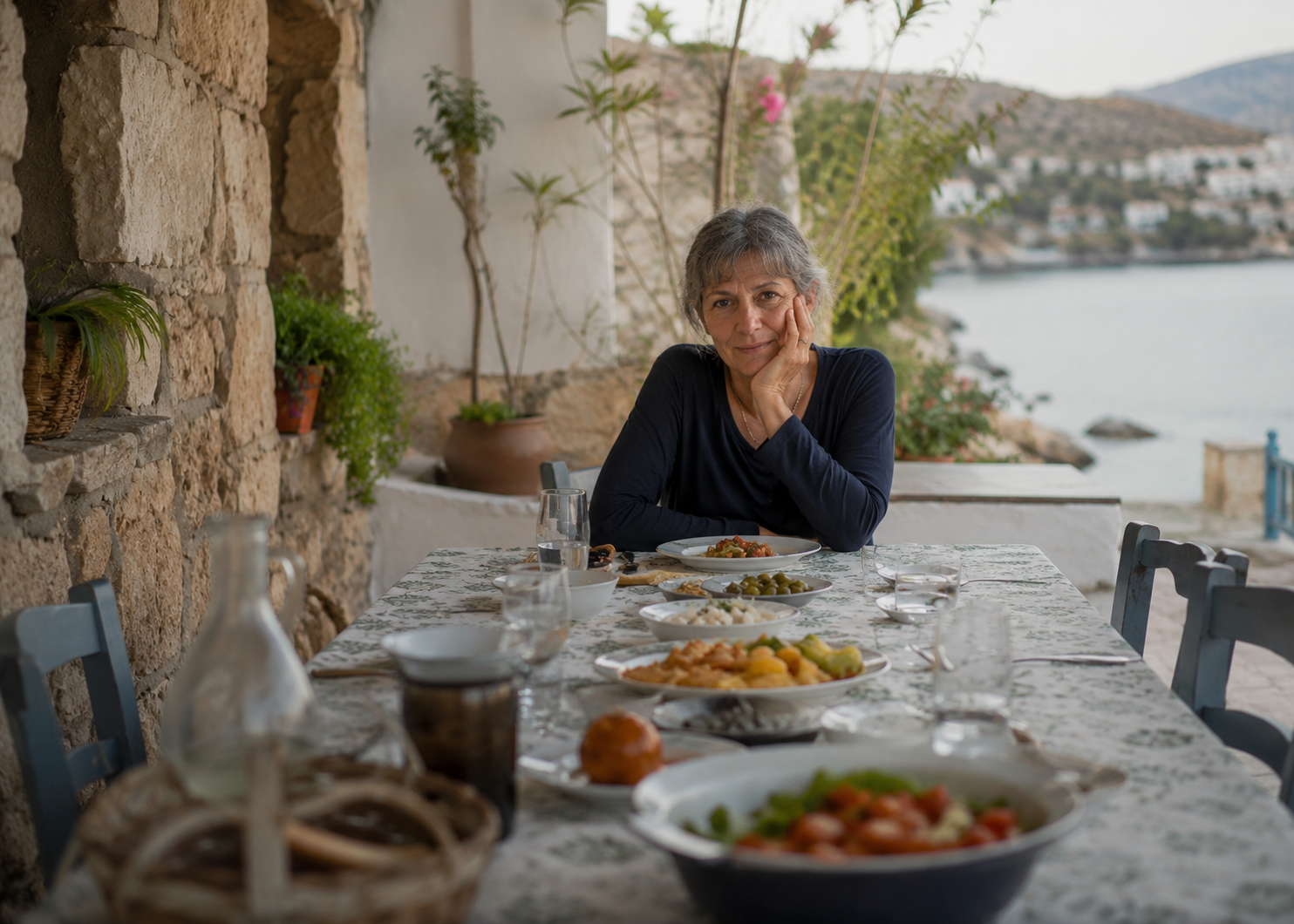
Behind these meal-specific findings sits a larger and more sobering body of research on social connection itself. The psychologist Julianne Holt-Lunstad and her colleagues pooled hundreds of studies and concluded that weak social connection raises the risk of early death by a margin comparable to well-known killers, on the order of smoking and greater than the risk carried by obesity.
That is the figure that reframes the whole subject. Loneliness and isolation are not merely unpleasant states of mind. They are measurable mortality risks, and public health bodies have started treating them that way. The US Surgeon General issued a formal advisory on it, placing isolation in the same bracket of national concern as tobacco, and Britain went as far as appointing a government minister for loneliness, with Japan later following, treating what used to be a private sadness as a public matter with a budget attached.
The proposed mechanisms mix the biological and the behavioral. Chronic loneliness keeps the body’s stress systems switched on, which over years drives inflammation and wear on the heart and vessels. Isolated people also tend to look after themselves less well, eating worse and putting off the doctor, each lapse quietly compounding the last.
The daily shared meal sits at the intersection of all of it. It is a reliable, repeating dose of connection, it lends a shape to the day, and it tends to improve both what and how much a person eats. It also happens to be one of the oldest and most natural ways human beings have of staying woven into each other’s lives. A single habit that pulls that many levers at once is rare, and this one comes disguised as dinner.
The Blue Zones Built It In
The places where people most reliably reach great age offer a kind of natural experiment, and social structure keeps turning up in them as prominently as diet. The researchers who mapped the world’s Blue Zones, the small regions with outsized numbers of people living past a hundred, found that nearly all of them shared strong, dense social ties alongside their celebrated eating patterns.
On Okinawa, in Japan, older people belong to a moai, a small group of lifelong friends who commit to supporting one another across the whole of life, meeting often and frequently over food. The moai is a standing guarantee against isolation, a built-in circle that keeps a person seen and looked after into extreme old age. It is exactly the kind of structure the loneliness research says ought to protect health, running quietly in the background of one of the longest-lived populations on earth.
The Okinawan case is telling in reverse, too. As younger Okinawans have shifted toward Western food and more solitary, car-bound lives, the island’s famous longevity edge has started to narrow, a natural experiment running backward and arriving at the same conclusion from the other side. When the shared table goes, the health advantage tends to follow it out the door.
In Sardinia, another Blue Zone, the pattern repeats in a different key, with tight village life, multigenerational households, and a respected place for the old that keeps them near the center of family meals rather than off at the edge. Rather than being stored away out of sight, the elderly stay woven into the daily life of the household, and the daily table is where a great deal of that weaving gets done.
None of these places set out to run a longevity experiment. They simply kept social forms that most of the modern world has been shedding, and those forms happen to include eating together, often, across generations, as a matter of course. When the researchers went hunting for the secret and came back with the food, the company had been sitting right there at the same table the whole time, easy to miss precisely because it was everywhere.
Why the Table Does More Than the Plate
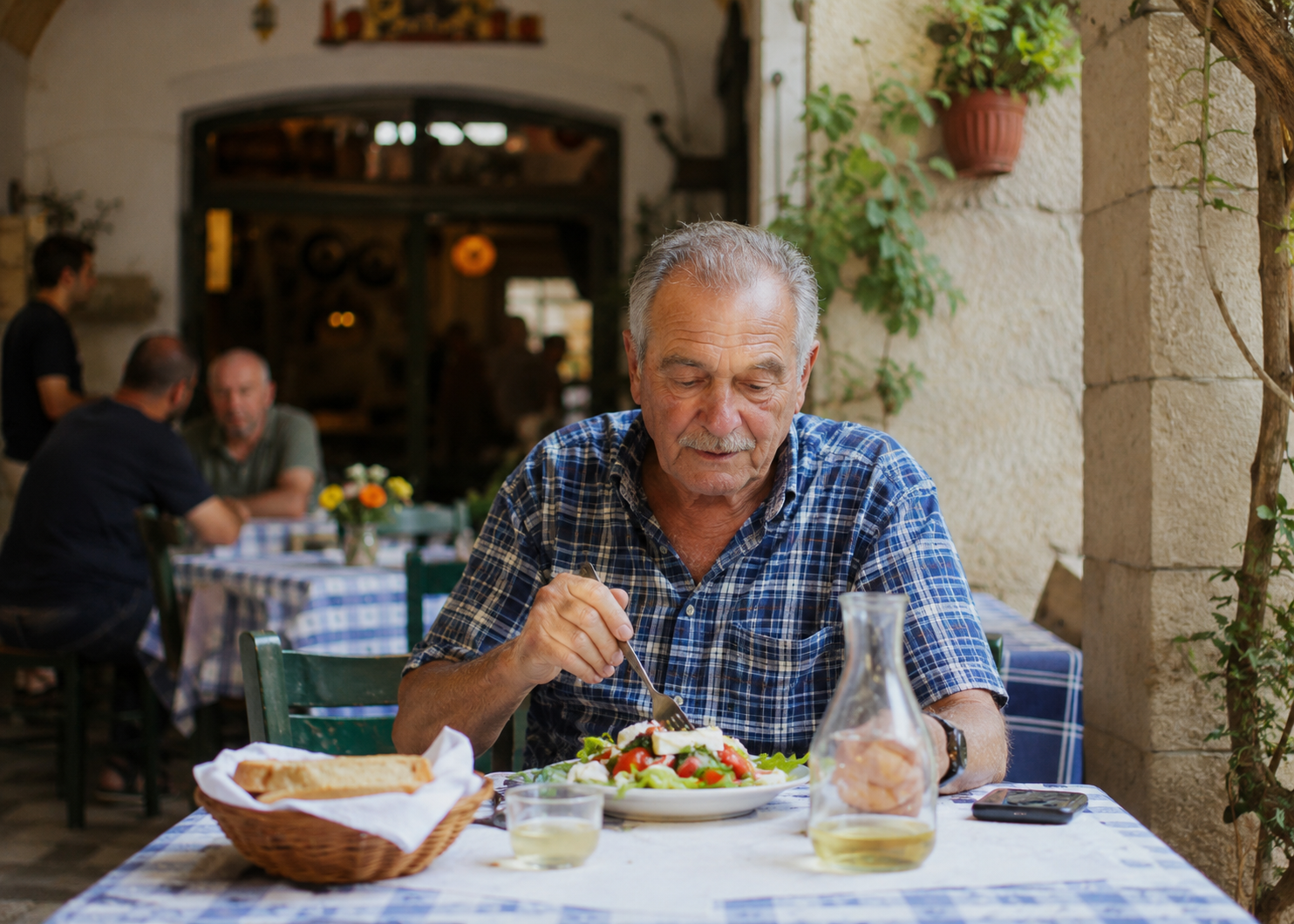
Zoom in on the meal itself and the effects multiply. Eating with others slows a meal down, and a slower meal is a healthier one, giving the body the time it needs to register fullness before a person overeats. Studies of eating pace bear this out, finding that people eat more slowly, and often less, in company than they do alone in front of a screen, where distracted eating tends to run well past the point of being full.
There is a structural effect layered on top. A household or a community that eats together at set times has a scaffolding built into every single day, a fixed point that draws people home and into the same room. For the old and the isolated in particular, that fixed point can be the one reliable human contact of the day, which is why programs that feed older people in company, rather than leaving a tray at the door, tend to do more good than the food by itself would predict.
And the table teaches. Around a shared meal children learn how to eat and how to hold a conversation, and older people pass along the recipes and the small habits that carry a food culture into the next generation. The loss compounds down the years, because a parent who never learned to run a family table is less equipped to build one for their own children, so the skill and the habit fade together, each generation inheriting a little less of both.
The honest caveat belongs right here, in one place. Almost all of this evidence is observational, which means it can show that eating together and good health travel side by side but cannot fully prove that the one produces the other. Solitude is not poison, either. A quiet meal alone is a real pleasure for many people and a problem for none who have plenty of connection elsewhere. What the research points to is narrower and more specific, that for people who are already isolated, and the old above all, the loss of the shared meal removes something that had been doing real work, and its absence turns up in the numbers.
The Habit Is Fading Where It Started
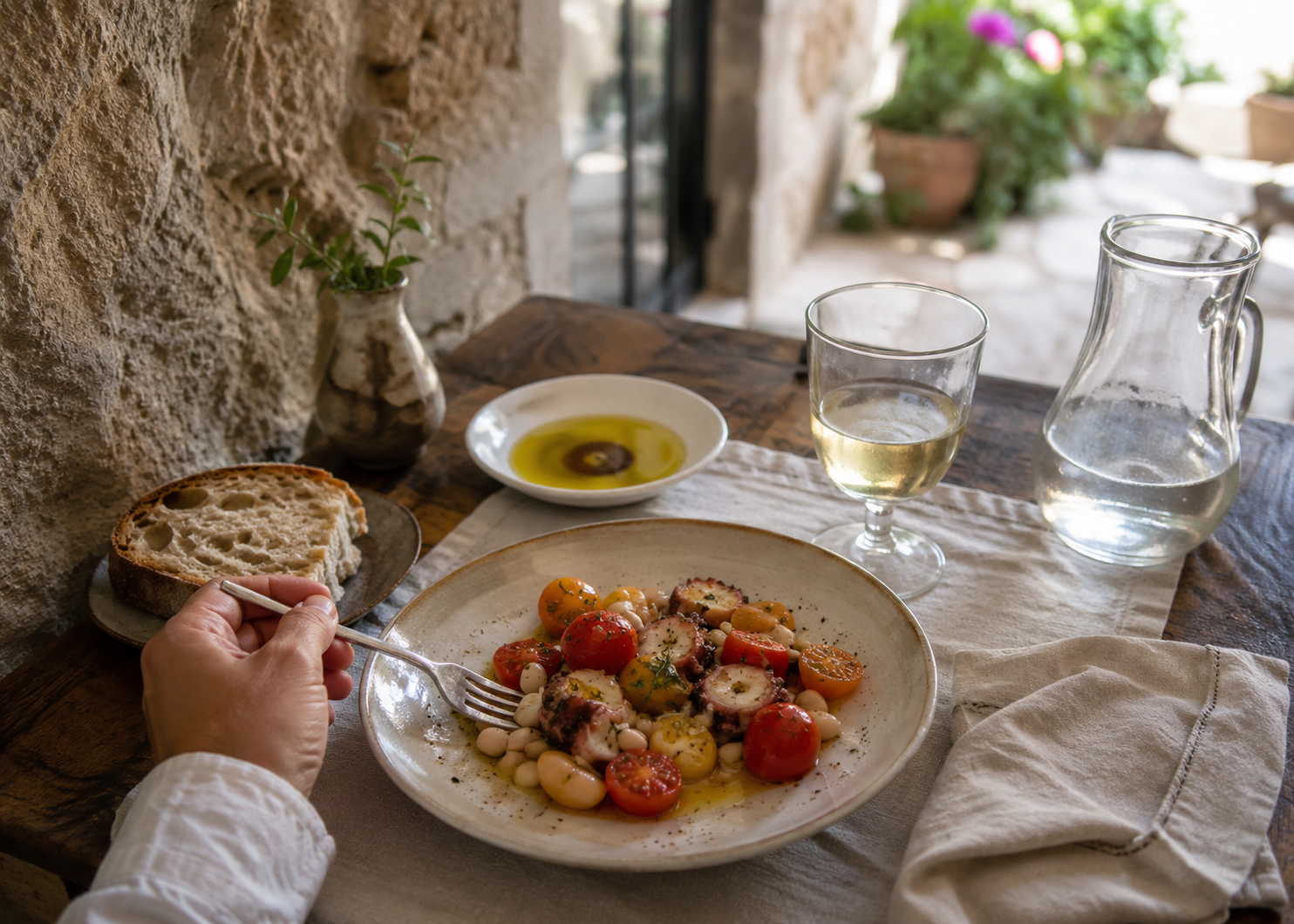
The uncomfortable part is that the shared meal is in retreat, including in the countries that were built around it. Solo dining is climbing across the developed world, driven by smaller households and unpredictable working hours, and by the quiet permission that screens grant to eat without company while never quite feeling alone. The shift is easy to miss because nobody decides to stop eating together. It simply erodes, one skipped family dinner and one delivery eaten over a laptop at a time, until the shared meal has quietly become the exception it never used to be.
Even in Spain and Italy the long midday meal has thinned under the weight of modern work, its hours squeezed and its participants scattered across the day. The tradition survives most fully now on weekends and at holidays, in the big Sunday lunches that still fill homes with three generations, rather than as the daily fixture it used to be.
The rise of eating alone falls hardest on exactly the people the research flags as most exposed, the widowed and the aging, whose social worlds were already narrowing without any help. For someone who has lost a partner and whose children live in another city, the daily meal can slide from the warm center of the day to its loneliest hour, and there is rarely anyone counting how often that happens, or stepping in when it does.
A person eating a sandwich at their desk is not harming themselves by doing it, and nothing here says otherwise. The worry runs wider than any single meal. A culture quietly shedding the shared table may be losing something it never realized it was getting, a piece of its own longevity that never once showed up on a nutrition label.
Bring the Table Back
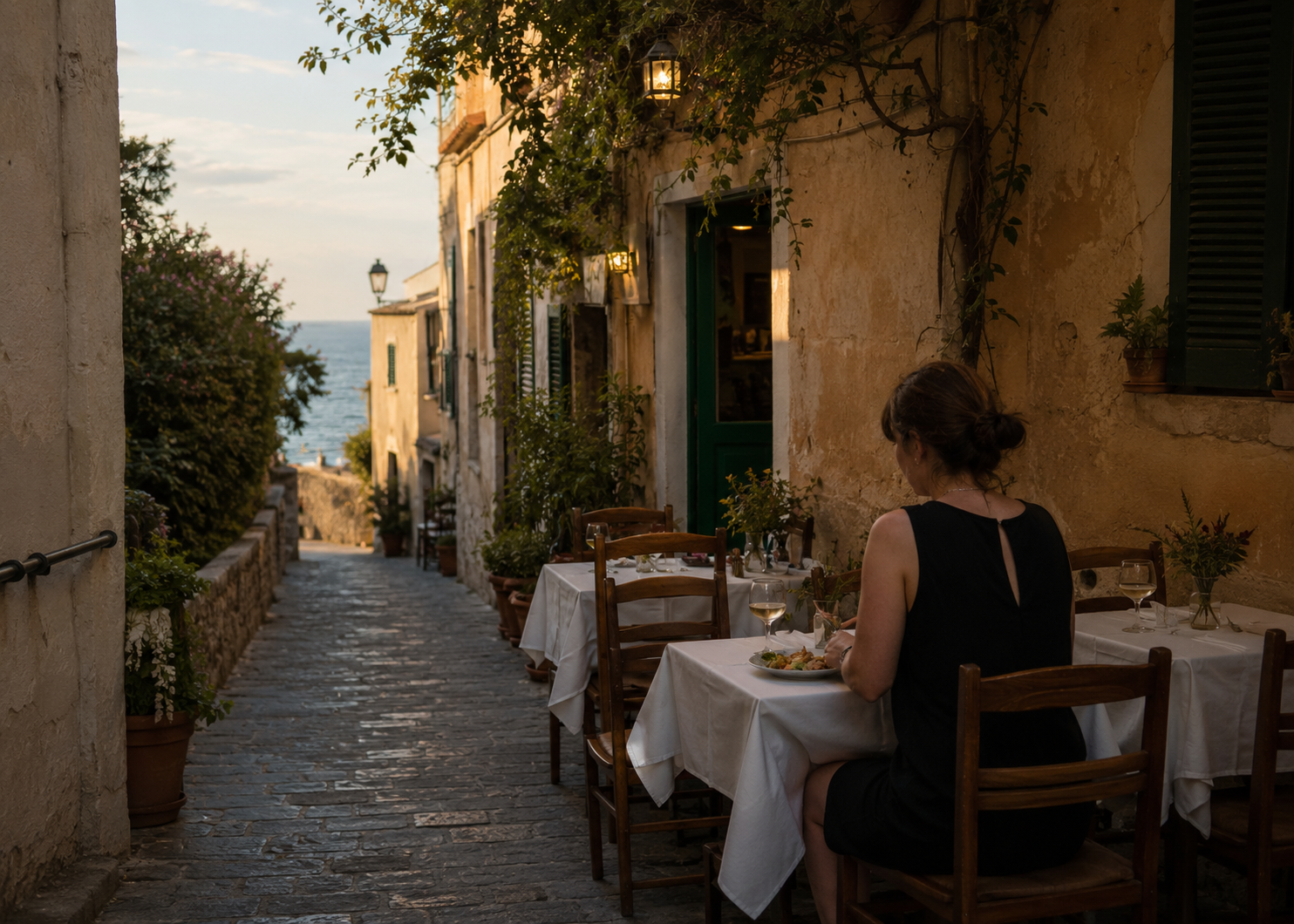
The fix is old and cheap, and within reach of more or less anyone. Eat with other people on purpose, more often than you do now, and treat the meal itself as the appointment rather than as the thing to be rushed through on the way to one.
It does not take a Spanish schedule or a three-hour lunch. One shared dinner a few nights a week, phones off the table and no screen propped against the salt, is most of the benefit right there. And if even that is out of reach, the principle still scales down. A standing weekly lunch with a friend counts, and so does a shared breakfast before the day scatters, or a phone call held over two plates in two separate kitchens. The active ingredient is the company, not the hour on the clock. For anyone with an isolated older relative, the single highest-value item on this entire list is to eat with them regularly, or to make sure that someone does, because for them the shared meal is not a nicety so much as something close to medicine.
The Mediterranean diet was never only the oil and the fish. It was people at a table, staying there, day after day, across the length of a life. That was always the harder half to bottle, and it may turn out to have been the more important half of the recipe. Set a second place, and start there.

About the Author: Ruben, co-founder of Gamintraveler.com since 2014, is a seasoned traveler from Spain who has explored over 100 countries since 2009. Known for his extensive travel adventures across South America, Europe, the US, Australia, New Zealand, Asia, and Africa, Ruben combines his passion for adventurous yet sustainable living with his love for cycling, highlighted by his remarkable 5-month bicycle journey from Spain to Norway. He currently resides in Spain, where he continues sharing his travel experiences with his partner, Rachel, and their son, Han.