
The paperwork to fly a dog from the United States to Europe is not complicated, and it is not especially expensive. Three documents and roughly $450 in vet and endorsement fees cover it, and a healthy adult dog from the United States faces no quarantine and no blood test on arrival. On paper it is one of the easier international pet moves in the world.
What trips Americans, over and over, is not the cost or the number of forms. It is the order and the timing. The three documents have to be obtained in a specific sequence, with specific waiting periods between them, inside specific windows before the flight, and getting any step out of order can invalidate the whole chain and ground the dog at the worst possible moment. The rule that catches the most people is deceptively small: the microchip has to come before the rabies shot, not after.
Here are the three documents, the sequence that matters more than any of them, and the timeline that turns a simple move into a missed flight for the travelers who leave it too late.
The Three Documents

The first document is not paper at all. It is an ISO-standard microchip, a fifteen-digit chip meeting the international ISO 11784/11785 standard, implanted under the dog’s skin. Europe reads these chips at the border to match the animal to its records, and a chip that does not meet the ISO standard, as some older American chips do not, may not be readable on arrival, in which case you are expected to bring your own scanner. For a chip implanted today, insist on the ISO type and the problem never arises.
The second document is the rabies vaccination, and here the detail that matters is not the shot itself but its relationship to the chip. The rabies vaccine only counts, for European purposes, if it was given after the microchip was already in place. A dog vaccinated against rabies and then microchipped, the natural order for many American pets, has a vaccination Europe will not recognize, and must be vaccinated again after the chip to reset the clock.
The third document is the EU Animal Health Certificate, the official form that ties the first two together and certifies the dog fit to travel. It has to be completed and signed by a veterinarian who is USDA-accredited, and then endorsed by the USDA, specifically its Animal and Plant Health Inspection Service, known as APHIS. A certificate from any vet will not do. It must be an accredited vet’s certificate, carrying the government endorsement stamped on top of it.
Those three things, an ISO chip, a rabies shot given after the chip, and a USDA-endorsed health certificate, are the entire documentary requirement for a dog entering the European Union from the United States. The reason people still get it wrong is that the three cannot simply be gathered in any order the week before the flight.
The Order Is Everything

The single most common and most painful mistake is the sequence of the first two documents. The microchip must be implanted before the rabies vaccination is given, because Europe uses the chip number to identify which animal the vaccination record belongs to. A rabies shot administered before the chip went in is, in European eyes, a shot given to an unidentified dog, and it does not count.
For a great many American dogs, this is exactly backwards from how their lives went. A puppy is vaccinated against rabies at the standard age and microchipped at some other visit, often earlier, often later, with no thought to the order because no American rule cares about it. Only when the family decides to move to Europe does the order suddenly matter, and a dog whose rabies shot predates its chip has to be revaccinated, after the chip, before anything else can proceed.
The revaccination triggers the next timing rule. After a dog’s first, or primary, rabies vaccination for travel purposes, Europe requires a wait of 21 days before the animal may enter, counted from the day of the shot. That three-week wait is not negotiable and cannot be shortened, so a family that discovers the chip-and-rabies ordering problem late finds itself starting a mandatory clock that pushes the earliest possible travel date three weeks out from the day they fix it.
This is why the whole thing has to start early. A dog that already has an ISO chip and a valid, in-date rabies shot given after that chip is ready to move on short notice. A dog that needs a new chip, a new rabies shot, and the 21-day wait is a month away from being eligible before anyone even books the vet for the health certificate. The order of two routine procedures, decided years ago, sets the floor on how fast the move can happen.
The Ten-Day Window
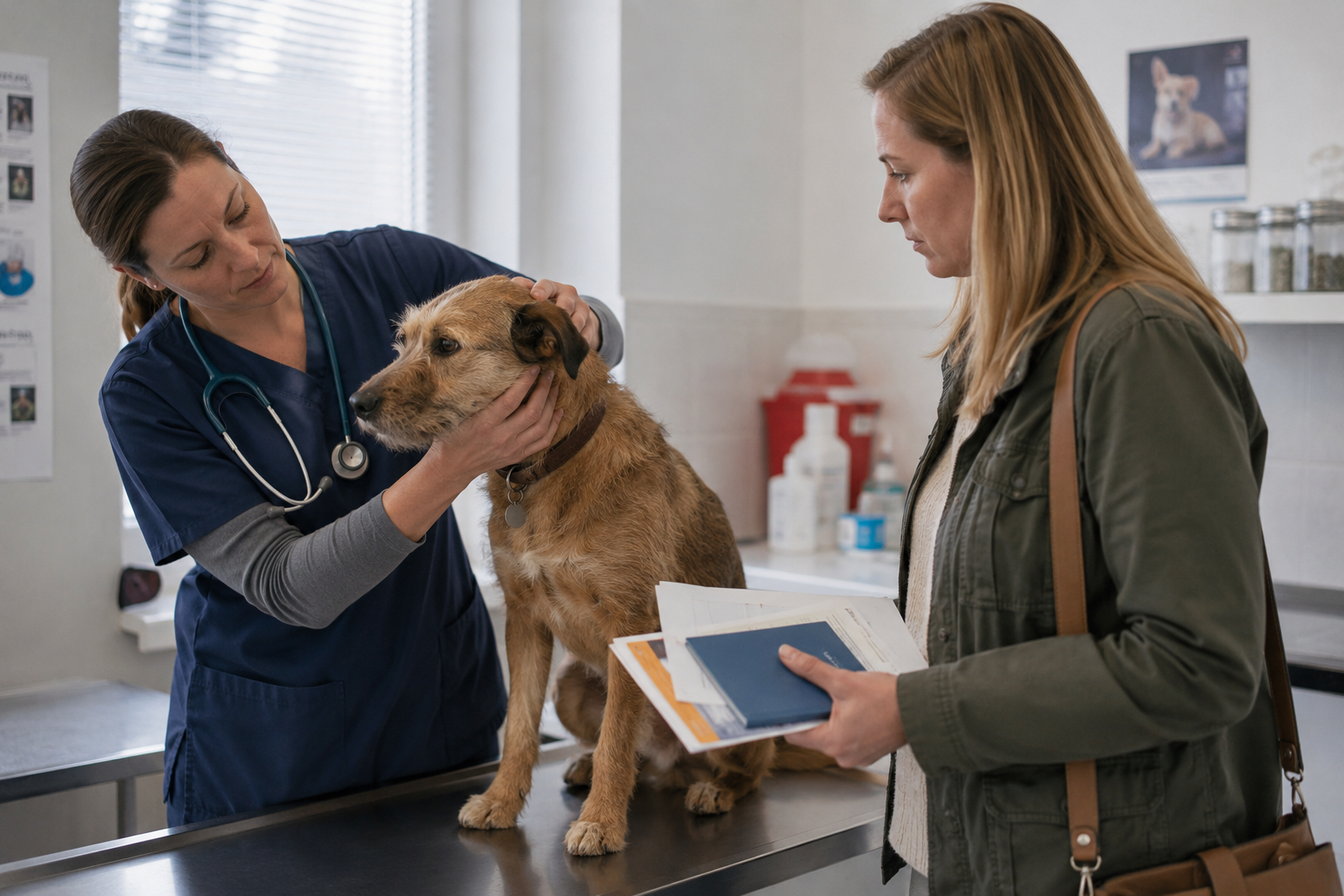
Once the chip and the vaccination are sorted, the health certificate introduces its own tight window, and this is where organized people still come unstuck. The EU Animal Health Certificate must be issued by the accredited vet within 10 days of the dog’s arrival in the European Union. Issue it too early, and it has expired before the flight. The certificate is a snapshot of a fit, documented dog at a moment close to travel, and Europe insists that moment be recent.
Inside that ten-day window sits another step that eats days: the USDA endorsement. After the accredited vet completes the certificate, it has to go to the USDA’s APHIS office to be officially endorsed, which takes a few business days to process, whether by mail or through the online system. So the real sequence is a vet appointment, then a wait of several days for the government endorsement, then the flight, all compressed into a window that opens just ten days before arrival.
The arithmetic is unforgiving if you leave it late. Book the vet too close to the flight and there is no time for the endorsement to come back. Book it too early and the certificate expires before you board. The workable path is to see the accredited vet around a week before travel, send the certificate straight for endorsement, and fly once it returns and while it is still inside its ten-day life. Miss the window at either end and the dog does not fly.
One piece of good news lightens the load. Because the United States is classified as a low-risk country for rabies, an American dog does not need the rabies antibody blood test, the titer test, that dogs from higher-risk countries must pass, and it faces no quarantine on arrival. That removes months of delay and hundreds of dollars that travelers from many other countries have to budget for. The American dog’s path is genuinely one of the simpler ones, once the sequence is respected.
What It Costs

The roughly $450 that the move costs in documentation breaks down across the three documents plus the endorsement, and the individual pieces are modest. A microchip, if the dog needs one, runs about $50. A rabies vaccination costs somewhere between $20 and $50. The health-certificate appointment with an accredited vet, which involves an examination and the completion of the official EU paperwork, is the largest single item, commonly $100 to $300 depending on the practice.
The USDA endorsement itself carries a government fee that varies with the certificate, generally in the range of $40 to $175. Add those together and the paperwork side of moving a dog to Europe lands around four hundred to five hundred dollars, which is the figure most families should plan for, assuming a healthy dog with no complications.
What that number does not include is the flight, and the flight can dwarf the paperwork. Airline pet fees range enormously, from around $100 or $150 to fly a small dog in the cabin to several hundred, sometimes over a thousand, dollars to fly a larger dog in the climate-controlled hold as cargo. The size of the dog, the airline, and whether the animal travels in the cabin or below decks matter far more to the total bill than the documents do, so a family with a large dog should price the flight early and treat the $450 as only the paperwork portion.
The temptation to economize by cutting corners on the documents is a false one. The vet exam and the government endorsement are the steps that make the whole trip legal, and a dog that arrives with a defective certificate can be refused entry, sent back, or held, at a cost in money and heartbreak that dwarfs anything saved. This is a place to do it properly the first time. Put the pieces together and a realistic all-in budget, the documents plus a mid-sized dog flying in cargo on a direct route, often lands somewhere between $800 and $1,500, with the flight rather than the paperwork as the swing factor.
Cabin, Cargo, or Courier
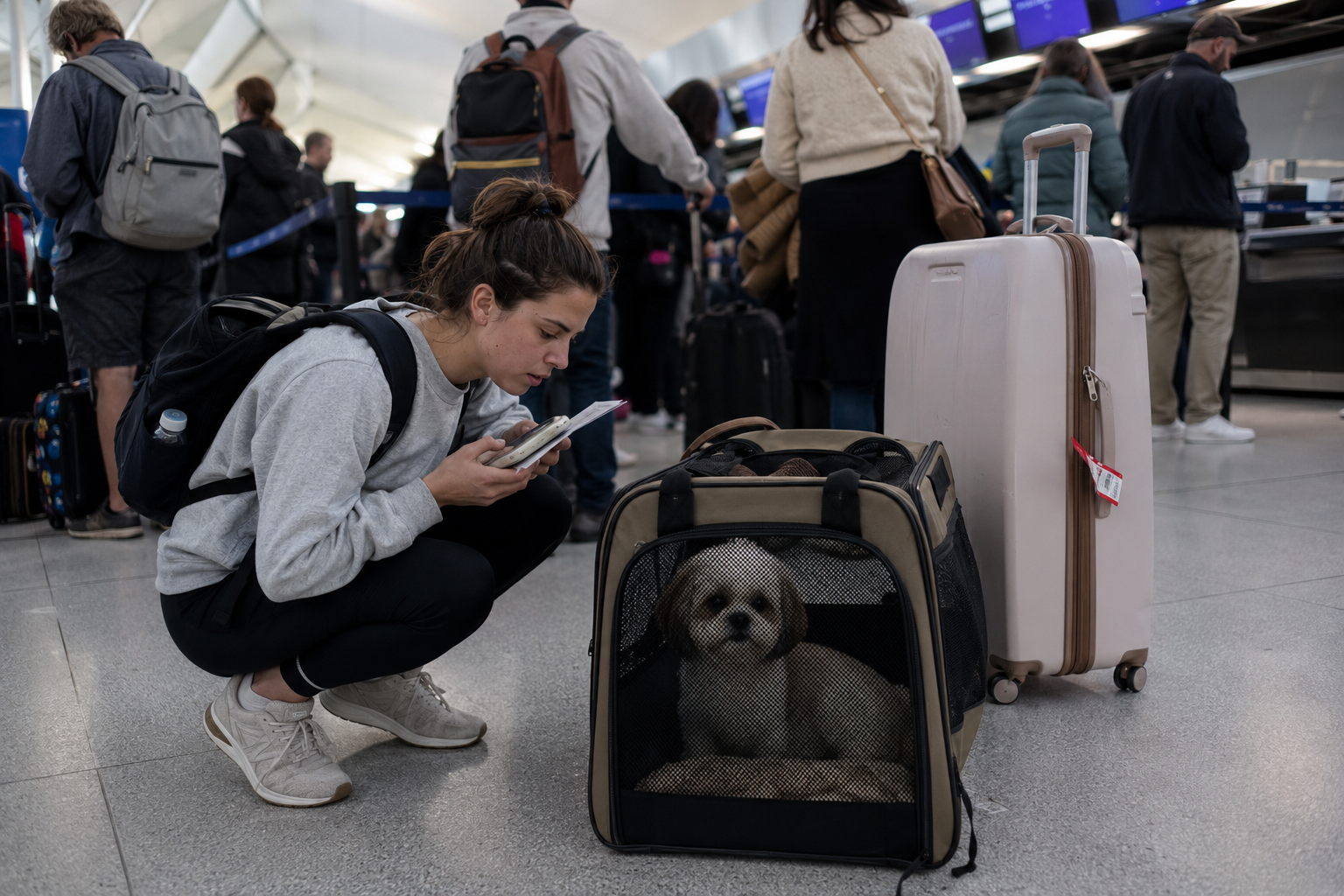
Getting the documents right only makes the dog eligible to fly. How it travels is a separate decision with its own rules, and it turns largely on size. A small dog, generally one that fits with its carrier under an airline’s weight limit of around eight kilograms, roughly seventeen pounds, can usually travel in the cabin, tucked under the seat in front of its owner. This is the cheapest and calmest option, and the one to aim for if the dog is small enough to qualify.
A larger dog travels in the cargo hold, in the pressurized, climate-controlled compartment built for live animals, inside a sturdy travel crate. It costs more and is harder on the animal, but it is routine, and the airlines that carry pets do it thousands of times a year. The crate itself must meet the international IATA standard for size and ventilation, big enough for the dog to stand and turn around, which is worth buying and getting the dog comfortable with well before the flight.
One category of dog faces a real obstacle here. The snub-nosed breeds, the bulldog and the pug and the boxer among them, are barred from the cargo hold by many airlines, because their short airways make them prone to breathing trouble under the stress and altitude of a hold. An owner of one of these breeds has to find an airline that will carry it, or a dog small enough for the cabin, and should settle this before anything else, since it can rule out whole routes.
Two more practical notes. A direct flight is worth paying for, since every connection multiplies the chance of a delay or a mishandled transfer with a dog below decks. And for anyone who would rather not manage the whole chain themselves, professional pet-relocation companies handle the documents, the crate, and the logistics end to end for a fee that runs into the thousands, which plenty of families judge well worth it for the peace of mind. Whichever way the dog flies, feeding it lightly beforehand and letting it grow used to the crate over the preceding weeks does more for its comfort on the day than anything bought at the airport.
The 2026 Rule Change and Other Fine Print

The core requirements have held steady for years, but 2026 brought an update worth knowing about. A new European regulation, Regulation 2026/131, governing non-commercial pet movement, came into force in April 2026. The underlying requirements, the chip, the rabies rule, the endorsed certificate, did not change, but the certificate format did, and enforcement tightened. The older certificate format remains valid only through 30 September 2026, and from 1 October 2026 the new format is required. A family moving a dog around that date should make sure their accredited vet is using the current version, because a certificate on an outdated form is a certificate that may be rejected.
A handful of countries add one more step. Finland, Ireland, Malta, and Norway require a tapeworm treatment administered by a vet within a set window, usually one to five days, before the dog enters, recorded in the certificate. If your destination or your route runs through one of these, that treatment becomes a fourth item on the checklist, timed as tightly as everything else.
It is worth thinking about the return journey before you leave, too. Bringing a dog back into the United States now requires its own paperwork, including a CDC Dog Import Form completed before arrival, and the dog must be at least six months old and arriving from a country the United States considers low-risk, which the European Union is. The trip out and the trip home are two separate procedures, and the family that plans only the outbound leg can be caught out coming back.
The Timeline That Works
The way to avoid every trap is to work backwards from the flight and start early. Two months out, take the dog to the vet and confirm two things above all: that the microchip is an ISO chip, and that the rabies vaccination is current and was given after the chip went in. If either is wrong, that visit is when you fix it, because a fresh rabies shot means a mandatory 21-day wait before the dog can travel, and you want that clock running with weeks to spare rather than days.
With the chip and the vaccination settled, the last ten days are a tight, well-defined dance. See the USDA-accredited vet about a week before the flight for the health certificate, send it immediately for APHIS endorsement, and fly once it returns and while it is still inside its ten-day window. Book the airline’s pet space well ahead of all this, since cabin and cargo slots are limited and fill up, especially in summer.
Done in that order, with that lead time, moving a dog from the United States to Europe is a smooth and affordable process rather than a frantic one. The Americans who struggle are almost never the ones who found it too expensive or too complicated. They are the ones who started too late, discovered the microchip was in the wrong place in the sequence, and ran out of the one thing the rules will not sell you more of, which is time.

About the Author: Ruben, co-founder of Gamintraveler.com since 2014, is a seasoned traveler from Spain who has explored over 100 countries since 2009. Known for his extensive travel adventures across South America, Europe, the US, Australia, New Zealand, Asia, and Africa, Ruben combines his passion for adventurous yet sustainable living with his love for cycling, highlighted by his remarkable 5-month bicycle journey from Spain to Norway. He currently resides in Spain, where he continues sharing his travel experiences with his partner, Rachel, and their son, Han.