
Most cooking is a race against time. You make the thing, you serve the thing, and every hour after that it gets a little worse. Escalivada, the great roasted vegetable dish of Catalonia, quietly breaks that rule. Make it today, and tomorrow it is better.
Escalivada is about as simple as a dish can be: whole vegetables charred until soft and smoky, then peeled, torn into strips, and dressed with good olive oil and salt. That is nearly all of it. Yet the result is silky, sweet, deeply savoury, and, unusually, a dish that actively improves as it sits. Here is how to make it, and why patience is the secret ingredient.
Cooking in the Ashes
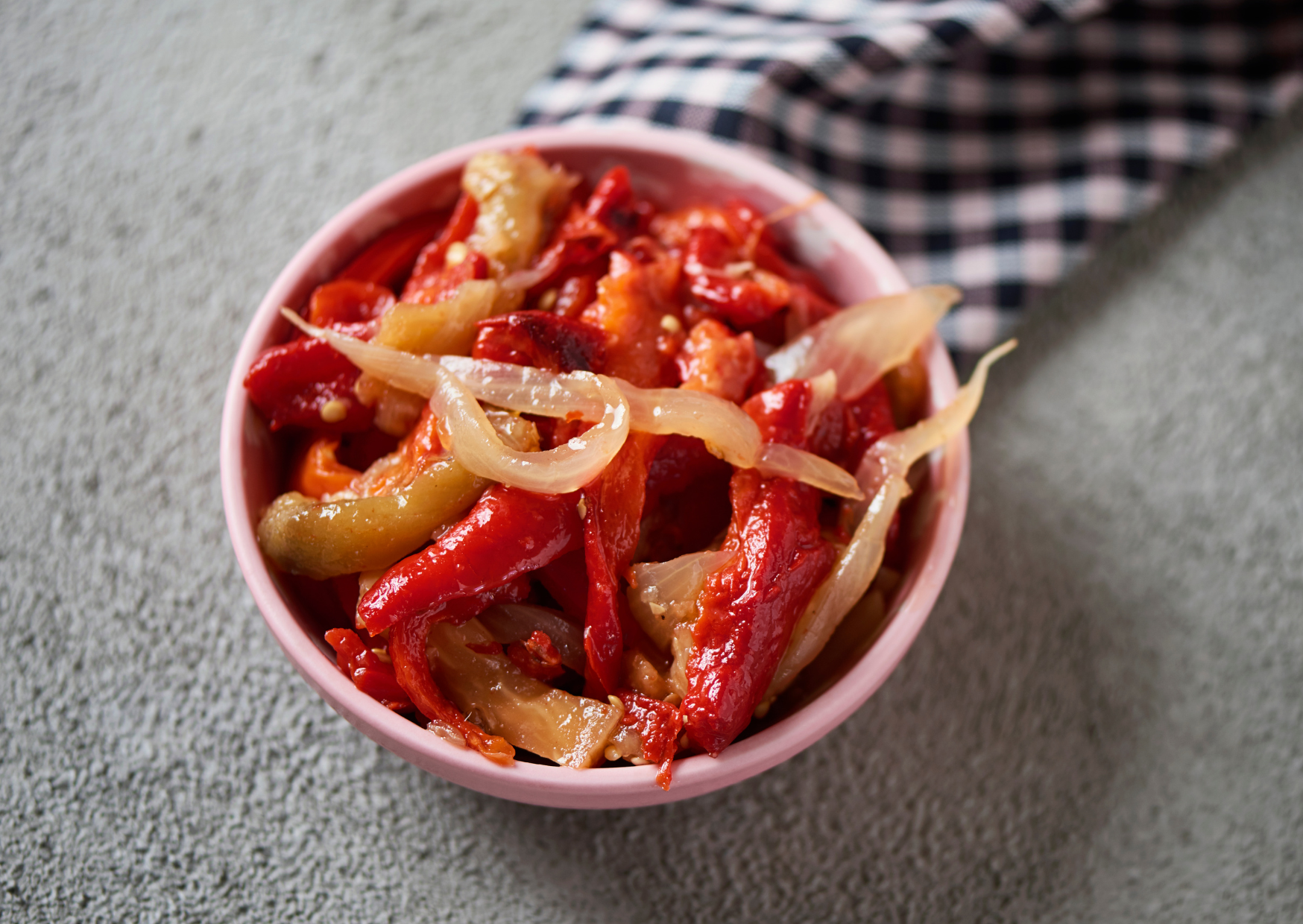
The name tells you everything about where this dish comes from. Escalivada derives from the Catalan verb escalivar, meaning to cook in embers or ashes, from caliu, the glowing coals of a dying fire. Traditionally, the vegetables were not roasted in an oven at all but laid directly among the embers of a wood fire and left to char.
This is country food, born in the rural kitchens of Catalonia and its neighbours in Aragon and Valencia, where farmers and shepherds cooked whatever they had over the same fires that warmed them. Vegetables buried in the coals needed no pan, no fat, no attention beyond the occasional turn, and they came out transformed: skins blackened and blistered, flesh collapsed into smoky sweetness. It was a way of making humble produce taste like a feast using nothing but fire.
That ember-roasting is the soul of the dish, and it is why a truly traditional escalivada carries a smokiness that an oven struggles to fully match. Most of us make it in the oven now, and it is still wonderful, but the ideal remains a live fire or a charcoal grill. If you ever get the chance to cook the vegetables over coals, take it, because you will taste exactly why this rustic method survived for centuries when easier ones existed.
There is also a thrift built into the technique that suited the people who invented it. Roasting vegetables in the embers used heat that was already there, from a fire lit for warmth or for cooking something else, so the meal cost nothing but the produce. Dishes born from that kind of resourcefulness tend to endure, because they were never about luxury in the first place, only about making the ordinary taste extraordinary.
Just Three Vegetables
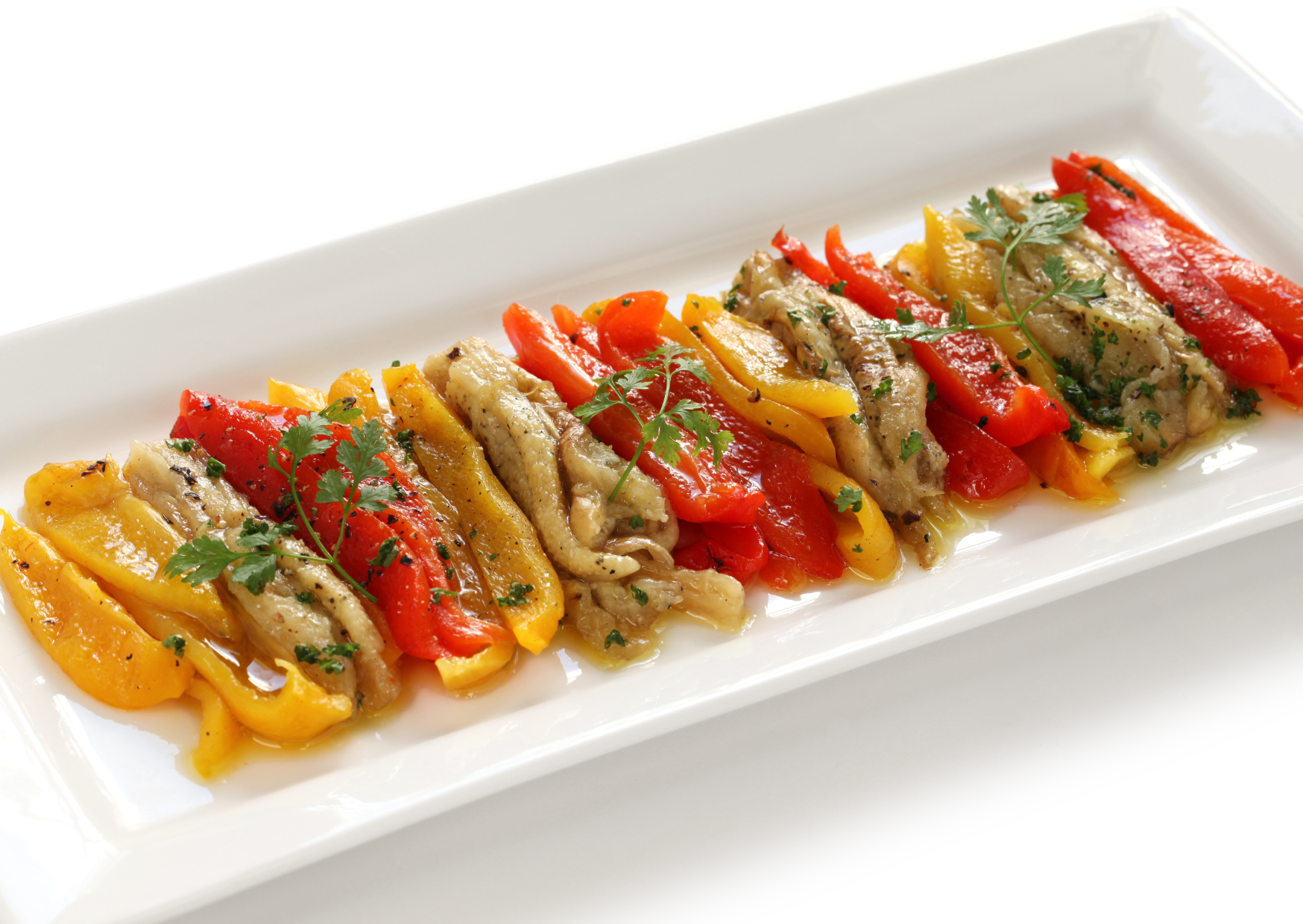
At its most classic, escalivada is built on three vegetables and almost nothing else. Aubergine and red peppers are the essential pair, with onion the usual third, and ripe tomatoes an optional fourth in some versions. The restraint is the point: with so few ingredients, each one has to be good, because there is nothing to hide behind.
The vegetables are roasted whole and unpeeled until their skins are charred and their insides are meltingly soft. Then they are covered to steam for a few minutes, which loosens the skins, and peeled by hand. Rather than being sliced neatly, the flesh is torn or cut into long strips and arranged on a platter, keeping that rustic, hand-made look. The seeds and any bitter juices are discarded so the finished dish stays clean and sweet rather than watery.
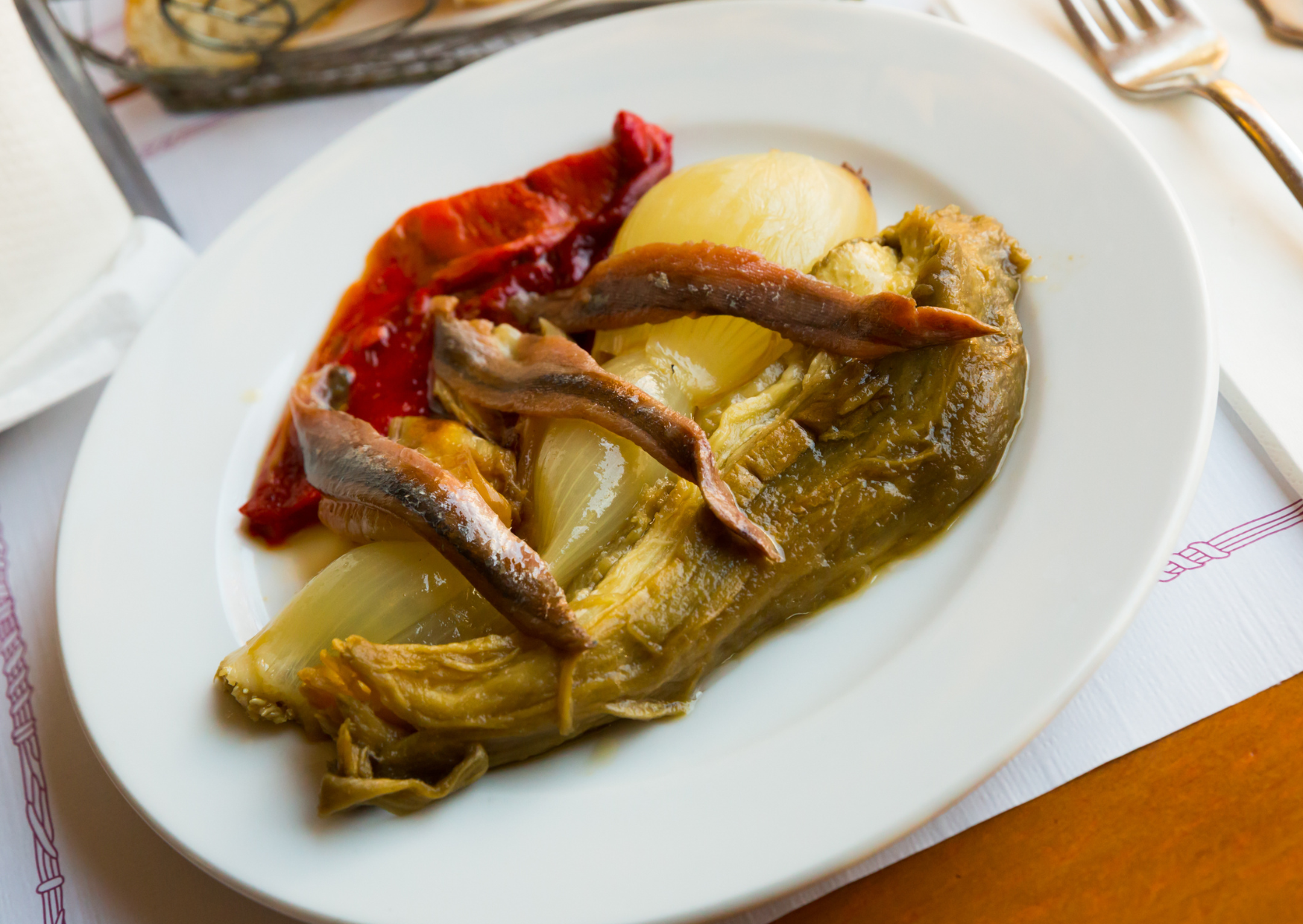
The dressing is deliberately minimal. Good extra-virgin olive oil, which does most of the work, and salt are the essentials, with a splash of sherry or red wine vinegar to brighten it and, if you like, a little raw garlic and some chopped parsley. That is the whole seasoning. Two optional but very traditional additions lift it further: a few salted anchovy fillets draped over the top, and a scatter of black olives, both of which play beautifully against the sweet, smoky vegetables.
None of these additions is mandatory, and the barest version, just the three roasted vegetables under oil and salt, is a complete dish in its own right. But the anchovy in particular is worth trying at least once. Its sharp, salty punch against the mellow sweetness of the peppers is one of those small combinations that feels, on first taste, like a secret the Catalans have quietly been keeping.
Not Quite Ratatouille
People meeting escalivada for the first time often reach for a comparison to ratatouille, the French dish of stewed summer vegetables, and while the two are cousins, the difference is worth understanding because it is the whole character of the dish.
Ratatouille is a stew. The vegetables are cut up and cooked together, softening into a saucy, unified whole. Escalivada is the opposite approach. The vegetables are roasted separately and whole, never simmered together, and the goal is not to blend them but to concentrate each one and keep its identity. On the plate, you can see and taste the distinct strips of smoky aubergine, sweet pepper, and soft onion side by side, dressed in oil rather than melted into sauce.
That distinction comes straight from the method. Fire-roasting drives moisture out and deepens flavour through char, where stewing adds moisture and melds flavours together. Neither is better, but they produce genuinely different things, and confusing them leads to disappointment. Escalivada should taste of smoke and concentrated vegetable sweetness, clean and distinct, not of a soft tangle of stewed produce. Keep the vegetables separate, char them properly, and you end up with escalivada rather than an accidental ratatouille.
Why It Tastes Better the Next Day
Here is the quality that sets escalivada apart. It is served not hot but at room temperature, and it genuinely improves as it rests, which makes it one of the most rewarding make-ahead dishes you can put your hands on.
The reason is marination. Once the warm, roasted vegetables are dressed in olive oil, they slowly drink it in, and the flavours meld and deepen over the following hours. The smokiness settles, the sweetness rounds out, the oil takes on the flavour of the vegetables and gives it back enriched. A freshly made escalivada is lovely; one that has sat in its oil for a few hours, or overnight in the fridge and come back to room temperature, is noticeably better, more harmonious and more intense.
This is why escalivada is such a gift for entertaining and for hot-weather cooking. You can make it a day ahead, keep it covered in the fridge, and simply bring it out when you need it, letting it come back to room temperature before serving. There is no last-minute cooking, no reheating, no stress. In the heat of a Spanish summer, a dish you make once and eat cool over the next two days is not just convenient, it is the sensible way to cook, and escalivada was built for exactly that rhythm.
It is worth saying that a small minority of cooks prefer it eaten the same day, arguing the smokiness is at its brightest fresh. They are not wrong that the flavour shifts. But the majority view, and the one the make-ahead tradition supports, is that a few hours in the oil does the dish more good than harm, trading a little immediacy for a lot of depth.
How to Serve It
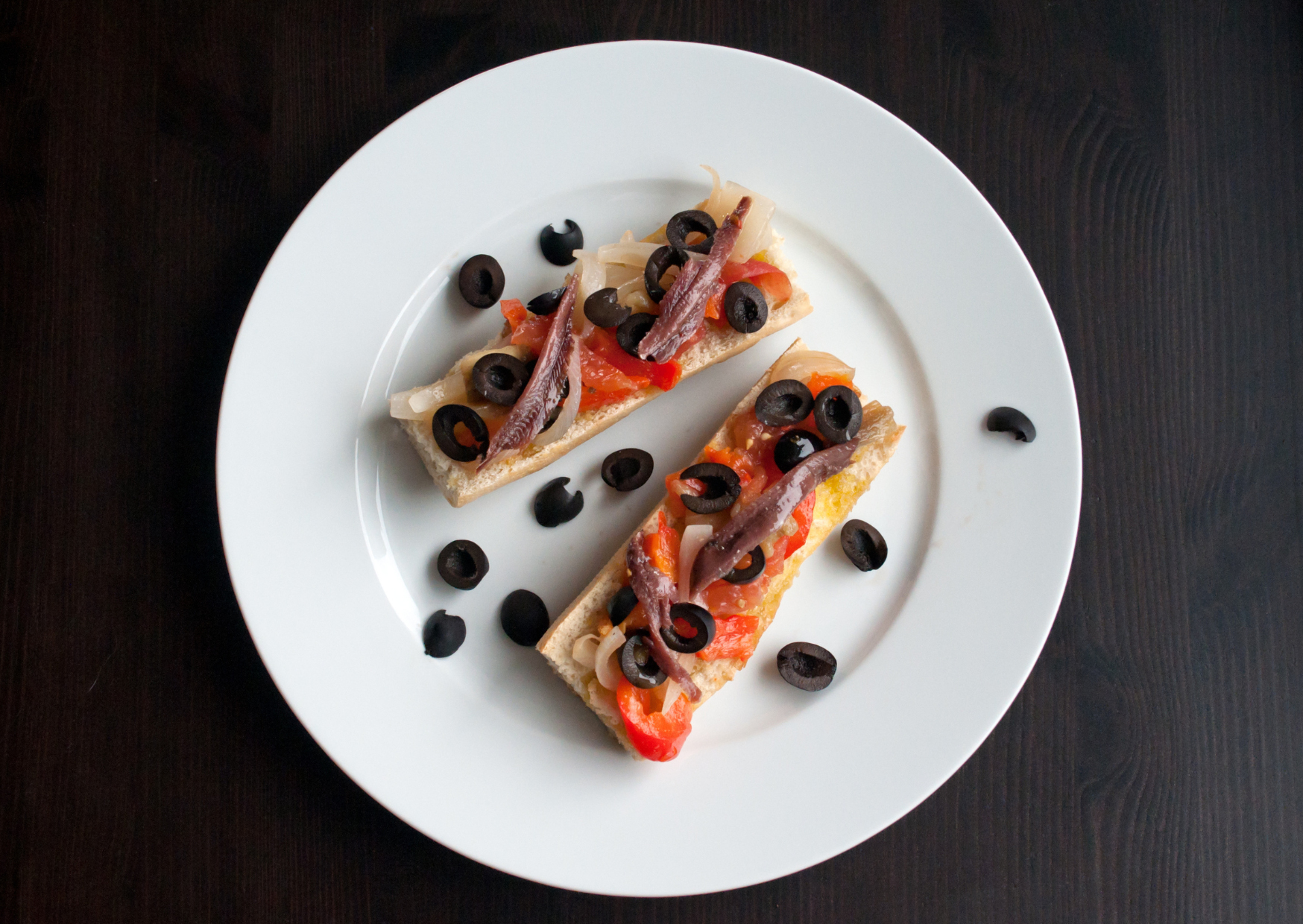
Escalivada is endlessly useful, which is the other reason it earns its place in the rotation. Most classically, it is served at room temperature as a tapa or a light salad, glistening with oil, perhaps with those anchovies and olives, and mopped up with good bread.
It is superb spooned over toasted bread or a Catalan coca, where the oil soaks in and the smoky vegetables become a rustic open sandwich. It makes an ideal side for grilled or roasted fish and meats, its sweetness cutting through anything rich or charred. It can be folded into sandwiches, piled onto flatbreads, stirred through beans or lentils for a simple lunch, or served alongside eggs. It also sits naturally beside its Catalan cousin romesco, the roasted pepper and nut sauce, in the same family of smoky, sun-soaked flavours.
The one constant is that it is rarely served piping hot, and never needs to be. Room temperature is where its flavours are fullest, which conveniently is also where it is easiest to serve. Whatever you pair it with, keep the accompaniments simple and let the vegetables, and all that good olive oil they have been sitting in, be the star.
How to Make It
The method is genuinely easy, and the only rule is not to rush the roasting. The vegetables must be properly soft and their skins truly charred, because undercooked escalivada is bland and difficult to peel. Give them the time they need and the rest takes care of itself.
Roast the vegetables whole until they collapse, steam and peel them, tear them into strips, and dress them well. Then, ideally, walk away and let them sit, because that resting time is where the magic happens. If you can make it several hours ahead, or the day before, do, and you will taste for yourself why the Catalans have never been in a hurry with this dish. It is proof that sometimes the best thing you can do for a meal is to make it early and leave it alone.
Escalivada (Catalan Roasted Vegetables)
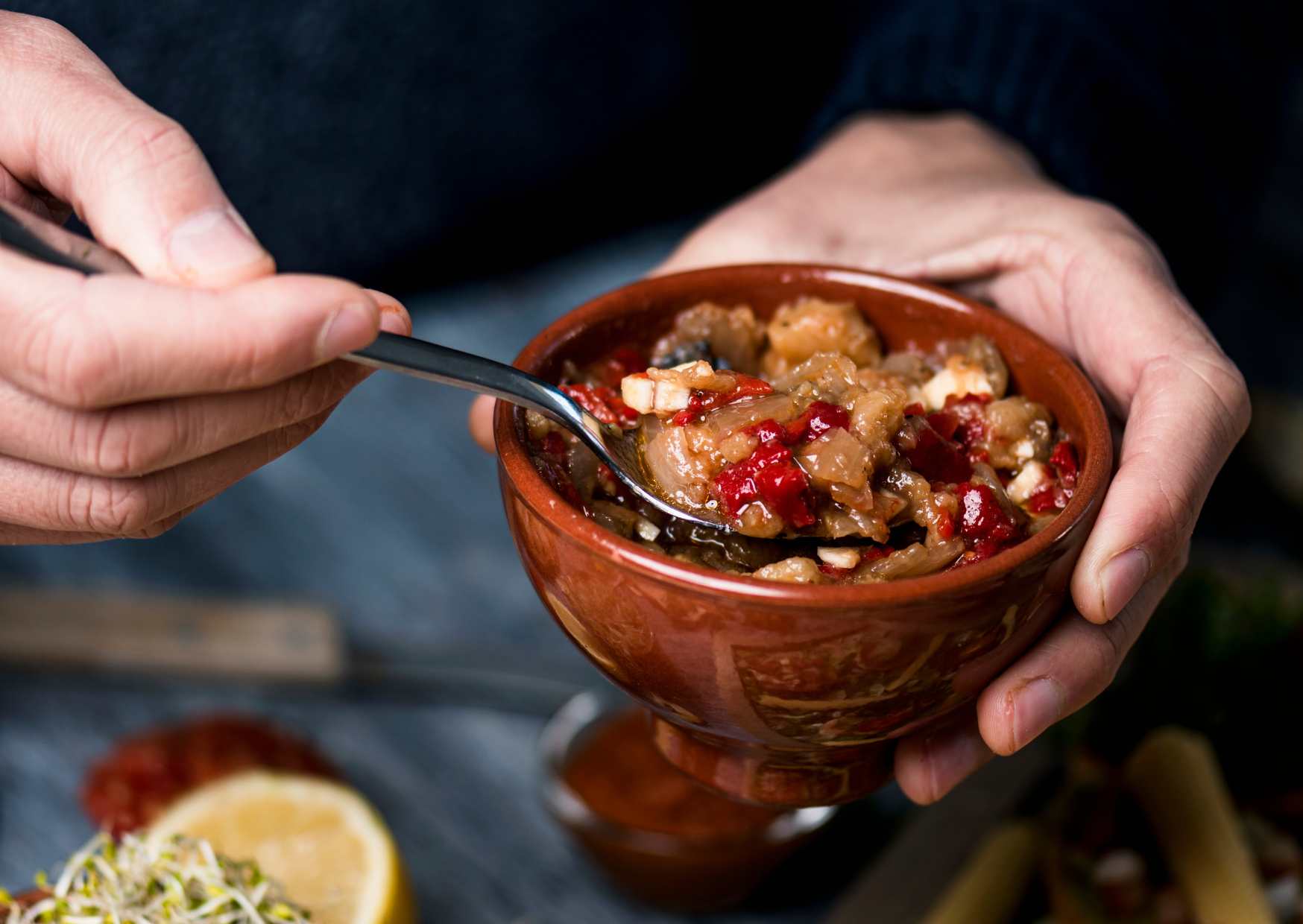
Whole aubergines, peppers, and onions roasted until charred and sweet, then peeled, torn into strips, and dressed with olive oil. Served at room temperature, and even better the next day.
Serves: 4 · Prep: 15 minutes · Cook: 50 minutes
Ingredients
- 2 medium aubergines (eggplants)
- 3 red bell peppers
- 2 onions, unpeeled
- 2 ripe tomatoes (optional)
- 4 tbsp extra-virgin olive oil, plus more for drizzling
- 1 tbsp sherry vinegar or red wine vinegar
- 1 small garlic clove, finely minced (optional)
- Salt, to taste
- Small handful fresh parsley, chopped
- Salted anchovy fillets and black olives, to serve (optional)
- Bread or coca, to serve
Method
- Preheat the oven to 220°C (425°F). Prick the aubergines a few times with a knife. Place the whole aubergines, peppers, and onions on a foil-lined tray and rub lightly with a little oil.
- Roast for 45 to 60 minutes, turning once or twice, until the skins are blistered and blackened and the flesh is completely soft. Peppers may be ready sooner; remove each vegetable as it is done. Add the tomatoes for the last 15 minutes if using.
- Transfer the hot vegetables to a bowl and cover, or seal in a bag, for 10 to 15 minutes. The trapped steam loosens the skins.
- Peel the vegetables. Remove the pepper seeds and stems. Tear or slice the flesh into long strips, discarding seeds and any bitter juices.
- Arrange the strips on a platter. Whisk the olive oil, vinegar, garlic, and salt, and spoon over the top. Scatter with parsley.
- Let rest at least 30 minutes, ideally a few hours, before serving at room temperature. Top with anchovies and olives if using, and serve with bread.
Notes
- Escalivada improves as it marinates. Make it a day ahead, refrigerate, and bring back to room temperature before serving.
- For maximum smoky flavour, cook the whole vegetables over a charcoal grill instead of roasting.
- Delicious spooned over toasted bread or coca as a simple starter or snack.
- Keeps, covered, in the fridge for up to 4 days.

About the Author: Ruben, co-founder of Gamintraveler.com since 2014, is a seasoned traveler from Spain who has explored over 100 countries since 2009. Known for his extensive travel adventures across South America, Europe, the US, Australia, New Zealand, Asia, and Africa, Ruben combines his passion for adventurous yet sustainable living with his love for cycling, highlighted by his remarkable 5-month bicycle journey from Spain to Norway. He currently resides in Spain, where he continues sharing his travel experiences with his partner, Rachel, and their son, Han.