
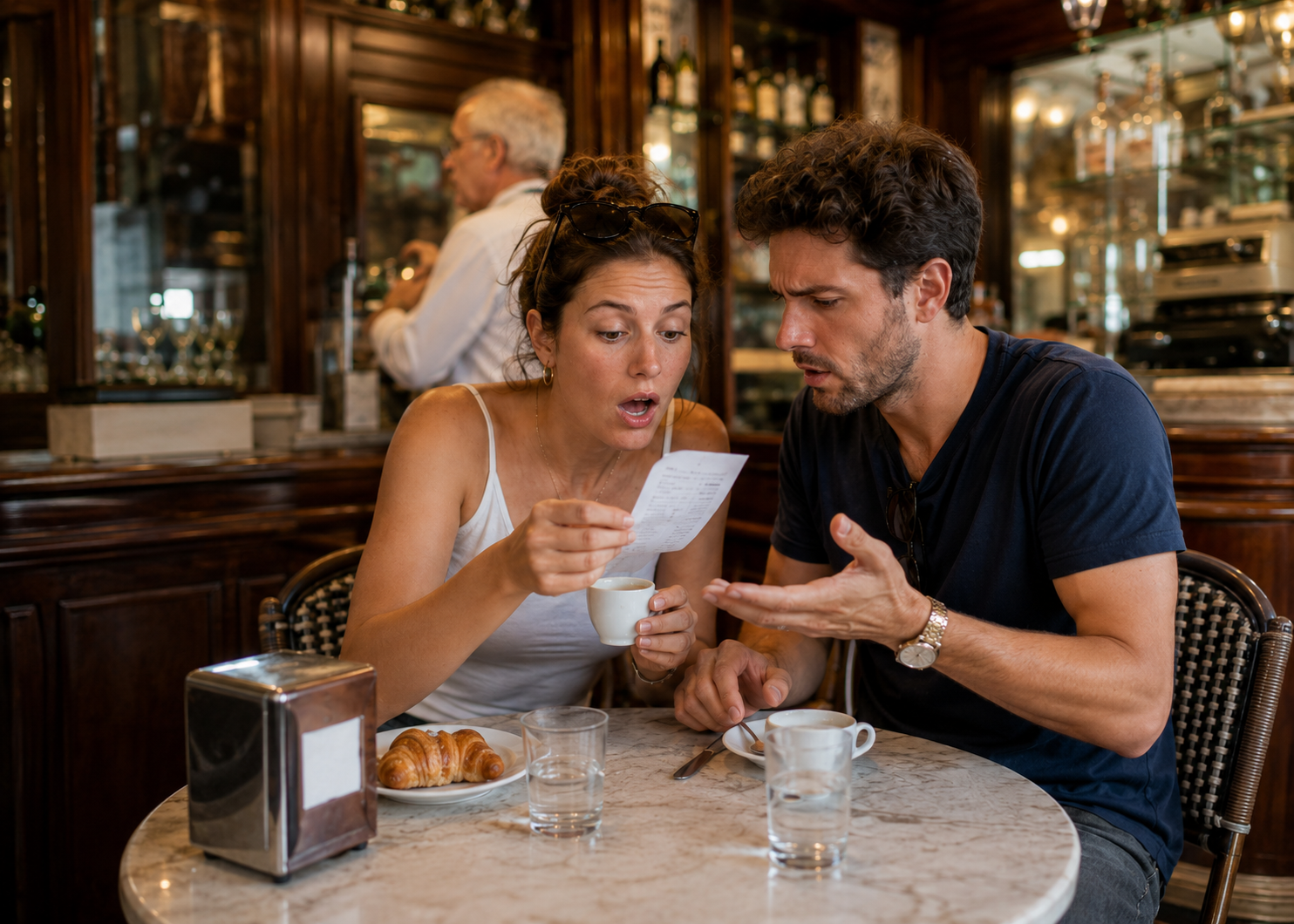
An American walks into a bar in Rome, orders an espresso, and glances at the price list. The same coffee appears twice, at two different prices. One column says something like €1.20, roughly $1.30. Another says €3.50, about $3.80. Same cup, same beans, nearly triple the price. It looks like a mistake, or a trick.
It is neither. It is one of the most fundamental features of Italian coffee culture, and it trips up visitors constantly because nothing in American café life prepares them for it. In Italy, the price of your coffee depends not just on what you order but on where you drink it: standing at the counter, or sitting at a table. Understand that one distinction and you understand how Italy drinks coffee.
Al Banco and Al Tavolo
Italian bars, which is what Italians call the places the rest of the world would call cafés, run on two prices, and they have names. Coffee al banco means coffee taken standing at the bar, the counter where the barista works. Coffee al tavolo means coffee brought to you while you sit at a table.
Al banco is the standard, the default, the way most Italians take their coffee. You walk in, order at the counter, and drink your espresso standing right there, often in under a minute. It is quick, social, and cheap. Al tavolo is the seated option: you take a table, a member of staff comes to you, and you linger. For that privilege, you pay more, sometimes a little, sometimes a lot.
Crucially, both prices are usually posted, and often the difference is stark. A coffee that costs a euro or so at the counter can cost two, three, or four times as much at a table, especially if that table sits on a famous piazza. This is not a tourist trap sprung on the unwary; it is a transparent, long-standing system that Italians navigate without a second thought. The two prices are simply two different things, and knowing which one you are choosing is the whole game.
The physical layout of a bar tells the story before you order. There is the long counter, the banco, where a knot of people stand with tiny cups, drink, and disperse in a constant churn. And there are the tables, often fewer, where people sit more slowly. The two zones operate almost as two different businesses under one roof, and the price list simply reflects that.
Why Standing Is Cheaper
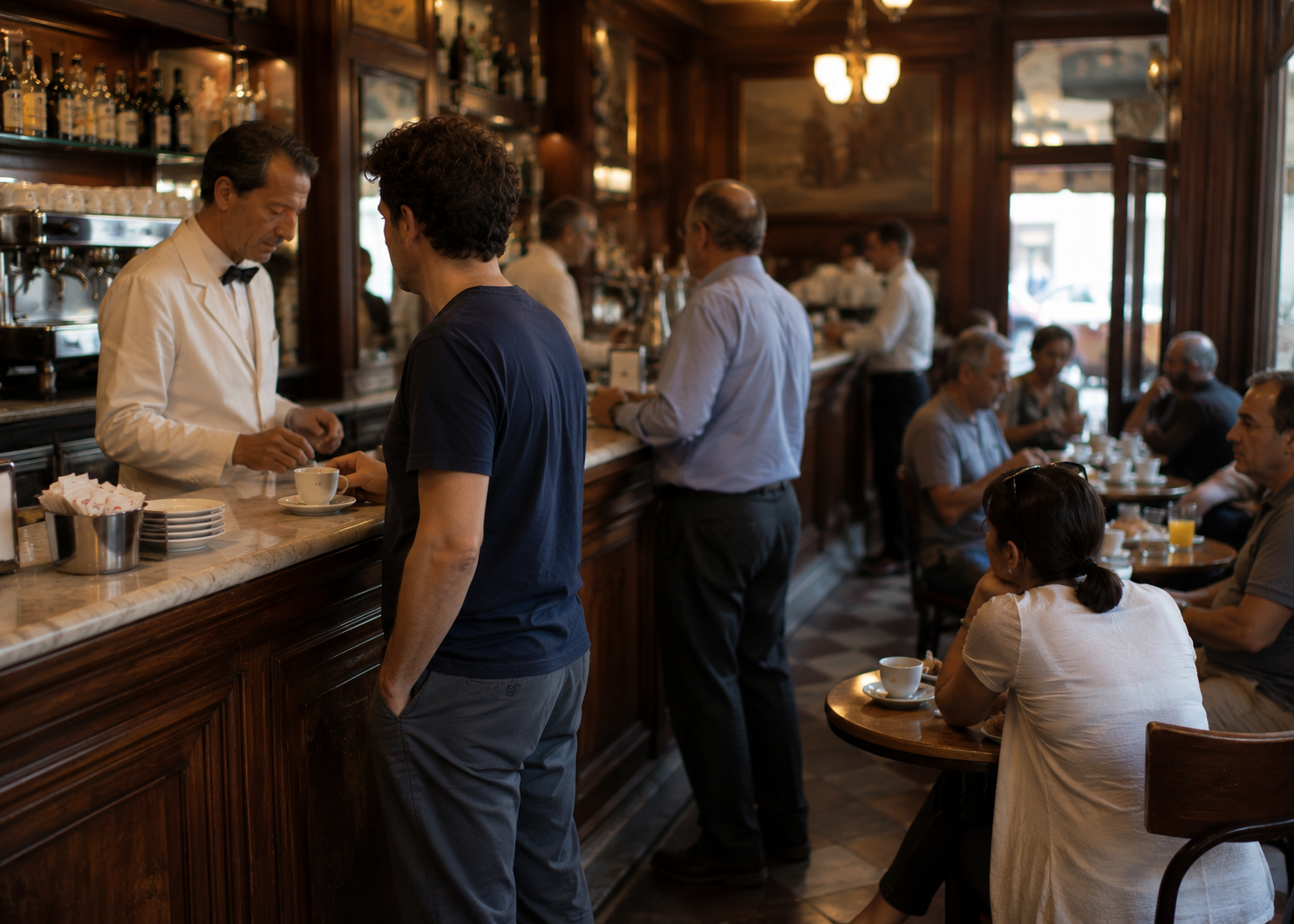
The logic, once you see it, is completely reasonable. When you drink al banco, you are paying for the coffee and almost nothing else. You order, you drink, you leave, and the whole transaction takes a couple of minutes, so the bar can serve a great many people at that counter in an hour. The overhead per customer is tiny.
When you sit down, the economics change. A table takes up space that could otherwise turn over many standing customers. A member of staff has to come to you, take your order, carry it out, and clear up afterward. You occupy that seat for as long as you like, whether that is ten minutes or an hour. All of that costs the bar money, and the higher al tavolo price covers it.
There is also the matter of tipping, or rather the absence of it. In Italy, tipping is not a real part of the culture; servers are paid a proper wage and do not depend on gratuities. So the cost of table service cannot be quietly offloaded onto the customer as an expected tip, the way it often is in the United States. Instead, it is built openly into the seated price. The higher al tavolo figure is, in effect, the service charge, stated up front rather than added on with an awkward expectation at the end. Seen that way, the two-tier system is arguably more honest than the American model, not less.
The Law Behind the Two Prices
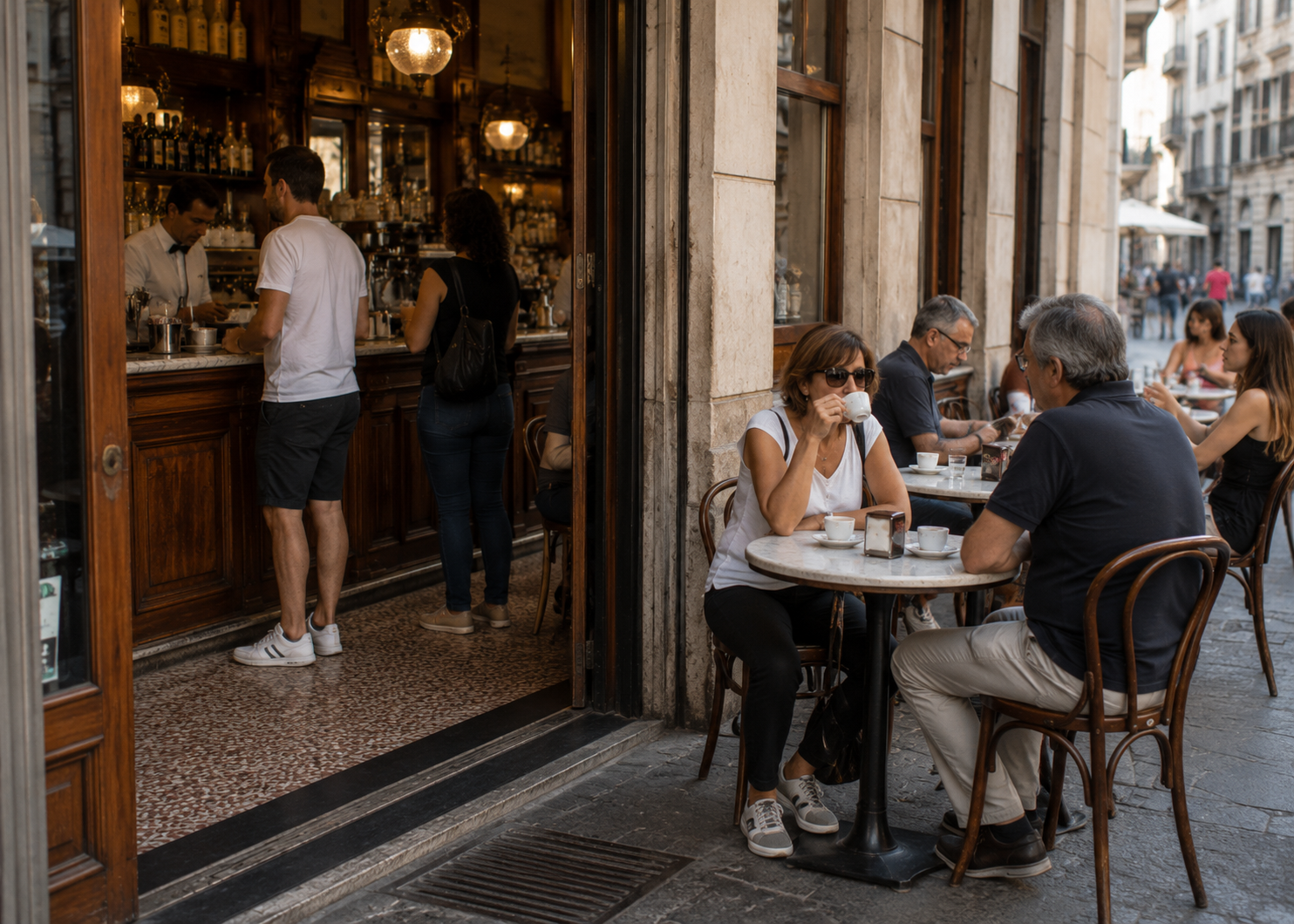
The two-price system is not just a custom; it is backed by law. Italian regulations require bars to clearly display their prices, distinguishing between the prezzo al banco and the prezzo al tavolo, so that customers can see exactly what each option costs before they commit. The transparency is the legal point: you are meant to know.
The origin of the split reaches surprisingly far back. The dual pricing is generally traced to the era around the First World War, when the Italian government set a fixed maximum price on certain staples, coffee among them, to keep essentials affordable. That cap squeezed the profit bar owners could make on the coffee itself, so they began charging separately for the added service of a table. The workaround stuck, and a century later it is simply how Italian bars operate.
That history explains why the counter price stays so low even now. The espresso al banco is treated almost as a protected everyday necessity, kept cheap and accessible, while the table service is where the bar makes its margin. It is a neat piece of economic history hiding in plain sight on every price list in the country, and it is why an Italian can still get a superb espresso for around a euro while a seated coffee on a grand square costs many times that.
How Italians Actually Drink Coffee
To really understand the system, it helps to see how Italians treat coffee, because it is nothing like the American ritual. For most Italians, coffee means espresso, a single small, intense shot, and the word for it is simply un caffè. Ask for an espresso and you will be understood, but the local word is caffè.
The typical order is quick and standing. An Italian walks into their regular bar, says buongiorno, orders un caffè, drinks it at the counter in a matter of seconds, pays, and leaves, often exchanging a few words with the barista or a neighbour along the way. The whole thing is a brief, upright, almost ceremonial pause in the day. In many bars you pay at a separate till, the cassa, either before or after, and hand your receipt to the barista.
There is no to-go culture to speak of. Italians do not generally walk down the street clutching a giant paper cup; coffee is something you stop for, not something you carry. There are unwritten rules, too, the most famous being that milky coffees like cappuccino belong to the morning and look faintly odd after lunch. None of this is compulsory for a visitor, but the closer you get to it, the more the two-price system makes sense, because the whole culture is built around the quick, cheap coffee taken standing at the bar.
This is also why the espresso itself is so small. It is designed to be drunk in a few hot, fast sips, not nursed from a large cup over an hour of work emails. The size, the speed, the standing, and the low counter price all fit together into a single coherent way of taking coffee, one with more in common with a quick shared ritual than with the American idea of coffee as portable fuel or a mobile office.
What Sitting Down Actually Buys
None of this means sitting down is a mistake or a rip-off. The seated price buys something real, and often something worth having. When you pay al tavolo, you are buying time, comfort, service, and very often a view, and there are moments when all of that is exactly what you want.
After a long morning of sightseeing, taking a table on a beautiful square and nursing a coffee while you watch the city go by is one of the great pleasures of travel, and the extra couple of euros is a fair price for it. The premium simply rises with the location. A table at an ordinary neighbourhood bar might cost only a little more than the counter, while a table at a historic café on a world-famous piazza can cost a great deal more. At the storied Caffè Florian in Venice, for instance, a coffee that is a few euros at the counter can climb toward double figures at a table on the square, a price that includes the setting, the history, and sometimes live music.
It is worth saying that even these eye-watering tourist-café prices are not, strictly speaking, unfair. A table on a grand Venetian or Roman square comes with centuries of atmosphere and a location that costs the café a fortune to occupy, and that cost is passed on to anyone who wants to sit in it. You are, quite literally, paying for the real estate and the view. Whether it is worth it is a personal call, but it is not a con.
The key is that you are choosing. Because both prices are posted, sitting down is an informed decision, not an ambush. If you want the quick, cheap experience, stand at the bar. If you want to linger over the view, take a table and pay for it gladly. Both are legitimate; they are simply two different products sold at two different, clearly marked prices.
It Is Not Only Coffee
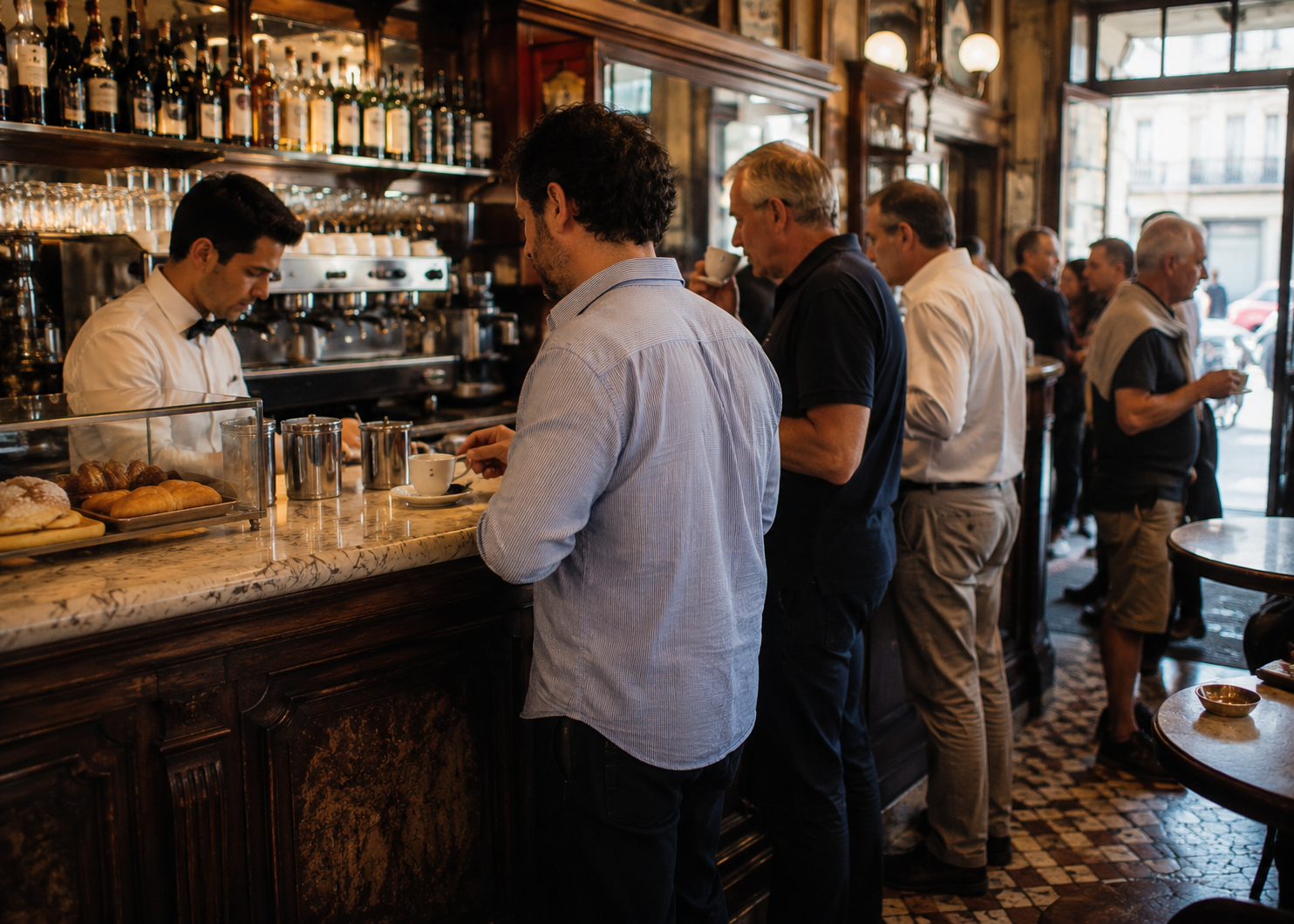
The standing-versus-sitting principle does not stop at espresso. Once you understand it, you start seeing the same logic across Italian bars and restaurants, because it reflects a broader Italian habit of pricing service separately and openly.
Order a cornetto, the Italian croissant, at the counter and it is cheap; have it brought to your table and it costs more, for the same reason the coffee does. The same is true of a spritz or a beer at aperitivo hour. And in restaurants, a related idea appears as the coperto, the small per-person cover charge for taking a table and being served, which trips up newcomers in much the same way the two coffee prices do. In each case the pattern is identical: the food or drink is one thing, and the seat and service around it are another, priced on their own.
For a visitor, this is the single most useful thing to internalise about eating and drinking in Italy. The country consistently separates the product from the service and charges for each, rather than hiding the service cost inside the product price or leaving it to a tip. It can feel unfamiliar at first, but it is consistent and it is honest, and once you expect it, none of it catches you out again.
Where Americans Trip Over It
The reason this system catches Americans off guard is that almost every assumption they bring from home points the wrong way. American café culture is built on the opposite instincts, and each one sets up a small collision with the Italian way.
Americans are used to one price regardless of where they sit, to ordering a large drink to carry out, to settling in with a laptop for an hour, and to adding a tip at the end. In Italy, the price changes with the seat, the coffee is small and meant to be drunk on the spot, working in a bar over a single espresso is nearly unheard of, and the service is priced in rather than tipped. The seated espresso that arrives costing four or five euros feels, to an American, like being overcharged, when in fact it was the clearly posted price for a service they chose.
The trap, such as it is, is entirely avoidable, and it is not really a trap at all. The only real risk is sitting down in a premium tourist spot without checking the al tavolo price and then feeling stung by a bill that was written on the board the whole time. Glance at both prices, decide whether the seat is worth it to you, and there are no unpleasant surprises. The system rewards a moment of attention and punishes only the assumption that Italy works like home.
How to Order Like a Local
Putting it together, ordering coffee like an Italian is simple once you know the moves, and doing so saves money while pulling you a little deeper into the rhythm of the country. The whole thing takes about a minute and costs about a euro.
Walk up to the counter and say un caffè, per favore for an espresso. Drink it standing at the bar, reasonably quickly, the way everyone around you is doing. Pay at the till, in cash at smaller places, and be on your way. If the bar has a separate cassa, you may pay there first and bring the receipt to the barista. That is the entire ritual, and it is genuinely one of the best euros you can spend in Italy.
Save sitting down for when you actively want it: when you are tired, when the square is beautiful, when you want to people-watch or talk with someone unhurried. On those occasions, take a table without guilt, knowing you are paying for the experience and not being cheated. The skill is not in always choosing the cheap option but in choosing deliberately, matching the price you pay to the experience you actually want in that moment.
Two Prices, Two Experiences
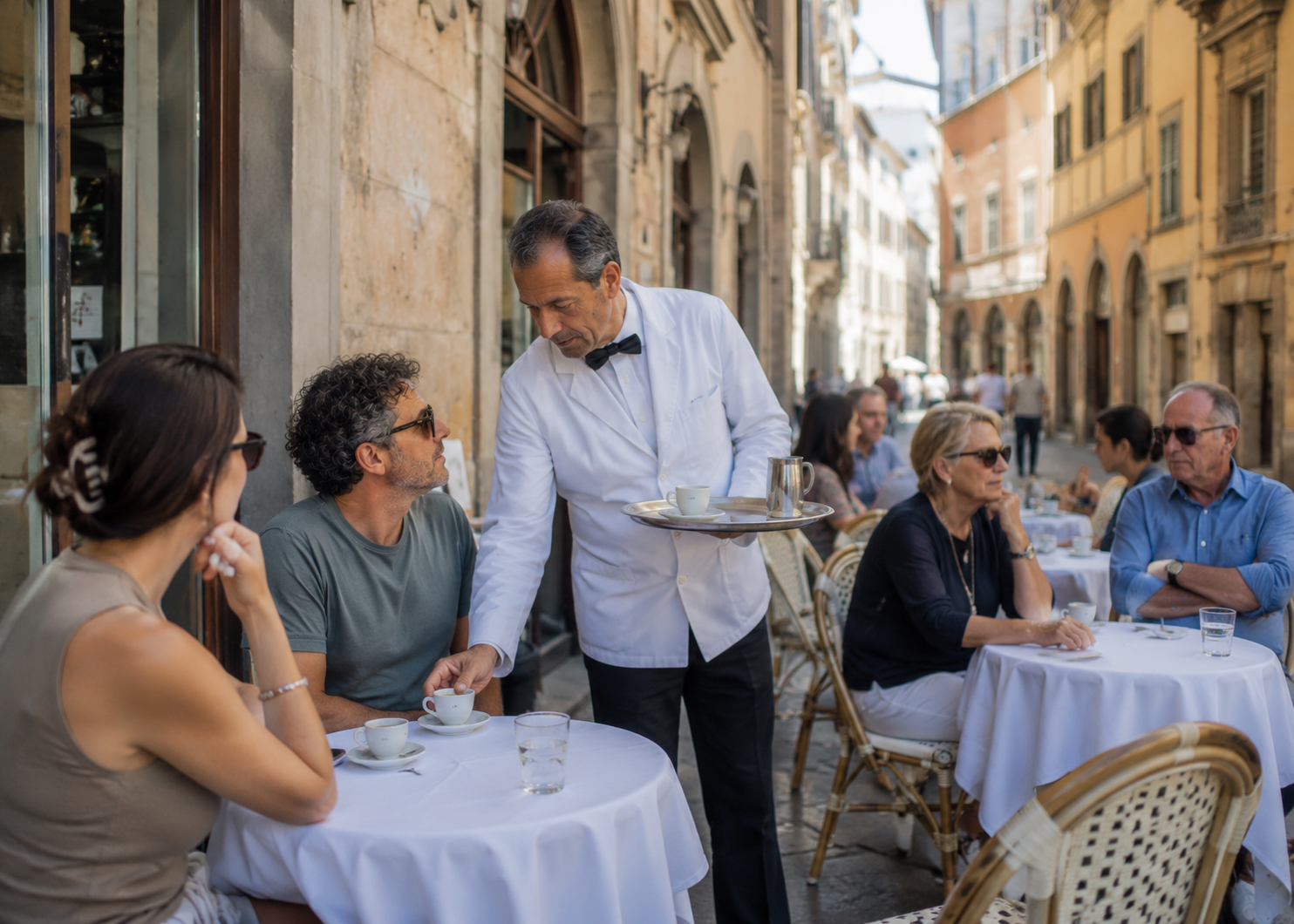
The Italian coffee bar, with its two prices for one cup, turns out to be a small masterclass in honest pricing. Nothing is hidden. The counter price and the table price sit side by side on the board, and you decide which experience you are buying before a drop of coffee is poured.
For the traveller, the lesson is to stop reading the two numbers as a scam and start reading them as a menu. €1.20 buys a quick, perfect espresso taken standing among locals, the everyday Italian ritual at its purest. €3.50, or more, buys a seat, a moment, and often a view, the coffee as an occasion rather than a pause. Neither is wrong, and on the right day each is exactly right.
Understand that, and the two-price system stops being something Americans trip over and becomes something they can use. You get to choose your own experience, cup by cup, and pay precisely for the one you want. That, more than the caffeine, is the quiet genius of the Italian bar.

About the Author: Ruben, co-founder of Gamintraveler.com since 2014, is a seasoned traveler from Spain who has explored over 100 countries since 2009. Known for his extensive travel adventures across South America, Europe, the US, Australia, New Zealand, Asia, and Africa, Ruben combines his passion for adventurous yet sustainable living with his love for cycling, highlighted by his remarkable 5-month bicycle journey from Spain to Norway. He currently resides in Spain, where he continues sharing his travel experiences with his partner, Rachel, and their son, Han.