
A family sits down at a restaurant in Seville, orders lunch, and asks for water. A waiter brings two large bottles of mineral water and, at the end of the meal, adds them to the bill: several euros for water that came out of a factory. The family pays without thinking, as tourists do across Spain every day. What almost none of them know is that they had a legal right to free tap water instead, and had done since 2022.
Since April of that year, Spanish law has required bars and restaurants to offer customers free, unbottled water. It is not a courtesy or a regional quirk; it is a national obligation written into a major environmental law. Yet the message has barely reached visitors, who keep paying for bottles they never needed to buy. Here is the law, why it exists, and how to actually claim the water you are entitled to.
The Law That Changed the Rules
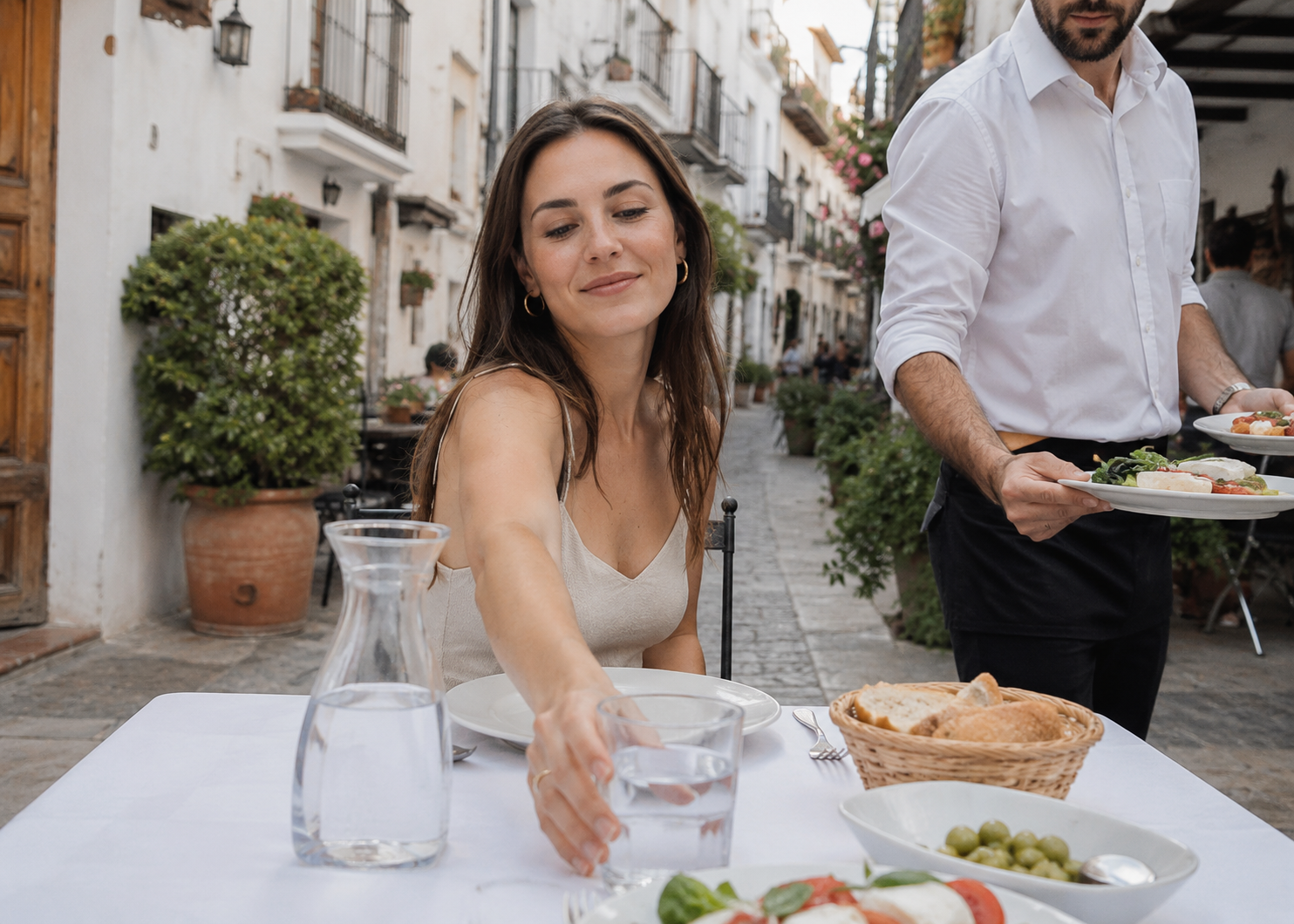
The rule comes from Ley 7/2022, the Law on Waste and Contaminated Soil for a Circular Economy, which came into force in April 2022. It is a sweeping piece of environmental legislation aimed at cutting waste and, above all, reducing single-use plastic, and tucked inside it is a small provision that quietly reshaped how Spain serves water.
Before this law, whether a bar or restaurant gave you free tap water was entirely up to the owner. A few Spanish regions had already passed their own rules, with Castilla y León leading the way back in 2016, but in most of the country it was a matter of the establishment’s goodwill, and many simply pushed bottled water because it was profitable. Ley 7/2022 ended that patchwork by making free unbottled water a requirement everywhere in Spain, from the Canary Islands to the Basque Country.
The significance is that this is now a nationwide legal obligation, not a regional courtesy. Every bar, café, and restaurant in the country falls under it, and the customer’s entitlement to free tap water is no longer something to be negotiated but something the law guarantees. For a visitor, that means the right travels with you across the whole of Spain, whichever city or region you happen to be eating in.
It is worth stressing how recent and how complete this shift is. For decades, free tap water in a Spanish restaurant was hit or miss, granted grudgingly in some places and flatly refused in others. In the space of a single law, it went from an owner’s whim to a customer’s right across the entire country, which is a genuinely large change dressed up as a minor clause.
What the Law Actually Says
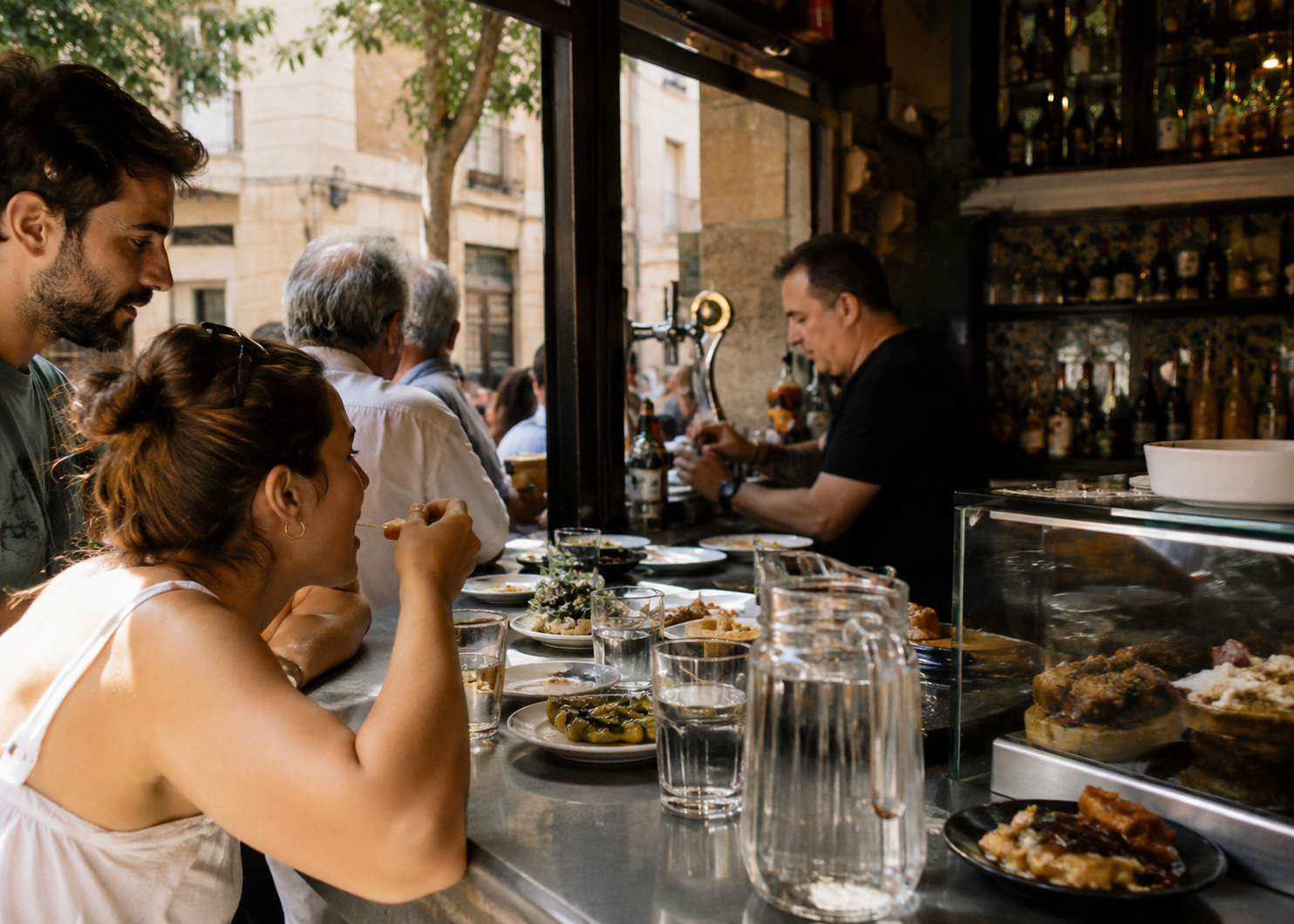
The relevant text is admirably direct. Establishments in the hospitality and restaurant sector must always offer consumers the possibility of consuming unpackaged water, free of charge and complementary to their own offering. In plain terms, if you are a customer, they must make free non-bottled water available to you.
The wording matters in two ways. First, the water must be free and additional to whatever else the place sells, so it cannot be quietly folded into a charge or used as a reason to insist you buy something. Second, it must be unpackaged, meaning tap water served in a glass or a jug rather than a sealed plastic bottle, because the entire point of the provision is to reduce plastic waste. A restaurant satisfies the law by bringing you a pitcher of tap water and a glass, at no cost.
This is the crucial thing for travellers to absorb: free tap water in a Spanish restaurant is not a favour you are asking for but a right the law grants you. The establishment is obliged to make it available. You are not being cheap or difficult by requesting it; you are simply asking for something the Spanish parliament decided, for environmental reasons, that you are entitled to. Understanding that changes the whole tenor of the request.
Why Most Tourists Still Pay
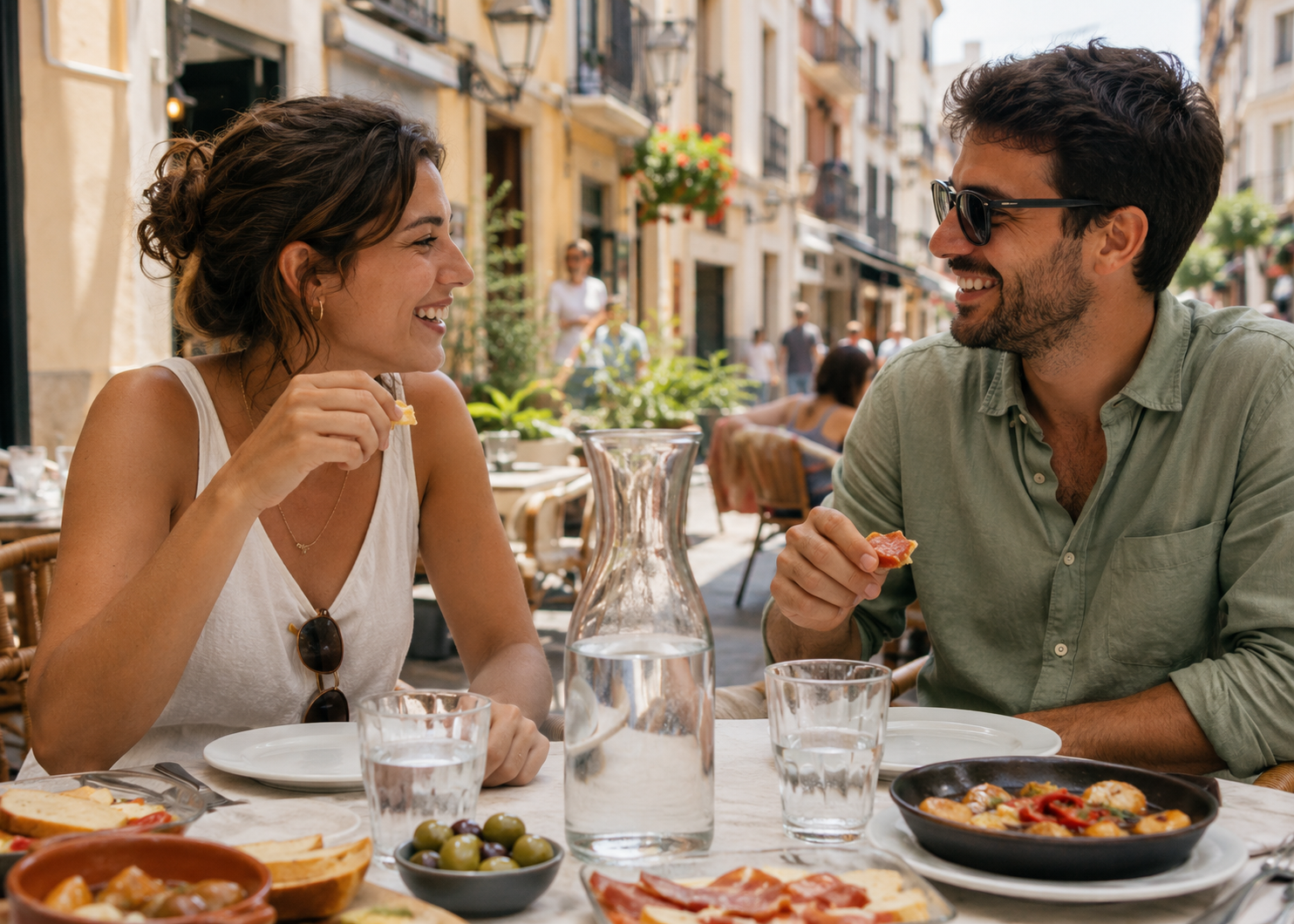
If the law is so clear, why do so many visitors keep paying for bottles? The answer is a combination of ignorance, culture, and habit, and it starts with the simple fact that almost no tourist knows the law exists. It was reported in Spain when it passed, but it never became common knowledge among the millions who visit each year.
Spanish drinking culture is the second factor. Spain is a nation of committed bottled-water drinkers, and ordering agua mineral, bottled mineral water, is deeply normal, often driven by old perceptions about the taste or quality of tap water. Waiters, following that norm, will frequently ask still or sparkling and reach for a bottle by default, never mentioning the free option, because bottled water is simply what most people order and what the establishment would rather sell. The free tap water exists, but it sits invisibly in the background unless someone asks for it by name.
That is the heart of the problem: the law requires that free water be available, but it does not force staff to advertise it, so in practice you almost always have to ask. A tourist who does not know to ask, and who assumes water means a bottle, will be handed a bottle and charged for it every single time. The gap between the right and the reality is bridged by three simple words, which most visitors never learn to say.
There is also a quiet incentive on the other side of the table. Bottled water carries a healthy margin, and a couple of bottles per table across a busy service adds up to real revenue, so an establishment has little reason to volunteer the free option the law requires it to keep available. None of this is sinister; it is simply that the default favours the bottle, and defaults are powerful. The law changed the rule but not the habit, and habits are what most people actually run on.
How to Actually Get It
Claiming your free water is easy once you know the magic phrase. When you want tap water, ask specifically for agua del grifo, which means tap water, ideally with a friendly por favor. This signals clearly that you do not want a bottle, and under the law the establishment should provide it free of charge.
It helps to be specific and confident, because if you simply ask for water, agua, you will very likely be brought a bottle by default. Agua del grifo removes the ambiguity. In the vast majority of places, especially since the law, this request is met without any fuss; a jug and glasses arrive and that is that. Some establishments even keep filtered or chilled tap water ready precisely for this purpose.
Very occasionally, an establishment may be reluctant or claim not to offer it, and here it is worth knowing your recourse. Spanish businesses are legally required to keep a Hoja de Reclamaciones, an official complaints form, available to customers on demand, and a refusal to provide free tap water is exactly the kind of thing it exists for. Simply asking for the Hoja tends to resolve the matter quickly, because staff know the request is legitimate. In practice you will rarely need it, but the fact that it exists is a reminder that the law is genuinely on your side.
Is Spanish Tap Water Safe to Drink?
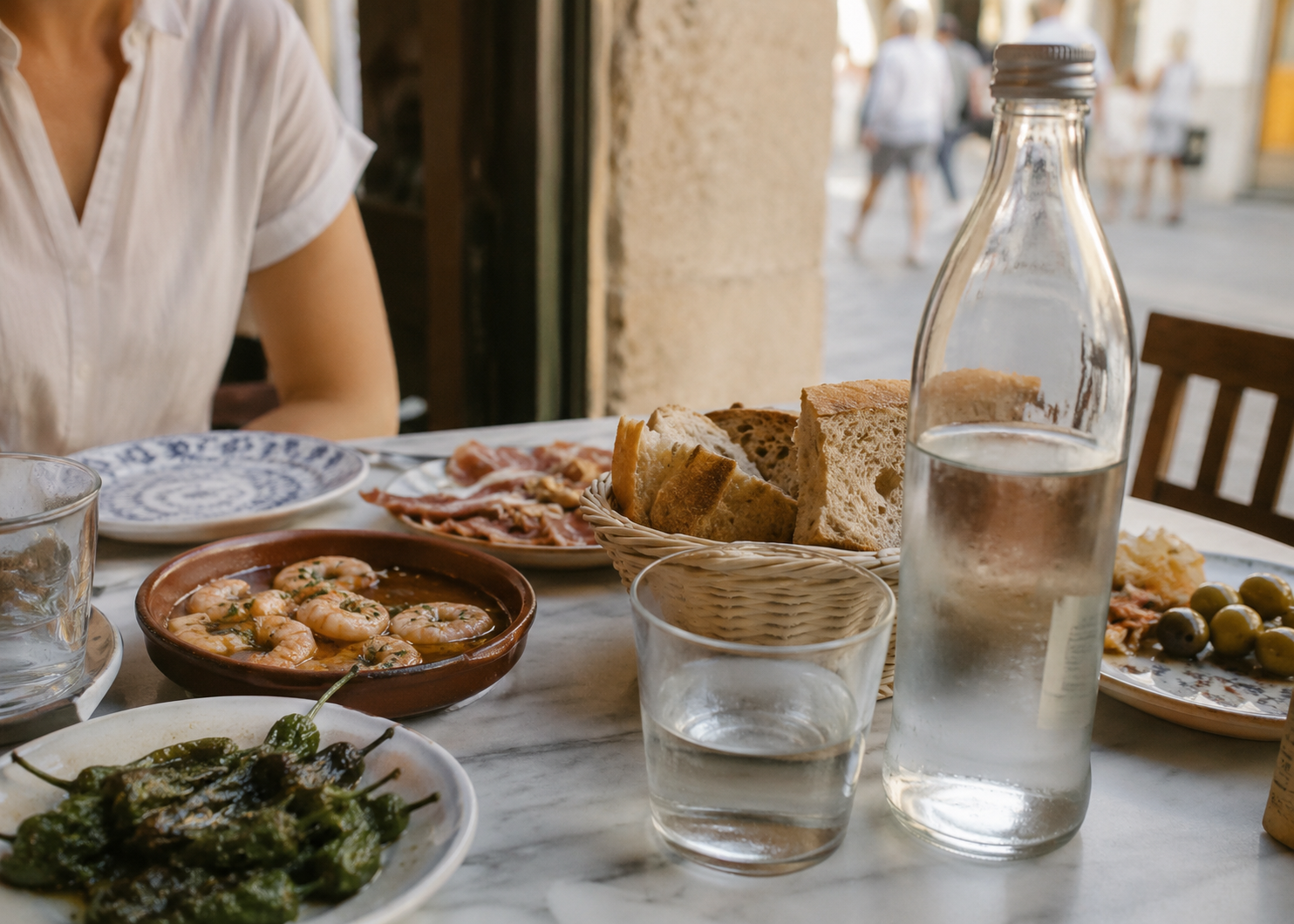
A fair question lurks behind all of this: is the tap water actually safe and pleasant to drink? For the vast majority of Spain, the answer is a clear yes. Tap water across mainland Spain is potable, safely treated to strict standards, and perfectly fine to drink, and in many cities it is genuinely excellent.
What varies is taste, not safety. Some areas, particularly parts of the coast and certain islands, have harder water or more noticeable chlorine, which is a large part of why bottled water became so entrenched in Spanish culture in the first place. Madrid, by contrast, is famous for the quality and taste of its tap water, which comes down from mountain reservoirs. So while the water is safe essentially everywhere, a traveller may find it more palatable in some places than others, and that regional variation is worth knowing.
The key point is that safety is not the issue. Nobody needs to buy bottled water in Spain out of health concern; the tap water will not make you ill. Whether you prefer the taste in a given town is a matter of personal preference, but it is a separate question from whether the free tap water is fit to drink, and it almost always is. For most visitors, in most places, the free option is not just cheaper but perfectly good.
The Fountains Are Free Too
The restaurant table is not the only place the law reaches. Ley 7/2022 also pushes local authorities to make tap water more accessible in public, which for a traveller means the humble drinking fountain is worth rediscovering.
Spanish towns and cities have long had public drinking fountains, the fuentes you see in squares and parks, and many of them run clean, cold, potable water for free. The circular-economy law encourages installing and maintaining more of them, precisely so that people can refill rather than buy. For a visitor, this turns a simple reusable bottle into one of the most useful things to carry: fill it at the hotel, top it up at a fountain during the day, and the cost of staying hydrated across a hot Spanish afternoon drops to nothing.
This matters most in exactly the conditions where tourists spend the most on water: sweltering summer sightseeing, when thirst is constant and every kiosk sells chilled bottles at a premium. A refillable bottle and an eye for the nearest fuente sidestep all of that. Between the free tap water the law guarantees indoors and the public fountains it encourages outdoors, a determined traveller in Spain need barely buy bottled water at all, which is exactly the plastic-free future the legislation was reaching for.
The Money You Are Leaving on the Table
It is worth doing the arithmetic, because the sums add up faster than people realise. A bottle of water in a Spanish restaurant typically costs somewhere between two and four euros, roughly two to four and a half dollars, and a table of travellers often gets through several bottles across a single meal.
Now multiply that across a holiday. A couple having lunch and dinner out for a week, buying two bottles of water at each meal, can easily spend twenty or thirty euros on water alone, and a family over two weeks can spend considerably more. It is money handed over for something the law says should be free, meal after meal, simply because nobody asked for the tap. None of it is a huge sum on its own, which is exactly why it goes unnoticed, but across a trip it is a real and pointless expense.
For a visitor watching their budget, switching to agua del grifo is one of the easiest savings available in Spain, requiring nothing but three words and a small shift in habit. The bottled water was never necessary, never safer, and never legally required, and the free alternative was sitting there the whole time. Claiming it is close to the definition of free money.
There is a psychological trick at work in why this expense slips by. Two euros for a bottle of water feels trivial in the moment, too small to question, especially on holiday when the whole point is not to fret over small sums. But holidays are made of many small sums, and water is one people pay again and again without ever tallying. Naming the free alternative is really just a way of noticing a cost that was designed to go unnoticed.
Why the Law Exists in the First Place
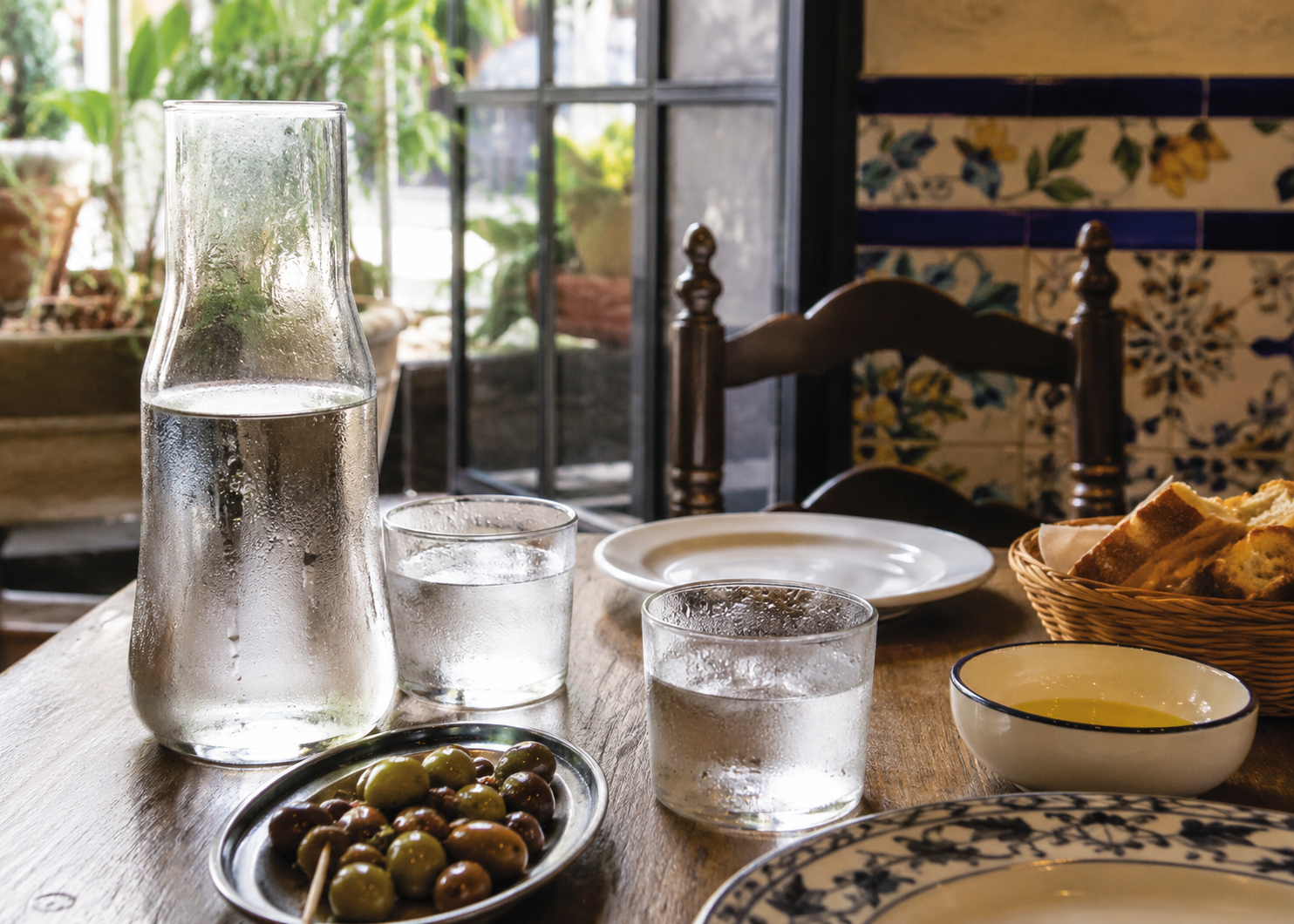
The tap-water rule is not really about saving tourists money, even if it does; that is a happy side effect. Its actual purpose is environmental, and understanding that helps explain why Spain bothered to legislate something so small-seeming in the first place. The law is a weapon against plastic.
Ley 7/2022 was designed to slash single-use plastic waste, and few things symbolise that waste better than the plastic water bottle, produced by the billion, used for minutes, and discarded. By making free tap water universally available, the law removes a major reason people reach for bottled water when eating out, nudging an entire nation of habitual bottle-buyers toward the tap. It sits alongside other measures in the same law, from encouraging bulk shopping to charging for single-use plastic items, all pushing in the same direction.
Seen that way, ordering agua del grifo is a tiny environmental act as much as a money-saving one. Every jug of tap water is a plastic bottle not made and not thrown away, which is precisely the outcome the law was written to encourage. The traveller who asks for tap water is not just saving a few euros; they are doing exactly what the legislation hoped people would do, participating in a small way in Spain’s effort to use less plastic.
Claiming What Is Already Yours
The situation, in the end, is a strange one. A clear national law has guaranteed free tap water in Spanish bars and restaurants for years now, and yet most visitors continue to pay for bottles, unaware that the right exists and unsure how to claim it. The gap is not in the law but in the knowledge.
Closing that gap costs nothing and requires almost no effort. Learn the phrase agua del grifo, ask for it with confidence, and know that the establishment is obliged to bring it to you free. The water is safe to drink across essentially all of Spain, the savings accumulate meaningfully over a trip, and every glass spares a plastic bottle. There is genuinely no downside for a traveller who simply prefers not to be charged for water.
So the next time a waiter in Spain asks whether you would like still or sparkling, there is a third answer that most tourists never give. Ask for tap water, del grifo, and claim the small right that the law handed you back in 2022. It has been yours all along; almost nobody has been using it.

About the Author: Ruben, co-founder of Gamintraveler.com since 2014, is a seasoned traveler from Spain who has explored over 100 countries since 2009. Known for his extensive travel adventures across South America, Europe, the US, Australia, New Zealand, Asia, and Africa, Ruben combines his passion for adventurous yet sustainable living with his love for cycling, highlighted by his remarkable 5-month bicycle journey from Spain to Norway. He currently resides in Spain, where he continues sharing his travel experiences with his partner, Rachel, and their son, Han.