
Walk into a busy bar in the old town of San Sebastián and look at the counter. Lined up along it, on little toothpicks, you will see the same small skewer again and again: a glossy anchovy, a slim green pepper, a plump olive. People pluck them from the bar, eat them in a bite or two while standing with a glass of wine, and reach for another. This is the gilda, and it is where the whole world of Basque bar food begins.
The gilda is about as simple as food gets. Three ingredients, no cooking, no technique, assembled on a stick in seconds. Yet it is one of the most iconic bites in all of Spain, credited by many as the very first pintxo, the snack that launched an entire culture of eating standing up at the bar. Here is the story behind it, and exactly how to make one that tastes like San Sebastián.
The First Pintxo
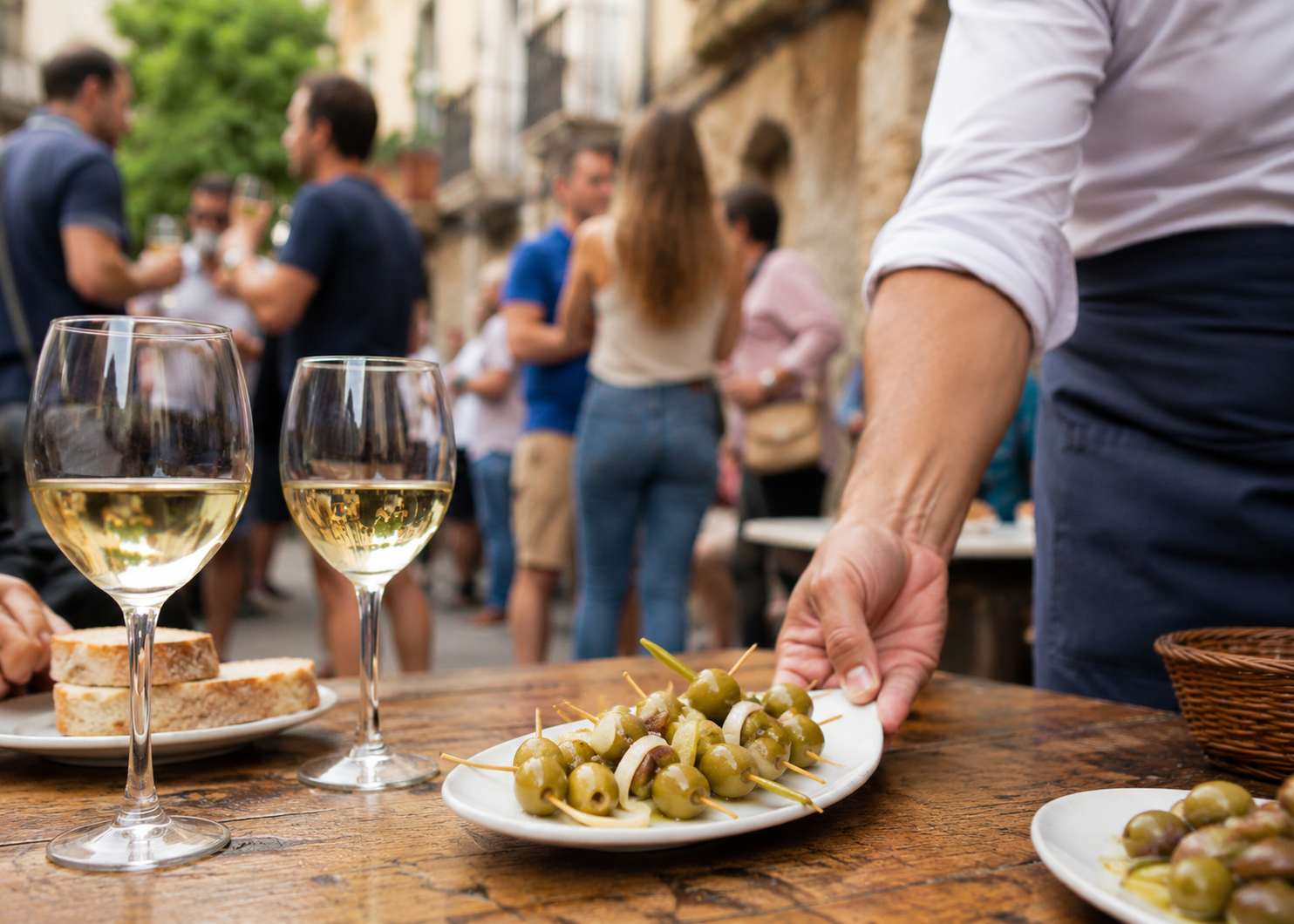
To understand the gilda, you have to understand the pintxo, which is not quite the same thing as a tapa. Where tapas are often shared plates brought to a table, pintxos are individual, self-contained bites displayed along the bar top, each one speared or perched on a slice of bread, meant to be grabbed and eaten on the spot with a drink in your other hand.
The gilda is widely considered the original, the bite that started it all. It was born in the 1940s at Bar Casa Vallés in San Sebastián, a bar still open and serving today. In those years it was common for bars to put out little dishes of olives, pickled peppers, and salted anchovies for customers to nibble alongside their wine, the salt encouraging another glass. The leap was made by a regular customer named Joaquín Aramburu, known to everyone as Txepetxa, who one day threaded an anchovy, a pepper, and an olive together onto a single toothpick.
That small act of assembly turned three separate snacks into one unified bite, easy to pick up and eat clean in your fingers. The other regulars copied him, the bar started serving them made up in advance, and the idea spread from Casa Vallés out across the bars of the Basque Country. Nearly a century later, the gilda remains the benchmark by which a good pintxo bar is judged, precisely because it hides nothing.
There is a lovely democracy to that. A city can have Michelin-starred restaurants and temples of avant-garde cooking, as San Sebastián famously does, and still measure its humblest bars by whether they can get three cheap ingredients exactly right. The gilda keeps everyone honest.
Named for a Movie Star
The name has nothing to do with food and everything to do with Hollywood, which is part of the gilda’s enduring charm. In 1946 the American film noir Gilda, starring Rita Hayworth as its dangerous and alluring leading lady, arrived in Spanish cinemas and caused an absolute sensation.
Txepetxa, the story goes, saw a likeness between the film’s femme fatale and his little skewer. Both, he said, were green, salty, and a little spicy. The word he used for green, verde, carries a cheeky double meaning in Spanish, hinting at something risqué, which fit both the scandalous film and the playful new snack. The name stuck instantly and travelled with the pintxo wherever it went.
It is a wonderful piece of trivia to have in your pocket, and it says something about the gilda’s character. This is not solemn, reverent food. It is a bar snack named after a sex symbol by a slightly tipsy regular, and it has never lost that lightness. Assemble a plate of them for friends, mention the Rita Hayworth story once everyone has tried one, and you will look like you know exactly what you are doing.
Few three-ingredient snacks anywhere come with a backstory this good, and the story is half of why the gilda has outlived a thousand fancier bar bites that came and went. People remember a pintxo named after a movie star.
Three Ingredients, Nowhere to Hide
Because the gilda is only three things, each one has to be very good. There is no sauce, no seasoning, no cooking to paper over a weak ingredient, so the whole pintxo rises or falls on the quality of what you put on the stick. A great gilda tells you, in a single bite, everything about a bar’s standards.
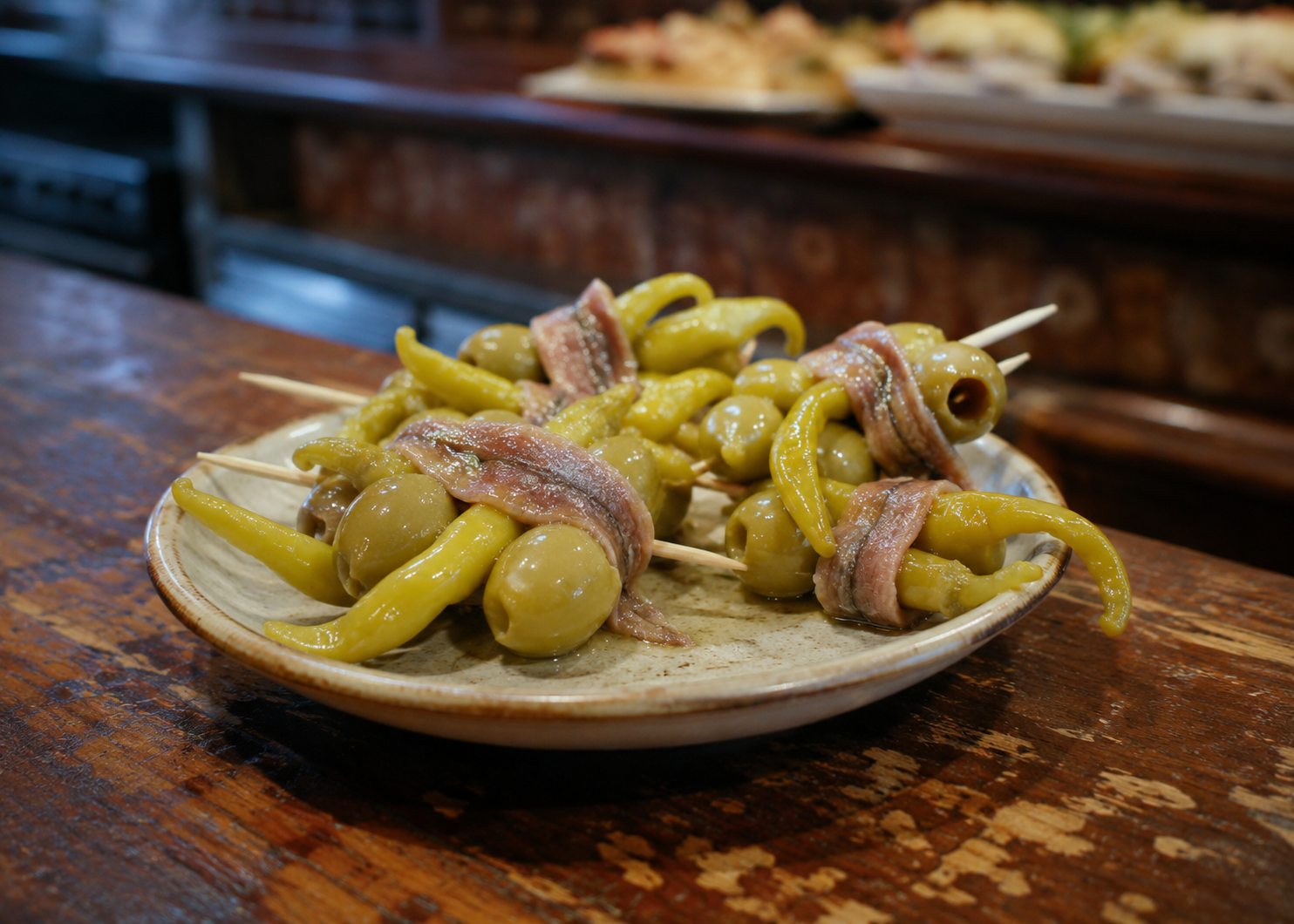
The anchovy is the star, and it should be a proper Cantabrian anchovy, oil-packed, deep amber in colour, meaty and cleanly briny rather than harsh or fishy. The Bay of Biscay off the Basque coast produces some of the finest anchovies in the world, and good brands are worth seeking out. The pepper is a guindilla, known in the Basque Country as a piparra, a long, slim, mild pickled pepper, the most celebrated of which come from the town of Ibarra. It should add brightness and a gentle kick, never an aggressive heat. The olive is traditionally a firm green one, a manzanilla or a plump gordal, pitted so it threads onto the stick.
The final touch is a drizzle of good extra-virgin olive oil over the assembled skewers. That is the entire shopping list. If you buy the best anchovies, peppers, and olives you can find, you genuinely cannot make a bad gilda, and if you cut corners on any of the three, no amount of care in the assembly will save it.
The Gildas That Came After
Once the gilda proved that three good things on a stick could be more than the sum of their parts, Basque bars spent the following decades riffing on the idea, and the variations are worth knowing even if the original remains the benchmark.
The most common swap is the anchovy itself. Use a boquerón, a white anchovy cured in vinegar rather than packed in oil, and you get a milder, brighter, more acidic gilda, and many bars offer both side by side so you can choose your intensity. Beyond that, cooks add a strip of sweet roasted piquillo pepper, a sliver of firm Idiazabal cheese, a piece of cured tuna, sometimes a caper or a folded slice of pickled onion. There is even a vegetarian gilda that drops the anchovy for a sun-dried tomato or a chunk of cheese to carry the salt.
None of these replaces the original, and no serious Basque bar would let it. But they show how generative that first little skewer turned out to be. The gilda was not just a snack; it was a template, the proof of concept for the entire pintxo tradition that now covers bar counters across the north of Spain in a hundred edible forms.
Eaten Standing Up
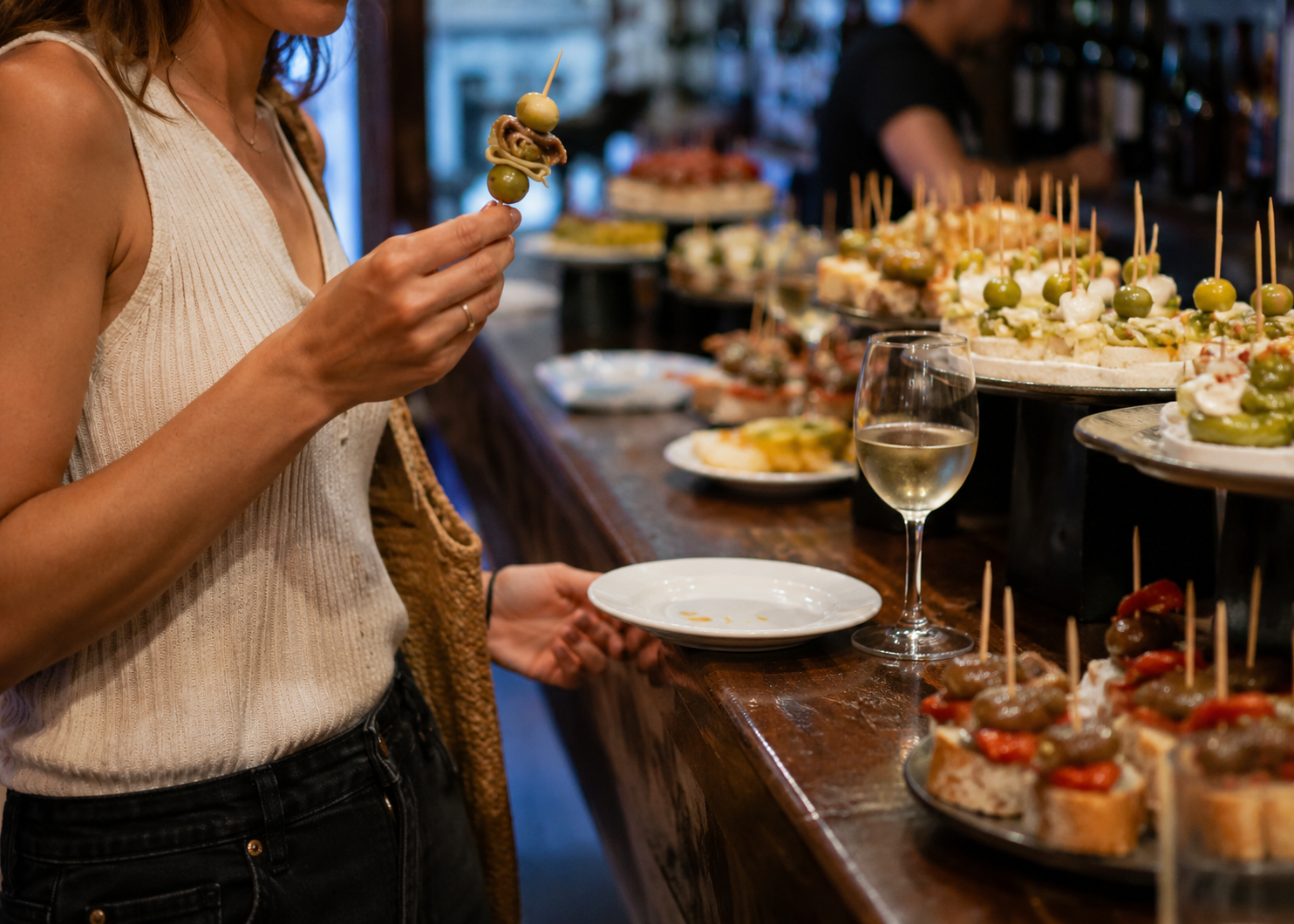
Half of what makes the gilda the gilda is how it is eaten, which is standing up, at the bar, with a drink. It is not a sit-down dish and never was. In the pintxo bars of San Sebastián’s Parte Vieja, the electric old town, you order at the counter, eat where you stand, and often move on to the next bar for the next bite, a moving feast the locals call a txikiteo.
The traditional partners are all local. A cold glass of txakoli, the young, faintly sparkling Basque white poured from a height to give it fizz, is the classic match, its sharp acidity cutting cleanly through the salt and oil. A glass of vermouth, a light beer, or a dry Basque cider all work just as well. The point is that the gilda is a drinking snack, engineered a lifetime ago to make you thirsty for the next glass, and it still does its job perfectly.
Eating one is its own small ritual. You take the whole skewer in one hand, tip your head, and eat it in a single generous bite or two, getting anchovy, pepper, and olive all at once so the flavours hit together: salty, briny, acidic, and gently hot. Eating the three parts separately misses the entire point. The magic is in the combination, which is exactly why Txepetxa put them on one stick in the first place.
That is also why a gilda rarely travels well to a formal dinner table. It belongs to the noise and motion of a crowded bar, eaten quickly between sips and sentences, one hand holding the skewer and the other a glass. Slow it down too much, sit it on a plate with a knife and fork, and you lose some of the very thing that makes it fun.
Assembling Them at Home
The beauty of the gilda is that there is nothing to cook and almost nothing to learn, which makes it the single easiest impressive thing you can put in front of guests. Buy well, assemble in five minutes, and serve as an aperitivo with cold drinks before dinner.
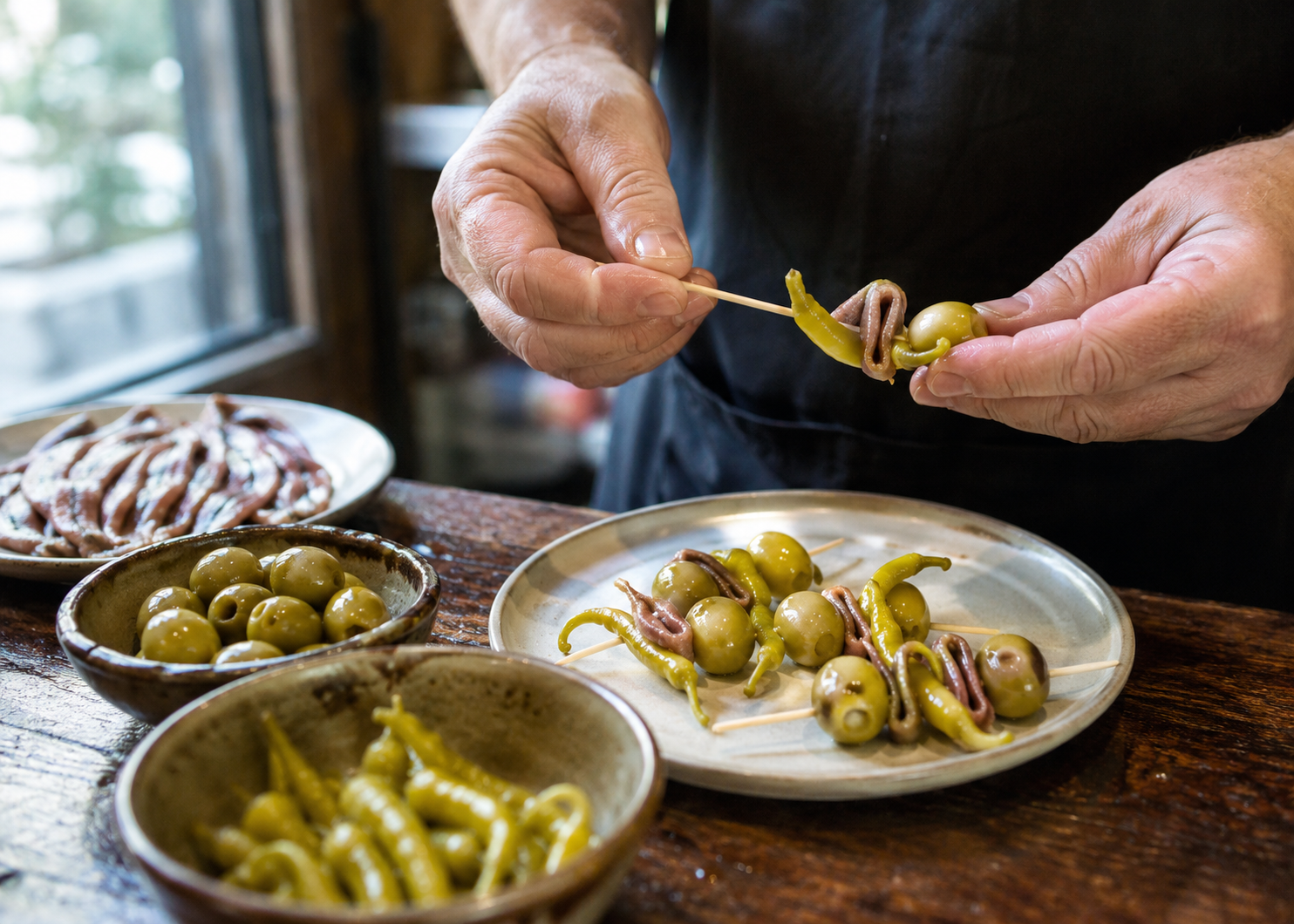
Assembly is a matter of feel rather than rules, but a good order threads an olive first, then a folded pepper, then the anchovy woven on in an S-shape, another pepper, and a final olive to cap it. Some people use one pepper, some two; some add a second olive. None of it is wrong. Lay the finished gildas on a plate, drizzle them with olive oil, and serve them at room temperature, standing up if you want to do it properly. Then tell the Rita Hayworth story and pour the txakoli.
The Gilda (Basque Anchovy, Pepper, and Olive Pintxo)
The original Basque pintxo from San Sebastián: a single skewer of Cantabrian anchovy, pickled guindilla pepper, and green olive, drizzled with olive oil. No cooking, three ingredients, eaten standing at the bar.
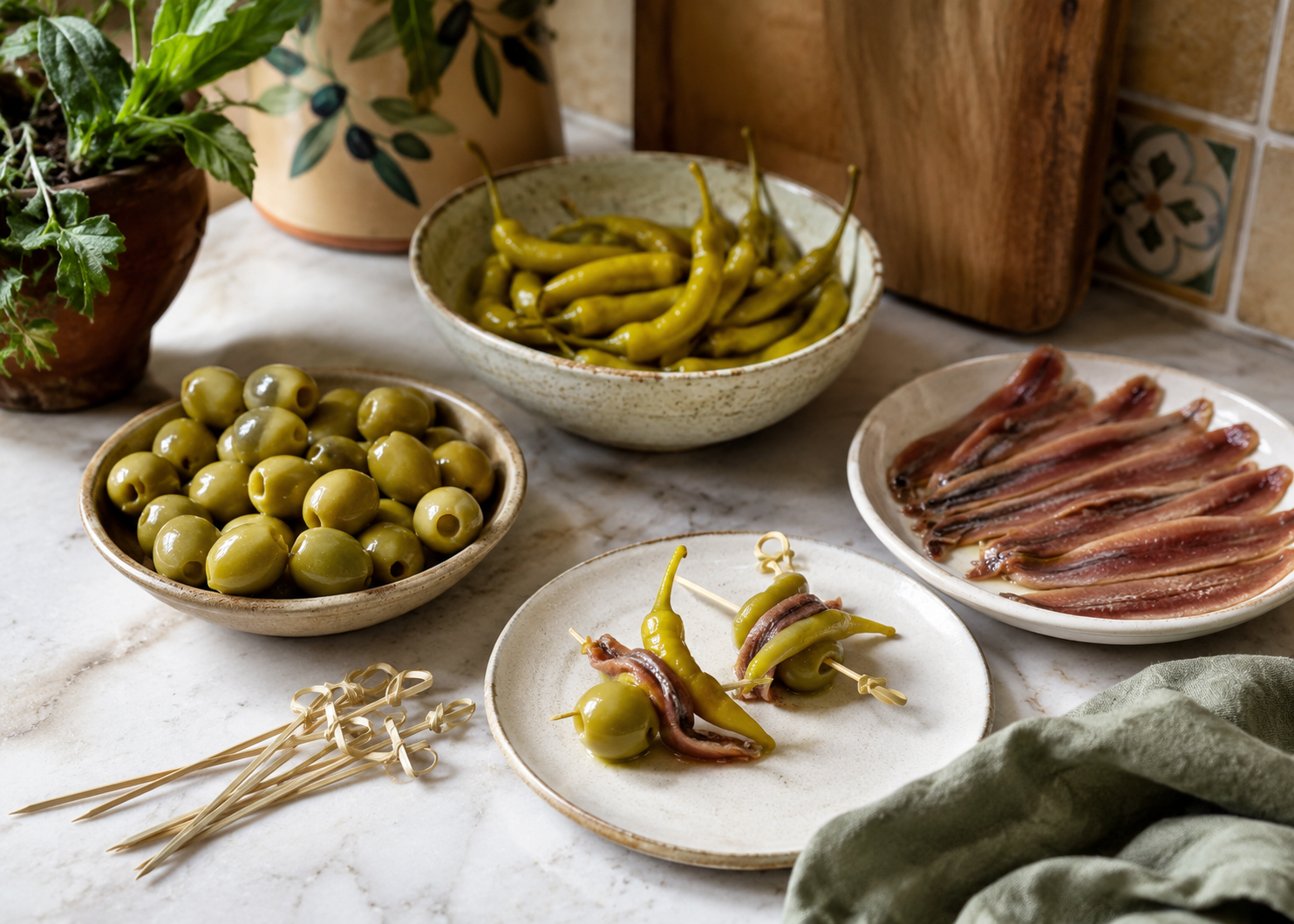
Makes: 8 pintxos · Prep: 10 minutes · Cook: none
Ingredients
- 16 pickled guindilla (piparra) peppers, stems trimmed
- 4 good-quality Cantabrian anchovy fillets in olive oil, halved lengthwise
- 16 green manzanilla or gordal olives, pitted
- Extra-virgin olive oil, for drizzling
- 8 wooden cocktail sticks or long toothpicks
Method
- Drain the peppers, anchovies, and olives, and lay them out on your work surface. Pat the anchovies very lightly if they are heavily oiled.
- Halve each anchovy fillet lengthwise if the fillets are large, so each gilda gets a manageable strip.
- Onto each cocktail stick, thread one olive, then a pepper folded in half, then weave the anchovy on in an S-shape, then another folded pepper, and finish with a second olive.
- Arrange the finished gildas on a plate and drizzle generously with extra-virgin olive oil.
- Serve at room temperature with cold txakoli, vermouth, or a light beer, ideally standing up.
Notes
- Quality is everything: since there are only three ingredients, buy the best anchovies, peppers, and olives you can find.
- For a milder, more acidic version, use boquerones (white anchovies cured in vinegar) instead of the oil-packed brown anchovies.
- Popular variations add a strip of roasted piquillo pepper or a sliver of Idiazabal cheese to the skewer.
- Assemble gildas the same day you plan to eat them; after a day or two the anchovy softens and the pepper leaches too much vinegar.

About the Author: Ruben, co-founder of Gamintraveler.com since 2014, is a seasoned traveler from Spain who has explored over 100 countries since 2009. Known for his extensive travel adventures across South America, Europe, the US, Australia, New Zealand, Asia, and Africa, Ruben combines his passion for adventurous yet sustainable living with his love for cycling, highlighted by his remarkable 5-month bicycle journey from Spain to Norway. He currently resides in Spain, where he continues sharing his travel experiences with his partner, Rachel, and their son, Han.