
Ask a French grandmother from the Limousin to pit the cherries before she makes her clafoutis and you may get a sharp look. In her kitchen, the cherries go into the batter whole, stones and all, exactly as they have for generations. To her, pitting them is not a helpful convenience but a small act of vandalism against the dish.
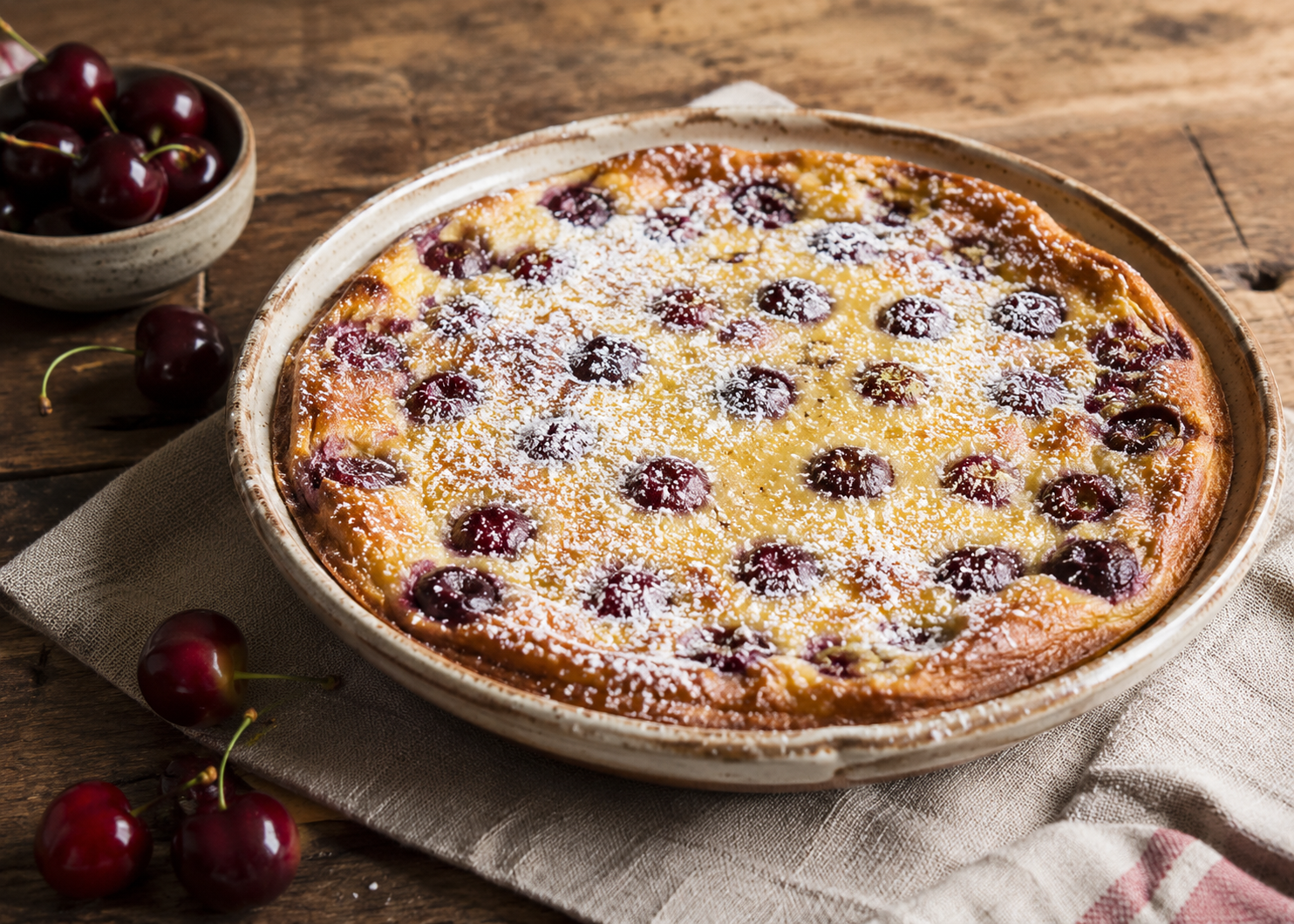
July is cherry season, and clafoutis is what France does with the glut. It is a rustic baked dessert of fresh cherries suspended in a thick, custard-like batter, somewhere between a flan and a cake, dusted with powdered sugar and served warm. It is one of the simplest and most beloved desserts in the French repertoire, and the business of the pits is not stubbornness for its own sake. There are real reasons the old cooks leave them in, and they are worth understanding before you make your own.
The Dessert That Started in the Limousin
Clafoutis comes from the Limousin, a rural region in central France better known for its cattle and its porcelain than its pastry. It is peasant food, a way of turning a tree full of ripe cherries into something that will feed a family, and its charm lies entirely in that rustic simplicity.
The name itself tells you what the dish is. Clafoutis comes from the Occitan word clafir, a local term meaning to fill or to stuff, which describes exactly what happens: a baking dish is filled with cherries and the gaps are flooded with batter. The dessert dates back centuries, with its popularity peaking in the nineteenth century before it spread from the Limousin across the whole of France to become one of the country’s most famous sweets.
What makes a clafoutis a clafoutis is the texture, which is unlike anything in the Anglo-American dessert world. It is not a cake and not quite a custard, but a set batter that bakes up soft and trembling, with a lightly golden top and a tender, almost flan-like body studded with dark fruit. The batter is barely more than eggs, sugar, flour, and milk, closer to a crêpe mixture than a cake batter, which is why the dish comes together in a single bowl in minutes. It is the kind of thing a home cook makes without ceremony on a summer evening, not a project for a special occasion.
That humility is part of why it has endured. Fashions in French pastry come and go, but clafoutis survives because it asks almost nothing of the cook and rewards them anyway. You need no special equipment, no piping bags or thermometers, just a bowl, a whisk, a dish, and a few handfuls of good fruit. It is the sort of recipe passed down not on paper but by standing beside someone while they make it.
The Cherries That Make It
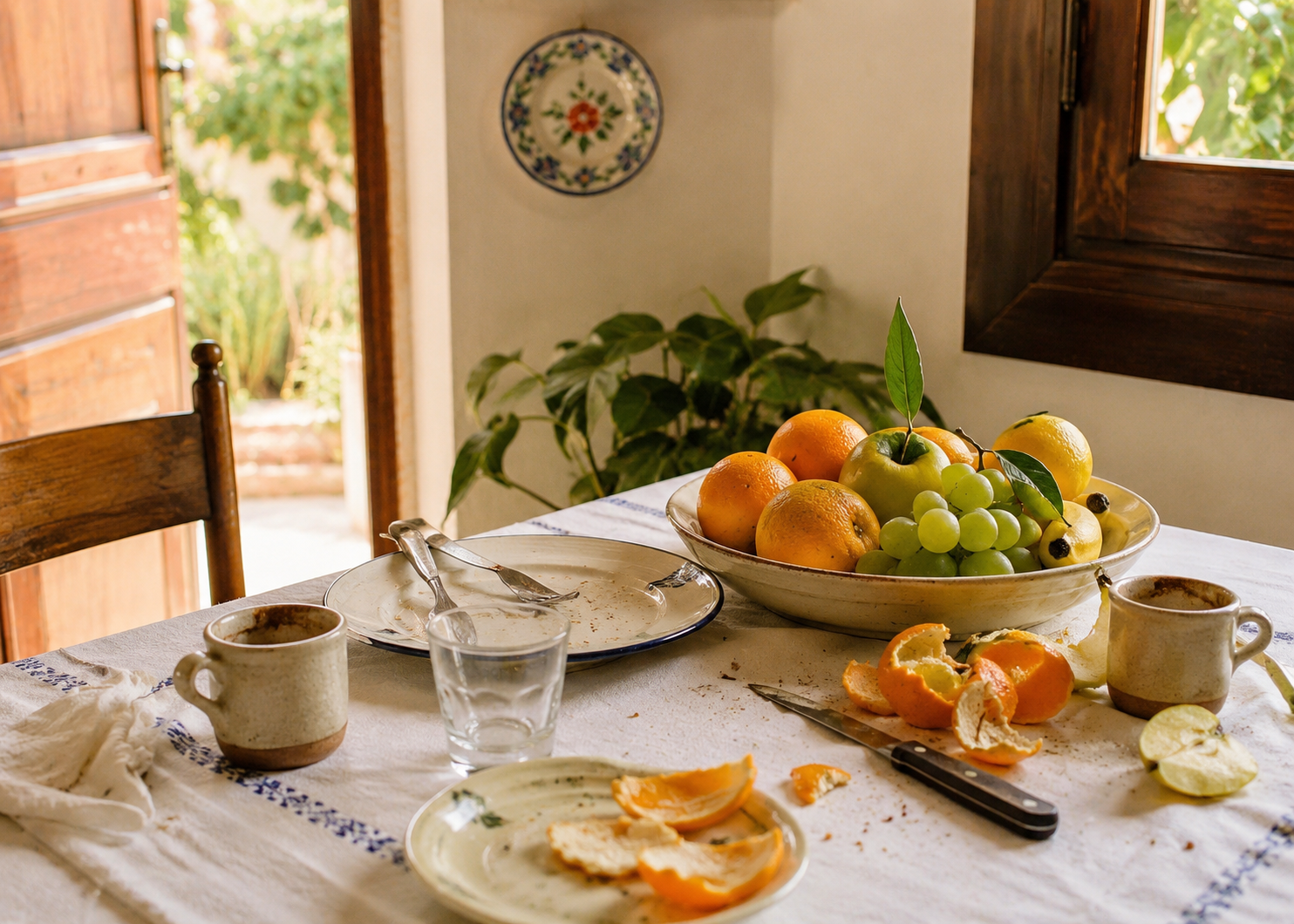
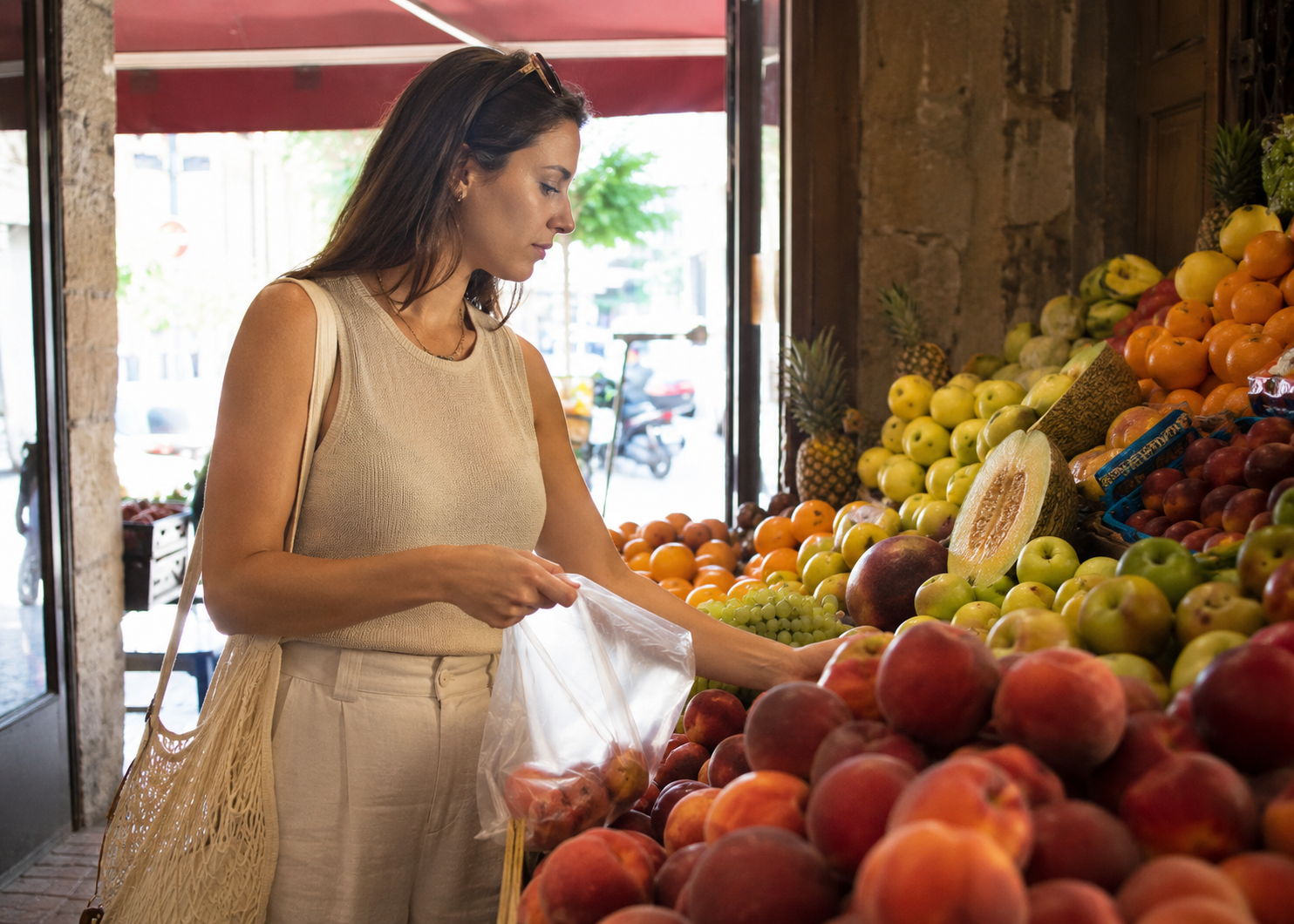
Because a clafoutis is really just cherries and a plain batter, the cherries are not a detail but the entire point, and the dessert lives or dies on their quality. This is emphatically a dish for high summer, when the fruit is at its ripe, dark, juicy best.
In the Limousin, the traditional cherry is a small, dark, intensely flavoured one, and many cooks favour the slightly sour kind the French call griottes, whose tartness cuts beautifully through the sweet custard. In North America, dark sweet varieties like Bing are the usual choice and work very well. What matters most is ripeness: a clafoutis made with pale, underripe fruit in the wrong season will taste of little, while one made with a July glut of properly ripe cherries tastes of summer itself.
If good fresh cherries are genuinely out of reach, frozen ones are a perfectly respectable fallback, and you should not thaw them first or they will flood the batter. But if you can time this dessert to the few weeks a year when local cherries are piled up cheap at the market, do. That short window is exactly what clafoutis was invented to celebrate.
Why the Pits Stay In
Here is the heart of the matter, the reason those grandmothers guard so fiercely. Traditionally, clafoutis is always made with whole, unpitted cherries, and there are two explanations for it, one romantic and one practical.
The romantic reason is flavour. Cherry pits contain a compound called amygdalin, the same substance that gives almond extract its scent, and the lore holds that as the clafoutis bakes, the pits release a faint, nutty, almond-like note into the custard around them. Many cooks swear by it. Others, including some very serious French cooks, are sceptical, arguing that the almond flavour is so subtle as to be imaginary and that anyone who wants it should simply add a drop of almond extract.
The practical reason is harder to argue with, and it may be the truer one. A whole cherry keeps its juice sealed inside. A pitted cherry weeps, and that juice bleeds into the batter, staining the pretty pale-gold custard a drab, patchy pink and adding excess liquid that can turn the texture soggy. Leaving the pits in keeps each cherry intact, so the custard sets clean and golden with dark fruit suspended in it like jewels, rather than dissolving into a muddy blush. Purists from the Limousin will also tell you, quite seriously, that a clafoutis made with anything but whole cherries is not really a clafoutis at all.
Whichever explanation you believe, the effect on the plate is the same. The whole cherries hold their shape and their deep colour, and the finished dessert has that characteristic look, dark fruit set cleanly in pale gold custard, that a pitted version simply cannot match. For a dish this rustic, that quiet beauty is a surprisingly large part of the pleasure.
A Word About the Pits and Safety
None of this means you should ignore the obvious, so let me be plainly practical for a moment. You do not eat the pits. You eat around them, spitting them out as you go, the way you would with a bowl of fresh cherries, and generations of French families have treated the little pile of stones on the plate as part of the ritual.
The compound in the pits is only a concern if you crush and eat the stones in quantity, which nobody does; a normal serving of clafoutis poses no real issue on that front. The genuine risk is simpler and more mundane: a cracked tooth, or a small child who does not know to spit. So the sensible rule is the one most French cooks follow instinctively. Warn everyone at the table that the cherries have their pits, and if you are serving children, or anyone who might swallow a stone, pit the cherries first and stir a drop of almond extract into the batter to make up for it. Tradition is lovely, but not at the cost of a trip to the dentist.
Handled with that small bit of common sense, the tradition is perfectly safe to enjoy, and there is a real charm to a dessert that still expects a little participation from the people eating it. The pile of neat little stones on the side of the plate is part of the experience, a small, old-fashioned pleasure most modern desserts have engineered away.
Clafoutis or Flognarde?
There is one more piece of Limousin pedantry worth knowing, because it will make you sound like you know what you are talking about. Strictly speaking, a clafoutis is made with cherries. Full stop. The moment you swap in another fruit, the French give it a different name entirely.
Made with pears, apples, plums, prunes, berries, or peaches, the same custard-batter dessert becomes a flognarde, sometimes spelled flaugnarde, a word arguably even more fun to say. The people of the Limousin can be genuinely adamant about this, insisting that the cherry is so central to the dish that changing the fruit changes the identity of what you have made. It is a small distinction, but it captures something about how seriously the French take their regional foods, even the humble ones.
That said, the versatility is real and worth embracing at home. A cherry clafoutis in July, an apricot or plum flognarde in August, a pear version in autumn: the same simple method carries you right through the fruit calendar. Just be aware that softer, wetter fruits release more liquid than cherries, so you may need to bake a little longer, and you will never quite get the same clean set that whole cherries give you.
Making It at Home
The method could hardly be simpler, which is the whole appeal. Butter a baking dish generously and dust it with sugar, which gives the finished clafoutis a lovely caramelised edge. Spread your cherries across the bottom in a single layer, whisk the batter together in one bowl, pour it over the fruit, and bake.
The only real skill is knowing when to stop. A clafoutis is done when it has puffed up and turned golden, set around the edges but still with a faint wobble at the very centre, like a barely-set custard. Overbake it and it turns rubbery and eggy, which is the most common mistake; pull it a touch early and it stays silky. It will deflate a little as it cools, and that is entirely normal, nothing to worry about. Dust it thickly with powdered sugar and serve it warm or at room temperature, on its own or with a spoonful of cream, and you will understand why the grandmothers of the Limousin are so protective of it.
Cherry Clafoutis (Clafoutis aux Cerises)
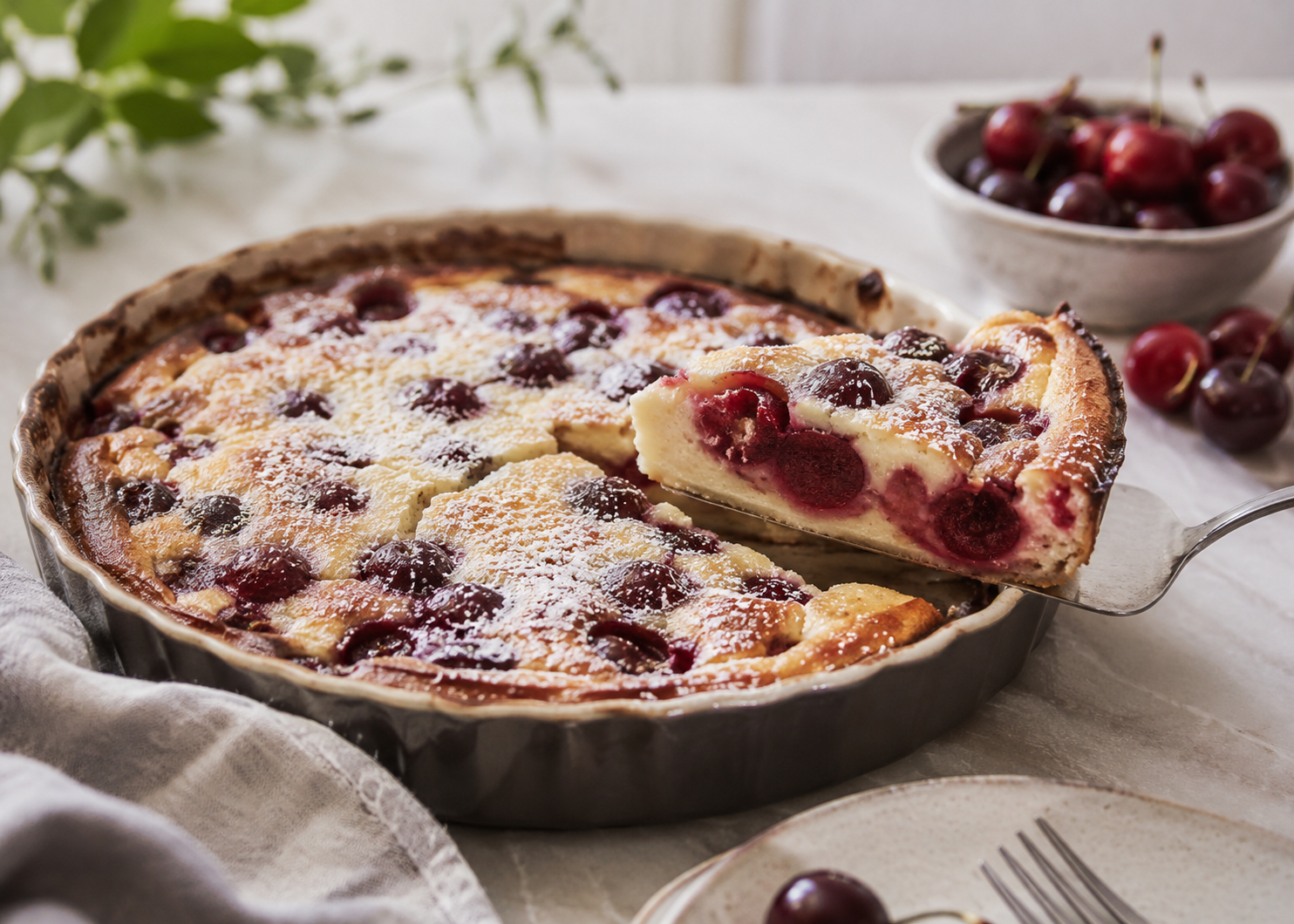
The classic rustic French dessert from the Limousin: fresh summer cherries baked into a soft, custard-like batter and dusted with powdered sugar. Traditionally made with the pits left in.
Serves: 6 · Prep: 15 minutes · Cook: 40 minutes · Total: 55 minutes
Ingredients
- 500 g (about 1 lb) fresh cherries, stems removed, ideally left unpitted (see notes)
- 3 large eggs
- 100 g (½ cup) caster or granulated sugar, plus extra for the dish
- 125 g (1 cup) plain flour
- 250 ml (1 cup) whole milk
- 60 ml (¼ cup) heavy cream (optional, for richness)
- 1 tsp vanilla extract
- 1 tbsp kirsch or rum (optional)
- Pinch of salt
- 20 g (1½ tbsp) butter, for the dish
- Icing (powdered) sugar, for dusting
Method
- Preheat the oven to 180°C (350°F). Generously butter a baking dish of around 24 cm (9 to 10 inches), then sprinkle it with sugar and tip out the excess. Spread the cherries over the base in a single layer.
- In a bowl, whisk the eggs and sugar together until pale. Add the flour and salt and whisk until smooth.
- Gradually whisk in the milk, then the cream, vanilla, and kirsch if using, until you have a smooth, thin batter with no lumps.
- Pour the batter evenly over the cherries.
- Bake for 35 to 45 minutes, until the clafoutis is puffed and golden, set around the edges but still slightly wobbly in the very centre. A knife inserted near the middle should come out clean.
- Let it cool for 10 to 15 minutes. It will sink a little as it settles, which is normal. Dust generously with icing sugar.
- Serve warm or at room temperature, on its own or with a spoonful of cream.
Notes
- The pit tradition: leaving the cherries whole keeps the custard pale and clean and adds a faint almond note. Warn your guests, and pit the cherries for children or anyone who might swallow a stone, adding a drop of almond extract to compensate.
- Flognarde: make the same dessert with pears, plums, apricots, or berries and it takes a different name. Softer fruit releases more liquid, so bake a little longer.
- Frozen cherries work when fresh are out of season; do not thaw them first.
- Store covered in the fridge for up to 3 days; it is lovely cold the next day, even for breakfast.

About the Author: Ruben, co-founder of Gamintraveler.com since 2014, is a seasoned traveler from Spain who has explored over 100 countries since 2009. Known for his extensive travel adventures across South America, Europe, the US, Australia, New Zealand, Asia, and Africa, Ruben combines his passion for adventurous yet sustainable living with his love for cycling, highlighted by his remarkable 5-month bicycle journey from Spain to Norway. He currently resides in Spain, where he continues sharing his travel experiences with his partner, Rachel, and their son, Han.