
For years, my afternoons were a slow, unbroken graze. A handful of almonds at my desk, a biscuit with a cup of coffee, a few crackers while I answered an email, a square of chocolate because it was there. I never sat down to any of it, never really tasted it, and never once thought of it as eating. By dinner I could not have told you what I had consumed, only that I had been nibbling since lunch.
Living in Spain, I kept noticing that the people around me did something different. They did not graze all afternoon. Instead, once a day, they had a merienda, a proper afternoon snack, at a set time, sitting down. So for one month I decided to copy them exactly. I swapped my six scattered, mindless snacks for a single scheduled one, and the change was bigger than I expected.
What the Merienda Actually Is
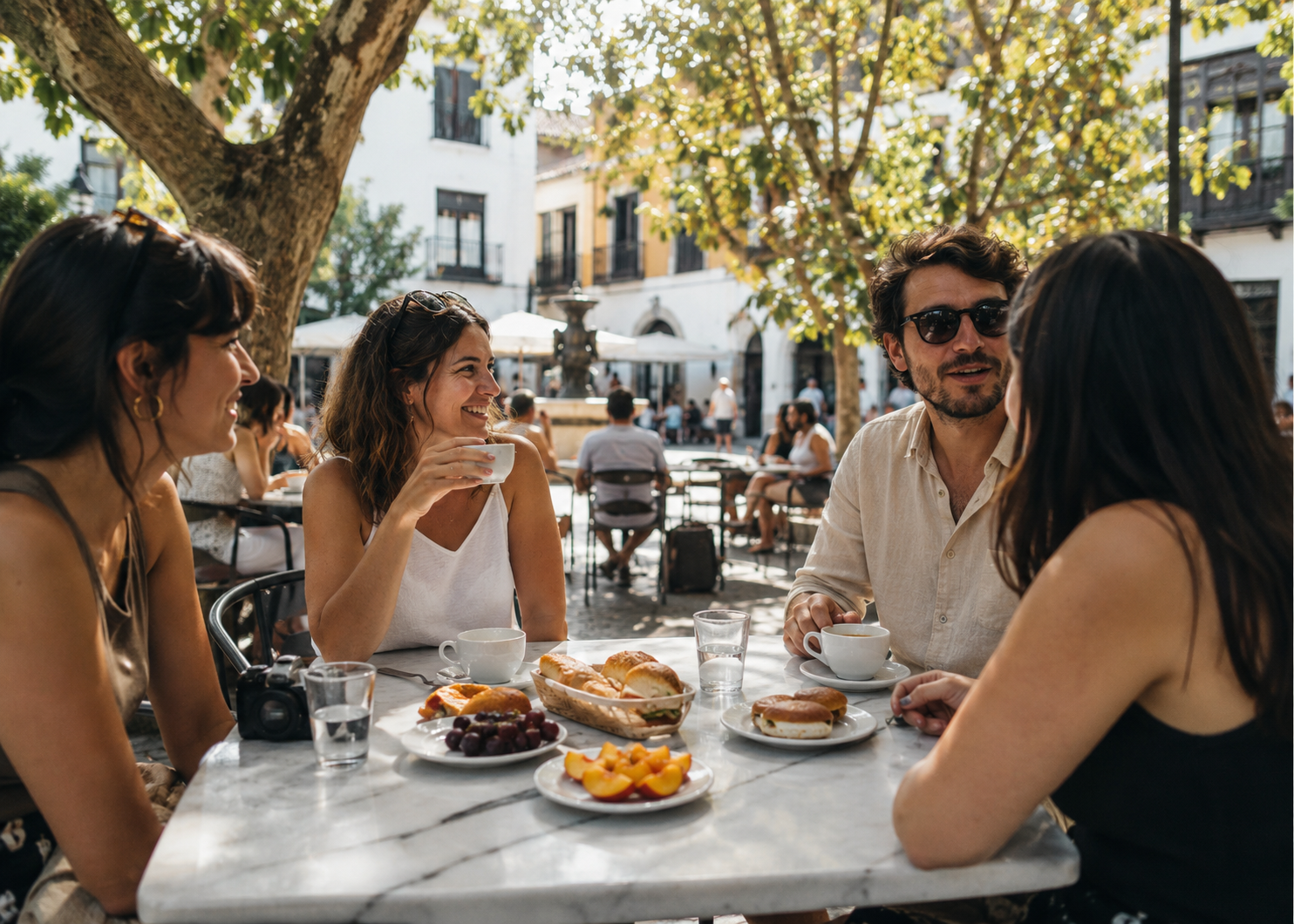
The merienda is often called Spain’s fourth meal, and it sits neatly in the long afternoon between the two big ones. Because lunch, the comida, is eaten late and large, often around two in the afternoon, and dinner, the cena, does not arrive until nine or ten at night, there is an enormous gap to bridge. The merienda bridges it.
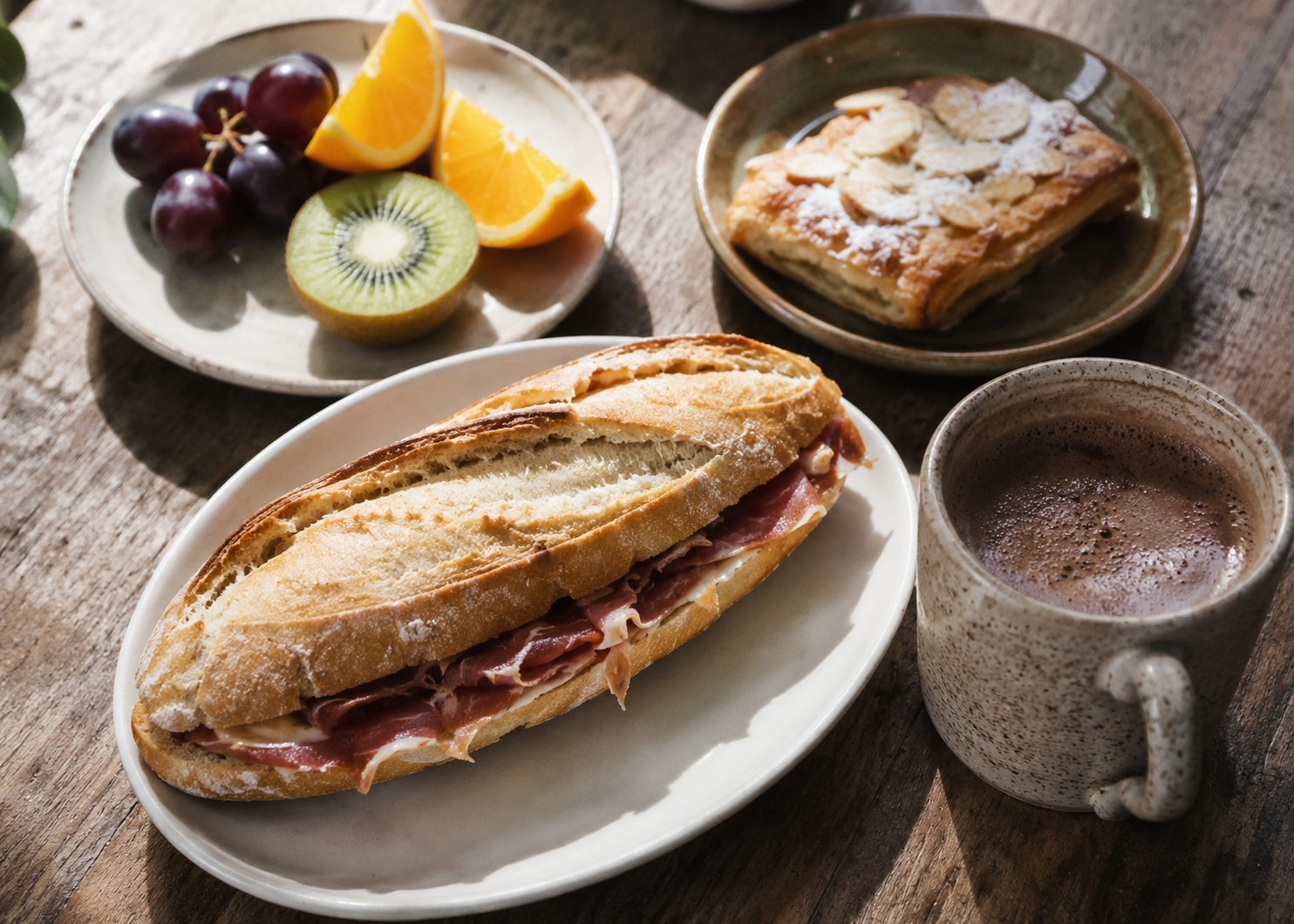
It usually happens around five or six in the evening. It is unfussy and can be sweet or savoury: a bocadillo, a small sandwich of jamón or cheese, a piece of fruit, a yogurt, a slice of olive-oil sponge cake, or the famous churros with thick hot chocolate. Children have it after school for energy, and adults have it too, often as an excuse to pause and catch up with someone.
The word itself comes from the Latin merenda, meaning something earned or deserved, and that framing turned out to matter to me more than I anticipated. A merienda is not grazing. It is a small, defined, deserved break in the day, with a beginning and an end. That single idea, that the afternoon snack is an event rather than a background activity, is the whole thing I was trying to borrow.
How I Used to Snack
To understand what changed, it helps to be honest about what I was doing before, because I suspect it is what a lot of people do. My snacking had no shape at all. It was not driven by hunger so much as by proximity, boredom, and the small frictions of a working afternoon.
If a task was annoying, I ate. If I walked past the kitchen, I ate. If my energy dipped at four o’clock, I reached for sugar without thinking. None of these were meals or even decisions; they were reflexes, and because each one was tiny, none of them ever felt like a thing I was choosing to do. The trouble is that six tiny unchosen snacks still add up, and worse, they never actually satisfied me, because I was never paying enough attention to feel satisfied.
The real cost was not any single snack but the fog of it. I ended most afternoons vaguely full and vaguely unsettled, having eaten steadily for hours without ever enjoying a single bite. There was no moment of pleasure and no moment of stopping. The eating just seeped through the whole afternoon like a background hum I had stopped hearing.
What made it hard to notice was that no single moment ever looked like a problem. A few almonds are not a crime, and neither is one biscuit. But the pattern, repeated a dozen times between lunch and dinner, quietly took over the afternoon without ever announcing itself as a habit worth examining. It took deliberately stopping it to see how large it had become, the way you only notice a background noise once it finally goes quiet.
The Rules I Gave Myself

The experiment needed to be simple enough to actually follow, so I set only a few rules and kept them plain. For thirty days, I would have exactly one merienda, at roughly the same time each afternoon, and I would sit down for it.
The first rule was the timing: a single snack at around six in the evening, chosen deliberately rather than grabbed. The second was that it had to be real food I actually wanted, not just whatever was nearest, so I planned it a little, the way I would a small meal. The third, and hardest, was that the rest of the afternoon was closed for grazing. No desk almonds, no passing biscuits, no absent-minded chocolate. If I wanted to eat in the afternoon, I waited for the merienda.
I did not count anything, weigh anything, or cut anything out. This was not a diet and I was not chasing a number on a scale. I was only changing the shape of my afternoon eating from a constant smear into a single defined point. That was the entire intervention, and its simplicity was the point.
What I Actually Ate
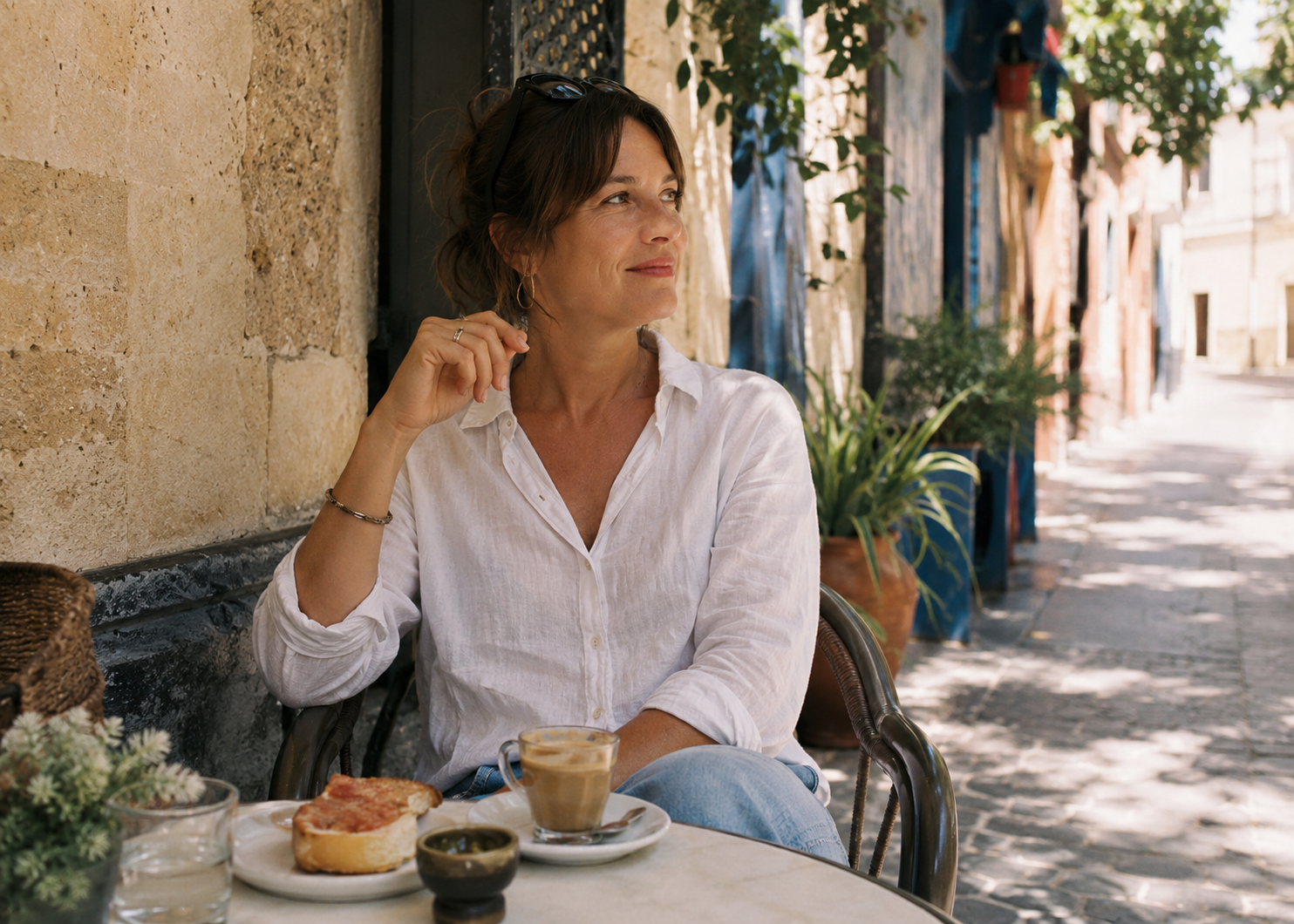
Because the merienda had to be real food I wanted rather than whatever was nearest, I ended up eating better in the afternoon than I had in years, not out of virtue but because I was finally choosing.
Most days it was something simple and Spanish. A bocadillo of good bread with a little jamón or cheese. A bowl of fruit with a yogurt. Pan con tomate, toast rubbed with ripe tomato and olive oil, which costs almost nothing and tastes like summer. Some afternoons a slice of olive-oil sponge cake with coffee, the kind Spanish families keep on the counter for exactly this hour. The point was not that these were health foods, because some of them plainly were not, but that they were chosen, sat down with, and enjoyed.
I kept a few treats deliberately in the rotation, because a merienda that is all discipline is not a merienda at all. Once a week or so I let it be churros or a proper pastry, and because it was planned and singular rather than one of six mindless nibbles, it felt like a pleasure instead of a lapse. That, I think, is the quiet genius of the custom. It makes room for the sweet thing by giving it a time and a place, which is far easier to live with than pretending you will never want it.
The First Week Was the Hardest
I will not pretend the first few days were pleasant, because the habit I was breaking was deeper than I realised. My hand kept reaching for food that was no longer on the schedule. At three in the afternoon I felt restless and a little cross, and I understood for the first time how much of my grazing had been about managing boredom and stress rather than hunger.
By about day four, something shifted. Knowing that a proper merienda was coming at six gave the afternoon a landmark, and the restless reaching quietened down. Instead of drifting toward the kitchen at every dip in mood, I found myself thinking, not yet, the merienda is coming, and getting back to work. The single scheduled snack started to act like an anchor that held the rest of the afternoon steady.
By the end of the first week I actively looked forward to it. Because I had stopped nibbling all day, I arrived at six genuinely ready to eat, and the merienda tasted like something rather than nothing. A piece of good bread with cheese and a coffee, eaten sitting down with full attention, was more satisfying than the entire scattered day of nibbling it had replaced. That was the moment the experiment started to feel less like a restriction and more like an upgrade.
One Snack Beat Six
The headline result, the one that surprised me most, is that a single intentional snack comfortably beat six random ones on every measure I cared about. It was more satisfying, more enjoyable, and, oddly, left me feeling like I had eaten better rather than less.
The satisfaction difference came down to attention. When you eat something you chose, at a table, without a screen, you actually register it. Your body and your mind both get the message that you have eaten, in a way they never do when food is trickling in unnoticed for hours. One properly enjoyed merienda landed as a real event; the old six snacks had landed as nothing at all, which is exactly why I used to keep reaching for more.
My afternoon energy steadied too, though I want to be careful here, because this is my own experience and not a medical claim. The constant low-level grazing, heavy on quick sugar, seemed to give me a bumpy afternoon of small lifts and small slumps. Replacing it with one more substantial, more balanced snack felt smoother, with less of the four o’clock crash that used to send me hunting for chocolate. Whether that would hold true for anyone else, I genuinely cannot say, but for me the difference was clear and welcome.
It is a strange thing to report that eating less often left me feeling more fed, yet that is honestly how it landed. The satisfaction was never really about quantity, and it certainly was not about denial. It was about being present for the food instead of letting it pass me by unnoticed, hour after hour, the way it used to.
The Pause I Didn’t Know I Needed
The part I did not anticipate had nothing to do with food at all. The merienda gave me a pause in the day that I had been missing without knowing it. Stopping properly at six, even for fifteen minutes, turned out to be worth as much as the snack itself.
In my old pattern, I never actually stopped. I ate while working, which meant I neither ate well nor rested well; the two activities just blurred into one long, unsatisfying afternoon. Sitting down for a defined merienda forced a genuine break into the day, a small boundary between the afternoon’s first half and its second. I came back to my desk afterward feeling reset in a way that a biscuit eaten over a keyboard had never managed.
On some days I shared it, which is how Spaniards often treat the merienda, as a reason to sit with someone for a few minutes. On others I simply sat alone with a coffee and looked out of the window. Either way, it became a hinge in the day rather than just a feeding. I had gone looking for a better way to snack and accidentally found a better way to take a break, which may have been the more valuable discovery.
It also changed how the second half of my afternoon went. With a real pause built in at six, the hours after it felt like a fresh start rather than a tired continuation of the morning. I suspect a lot of the four o’clock slump I used to feed with sugar was really just the fatigue of never stopping, and that a genuine break would have done more than any biscuit ever did. The merienda simply gave me permission to take that break and call it part of the day rather than a lapse from it.
The Honest Caveats
I do not want to oversell a month of eating a sandwich at six o’clock, so here are the honest limits. Some days the schedule simply broke. A busy afternoon, a meeting that ran long, a child who needed something, and the tidy single merienda dissolved back into a snatched bite whenever I could manage it. The habit is easier to describe than to keep perfectly.
It is also worth being clear about what this was and was not. It was not a diet, and I was not trying to lose weight or hit any nutritional target, so I have no numbers to report and would be wary of anyone who turned this gentle idea into a strict regime. If you are changing how you eat for a genuine health reason, that is a conversation for a doctor or a dietitian, not a blog post about a Spanish custom. What worked for me might not work the same way for you, because bodies and afternoons differ.
The one caution I would add is against turning a relaxed cultural habit into a rule you punish yourself for breaking. The whole charm of the merienda is that it is a pleasure, something earned and enjoyed, not a test of willpower. The moment it starts to feel like restriction, it has lost the very thing that made it work. I kept it loose on purpose, and I think that is why it stuck at all.
Would I Keep It?
A month on, the honest answer is that I have kept most of it, though not with military discipline. The grazing has not fully returned, the six mindless snacks have collapsed back into roughly one intentional one, and my afternoons feel calmer and clearer for it. The change that lasted was not really about food. It was about giving the afternoon a shape.
If there is a transferable lesson, it is that structure beat restriction every time. I did not eat less because I forbade myself things; I ate more happily because I gave the eating a proper time and place. The single scheduled merienda worked precisely because it was something to look forward to, not something to resist. That is a very different feeling from a diet, and a far more pleasant one to live inside.
So I would recommend the experiment, with all the caveats above, to anyone who recognises their own afternoons in my old grazing. Pick a time, sit down, have something you actually like, and close the rest of the afternoon for nibbling. You may find, as I did, that one snack you pay attention to is worth six you never noticed, and that the pause matters as much as the food. The Spanish worked this out a long time ago. I just needed a month to catch up.

About the Author: Ruben, co-founder of Gamintraveler.com since 2014, is a seasoned traveler from Spain who has explored over 100 countries since 2009. Known for his extensive travel adventures across South America, Europe, the US, Australia, New Zealand, Asia, and Africa, Ruben combines his passion for adventurous yet sustainable living with his love for cycling, highlighted by his remarkable 5-month bicycle journey from Spain to Norway. He currently resides in Spain, where he continues sharing his travel experiences with his partner, Rachel, and their son, Han.