
An American sits down in a small trattoria in Florence, scans the menu, and asks the waiter for chicken pasta. The waiter’s face does something complicated. There is no chicken pasta on the menu, and in most of Italy there never has been. The dish that half of America thinks of as Italian food, a plate of penne or fettuccine with sliced chicken breast on top, simply does not exist in the country it supposedly comes from.
This is one of the great gaps between Italian food and Italian-American food, and Italians feel it strongly. Ask an Italian why they do not put chicken on pasta and the answer usually arrives with real feeling, somewhere between bafflement and offence. The rule is deeply held and rarely explained, so it is worth explaining, because the reasons reveal how Italian cooking actually thinks, and because the answer to what they serve you instead is more interesting than the chicken pasta ever was.
The One Rule That Baffles Everyone
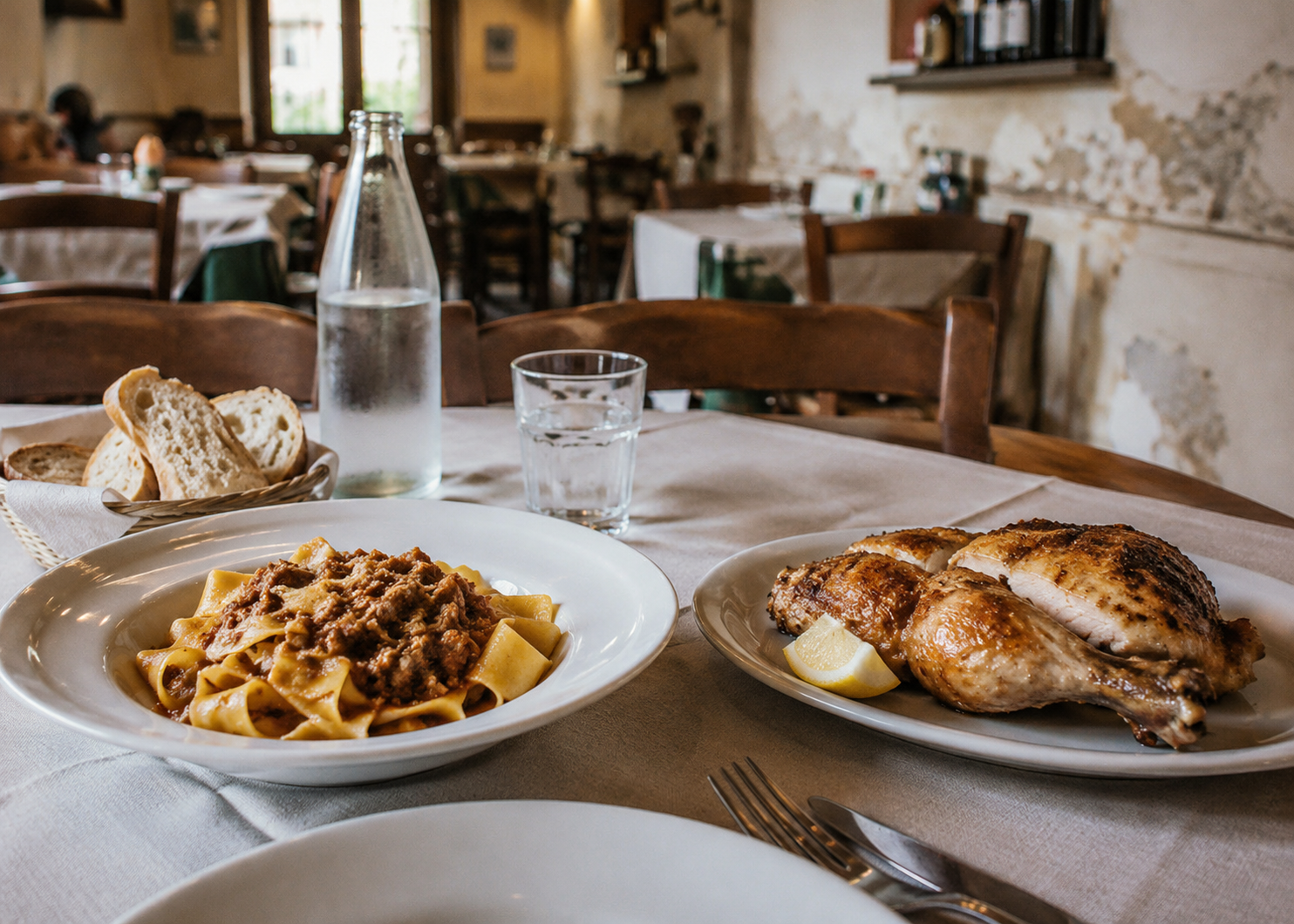
Of all the unwritten laws of Italian food, and there are many, the ban on chicken with pasta is among the most absolute and the least negotiable. Italians who will happily debate the correct shape of pasta for a given sauce close ranks completely on this one.
The strength of the reaction surprises visitors. An Italian chef will tell you flatly that there are no dishes featuring pasta and chicken, in the same breath as insisting that meatballs do not go on spaghetti and that pasta is never a side dish. There is a whole genre of online Italian outrage, affectionately known as Italians Mad at Food, devoted to exactly this kind of violation, and chicken on pasta sits near the top of the offender list, alongside pineapple on pizza and a cappuccino ordered after noon.
What makes it strange is that nobody can easily say why. Press an Italian for a reason and you get answers that range from the practical to the almost mystical, but rarely anything definitive. It is less a rule anyone can justify than a shared instinct, absorbed from childhood, that chicken and pasta belong to different worlds. And as with many food rules, the fact that it cannot be fully explained does not weaken it in the slightest.
The Other Rules That Come With It
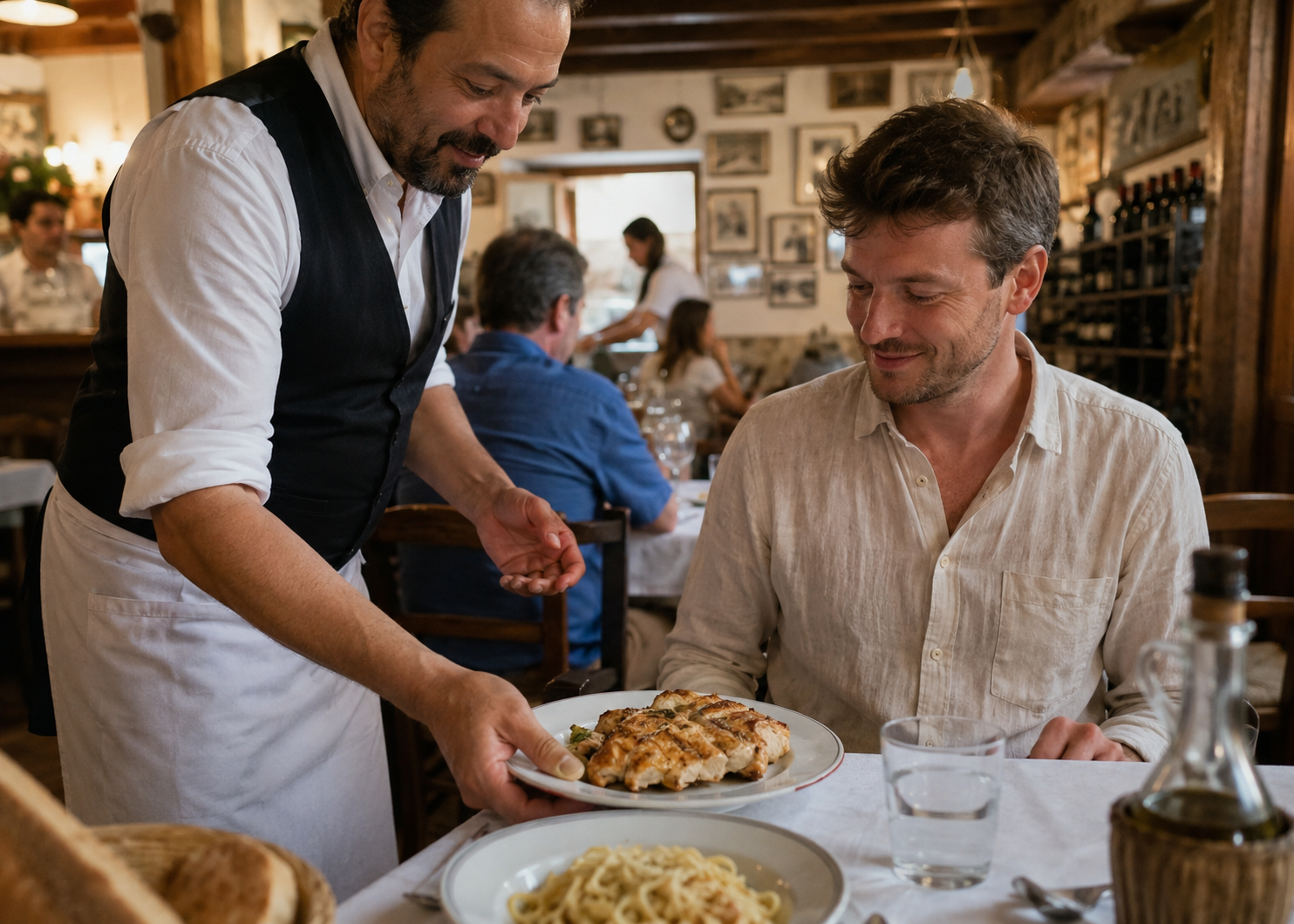
The chicken ban does not stand alone. It belongs to a whole code of Italian food conventions, and seeing the full list makes the logic clearer, because they all point the same way.
The greatest hits are familiar to anyone who has eaten with an Italian. You do not put cheese on seafood pasta, because the cheese overwhelms the delicate fish. You do not cut spaghetti with a knife; you twirl it. You do not order a cappuccino after a meal, since milky coffee is a breakfast drink and sits heavily on a full stomach. A salad comes after the main course, not before it. And salad dressing means olive oil and vinegar, full stop, with the thick creamy dressings of American tables viewed as faintly baffling.
Running through all of these is a single principle: respect for the integrity of each ingredient and each dish. The rules are not arbitrary snobbery, whatever they can feel like to an outsider being corrected. They are a shared agreement about how to let good ingredients taste like themselves, refined over generations and defended because they work. Chicken on pasta breaks that agreement in one particular way, and the strength of the reaction makes more sense once you see it as one clause in a much larger contract.
It Is Really About the Courses
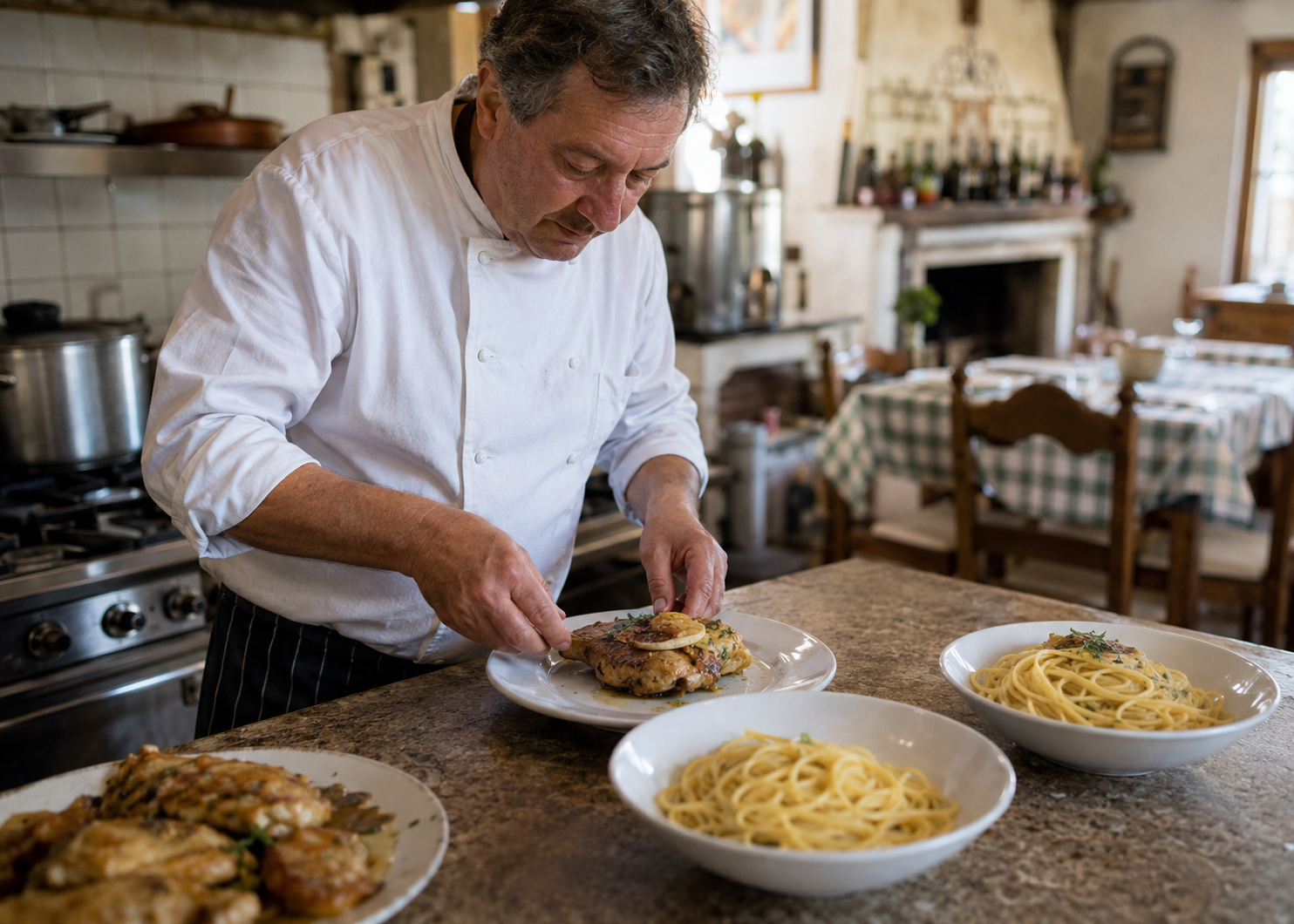
The clearest explanation is structural, and it has nothing to do with taste. A traditional Italian meal is built as a sequence of distinct courses, and pasta and chicken live in different ones.
The meal runs, roughly, from antipasto to primo to secondo, with sides and dessert around them. Pasta is a primo, a first course, served on its own and dressed with a sauce chosen to suit its shape. Meat, including chicken, is a secondo, the second course, eaten after the pasta with its own accompaniments. The two are separated by design, each given its own moment on the table rather than piled onto a single plate.
Seen this way, chicken on pasta is not so much wrong as category confusion, like serving the soup and the dessert in the same bowl. Putting a chicken breast on your spaghetti collapses two courses that Italian dining deliberately keeps apart. It also, in the Italian view, muddies the flavours: the point of the pasta course is the marriage of pasta and sauce, and a slab of chicken bulldozes that delicate balance. The separation is not fussiness. It is the whole architecture of the meal.
Where the Aversion Comes From
There is a deeper, historical layer under the rule, rooted in the poverty that shaped so much of Italian cooking. The tradition of cucina povera, the cooking of the poor, treated chicken very differently from how a modern supermarket does.
For centuries, chickens in rural Italy were kept primarily for their eggs, not their meat. A laying hen was a small daily food factory, far too valuable to kill young. Only when a hen grew old and stopped laying was it finally slaughtered, and by then its meat was tough, fit mainly for long simmering into a broth rather than roasting or slicing. To kill a young, tender chicken for its meat meant giving up a steady supply of eggs, a poor trade in times of scarcity.
Meat of any kind was a luxury, eaten rarely. A roast chicken was a Sunday treat, the centrepiece of the one special meal of the week, precisely because most people could not afford meat on ordinary days. In a food culture built around stretching cheap ingredients, pasta was the everyday filler and chicken was an occasional prize, and the two occupied completely different places in the week. That old logic, that chicken is a treasured secondo and pasta is the humble everyday primo, still shapes the modern rule long after the poverty that created it has passed.
The memory of scarcity runs deep in Italian cooking generally, which is why so many of its most loved dishes are built from almost nothing: pasta, oil, garlic, a little cheese, whatever the garden gave. In that world, mixing the precious Sunday bird into the daily plate of pasta would have seemed not just wrong but wasteful, a squandering of two things that each deserved their own moment. The rule outlived the hardship because the taste it trained did not fade with the poverty.
So What Do Italians Do With Chicken?
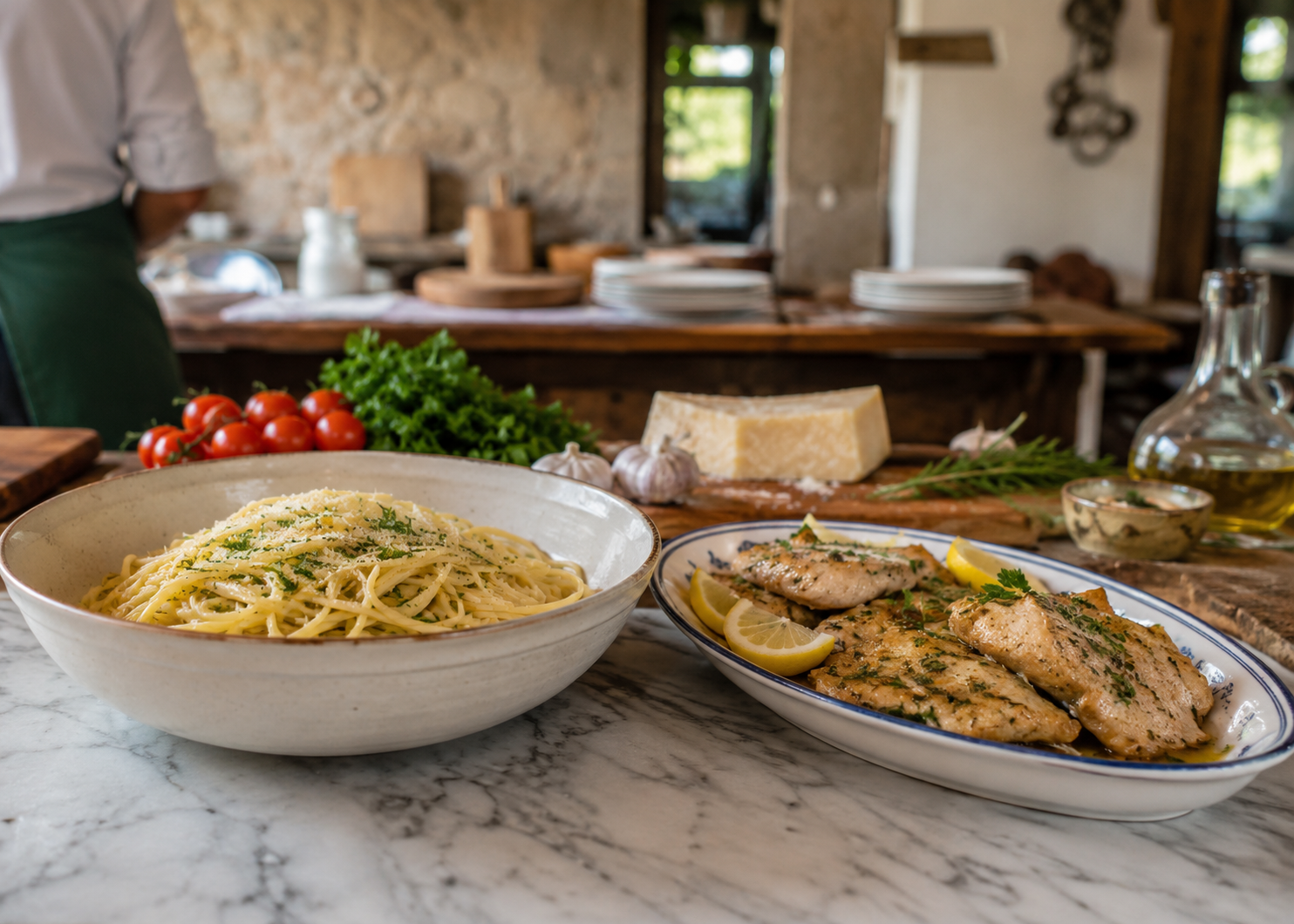
The rule is not that Italians dislike chicken. They eat plenty of it, and cook it beautifully. The point is that chicken gets its own dishes, prepared and served on its own terms, rather than being demoted to a topping.
Ask for chicken in Italy and you will be pointed toward the secondo courses, where it belongs. There is pollo alla cacciatora, hunter’s chicken, braised with tomatoes, onions, herbs, and sometimes olives. There are scaloppine, thin chicken cutlets cooked quickly in lemon or wine. There is simple roast chicken with potatoes, rosemary, and garlic, the Sunday classic. In each case the chicken is the star of its own course, given room to be itself rather than hidden under pasta.
This is the real answer to the American who wants chicken and pasta in one meal. An Italian would happily serve both, in the correct order: a plate of pasta with a proper sauce first, then a chicken dish after, each enjoyed on its own. What looks to an American like an odd refusal to combine two nice things is, to an Italian, simply the sensible way to give each of them the attention it deserves. You are not being denied chicken. You are being offered it done properly.
The Exceptions Nobody Mentions
Here honesty requires a caveat, because never is slightly too strong a word. Italians do combine chicken and pasta in a few traditional ways. What they avoid is specifically the American form, a cooked piece of chicken sitting on top of a sauced pasta. The traditional combinations look nothing like that.
The most common is the ragù. In parts of Italy, chicken or other poultry is slow-cooked into a rich sauce, a sugo di gallina, and that sauce is then used to dress pasta. The bird flavours the sauce deeply, and in the oldest versions the meat itself is often removed and eaten afterward as a separate course, leaving the pasta dressed only with the sauce. The chicken is present, but as the soul of the sauce rather than a lump of protein on top.
The other classic is pastina in brodo, tiny pasta shapes cooked in chicken broth, a humble, comforting dish eaten all over Italy, especially when someone is unwell or the weather turns cold. It is arguably the truest Italian pasta-and-chicken dish of all, and it bears no resemblance to chicken alfredo. A few modern cold pasta salads also include shredded chicken. So the honest version of the rule is narrower than the meme suggests: Italians do not put a slab of cooked chicken on a plate of sauced pasta, though they will happily let a chicken flavour the sauce or the broth.
Even these exceptions follow the underlying logic. In the ragù and the broth alike, the chicken dissolves into the dish rather than sitting on it as a separate lump, so the pasta and its sauce still read as one unified thing rather than two components stacked together. The distinction is subtle but it is the whole game. Italians will combine chicken and pasta into a single, integrated flavour. What they will not do is treat pasta as a bed for a piece of grilled meat.
Chicken Alfredo and Other Italian-American Inventions
If chicken pasta is not Italian, where did it come from? The answer is the Italian-American kitchen, where the old rules loosened in a new country with different conditions. Dishes like chicken alfredo and chicken parmigiana were born there, not in Italy.
When Italian immigrants arrived in the United States, meat was suddenly cheap and plentiful in a way it never had been back home, and portions grew to match American appetites. Combined with a customer base that expected a hearty protein with every meal, this reshaped the food. Fettuccine Alfredo, itself a simplified descendant of a Roman dish, acquired a chicken breast it never had in Rome. Chicken parmigiana adapted the classic melanzane alla parmigiana, made with eggplant, into a breaded-chicken crowd-pleaser. These are real, beloved dishes, but they are Italian-American, a distinct cuisine, not imports from Italy.
There is nothing wrong with any of this, and the snobbery around it can be tiresome. Italian-American food is a genuine and delicious tradition in its own right, shaped by real people adapting to real circumstances. The only error is the labelling, calling it authentically Italian and then being surprised when Italy has never heard of it. Chicken alfredo is about as Italian as the fortune cookie is Chinese: a diaspora invention that took on a life of its own, worth enjoying for what it actually is.
The confusion is understandable, because the branding has been so thorough. Generations of American restaurants labelled these dishes simply Italian, red-checked tablecloths and all, so millions of people learned an entire cuisine that Italy would not quite recognise. When those diners finally visit Italy and cannot find the food they grew up calling Italian, the disorientation is real. The dishes are not fake, exactly. They are authentic to a different place, the Italian-American neighbourhoods of New York, New Jersey, and beyond, and they deserve to be understood on those terms rather than measured against a Tuscan trattoria.
Respecting the Rule Without Rolling Your Eyes
It is easy to hear all this as gatekeeping, a nation of purists scolding tourists for ordering wrong. That reading misses what the rules are actually protecting, which is worth understanding before dismissing them.
Italian cooking is intensely regional, almost hyper-local, with dishes tied to specific towns and traditions in a way few cuisines match. Carbonara belongs to Rome, not to a generic idea of Italy. Each region guards its own specialties, its own pairings, its own way of doing things. The rules against chicken pasta and the rest are, at bottom, a defence of that regionalism against the flattening pressure of global tourism, which would happily turn every Italian menu into the same handful of internationally recognisable dishes.
For a visitor, respecting the rule is not submission to snobbery but the key to a better meal. Order what a place actually does well, the dish its region is famous for, and you tap into centuries of refinement. Insist on the familiar chicken pasta and you get, at best, a mediocre version of something the kitchen does not believe in. The rule, followed rather than fought, is a shortcut to eating the way the locals do, which is the whole reason to travel for food in the first place.
What They Actually Serve Americans Who Ask
So what happens when an American does ask for chicken pasta in Italy? Increasingly, in the most tourist-heavy places, the uncomfortable answer is that some restaurants have started to serve it. In parts of Florence and other cities flooded with visitors, a few menus now quietly offer chicken pasta, added specifically for tourists who expect it.
Italian food writers tend to find this depressing rather than accommodating. To them it signals a slide from Italy’s fierce regional traditions toward a bland, standardised, internationally palatable version of Italian food, the culinary equivalent of every high street looking the same. A restaurant that adds chicken pasta for tourists is, in this view, giving up a small piece of what makes its cooking worth traveling for. The visitor gets what they asked for and, without knowing it, gets something less than what they came for.
The better restaurants take a different path. Faced with the request, a good Italian kitchen will gently redirect, steering the diner toward pasta with an authentic sauce followed by a proper chicken secondo, or toward one of the genuine chicken-and-pasta traditions like a chicken ragù. The most rewarding move for any visitor is to meet Italy on its own terms. Order the pasta the region is known for, order a chicken dish done the Italian way, and skip the chicken pasta entirely. You will eat far better, and you will taste why Italians guard the rule so jealously in the first place.
The Authentic Version to Cook at Home
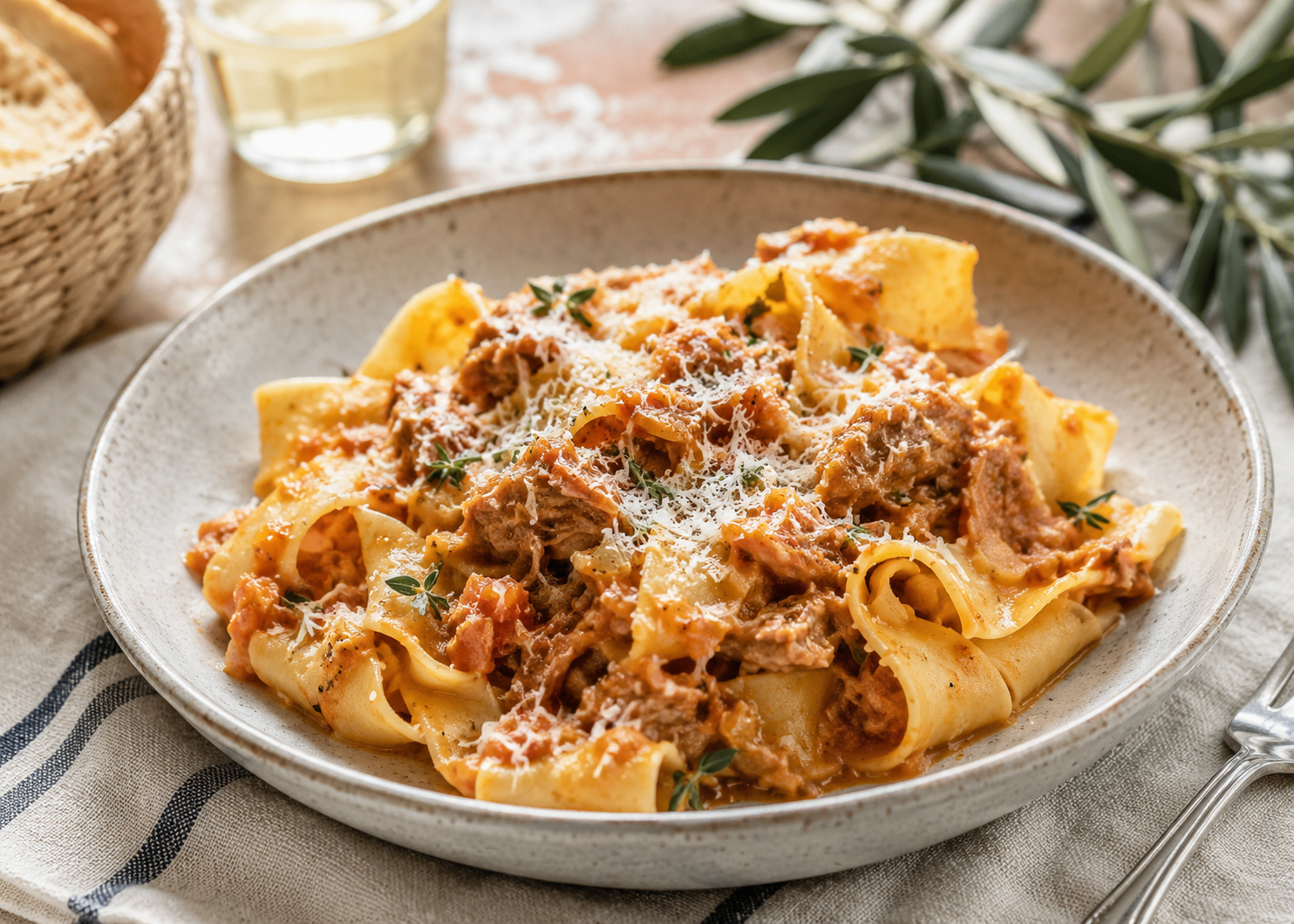
So here is the dish to make instead of reaching for chicken alfredo: a proper Italian chicken ragù, tossed through wide ribbons of pappardelle. This is the honest answer to the whole question, chicken and pasta together, done the way Italy actually does it. The chicken is not a grilled breast dropped on top. It is slow-cooked with a soffritto and a little wine and tomato until it falls apart, then shredded back through its own sauce so that every strand of pasta carries the flavour.
The technique is forgiving and the payoff is enormous. Use bone-in, skin-on chicken thighs rather than breast, because they stay moist through the long simmer and give the sauce far more depth. Pappardelle or tagliatelle is the ideal pasta, wide and rough enough to hold a hearty ragù, though any sturdy shape will do. Make it on a Sunday if you can, because it only improves after a night in the fridge, exactly the kind of dish an Italian grandmother would recognise as the real thing.
Chicken Ragù With Pappardelle (Ragù di Pollo)
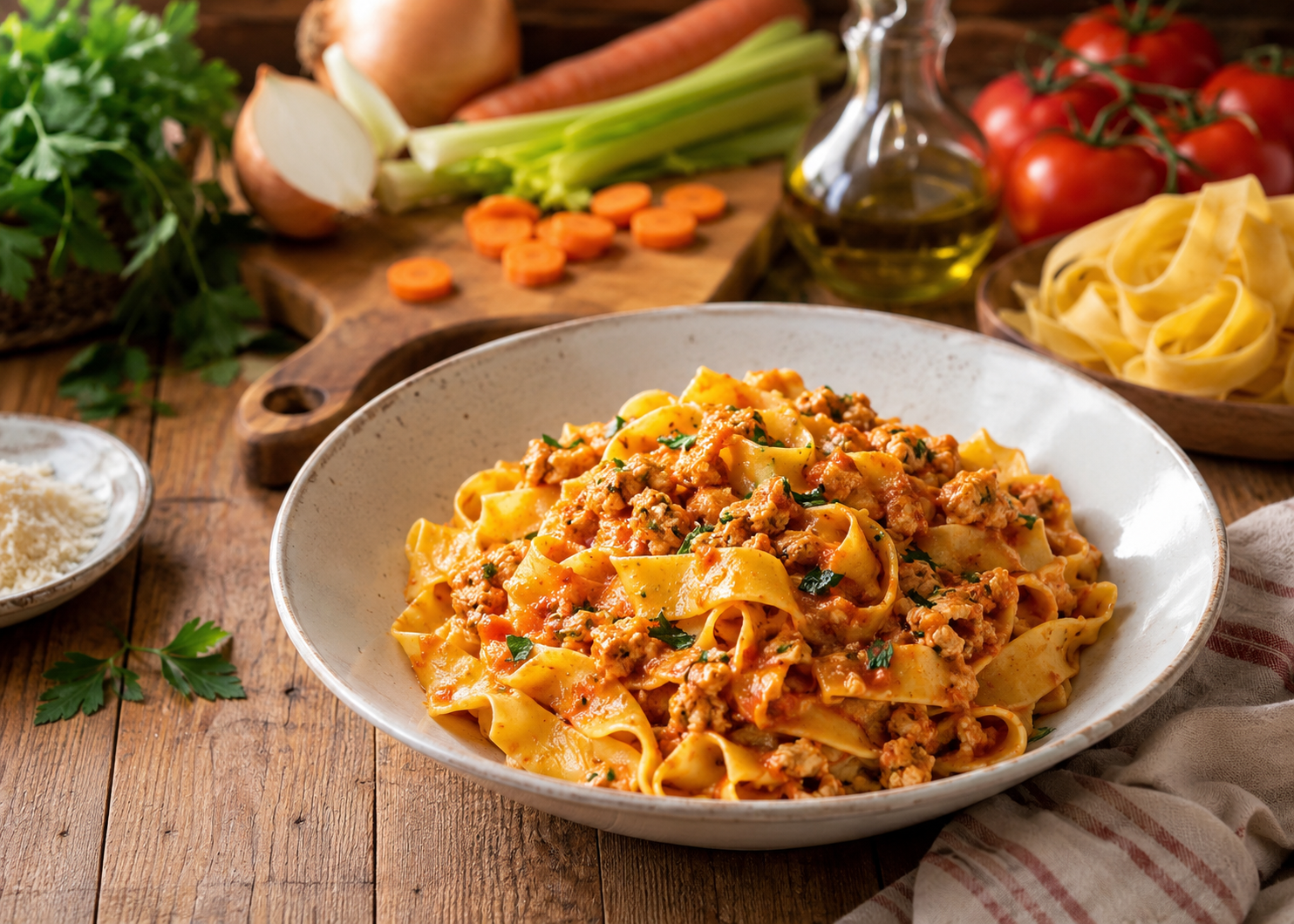
A rich, slow-cooked chicken ragù shredded through its own sauce and tossed with wide pappardelle. The authentic Italian answer to chicken and pasta, and nothing like chicken alfredo.
Serves: 4 to 6 · Prep: 20 minutes · Cook: 1 hour 15 minutes · Total: about 1 hour 35 minutes
Ingredients
- 700 g (1½ lb) bone-in, skin-on chicken thighs
- 3 tbsp extra-virgin olive oil, plus extra to finish
- 1 onion, finely chopped
- 1 carrot, finely chopped
- 1 celery stalk, finely chopped
- 3 garlic cloves, finely chopped
- 125 ml (½ cup) dry white wine
- 2 tbsp tomato paste (concentrato di pomodoro)
- 400 g (14 oz) tin whole or crushed tomatoes, preferably San Marzano
- 250 ml (1 cup) chicken stock
- 1 bay leaf
- 1 sprig rosemary and a few sage leaves
- Pinch of chilli flakes (optional)
- Salt and freshly ground black pepper
- 500 g (1 lb) pappardelle or tagliatelle
- Parmigiano-Reggiano, freshly grated, to serve
Method
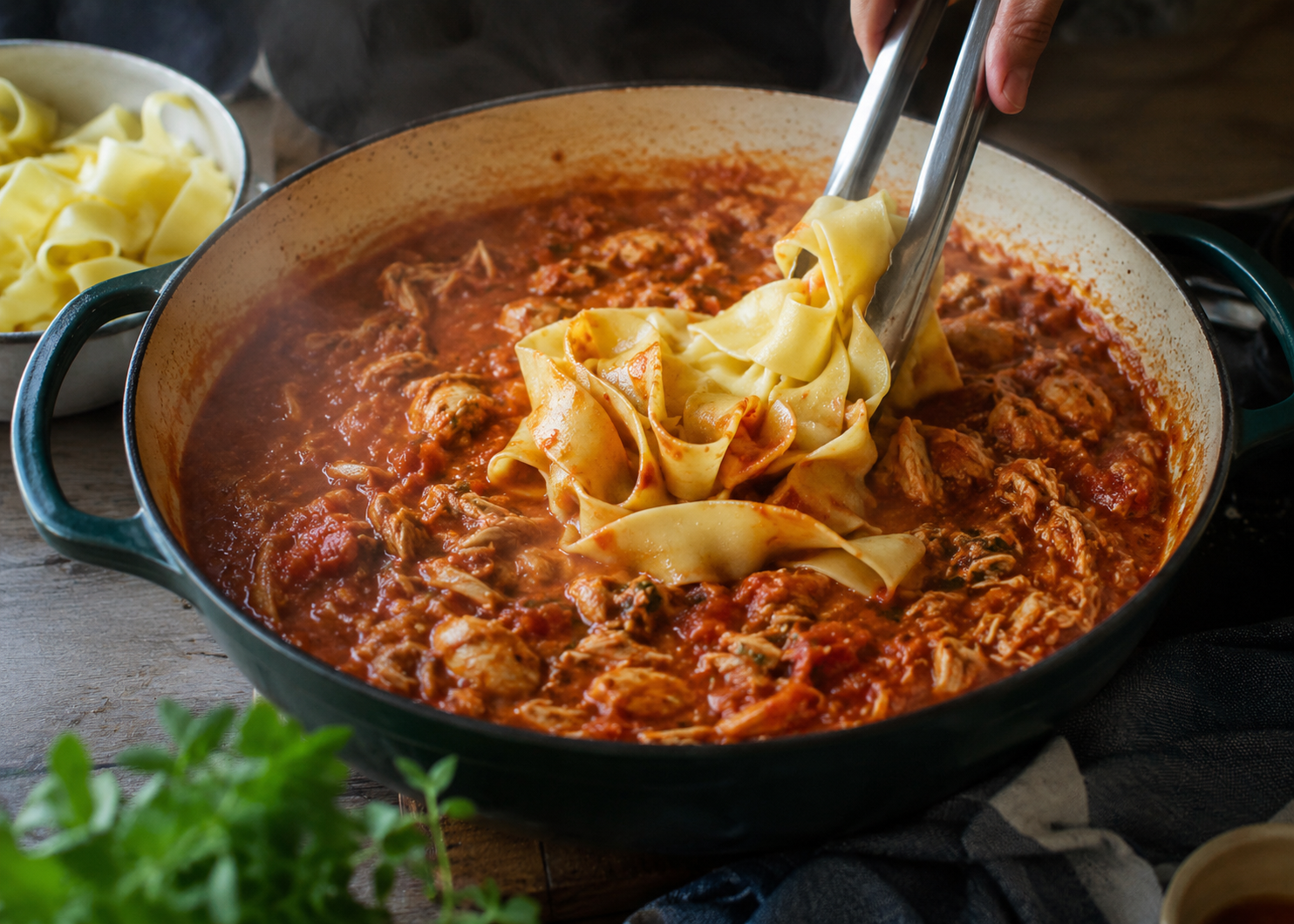
- Pat the chicken dry and season it well with salt and pepper. Heat the olive oil in a heavy pot or Dutch oven over medium-high heat and brown the thighs on both sides, about 8 minutes in total. Remove and set aside.
- Lower the heat to medium. Add the onion, carrot, and celery to the same pot and cook gently until soft and golden, 8 to 10 minutes. Stir in the garlic and cook for another minute.
- Pour in the white wine, scraping up the browned bits from the bottom, and let it bubble until mostly evaporated.
- Stir in the tomato paste and cook for a minute, then add the tomatoes, chicken stock, bay leaf, herbs, and chilli if using. Break up the tomatoes with a spoon.
- Return the chicken to the pot, skin-side up, and bring to a gentle simmer. Cover partly and cook for 45 to 60 minutes, until the meat is tender and falling from the bone.
- Lift out the chicken. Discard the skin and bones, shred the meat with two forks, and return it to the sauce. Simmer uncovered for about 10 minutes to thicken, then season to taste and fish out the bay leaf and rosemary stalk.
- Meanwhile, cook the pappardelle in well-salted boiling water until al dente. Reserve a cup of the pasta water before draining.
- Toss the pasta with the ragù over low heat, loosening it with a splash of pasta water and a drizzle of olive oil until the sauce clings to every ribbon. Serve at once under a generous shower of grated Parmigiano-Reggiano.
Notes
- Thighs beat breast here every time. Breast dries out over a long simmer, while thighs stay silky and shred beautifully.
- The ragù is even better the next day, and it freezes well for up to three months.
- No pappardelle to hand? Any wide or sturdy pasta works. The point is a shape that can carry a hearty sauce.
- For a Tuscan white ragù, leave out the tinned tomatoes and add a little extra stock plus a splash of milk at the end.

About the Author: Ruben, co-founder of Gamintraveler.com since 2014, is a seasoned traveler from Spain who has explored over 100 countries since 2009. Known for his extensive travel adventures across South America, Europe, the US, Australia, New Zealand, Asia, and Africa, Ruben combines his passion for adventurous yet sustainable living with his love for cycling, highlighted by his remarkable 5-month bicycle journey from Spain to Norway. He currently resides in Spain, where he continues sharing his travel experiences with his partner, Rachel, and their son, Han.