
There is a set of rules most Americans absorb about Italian red sauce without ever being formally taught them. It starts with olive oil. You sweat garlic in good olive oil, you add tomatoes, you simmer, you finish with basil. Olive oil is the fat, the beginning and the end of it, because olive oil is what Italian means. Reaching for the butter dish would feel like a small betrayal, a French intrusion into an Italian pot, the kind of thing that would get you a look.
So it tends to genuinely surprise Americans to learn that one of the most celebrated tomato sauces in all of Italian cooking contains no olive oil at all. It is built on butter.
The one thing Italians add to tomato sauce that a lot of Americans believe they should never use is exactly that, butter, and it is not a quirk or a heresy. It is a real and traditional technique that does something to a tomato sauce that olive oil cannot, and once you understand what, the rule you absorbed starts to look less like wisdom and more like a habit nobody examined.
We held that rule too, without ever questioning it, until an Italian kitchen quietly broke it in front of us and the sauce was better for it. It is a strange thing to discover that a belief you held about a whole cuisine was never actually held by the people who cook it.
The Most Famous Proof Is Three Ingredients
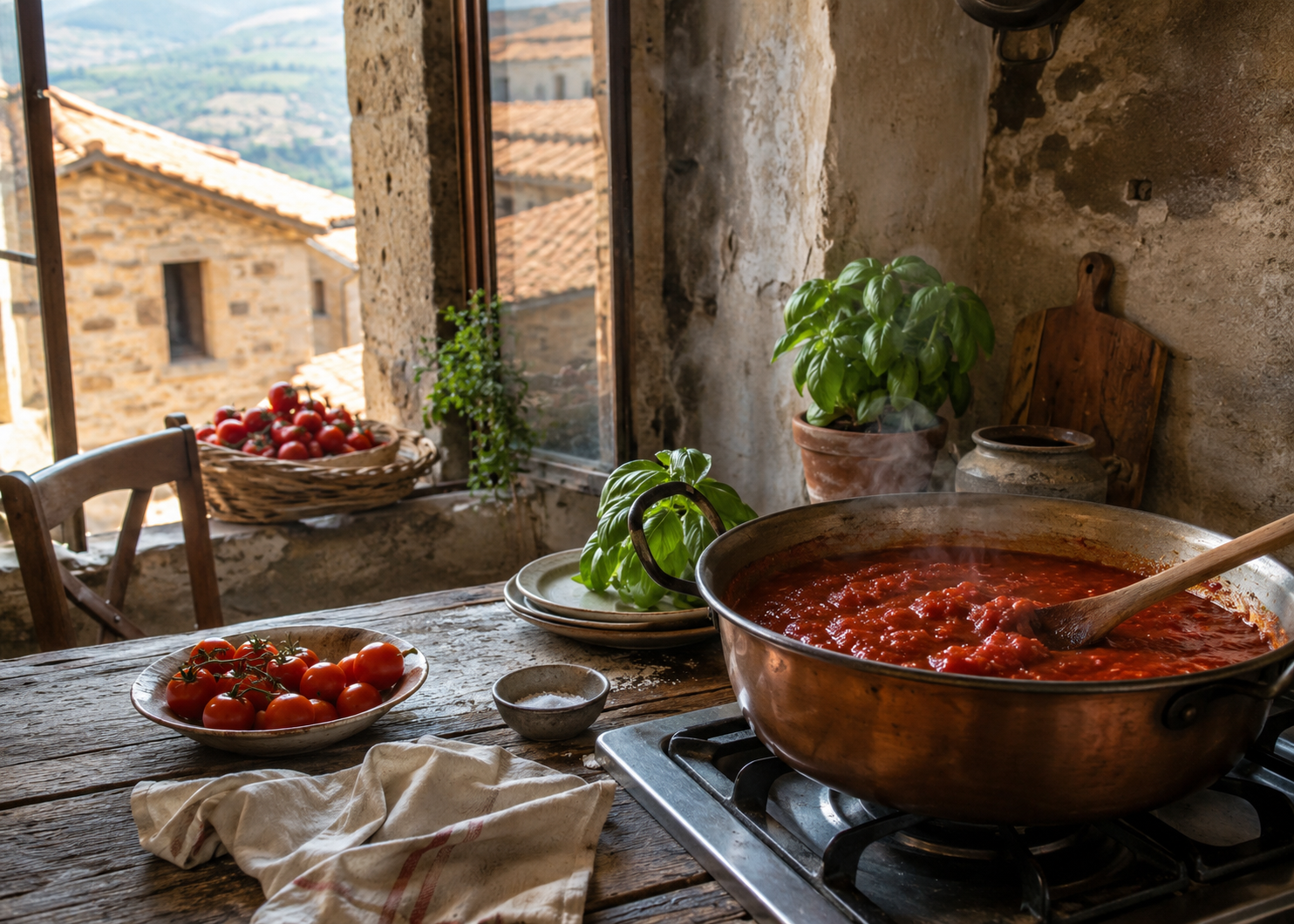
The clinching example belongs to Marcella Hazan, the woman who taught America how to cook Italian food properly, and whose tomato sauce is probably the single most beloved recipe she ever published. It is almost aggressively simple, and it is built around butter.
The whole thing is three ingredients. A can of good tomatoes, a peeled onion cut in half, and a generous amount of butter, simmered together slowly for about forty-five minutes. You discard the onion at the end, or eat it as a cook’s reward. There is no garlic. There is no olive oil. There is barely any work. And the result is a sauce of such silky, rounded, savory depth that people who make it once tend to make it forever.
That sauce is not some obscure modernist experiment. It is a classic, beloved across Italy and adored by every American food writer who has ever encountered it. A tomato sauce whose entire character comes from butter sits at the absolute center of the Italian canon, which makes the American rule against butter in red sauce look exactly as arbitrary as it is.
Hazan herself was no fringe figure. She is widely credited with teaching a generation of Americans how to cook real Italian food, through cookbooks that became kitchen bibles, and she was famously uncompromising about authenticity. This was not someone cutting corners or pandering to American tastes with a stick of butter. This was the most respected authority on Italian home cooking that America ever had, telling people that the best simple tomato sauce is built on butter, no oil in sight. When she is the source, the rule does not have a leg to stand on.
Why Butter Does Something Oil Cannot
The reason butter works is not magic, and it is worth understanding, because it explains why the sauce comes out the way it does.
A tomato is acidic, sometimes sharply so, and that acidity is the thing that makes a mediocre tomato sauce taste thin, tinny, or harsh. Butter tames that acidity in a way olive oil does not. The milk solids and the dairy fat in butter round off the sharp edges of the tomato, softening the acid into something mellow and full. The sauce stops tasting like bright, aggressive tomato and starts tasting deep and almost sweet, without a grain of added sugar.
Butter also gives the sauce a particular body and texture. It emulsifies into the tomato as it simmers, lending a velvety, coating quality, a richness that clings to pasta rather than sliding off it. Olive oil brings its own wonderful things, a fruity, peppery, savory note, but it does not round and silken a sauce the way butter does. They are different tools for different jobs, and the job of making a tomato sauce mellow and luxurious belongs to butter.
This is why the Hazan sauce tastes the way it does. It is not a trick. It is straightforward dairy chemistry, the same reason a splash of cream or a knob of butter rescues so many sharp sauces, applied to the most basic tomato sauce there is.
There is a flavor reason as well as a texture one. A good deal of what makes a tomato taste rich is fat-soluble, meaning the flavor compounds need fat to carry them to your palate, and butter is a generous, mild carrier that does not compete with the tomato the way a strong olive oil can. The butter does not add its own loud taste so much as it lifts and spreads the tomato’s, which is exactly what you want from a fat in a sauce this simple.
It Was Never Actually Forbidden
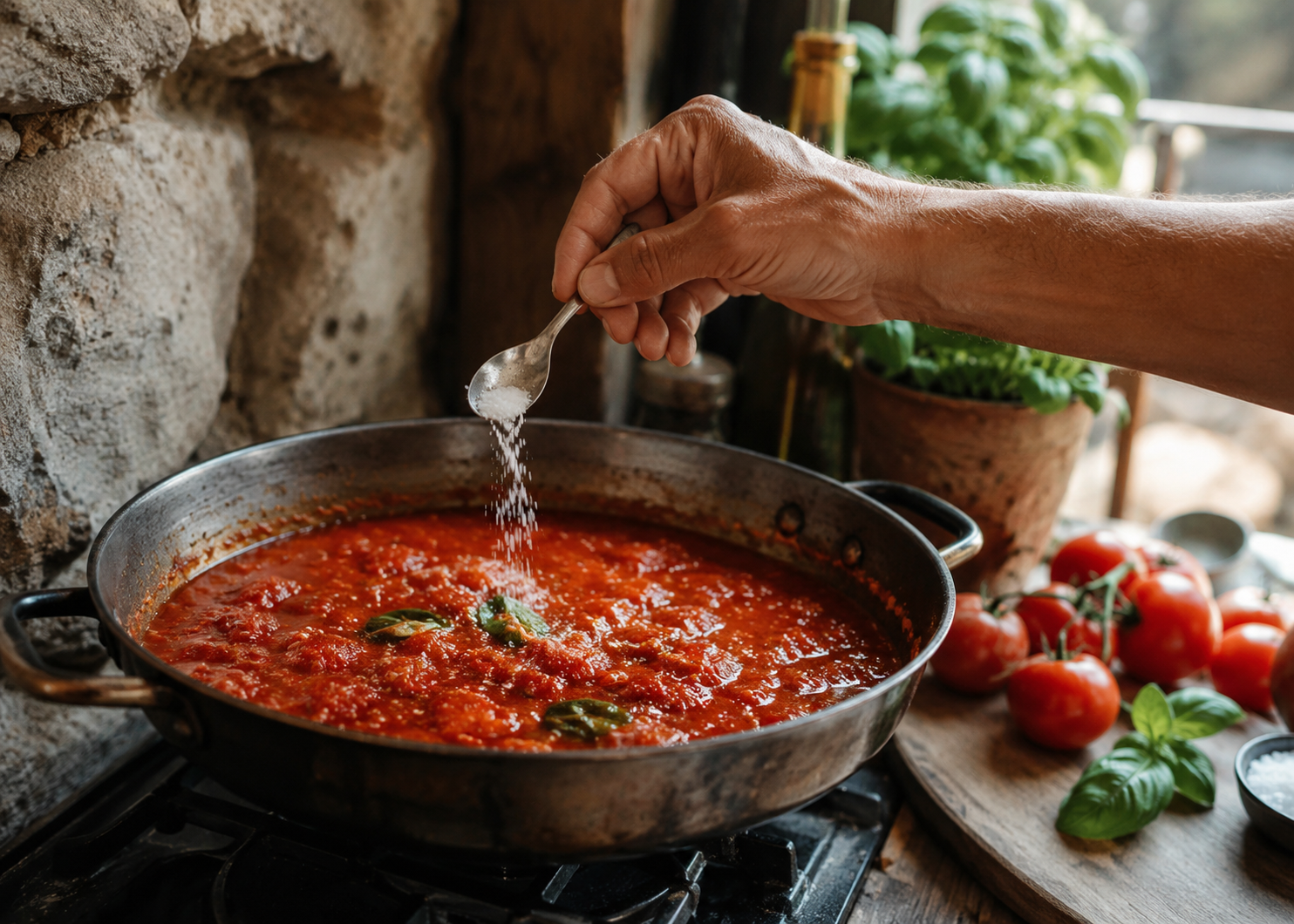
Here is the honest part, because the title leans on a rule that is more cultural assumption than actual law. Nobody in Italy ever passed an edict against butter in tomato sauce. The prohibition lives mostly in the American imagination.
What happened is that Americans absorbed a simplified, marketable version of Italian cooking in which olive oil stood for the whole cuisine, healthy, Mediterranean, authentic, and butter got quietly recoded as the enemy, the French fat, the thing Italian food supposedly was not. The rule against butter is an American invention, not an Italian one. It flattened a varied, regional cuisine into a single olive-oil story and then mistook that story for the truth.
The reality on the ground in Italy is more interesting. The north of the country, closer to the Alps and to dairy country, has always cooked richly with butter. Risotto is finished with it. Plenty of northern sauces lean on it. The olive-oil-only image of Italian cooking is really the cuisine of the south generalized to the whole peninsula, and it leaves out a butter-loving half of the country entirely.
Butter And Tomato Are Old Friends In Italy
Once you start looking, butter turns up alongside tomato all over Italian cooking, not as an exception but as a recurring pairing the olive-oil story simply edits out.
The familiar restaurant vodka sauce, the pink one so many Americans love, is tomato rounded with butter and cream, and nobody calls it inauthentic. Plenty of northern Italian ragùs are started in butter rather than oil, or finished with it. Tomato risotto leans on butter as a matter of course. The whole family of rosé and creamy tomato sauces, beloved in Italy and abroad, depends on dairy softening the acid of the tomato into something gentler.
These are not fringe dishes invented to please foreign palates. They are mainstream Italian cooking, and every one of them puts butter and tomato in the same pot on purpose. The pairing is so common that the only surprising thing is how thoroughly the olive-oil-only image managed to hide it. Butter and tomato were never strangers in Italy. They have been working together for as long as Italians have had both.
The Finishing Swirl Almost No One Mentions
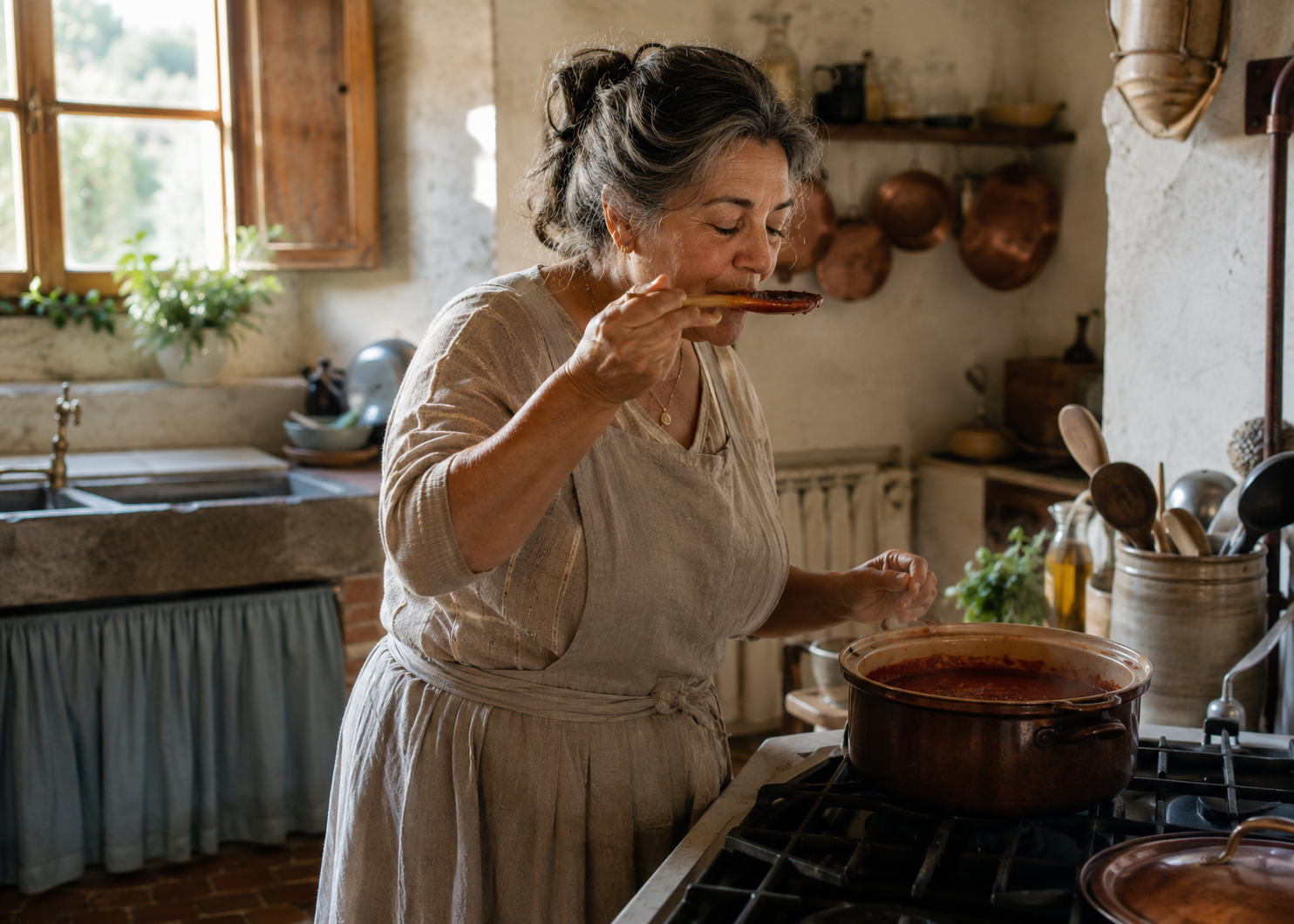
Butter has a second, quieter role in Italian sauce-making that goes well beyond the Hazan recipe, and it is the kind of thing that separates a restaurant plate of pasta from a home one.
The technique is called mantecatura, and it happens at the very end. After the pasta is tossed with the sauce, a cook will swirl in a knob of cold butter off the heat, beating it through until it melts into a glossy, unified sauce that coats every strand. It is the same move that gives a great risotto its sheen. The butter emulsifies the sauce, binds it, and gives it that restaurant-quality gloss and cling that home cooks often cannot quite achieve.
Most Americans finishing a pot of red sauce would never think to do this, because the butter rule forbids it before they get there. A small piece of butter swirled in at the end is one of the simplest upgrades a tomato sauce can get, and it is standard practice in Italian kitchens that the olive-oil-only story pretends do not exist.
Where The Rule Came From
It is worth asking why the no-butter idea took such firm hold in America, because the answer says more about marketing than about cooking.
Olive oil arrived in the American imagination wrapped in a health halo, the centerpiece of the Mediterranean diet, the good fat, the authentic choice. That was a genuinely useful story, and olive oil deserves its reputation. But it hardened into something narrower, the belief that real Italian cooking used olive oil and only olive oil, and that butter belonged to a different, richer, less virtuous tradition somewhere to the north in France.
So the line got drawn, and it got drawn in the wrong place. Italian cooking was never olive-oil-only. That was a simplification sold to Americans, and like a lot of simplifications it became a rule that real Italian cooks would find slightly baffling. The Italian grandmother in Bologna finishing her ragù with butter is not breaking a rule. She never heard of the rule. The rule was made in America.
What About Health, Honestly
A health-minded reader will reasonably ask whether all this butter is a problem, and the honest answer is worth giving plainly. For everyday cooking, olive oil really is the better fat for your health, and nothing here is an argument against it.
But that is a different question from how to make a good sauce, and it is easy to keep the two separate. A few tablespoons of butter in a pot of sauce that feeds four people is not a health decision worth losing sleep over, any more than the splash of cream in a soup is. You are not choosing to live on butter. You are using a little of it, occasionally, to make one dish taste better than it otherwise would.
And you do not have to pick a side. Many cooks use olive oil as their daily workhorse and reach for butter when a particular sauce wants rounding, which is exactly how much of Italy actually cooks. The point was never to replace the oil. It was to stop treating a perfectly good technique as forbidden when it never was.
The Recipe: Marcella Hazan’s Tomato Sauce With Butter And Onion
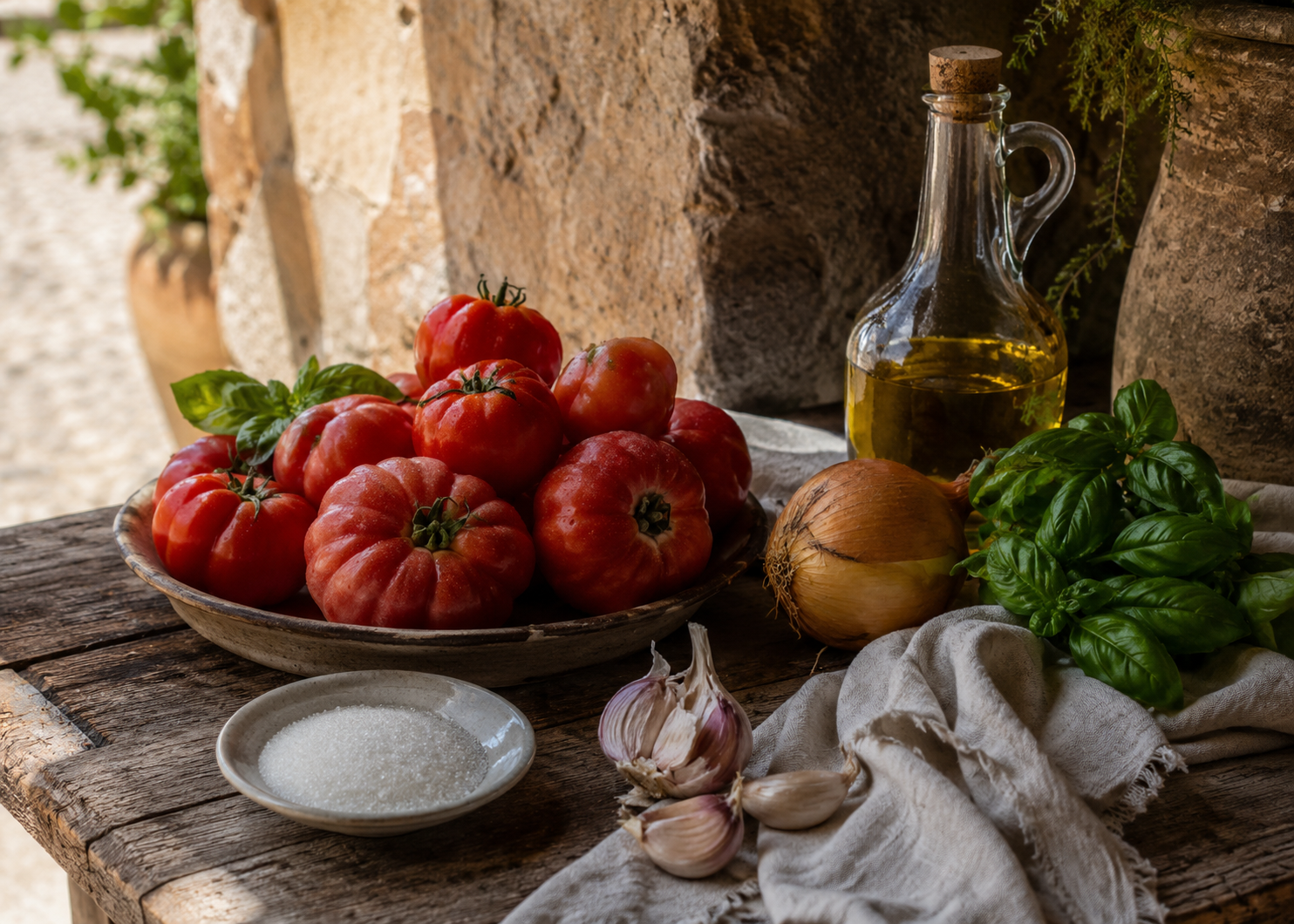
Here it is, the proof of everything above, and very likely the easiest sauce you will ever make. Three ingredients, almost no work, and a result good enough to convert anyone. Make it once beside your usual olive-oil-and-garlic version and taste them side by side.
Makes: about 2 cups, enough to sauce 1 pound of pasta (serves 4)
Time: 5 minutes to prepare, about 45 minutes to simmer
Ingredients
- 1 can (28 oz / 800 g) whole peeled tomatoes, preferably San Marzano
- 5 tablespoons (70 g) unsalted butter
- 1 medium yellow onion, peeled and cut in half
- Salt, to taste
Method
- Empty the tomatoes and their juice into a medium saucepan, and crush them roughly by hand or with a wooden spoon.
- Add the butter, both onion halves, and a good pinch of salt.
- Set the pan over medium-low heat and bring it to a gentle, steady simmer.
- Cook uncovered for about 45 minutes, stirring now and then and pressing the tomatoes against the side of the pan to break them down, until the sauce has thickened and small droplets of fat float free on the surface.
- Remove and discard the onion halves, or eat them as the cook’s reward. Taste, and add salt as needed.
- Toss with hot, just-drained pasta. For extra silk, swirl in a final small knob of butter off the heat before serving.
A few notes. If you truly cannot leave out the garlic, add a clove or two, though it is worth trying it once exactly as written to see what the butter does on its own. A piece of parmesan rind dropped in while it simmers deepens it further. And resist the urge to complicate it much beyond that, because the quiet revelation of the sauce is how little it needs. The butter sauce will come out rounder, softer, and deeper than the oil-and-garlic kind, with none of the sharp tomato edge, and you will understand at the first taste why a rule against it never made any sense.
The Rule Worth Breaking
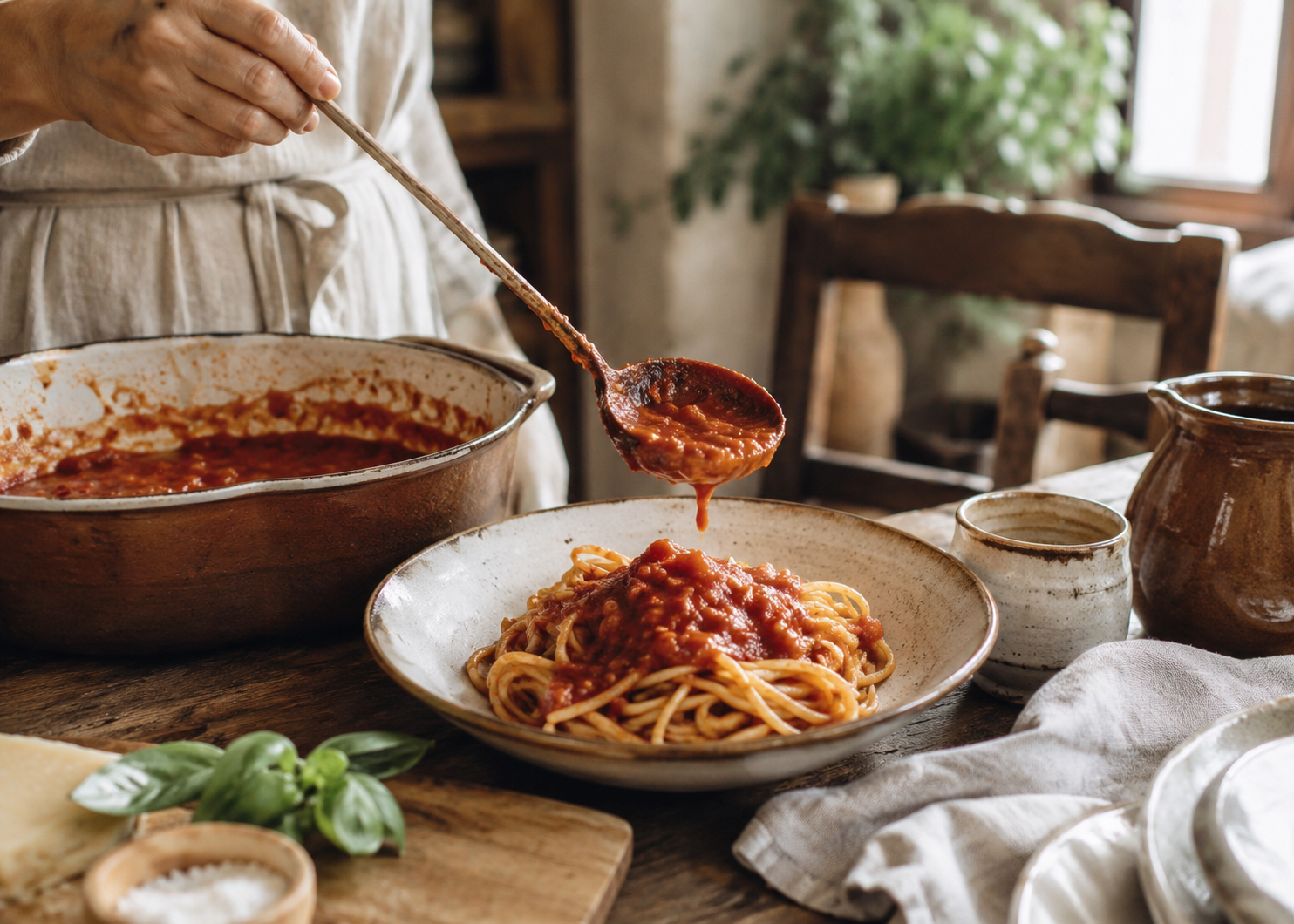
So the one thing Italians add to tomato sauce that Americans are told never to is butter, and the telling turns out to be the only thing standing in the way. There is no Italian tradition against it, no culinary reason to avoid it, nothing but an imported idea that olive oil and authenticity are the same thing and that butter is a betrayal.
There is a small lesson in it beyond the sauce. A lot of what people believe about other countries’ cooking comes from a flattened, marketable version of it, a single story sold as the whole truth, and the rules that come out of those stories are often invented rather than inherited. The cooks who actually live inside a cuisine are usually far more relaxed about its rules than the foreigners who revere it from a distance. The Italian grandmother is not policing your sauce. She is reaching for whatever makes it taste good.
Break that rule once, with the simplest three-ingredient sauce in the Italian repertoire, and you will have a better pot of tomato sauce and one fewer false belief about how Italian food works. The olive oil is not going anywhere, and it should not. But the butter has a seat at that table too, and it always did. The only people who forgot were the ones who learned the rules from a story instead of from a kitchen.

About the Author: Ruben, co-founder of Gamintraveler.com since 2014, is a seasoned traveler from Spain who has explored over 100 countries since 2009. Known for his extensive travel adventures across South America, Europe, the US, Australia, New Zealand, Asia, and Africa, Ruben combines his passion for adventurous yet sustainable living with his love for cycling, highlighted by his remarkable 5-month bicycle journey from Spain to Norway. He currently resides in Spain, where he continues sharing his travel experiences with his partner, Rachel, and their son, Han.