
The question comes to us more than almost any other. An American couple in their sixties, retirement in sight or already here, has narrowed Europe down to two finalists, Italy and Spain, and wants to know which one will actually have them. Usually it arrives with a worry tucked inside it, a quiet fear that being past sixty-five somehow counts against you, that the good visas are for younger people and a retiree is a harder sell.
Let me take that worry off the table first, because it is the wrong thing to be afraid of. Neither country cares how old you are. The visas that bring retirees to Spain and Italy have no upper age limit, and in practice they are designed for exactly the person asking, someone with steady income who will not be competing for a local job. Being sixty-five, or seventy-five, is not the obstacle.
What actually separates the two countries is money, paperwork, healthcare, and tax, and on those four things they are genuinely different. Understanding the differences is how you pick the one that fits your life rather than the one that photographs best.
The Visa You Will Actually Use

Forget golden visas and investor schemes. For most retiring Americans, each country has one realistic route, and it is the same idea on both sides of the Mediterranean: prove you can support yourself from income earned outside the country, and you may live there without working.
In Spain it is the Non-Lucrative Visa, often just called the NLV. In Italy it is the Elective Residence Visa, the ERV. Both are built for the financially independent, both forbid you from working locally, and both start as a one-year permit that you renew, leading after five years to permanent residency and after ten to a shot at citizenship.
The renewal rhythm differs slightly, Spain stepping from a first year into two-year blocks, Italy renewing annually at the start, but the five-year and ten-year milestones line up.
On paper they are twins. In the details that decide whether your application is a smooth yes or a stressful maybe, they pull apart.
The Money They Want To See

Spain sets a clear, published number. For 2026 the Non-Lucrative Visa asks a single applicant to show €28,800 a year, which is 400 percent of a Spanish benchmark called the IPREM, with roughly €7,200 more for a spouse, putting a couple around €36,000. That figure has held steady for several years.
Spain is also flexible about how you prove it. Pensions, Social Security, dividends, and rental income all count, and so do savings. Many American applicants simply show a large enough investment or bank balance, often the annual figure multiplied across the five-year horizon, rather than a monthly income stream. For a retiree whose wealth sits in a 401(k) or a brokerage account rather than a fat monthly check, that flexibility matters enormously.
Italy’s Elective Residence Visa starts a little higher, around €31,000 a year for a single applicant and roughly €38,000 for a couple, and then gets stricter in a way the headline number hides. Italy wants genuinely passive income, and savings alone usually will not do it. The visa is built around a stable, recurring stream, a pension, an annuity, dividends, rent, and a consulate looking at a pile of savings with no income behind it tends to balk.
There is one more Italian wrinkle worth knowing. Consulates, especially the American ones, frequently want to see well above the legal minimum, and figures in the range of €38,000 to €40,000, sometimes much more, get quoted in practice. The published floor and the working reality are not the same number.
There is a temperamental difference behind the numbers, too. Spain’s test is mechanical: hit the threshold, document it cleanly, and you pass. Italy’s consulates exercise real discretion and reject applications that meet the minimums on paper but fail to convince, which makes the Italian process less predictable even when your finances are strong.
The Catch Italy Springs On You
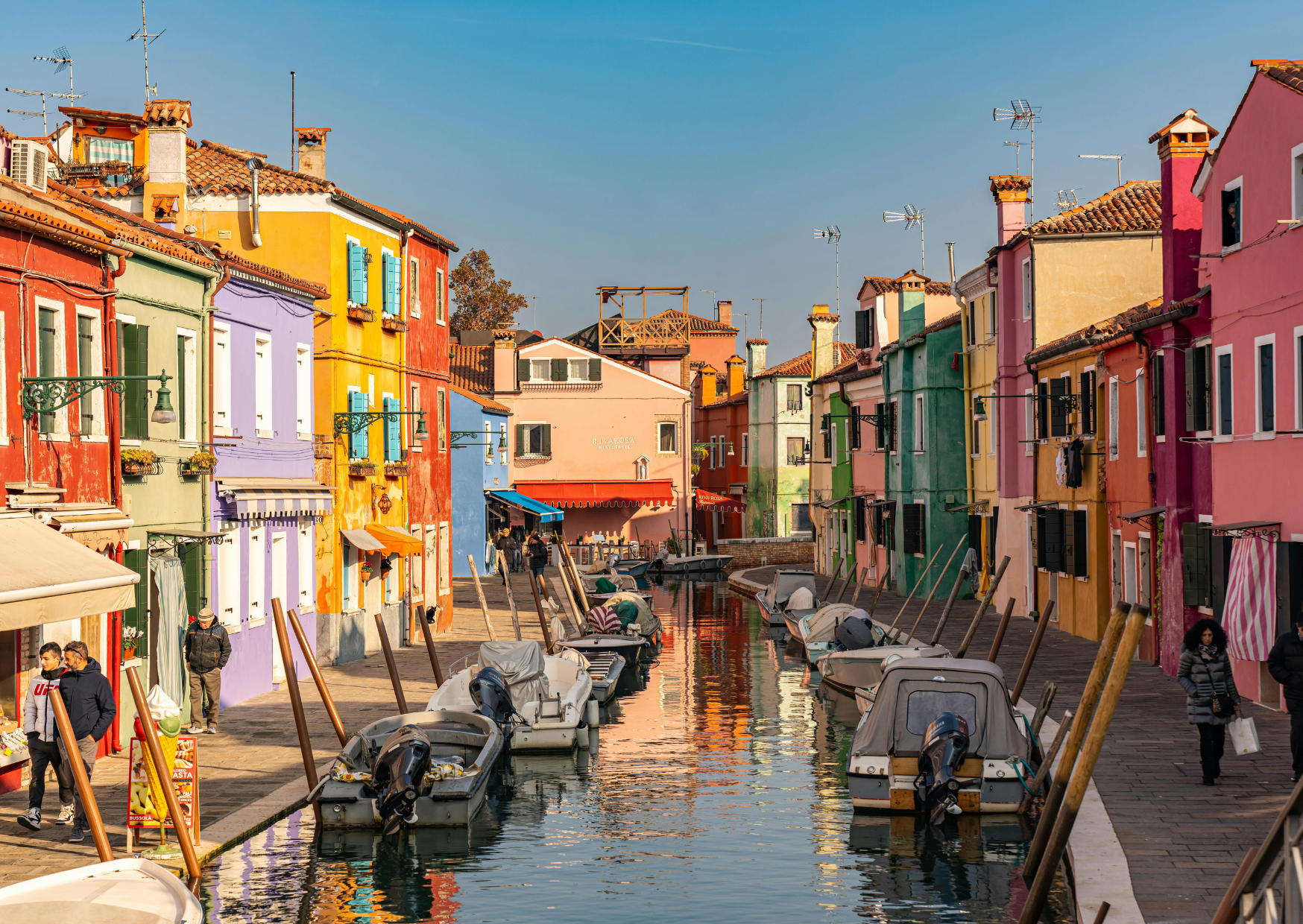
This is the single biggest practical difference, and it surprises people. Italy makes you secure a home in Italy before you can even apply for the visa.
The Elective Residence Visa requires proof of accommodation up front, a registered one-year lease or a property deed in your name, arranged from abroad before you have any guarantee the visa will be granted. Hotels and short-term rentals do not count. You are committing to an Italian address, sight largely unseen and money down, on the hope that the application then succeeds.
Spain asks for nothing like this at the visa stage. You show an address where you will live for the first months, but you are not required to sign a year-long Italian-style lease or buy a property before you are even approved. You can land, look around, and settle where you actually like.
For a retiree, this is not a small thing. Italy asks you to make an irreversible-feeling commitment to a specific town before the door has opened. Spain lets you keep your options open until you are already in. If the idea of leasing a house in a country you have only visited makes your stomach tighten, that instinct is telling you something real.
Healthcare, Where The Real Question Lives
For anyone past sixty-five, this is the part that actually matters, and it is the part the brochures gloss. Both countries run excellent universal public health systems. The question is how you, a non-EU retiree, get into them, and what it costs.
Both visas require private health insurance to be granted, full coverage with no co-pays, and here age does bite, not through the visa rules but through the premiums. Private medical cover gets more expensive the older you are, and a couple in their late sixties should price real policies early, because this is one genuine cost that rises with age.
Once you are resident, the public door opens, by different routes. Spain offers the convenio especial, a pay-in scheme that lets non-working residents buy into the public system for a monthly fee, in the region of €60 a month for younger applicants and higher for those over sixty-five. Italy lets Elective Residence holders enroll voluntarily in its national health service, the SSN, for an annual contribution that since a 2024 change starts at a floor of around €2,000 a year and rises with income.
Run the math and the systems land in a similar place for an older couple, a few thousand euros a year for access to genuinely good public healthcare that, crucially, covers pre-existing conditions from the day you enroll. That last point is the one that should reassure anyone leaving the American system behind. Neither country will turn you away or surcharge you for the conditions you arrive with.
The Tax Break That Can Tilt The Whole Decision

Here Italy plays a card Spain simply does not hold. A foreign retiree who moves to a small town in southern Italy can pay a flat 7 percent tax on all foreign income.
The rule is specific and real. Relocate to a qualifying municipality of fewer than 20,000 people in one of the southern regions, Sicily, Calabria, Sardinia, Puglia, Basilicata, Abruzzo, Molise, or Campania, and for up to nine years your foreign pension, Social Security, dividends, and other foreign income are taxed at a flat 7 percent. For an American retiree with a solid pension, that is a striking number, and it is a deliberate bid by Italy to repopulate its emptying southern villages with people who bring income.
Spain offers no retiree equivalent. Its well-known Beckham tax regime is for employees, not pensioners, and does nothing for someone living on passive income. Worse, several Spanish regions levy a wealth tax on substantial assets, which can reach retirees with large portfolios, though some regions, Madrid among them, effectively waive it. Spanish tax for a well-off retiree can run meaningfully higher than Italy’s southern deal.
The catch is that the 7 percent prize comes attached to a place. You have to actually want to live in a small southern Italian town, not a Tuscan hill or a Roman neighborhood, to claim it. For some people that is the dream. For others it is a tax break for a life they do not want, which is no break at all.
You Still Answer To The IRS
One thing neither country lets you escape, and one thing your new country will want, both deserve a clear word, because tax surprises are how good retirements quietly go sour.
Spend more than 183 days a year in Spain or Italy and you become a tax resident there, which means that country can tax your worldwide income, including the American pension and Social Security you are living on. That is true on both sides, and it is the trade for actually living somewhere rather than visiting.
The American part catches people off guard. The United States taxes its citizens no matter where they live, so moving abroad does not end your IRS filing. You keep filing a US return for the rest of your life. What stops you being taxed twice are the tax treaties the US holds with both Spain and Italy, plus the foreign tax credit, which between them generally ensure you are not paying full freight to two governments on the same income. The paperwork grows; the double bill, handled properly, mostly does not arrive.
The practical lesson is to budget for a cross-border tax advisor in the first year or two. It is a real cost, and skipping it is how people stumble into penalties on both sides of the Atlantic.
What Daily Life Is Actually Like
Strip away the paperwork and these are two of the finest places on earth to grow older, which is the real reason anyone is asking. Both give you walkable towns, a culture that still eats long lunches and lingers over them, public squares where old age is visible and ordinary rather than hidden away, and a daily pace that treats slowing down as civilized rather than a failure.
Both are markedly cheaper than coastal America for the life they deliver, both put excellent fresh food within a short walk, and both fold older people into public life in a way a lot of American retirees find quietly moving after the isolation of car-dependent suburbs. The differences here are matters of flavor more than substance. Spain runs later, louder, and more social, dinner at ten, the streets alive past midnight. Italy runs a touch more formal and regional, its rhythms shifting from one province to the next.
Neither will feel like a downgrade. Both, for the right person, feel like an upgrade on the life they left.
The Long Game If You Stay For Good

Most people asking this are thinking about the next decade, not a passport, but the long path is worth a glance, because the two countries part ways at the finish line in a way that can matter.
Both grant permanent residency after five years of legal residence, which loosens the income and renewal demands considerably and is the milestone most retirees actually care about. Both open the door to citizenship after ten.
The citizenship terms differ, though. Italy asks for B1 Italian and, importantly, lets you keep your American passport, since it permits dual citizenship. Spain asks for the DELE A2 language exam and the CCSE civics test, a gentler language bar, but it formally requires renouncing other citizenships and has no dual-nationality arrangement with the United States. In practice the US does not tear up your passport over it, but on paper Spain asks you to give up being American in a way Italy does not.
For a retiree who simply wants a good life abroad, none of this may ever come up. For one who dreams of an EU passport at the end of the road, Italy keeps both nationalities while Spain, on paper, asks you to choose.
So Which One Actually Welcomes You
The honest answer is that both welcome you, and the better fit comes down to your particular shape as a retiree.
Spain is the more forgiving entry. The income bar is lower, it accepts savings rather than demanding pure passive income, and it does not make you lease a home before you are approved. If your money sits in investments rather than a pension, or you want to arrive and then decide where to settle, Spain bends to meet you. It is the easier door to walk through.
Italy asks more of you at the start and can give more back at the end. It wants real recurring income and a home secured before you apply, which is a heavier lift. But if you draw a steady pension and you are genuinely drawn to a quiet life in the south, the 7 percent flat tax can make Italy the cheaper place to spend your retirement by a wide margin. The friction is front-loaded; the reward is in the years that follow.
So the question is not which country lets a sixty-five-year-old in, because both do, gladly. It is whether your income is steady or lump-sum, whether you want to commit to a place or keep your options open, and whether the south of Italy is a dream or just a discount. Answer those honestly and the country chooses itself.

About the Author: Ruben, co-founder of Gamintraveler.com since 2014, is a seasoned traveler from Spain who has explored over 100 countries since 2009. Known for his extensive travel adventures across South America, Europe, the US, Australia, New Zealand, Asia, and Africa, Ruben combines his passion for adventurous yet sustainable living with his love for cycling, highlighted by his remarkable 5-month bicycle journey from Spain to Norway. He currently resides in Spain, where he continues sharing his travel experiences with his partner, Rachel, and their son, Han.