
There is a dish you can order in almost any bar in Spain, from the grandest in Madrid to the smallest in an Andalusian village, and it arrives the same way everywhere, a small earthenware dish still violently bubbling, shrimp curled in golden oil thick with sliced garlic and a confetti of red pepper, a thread of smoke coming off it, a hunk of bread already in your hand because you will need it. Gambas al ajillo, garlic shrimp, is one of the great Spanish tapas, and it is also one of the easiest impressive things you can cook, ready in under ten minutes from a handful of ingredients, requiring no skill beyond not walking away from the pan.
It is the kind of dish that makes a cook look far more accomplished than the effort deserves, which is the best kind of dish to learn. The whole thing is shrimp, a lot of garlic, good olive oil, a little chili, and the bread to mop up the glorious oil afterward, which is honestly the best part. There are a few small things that separate the real bubbling Spanish version from a sad sauteed-shrimp imitation, and once you know them, you will make this constantly. Here is how gambas al ajillo works, the details that matter, and the method that gets you the bubbling bar version at home.
Why This Dish Works So Well
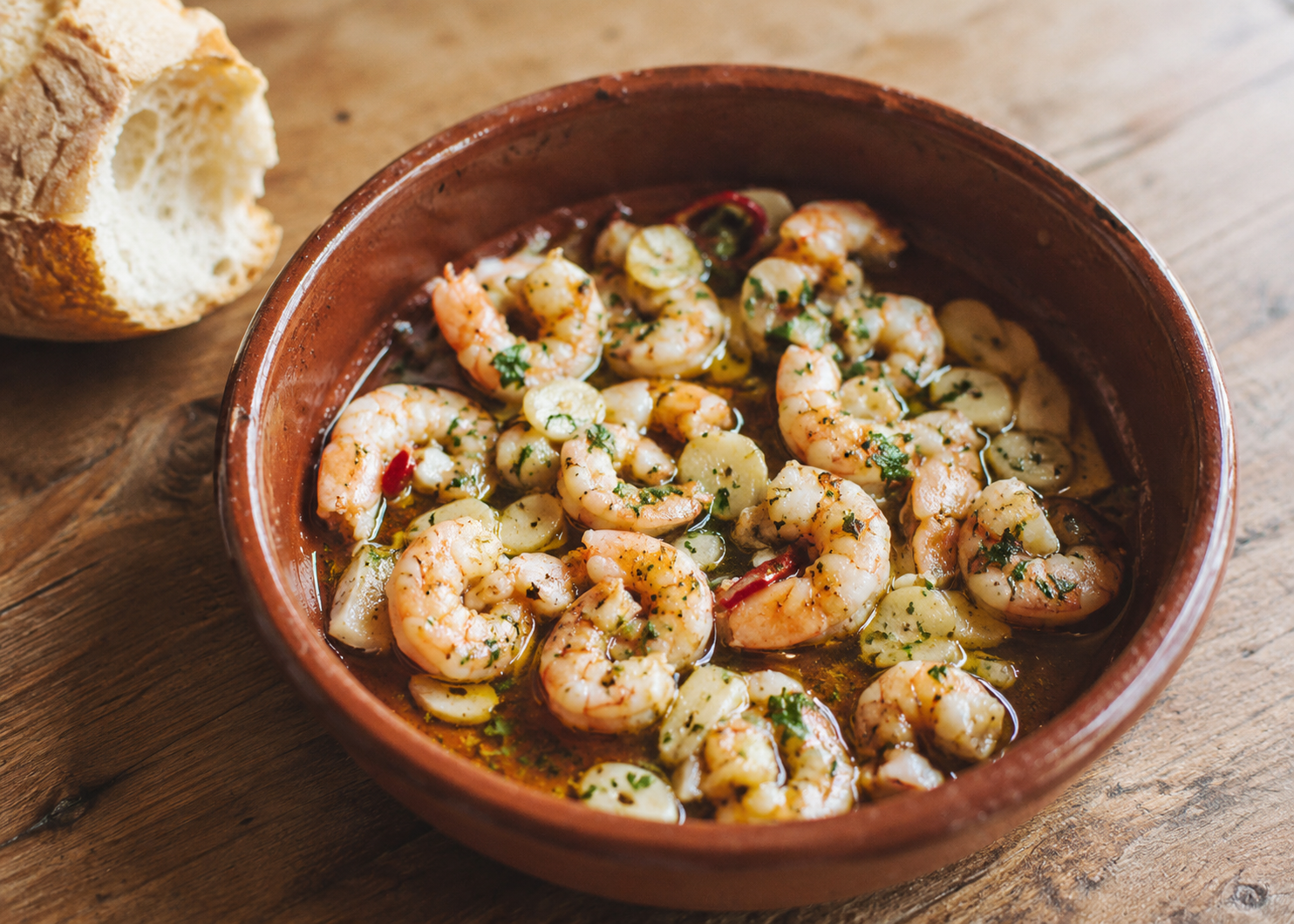
The magic of gambas al ajillo is that it transforms five humble ingredients into something that tastes like far more, through nothing but technique and good oil.
The genius of the dish is the oil, since gambas al ajillo is really a method of cooking shrimp in a generous quantity of olive oil infused with garlic and chili, so the oil itself becomes a flavor-soaked sauce, fragrant and golden and good enough to be the point of the whole dish. This is the thing Americans miss about it, that the oil is not a cooking medium to be drained away but the heart of the dish, deliberately generous, infused with garlic and chili and the flavor of the shrimp, destined to be soaked up with bread, which is why the dish always arrives swimming in it. Get good olive oil, use plenty of it, infuse it properly with garlic and chili, and you have made something delicious before the shrimp even goes in. The oil is half the dish, and treating it as such is the first secret.
Gambas al Ajillo (Spanish Garlic Shrimp)
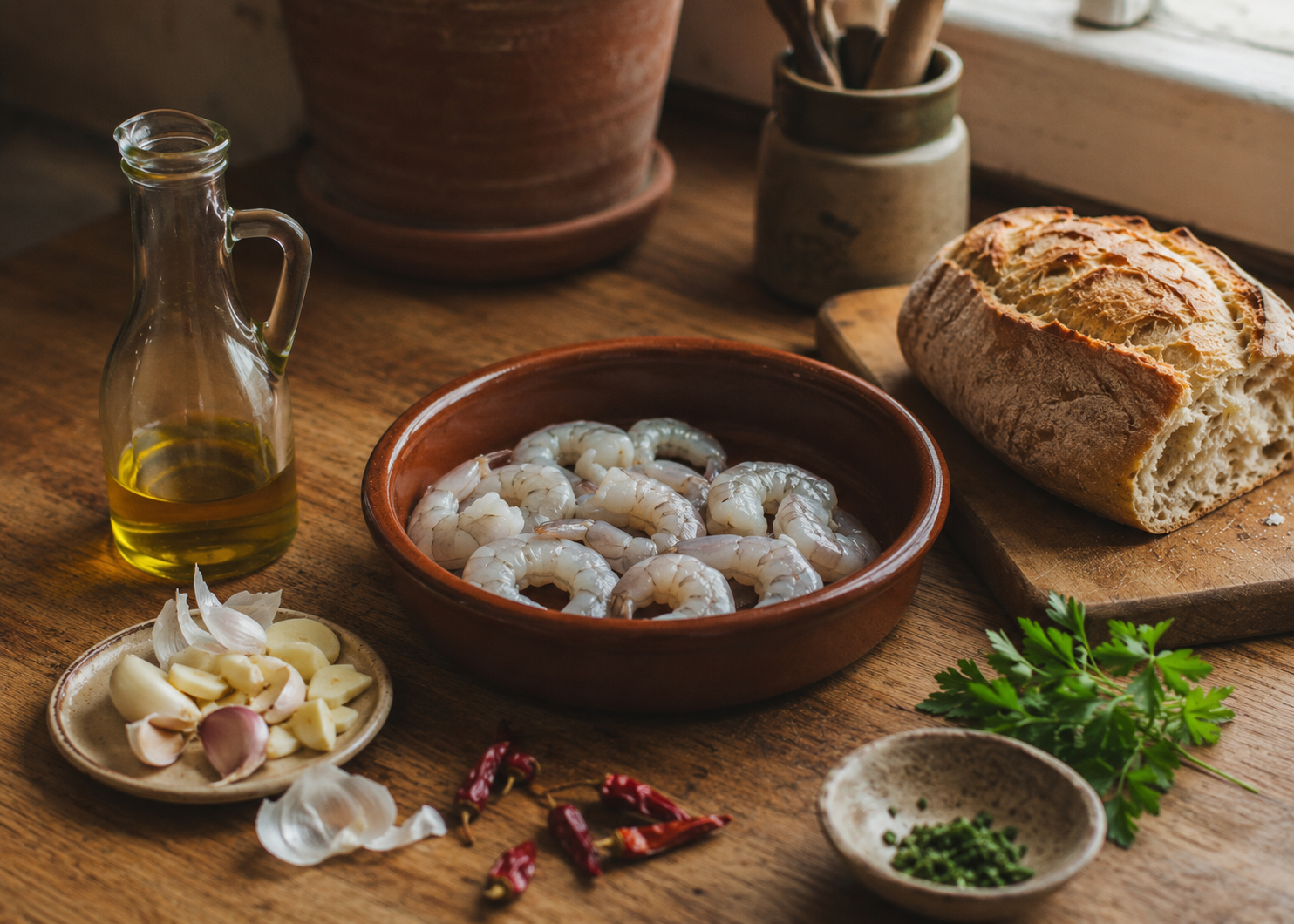
The shrimp, cooked fast in that hot infused oil, stay tender and sweet, picking up the garlic and chili and adding their own flavor back into the oil, the whole thing coming together in a couple of minutes of fierce bubbling. The speed is essential, since shrimp overcook in a heartbeat, turning from tender to rubbery, so the dish is cooked hot and fast, the shrimp going in for just a minute or two until barely done and immediately served. This fast hot cooking in flavored oil is the entire technique, simple to describe and easy to do, requiring only good ingredients and attention, no skill, no complexity, which is exactly why a humble bar dish became one of the most beloved tapas in Spain. It works because it is simple done right, the oil infused, the shrimp barely cooked, the whole thing bubbling and fragrant and ready to eat.
The bubbling bar tapa, ready in under 10 minutes. Serves 4 as a tapa, 2 as a light main.
Ingredients
- 500g (1 lb) raw shrimp, peeled and deveined
- 120ml (½ cup) extra virgin olive oil
- 6 to 8 garlic cloves, thinly sliced
- 1 dried guindilla chili, or ½ tsp dried red pepper flakes
- 2 tbsp dry sherry (fino or manzanilla), optional
- 2 tbsp chopped fresh parsley
- Salt
- Crusty bread, to serve
Method
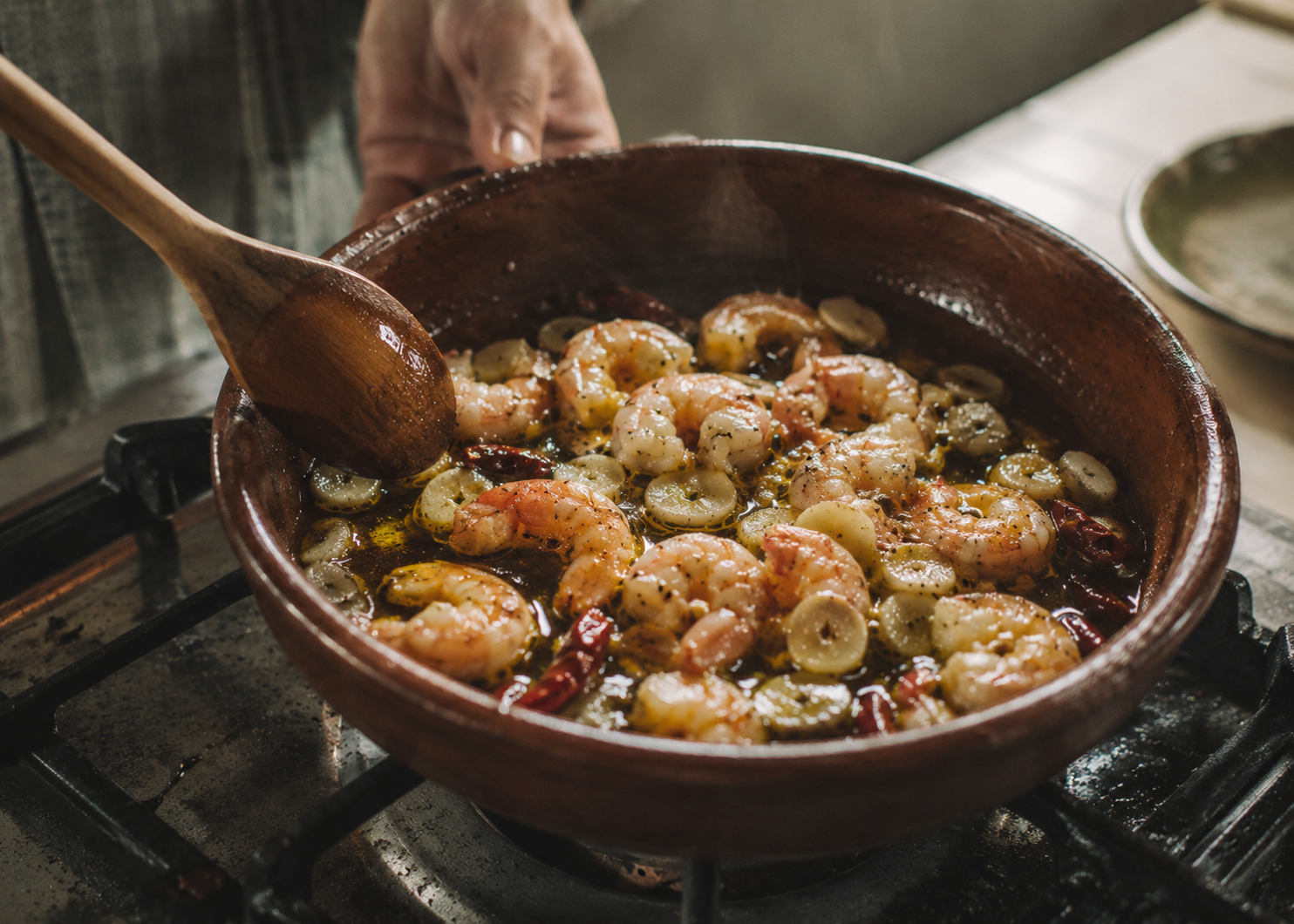
- Pat the shrimp thoroughly dry with paper towels and season lightly with salt.
- Pour the olive oil into a wide skillet or earthenware cazuela and add the sliced garlic and the chili. Set over medium heat.
- Cook gently, stirring, for 2 to 3 minutes until the garlic is fragrant, soft, and just turning pale gold. Do not let it brown or burn, or it will taste bitter.
- Turn the heat up to medium-high. Add the shrimp in a single layer and cook for about 1 minute on each side, until pink and just curled.
- If using, add the sherry and let it bubble for another 30 seconds.
- Stir in the parsley, taste for salt, and remove from the heat the moment the shrimp are just cooked through.
- Serve immediately, bubbling hot, in the pan or cazuela, with plenty of crusty bread to soak up the garlic oil.
The Ingredients That Matter
With so few ingredients, each one counts, and getting them right is most of the dish.
The shrimp should be good quality, raw, peeled, and a decent size, since they are the star, and frozen raw shrimp, properly thawed, are perfectly good and often better than tired fresh ones. The garlic must be fresh and plentiful, sliced rather than crushed in the traditional version so it gently fries and flavors the oil without burning, and there should be a lot of it, since this is garlic shrimp and the garlic is not shy. The olive oil should be good extra virgin, used generously, since it is the sauce, and skimping on either the quality or the quantity is the most common way the dish falls short. The chili is traditionally a dried guindilla, a small mild-to-medium Spanish chili, but a pinch of dried red pepper flakes works fine, adding a gentle warmth rather than real heat.
The finishing touches are small but real, a splash of dry sherry or white wine for depth in some versions, a little chopped parsley at the end for freshness and color, a squeeze of lemon for some cooks though not all, and crucially, good bread to serve alongside. The bread is not optional, since half the pleasure of gambas al ajillo is dragging crusty bread through the leftover garlic chili oil, and a dish served without bread to mop it up is a dish that has misunderstood itself. So the shopping list is short and the standards are high, good shrimp, lots of fresh garlic, good olive oil used generously, a little chili, parsley, and bread, and with those few things right, the dish is most of the way made. Few ingredients, all of them good, is the whole strategy.
The Details That Separate Real From Imitation
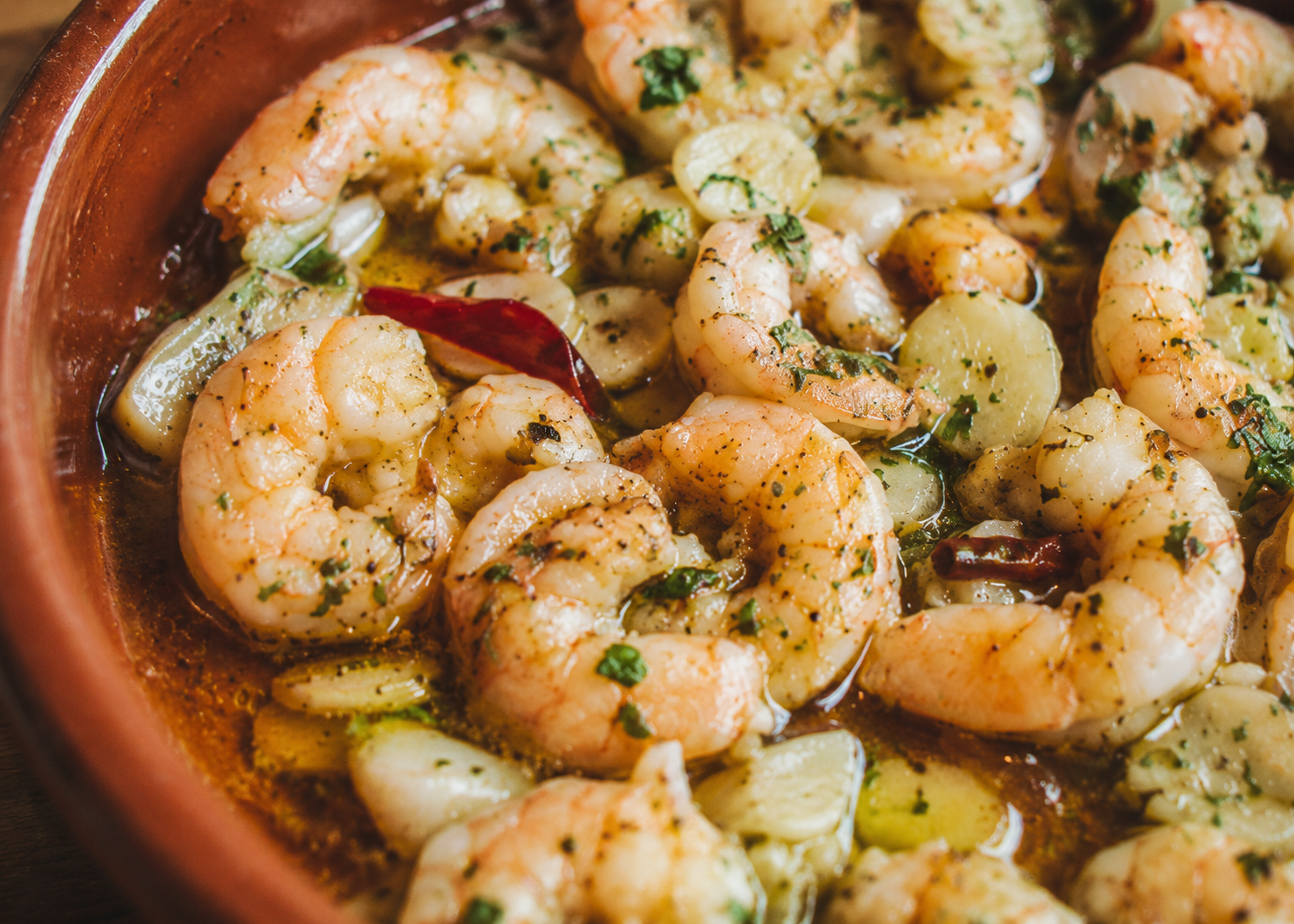
A few specific points distinguish the genuine bubbling Spanish version from a mediocre sauteed-shrimp dish, and they are worth knowing precisely.
The first is the quantity of oil, since the real dish uses far more oil than an American instinct suggests, enough to half-submerge the shrimp, because the oil is the sauce and you want plenty of it to soak into the bread, so do not be timid, use a generous quantity of good olive oil. The second is the garlic technique, gently infusing the oil with the sliced garlic over moderate heat first, before the shrimp, so the garlic flavors the oil and turns golden and sweet without burning, since burnt garlic turns bitter and ruins the dish, the gentle infusion being the key step most rushed versions skip. The third is not overcooking the shrimp, adding them to the hot infused oil only at the end and cooking just until they turn pink and curl, a minute or two, then serving immediately, since overcooked shrimp are the single most common failure.
The fourth detail is the heat and the serving, since the dish is meant to arrive bubbling hot, traditionally in an individual earthenware cazuela that holds the heat and keeps the oil sizzling at the table, and while you do not need the earthenware, you do want to serve it immediately, hot and bubbling, not left to cool into greasy stillness. The fifth, and it bears repeating, is the bread, served alongside, ready for the mopping that is the dish’s whole reward. Get these right, generous good oil, gently infused garlic, barely-cooked shrimp, served bubbling hot with bread, and you have the real thing, the bar version, indistinguishable from what you would be served in Seville. Miss them, skimp the oil, burn the garlic, overcook the shrimp, serve it lukewarm without bread, and you have a sad imitation. The difference is entirely in these few details, none of them hard.
How Spain Actually Eats This
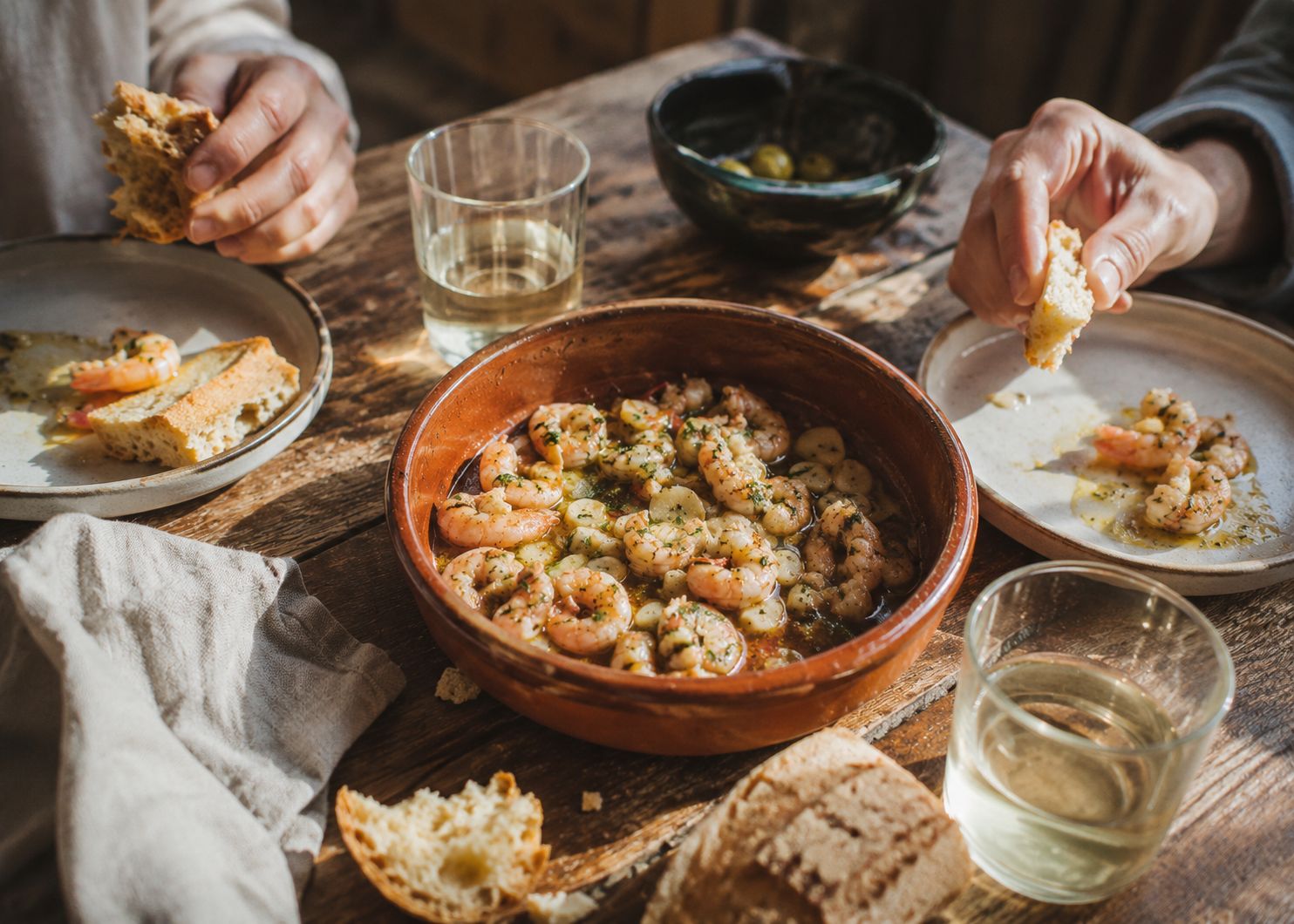
To make the dish well is also to understand where it sits in Spanish life, which tells you how to serve and enjoy it properly.
Gambas al ajillo is a tapa, one of the small dishes that Spaniards order to share over drinks, not a main course, and it arrives as one of several little plates on a bar table, eaten standing or sitting with a glass of wine or a caña of beer, in company, in the early evening or before a late dinner. This shapes how to serve it at home, as part of a spread of small dishes rather than a plated main, a bubbling cazuela in the middle of the table with bread and other tapas around it, forks reaching in, the oil shared, the bread passed. The dish is social by nature, made for sharing, and serving it the Spanish way, as one of several small plates to graze over with drinks, is how it tastes best and how it was always meant to be eaten.
The setting in Spain is the bar, the tasca, the place where the cazuelas of gambas come out sizzling all evening to a crowd that has been eating them this way for generations, and you can bring a little of that home by treating the dish as the convivial thing it is. Make it alongside a few other simple tapas, some good olives, some cheese, some bread and tomato, pour the wine, and let the gambas be the bubbling centerpiece of a relaxed grazing evening rather than a formal course. This is the deeper lesson of the dish, that it is not just a recipe but a piece of Spanish social life, the food of easy evenings among friends, and cooking it is a way of bringing that ease to your own table. Make it to share, with drinks, in good company, and you have not just cooked a Spanish dish but borrowed a Spanish evening.
Variations Worth Knowing
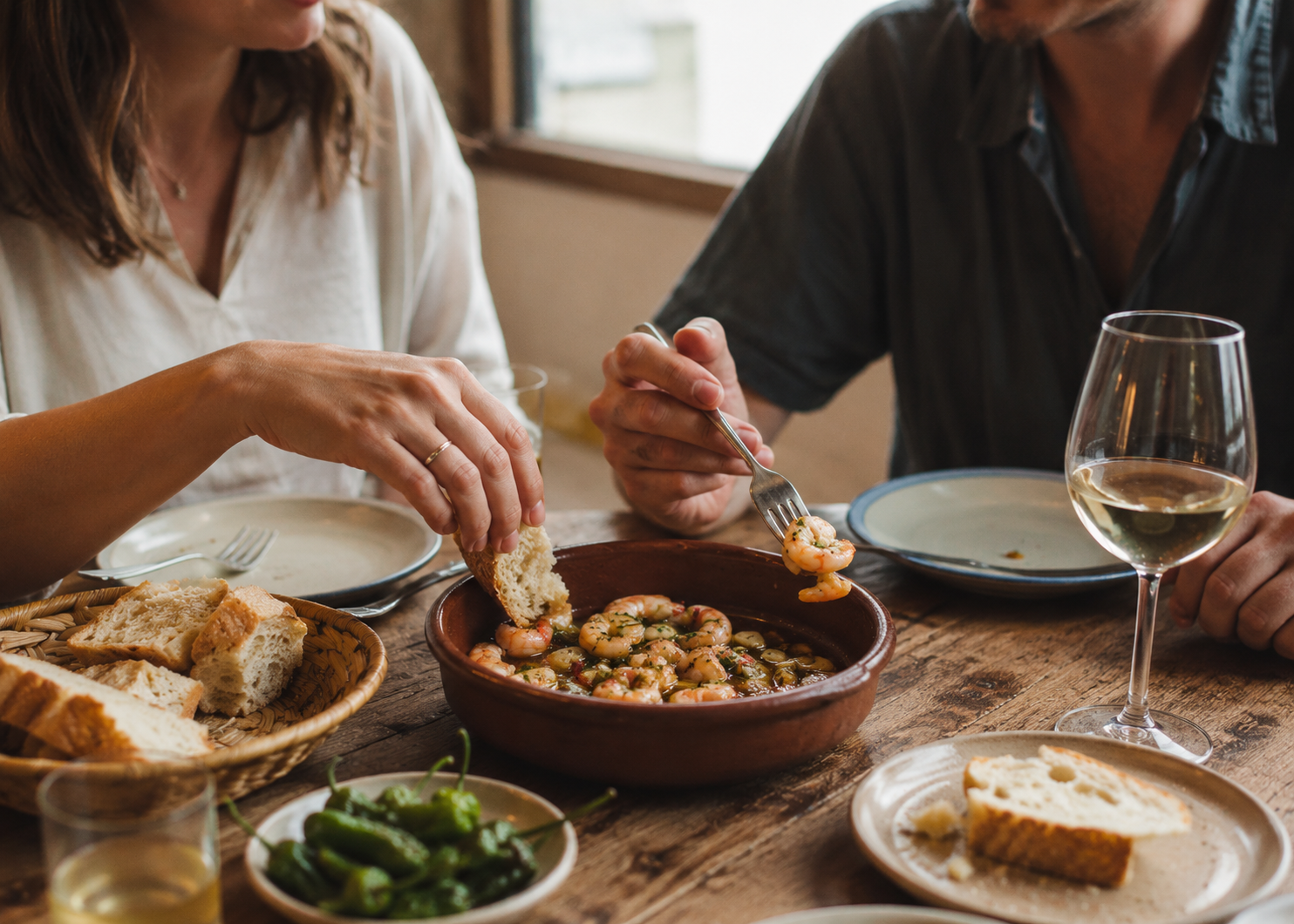
Once you have the basic dish, a few traditional variations are worth knowing, since gambas al ajillo is a template as much as a fixed recipe.
The most common variation is the addition of a splash of dry sherry, fino or manzanilla, added to the oil with the shrimp, which brings a savory depth and a faint nuttiness that is distinctly Spanish and lovely, and many of the best versions include it. Some cooks add a bay leaf to the infusing oil for a subtle aromatic note, others a little sweet or smoked paprika for color and a deeper flavor, the smoked pimentón being a very Spanish touch that adds warmth and complexity. The level of chili is entirely adjustable, from the gentle warmth of a single guindilla to a more assertive heat for those who like it, the dish forgiving whatever level suits you. These are small adjustments on a sound base, and the dish welcomes them.
The same technique also extends beautifully to other things, since the method of cooking in garlic-infused oil works wonderfully with other quick-cooking ingredients, mushrooms cooked the same way, al ajillo, being a classic vegetarian tapa, or small pieces of fish or even chicken. Learning gambas al ajillo really teaches you the al ajillo method, the garlic-and-chili-infused oil that is one of the foundational Spanish techniques, applicable far beyond shrimp. So master the gambas first, then play, the sherry, the paprika, the bay leaf, the mushrooms, the whole flexible world that opens up once you understand the simple brilliant base. The dish is a doorway as much as a destination, and walking through it leads to a great deal of easy delicious Spanish cooking, all built on the same humble genius of garlic gently fried in good oil.
A Note On The Shrimp Themselves
Since the shrimp are the star, a few words on choosing and preparing them will lift the whole dish, because this is where quality most shows.
Buy raw shrimp, never pre-cooked, since the entire point is to cook them gently in the flavored oil and pre-cooked shrimp will only toughen and turn rubbery when reheated, missing the tender sweetness that makes the dish. Size is a matter of preference, with medium to large shrimp giving a good balance of presence and quick cooking, and the traditional bar version often uses smallish shrimp that cook in seconds. If you can find them shell-on or even head-on, the shells and heads add real flavor to the oil, and some traditional versions cook them that way for a deeper, more intense result, though peeled is far easier to eat as a shared tapa and perfectly authentic. Frozen raw shrimp, thawed slowly in the refrigerator, are reliable and often better than the previously-frozen “fresh” shrimp sitting at the fish counter.
The preparation is simple, peeling and deveining if needed, then patting the shrimp thoroughly dry before they go into the oil, since wet shrimp will spit and steam rather than cook cleanly in the hot oil. A little salt on the shrimp before cooking seasons them properly from the start. With good raw shrimp, dried and lightly salted, going into properly infused hot oil for just the minute or two they need, the heart of the dish is right, and everything else, the garlic, the oil, the chili, the bread, is in service of letting those few perfectly-cooked shrimp shine. Choose them well, dry them, cook them barely, and the dish rewards you with the sweet tender bite that the bubbling oil was built to frame.

About the Author: Ruben, co-founder of Gamintraveler.com since 2014, is a seasoned traveler from Spain who has explored over 100 countries since 2009. Known for his extensive travel adventures across South America, Europe, the US, Australia, New Zealand, Asia, and Africa, Ruben combines his passion for adventurous yet sustainable living with his love for cycling, highlighted by his remarkable 5-month bicycle journey from Spain to Norway. He currently resides in Spain, where he continues sharing his travel experiences with his partner, Rachel, and their son, Han.
Nope
Saturday 11th of July 2026
Just gambas al ajillo...don't change or anglo the name...