
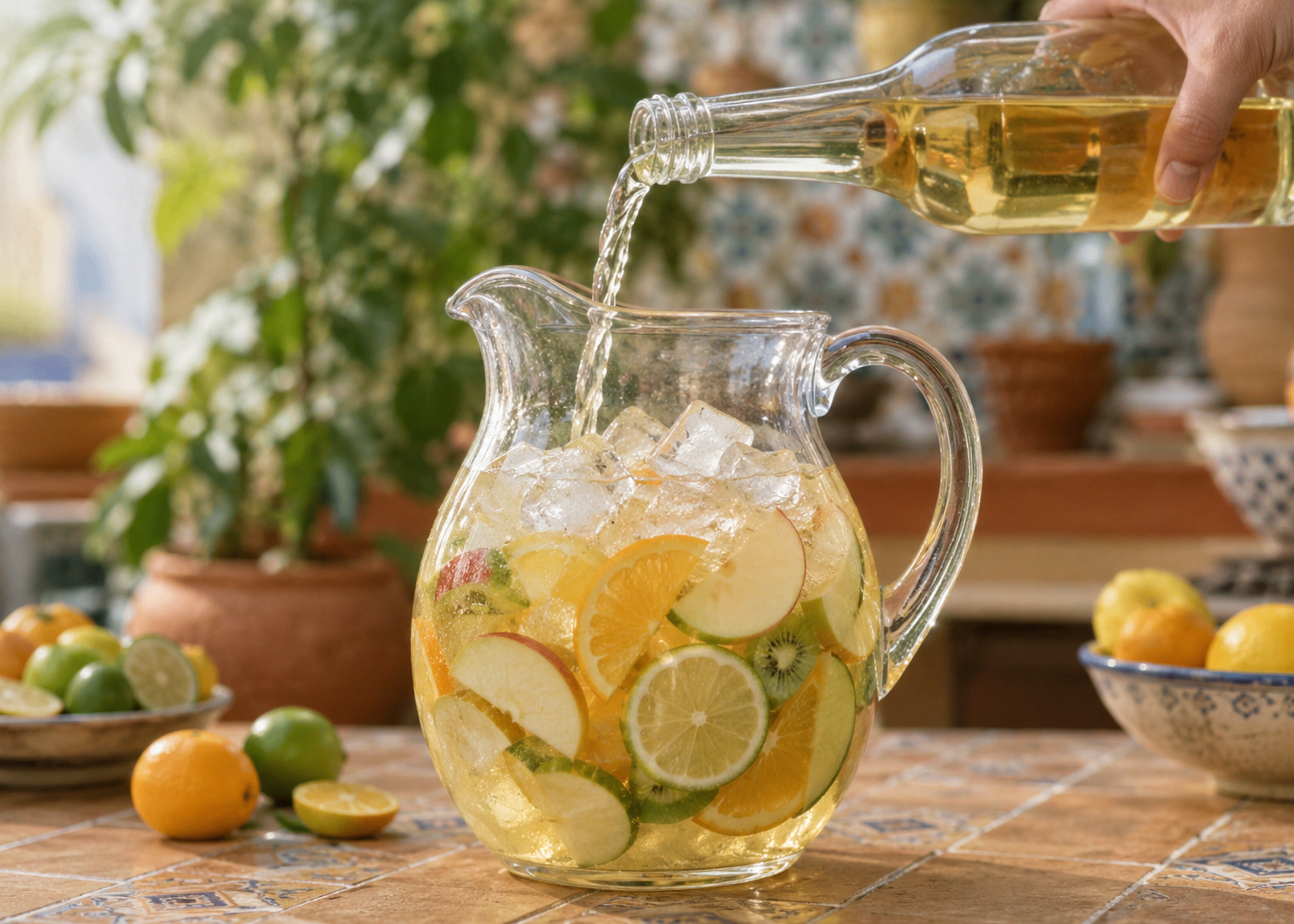
Everyone knows red sangria, the deep ruby pitcher of wine and fruit that has become the global shorthand for a Spanish summer. Far fewer people outside Spain know its lighter, fresher, arguably more elegant cousin, sangria blanca, white sangria, made with white wine instead of red and tasting of crisp orchard and citrus fruit rather than the darker berry notes of the red. It is a glorious drink for a hot afternoon, lighter and more refreshing than the red, and it is just as easy to make, which makes it a perfect thing to have in the repertoire for summer entertaining.
From Spain, where sangria in all its forms is genuinely drunk, especially in summer, sangria blanca is a wonderful and underappreciated thing to share with people who only know the red version. The principle is identical, wine and fruit and a little something extra macerated together and served cold, but the white wine base makes it crisper, lighter, and more versatile, pairing beautifully with the lighter fruits of summer and slipping down all too easily on a warm day. Here is how to make a proper sangria blanca, the choices that matter, and the way to get it right.
What Sangria Blanca Actually Is
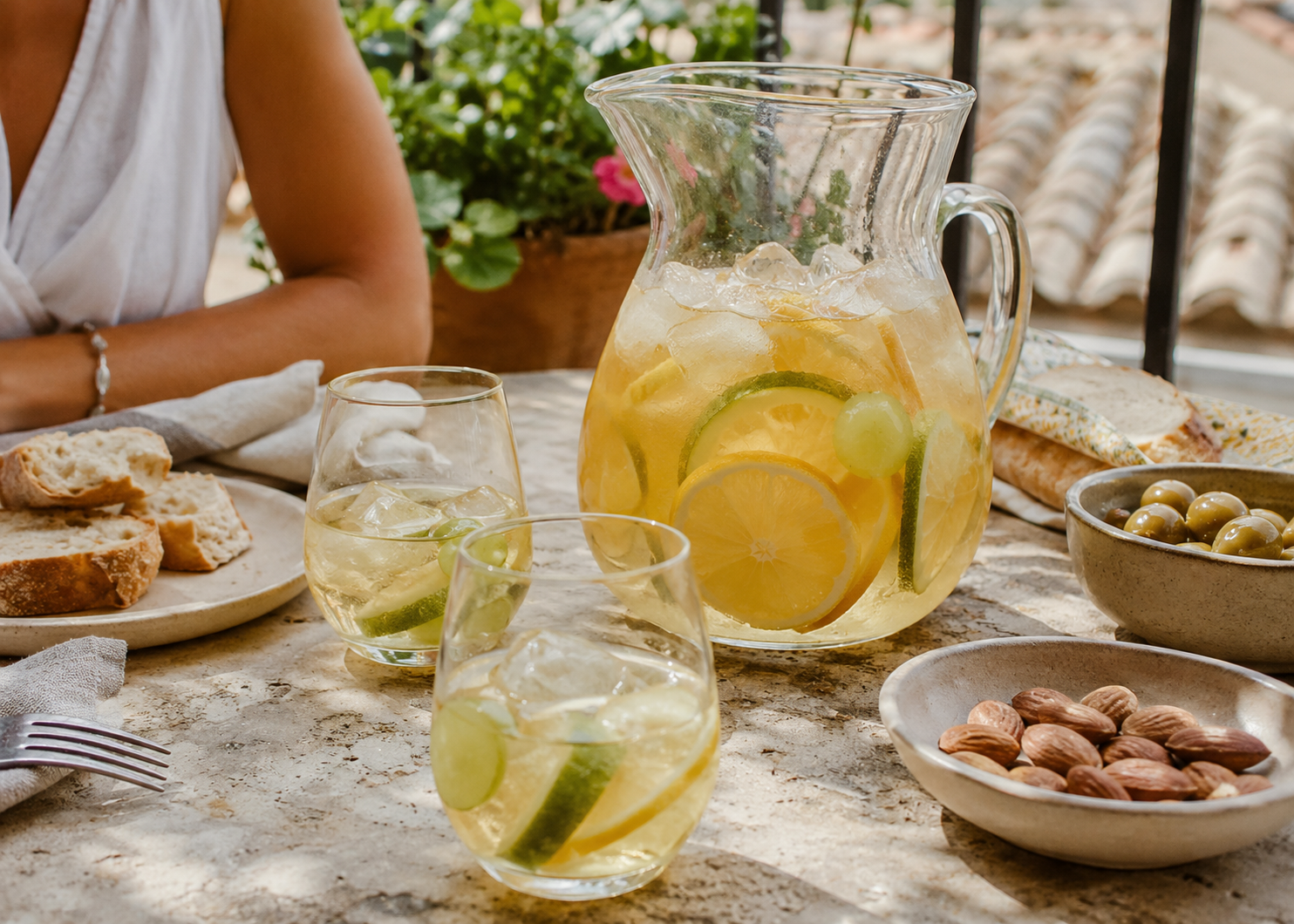
Start with what the drink is, because the white version follows the same logic as the red but with a different and lighter character.
Sangria, at its heart, is a wine punch, wine combined with fruit and usually a little added sweetness and a splash of spirit, left to macerate so the flavors mingle, and served cold, often with a little fizz added at the end. Sangria blanca simply uses white wine as the base instead of red, which changes the whole character of the drink, making it lighter, crisper, more citrus-and-orchard-fruit in flavor, and generally more refreshing than the deeper, fruitier red. Everything else, the fruit, the sweetener, the spirit, the chilling, the optional fizz, follows the same pattern as red sangria, just oriented around the lighter white base and the fruits that suit it.
The white version is, to many palates, the more elegant and summer-appropriate of the two, since the crisp white wine and the bright fruits make for a drink that refreshes rather than fills, perfect for hot weather and lighter summer food. It is also extremely forgiving and flexible, since sangria is a rustic, improvised sort of drink rather than a precise cocktail, made to taste with whatever good fruit is around, which means it can be adjusted endlessly to preference and to what the season offers. This flexibility is part of its charm, and it means the recipe below is a reliable template to be adjusted freely rather than a rigid formula to follow exactly.
Choosing The Wine
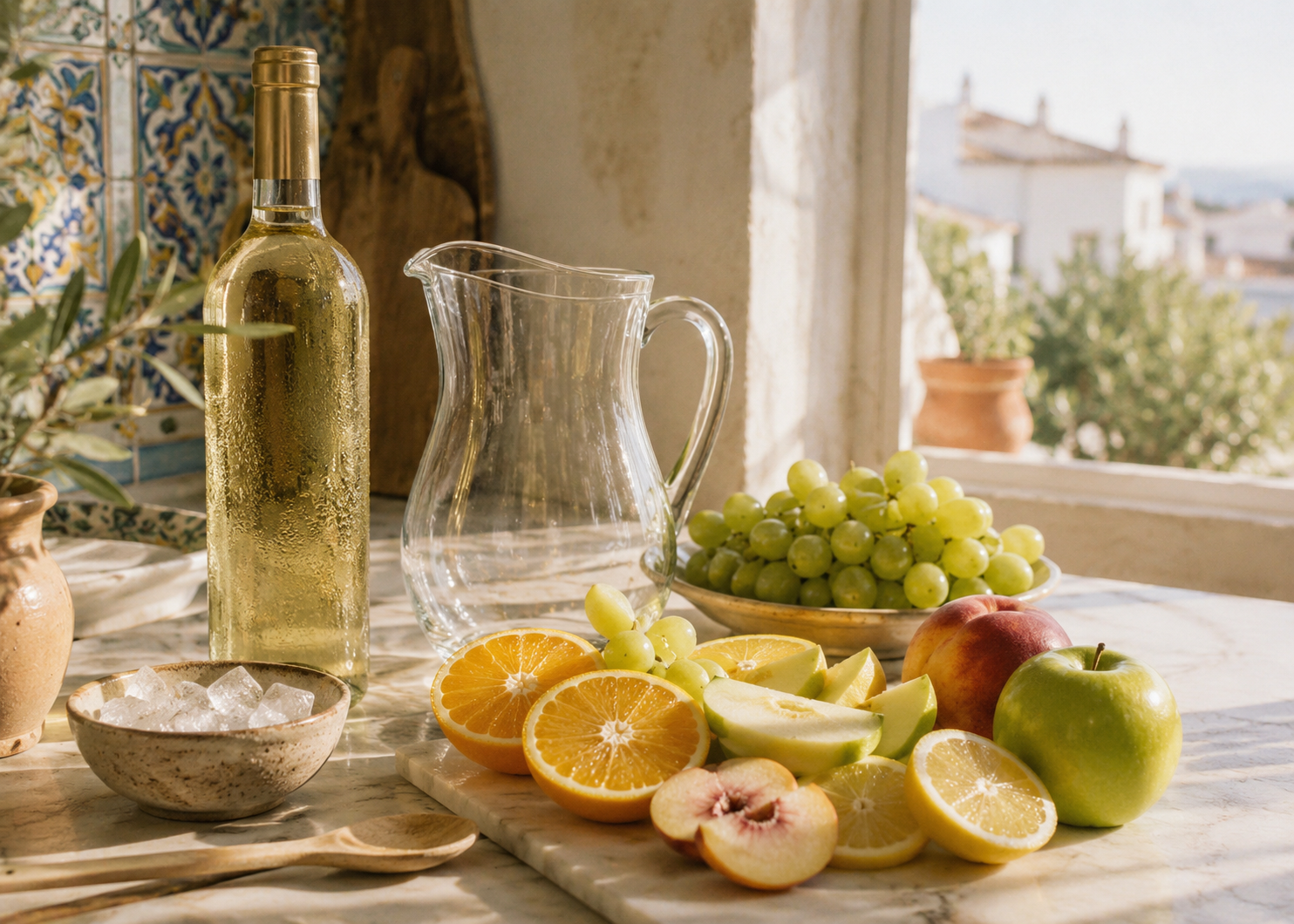
The wine is the foundation, and while sangria is forgiving, a few sensible choices about the white wine make a real difference to the result.
The best wine for sangria blanca is a crisp, dry, inexpensive white, something fresh and uncomplicated rather than an expensive or heavily oaked bottle, since the wine will be flavored with fruit and sweetener and there is no point using a fine wine for it. A dry Spanish white is ideal and authentic, something like a Verdejo, an Albariño, or a simple white from a Spanish region, but any crisp dry white of modest price works well, a Sauvignon Blanc, a Pinot Grigio, an unoaked white of almost any kind. The wine should be dry rather than sweet, since sweetness is added separately and a sweet wine would make the final drink cloying, and it should be crisp and fresh rather than rich and oaky, since the point is refreshment.
There is no need and no benefit to using an expensive wine, since the fruit and the other additions will dominate the flavor and a cheap crisp white performs just as well as a costly one in this context, which is part of what makes sangria such an economical and generous drink for entertaining. The one thing to avoid is a wine that is already sweet or heavily oaked, the first making the drink too sugary and the second clashing with the fresh fruit, so a plain dry crisp white is the safe and the right choice. A single standard bottle of such wine forms the base of a pitcher that serves several people, making sangria blanca an inexpensive way to offer a special drink to a group.
The Fruit That Suits The White Base
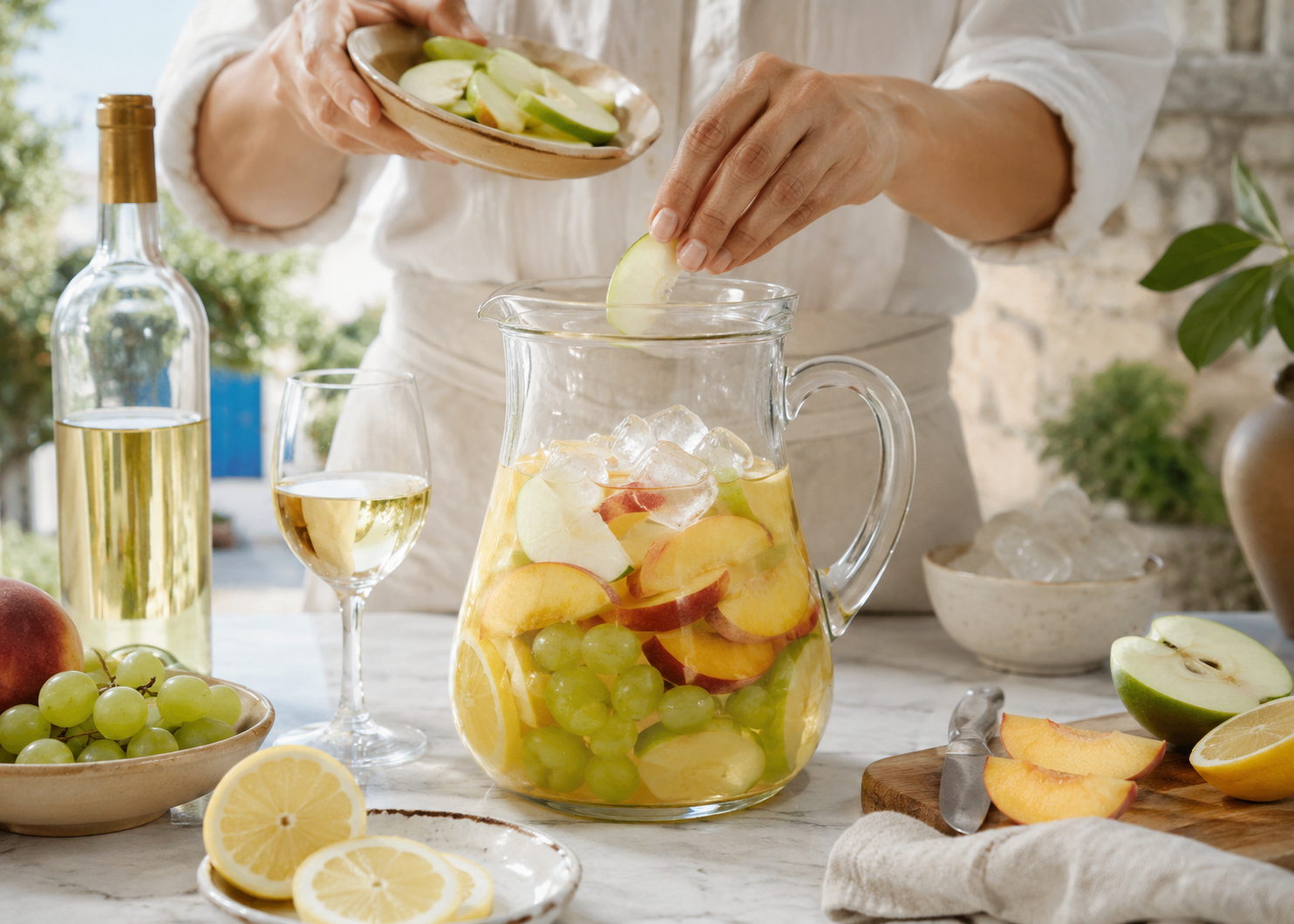
The fruit is the heart of the drink’s flavor and appearance, and the white base calls for lighter fruits than the red version, which is part of what makes it distinct.
Sangria blanca suits the lighter, fresher fruits of summer, and the classic choices are crisp orchard and citrus fruit, apples, pears, peaches, and citrus like orange, lemon, and lime, along with lighter summer fruit like green grapes and sometimes melon. These lighter fruits complement the crisp white wine beautifully, where the red version tends toward darker fruit like berries and red orange, so the white sangria takes on a paler, fresher, more orchard-and-citrus character. Peaches in particular are wonderful in white sangria, their sweet fragrant flesh perfect with the crisp wine, and a mix of apple, pear, peach, and citrus makes a classic and lovely combination, though the drink welcomes whatever good summer fruit is around.
The fruit should be cut into pieces small enough to release their flavor and look attractive in the glass but large enough to remain pleasant to eat or to leave behind, typically sliced or cubed, with citrus often sliced into rounds or wedges. The fruit serves two purposes, flavoring the wine as it macerates and providing the beautiful appearance and the lovely boozy fruit to eat at the end, so it is both a flavoring and a feature. Adding the fruit well ahead of serving, so it has hours to macerate in the wine, is one of the keys to a good sangria, since the time is what lets the fruit flavor infuse the wine and the wine soak into the fruit, the mingling that makes sangria more than just wine with fruit floating in it.
The Sweetener And The Spirit
Two more elements complete the basic sangria, a little sweetness and usually a splash of spirit, and getting the balance right is most of the art.
Sangria is usually lightly sweetened, since the dry wine and tart citrus benefit from a little sugar to round them out, and the sweetener can be sugar, a simple syrup which dissolves more easily, honey, or sometimes a fruit juice or liqueur that adds sweetness and flavor at once. The amount is to taste and depends on the sweetness of the fruit and the preference of the maker, so it is best added gradually and tasted, starting with a modest amount and adjusting, since the drink should be balanced and refreshing rather than sugary. A common and lovely approach is to use a splash of a fruit liqueur or orange liqueur both to sweeten and to deepen the flavor, which adds complexity along with the sweetness.
The spirit is traditional but optional, a splash of brandy being the classic addition to Spanish sangria, adding warmth and depth and a little more potency, though white sangria often uses lighter spirits or liqueurs that suit the crisp base, an orange liqueur like triple sec, a splash of white rum, or a fruit brandy. The spirit should be a splash rather than a flood, since sangria is meant to be a refreshing wine punch rather than a strong cocktail, and too much spirit makes it harsh and heady rather than easy and refreshing. Some make sangria with no added spirit at all, just wine, fruit, and a touch of sweetness, which is lighter still and perfectly good, so the spirit is a matter of preference and the drink works with or without it.
Here is how it all comes together. This makes a pitcher serving about six.
Ingredients
- 1 bottle crisp dry white wine, such as Verdejo or Sauvignon Blanc
- 1 apple, cored and cubed
- 1 pear, cored and cubed
- 1 peach, sliced
- 1 orange, half juiced and half sliced
- 1 lemon, sliced
- a handful of green grapes, halved
- 2 to 3 tbsp sugar or simple syrup, to taste
- 60 ml orange liqueur or brandy, optional
- sparkling water, soda, or cava, to top
- ice, to serve
Method
- Combine the base. In a large pitcher, combine the white wine, the orange liqueur or brandy if using, and the juice of half the orange. Add the sugar or simple syrup and stir until it dissolves, tasting and adjusting the sweetness to your liking.
- Add the fruit. Add the cubed apple and pear, the sliced peach, the sliced orange and lemon, and the halved grapes. Stir gently to combine so all the fruit is submerged in the wine.
- Chill and macerate. Cover and refrigerate for several hours, ideally four or more, or even overnight, so the fruit and wine macerate and the flavors mingle. This step is what turns wine and fruit into proper sangria, so give it time.
- Taste and adjust. Before serving, taste the sangria and adjust, adding a little more sweetener if needed or a squeeze of citrus for brightness, since the right balance depends on the fruit and wine used.
- Add the fizz and serve. Just before serving, top the pitcher with sparkling water, soda, or cava for a festive version, stirring gently to keep the fizz. Pour over ice into glasses, spooning some of the macerated fruit into each.
A note on timing and the wine. Make the still base several hours ahead so the fruit properly macerates, and add the fizzy element only at serving time so it does not go flat. Use a crisp dry inexpensive white, never a sweet or heavily oaked one, since the fruit and sweetener supply all the sweetness the drink needs.
The Fizz And The Final Assembly
The last element, and one that lifts the drink, is the fizz added at the end, and a word on the final assembly and serving completes the method.
Many sangrias, and white sangria especially, are finished with a splash of something fizzy added just before serving, sparkling water or soda for lightness, or a sparkling wine like cava for a more festive lift, which adds effervescence and dilutes the drink slightly into something even more refreshing. The fizz is added at the very end, just before or as you serve, rather than during the maceration, since it would go flat over the hours of chilling, so the still wine and fruit and sweetener and spirit macerate together cold, and the sparkling element joins only at serving time. For a lighter drink, soda water or lemon-lime soda is lovely, while for a celebratory version, topping the sangria with cava makes it sparkling and special.
The final assembly is simple and follows the logic of all that came before. The wine, fruit, sweetener, and spirit are combined and chilled together for several hours, ideally, so the flavors mingle and the whole thing gets thoroughly cold, since sangria must be served properly cold to be refreshing. Just before serving, the pitcher is topped with the fizzy element if using, and the sangria is poured over ice into glasses, with some of the macerated fruit spooned into each. Served this way, very cold, lightly fizzy, full of boozy summer fruit, sangria blanca is one of the great pleasures of a hot afternoon, and the few hours of advance maceration are the only planning it requires.
Tips For Getting It Right
A few practical points make the difference between a good sangria blanca and a great one, and they are worth knowing since the drink is so simple that the details matter.
The most important is to give it time, making the sangria several hours ahead, or even the day before for the still base, so the fruit and wine have time to properly macerate and mingle, since a sangria thrown together at the last minute is just wine with fruit in it, while one given hours to develop is a genuinely infused, harmonious drink. The second is to serve it properly cold, chilling it thoroughly and serving over ice, since warm sangria is unpleasant and the whole point is refreshment, though being mindful that too much ice melting will dilute it, which the planned addition of fizz already accounts for. The third is to taste and adjust before serving, checking the balance of sweetness and adjusting with a little more sweetener or a squeeze of citrus, since the right balance depends on the fruit and wine used and a quick taste lets you correct it.
Beyond those essentials, a few refinements help. Using a variety of fruit gives a more complex and beautiful result than a single fruit. Adding some fresh herbs like mint or a little fresh ginger can lift the drink with an extra aromatic note, a lovely touch in the white version especially. Muddling or gently pressing some of the fruit releases more flavor into the wine for a more intense infusion. And making a large batch for a party is easy, simply scaling up the proportions, which is part of what makes sangria such a generous drink for entertaining a crowd. None of these is necessary, but each can lift the drink, and they are the kind of small adjustments that let a maker develop their own perfect version over time.
A Note On Drinking It Sensibly
One honest word belongs here, because sangria’s very drinkability carries a small caution worth mentioning.
The danger and the delight of sangria, white especially, is that it goes down so easily, the crisp refreshing fruit-filled drink slipping back on a hot afternoon so pleasantly that it is easy to forget it is still wine with often a splash of spirit added, and therefore genuinely alcoholic despite tasting so light and fruity. This is worth a gentle note simply because the lightness and the fruit can mask the alcohol, making it easy to drink more than intended, particularly in the heat where it goes down fastest and where the sun adds its own effect. The sensible approach is to enjoy it for the lovely refreshing thing it is while remembering it is a real alcoholic drink, pacing accordingly, having water alongside in the heat, and not being fooled by how innocent and fruity it tastes.
This is not a reason for any anxiety about the drink, just the ordinary good sense that applies to any alcohol made unusually easy to drink, and a maker can also simply make a lighter version, going easy on the spirit or leaving it out and adding more fizzy water, for a drink that refreshes with less potency. Made and enjoyed sensibly, sangria blanca is one of the great simple pleasures of a Spanish summer, an easy, beautiful, refreshing drink to share with friends on a warm afternoon, and the small caution about its drinkability is simply part of enjoying it well rather than any reason to hesitate. Cold, fruity, lightly fizzy, and shared in good company, it is summer in a glass, and that is exactly what it is for.

About the Author: Ruben, co-founder of Gamintraveler.com since 2014, is a seasoned traveler from Spain who has explored over 100 countries since 2009. Known for his extensive travel adventures across South America, Europe, the US, Australia, New Zealand, Asia, and Africa, Ruben combines his passion for adventurous yet sustainable living with his love for cycling, highlighted by his remarkable 5-month bicycle journey from Spain to Norway. He currently resides in Spain, where he continues sharing his travel experiences with his partner, Rachel, and their son, Han.