
Watch an Italian man of eighty-five move through his day in a village in the hills, and you see something that has largely vanished from American life, a man still fully woven into the daily fabric of his world, walking everywhere, tending his garden, sitting in the piazza with his lifelong friends, eating with his family, active and engaged and connected in ways that many American men gave up decades earlier. The contrast is striking, and it is not really about Italian genetics or Mediterranean sunshine, but about a set of daily habits that Italian grandfathers maintain deep into old age and that American men, for various reasons, tend to abandon somewhere around sixty, often to their cost.
From Spain, where the same pattern of vigorous, connected old age is visible in the abuelos as in the Italian nonni, the difference in how men age in these cultures versus in America is one of the most instructive things an observer can notice. It is not that Italian men have discovered some secret, but that they simply keep doing, into their eighties and beyond, the ordinary daily things that keep a person active, connected, and engaged, while American men tend to stop doing them, retreating into a narrower, more sedentary, more isolated old age. Here are nine daily habits the Italian grandfathers keep that American men so often give up, and why each one matters.
The First Habit, Walking Everywhere
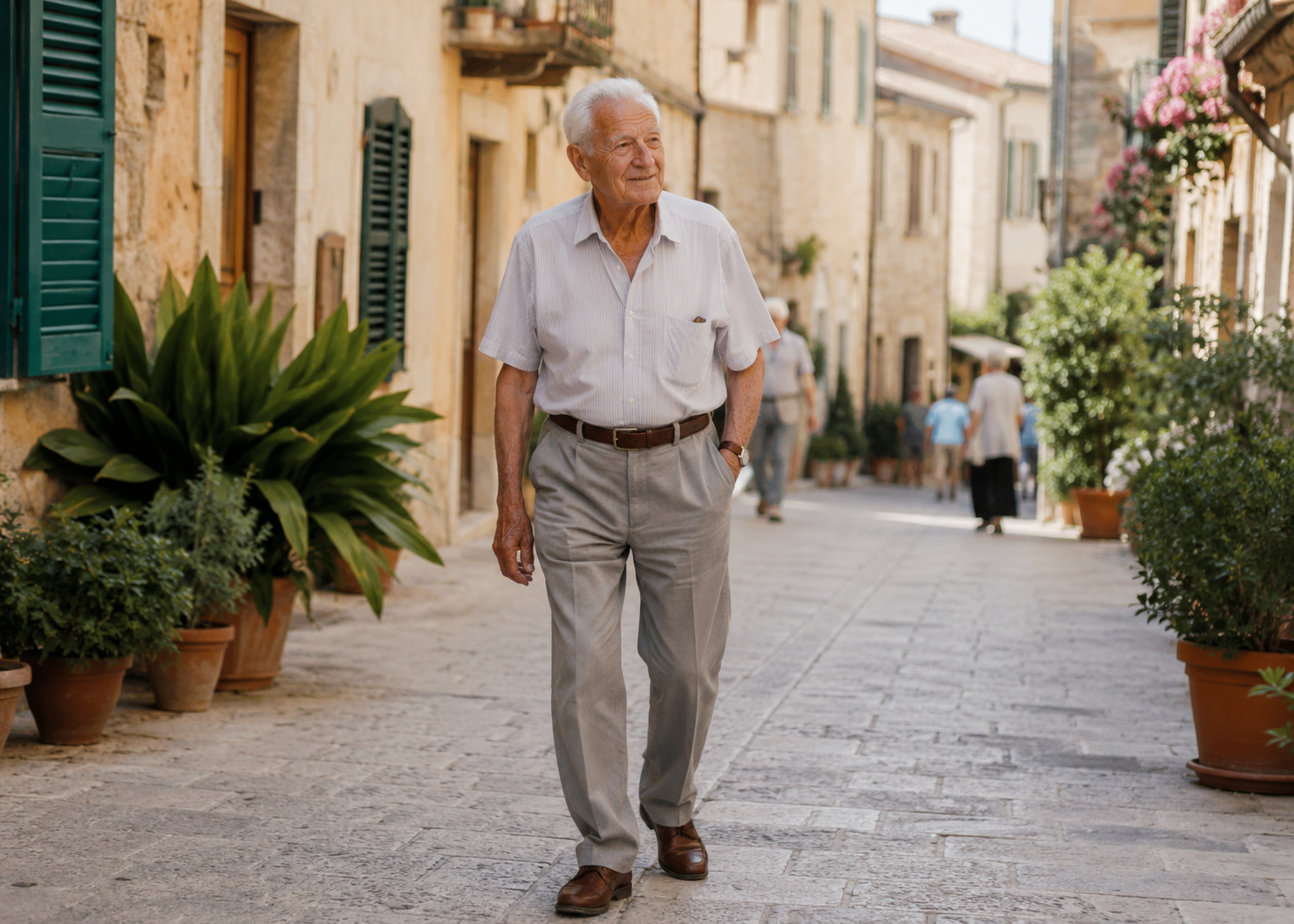
The most fundamental habit, and the foundation of much of the rest, is simply walking, the Italian grandfather walking as his basic mode of getting through the day well into old age.
The Italian nonno walks, everywhere and constantly, to the market, to the bar for his coffee, to the piazza, to visit friends, around the village, the walking woven into the ordinary fabric of his day as the natural way of getting about rather than as exercise. This is not a deliberate fitness regime but simply how life is lived in a walkable place, the daily errands and social rounds all done on foot, which adds up to a great deal of gentle, constant, lifelong physical activity that keeps the body moving and capable into old age. The walking is purposeful and social and woven into life, not a chore, which is exactly why it endures, since a man does not give up walking to the bar for his coffee the way he might give up a gym membership.
The American man, by contrast, often largely stops walking as a mode of life, especially after retirement and especially in car-dependent places, his daily activity declining as the structured reasons to move disappear and the car carries him everywhere. Where the Italian grandfather keeps walking because his life is built around it, the American man, in a life built around the car and the home, can become largely sedentary in old age, the natural daily movement having drained out of his life. This is perhaps the single biggest difference, the Italian grandfather’s life keeping him walking constantly while the American man’s life lets him stop, and the consequences for health and vigor in old age are enormous, since constant gentle movement is one of the great preservers of the aging body.
The Second Habit, Tending The Garden Or The Land
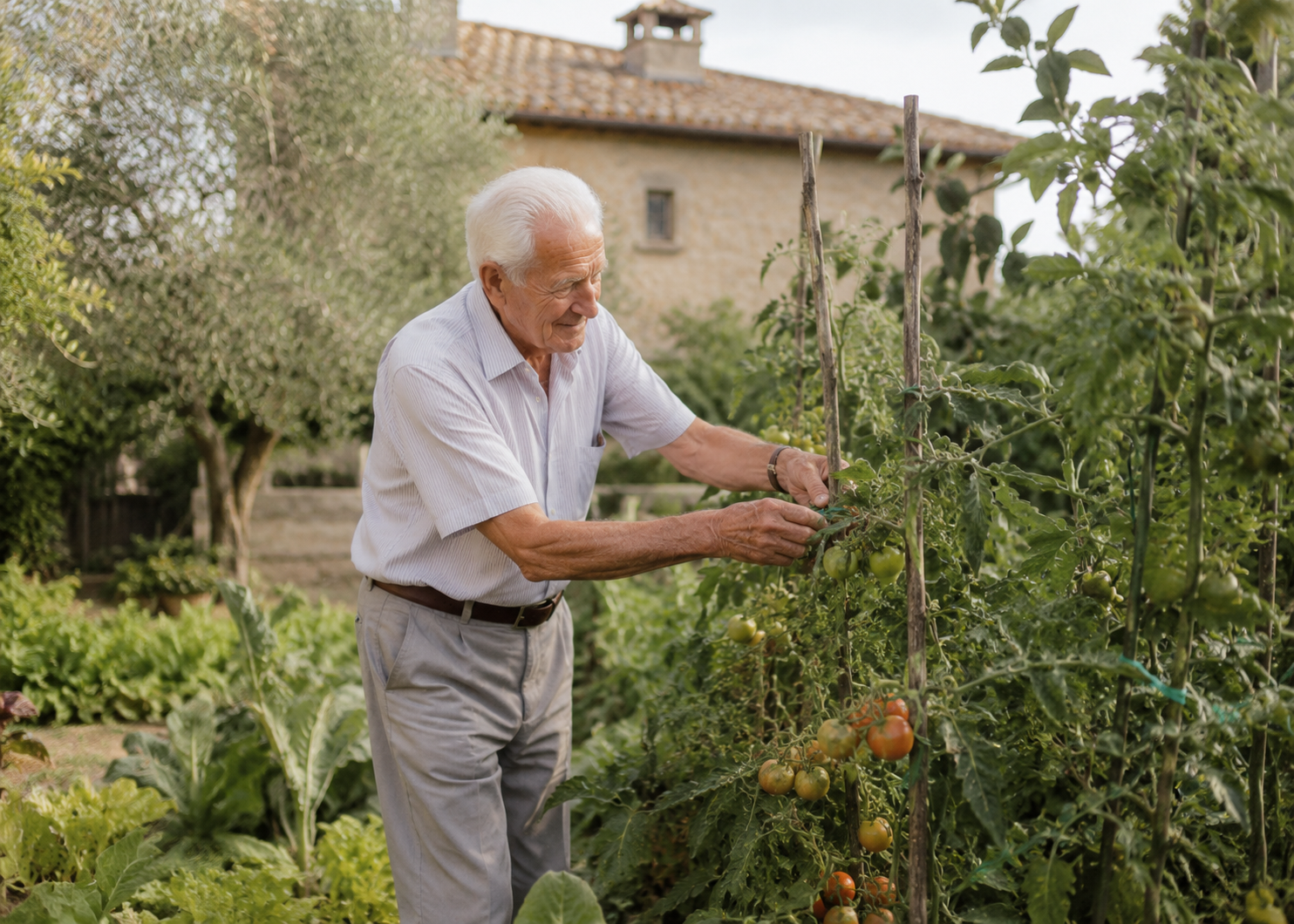
The second habit is the garden, the orto, the Italian grandfather’s lifelong relationship with growing things that keeps him active and purposeful into great age.
Many Italian grandfathers keep a garden or a patch of land, the orto where they grow vegetables, tend fruit trees, perhaps keep a few vines, and this tending is a daily activity that continues deep into old age, providing physical work, purpose, time outdoors, and the satisfaction of producing food. The gardening is real physical activity, the bending and digging and carrying and tending, gentle but constant, keeping the body working, and it is also purposeful and rewarding, giving the old man a reason to be out and active every day and something to care for and take pride in. The orto is an institution of Italian rural old age, the grandfather and his garden a familiar and enduring pairing, the daily tending a thread that runs through a man’s whole life and does not stop in old age.
American men, by contrast, often have no such lifelong relationship with growing things, and even those who gardened may give it up in old age, losing both the physical activity and the daily purpose it provided. Where the Italian grandfather has his orto to draw him out and keep him working and give his days shape and meaning, the American man in old age may have no equivalent, no daily reason to be physically active and outdoors and productive, and the loss is both physical and psychological. The garden is a habit Americans largely skip or abandon, when the Italian grandfather’s lifelong tending of his patch of land is one of the things that keeps him vigorous, purposeful, and engaged with the physical world deep into his eighties.
The Third Habit, The Daily Social Ritual
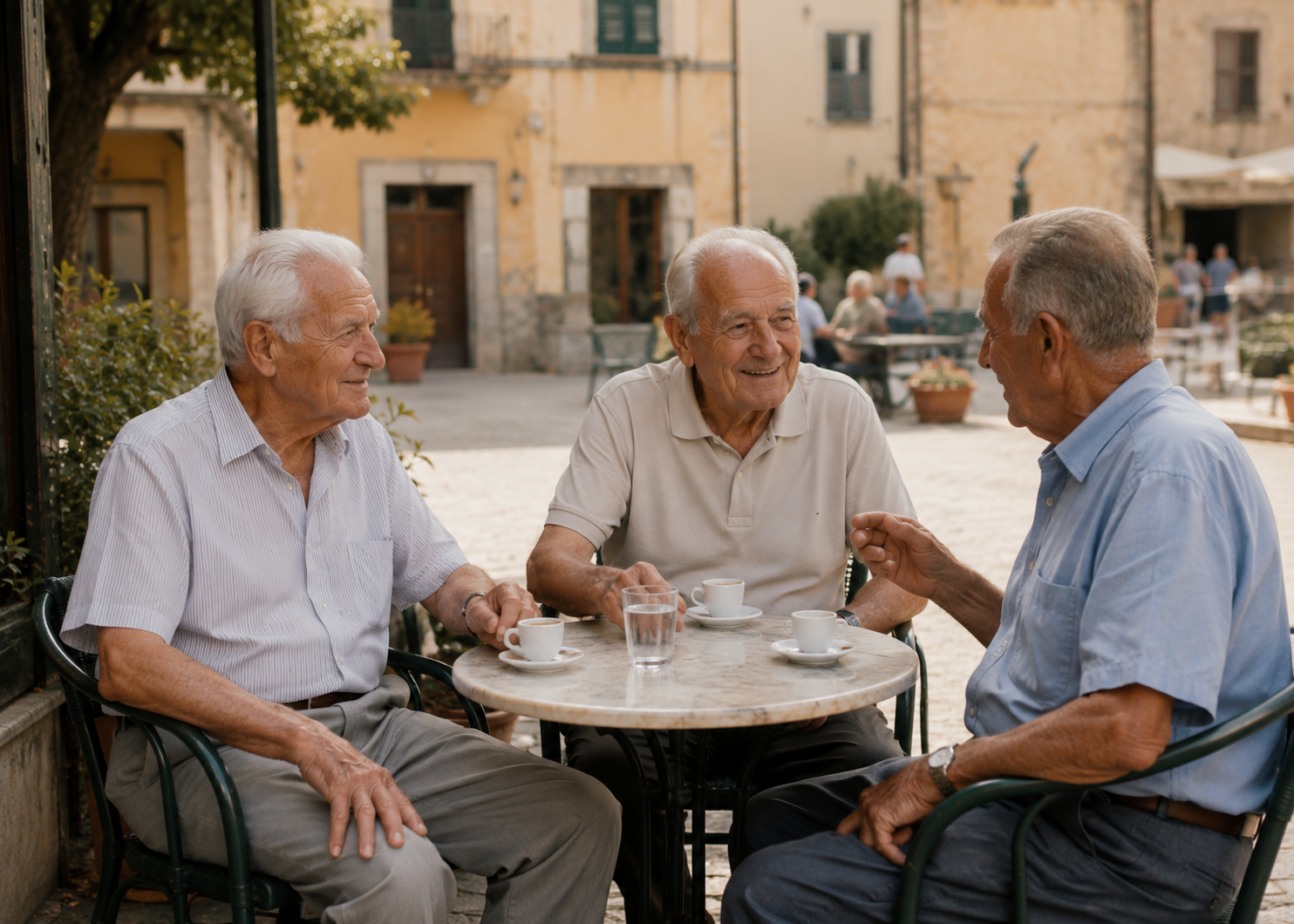
The third habit is the daily social ritual, the Italian grandfather’s habit of regular, structured, daily social contact with his lifelong friends, which he maintains into great age.
The Italian nonno has his daily social rituals, the coffee at the bar with the same men he has known for decades, the gathering in the piazza in the evening, the card game, the regular structured contact with his community of old friends, and these continue daily into old age as a fixed part of his life. This is not occasional socializing but a daily institution, the old men gathering at the same times in the same places, maintaining the rich web of lifelong friendship and community contact that keeps a person connected and engaged, the loneliness of old age held at bay by the simple fact of seeing your friends every single day. The social contact is structural, built into the rhythm of the day and the geography of the village, so it endures rather than fading.
American men, by contrast, are famously prone to social isolation in old age, their friendships often having faded after the work that sustained them ended, their social contact thinning as they age, many older American men ending up genuinely isolated with few close friends and little daily social contact. Where the Italian grandfather has his daily gathering of lifelong friends woven into his world, the American man may have lost or never maintained such a network, and the isolation that results is one of the most damaging things about American male aging, since social connection is among the strongest predictors of health and longevity. This is a habit Americans tragically skip, the daily structured social ritual, when the Italian grandfather’s daily coffee with his friends is one of the things most keeping him alive and well.
The Fourth Habit, Eating With Others
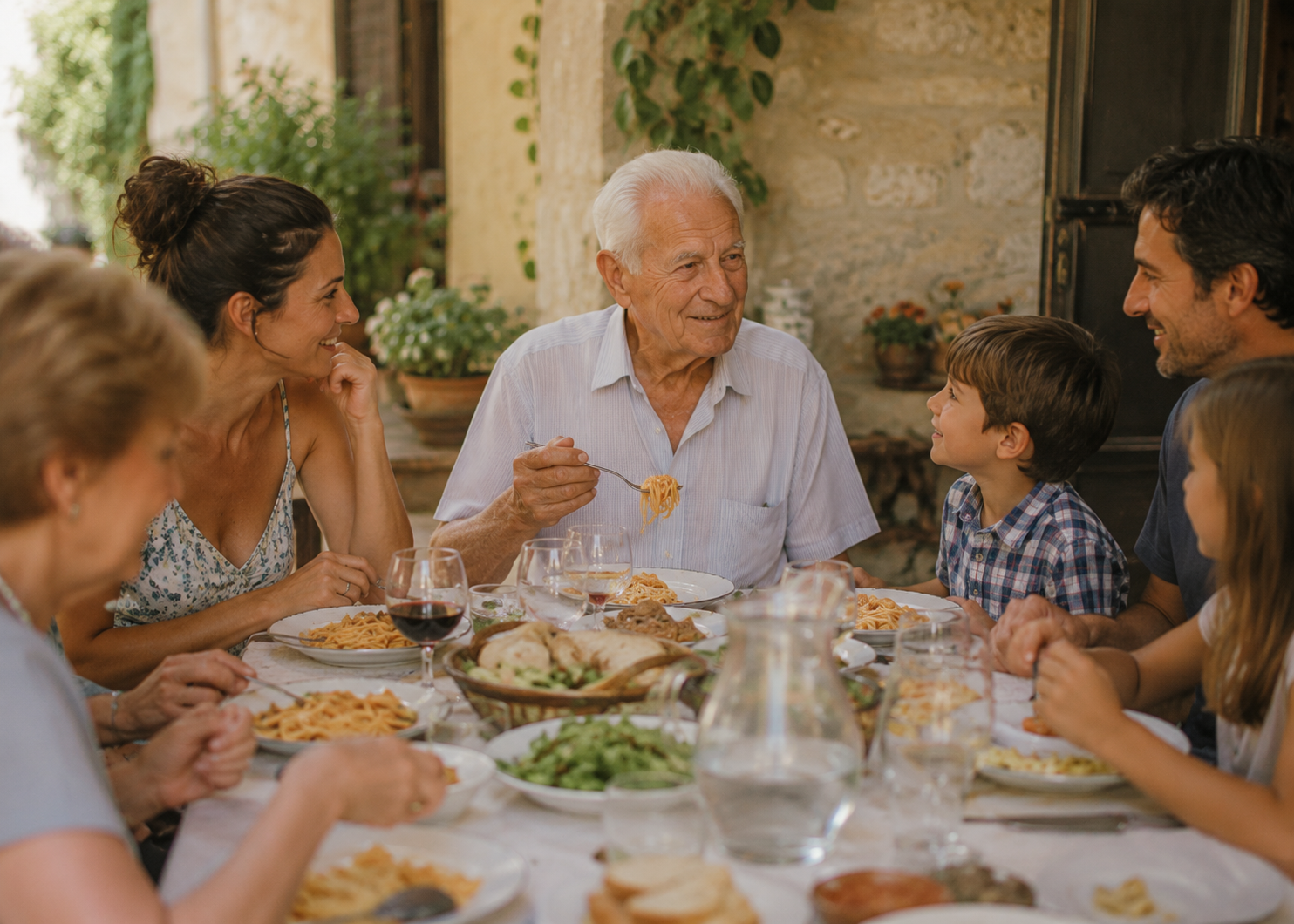
The fourth habit is communal eating, the Italian grandfather’s continued participation in shared family and social meals into old age, rather than eating alone.
The Italian grandfather eats with others, the family meals, the long Sunday lunches with the whole extended family, the shared eating that is central to Italian life and that continues to include him fully into old age, so that he eats in company, embedded in the family, rather than alone. The communal meal is both nourishment and connection, the old man fed both literally and socially by the shared table, included in the life of the family and the rhythms of its gatherings, the eating an occasion of belonging rather than a solitary refueling. This communal eating continues throughout life, the grandfather a valued presence at the family table rather than someone shunted aside, and it provides both better nutrition, since shared meals tend to be real cooked food, and the profound benefit of regular connection.
American men in old age, by contrast, often end up eating alone, especially if widowed or isolated, the solitary meal a common feature of American aging, with its poorer nutrition and its loneliness. Where the Italian grandfather is fed at the family table, included and nourished and connected, the isolated American man may eat alone and poorly, missing both the nutrition and the connection of the shared meal. This is a habit Americans often lose, the communal eating, partly through the breakdown of the extended-family proximity that sustains it, and the Italian grandfather’s place at the family table is one of the things that keeps him both well-nourished and connected, fed in every sense deep into old age.
The Fifth Habit, The Daily Glass Of Wine With Others
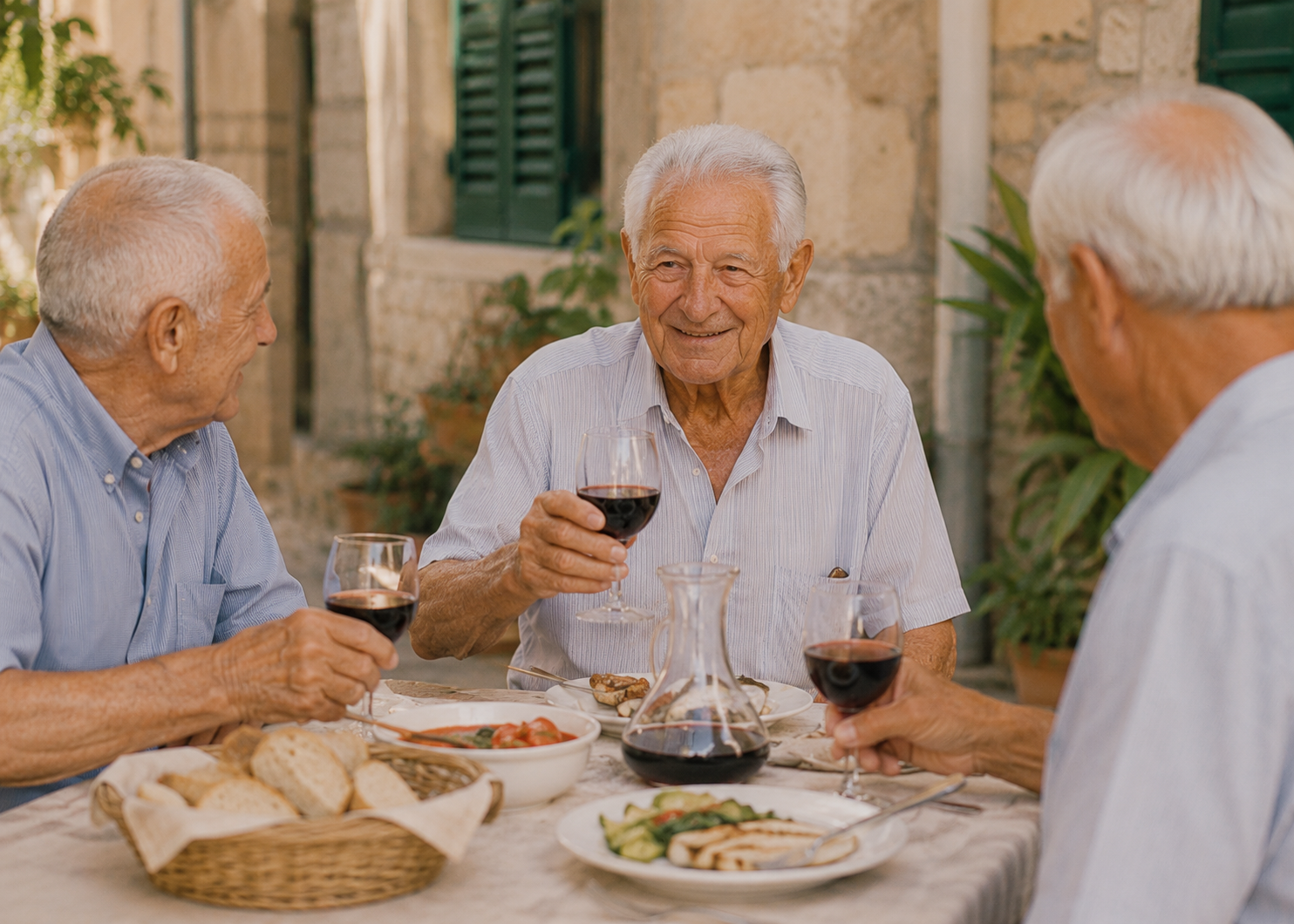
The fifth habit is the moderate daily wine, the Italian grandfather’s glass of wine taken with food and company, which is as much social as it is about the wine.
The Italian grandfather typically has his moderate daily glass of wine, taken with meals and in company, a small and steady pleasure woven into the social and eating rituals of his life rather than a solitary or excessive habit. The key features are the moderation, a glass or two with food rather than heavy drinking, and the social context, the wine taken with the meal and the company rather than alone, so that it functions as part of the convivial rituals of eating and gathering rather than as solitary consumption. This moderate, social, food-accompanied relationship with wine is part of the Mediterranean pattern, and it continues into old age as a small daily pleasure embedded in the larger rituals of connection and eating, contributing to the relaxed conviviality of the shared table.
The contrast with American patterns is instructive, since American drinking, where it happens, more often follows a different pattern, either abstention or heavier or more solitary drinking, less integrated into daily meals and social ritual in the moderate Mediterranean way. The point is not that the wine itself is a health secret, a claim that should be treated cautiously, but that the Italian grandfather’s relationship with it, moderate, social, food-accompanied, woven into the convivial rituals of his life, reflects and supports the connected, ritualized, unhurried way of living that is the real benefit. This is less a habit Americans simply skip than one they tend to practice differently, the moderate social glass with food and friends being part of the larger Italian pattern of connected, ritualized daily life rather than a thing in itself.
The Sixth Habit, Staying Useful And Needed
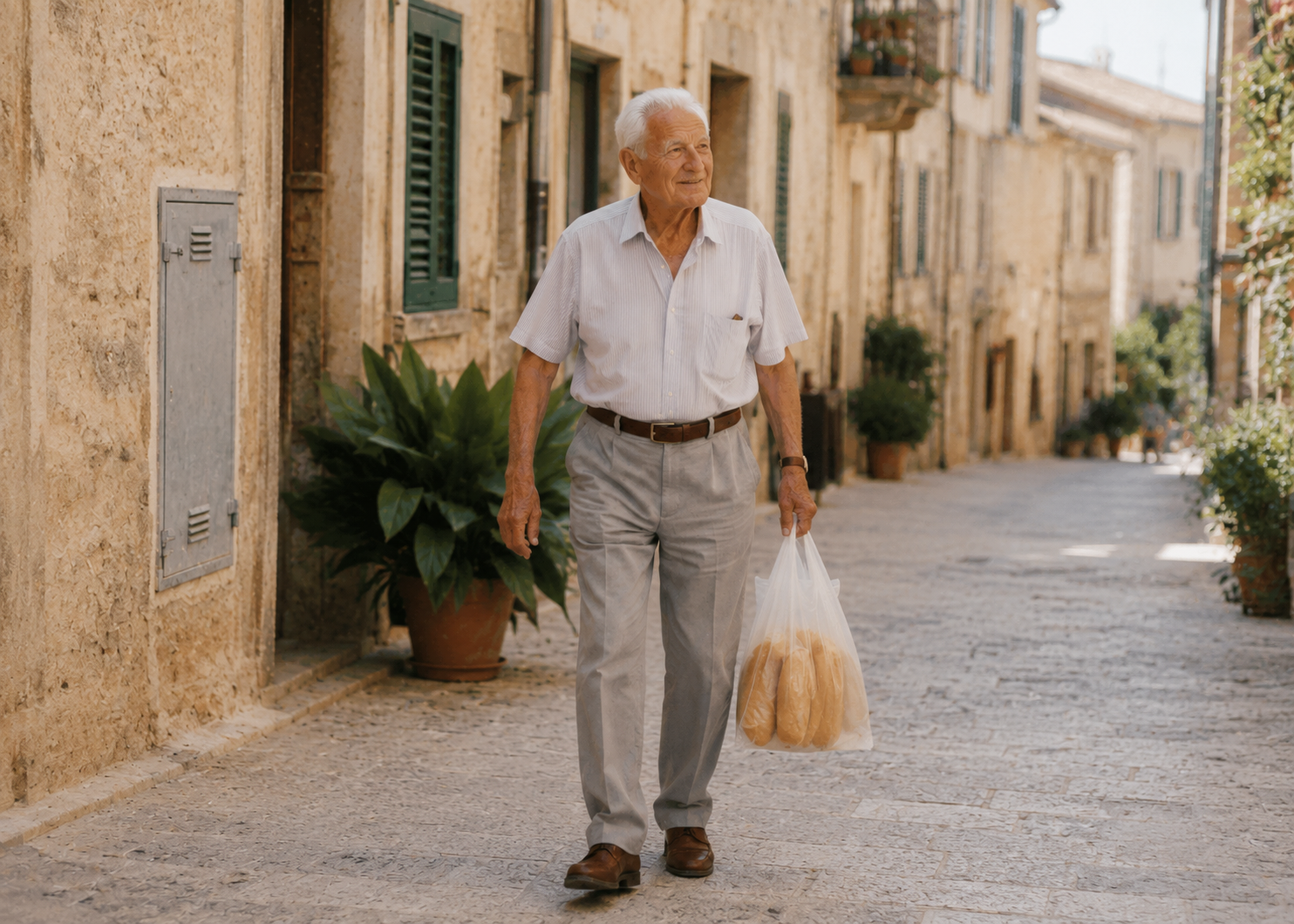
The sixth habit is remaining useful, the Italian grandfather’s continued role and usefulness within the family and community, his sense of still being needed and contributing.
The Italian grandfather typically retains a real role and usefulness into old age, helping with the grandchildren, contributing his garden produce, offering his experience and his presence, remaining a valued and needed member of the family and community rather than being sidelined as useless. This continued usefulness is profoundly important, since feeling needed and having a role and contributing to others is one of the deep sustainers of wellbeing and purpose in old age, and the Italian grandfather, embedded in an extended family that still relies on and values him, keeps that sense of mattering. He is not put out to pasture but remains woven into the working life of the family, his contributions real and valued, which keeps him engaged, purposeful, and psychologically alive.
American men in old age, by contrast, often lose their sense of usefulness and role, especially after retirement removes their work identity, and in a culture that can sideline the old and where the extended family is more dispersed, the older man may come to feel useless, unneeded, his role gone. Where the Italian grandfather remains needed and contributing, the American man may lose that, and the loss of purpose and the feeling of being unneeded is genuinely corrosive to health and spirit in old age. This is a habit, or really a condition, that Americans often lose, the sense of being useful and needed, and the Italian grandfather’s retained role in his family and community is one of the things most sustaining his vigor and his will to keep going.
The Seventh Habit, Keeping A Daily Routine
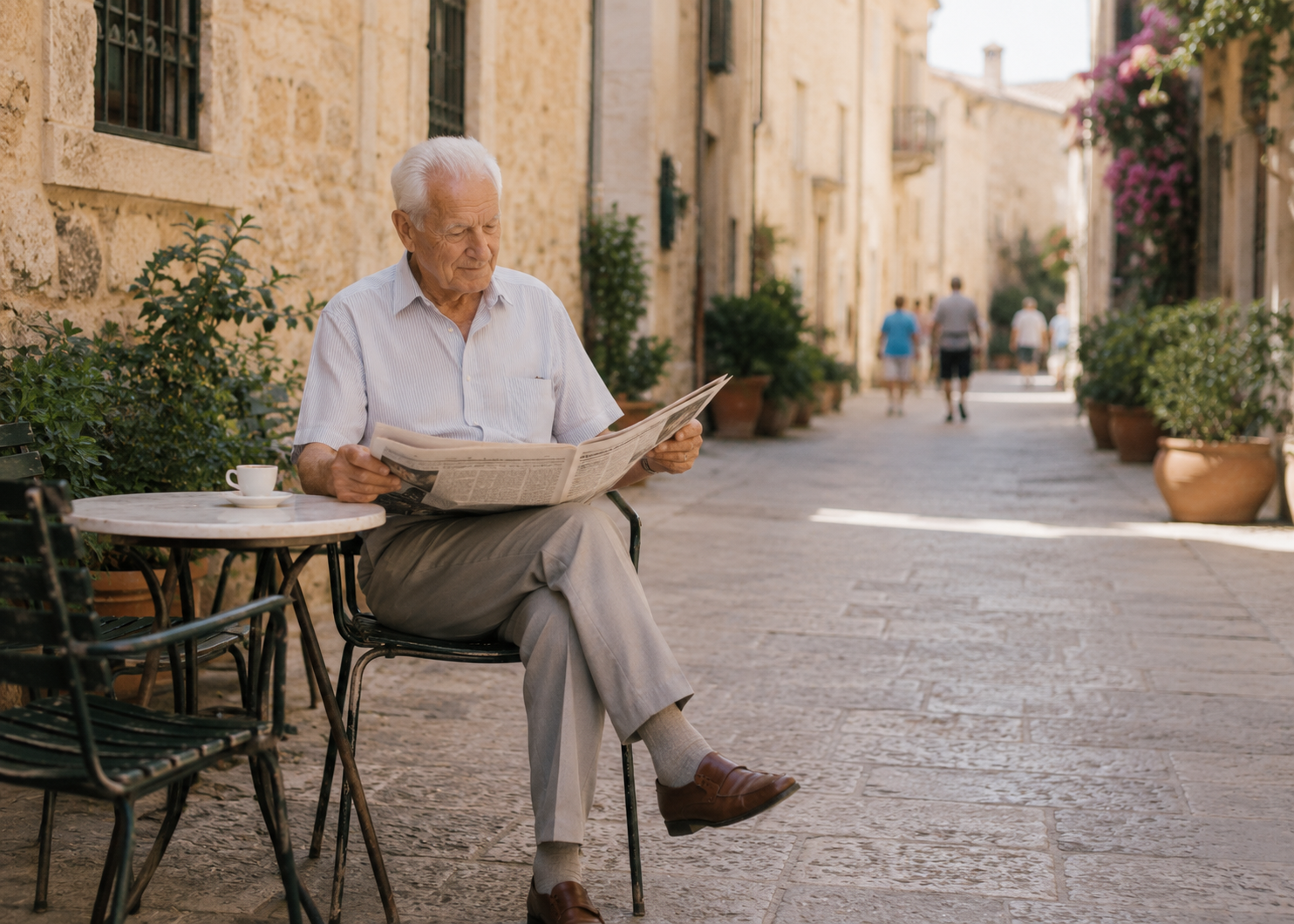
The seventh habit is the maintained daily routine, the Italian grandfather’s preservation of a regular structured rhythm to his days rather than letting them dissolve into shapelessness.
The Italian grandfather keeps a daily routine, the regular rhythm of rising, the morning coffee at the bar, the tending of the garden, the midday meal, the afternoon rest, the evening gathering, a structured and predictable shape to his days that gives them order and purpose and keeps him active and engaged through each one. This routine is partly cultural, the shared rhythms of village life, and partly personal, the man’s own steady habits, and together they ensure his days have shape and activity rather than dissolving into the formless, sedentary, aimless drift that can overtake an unstructured old age. The routine keeps him getting up and getting out and doing things, the structure itself a kind of scaffolding that holds an active engaged life in place.
American men in retirement and old age, by contrast, sometimes lose this structure entirely, the end of work removing the framework that shaped their days and nothing replacing it, so that the days can become shapeless, sedentary, and aimless, the man drifting without the routine that once held his life together. Where the Italian grandfather’s days keep their structure through the cultural and personal rhythms he maintains, the American man may find his days collapse into formlessness after work ends, and the loss of structure can accelerate decline. This is a habit Americans often lose, the maintained daily routine, and the Italian grandfather’s steady daily rhythm is one of the things keeping his old age active and engaged rather than adrift.
The Eighth Habit, Staying Outdoors And In The World
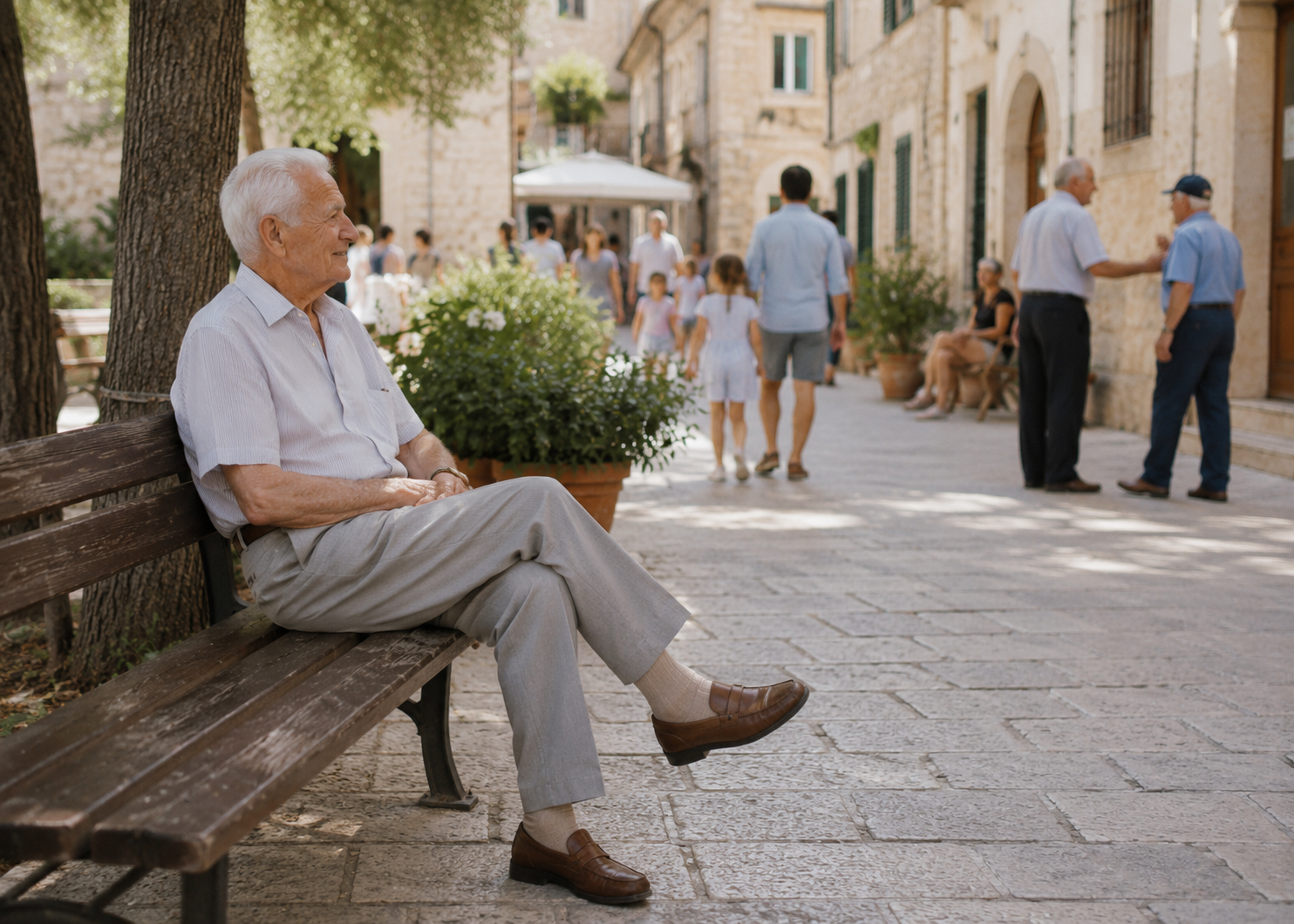
The eighth habit is remaining out in the world, the Italian grandfather’s continued daily presence outdoors and in the public life of his community rather than retreating indoors.
The Italian grandfather is out in the world daily, in the piazza, on the streets, at the bar, in his garden, present in the public and outdoor life of his community rather than shut away indoors, his life lived substantially in the open and in public, woven into the visible daily life of the village. This continued presence in the world means daily fresh air and sunlight, daily contact with the wider community beyond just close friends and family, daily stimulation and engagement with the life around him, all of which keep him connected to the world and embedded in its rhythms rather than withdrawn from them. The old men of an Italian village are a visible presence in its public life, out among everyone, part of the scene rather than hidden away, and this continued public, outdoor existence is itself sustaining.
American men in old age, by contrast, often retreat indoors, into the house, the television, the narrow private world, their daily presence in the public and outdoor life of their community fading as they age, especially in places without the walkable public spaces that draw people out. Where the Italian grandfather remains a visible part of the outdoor public life of his village, the American man may withdraw into a private indoor existence, losing the fresh air, the sunlight, the community contact, and the engagement with the world that the outdoor public life provides. This is a habit Americans often lose, the daily presence out in the world, and the Italian grandfather’s continued public outdoor existence is one of the things keeping him stimulated, connected, and engaged with life.
The Ninth Habit, Carrying On As Normal
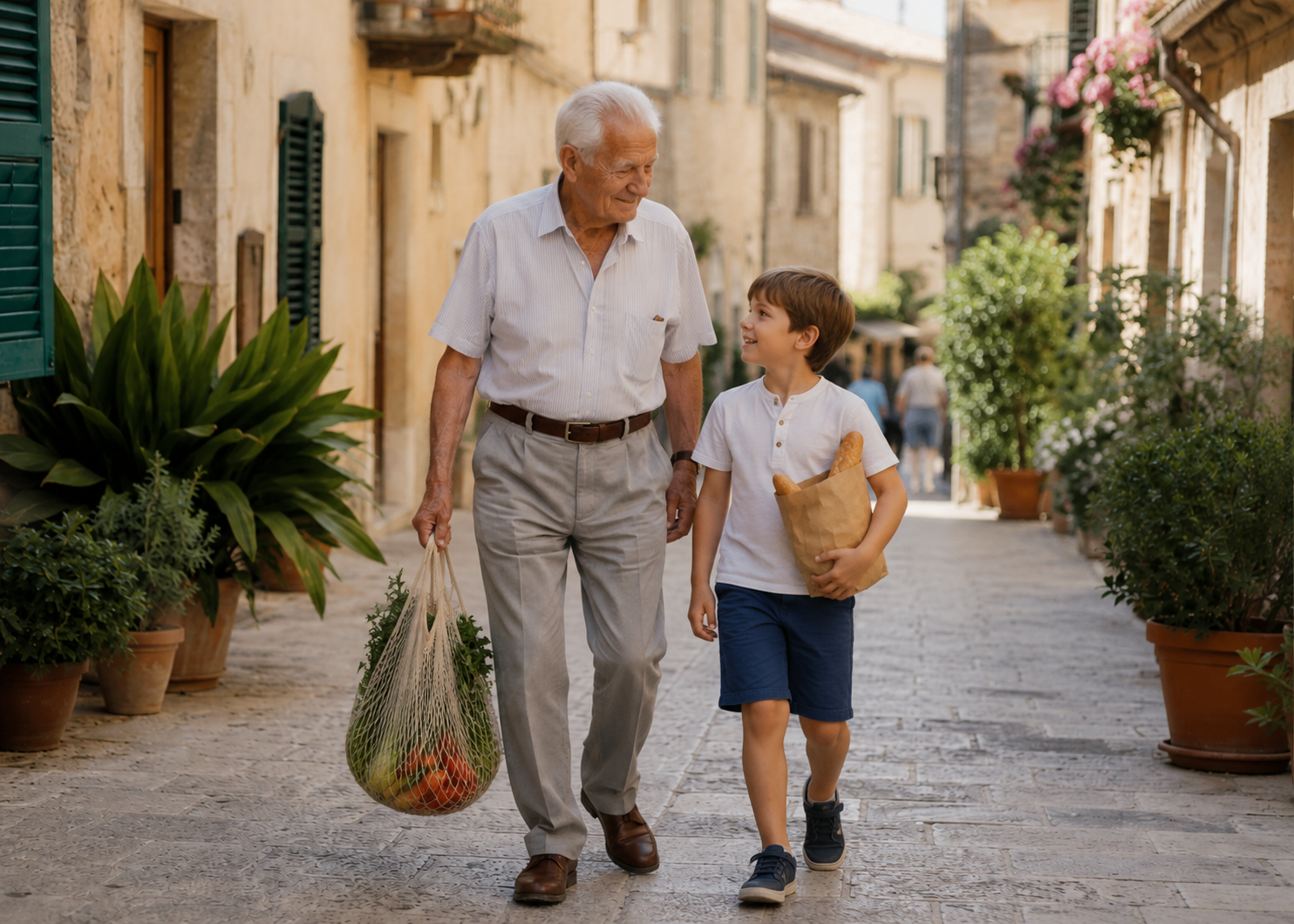
The ninth habit is the deepest, the Italian grandfather’s fundamental attitude of simply carrying on with his normal active life rather than retiring into the role of an old man.
The deepest habit, underlying all the others, is that the Italian grandfather largely just keeps living his normal life, continuing the walking, the gardening, the socializing, the working usefulness, the routines, into old age without dramatically changing into a different, diminished, retired-from-life mode of being, refusing in effect to become merely old. He does not, at sixty or seventy, decide that he is now an old man who should slow down, withdraw, and stop doing the things he has always done, but simply carries on, maintaining his active engaged life as long as he can, treating old age as a continuation of life rather than a retreat from it. This continuity, this refusal to prematurely embrace the diminished role of the old, is the attitude beneath all the specific habits, the disposition to keep living fully rather than to retire into being elderly.
American men, by contrast, sometimes do embrace that diminished role, treating some milestone like retirement as the moment to fundamentally change, to slow down, withdraw, stop doing the active connected things, and settle into a narrower old age, in effect deciding to become old in a way that the Italian grandfather does not. Where the Italian grandfather carries on living his full life, the American man may prematurely retire from active engaged living, and the difference in outcomes is profound, since continuing to live fully is itself one of the great preservers of the capacity to do so. This is the deepest habit Americans tend to lose, the simple carrying-on, and the Italian grandfather’s refusal to retire from life is perhaps the most important thing keeping him vigorous and engaged into his eighties and beyond.
What The Nine Habits Add Up To
Stepping back from the nine, what is striking is how they form a connected whole, a way of aging that keeps a man active, connected, purposeful, and engaged rather than sedentary, isolated, aimless, and withdrawn.
The nine habits are not really separate tricks but facets of a single way of growing old, in which the man keeps moving, keeps connected, keeps useful, keeps to a rhythm, keeps out in the world, and keeps simply living his life, the walking and the garden and the friends and the family table and the routine and the public presence and the carrying-on all reinforcing one another into a whole that sustains a vigorous engaged old age. The American losses are likewise connected, the stopping of the walking and the gardening and the socializing and the routine and the public presence, often all flowing from the same retreat into a sedentary, isolated, unstructured, withdrawn old age that the surrounding car-dependent, work-defined, family-dispersed culture makes easy to fall into. The contrast is between two whole patterns of aging, not nine separate habits.
The encouraging truth is that the Italian pattern is largely available to anyone willing to adopt its habits, since none of them requires being Italian, only the choice to keep walking, keep a garden or some equivalent purposeful activity, maintain daily friendships and social ritual, eat with others, stay useful, keep a routine, stay out in the world, and refuse to prematurely retire from active life. An American man, or anyone, can choose to age more like the Italian grandfather, and the habits, though easier in a culture built around them, can be cultivated anywhere by someone who understands their value and decides to maintain them. The Italian grandfathers are not lucky so much as embedded in and faithful to a way of aging that works, and the nine habits are a map any man can follow toward a more vigorous, connected, and engaged old age, wherever he happens to live.

About the Author: Ruben, co-founder of Gamintraveler.com since 2014, is a seasoned traveler from Spain who has explored over 100 countries since 2009. Known for his extensive travel adventures across South America, Europe, the US, Australia, New Zealand, Asia, and Africa, Ruben combines his passion for adventurous yet sustainable living with his love for cycling, highlighted by his remarkable 5-month bicycle journey from Spain to Norway. He currently resides in Spain, where he continues sharing his travel experiences with his partner, Rachel, and their son, Han.