
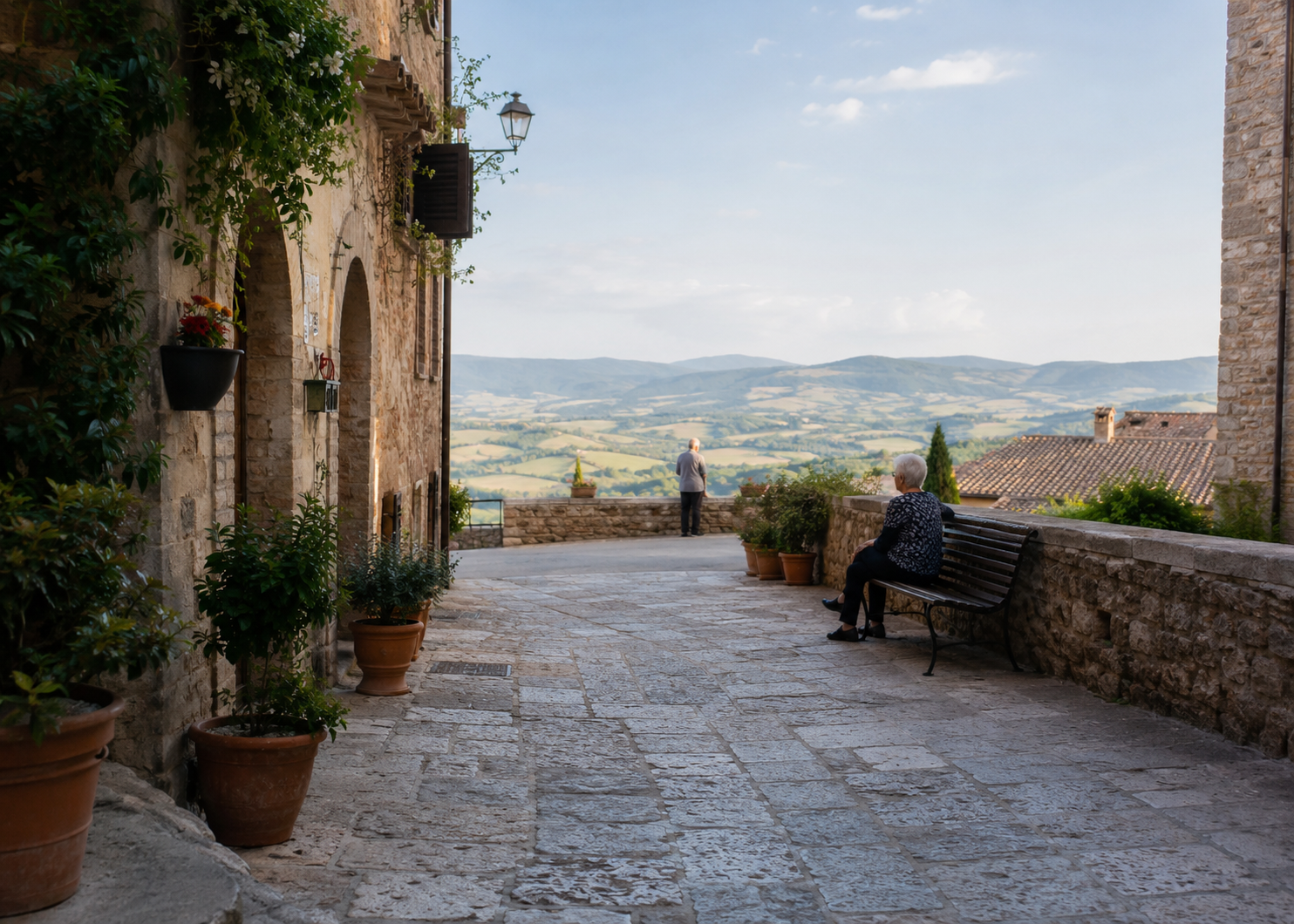
Most Americans who dream of Italian retirement picture Tuscany. The rolling hills, the cypress trees, the Florence skyline, the Chianti vineyards. Tuscany has become the default Italian retirement fantasy, and the prices reflect it. A retirement in central Florence or the desirable Tuscan hill towns now requires substantial wealth. The Americans who can afford it find what they imagined. The Americans who cannot afford it often abandon the Italian dream entirely, assuming that Italy is out of reach.
It is not. An hour or two from Florence, in Umbria and the inland reaches of Emilia-Romagna, a different Italy offers most of what Tuscany offers at meaningfully lower cost. Perugia, Orvieto, Spoleto, Parma, and similar inland cities deliver walkable historic centers, excellent healthcare, deep cultural richness, and proximity to Florence as a day trip rather than a permanent address. These cities are well known to Italians and to a small number of savvy expats. They remain largely unknown to the broader American retirement market, which has concentrated its Italian attention on Tuscany and the famous coastal destinations.
This piece walks through what these inland Italian cities actually offer, which specific cities deserve American attention, what the costs and trade-offs honestly are, and what Americans considering Italian retirement should understand. The information is current as of early 2026, with real cost figures from the Italian market.
What These Inland Cities Actually Offer
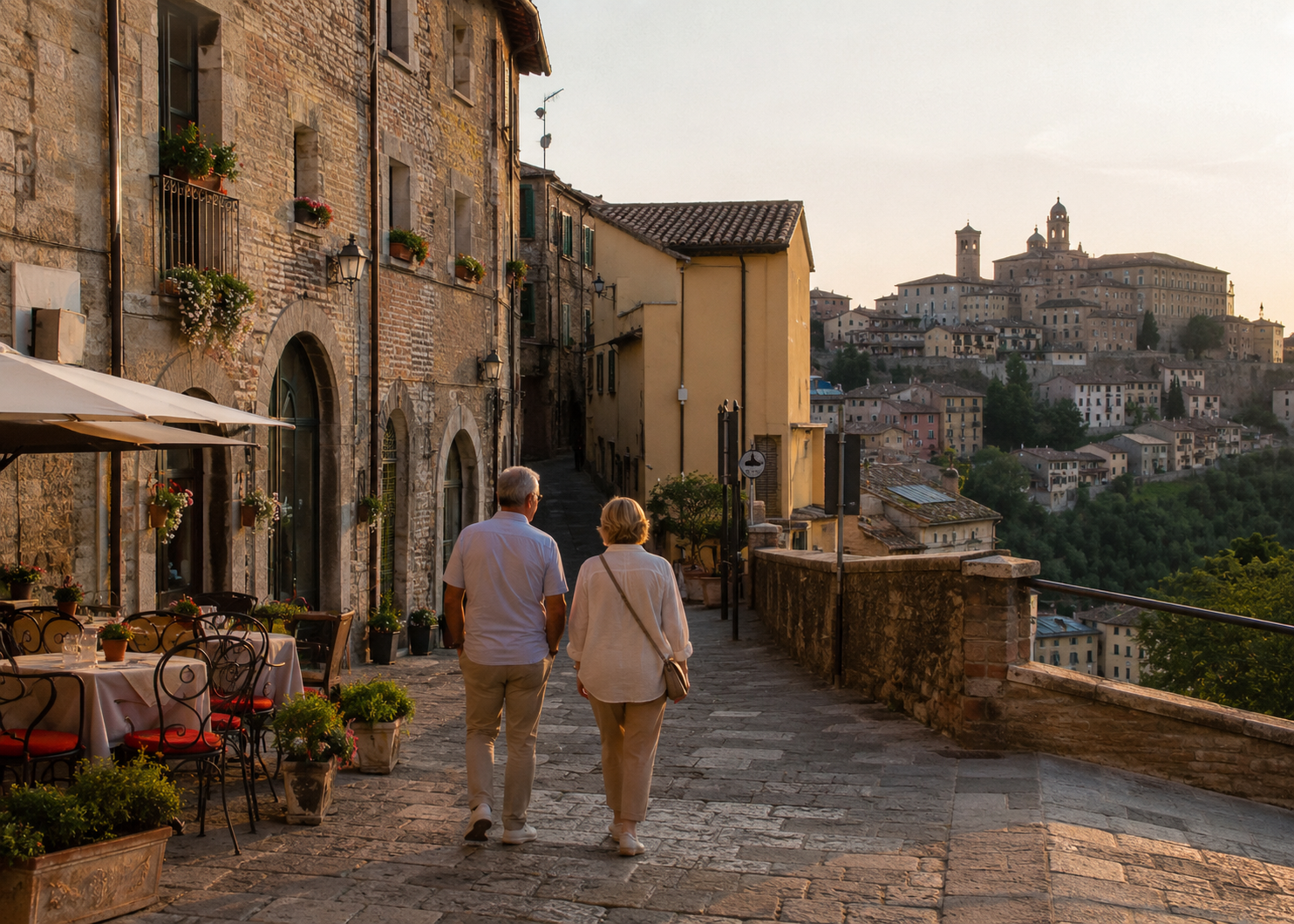
The inland central Italian cities share characteristics that make them well-suited to American retirement at lower cost than the famous Tuscan destinations.
The costs are meaningfully lower than Tuscany. While not the cheapest cities in Italy (the truly rock-bottom options are mostly in the south), the inland central cities offer substantial savings over Florence and the desirable Tuscan towns. A one-bedroom apartment in central Parma runs €700 to €950. Umbrian towns offer comparable or lower. Florence equivalents run substantially higher, and the desirable Tuscan hill towns higher still.
The healthcare is excellent and inexpensive. Italy’s national health service operates throughout the country, and Emilia-Romagna in particular has one of the best regional healthcare systems in Italy. The inland cities provide access to high-quality medical care through the public system at costs far below American equivalents. Umbria and Emilia-Romagna both have strong healthcare infrastructure.
The historic centers are genuinely walkable. These cities developed across centuries before the automobile. The retiree reaches the market, the pharmacy, the cafe, the cathedral, and the train station on foot. Perugia, Orvieto, and Spoleto have particularly compact walkable centers. Parma’s elegant center is fully walkable.
Florence is a day trip rather than a permanent expense. From Umbria and inland Emilia-Romagna, Florence is accessible by train for a day visit. The retiree gets Florence when they want it without paying Florence prices to live there. The Tuscan capital becomes an occasional pleasure rather than a daily cost.
The cultural depth is substantial. These are old cities with cathedrals, Renaissance art, music festivals, universities, and centuries of history. Perugia hosts internationally significant jazz and chocolate festivals. Parma is a UNESCO Creative City of Gastronomy and the home of Parmigiano-Reggiano and Prosciutto di Parma. The cultural richness exceeds what the city sizes would suggest.
The food culture is world-class. Emilia-Romagna is arguably the greatest food region in Italy, home to Parmigiano-Reggiano, prosciutto, balsamic vinegar, and the pasta traditions of Bologna. The inland cities sit at the center of this food culture. Umbria has its own rich culinary tradition built around truffles, olive oil, and regional specialties.
The combined offering is a version of Italian retirement that delivers most of what Tuscany offers, plus better food and lower costs, at the price of less international recognition and somewhat thinner expat infrastructure.
The Specific Cities Worth American Attention
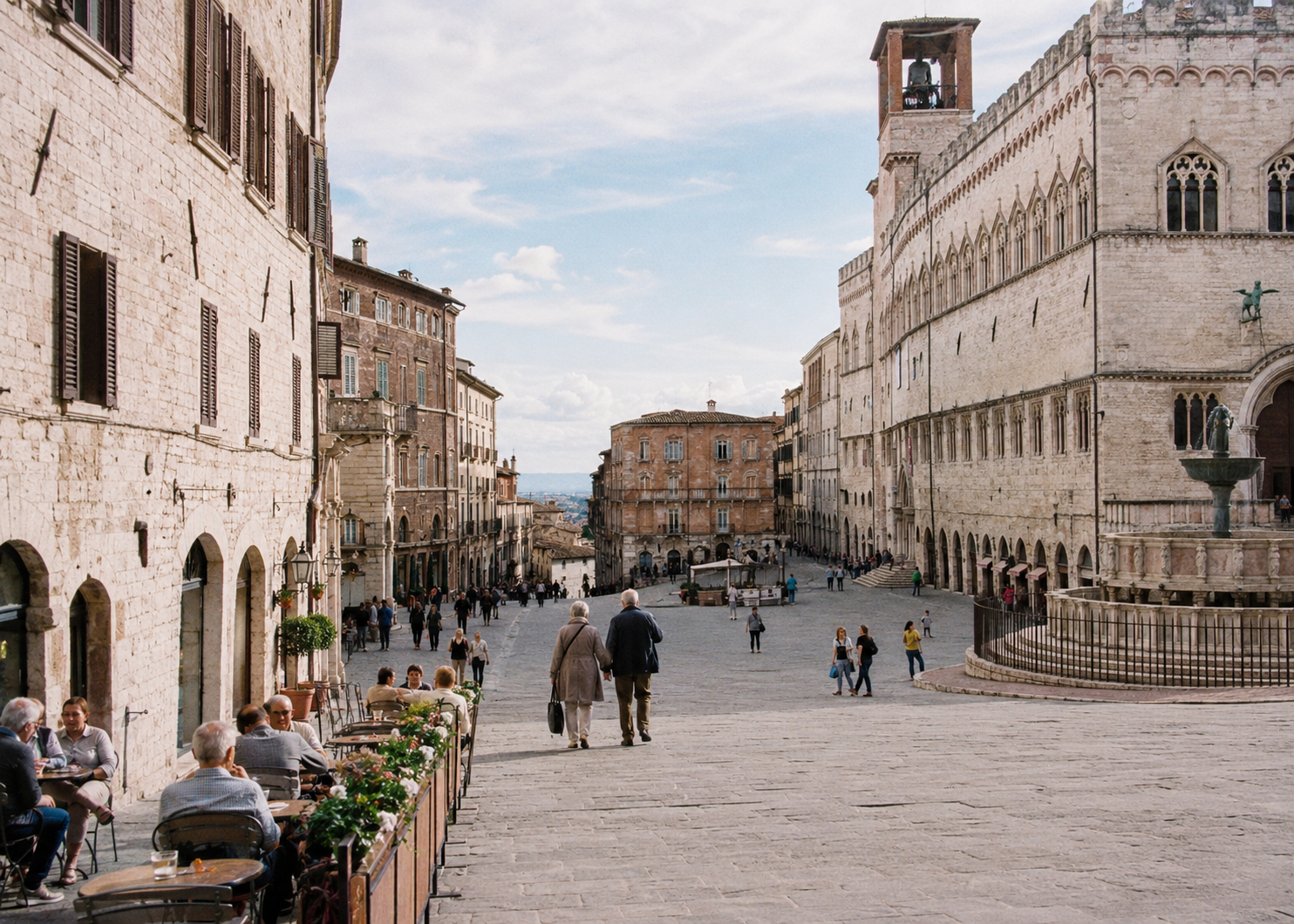
Several inland central Italian cities deserve specific consideration. Each has its own character and trade-offs.
Perugia, in Umbria. The regional capital, a hill city with a magnificent walkable historic center, a major university, and a strong cultural calendar including the internationally known Umbria Jazz festival. Florence is roughly 90 minutes by train, Rome about two hours. Perugia has its own small airport, though flight options are limited. The city combines genuine urban amenities with the Umbrian countryside immediately accessible. Best suited to retirees who want a real city with cultural energy rather than a sleepy town, while remaining far more affordable than Florence.
Orvieto, in Umbria. A dramatic hilltop town built on a volcanic plateau, crowned by one of Italy’s most stunning cathedrals. Smaller and quieter than Perugia, with a compact medieval center entirely walkable. Direct train access to both Florence and Rome makes day trips easy. Best suited to retirees who want a smaller, more intimate town with extraordinary beauty and good rail connections. The trade-off is that Orvieto is genuinely small, which some will find peaceful and others limiting.
Spoleto, in Umbria. A historic town famous for its annual Festival dei Due Mondi, one of Italy’s most important arts festivals. A walkable medieval center, Roman ruins, and a strong cultural identity despite the small size. Train access connects to Rome and the broader region. Best suited to retirees with strong arts and cultural interests who want a town where culture is central to daily life. The trade-off is the small size and somewhat more limited everyday infrastructure.
Parma, in Emilia-Romagna. An elegant, refined city steeped in culture and the world’s most celebrated food traditions. The historic center is sophisticated and fully walkable, with the Teatro Regio opera house, the Parma Cathedral and Baptistery, and beautiful parks. One-bedroom apartments in the center run €700 to €950. Emilia-Romagna’s healthcare system is among Italy’s best. Best suited to retirees who want a graceful, cultured city with world-class food and excellent services. Bologna is a short train ride, Florence reachable in roughly 90 minutes to two hours. The trade-off is that Parma is more expensive than the Umbrian towns, though still far below Florence.
Todi, in Umbria. A small hilltop town frequently cited as one of Italy’s most livable, with a beautiful central piazza and sweeping countryside views. Very walkable, very Italian, very small. Best suited to retirees who want the quintessential Umbrian hill-town experience and do not need extensive urban amenities. The trade-off is that Todi requires a car for many practical needs and offers limited everyday infrastructure within walking distance.
Each of these cities delivers walkable historic centers, excellent healthcare, cultural depth, world-class food, and Florence as a day trip. The choice among them depends on the size of city desired, the specific cultural interests, and the trade-offs each retiree accepts.
What The Costs And Trade-Offs Honestly Are
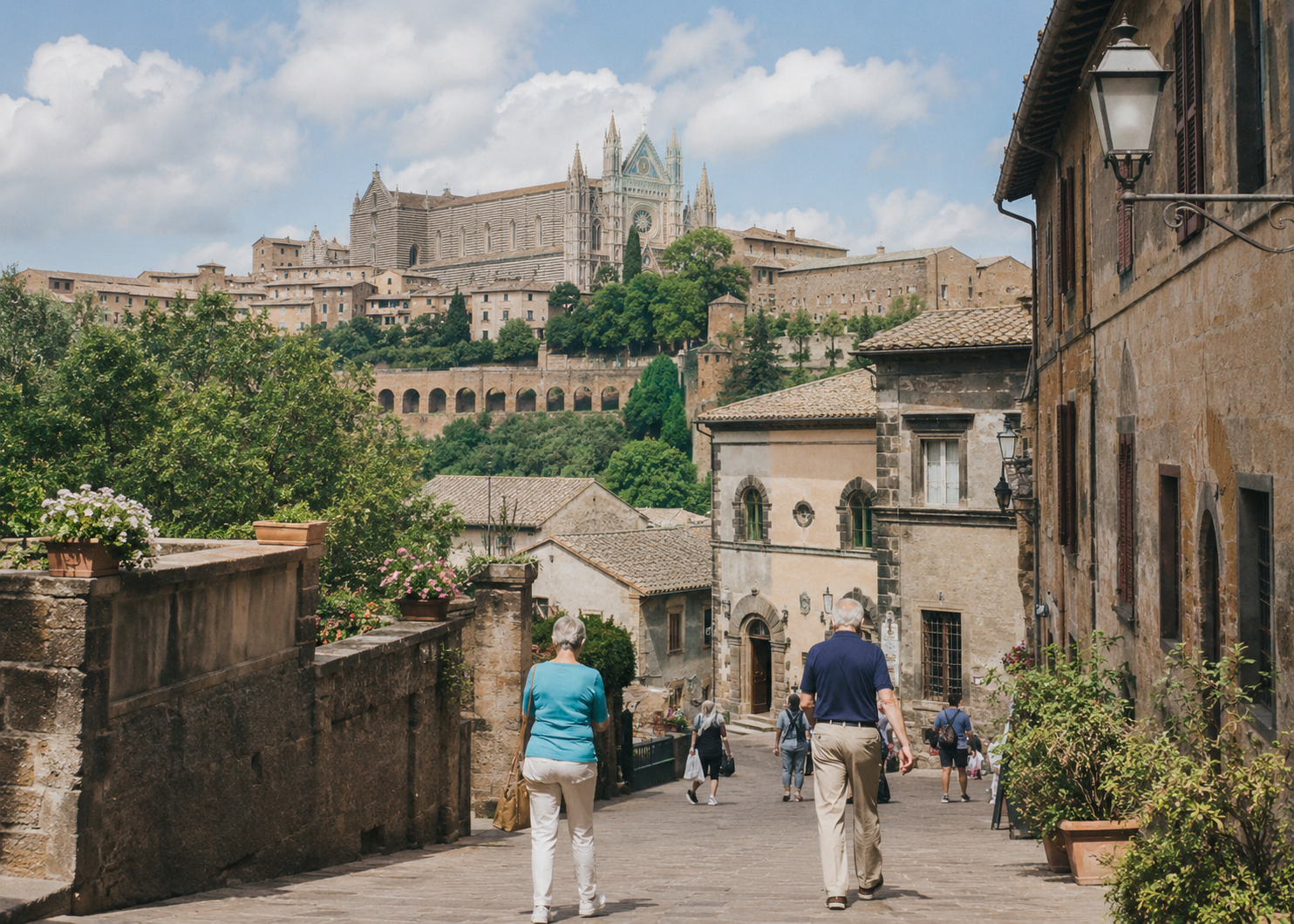
The inland central Italian cities offer real value, but they are not the cheapest retirement option in Italy, and they come with trade-offs American retirees should understand honestly.
They are cheaper than Tuscany but not the cheapest in Italy. The truly rock-bottom Italian cities are mostly in the south: Lecce, Catania, Bari, where all-in monthly costs can run €1,000 to €1,300. The inland central cities cost more than these southern options but offer the central location, the Florence proximity, and the Emilia-Romagna and Umbria infrastructure that the southern cities cannot. The retiree choosing inland central Italy is paying a premium over the cheapest Italian options in exchange for location and amenities.
The Italian tax situation requires careful planning. Italy taxes worldwide income for residents, and the favorable flat-tax regimes are designed for high earners (the flat tax rose to €200,000 annually for new applicants and is increasing further). For typical American retirees, the standard Italian tax system applies, which is generally less favorable than the regimes available in Greece or formerly in Portugal. The tax math needs honest calculation before committing.
English is less commonly spoken than in tourist centers. The inland cities operate primarily in Italian. The retiree who does not learn functional Italian will struggle with daily life. This is more demanding than retirement in heavily touristed areas where English is widespread.
The expat community is thin. These cities have few Americans. The retiree seeking substantial English-speaking community finds less of it than in Tuscany’s expat enclaves or Rome. The retiree seeking Italian community finds it readily.
International connectivity requires connections. Perugia’s airport has limited flights. Most international travel routes through Rome or Bologna. The retiree who travels frequently to the US faces longer journeys than from a major hub.
The bureaucracy is genuinely difficult. Italian bureaucracy is notoriously complex, more so than Spanish or Portuguese systems in many respects. The residency, tax, and administrative processes require patience and ideally professional help through a commercialista (accountant) and possibly a lawyer.
Some towns require a car. The smaller hill towns (Todi, to some extent Orvieto and Spoleto) are walkable within their centers but require a car for some practical needs. The fully car-free retirement works better in Perugia or Parma than in the smallest towns.
Summers are hot and some winters are cold. The inland location produces continental climate patterns. Hot summers and cool-to-cold winters in much of the region. The retiree specifically seeking mild Mediterranean coastal climate should weight coastal options, accepting their higher costs.
These trade-offs are real. For many American retirees, the inland central cities represent an excellent balance: more affordable than Tuscany, better located and better served than the cheap southern cities, with world-class food and culture. The retiree seeking the absolute lowest costs should look south. The retiree seeking the famous Tuscan experience should look at Tuscany and pay for it. The retiree seeking the balance finds it in Umbria and inland Emilia-Romagna.
Why These Cities Remain Secrets To Americans
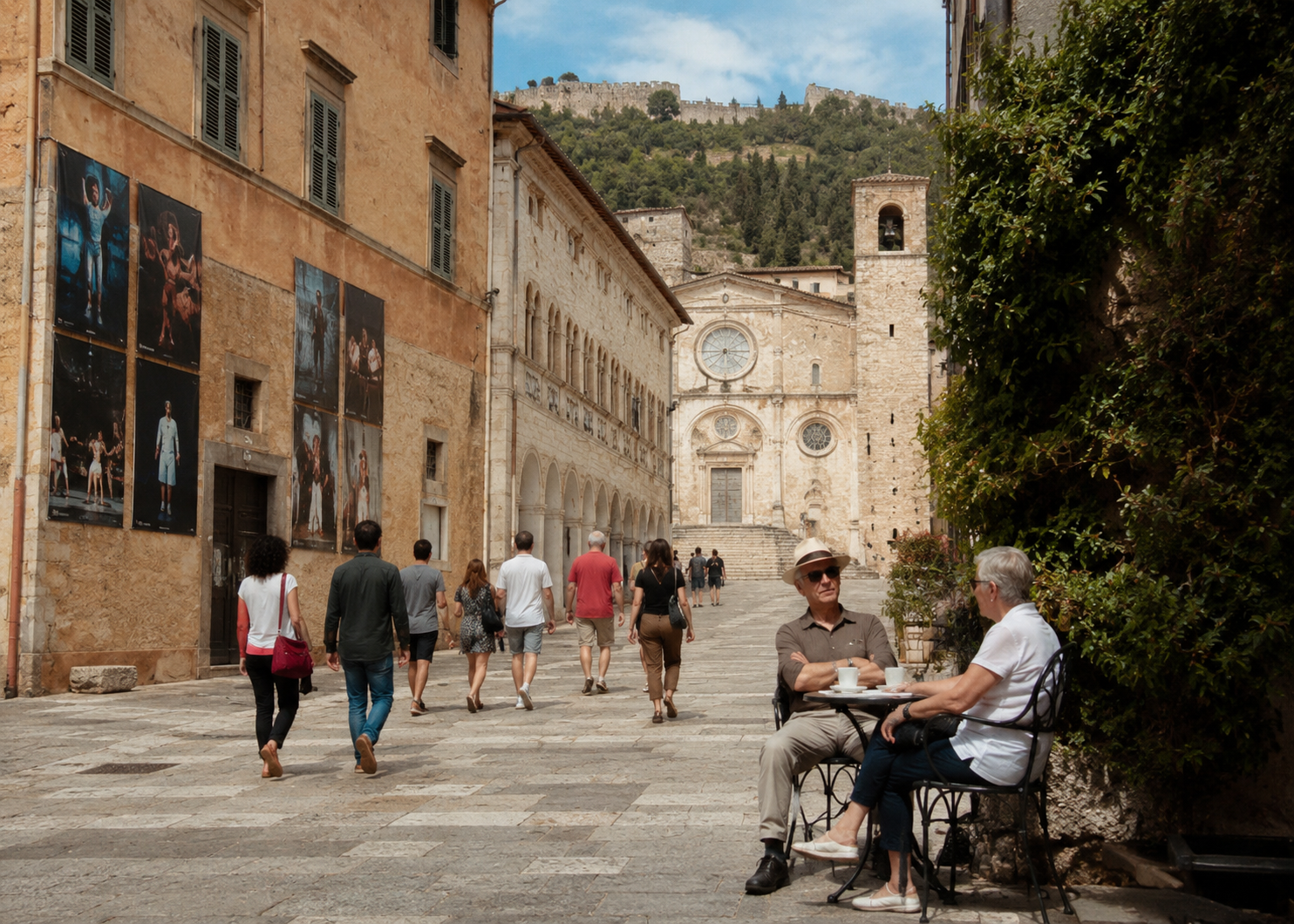
The inland central Italian cities remain off the American retirement radar for specific reasons.
Tuscany dominates the American Italian imagination. Books, films, marketing. “Under the Tuscan Sun” defined the American fantasy of Italian retirement. The marketing concentrates American attention on Tuscany so completely that the equally beautiful and more affordable neighboring regions receive little notice.
Americans gravitate toward recognized names. Perugia, Orvieto, and Spoleto lack the global recognition of Florence or Siena. The recognition gap keeps American attention on the famous Tuscan destinations.
The English-language information is thinner. Researching Umbrian towns in English produces less material than researching Tuscany. The information gap makes the inland cities harder to evaluate from the US.
The expat infrastructure is self-reinforcing. Americans move where other Americans are. Tuscany has American communities. The inland cities lack the seed community that would attract additional Americans.
Italy’s overall reputation for bureaucratic difficulty discourages some Americans regardless of city. The complexity keeps Italian retirement smaller than Spanish or Portuguese retirement in the American market overall, which means even the famous Italian cities receive less American attention than their Spanish equivalents, and the inland cities receive less still.
What This Means For American Retirees Considering Italy
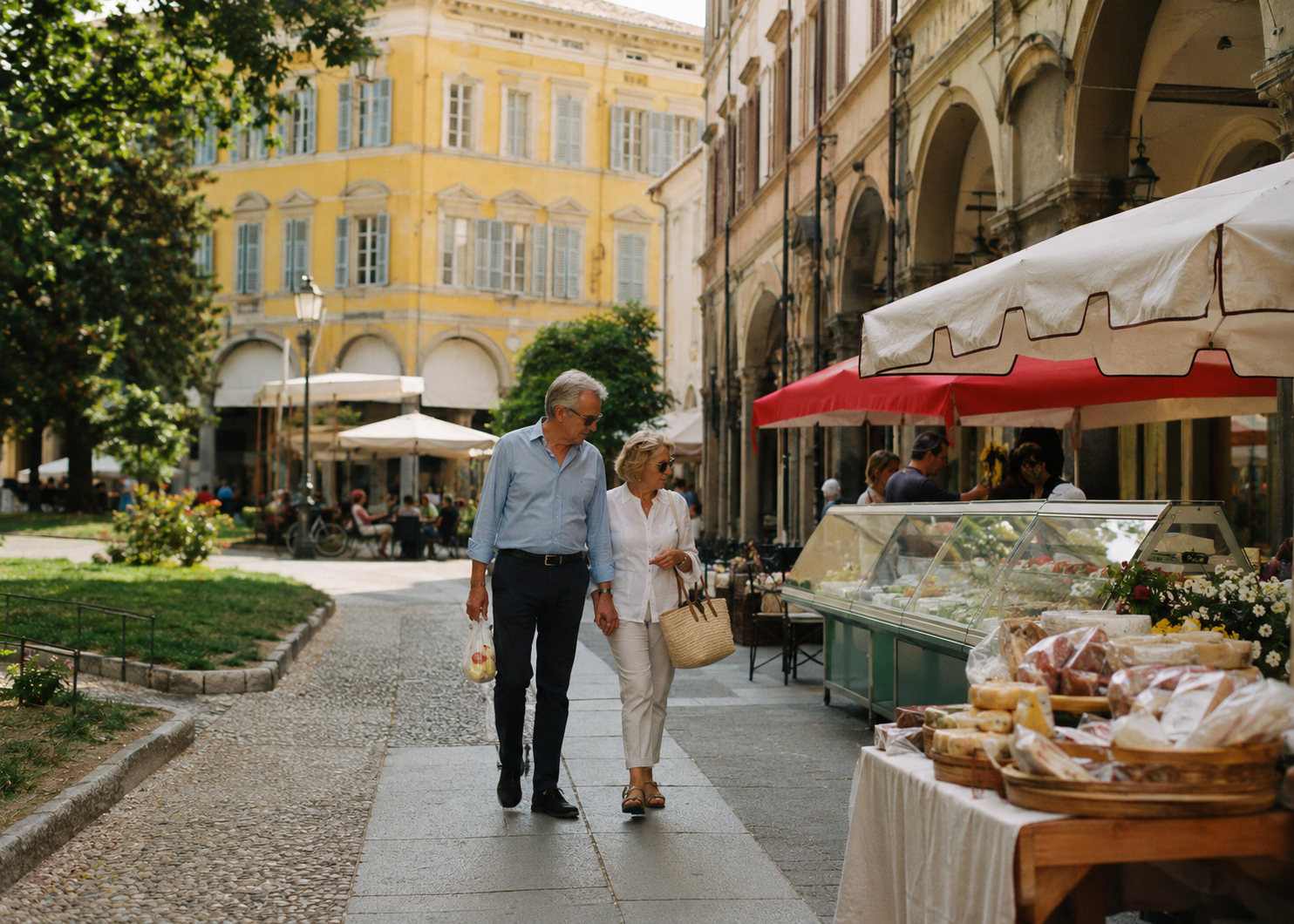
For American retirees evaluating Italian retirement, the inland central cities deserve serious consideration alongside Tuscany.
Run the math on the inland cities. A retirement that requires substantial wealth in Florence might work on moderate assets in Perugia or an Umbrian town. The cost differential between Tuscany and inland Umbria is substantial.
Visit the inland cities before deciding. Spend time in Perugia, Orvieto, Spoleto, Parma. The daily life reveals itself in ways research cannot capture. The visit reveals which size of city and which regional character suits you.
Calculate the Italian tax honestly. The standard Italian tax system applies to most American retirees. Run the actual numbers with a qualified cross-border tax advisor before committing. Italian tax on US retirement income is a meaningful factor.
Commit to learning Italian. The inland cities require functional Italian more than tourist centers do. The language investment is the entry fee to successful inland Italian retirement.
Budget for bureaucratic help. A good commercialista and possibly a lawyer. The Italian bureaucracy is genuinely difficult, and professional help is not optional for most American retirees.
Consider the food and culture as core value. Emilia-Romagna and Umbria offer food and culture that exceed most of the world. For retirees who value these, the inland cities deliver extraordinary daily richness.
Recognize the Florence proximity as the key feature. The inland cities give you Florence when you want it without Florence costs. The day-trip access is the structural advantage that makes these cities so well-suited to retirees who love Tuscany but cannot or do not want to pay to live there.
For American retirees willing to look beyond Tuscany, the inland central Italian cities offer a version of Italian retirement that delivers most of what Tuscany offers, plus better food and lower costs, at the price of less recognition and thinner expat infrastructure. The secret is available to retirees willing to investigate it.
The American retiree living in Perugia or Parma or Orvieto is not making a sacrifice relative to the retiree in Florence. In many ways the inland retiree has the better arrangement: lower costs, world-class food, walkable beauty, excellent healthcare, and Florence ninety minutes away whenever they want it. Tuscany offers recognition and established expat community. The inland cities offer everything else, often better, at meaningfully lower cost. The choice is individual, but the inland cities deserve a place in the conversation that currently overlooks them in favor of the Tuscan fantasy.

About the Author: Ruben, co-founder of Gamintraveler.com since 2014, is a seasoned traveler from Spain who has explored over 100 countries since 2009. Known for his extensive travel adventures across South America, Europe, the US, Australia, New Zealand, Asia, and Africa, Ruben combines his passion for adventurous yet sustainable living with his love for cycling, highlighted by his remarkable 5-month bicycle journey from Spain to Norway. He currently resides in Spain, where he continues sharing his travel experiences with his partner, Rachel, and their son, Han.