
Two of the world’s most famous longevity hotspots sit on opposite sides of the planet, Okinawa in the islands of southern Japan and Ikaria in the Greek Aegean, and they could hardly seem more different in their cuisines, the one built on rice, tofu, sweet potato, and seaweed, the other on greens, beans, olive oil, and bread. Yet researchers who study these long-lived populations have noticed that beneath the very different specific foods, the two diets share a single underlying habit, a way of eating rather than a set of ingredients, and it turns out to be one of the things most associated with their remarkable longevity. It is also precisely the habit that the dominant American way of eating breaks most thoroughly.
From Spain, where the traditional diet shares much of the same underlying pattern, the convergence of these distant cuisines on a common habit is one of the most illuminating findings in longevity research, because it points past the endless arguments about specific superfoods toward something more fundamental about how people eat. The shared habit is not about any magic ingredient but about the structure and the manner of eating, and understanding it, and understanding how the American pattern breaks it, is more useful than any list of longevity foods. Here is the habit the two diets share, why it matters, and the American eating pattern that destroys it.
The Two Diets That Should Not Match

Start with how genuinely different the two cuisines are on the surface, because that difference is what makes their shared habit so significant.
The traditional Okinawan diet and the traditional Ikarian diet are built on almost entirely different foods, reflecting their utterly different climates, cultures, and histories. The Okinawan diet centers on the foods of a subtropical Japanese island, the purple sweet potato that was long the staple, rice, tofu and other soy foods, an abundance of vegetables, seaweed and sea vegetables, modest amounts of fish, very little meat, the flavors of dashi and miso and the produce of the islands. The Ikarian diet, by contrast, is a Mediterranean one, built on wild greens and vegetables, beans and other legumes, olive oil in abundance, whole-grain bread, fruit, herbs, modest dairy in the form of goat products, a little fish, very little meat, the flavors of the Greek countryside.
These are, in their specific foods, almost opposite cuisines, the subtropical Pacific island and the Mediterranean Aegean island sharing almost no actual ingredients, the sweet potato and seaweed and tofu of the one bearing no resemblance to the greens and beans and olive oil of the other. If longevity came from specific magic foods, these two populations should not both be among the longest-lived on earth, and the very fact that they are, despite their dietary differences, is the clue that points toward a shared underlying habit beneath the different ingredients. The puzzle of two such different diets producing such similar longevity is what led researchers to look past the specific foods to the common pattern underneath.
The Shared Habit, Eating Mostly Plants To Modest Fullness
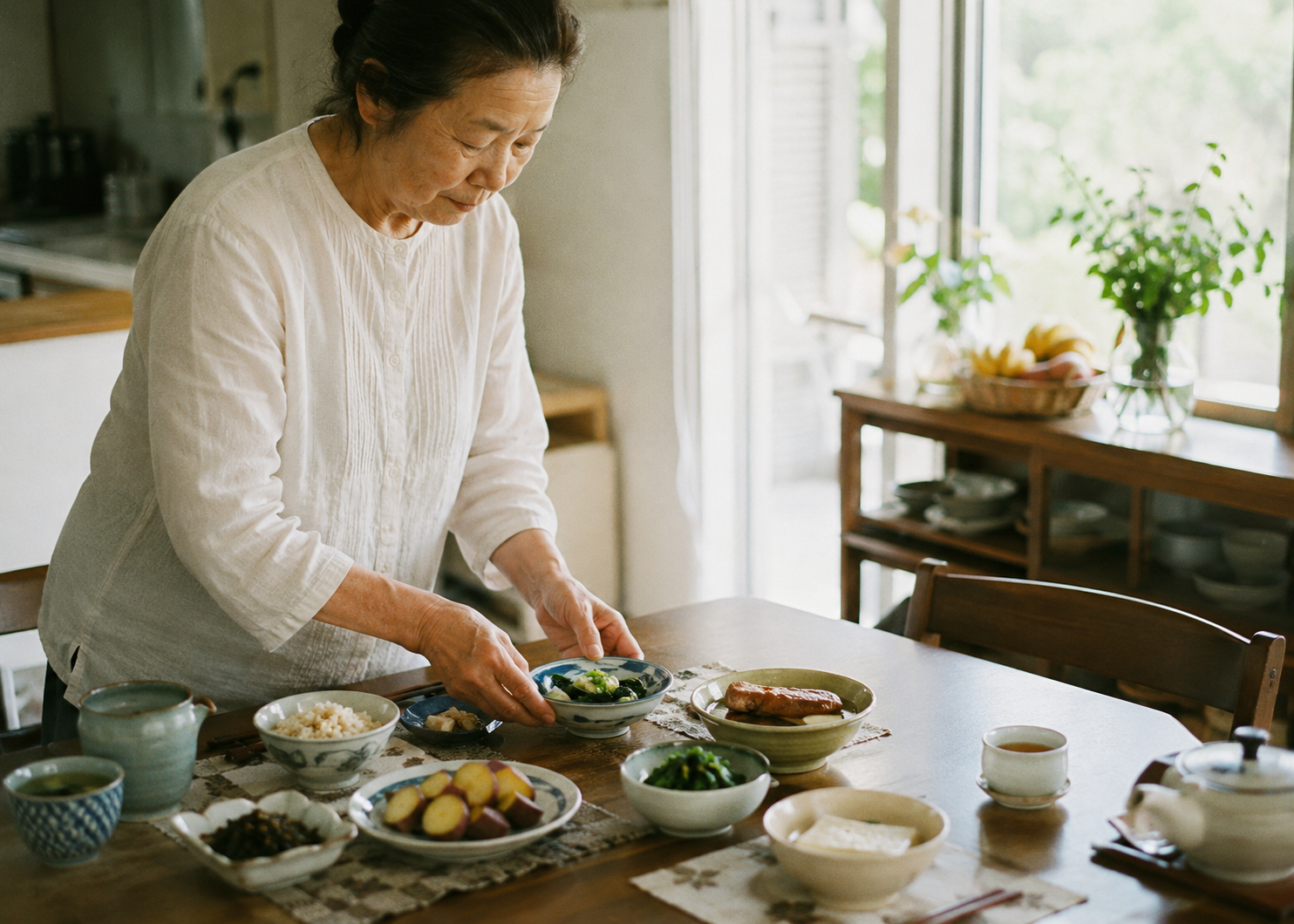
The habit the two diets share, beneath their different foods, is a way of eating centered on plants and on moderation, eating mostly plant foods and stopping at a comfortable, modest fullness rather than eating to excess.
Both diets are overwhelmingly plant-based in their structure, built on vegetables, legumes, whole grains, and other plant foods, with meat a rare event rather than a daily centerpiece and animal foods generally modest, so that the great bulk of what is eaten in both places is plants. This plant-centered structure is the first part of the shared habit, the two populations both eating diets composed mostly of vegetables, beans, grains, and other plant foods, with the Okinawan sweet potato and soy and vegetables and the Ikarian greens and beans and grains both expressing the same underlying plant-dominant pattern despite the different specific plants. The foods differ, but the plant-centered structure is the same.
The second and equally important part of the shared habit is moderation, eating to a comfortable modest fullness rather than to excess, the traditional practice in both cultures of eating enough to be satisfied but not stuffed, not the overeating that characterizes much of modern eating. Okinawa is famous for a cultural principle of eating until one is just satisfied rather than full, and the traditional Ikarian way similarly involves moderate portions of simple food rather than large rich meals, so both populations traditionally eat plant-centered food in moderate amounts, satisfied rather than stuffed. This combination, mostly plants, eaten in moderation to a comfortable fullness, is the shared habit beneath the two different cuisines, and it is one of the things most associated with their longevity, a way of eating rather than a particular food.
Why This Habit Matters So Much
It is worth understanding why this shared pattern, eating mostly plants in moderation, is so strongly linked to long healthy life, because the reasons illuminate what the habit actually does.
The plant-centered, moderate way of eating supports health and longevity through several well-understood mechanisms that do not depend on any single magic food. A diet built mostly on vegetables, legumes, and whole grains is naturally rich in fiber, nutrients, and beneficial plant compounds while being lower in the things associated with chronic disease, and eating it in moderation rather than excess avoids the overconsumption that drives so much modern ill health. The combination tends to support healthy weight, good metabolic health, and lower rates of the chronic diseases that shorten life, not through any one miraculous ingredient but through the overall pattern of eating abundant plants in sensible amounts. This is why the specific foods matter less than the pattern, since many different plant-centered moderate diets, the Okinawan and the Ikarian among them, produce similar benefits.
The deeper point is that longevity research increasingly suggests that the overall dietary pattern matters far more than any specific food, that the search for magic superfoods is largely misguided, and that what actually distinguishes the long-lived populations is this kind of structural habit, mostly plants, eaten in moderation, as part of a generally healthy life. The two diets converging on this habit despite their different foods is strong evidence that the habit itself, rather than the sweet potato or the olive oil or any particular item, is what matters, which is both clarifying and encouraging, since it means the path to eating for longevity is not about obtaining exotic superfoods but about adopting a pattern available with ordinary plants anywhere. The habit, not the ingredient, is the thing.
The American Pattern That Breaks It

Now to the heart of the matter, the dominant American way of eating that breaks this shared habit on both of its dimensions, the plant-centeredness and the moderation alike.
The standard American dietary pattern inverts the plant-centered structure, building meals around large portions of meat and animal foods, with plants relegated to side dishes or omitted, and filling much of the rest with processed and refined foods rather than whole plant foods, so that the diet is the opposite of the plant-dominant pattern of the long-lived populations. Where the Okinawan and Ikarian diets are mostly plants with meat as a rare event, the American pattern is often meat-centered with plants marginal, and where the long-lived diets are built on whole, simple foods, the American one leans heavily on processed, packaged, refined foods engineered for palatability. This inversion of the plant-centered structure is the first way the American pattern breaks the shared habit, putting at the center exactly what the longevity diets keep at the margins and marginalizing what they center.
The American pattern also breaks the moderation half of the habit, through the large portions, the abundance, the eating to excess rather than to modest fullness that characterizes so much American eating, and through the processed foods engineered to override the body’s satisfaction signals and drive overconsumption. Where the long-lived populations traditionally eat moderate amounts to a comfortable fullness, the American pattern involves large portions and a food environment designed to encourage eating beyond satisfaction, the oversized servings and the hyper-palatable processed foods together driving an overeating that is the opposite of the traditional moderation. So the American pattern breaks the shared habit on both dimensions at once, inverting the plant-centered structure into a meat-and-processed-food one, and replacing the traditional moderation with portion sizes and engineered foods that drive excess.
The Social Dimension The American Pattern Also Breaks
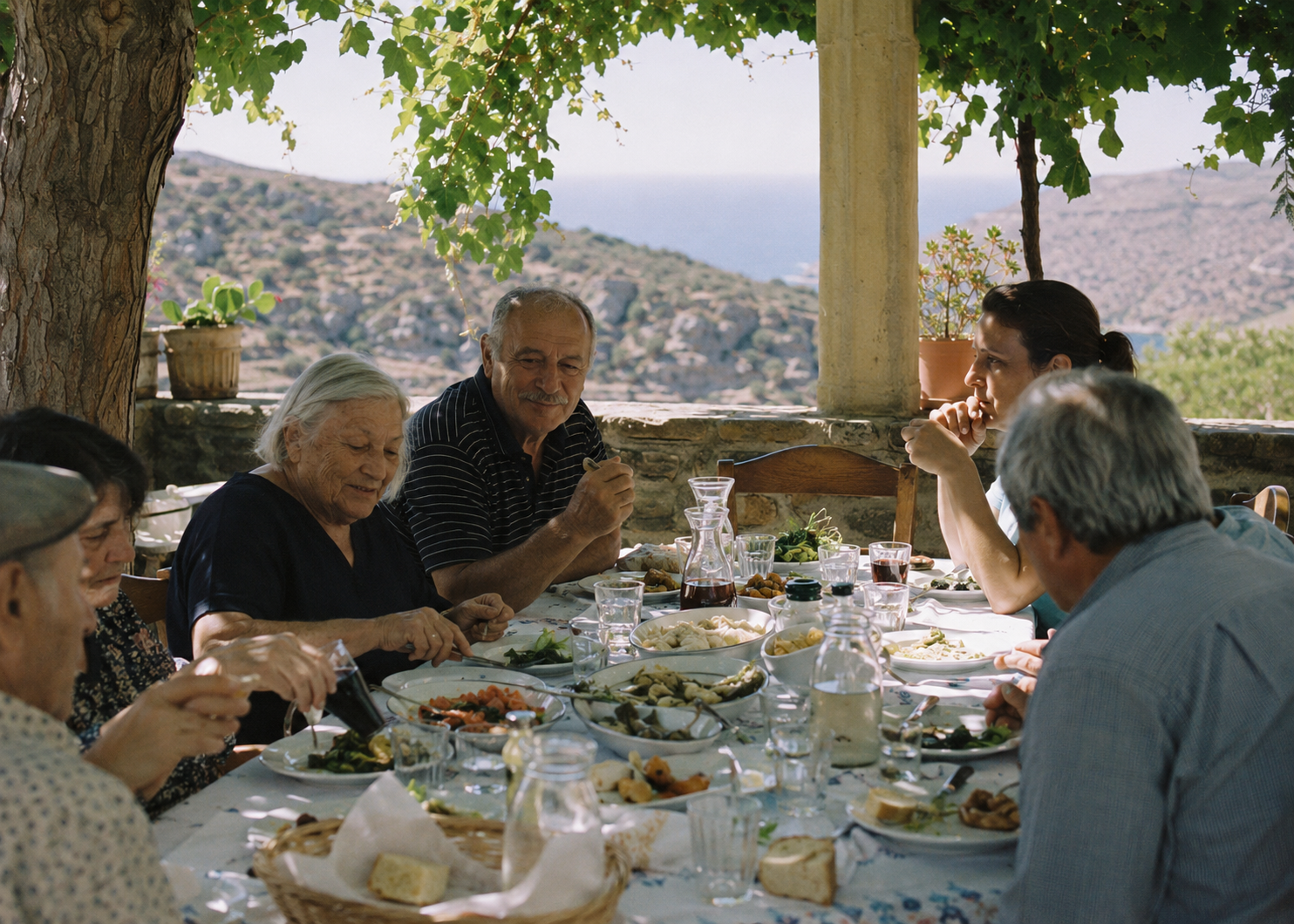
Beyond the food itself, there is a further dimension of the shared habit that the American pattern breaks, the social and unhurried manner of eating that accompanies the food in both longevity cultures.
In both Okinawa and Ikaria, as in the traditional Mediterranean generally, eating is traditionally a social, unhurried, communal activity, meals shared with family and community, eaten slowly and with attention, the eating embedded in connection and ritual rather than rushed and solitary. This social, slow manner of eating is part of the longevity pattern, both because eating slowly and attentively supports the moderation, giving the body time to register fullness, and because the social connection of shared meals is itself associated with wellbeing and long life. The how and the with-whom of eating, slow and social and shared, accompanies the what, mostly plants in moderation, as part of the whole healthy pattern in both cultures.
The American pattern breaks this too, through the rushed, solitary, distracted eating that characterizes much of modern American life, the meals eaten alone, quickly, in front of screens, on the go, disconnected from the social ritual and the unhurried attention that accompany eating in the longevity cultures. Where the long-lived populations eat slowly and socially, the American pattern often involves fast, solitary, distracted consumption, which both undermines the moderation, since eating fast and distracted leads to eating more before fullness registers, and loses the social connection of the shared meal. So the American pattern breaks the shared habit on this third dimension as well, replacing the slow social communal eating of the longevity cultures with the fast solitary distracted eating of modern American life, a difference in the manner of eating that compounds the differences in the food itself.
What The Other Blue Zones Confirm
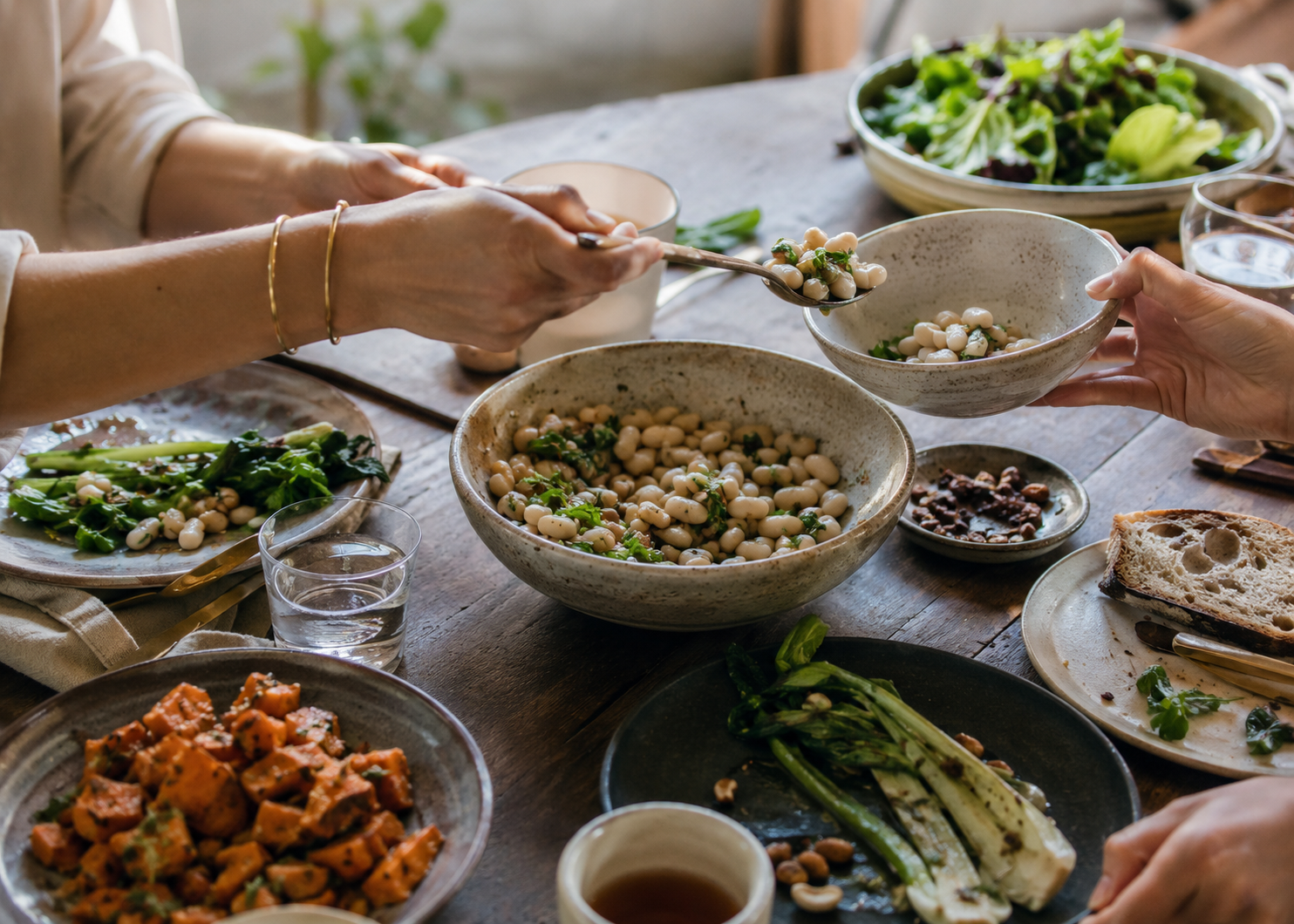
The pattern becomes even more convincing when you look beyond just Okinawa and Ikaria to the other famous longevity regions, which confirm the same shared habit from yet more directions.
The longevity researchers who popularized the idea of these long-lived regions identified several others beyond Okinawa and Ikaria, including Sardinia in Italy, the Nicoya peninsula in Costa Rica, and a community in Loma Linda in California, and these too, despite their own different cuisines, share the same underlying habit of plant-centered, moderate eating. Sardinia has its own Mediterranean pattern of beans, whole grains, vegetables, and modest meat, Nicoya its beans, corn, squash, and tropical produce, Loma Linda its largely vegetarian diet, and each, like Okinawa and Ikaria, is built mostly on plants, eaten in moderation, as part of a generally healthy and connected life. The specific foods differ in every case, the Sardinian beans and the Nicoyan corn and the Okinawan sweet potato all different, but the underlying pattern is the same across all of them.
This convergence across multiple distant and different cultures is powerful confirmation that the habit, not the specific foods, is what matters, since five or more populations on different continents eating different cuisines but sharing the plant-centered moderate pattern all achieve exceptional longevity. If it were about specific superfoods, these populations eating such different things should not converge, and the fact that they do, all sharing the structural habit beneath their different ingredients, is strong evidence that the habit itself is the key. The lesson from the full set of longevity regions is the same as from Okinawa and Ikaria alone, only more strongly confirmed, that the path to eating for long life is the shared structural habit of mostly plants in moderation, available everywhere, rather than any particular regional food.
There is one more thing the full set of longevity regions confirms, which is that the eating habit is always embedded in a larger pattern of healthy living, the movement, the social connection, the sense of purpose, the lower stress, that accompany the diet in all these places. The plant-centered moderate eating is never the whole story but one part of a whole way of living that produces the longevity, and this too is consistent across all the regions, the diet always part of a larger healthy pattern rather than a standalone trick. So the deepest lesson is that eating for longevity means adopting not just the dietary habit but ideally the whole pattern of which it is part, the eating alongside the moving and the connecting and the purpose, which together rather than any one alone are what the long-lived populations share and what actually produces their remarkable lives.
How To Adopt The Habit Wherever You Are

The encouraging conclusion is that the shared habit, being a pattern rather than a set of exotic foods, is available to anyone anywhere willing to adopt it, without needing to obtain Okinawan sweet potatoes or Ikarian wild greens.
Because the longevity habit is structural, mostly plants, eaten in moderation, slowly and socially, it can be practiced with ordinary plant foods available anywhere, since the specific foods of Okinawa and Ikaria are not the point and any plant-centered, moderate, sociably-eaten diet expresses the same pattern. A person anywhere can build their meals around vegetables, legumes, and whole grains with meat as an occasional rather than central food, eat moderate portions to a comfortable fullness rather than to excess, favor whole simple foods over processed ones, and eat slowly and socially rather than fast and alone, and in doing so adopt the very habit that the two distant longevity cultures share, without any exotic ingredients. The habit travels because it is a pattern, not a cuisine.
This is both the clarifying and the hopeful conclusion of the whole comparison, that eating for longevity is not about chasing superfoods or replicating an exotic diet but about adopting a simple, available, structural habit, mostly plants, in moderation, eaten slowly and in company, which any person in any place can practice with ordinary food. The American pattern breaks this habit on every dimension, the plant-centeredness, the moderation, and the social slowness, which is much of why it is associated with poorer health outcomes, but the habit can be reclaimed by anyone willing to invert those breaks, to center plants, moderate portions, choose whole foods, and eat slowly and socially. The two diets that should not match point the way, and the way is open to anyone, since the secret was never in the sweet potato or the olive oil but in the shared habit any of us can adopt.
None of this is medical or dietary advice, and individual nutritional needs vary widely depending on health, age, conditions, and circumstances. The patterns described here are observations about traditional dietary cultures and longevity research rather than a prescription for any individual, and anyone considering significant changes to their diet, particularly with existing health conditions or specific nutritional needs, should consult a doctor or qualified dietitian, since the right approach depends entirely on the individual and a healthy pattern in general terms is not a substitute for personalized guidance.

About the Author: Ruben, co-founder of Gamintraveler.com since 2014, is a seasoned traveler from Spain who has explored over 100 countries since 2009. Known for his extensive travel adventures across South America, Europe, the US, Australia, New Zealand, Asia, and Africa, Ruben combines his passion for adventurous yet sustainable living with his love for cycling, highlighted by his remarkable 5-month bicycle journey from Spain to Norway. He currently resides in Spain, where he continues sharing his travel experiences with his partner, Rachel, and their son, Han.