
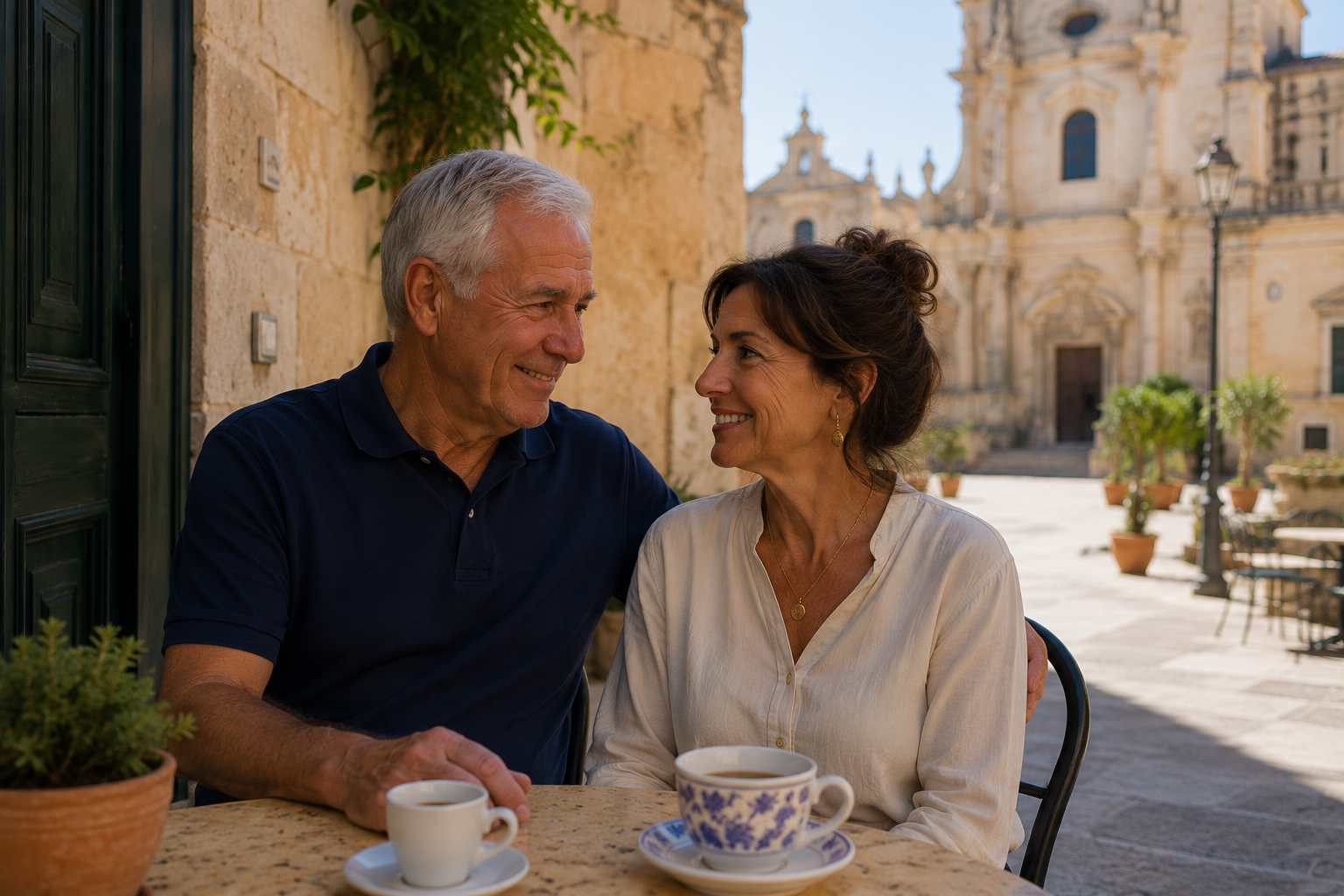
A man moved to Lecce, the baroque jewel of Italy’s southern heel, alone at sixty-four with ninety-seven thousand dollars, a sum so small for a retirement that any American financial advisor would have told him it was impossible. Seven years later, at seventy-one, he is settled in one of the most beautiful cities in southern Italy, his savings intact, his life full, and he has found love again, an Italian partner who shares his life in Lecce. The move that looked reckless became the foundation of a rich late chapter, and his story is worth telling for what it honestly shows about how a very modest sum, an affordable place, and a willingness to build a new life can combine into something wonderful.
He is a composite, drawn from the many solo movers this blog encounters who have made versions of this move to affordable southern Italy, his details standing for a real and recurring pattern rather than one individual. One note on the geography, since it matters: Lecce is in Puglia, in southern Italy, not in Spain, so the partner he found is Italian, a woman of Lecce, not a Spanish wife, and the detail is worth getting right because the specifics of place are part of telling these stories honestly. From Madrid, watching solo men make this kind of move, what his story illustrates is how affordable geography and the courage to build anew can turn an impossible-looking retirement into a genuinely good one.
Why Lecce, And Why $97,000 Works There
Start with the place and the sum, because the affordability of Lecce and its region is the foundation of the whole modest retirement.
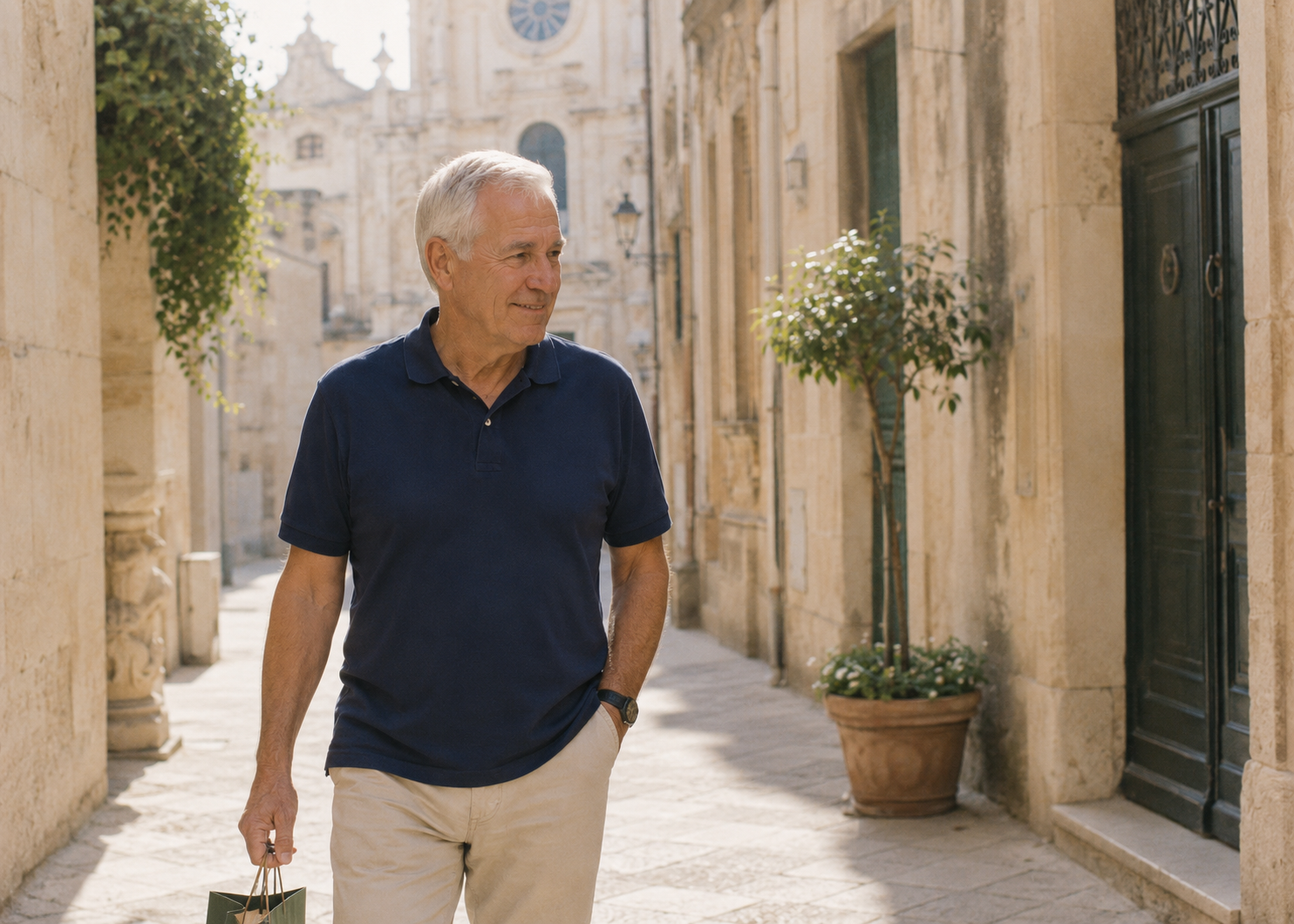
Lecce is the principal city of the Salento, the southern tip of Puglia, a region of extraordinary beauty and affordability, with its baroque architecture, olive groves, and two seas, that is also one of the most affordable parts of Italy, far cheaper than the famous northern and central regions and even much of the rest of the south. For a man with ninety-seven thousand dollars and a modest income, Lecce offers what the famous expensive Italian cities cannot, a beautiful, vibrant, culturally rich city to live in at a cost low enough that a small nest egg and a modest income can sustain it comfortably. The choice of this specific affordable southern city, rather than a famous expensive one like Florence or Rome, is the first reason the very modest sum works at all.
The ninety-seven thousand dollars, alarming as an American retirement figure, meets in Lecce a cost of living far below the American equivalent, stretching dramatically further than it ever could at home. The two great American retirement costs, housing and healthcare, both cost a fraction of their American levels, housing because the Salento is cheap and healthcare because Italy’s good public system supplemented by affordable cover costs little and removes the catastrophic-bill fear. For a single man living modestly, needing only a small space and a simple good life, the cheap cost of living in Lecce means his modest income and small nest egg comfortably cover a rich daily existence, which is the whole basis of retiring securely on so little.
The Honest Truth About His Money
Here the story needs its honest accounting, because the framing that he now has more money than he started with is not the responsible thing to promise, and the real mechanism is different and more useful.
It would be easy to tell this as a story in which a man retired on ninety-seven thousand dollars and now, at seventy-one, has more than he began with, as though the move itself multiplied his money. That framing should be resisted, because moving abroad is not an investment scheme and no one should expect their balance to grow simply by relocating. What actually happens, and what genuinely served the man this composite represents, is that the very low cost of living in Lecce allowed him to live comfortably within his regular income, his pension and other income covering the cheap local cost of living, so that he rarely needed to touch the nest egg, leaving it intact as a cushion rather than spending it down. Whether any given person’s balance holds, declines slowly, or grows depends entirely on their income, any investment returns, and their spending, and is not something the move guarantees or that should be promised.
The honest benefit is sustainability rather than multiplication, the turning of a sum too small to retire on in America into one that comfortably lasts in Lecce because the life it funds costs so little. A nest egg left largely untouched because the income covers the cheap life can indeed hold steady over many years, and in good circumstances, modestly invested and rarely drawn upon, it may even grow through ordinary investment returns rather than through any magic of the move itself. That is the truthful version, that the cheap cost of living let him preserve his savings rather than consume them, which is genuinely powerful but is preservation and sustainability, not a move-driven windfall, and telling it honestly serves the reader far better than the fantasy of multiplied money would.
The Love Story, Honestly Told
The most charming part of his story is the love he found, and it deserves to be told honestly too, since it is real but should not be oversold as a feature of the move.
The man this composite represents did find love again in Lecce, an Italian woman who became his partner, and this is a genuine and lovely part of his late chapter, the kind of unexpected gift that building a new life in a new place can bring. But it should be told honestly, as something that happened for him rather than as a promised outcome of the move, since obviously no relocation guarantees finding love and it would be misleading to present a new partner as a feature you can expect to acquire by moving abroad. What can be said honestly is that building a genuine, integrated life in a new place, the kind of life that involves real participation in the local community, does open a person to the full range of human possibility, including new relationships, in a way that isolation does not.
The deeper and honest point is that his finding love was a consequence of the same thing that made his whole move succeed, his genuine integration into local life, his learning the language, his real participation in the community of Lecce, which placed him among people, in the flow of a real social life, where such a connection could happen. A man who had moved and remained isolated in an expat bubble would have been far less likely to find what he found, so the love was not a feature of the move but a fruit of doing the move well, of building a real connected life. That is the honest version, that integration opens a person to life’s possibilities including love, not that moving abroad delivers a partner, and it is both truer and more useful, since it points the reader toward the integration that actually matters rather than toward a romantic fantasy.
What Actually Made His Move Work

Beneath both the money and the love lies the real engine of his successful move, and it is worth naming clearly because it is the transferable lesson.
What made his move work was the courage and the daily discipline of building a genuinely new life alone in a foreign country, learning Italian, integrating into the community of Lecce, participating in the local life, constructing over the years real friendships and belonging and eventually love, the whole project of actually inhabiting his new home rather than merely residing in it as an isolated foreigner. This is the thing that distinguishes the solo moves that flourish from those that fail, since the failures usually come not from money but from isolation, the failure to build a real connected life, while the successes come from exactly the integration he achieved. His intact savings made the move financially possible, but it was the building of a real life that made it worth doing and made it last.
This is the lesson that transfers to any reader considering such a move, that the financial side, while necessary, is not the hard part or the deciding one, and that the real work and the real determinant of success is the building of a genuine integrated life in the new place. A solo mover who commits to that, to the language, the community, the daily participation, the courage to build anew, gives himself the chance at exactly what this man found, a secure, rich, connected, even love-filled late chapter, while one who neglects it, however sound his finances, risks the isolation that sends people home. The money lasting is the foundation, but the life built upon it is the point, and the daily discipline of integration is what builds it.
What His Story Honestly Promises

Pulling it together, the honest promise of his story is more grounded than a tale of multiplied money and acquired romance, but it is also more real and more useful.
What his story genuinely shows is that a very modest nest egg, set against the low cost of an affordable place like Lecce, can fund a secure retirement the American numbers called impossible, that the savings can be preserved rather than drained because the life costs so little, and that the courageous daily work of building a genuinely integrated life in the new place is what makes the move both sustainable and rich, opening a person to friendship, belonging, and even love. That is the real and powerful message, needing no embellishment, the affordable geography making the modest sum sufficient and the integration making the resulting life full and connected. A reader can act on this, choosing an affordable place, living within their income, and committing to the courageous daily work of building a new life.
What it does not promise is that anyone’s money will grow, that anyone will find love, or that the move suits everyone, since all of that depends on the individual and on circumstances beyond any guarantee. The honest version is an invitation to a real and available path, the use of affordable geography and the courage of integration to build a secure and rich late chapter on a modest sum, offered with clear eyes about both its genuine possibilities and its real demands. For the man this composite represents, and the real movers he stands for, the cheap beautiful place and the courageous building of a new life combined into a genuinely wonderful retirement on a sum that looked impossible, and that path, if not its every gift, is available to others willing to choose the affordable place and do the brave daily work of building a real life in it.
A Word On Moving Alone As A Man
Because his story is specifically about a man moving alone, a word on that dimension is worth adding, since the solo male mover faces his own version of the challenge.
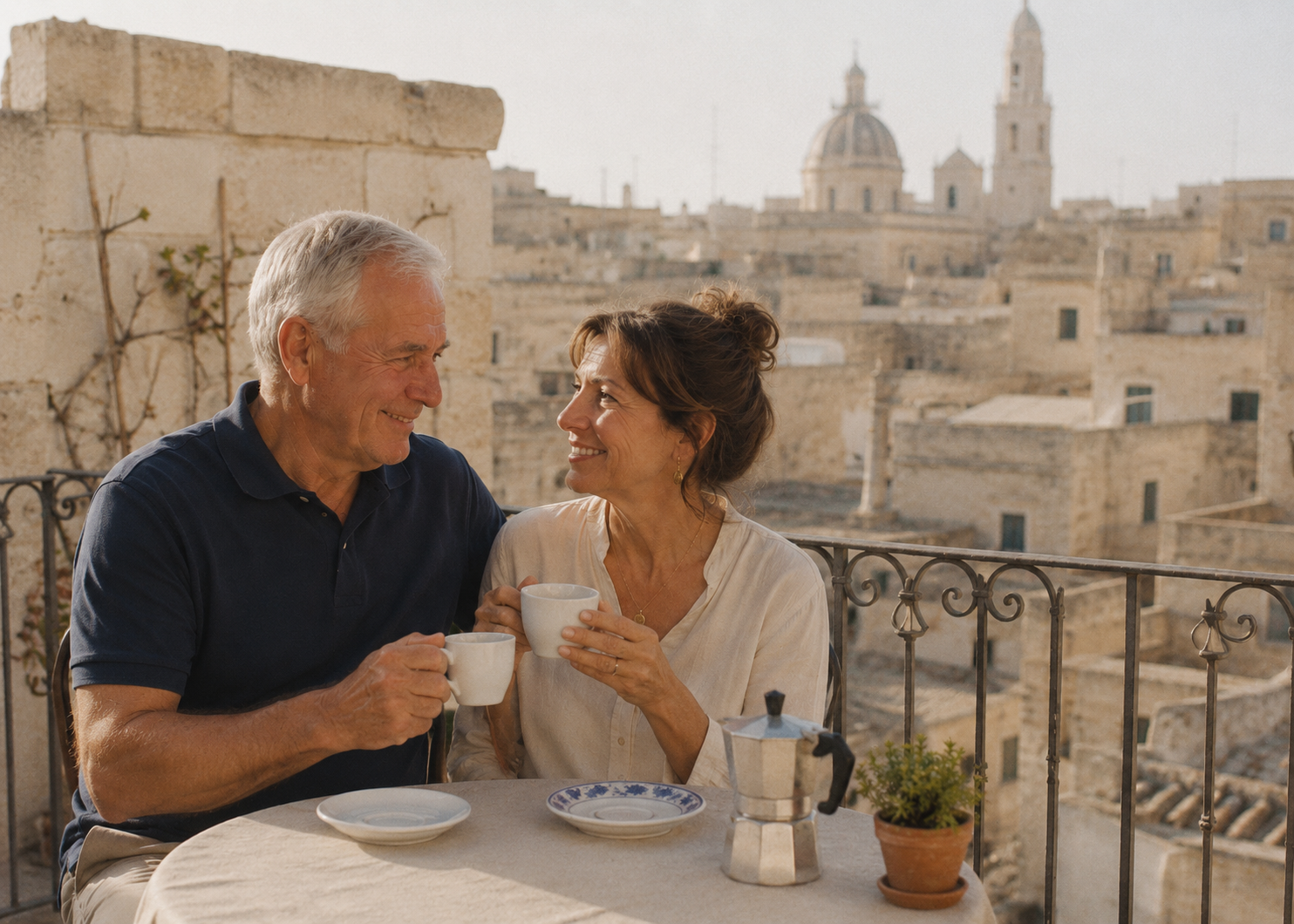
A man moving abroad alone late in life faces the same core challenge any solo mover does, the risk of isolation and the necessity of building a social world from scratch, but men can face a particular version of it, since men sometimes arrive with fewer of the social habits and inclinations that ease the building of new friendships, and can be more prone to isolation if they do not actively work against it. The solo male mover who assumes a social life will simply materialize, or who is reluctant to put himself out into the community, joining things, showing up, learning the language, can drift into a lonely existence even in a beautiful place, which is the same trap that catches any isolated mover but which some men are especially vulnerable to through habit or temperament. The man this composite represents avoided that trap precisely by doing the opposite, by actively and persistently building his place in the community of Lecce.
The lesson for a man considering such a move is to recognize the isolation risk honestly and to commit, perhaps against his own inclinations, to the active social work that building a new life requires, the language, the participation, the showing up, the putting himself out into the local world. This is the work that turns a solo male move from a lonely exile into a rich connected life, and it is entirely achievable for any man willing to do it, regardless of how naturally social he is, since it is a matter of deliberate effort rather than innate temperament. The man who does this work gives himself the chance at exactly what this composite man found, a full and connected and even love-filled late chapter, while the one who neglects it risks the isolation that undoes so many solo moves. The courage to build socially, deliberately and persistently, is the heart of a successful solo move for a man, and it is the real key to the life this story describes.
The Salento As A Place To Land
A final word on the Salento specifically, because the region itself is part of why this kind of move can be so rewarding, beyond just its affordability.
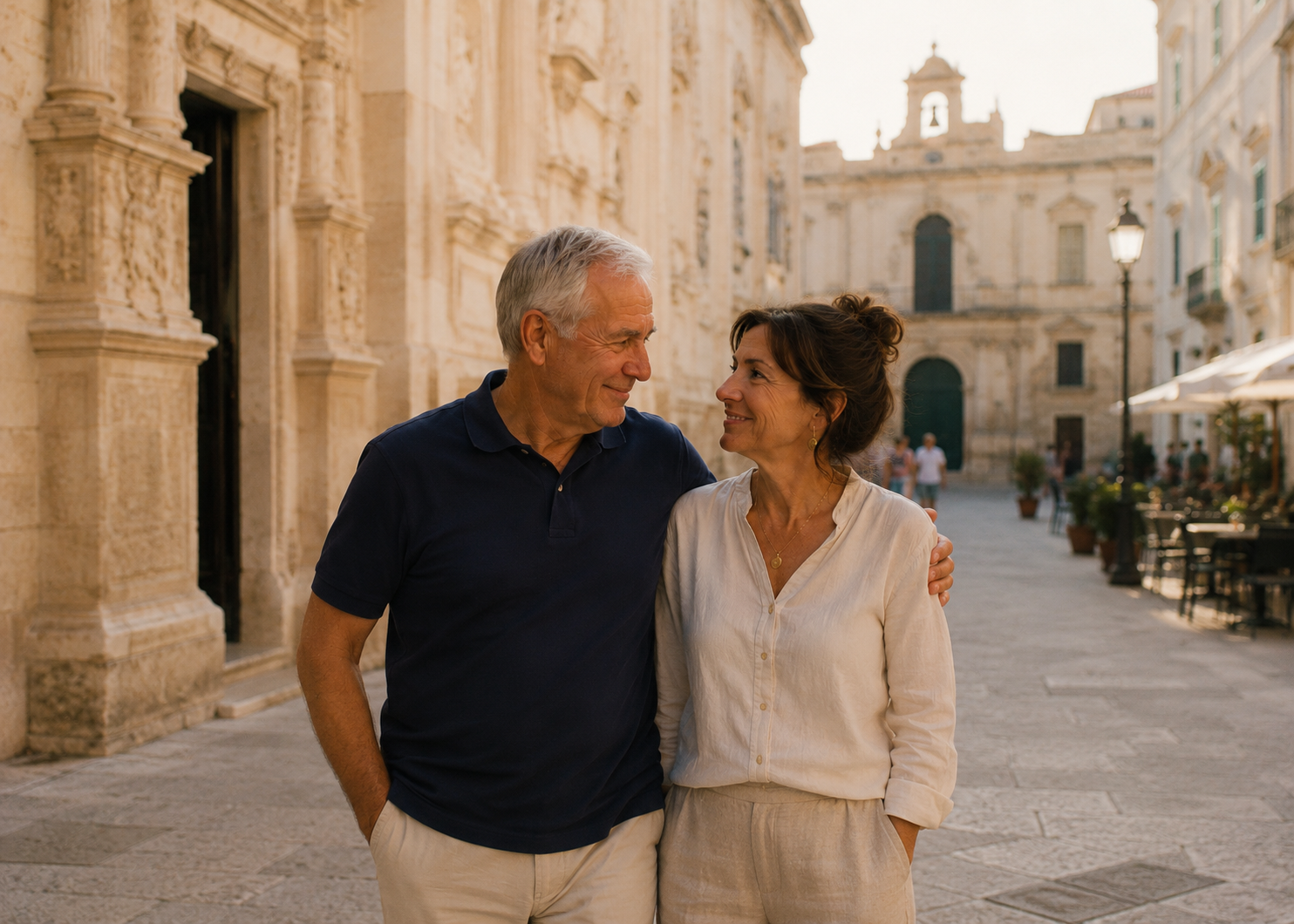
The Salento, the southern tip of Puglia around Lecce, is a region of genuine beauty and rich culture, with its baroque towns, its olive groves, its coastline on two seas, its distinctive food and traditions, and a warm, welcoming, unhurried southern Italian character, all of it available at a cost far below the famous Italian regions. This is the affordable-geography principle at its best, not a matter of accepting a lesser place to save money but of finding a genuinely wonderful place that happens to be cheap, since the Salento offers a quality of life, beauty, and culture that rival the expensive regions at a fraction of the cost. A retiree landing here gets not a compromise but a genuine prize, one of the loveliest corners of Italy at one of its lowest costs.
For the man this composite represents, the richness of the Salento was part of what made the integrated local life so rewarding, the beauty and culture and warmth of the place giving his daily integrated existence its texture and pleasure, so that the cheap life was also a deeply rich one. This is the combination that makes these affordable southern European moves so powerful for those who do them well, the meeting of low cost with high quality of life, where a modest sum buys not survival but genuine richness. The Salento, like the other great affordable corners of southern Europe, is a place where a person of modest means can live a life of real beauty and depth, and the man who landed there and built a real life in it found exactly that, which is the honest and genuinely enviable promise his story holds out to anyone willing to choose such a place and build a life in it with courage and care.

About the Author: Ruben, co-founder of Gamintraveler.com since 2014, is a seasoned traveler from Spain who has explored over 100 countries since 2009. Known for his extensive travel adventures across South America, Europe, the US, Australia, New Zealand, Asia, and Africa, Ruben combines his passion for adventurous yet sustainable living with his love for cycling, highlighted by his remarkable 5-month bicycle journey from Spain to Norway. He currently resides in Spain, where he continues sharing his travel experiences with his partner, Rachel, and their son, Han.