
A divorced teacher from Albuquerque moved to Almería in May 2018 with $84,000 in combined retirement assets. She was 58. Her financial advisor told her she did not have enough to retire at any age in the US. He was correct about American cost structure. He had no useful information about Spanish cost structure, and she did not ask him to acquire any. She made the decision based on her own research and moved with one suitcase and two boxes of books.
She has now lived in Almería for almost eight years. Her portfolio has grown from $84,000 to approximately $112,000. She is 66, in good health, deeply integrated into the local community, with a Spanish life that fits her better than her Albuquerque life did in its final years. Her Social Security claim at her full retirement age in 2027 will substantially expand her financial margin further.
This piece walks through how her specific math worked, what made Almería suitable for a solo female retiree at her asset level, and what the case suggests for divorced and widowed women in their late fifties and early sixties considering whether modest assets can support international retirement.
Why Almería Specifically
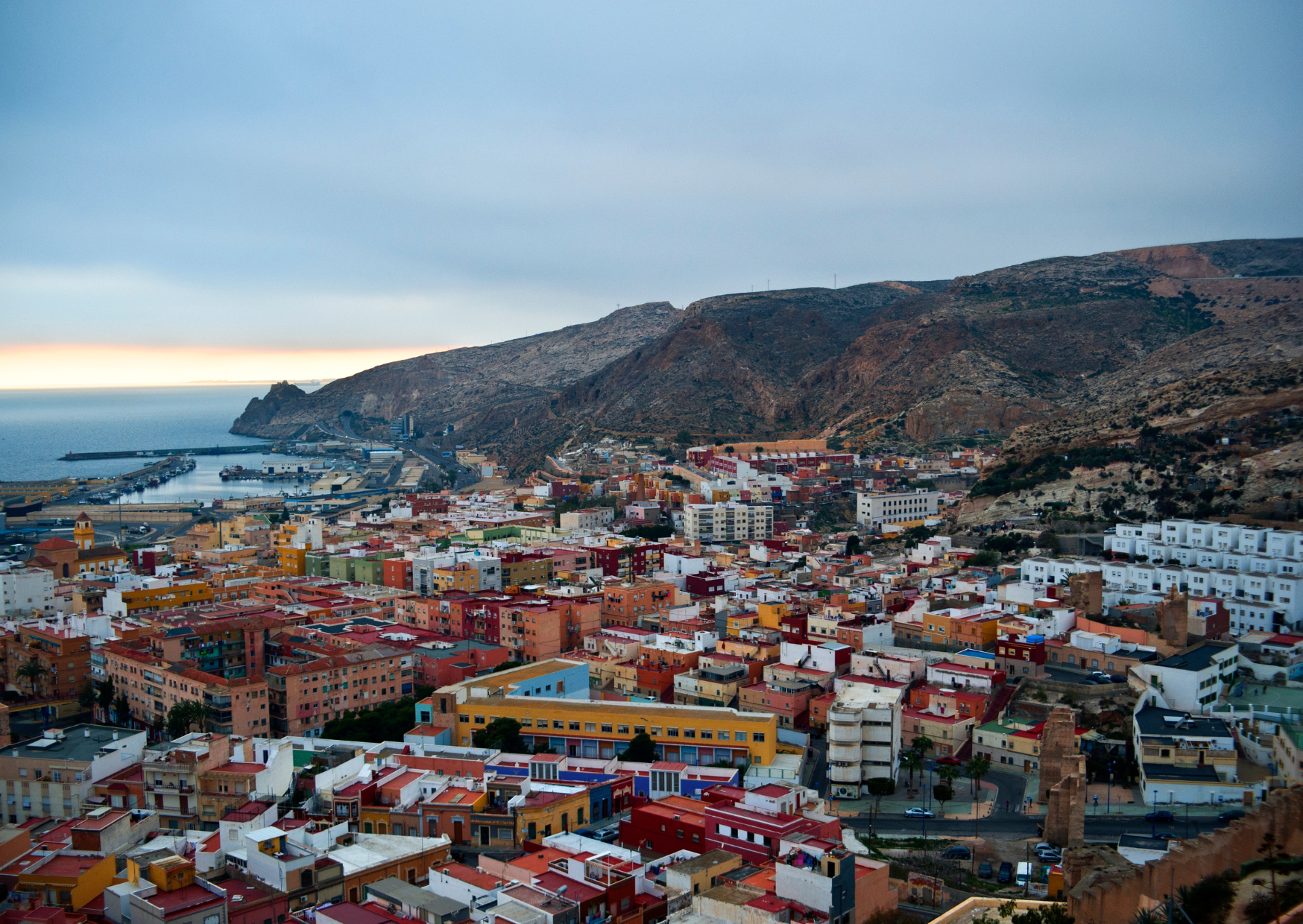
Almería is the southeastern Spanish city in eastern Andalusia, between the Costa del Sol and Murcia. It is one of the lowest-cost major Spanish cities for foreign residents. The tourism pressure that has elevated prices in Sevilla, Granada, and the coastal cities west of it has not equivalent reached Almería. The climate is among the driest and sunniest in Europe. The historic center is walkable and rich. The cost of living is approximately 30 percent below Madrid and 20 percent below Granada.
The Albuquerque retiree chose Almería for several specific reasons that mattered for her configuration.
The cost structure made her math work. Her starting asset level required a destination where comfortable solo living costs less than €1,400 monthly. Almería accommodates this comfortably. Madrid and Barcelona would not have. Most Mediterranean coastal cities would have produced tighter math.
The climate matched what she had been accustomed to in New Mexico. Sunny, dry, warm summers, mild winters. The transition from Albuquerque to Almería involved minimal climate adjustment.
The cultural pace suited her. Almería operates on a relaxed Andalusian schedule that aligned with her preferences. The fast pace of Madrid or Barcelona would have felt intrusive. The Almería rhythm of long lunches, afternoon rest, evening sociability worked naturally.
The safety profile was favorable for solo female residency. Spain ranks among the safer countries in Europe for women living alone. Smaller Spanish cities like Almería have particularly low rates of violent crime against women. Her ability to walk home from dinner at 11pm without anxiety was a feature of her Spanish life that she had not experienced in Albuquerque for at least a decade.
The English-speaking infrastructure was adequate. Almería has enough international residents and tourism to support some English-language services without being overrun by them. The medical care available in English exists. The legal and tax services in English exist. The basic transitions are achievable.
The community welcomed her gradually but genuinely. The Almería culture is welcoming to outsiders who make an effort. Her commitment to learning Spanish, attending local events, supporting local businesses, and being a good neighbor produced friendships within her first eighteen months that she has maintained across the years.
How The Math Actually Worked

Her financial structure required careful management across the bridge years from her move to her Social Security claim.
Her current monthly costs in Almería run approximately €1,100. Rent on her one-bedroom apartment near the old town runs €460. Utilities including internet and phone run €70. Food costs approximately €250 monthly. Healthcare through the Spanish public system supplemented by private insurance costs €130. Transportation, mostly walking with occasional buses, runs €30. Entertainment, books, cultural events, regular tea with friends runs €160. Total annual costs come to approximately €13,200, or about $14,300.
Her income sources have evolved across the eight years. From 2018 to 2022, the bridge years before any Social Security, she lived on rental income of approximately $9,600 annually from her retained Albuquerque condo plus portfolio drawdowns of $4,500 to $5,500 annually. The total cash flow ran $14,100 to $15,100 annually against costs ranging from €12,000 to €13,000.
She claimed Social Security at her age 62 in 2022. The early claim reduced her monthly benefit from what a full retirement age claim would have produced, but it eliminated the need for further portfolio drawdowns and produced an annual benefit of $14,800 that combined with her rental income to substantially exceed her annual costs.
From 2022 onward, her annual income has run approximately $24,400 (rental income plus Social Security). Her annual costs are $14,300. Her annual surplus exceeds $10,000.
She has been reinvesting the surplus in her portfolio. The portfolio that ended the bridge years at approximately $63,000 in 2022 has grown to approximately $112,000 in early 2026, helped by both the reinvestment of her annual surplus and the strong equity markets across most of the period.
What The Early Social Security Claim Produced
Conventional retirement planning advice favors delaying Social Security claims to full retirement age. For most retirees this advice is correct. For her specific situation, it was not.
The choice at age 62 was between claiming early at $1,235 monthly or waiting until 67 at approximately $1,750 monthly. The conventional analysis would have favored waiting for the $515 additional monthly benefit. The conventional analysis assumes that the retiree can fund the years between 62 and 67 from other sources.
She could not fund the bridge years from other sources without continuing portfolio drawdown that would have substantially depleted her remaining assets. The choice in her specific situation was between earlier reduced benefits and continued portfolio depletion. The early claim protected the portfolio. The portfolio has subsequently grown enough that the early claim was probably the right structural decision for her configuration.
This is worth noting because the conventional advice can produce suboptimal outcomes for retirees in tight bridge year situations. For solo female retirees with smaller starting assets and lower lifetime Social Security benefits (often due to career interruptions for childcare or domestic responsibilities), the early claim may be the structural decision that makes the rest of the retirement viable. The optimal Social Security claim timing depends on the specific cash flow situation, not on generic conventional wisdom about benefit maximization.
What Her Daily Life Looks Like

The lifestyle the Almería retiree lives is comfortable, social, and engaged in ways her Albuquerque life had ceased to be.
Her mornings start at 8:00. She walks to the bakery for fresh bread and to her regular cafe for coffee. She reads the newspaper and chats with the cafe owner and other regulars. By 9:30 she is back home or running morning errands.
Most mornings include something specific. Twice weekly she attends a Spanish conversation group at the local library. Two mornings weekly she meets a friend for coffee. Two mornings weekly she works in the small community garden plot she has maintained for five years. One morning weekly she takes the local bus to a nearby village to shop for things her Almería neighborhood does not have.
Lunch is the main meal of her day. She cooks at home four or five days weekly. Fresh fish or chicken with vegetables, sometimes a simple paella or stew, always with bread and a small glass of wine. The remaining two or three days weekly she meets friends for the menu del día at one of several reasonable local restaurants. Total weekly food spending runs approximately €55.
Afternoons involve reading, occasional naps, and projects. She has been writing a memoir for three years, working on it most afternoons for an hour or two. She reads constantly. She maintains correspondence with friends in the US through long letters that she actually writes by hand. Her American friends initially found this strange. By year three they had started writing back in kind.
Evenings are social. Three or four evenings weekly she meets friends for tapas or for dinner. The remaining evenings she walks along the seafront, attends concerts at the local cultural center, watches Spanish films at the small theater that shows them with English subtitles, or stays home with a book.
Her health has improved substantially. The walking, the Mediterranean food, the reduced stress, the social engagement, the sunshine. She had been managing mild depression in Albuquerque for years before the move. The depression has not returned across eight years in Almería. Her cardiovascular markers have improved. Her weight settled at a stable level approximately 18 pounds below her Albuquerque weight without deliberate weight loss effort.
Her social network is real. Her Spanish friends from the conversation group. Her cafe regulars. The friends from the community garden. The British widow who lives in her building. The Dutch couple who summer in Almería. The neighbors who have known her for years. She is not lonely. She is not isolated. She has the social fabric that solo American retirement so often fails to provide.
What This Pattern Reveals About Solo Female Retirement Specifically
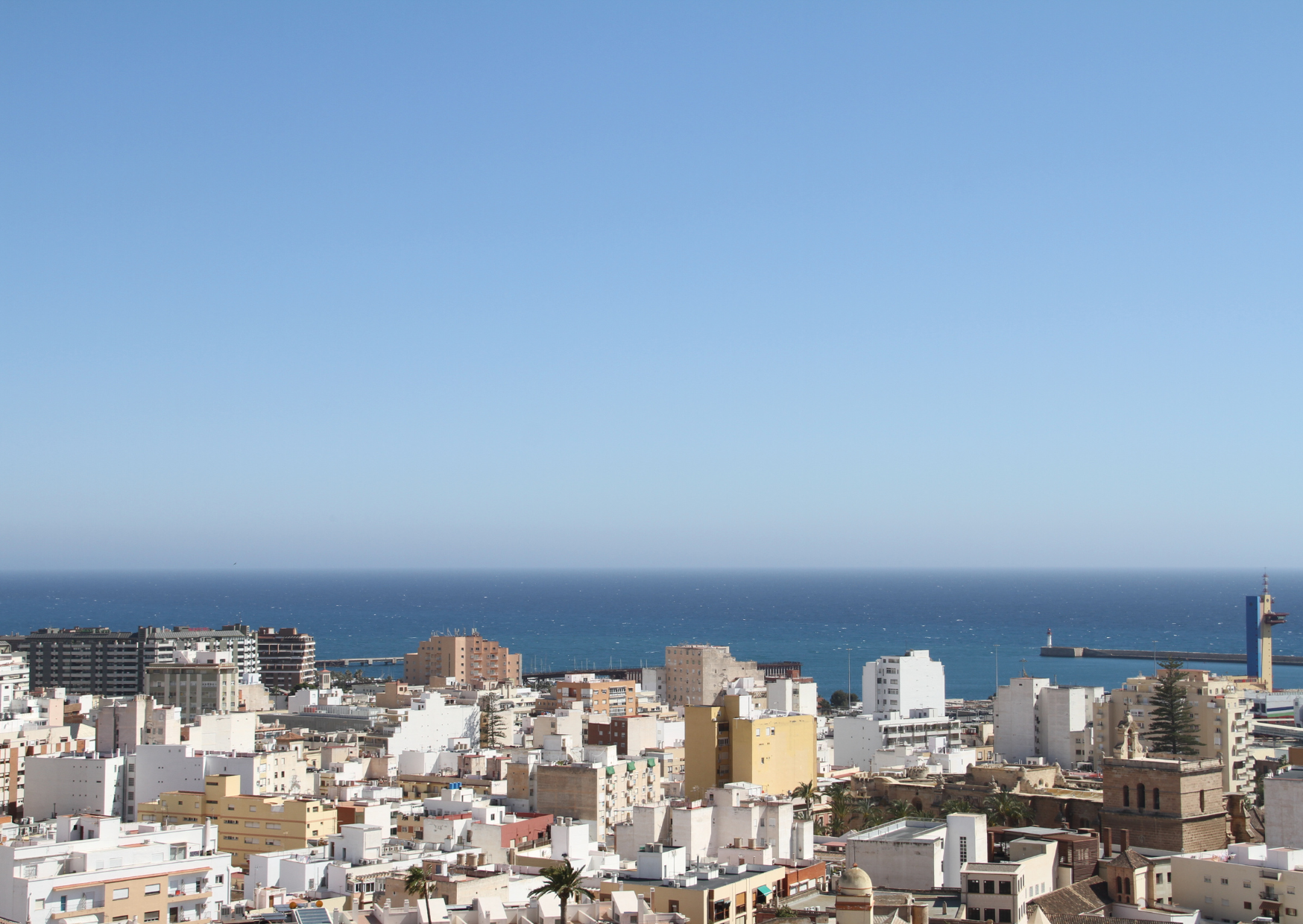
Solo female retirees face specific challenges that the conventional retirement planning literature often does not address adequately.
Social Security benefits for women are typically lower than for men of comparable retirement profiles because of career interruptions for childcare, lower lifetime earnings in many cases, and the absence of spousal benefit for divorced and widowed women whose marriages did not last long enough or whose ex-spouses earned less. The retirement income gap between solo women and couples is structurally larger than the asset gap alone would suggest.
Solo women face longer life expectancy with the corresponding need for retirement income that lasts longer. The financial planning implications are real. Retirement funded by $84,000 in starting assets must work across 25 to 35 years rather than the shorter spans men of similar age can plan around.
Solo women face specific safety considerations in destination selection that couples and solo men do not always face equivalently. The choice of country and city affects daily quality of life through the ability to walk, travel, and live alone without persistent safety concerns.
The social integration challenge for solo women in retirement is real. Adult children moving far away, the death of a spouse, the dispersal of long-term friendships. American solo retirement frequently produces isolation that the standard advice does not address.
The Almería retiree’s case suggests that international retirement specifically may address several of these solo female retirement challenges more effectively than American retirement does. The cost structure that supports lower-asset retirement. The healthcare system that removes catastrophic risk. The walkable city that supports daily activity. The social fabric that European smaller cities maintain. The safety profile that supports solo female living. The combination produces solo retirement that works in ways American configuration often does not produce at equivalent asset levels.
What This Tells Other Solo Women At Modest Asset Levels
For divorced or widowed American women in their late fifties or early sixties with retirement assets between $50,000 and $200,000 considering whether international retirement could work for them, the Almería case provides a useful data point.
The math can work at this asset level if specific conditions hold. Retained US rental property providing $700 to $1,400 monthly. Destination with cost structure below €1,400 monthly. Social Security claiming strategy matched to the specific bridge year math. Genuinely modest lifestyle and willingness to live in a smaller apartment rather than a house.
The destination selection matters substantially. Spanish smaller cities (Almería, Granada, Cádiz, Salamanca, León), Portuguese smaller cities (Évora, Coimbra, Aveiro), Greek smaller cities, and some Latin American destinations support solo female retirement at these asset levels. The famous expensive destinations do not at this asset level.
The bridge year math requires careful management. Years between move and Social Security claim can require portfolio drawdown that solo women at modest asset levels can ill afford. The early Social Security claim may be the structural decision that makes the rest of the math work, even though conventional advice often discourages early claims.
The lifestyle has to be genuinely simple. Apartment rather than house. Walking rather than car. Modest restaurant pattern rather than frequent fine dining. Local entertainment rather than expensive travel. Solo women who would find this lifestyle inadequate should not attempt retirement at this asset level in any country.

Social engagement has to be built deliberately. Solo female retirees face the highest loneliness risk in retirement statistics. Joining specific communities (language exchange groups, hobby clubs, library programs, religious communities, neighborhood organizations) is essential. The community will not build itself, but the European smaller city environment supports community building more effectively than American suburban configuration does.
Safety considerations matter and should be researched honestly for any proposed destination. Country-level safety statistics, city-level safety statistics, neighborhood-level safety patterns. Solo female residents who do this research carefully select destinations that support their daily life. Solo female residents who do not research carefully sometimes encounter the daily safety pressures that affected their lives in the US.
Healthcare access through public systems is structurally important for solo female retirees specifically. Women’s healthcare needs across aging include specific screening, prescription, and treatment requirements that European public systems handle without producing the catastrophic costs that American healthcare can produce.
What The Albuquerque Advisor Missed
The Albuquerque financial advisor who told this retiree she did not have enough assets to retire at any age was working within an American cost framework. He was correct within that framework. He was incorrect about the existence of other frameworks.
The American framework assumes that retirement requires American costs. American housing, American healthcare, American transportation, American property taxes, American everything. Under that framework, $84,000 in starting assets at 58 produces a difficult retirement.
The Almería framework requires Spanish costs, which run approximately 30 to 40 percent of American equivalents for the same quality of life. Under that framework, $84,000 in starting assets at 58 produces a comfortable solo retirement that has, eight years later, demonstrated portfolio growth rather than depletion.
The advisor did not know about the Almería framework because his job was to advise within the American framework. His advice was internally consistent but did not include the option that turned out to be available. The retiree did her own research, found the option, took the risk, and produced the outcome the advisor would have said was impossible.
For solo American women currently considering whether their own modest assets could support comfortable retirement, the question is whether you can do your own research on the specific cost structure of your specific proposed destination, and whether you trust that research enough to act on it even when American advisors recommend against. The Almería retiree did both. Eight years of comfortable Spanish life have validated her decision. The same approach is available for other solo women willing to do the research and trust the math when the numbers support the move.
The teacher from Albuquerque at 66 in Almería is one example of a pattern that more solo American women could follow. The math can work below $100,000 in starting assets. The lifestyle can be rich. The community can be real. The retirement that her advisor told her was impossible has been her life for almost eight years and looks better with each passing year.
For solo American women in their late fifties currently making decisions about their retirement futures, the Almería retiree’s eight years provide an honest comparison to American solo retirement at equivalent asset levels. The comparison is meaningful, and the choice about which framework to operate within remains individual. The information about what each framework produces is now available for women willing to engage with it.

About the Author: Ruben, co-founder of Gamintraveler.com since 2014, is a seasoned traveler from Spain who has explored over 100 countries since 2009. Known for his extensive travel adventures across South America, Europe, the US, Australia, New Zealand, Asia, and Africa, Ruben combines his passion for adventurous yet sustainable living with his love for cycling, highlighted by his remarkable 5-month bicycle journey from Spain to Norway. He currently resides in Spain, where he continues sharing his travel experiences with his partner, Rachel, and their son, Han.