
The bulgogi at the Korean restaurant in Seoul, Los Angeles Koreatown, or Madrid’s growing Korean food scene is not the bulgogi made at home from most American cookbooks. The restaurant version has tender, almost silky meat, a marinade flavor that has fully penetrated rather than coated the surface, a slight sweetness that does not come from added sugar, and a finish that browns properly without drying out. The home version is usually tougher, less integrated, sweeter in a sugary rather than fruity way, and either underbrowned or overcooked.
The single most important difference is the pear. Real Korean bulgogi marinade contains grated Asian pear (or sometimes Korean pear, which is slightly different), which serves a specific function that most American recipes either omit or substitute with sugar. The pear is not a flavoring addition. It is the active tenderizing agent that produces the characteristic texture of properly marinated bulgogi. American recipes that use sugar or pineapple juice instead are making a different dish.
This piece is the recipe written for the cook who wants the Korean version rather than the cookbook version. The pear, the marinade structure, and the cooking technique come first. The cultural and history context follows.
The Recipe
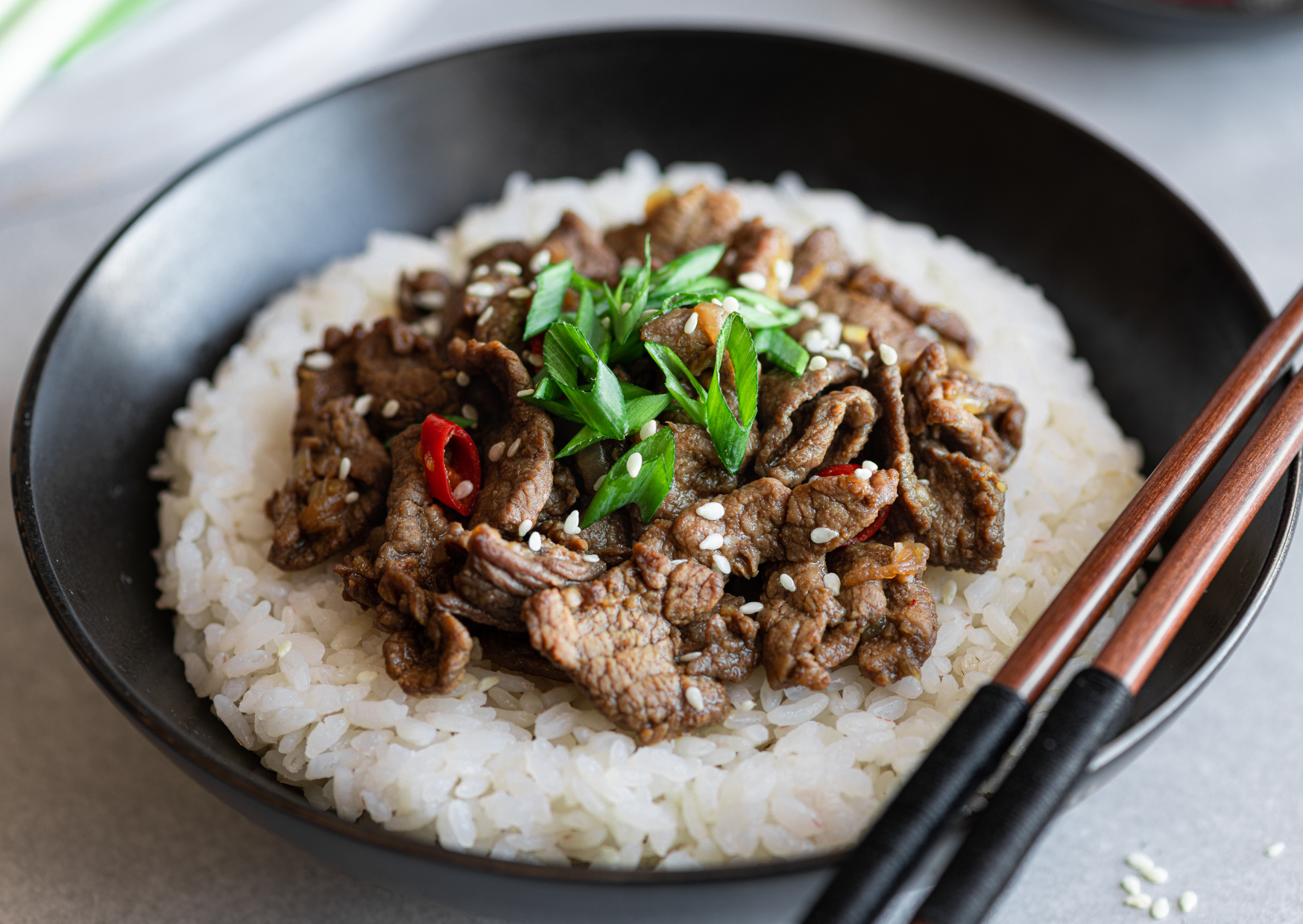
Yield: 4 servings
Active time: 25 minutes prep, 8 to 10 minutes cooking Total time: 1 hour 30 minutes minimum, or up to 24 hours marinating
Ingredients for the marinade:
- 1 medium Asian pear (about 200 grams), peeled and grated
- 1 small yellow onion (about 100 grams), peeled and grated
- 6 cloves garlic, minced or grated
- 2 cm fresh ginger, peeled and grated
- 4 tablespoons regular soy sauce (preferably Korean or Japanese)
- 2 tablespoons brown sugar
- 1 tablespoon mirin or Korean cooking wine (mirim)
- 1 tablespoon toasted sesame oil
- 1 teaspoon ground black pepper
- 1 tablespoon toasted sesame seeds
Ingredients for the meat:
- 700 grams beef sirloin, ribeye, or chuck eye, sliced very thin (1 to 2 mm)
Ingredients for cooking:
- 1 tablespoon neutral oil (rice bran, canola, or peanut)
- 4 scallions, cut into 4 cm pieces
- 1 small white onion, sliced thin
- Additional toasted sesame seeds for garnish
To serve:
- Steamed short-grain rice
- Lettuce leaves (red leaf or romaine)
- Perilla leaves if available
- Ssamjang (Korean dipping sauce)
- Kimchi
- Pickled radish
Method:
- Slice the beef as thinly as possible. Freezing the beef partially (about 45 minutes) makes thin slicing significantly easier. The slices should be 1 to 2 millimeters thick. Most American cookbooks call for 5 mm slices, which is too thick for proper bulgogi. Real bulgogi uses near-paper-thin slices.
- Combine the grated Asian pear, grated onion, minced garlic, and grated ginger in a bowl. The mixture should be wet and slightly chunky, not pureed.
- Add the soy sauce, brown sugar, mirin, sesame oil, black pepper, and sesame seeds to the pear-onion mixture. Whisk to combine.
- Add the sliced beef to the marinade. Mix thoroughly with your hands, separating any pieces that stick together. Make sure every slice has marinade contact. The marinade should be loose and well-distributed, not pooled at the bottom.
- Cover and refrigerate for at least 1 hour. The minimum is 1 hour, the maximum is 24 hours. Longer marinating produces more tender meat but the pear enzyme can over-tenderize after 24 hours and produce mushy texture.
- When ready to cook, heat a large cast-iron skillet, carbon steel pan, or wok over high heat until smoking. Add the neutral oil and swirl to coat.
- Add the marinated beef in a single layer, working in two batches if necessary. Do not crowd the pan. Crowded meat steams rather than browns. Cook each batch for 2 to 3 minutes, stirring occasionally, until the beef is just cooked through and the marinade has caramelized on the meat surface.
- Add the scallions and white onion in the final minute of cooking. The vegetables should be just barely cooked, retaining some crunch.
- Transfer to a serving plate. Sprinkle with additional toasted sesame seeds.
- Serve immediately with steamed rice, lettuce leaves for wrapping, perilla leaves if available, ssamjang for dipping, kimchi, and pickled radish.
Why The Asian Pear Specifically
The Asian pear in bulgogi marinade is doing chemistry that most American recipes do not understand or replicate.
Asian pears contain a specific enzyme called calpain, which breaks down the connective proteins in muscle tissue. This is the same category of enzyme found in pineapple (bromelain), papaya (papain), and kiwi (actinidain), but the pear version works more gently and produces more controlled tenderizing.
The pear does three things simultaneously. It tenderizes the meat through enzymatic action. It adds a subtle natural sweetness without the harsh sugariness that added sugar produces. It contributes to the marinade’s ability to penetrate the meat through its high water content and slight acidity.
The substitutions American recipes typically make do not produce the same result. Sugar adds sweetness but no tenderizing. Pineapple juice tenderizes too aggressively and produces mushy texture if marinating exceeds 30 minutes. Cola (sometimes recommended in American recipes) adds sweetness and some acid but no enzymatic tenderizing. Apple is closer to pear but slightly different in flavor and enzyme content.
The Asian pear is genuinely irreplaceable for proper bulgogi. If Asian pears are not available, Korean pears (slightly more granular texture but similar enzymatic profile) work. Bosc pears are a distant third option but produce a noticeably different result. Regular grocery store American pears are generally the wrong texture and water content for bulgogi marinade.
Asian pears are increasingly available in American supermarkets, particularly in well-stocked produce sections and Asian markets. They are usually labeled as “Asian pear,” “Korean pear,” “nashi pear,” or “apple pear.” The flesh is white, very crisp, and high in water content. They look more like apples than like American pears.
On The Beef Cut And Slicing
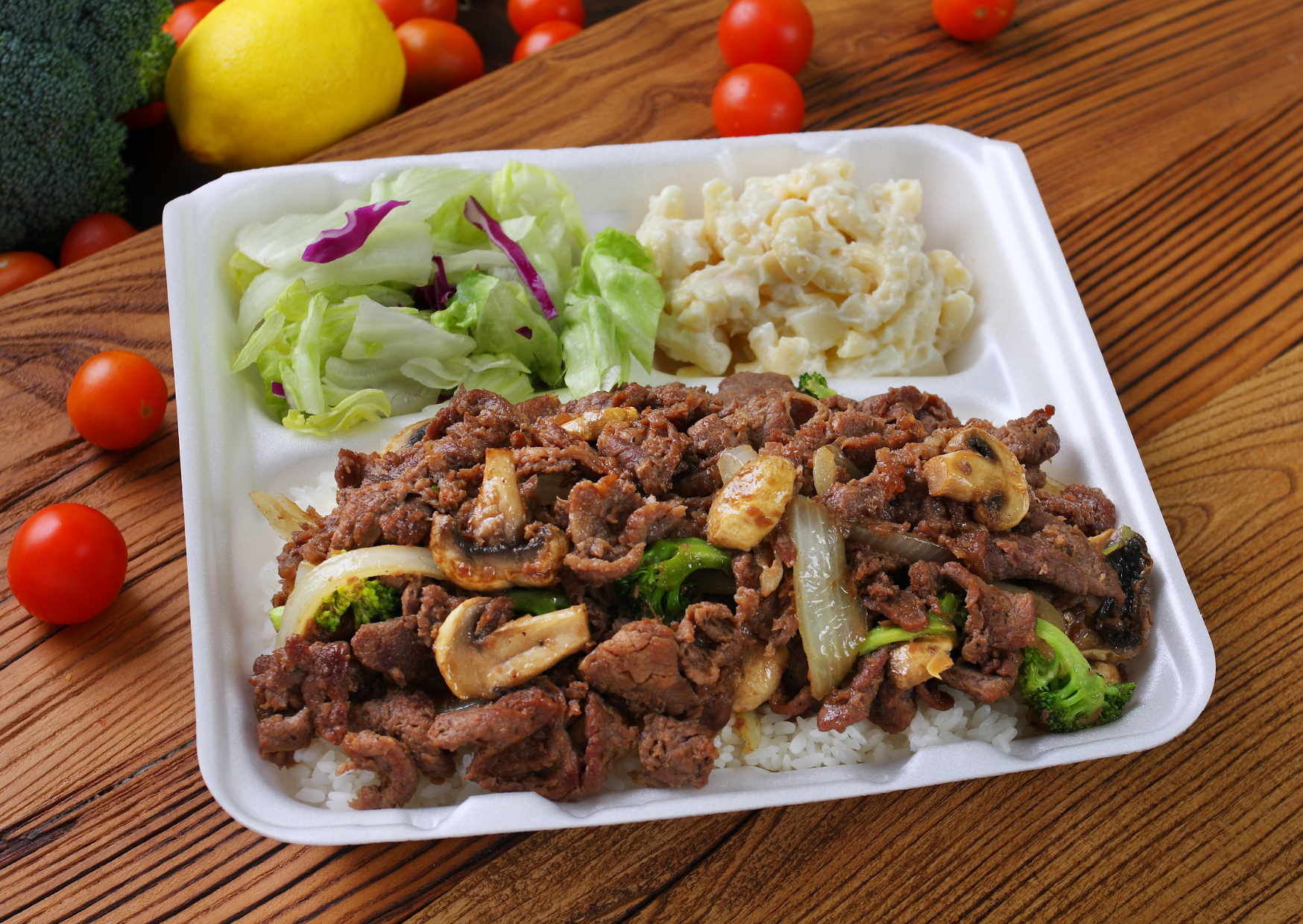
The beef cut and slicing technique are both critical for proper bulgogi texture.
Sirloin, ribeye, and chuck eye are the traditional cuts. Each works slightly differently. Sirloin is leaner and produces a cleaner-flavored bulgogi. Ribeye has more marbling and produces richer flavor with slightly less tender texture. Chuck eye is a budget option that works well when properly sliced and marinated.
The slicing is the part most American cooks underestimate. Real bulgogi uses paper-thin slices, around 1 to 2 millimeters thick. At this thickness, the meat is essentially translucent when held up to light. Thicker slices do not absorb marinade properly, do not cook quickly enough at high heat, and do not produce the characteristic bulgogi texture.
The technique for slicing this thin requires either professional equipment (a meat slicer) or partial freezing of the meat. Place the beef in the freezer for 30 to 60 minutes before slicing. The beef should be firm but not frozen solid. A very sharp knife, ideally a meat slicer or long blade, then cuts the meat into thin slices.
Many American supermarkets and Korean markets sell pre-sliced beef labeled as “bulgogi meat” or “shabu shabu meat.” This pre-sliced product is the easiest option and is generally sliced correctly. The cost is slightly higher than buying whole cuts and slicing at home, but the convenience and consistency are worth it for most home cooks.
If using a Korean butcher, ask for “bulgogi-yong” cuts (cuts for bulgogi). They will know what thickness to slice at.
On The Marinade Structure
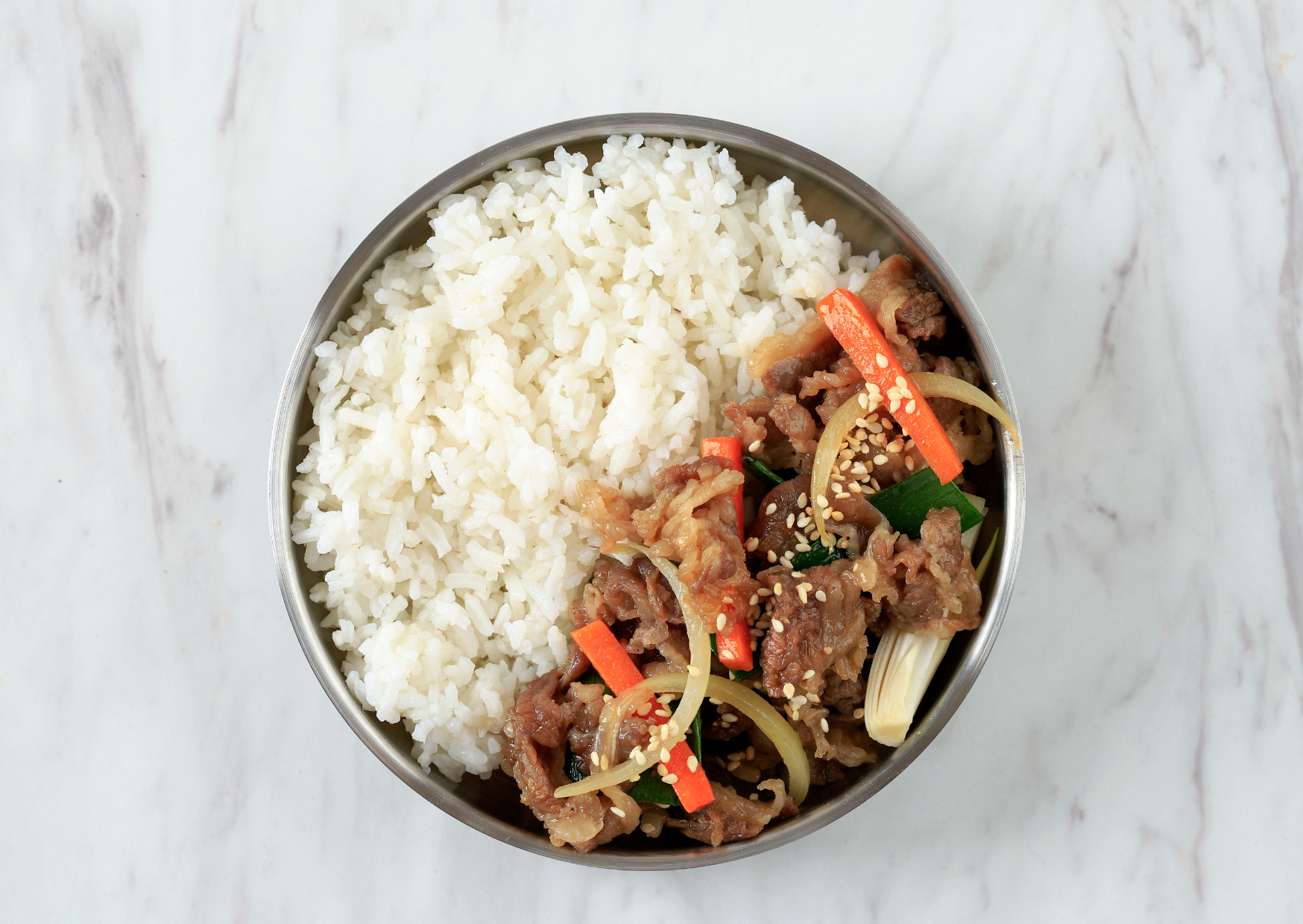
The bulgogi marinade has a specific structure that the cook should understand to make adjustments.
The pear and onion are the wet, vegetable-based foundation that produces tenderizing and adds natural sweetness.
The garlic and ginger are the aromatic foundation that produces the characteristic Korean savory profile.
The soy sauce is the salt and umami foundation. Korean soy sauce (specifically Korean ganjang, also called whe-ganjang for general cooking) is slightly different from Japanese soy sauce, with a more complex fermented profile. If Korean soy sauce is not available, Japanese soy sauce (Kikkoman, Yamasa) is the closest substitute. Chinese soy sauce is wrong.
The brown sugar balances the saltiness and contributes to the caramelization during cooking. Some Korean recipes use only the pear’s natural sweetness without added sugar. The brown sugar version is standard restaurant style and produces more reliable caramelization.
The mirin (or Korean cooking wine called mirim) adds depth and acidity that balances the marinade. Substituting with rice vinegar produces a different and slightly off result. Sherry can substitute in a pinch.
The sesame oil is the finishing flavor element. It should be Korean or Japanese toasted sesame oil, not raw. Use only 1 tablespoon. More than this overpowers the marinade.
The black pepper adds gentle heat without dominating the flavor profile. Korean recipes generally use less spice than Chinese recipes. The black pepper is the only heat element in standard bulgogi (some variations add gochujang or gochugaru for spiciness, but those are spicy bulgogi variants rather than standard bulgogi).
The marinade ratios can be adjusted. More pear produces more tender meat but slightly different flavor. More soy sauce produces saltier marinade. More sugar produces sweeter result. The proportions in this recipe are calibrated for the typical bulgogi balance, but personal preference is reasonable.
On The Cooking Technique
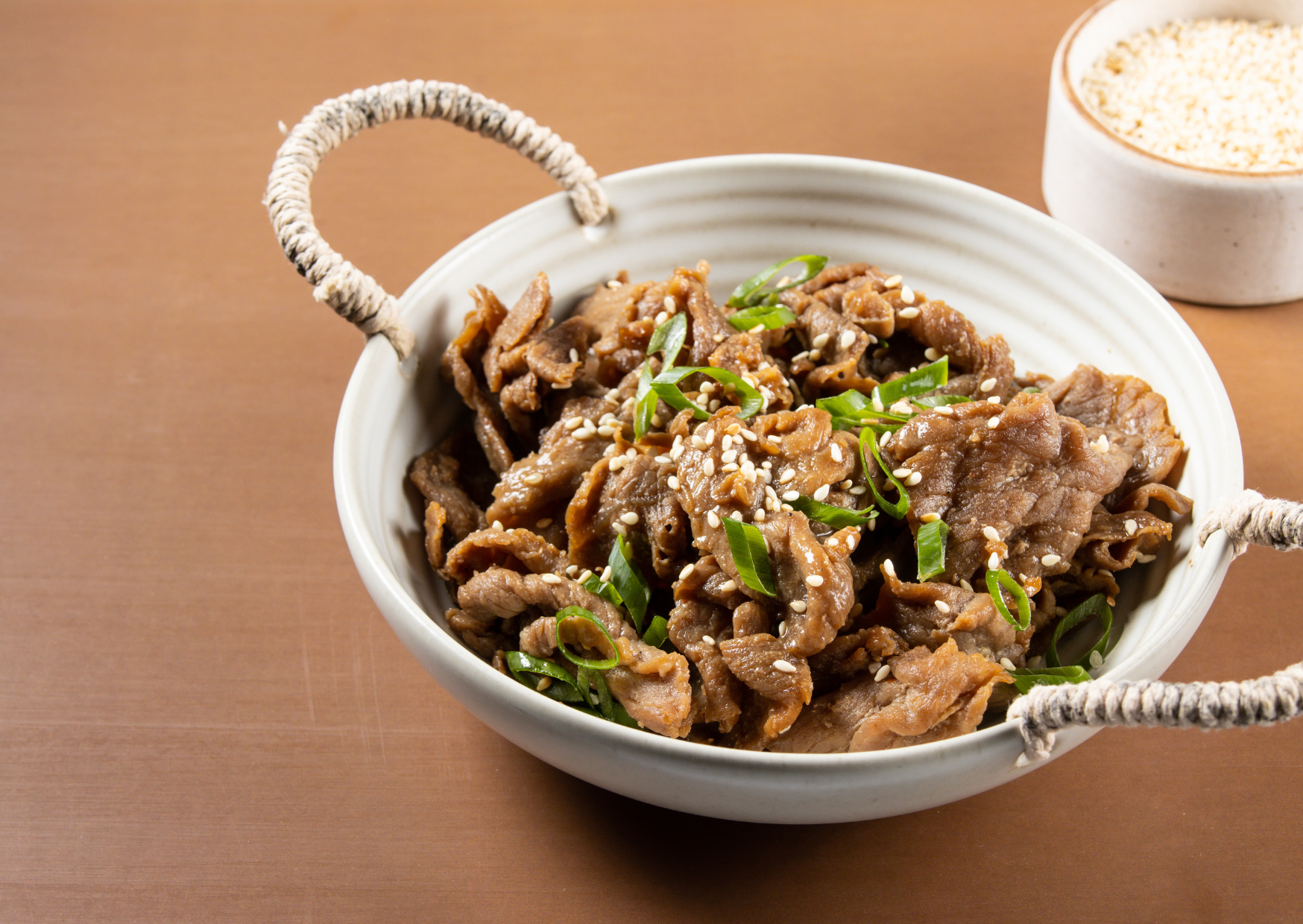
The cooking technique for bulgogi is high-heat, fast-cooking, similar to other Asian wok preparations.
The pan must be very hot before the meat goes in. The marinade is wet, and adding wet meat to a cool pan produces steaming rather than browning. The pan should be smoking when the oil is added.
Cook in batches if your pan is not large enough to hold all the meat in a single layer. Crowded meat steams. The pan recovers heat between batches.
Stir frequently but not constantly. The meat needs occasional contact with the pan surface to brown, but it cooks so quickly that overstirring prevents browning. Stir every 30 to 45 seconds rather than continuously.
Cook just until the meat is no longer pink. Bulgogi is meant to be just-cooked, with the marinade caramelized on the surface but the meat itself remaining tender. Overcooked bulgogi is dry and tough. The total cooking time per batch is 2 to 3 minutes.
The vegetables go in last to maintain their texture. Scallions and onion should retain some crunch in the finished dish.
For outdoor grilling (a traditional Korean preparation), use a charcoal grill with high heat. Place the marinated meat on a grill grate or in a perforated grill pan. The cooking time is similar to stovetop, around 2 to 3 minutes total. The smoke adds character that stovetop cooking cannot produce.
For Korean tabletop grilling (gas burner with grill plate, common in Korean restaurants), the technique is similar but the cooking happens at the table with diners participating. This is the traditional restaurant style but is not necessary for home cooking.
On The Accompaniments
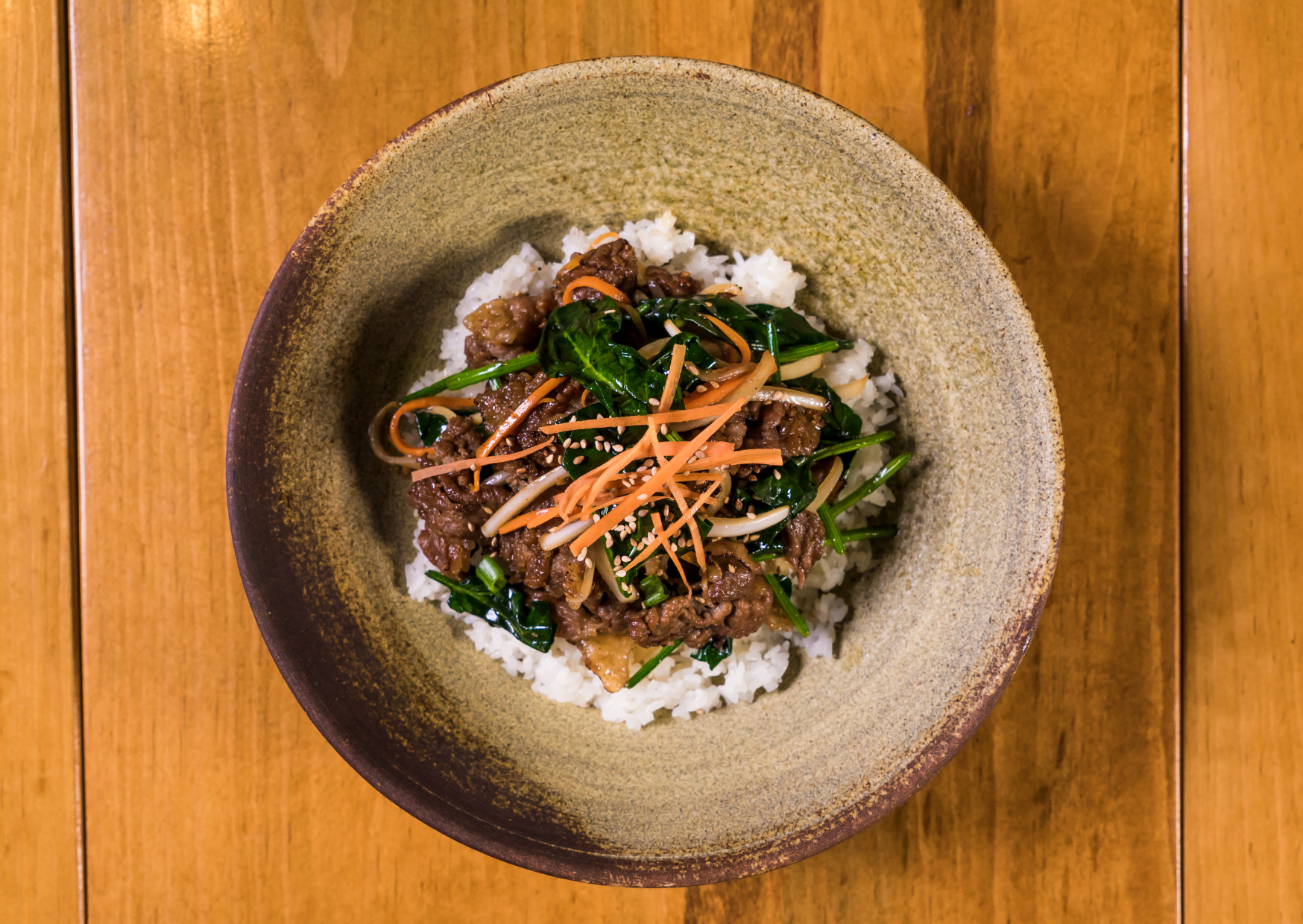
Bulgogi served without proper accompaniments is incomplete. The Korean dining structure assumes specific side dishes and serving vessels.
Lettuce leaves are the wrapping vehicle. Bulgogi is traditionally eaten by placing a small amount of meat on a lettuce leaf, adding rice, ssamjang, and other ingredients, then wrapping into a small parcel that is eaten in one or two bites. Red leaf, butter, or romaine lettuce work. The lettuce should be fresh and crisp.
Perilla leaves add a distinctive herbal flavor. They are increasingly available at Asian markets but not yet at typical American supermarkets. If unavailable, the dish works without them. Shiso leaves are a partial substitute.
Ssamjang is a thick Korean dipping sauce made with fermented soybean paste (doenjang), gochujang (red chili paste), garlic, sesame oil, and sometimes minced onion or apple. It is sold ready-made at Korean markets. Quality varies; Sempio and CJ brands are reliable. Homemade ssamjang is better but the bottled version is acceptable.
Kimchi is the standard fermented vegetable accompaniment. Napa cabbage kimchi is the most common; radish kimchi (kkakdugi) is also traditional. Korean markets have wide selections. Mainstream supermarkets increasingly carry kimchi but the quality varies.
Pickled radish (danmuji) is a yellow pickled daikon often served with Korean dishes. It is sold in plastic packets at Asian markets.
Steamed short-grain rice is the starch foundation. Korean rice varieties work best, but Japanese short-grain rice (Calrose, sushi rice) is an acceptable substitute. American long-grain rice is wrong.
The full Korean meal includes additional small side dishes called banchan: seasoned spinach, bean sprouts, marinated cucumber, fish cakes, or various pickled and fermented vegetables. For home cooking, 2 to 3 banchan plus the main dish, rice, and lettuce wraps is sufficient. A full Korean restaurant meal might have 8 to 12 banchan, but this is not necessary at home.
The Cost Breakdown
For a single batch, four servings:
Beef (sirloin or ribeye, sliced thin): 14 to 22 euros for 700 grams of good quality. Asian pear: 1.50 to 3 euros for 1 medium pear. Onion, garlic, ginger: 1.50 to 2.50 euros total. Soy sauce, brown sugar, mirin, sesame oil: 1 to 2 euros for the amounts used (bottles last months). Sesame seeds: negligible. Cooking oil: negligible. Lettuce, perilla, scallions: 2 to 4 euros total. Ssamjang, kimchi, pickled radish: 3 to 5 euros if buying ready-made. Rice: 1 to 2 euros for the cooked rice serving four.
Total cost for four servings: roughly 24 to 40 euros, or 6 to 10 euros per person.
For comparison, bulgogi at a Korean restaurant in Madrid, Lisbon, or Barcelona typically costs 18 to 28 euros per person for the equivalent serving with sides. Making it at home is meaningfully cheaper, particularly when the marinade ingredients are amortized across multiple batches.
Storage And Leftovers
Cooked bulgogi keeps in the refrigerator for 3 to 4 days. The flavor often improves overnight as the marinade continues to integrate. Reheat gently in a pan over medium heat with a splash of water to prevent drying.
Marinated raw bulgogi (before cooking) keeps in the refrigerator for up to 24 hours. Beyond this, the pear enzyme over-tenderizes the meat and produces mushy texture.
Marinated raw bulgogi can be frozen for up to 1 month. Freeze the meat in the marinade in airtight containers or freezer bags. Thaw overnight in the refrigerator before cooking. The texture is slightly softer after freezing but still acceptable.
Leftover cooked bulgogi has many uses beyond the original presentation. Stuffed into Korean rice rolls (gimbap). Stir-fried with vegetables and rice for a quick fried rice. Layered into Korean-style sandwiches. Mixed into eggs for a Korean omelet. Used as a pizza topping in Korean-style fusion preparations.
A Repeatable Cooking Pattern
To integrate this dish into regular cooking:
Make bulgogi every 2 to 3 weeks. The active prep time is 20 to 25 minutes including marinade preparation. The cooking is 8 to 10 minutes. Including marinating time, the dish takes about 90 minutes from start to finish.
Buy Asian pears when in season (late summer through early winter for the best quality). Outside of peak season, store-bought Asian pears can be more expensive but are generally available at Asian markets.
Build a Korean pantry. Soy sauce, sesame oil, mirin, gochujang, gochugaru, doenjang, and rice wine cover most Korean home cooking. The initial investment is moderate and the ingredients enable a wide range of dishes beyond bulgogi.
Try variations after mastering the base recipe. Spicy bulgogi (with added gochujang and gochugaru). Pork bulgogi (using pork shoulder or belly, slightly different marinade). Chicken bulgogi (slightly modified marinade). The base technique stays the same. The variations build on it.
The Framework The Cookbook Misses
The recipe above is one specific dish. The framework it teaches transfers to most Korean meat preparations.
The pear-onion enzymatic marinade applies to galbi (Korean short ribs), to chicken bulgogi, to other Korean grilled meat preparations. The thin-slicing technique applies to multiple Korean stir-fry and grill preparations. The high-heat fast-cooking technique applies broadly across Korean meat dishes.
These techniques are obvious to Korean home cooks who learned the dishes from family. They are largely absent from American cookbooks because the cookbook writers often work with American kitchen norms (thicker slices, simpler marinades, longer cooking times) without explaining what they have changed.
The American who makes this bulgogi three or four times stops needing the recipe. The cook starts adjusting the marinade by feel, the slicing thickness by intuition, the cooking time by visual cues. The dish becomes a regular dinner option rather than a special-occasion attempt at Korean restaurant cuisine.
The pear is not a secret ingredient. It is just an ingredient that American recipes often substitute for convenience or unfamiliarity. Once you understand what the pear is doing chemically, the substitutions become unacceptable. The pear cannot be replaced with sugar. It can only be replaced with another enzymatic tenderizer that does the same job differently.
The cookbook version of bulgogi is no longer the bulgogi you make. The Korean version, with the proper pear marinade and thin-sliced beef, is. The difference between the two is the difference between Korean food cooked by Koreans and Korean food cooked by Americans following Americanized recipes.

About the Author: Ruben, co-founder of Gamintraveler.com since 2014, is a seasoned traveler from Spain who has explored over 100 countries since 2009. Known for his extensive travel adventures across South America, Europe, the US, Australia, New Zealand, Asia, and Africa, Ruben combines his passion for adventurous yet sustainable living with his love for cycling, highlighted by his remarkable 5-month bicycle journey from Spain to Norway. He currently resides in Spain, where he continues sharing his travel experiences with his partner, Rachel, and their son, Han.