
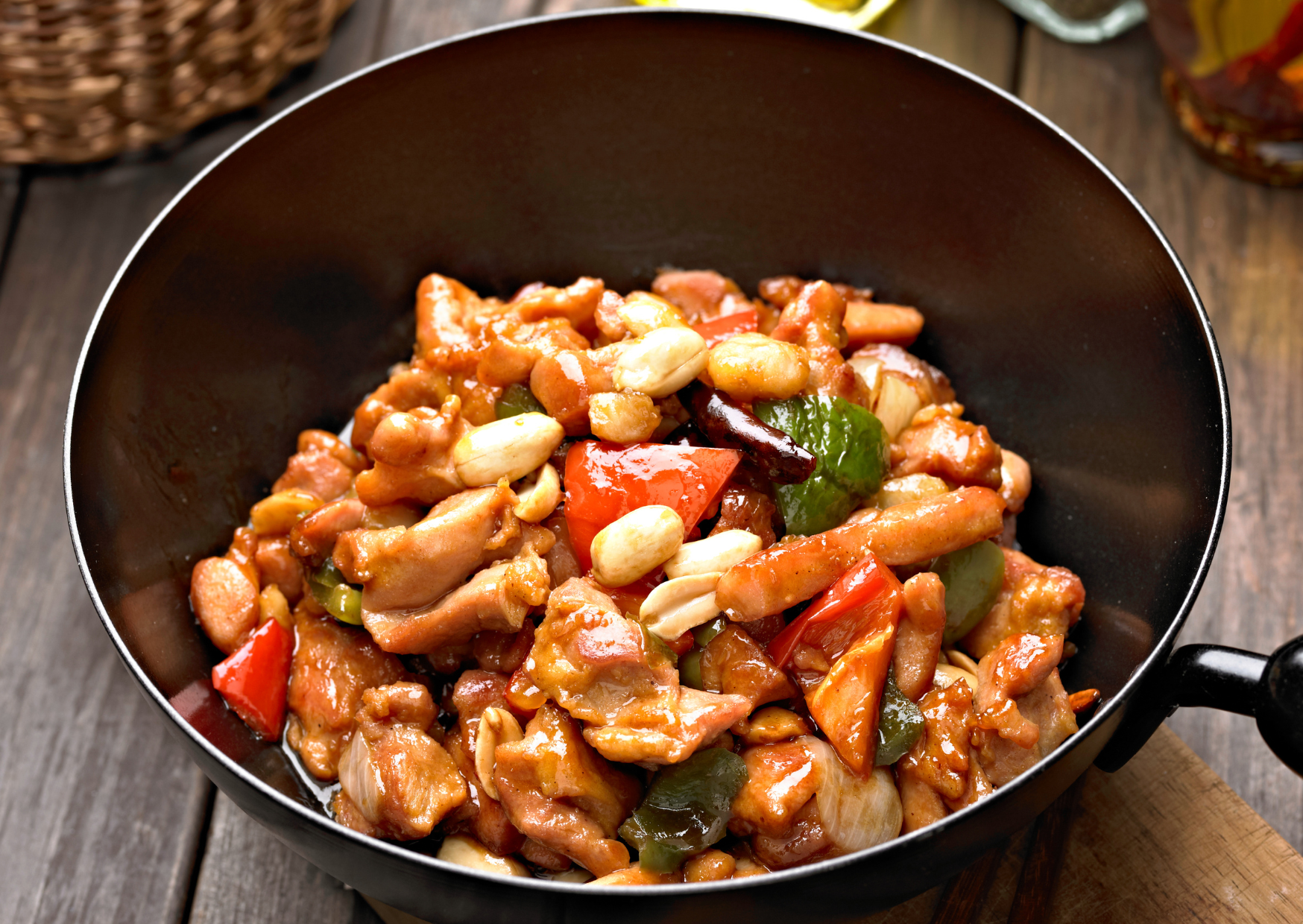
The Kung Pao chicken at the Sichuan restaurant in Chengdu is not the Kung Pao chicken at the American restaurant in suburban Ohio. The Chengdu version has a specific smoky character, a coating that clings to the chicken without being thick, vegetables that are crisp and barely cooked, and an integrated heat that comes from chili oil rather than from a sweet glaze. The Ohio version has a thicker, sweeter sauce, fully cooked vegetables, and chili heat that sits separately from the rest of the dish.
The cookbook explanation usually points at ingredients. Sichuan peppercorns versus regular black pepper. Specific dried chili varieties. The right black vinegar. These are real differences. They are not the main difference. The main difference is wok heat, the temperature at which the dish is cooked, which most American home kitchens cannot reach.
A Chinese restaurant wok runs at temperatures that domestic American stoves cannot produce. Commercial wok burners reach 100,000 to 150,000 BTU per hour. A typical American gas stove runs 7,000 to 12,000 BTU per hour at the largest burner. The temperature differential is 8 to 15 times. The cooking that happens at restaurant wok heat is fundamentally different from what happens at home stove heat.
This piece is the recipe written for the cook who wants the Sichuan restaurant version rather than the cookbook version. The ingredient logic, the wok heat workaround, and the sequencing come first. The cultural and history context follows.
The Recipe
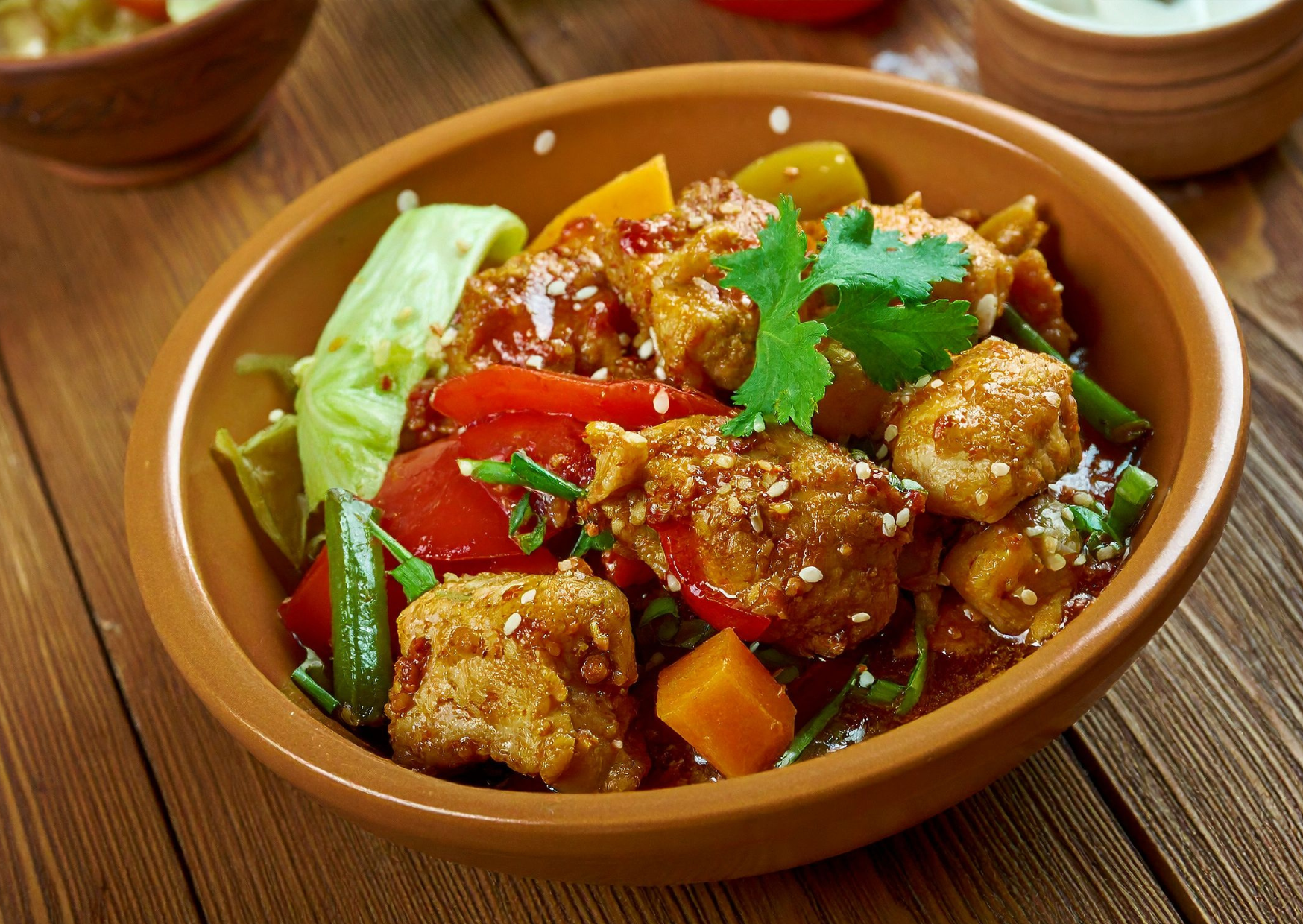
Yield: 4 servings
Active time: 25 minutes prep, 5 to 6 minutes cooking Total time: 35 minutes (or up to 4 hours including marinating)
Ingredients for the chicken and marinade:
- 600 grams boneless, skinless chicken thigh, cut into 2 cm cubes
- 1 tablespoon Shaoxing wine (Chinese rice wine)
- 1 teaspoon light soy sauce
- 1 teaspoon dark soy sauce
- 1 teaspoon cornstarch
- 1/2 teaspoon white pepper
- 1/2 teaspoon salt
Ingredients for the sauce:
- 2 tablespoons Chinese black vinegar (Chinkiang)
- 1.5 tablespoons light soy sauce
- 1 tablespoon sugar
- 1 tablespoon Shaoxing wine
- 1 tablespoon water
- 1 teaspoon dark soy sauce
- 1.5 teaspoons cornstarch
- 1/2 teaspoon sesame oil
Ingredients for stir-frying:
- 3 tablespoons neutral oil (peanut, rice bran, or canola)
- 15 to 20 dried Sichuan or Tianjin chilies, stems removed and torn into pieces
- 1 tablespoon Sichuan peppercorns
- 4 cloves garlic, sliced thin
- 4 cm fresh ginger, sliced thin
- 6 scallions, white and light green parts, cut into 2 cm pieces
- 100 grams roasted unsalted peanuts
Method:
- Combine the chicken with the marinade ingredients. Mix thoroughly with your hands until the cornstarch is fully incorporated. Let marinate for at least 20 minutes at room temperature, or up to 4 hours refrigerated.
- Combine the sauce ingredients in a small bowl. Whisk thoroughly so the cornstarch is dissolved. Set near the cooking area.
- Prepare all stir-fry ingredients before starting to cook. The cooking happens in 5 to 6 minutes total. Once you start, there is no time to chop, measure, or retrieve anything. Have everything ready in bowls within reach of the wok or pan.
- Heat your wok or heavy skillet over the highest heat your stove can produce. The pan must be hotter than seems reasonable. It should smoke when oil is added. This is where the wok heat workaround applies, covered in detail below.
- Add 2 tablespoons of the neutral oil. Swirl to coat. Add the marinated chicken in a single layer, breaking up any pieces that stuck together during marinating. Let cook undisturbed for 90 seconds. The chicken should sear and develop color on the bottom side.
- Stir-fry the chicken for another 60 to 90 seconds, until it is mostly cooked but not fully done. Transfer to a plate. The chicken will finish cooking when it returns to the pan later.
- Return the wok to high heat. Add the remaining 1 tablespoon of oil. Add the dried chilies and Sichuan peppercorns. Stir-fry for 15 to 30 seconds until fragrant and the chilies have darkened slightly but not burned. The smell should be intensely spicy and aromatic but not acrid. If the chilies start to turn black, the heat is too high or you are stirring too slowly.
- Add the garlic and ginger. Stir-fry for 15 seconds. Add the scallions. Stir-fry for another 15 seconds.
- Return the chicken to the wok. Stir-fry for 30 seconds to combine.
- Whisk the sauce one more time (the cornstarch settles), then pour it into the wok along the edges of the pan. Stir-fry vigorously to coat the chicken as the sauce thickens. This takes 30 to 45 seconds.
- Add the peanuts. Stir-fry for another 15 to 30 seconds to integrate. The peanuts should remain crisp.
- Transfer immediately to a serving plate. Do not let the dish sit in the hot wok or it will overcook. Serve immediately with steamed white rice.
The Wok Heat Problem
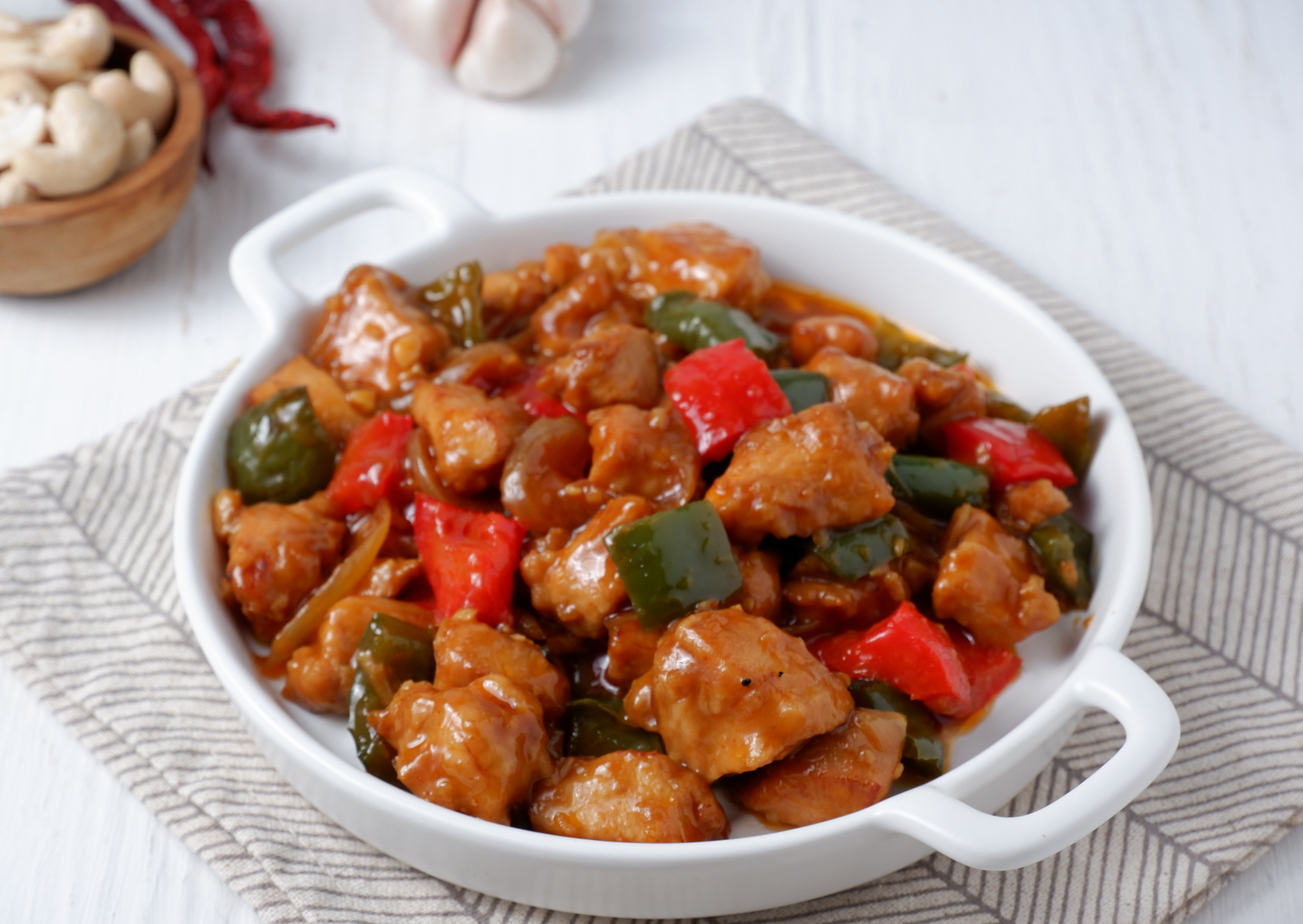
The single most important factor in real Chinese stir-fry cooking is heat that the home kitchen cannot produce. Understanding this is the first step toward working around it.
A commercial Chinese restaurant wok burner produces a focused, ring-shaped flame that reaches the wok at temperatures around 350 to 400 degrees Celsius (660 to 750 Fahrenheit). The wok itself reaches similar temperatures. At this heat, food cooked in the wok is essentially flash-cooked, with surface searing happening in seconds and the interior remaining minimally cooked.
This high-heat, short-duration cooking is what produces the characteristic stir-fry texture: vegetables that are crisp-tender with browned edges, meat that is seared on the outside but tender inside, and the smoky flavor called wok hei that comes from the partial vaporization of fat and food juices on the screaming-hot wok surface.
A home gas stove cannot produce this temperature. The largest burner on most American gas ranges (around 12,000 BTU) heats a wok to about 230 to 260 degrees Celsius (450 to 500 Fahrenheit) at maximum, and the heat is unfocused, hitting the bottom of the wok rather than the sides. Adding cold ingredients drops this temperature further. A wok full of marinated chicken can drop to 160 to 180 degrees, which is poaching temperature, not stir-frying temperature.
Electric stoves are worse. Induction is better than coil but still cannot reach restaurant wok heat. Outdoor propane wok burners (the kind sold for home use) can approach restaurant heat but are usually only practical for outdoor cooking.
The result of cooking stir-fry at insufficient heat is the dish that comes out of most American home kitchens. Vegetables that steam rather than sear. Meat that releases water and ends up boiled rather than fried. Sauce that becomes watery and dilute. The wok hei flavor entirely absent.
The Workaround
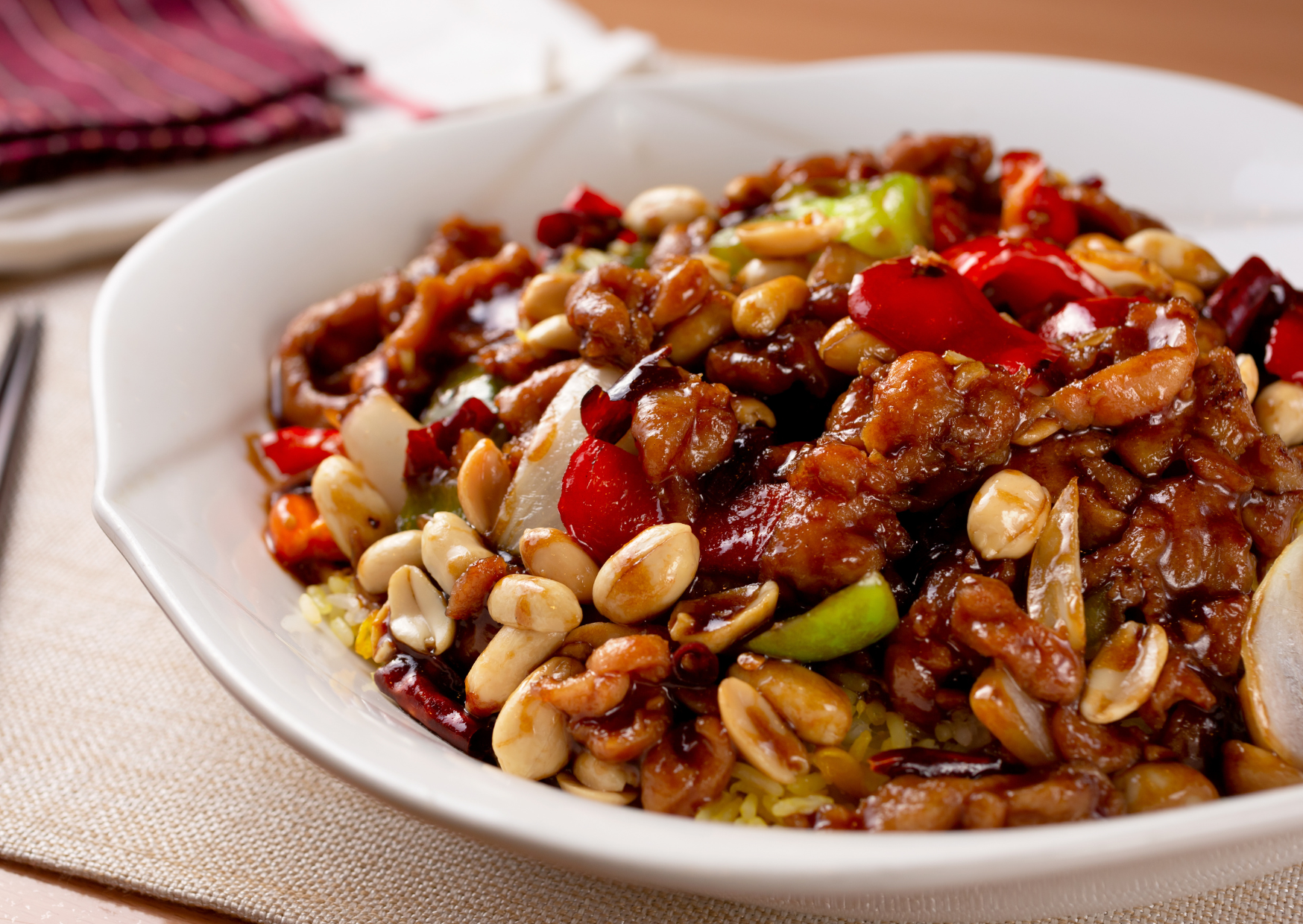
The home cook cannot replicate restaurant wok heat. The workaround is to compensate for the lower heat through different techniques that produce something closer to the right result.
Cook in smaller batches. A restaurant wok cooks 600 grams of chicken at one time without dropping the temperature. A home pan cannot. Cook the chicken in two batches of 300 grams each, with the pan returning to high heat between batches. Each smaller batch maintains higher pan temperature.
Use a heavy carbon steel wok or skillet. Carbon steel holds heat better than thin pans. A 14-inch carbon steel wok preheated for 5 to 7 minutes on the largest burner produces meaningfully better results than a thin nonstick pan. The pan should be smoking before you add oil. Cast iron is acceptable but slower to respond to heat changes.
Preheat the pan longer than seems necessary. A home cook should preheat for 5 to 7 minutes on maximum heat before starting to cook. The pan should be hot enough that a drop of water vaporizes immediately on contact, not boil briefly. A drop of oil should smoke as soon as it hits the surface.
Dry the ingredients thoroughly. Wet ingredients drop the pan temperature dramatically when they hit the surface. Pat the chicken dry with paper towels before marinating. After marinating, drain off excess marinade liquid. Dry vegetables thoroughly before stir-frying.
Cook with the lid off and the fan on. Stir-fry produces significant smoke and fat aerosols. The fan should be on maximum. Open windows if possible. The smoke is part of the cooking. It should not be suppressed by lowering the heat.
Move quickly. The whole stir-fry should take 5 to 6 minutes from when the first oil hits the pan to when the dish is plated. Hesitation drops the temperature and ruins the texture. Have everything ready before starting.
Finish under the broiler if possible. This is an unconventional move but it works. After the dish is plated, slide it under a hot broiler for 30 to 45 seconds. The intense top heat produces some of the surface browning that the original cooking heat could not achieve. This trick is used in some Chinese-American restaurants to compensate for inadequate burner heat.
Use a propane torch on the finished dish. Pass a kitchen torch over the plated dish for 10 to 15 seconds. The localized intense heat produces wok hei flavor compounds that the home stove could not generate. This is unconventional but effective.
The combined effect of these workarounds produces stir-fry that is meaningfully better than what comes out of most American home kitchens. It is still not restaurant-quality stir-fry. The restaurant version requires restaurant heat. The home version with the workarounds applied is about 75 to 85 percent of the restaurant version, which is enough to produce a satisfying dish.
On The Sichuan Peppercorns
Sichuan peppercorns are non-negotiable for proper Kung Pao chicken. They produce the distinctive numbing-tingling sensation called málà that defines Sichuan cuisine. Without them, the dish is not Kung Pao. It is generic stir-fried chicken with chilies.
The peppercorns are not actually peppers. They are the seed husks of the prickly ash tree. The active compounds are different from those in black pepper or white pepper, and the sensory effect is different. The numbing sensation is real and chemical, produced by hydroxy-alpha sanshool that activates touch receptors in the mouth.
The quality matters. Old Sichuan peppercorns lose their potency. They should be reddish-brown, fragrant when crushed, and produce noticeable numbing when a single husk is bitten. Old peppercorns smell flat and produce no numbing.
For best flavor, toast the peppercorns briefly in a dry pan before using. About 30 seconds over medium heat until fragrant. Some cooks grind them after toasting. Others leave them whole and remove them before serving (or eat around them). For Kung Pao chicken, leave them whole and integrated into the dish.
Sichuan peppercorns are available at Chinese markets and increasingly at well-stocked supermarkets. Look for “huā jiāo” on the label. Red varieties are more common; green varieties are slightly more aromatic and less numbing. Either works for Kung Pao.
On The Dried Chilies
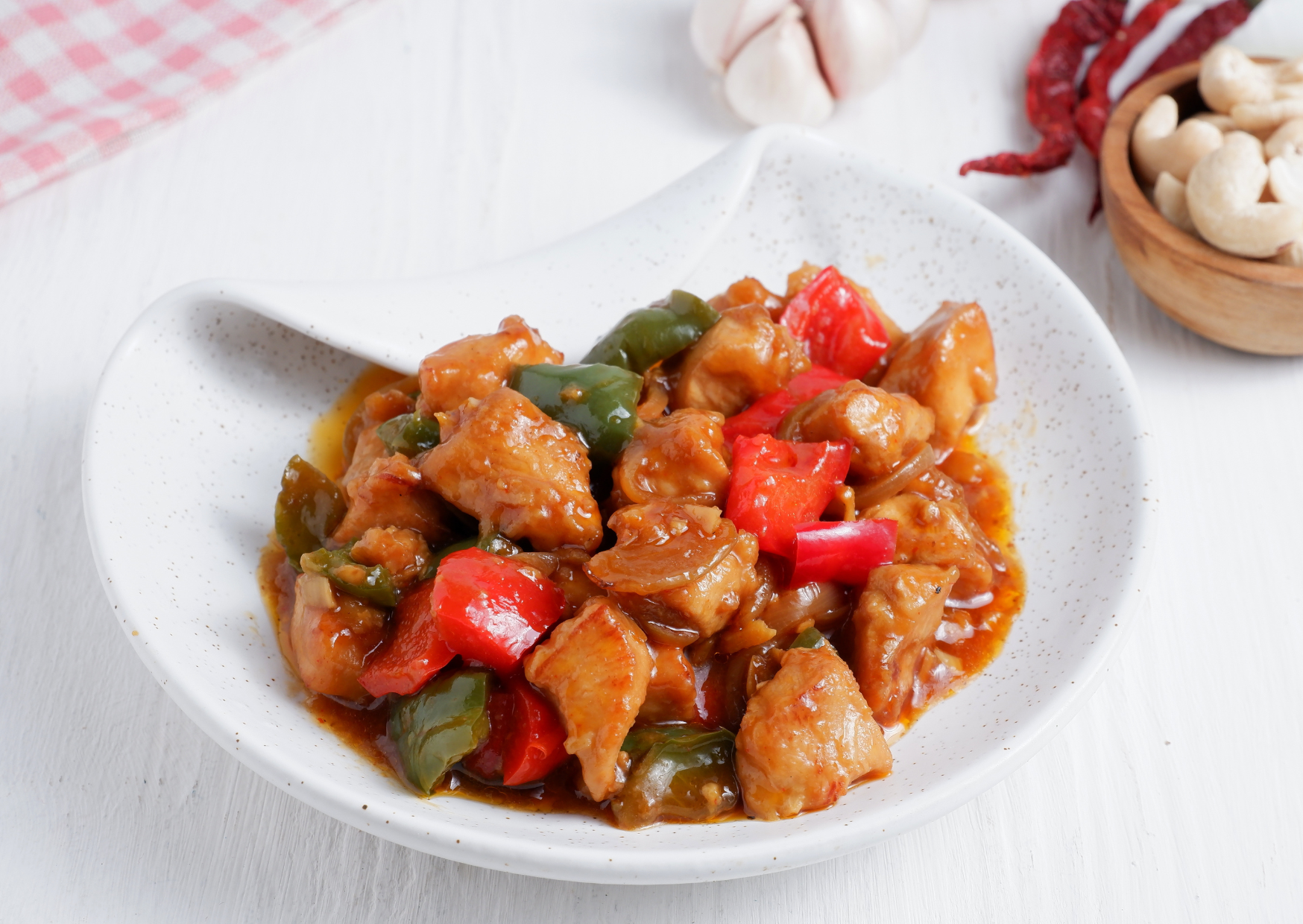
The chilies for Kung Pao should be specific dried red chilies, not generic crushed red pepper or chili flakes.
Sichuan dried chilies (chao tian jiao or èr jīng tiáo) are the traditional choice. They are about 5 to 7 centimeters long, deep red, and moderately spicy. Tianjin chilies are slightly smaller, sweeter, and somewhat less spicy. Both work for Kung Pao.
Cascabel, guajillo, or other Mexican dried chilies are not the right substitute. Their flavor profile is different and produces a Mexican-influenced dish rather than Sichuan. If Chinese chilies are not available, Korean dried chilies (Korean dried red peppers, gochugaru in flake form) are a closer substitute than Mexican chilies.
The quantity of chilies in the recipe seems large. It is. Real Kung Pao chicken uses many chilies and they are visible in the finished dish. Most are eaten only by removing pieces before chewing. The chilies flavor the oil and the dish but are not consumed whole by most diners.
For lower spice tolerance, reduce the chili quantity but maintain the Sichuan peppercorns. The peppercorn numbing is essential to the dish; the chili heat is variable.
On The Other Ingredients
Shaoxing wine is the Chinese rice wine used both in the marinade and in the sauce. It is fermented from glutinous rice and has a distinctive flavor that pale dry sherry approximates but does not match. If Shaoxing is unavailable, dry sherry is the best substitute. Mirin is wrong. Sake is wrong. Rice vinegar is very wrong.
Chinese black vinegar (Chinkiang) is a fermented rice vinegar with a deep, complex flavor different from any Western vinegar. Balsamic vinegar approximates the appearance but not the flavor. Look for Chinkiang vinegar at Chinese markets. The label often says “Zhenjiang” or “Chinkiang.”
Light soy sauce versus dark soy sauce are different products with different functions. Light soy sauce is saltier and used for general seasoning. Dark soy sauce is thicker, sweeter, and used for color and complexity. Both are used in this recipe in small quantities. Generic supermarket soy sauce is closer to light soy sauce. The two are not interchangeable.
Sesame oil should be Asian toasted sesame oil, not raw sesame oil from health food stores. The toasting produces the distinctive nutty flavor. A small amount goes far. Use only at the end of cooking, never for the main cooking, since it burns at low temperatures.
Roasted unsalted peanuts should be deep-fried or roasted, not raw. Raw peanuts will not crisp during the brief stir-fry time. If you cannot find pre-roasted peanuts, roast raw peanuts in a 175 degree Celsius oven for 10 to 12 minutes until golden, then cool before using.
On The Chicken
Boneless, skinless chicken thighs are the right choice for Kung Pao. Thigh meat stays tender and juicy at the high heat of stir-frying, while breast meat dries out quickly. Thighs also have more flavor.
Cut the chicken into 2-centimeter cubes. Smaller cubes overcook before they sear. Larger cubes do not cook through in the brief stir-fry time.
Some Chinese restaurants use velveting, a technique that briefly poaches the marinated chicken in oil or water before stir-frying. This produces an exceptionally tender result and is worth doing for special occasions. For everyday cooking, the marinade with cornstarch produces sufficient tenderness without the additional step.
The marinade with cornstarch is functioning as a velveting substitute. The cornstarch coats the chicken and creates a thin protective layer that holds in moisture during the high-heat cooking. This is why the cornstarch is essential even though the recipe also has cornstarch in the sauce. The two cornstarch applications do different jobs.
On The Cooking Sequence
The cooking sequence matters. Each step is timed for a reason.
The chicken cooks first because it needs the highest heat to sear properly. Cooking the aromatics first would lower the pan temperature for the chicken.
The chilies and peppercorns cook second, briefly, to release their flavor into the oil. Cooking them too long burns them and produces bitter flavor.
The garlic, ginger, and scallions cook third, briefly, to release their flavor without burning.
The chicken returns to integrate. The sauce goes in last, where it thickens quickly because the pan is hot.
The peanuts go in nearly last to maintain their crispness. Adding them earlier softens them.
This sequence is the standard Sichuan stir-fry pattern. Reversing or compressing the sequence produces a different dish. Many American home cooks cook everything together, which produces uneven results. The Sichuan sequence with proper timing is part of why the restaurant version differs from the home version.
The Cost Breakdown
For a single batch, four servings:
Chicken thighs: 6 to 10 euros for 600 grams of good-quality chicken. Sichuan peppercorns: 0.50 to 1 euro for the small amount used (a 100g bag costs 6 to 10 euros and lasts months). Dried chilies: 0.30 to 0.60 euros for the chilies used (a bag costs 4 to 8 euros and lasts months). Shaoxing wine: 0.50 to 1 euro for the small amount used (a bottle costs 8 to 15 euros). Black vinegar: 0.30 to 0.60 euros for the small amount used. Soy sauces, sesame oil, cornstarch: 0.50 to 1 euro total for the amounts used. Garlic, ginger, scallions: 1 to 2 euros total. Peanuts: 1 to 2 euros for the amount used. Cooking oil: 0.50 to 1 euro for the oil used.
Total cost for four servings: roughly 11 to 19 euros, or 2.75 to 4.75 euros per person.
For comparison, Kung Pao chicken at a Chinese restaurant typically costs 10 to 18 euros per person for the equivalent serving with rice and sides. Making it at home is significantly cheaper, particularly when the specialty ingredients are amortized across many dishes.
A Repeatable Cooking Pattern
To integrate this dish into regular cooking:
Make Kung Pao chicken once a week or every two weeks. The active prep time is 15 to 20 minutes including chopping. The cooking is 5 to 6 minutes. The total time is manageable for a weeknight dinner.
Buy the specialty ingredients (Sichuan peppercorns, dried chilies, Shaoxing wine, black vinegar, soy sauces) in larger quantities at a Chinese market. The total cost is moderate and the ingredients last months.
Build a Sichuan pantry. The same ingredients work for mapo tofu, dan dan noodles, twice-cooked pork, fish-fragrant eggplant, and other Sichuan classics. Investing in the pantry once enables a wide range of dishes.
Practice the wok-heat workarounds. The more you cook stir-fry, the more comfortable you become with the high-heat, fast-cooking pattern. The first few attempts may be rough. By the fifth or sixth time, the technique becomes natural.
The Framework The Cookbook Misses
The recipe above is one specific dish. The framework it teaches transfers to most Chinese stir-fry cooking.
The wok heat workarounds apply to all stir-fry dishes, not just Kung Pao. Smaller batches, longer preheat, dry ingredients, fast cooking, and the optional broiler or torch finish all produce better results across the category.
The sequence framework (protein first, aromatics second, return protein, sauce last) applies to most stir-fry dishes. The specific aromatics and sauce vary by dish, but the structural pattern is consistent.
The Sichuan flavor framework (chilies plus peppercorns for málà, plus the specific sauce ingredients) applies to multiple Sichuan dishes. Once you understand the framework, the variations follow naturally.
These techniques are obvious to Sichuan home cooks who learned the dishes from their families or from Chinese cooking shows. They are largely absent from American cookbooks because the cookbook writers often work with American kitchen constraints (lower heat, generic ingredients, simplified techniques) without explaining what those constraints have changed.
The American who makes this Kung Pao three or four times stops needing the recipe. The cook starts adjusting the chili quantity, the peppercorn intensity, and the sauce proportions by feel. The dish becomes a regular dinner option rather than a special-occasion attempt at Sichuan restaurant cuisine.
The wok heat that the home stove cannot produce is real. The workaround is partial but effective. The recipe with the workaround applied produces meaningfully better Kung Pao than the cookbook version made on the cookbook’s terms. The Sichuan restaurant has the heat advantage. The home cook with the right ingredients, technique, and workarounds has access to most of what the restaurant produces.
The cookbook version of Kung Pao is no longer the Kung Pao you make. The Sichuan version, adapted for the home kitchen with the wok-heat workaround, is.

About the Author: Ruben, co-founder of Gamintraveler.com since 2014, is a seasoned traveler from Spain who has explored over 100 countries since 2009. Known for his extensive travel adventures across South America, Europe, the US, Australia, New Zealand, Asia, and Africa, Ruben combines his passion for adventurous yet sustainable living with his love for cycling, highlighted by his remarkable 5-month bicycle journey from Spain to Norway. He currently resides in Spain, where he continues sharing his travel experiences with his partner, Rachel, and their son, Han.