
Offer an American a mince pie at Christmas and the first question is always the same: where is the mince? The name promises ground beef, the kind that goes into a taco or a cottage pie, and the small sweet pastry that arrives instead, filled with spiced dried fruit, is a genuine surprise. The answer, which delights Britons and baffles visitors, is that mince pies did once contain meat, centuries ago, and the name simply never caught up with the recipe. Today’s mince pie is all fruit and spice and not a shred of beef, yet it still carries the name of its carnivorous ancestors.
The mince pie is one of Britain’s oldest and most beloved Christmas foods, a small spiced fruit pie eaten by the dozen through the whole festive season, and its history runs back some five hundred years to a time when sweet and savory were not the separate worlds they are now. This piece explains what is really in a mince pie, the strange journey from meat to sweet, the long season Britain eats them through, the superstitions attached to them, and how to make your own. A recipe follows the story, because a warm homemade mince pie is a different thing entirely from the supermarket box.
What Is Actually in a Mince Pie
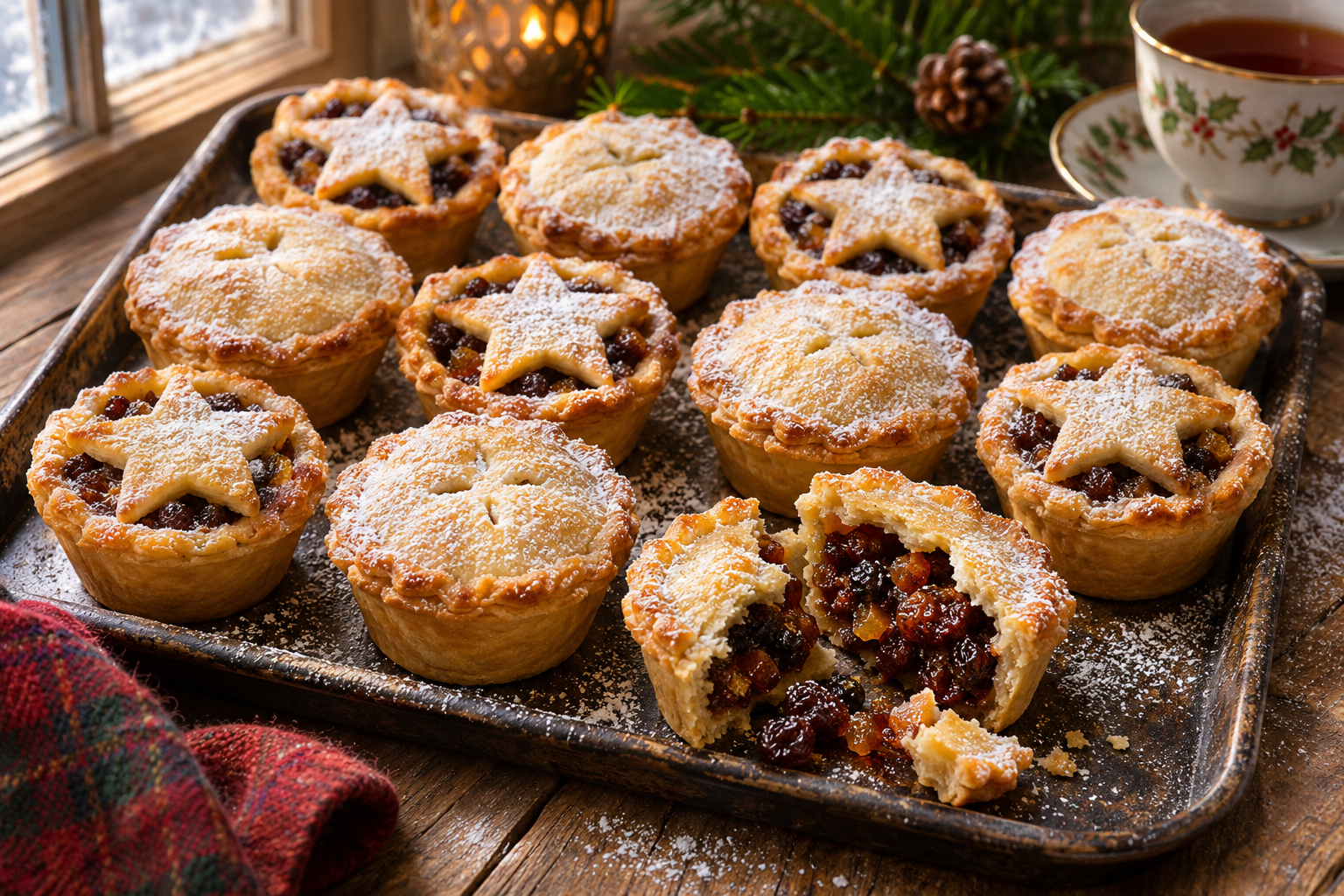
A modern mince pie is a small round pastry, about the size to fit in a palm, filled with mincemeat and topped with a pastry lid or a little pastry star. The crucial word is mincemeat, which despite its name contains no meat at all in the usual recipe, being instead a dense, dark, intensely spiced mixture of dried and candied fruit. It is sweet, rich, boozy, and aromatic, a world away from anything savory.
What goes into that mincemeat is the heart of the thing: raisins, currants, and sultanas, chopped candied peel, grated apple, sugar, warming spices like cinnamon, nutmeg, and clove, the zest and juice of citrus, a good slug of brandy or other spirit, and suet, the one lingering trace of the pie’s meaty past. Suet is hard fat, traditionally beef fat, which binds and enriches the mixture, so the strictest traditional mincemeat does contain an animal product even though it contains no actual meat, while modern versions very often use vegetable suet and are fully vegetarian. The mixture is packed into the pastry and baked until the fruit bubbles and the pastry turns golden.
The result is a small, warm, spiced fruit pie, usually dusted with sugar, eaten in one or two bites, rich enough that a few go a long way. It tastes of Christmas in the most concentrated form, all dried fruit and brandy and warm spice, and it is the sort of thing Britons eat constantly through December, with tea, with coffee, after dinner, offered to every visitor. The meat is long gone; the name and the spice and the richness remain.
From Meat to Sweet
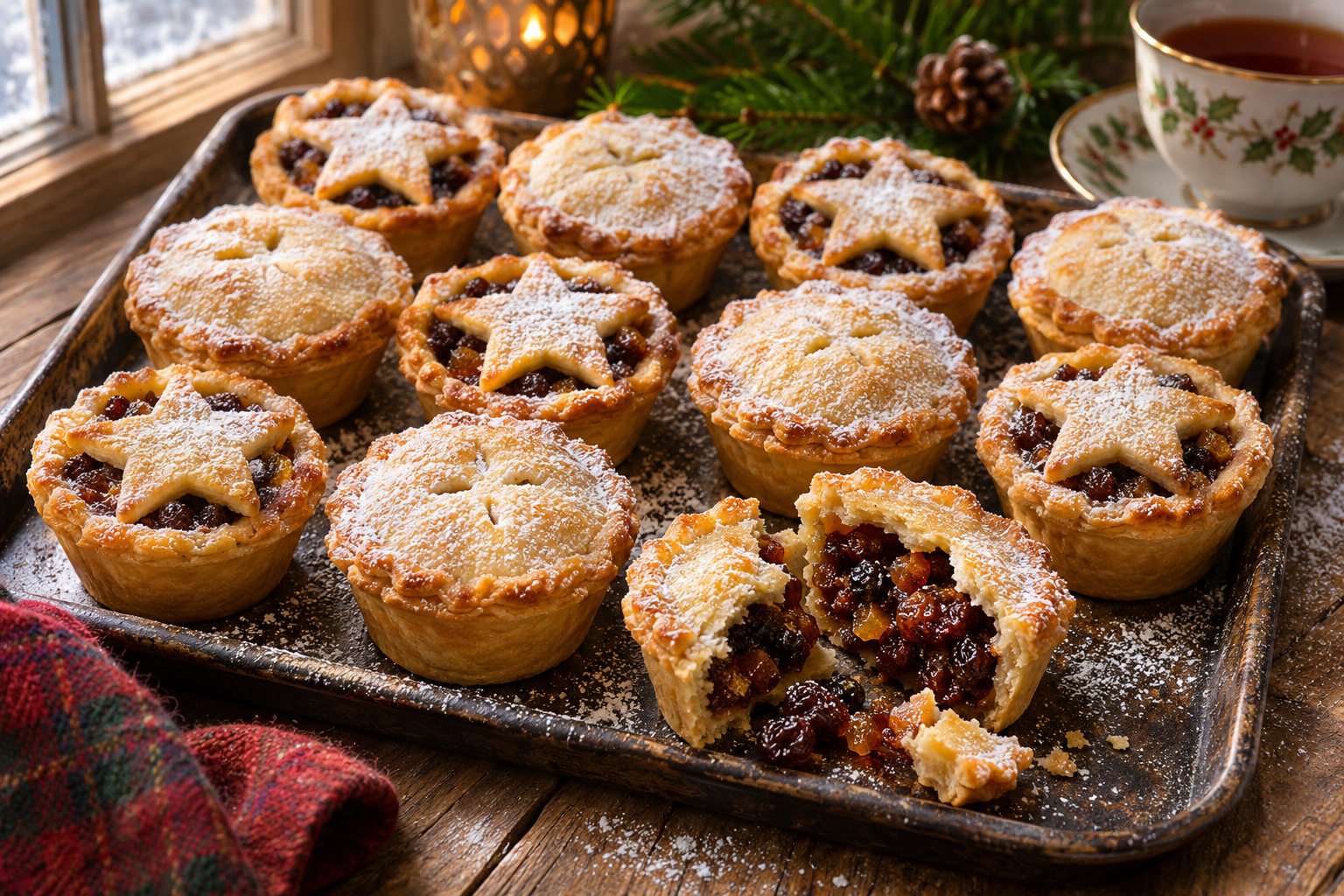
The mince pie really did begin as a meat pie, and the journey from there to here is the whole story. In the medieval and Tudor periods, mince pies, also called shred pies or Christmas pies, genuinely contained minced meat, typically mutton, beef, or tongue, combined with suet, dried fruit, sugar, and the exotic spices that returning crusaders and traders had brought to Europe. The combination of meat, fruit, and spice in one pie was entirely normal then, when the line between savory and sweet was blurry and spices were a mark of wealth and celebration.
Those early pies carried Christmas symbolism too, sometimes made in an oblong shape said to represent the manger, and spiced with cinnamon, cloves, and nutmeg in a nod to the gifts of the three kings. Over the centuries, as sugar became cheaper and tastes changed, the balance shifted steadily away from the meat and toward the fruit, the meat shrinking in proportion until, by the Victorian era, it had largely vanished altogether, leaving the sweet, fruit and suet mincemeat we know. The suet survived as the last ghost of the original meat.
So the American question, where is the meat, has a precise historical answer: it was there for most of the pie’s long life and only disappeared within the last century and a half or so. The name mincemeat is a fossil, preserving the memory of the minced meat that was once the point, even though modern mincemeat is entirely fruit and spice. Knowing that history turns the odd name from a puzzle into a little window onto five hundred years of English eating, which is exactly why Britons enjoy explaining it.
The Long Season
Mince pies are not a single day’s treat but the food of a whole long season, and the span over which Britain eats them is part of their character. They begin appearing in the shops absurdly early, often from autumn, to general mock complaint, and they are eaten in earnest from the start of Advent and the run up to Christmas, right through the twelve days of Christmas, and traditionally on to Twelfth Night, the eve of Epiphany on the fifth or sixth of January. That is weeks of mince pies, eaten steadily and in quantity.
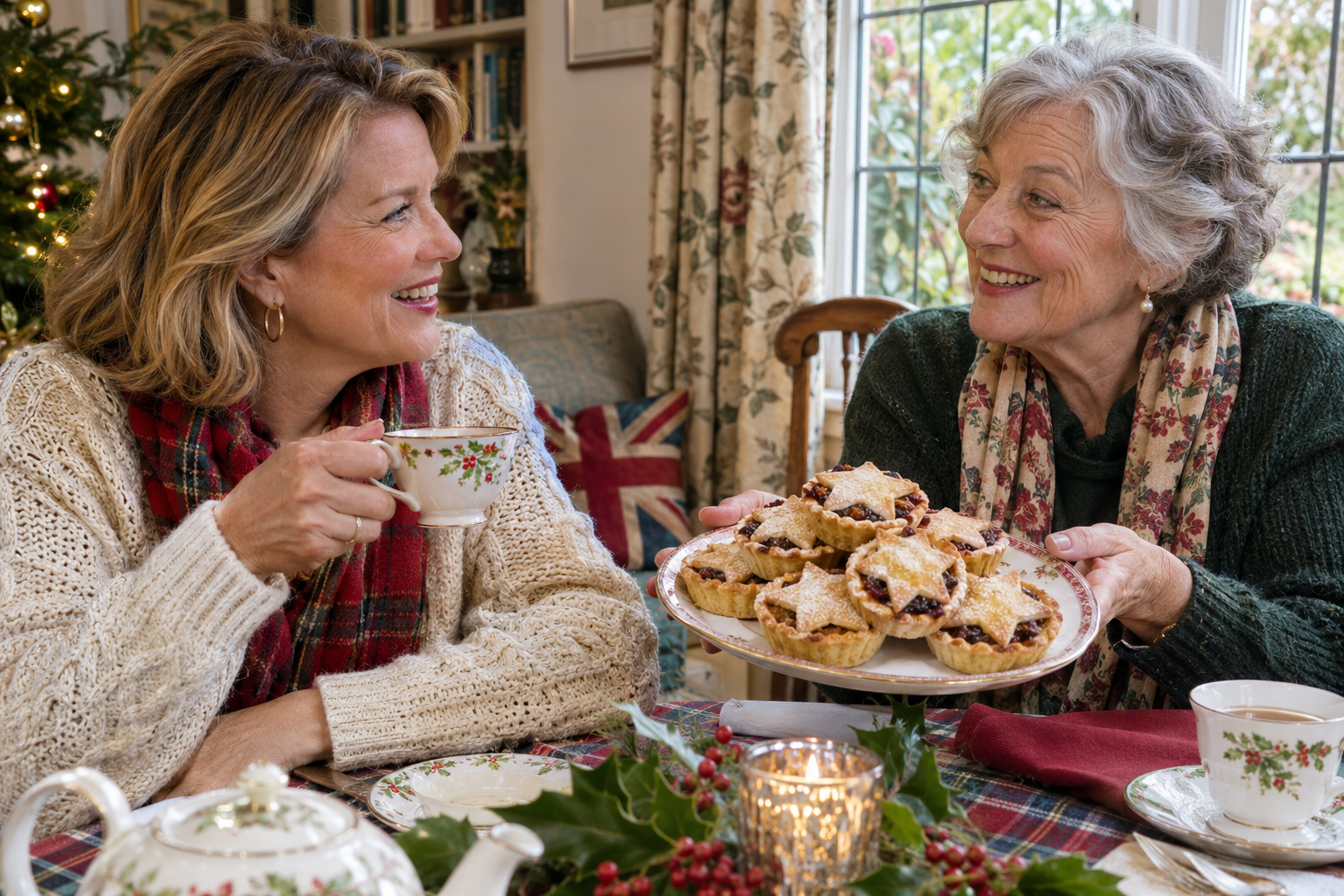
Through that season they are woven into the rituals of British Christmas. They are offered to every visitor who crosses the threshold, set out for carol singers, left out with a drink for Father Christmas on Christmas Eve, eaten with mulled wine at parties, and consumed by the office and the household in a steady stream until the new year. A British Christmas without a constant supply of mince pies is unthinkable, and the tin of them is simply always there, being topped up.
The Twelfth Night endpoint matters, because traditionally the Christmas season ran its full twelve days and the mince pies went with it, right up to the point when decorations came down. In practice most of them are eaten in the busy stretch around Christmas itself, but the traditional season is generous and long, and the pies belong to all of it. For an American used to Christmas food appearing and vanishing around a single day, the sheer duration of the mince pie season, weeks of small spiced pies, is part of what makes a British Christmas feel so steeped in the holiday.
The Superstitions
Like many very old foods, the mince pie comes trailing superstitions, and they are charming enough to be worth keeping. The best known is the belief that eating a mince pie on each of the twelve days of Christmas brings twelve months of happiness and good luck in the year to come, one pie per day, each promising a lucky month. It is a wonderful excuse to eat a great many mince pies, and plenty of Britons cheerfully honor it.
Another old piece of lore holds that you should eat your mince pie in silence, or that you should never refuse a mince pie offered to you, or cut it with a knife, lest you cut your luck, so the pie is eaten by hand and whole. There is also the custom, when eating the first mince pie of the season or making the mincemeat, of making a wish. These little rituals cluster around the pie the way they do around the Christmas pudding, markers of its age and its place at the heart of the festive table.
None of it is taken entirely seriously, of course, but the superstitions add to the pleasure, giving a small sweet pie an air of luck and ceremony and licensing the happy over consumption that the season demands anyway. Whether or not twelve pies truly buy twelve lucky months, the belief is a delightful piece of folk tradition, and honoring it is no hardship at all. The mince pie carries its five centuries lightly, in a handful of superstitions that make eating it feel, pleasingly, like doing something a little bit magic.
Why Homemade Is Worth It
The supermarket mince pie is perfectly fine, and Britons eat vast numbers of them without complaint, but a homemade one is a genuinely different and better thing, which is the case for making your own. The pastry can be short and buttery and fresh rather than firm and uniform, the mincemeat can be as boozy and generous as you like, and a mince pie eaten warm from your own oven, the fruit still bubbling and the pastry crisp, is a world away from one eaten cold from a plastic tray. The gap in pleasure is large.
The good news is that mince pies are easy, especially if you buy a jar of good mincemeat rather than making your own, which turns the whole project into little more than making and cutting pastry and filling it. Making the mincemeat from scratch is its own rewarding ritual, best done weeks ahead so the fruit can steep in the brandy and the flavors deepen, but it is entirely optional, and excellent jarred mincemeat is widely sold. Either way, the assembly is quick and forgiving, and the results are far beyond the box.
Making your own also lets you honor the traditions properly, filling the house with the smell of spiced fruit and warm pastry, making a wish as you stir, and eating the first one warm in happy silence for luck. It is exactly the kind of small, achievable Christmas baking that rewards the effort many times over, and it is a lovely way for an expat or a curious American to take part in one of Britain’s oldest festive customs. The recipe below assumes good jarred mincemeat for ease, with a note on making your own if you have the time.
Make It: Mince Pies
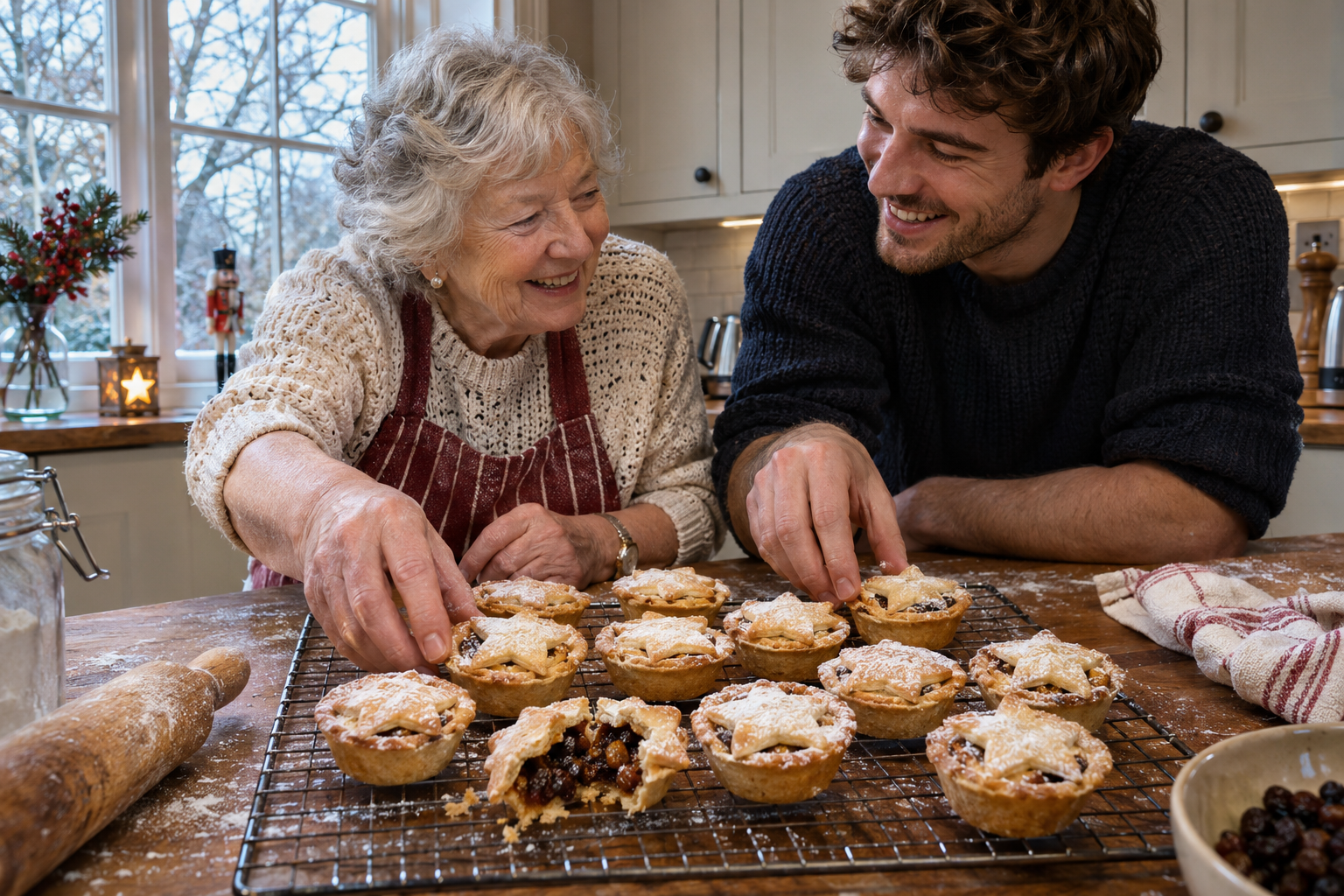
This makes about 12 mince pies using jarred mincemeat and a quick, rich shortcrust pastry. It is simple, forgiving, and far better than the box.
Ingredients:
- For the pastry: 225 g plain flour, 150 g cold butter (cubed), 75 g sugar, 1 egg, a pinch of salt, a splash of cold milk if needed
- About 400 g good quality mincemeat (one jar), ideally brandy enriched
- 1 egg, beaten, for glazing
- Powdered (icing) sugar, for dusting
- Optional: a little extra brandy to stir into the mincemeat, and grated apple or orange zest to freshen it
Method:
- Make the pastry: rub the cold butter into the flour, salt, and sugar with your fingertips until it resembles breadcrumbs, or pulse in a food processor. Add the egg and bring it together into a dough, adding a splash of cold milk only if needed. Wrap and chill for 30 minutes.
- If you like, stir a tablespoon of brandy and a little grated apple or orange zest through the mincemeat to freshen and loosen it.
- Heat the oven to 200 C (400 F). Lightly grease a 12 hole tart or bun tin.
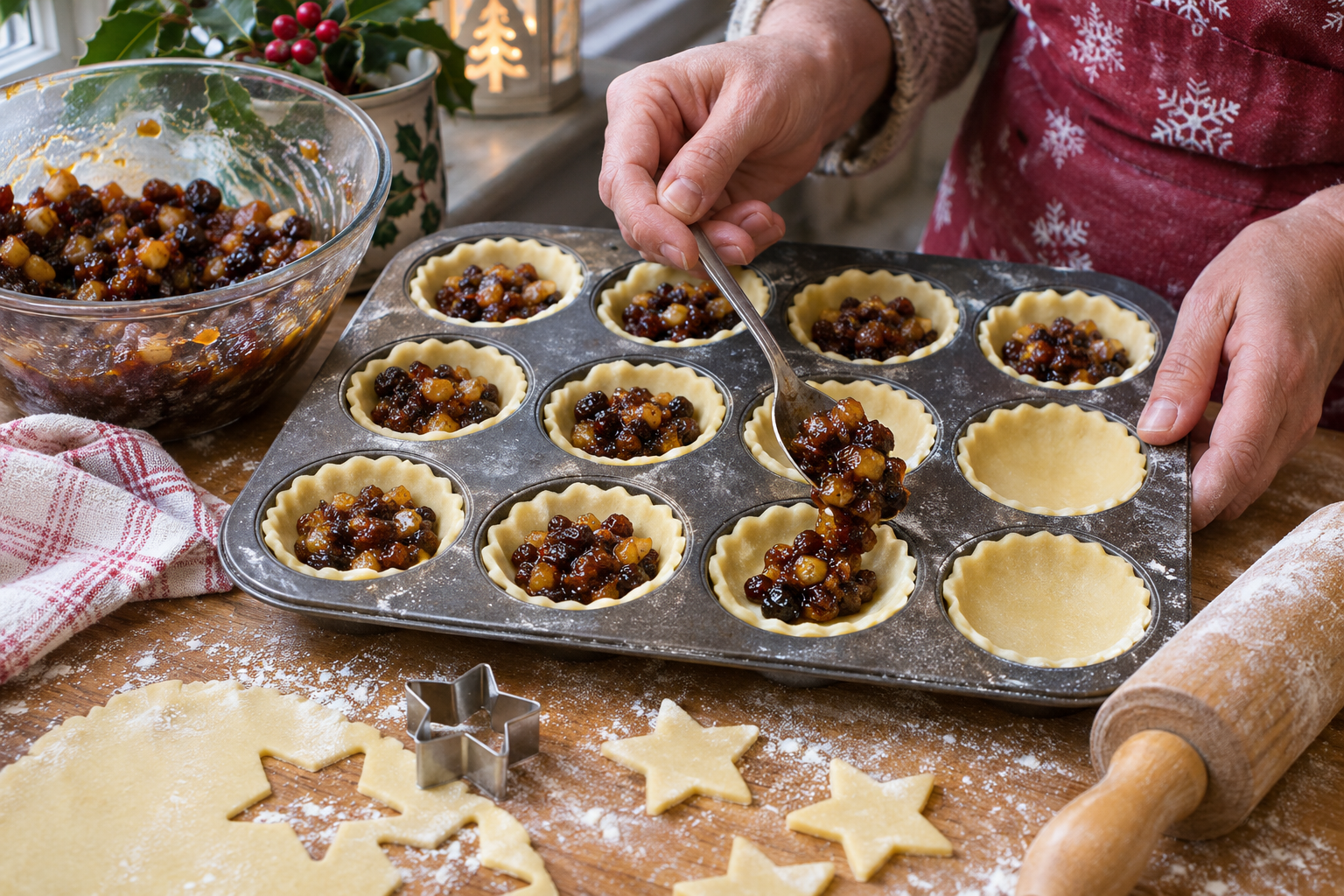
- Roll the pastry out on a floured surface to about 3 mm thick. Cut 12 rounds large enough to line the holes, and 12 smaller rounds or stars for the lids. Press the large rounds into the holes.
- Spoon a generous teaspoon of mincemeat into each, not overfilling. Top with a pastry lid (dampen the edge and press to seal) or a pastry star. If using full lids, make a small snip in the top for steam.
- Brush the tops with beaten egg.
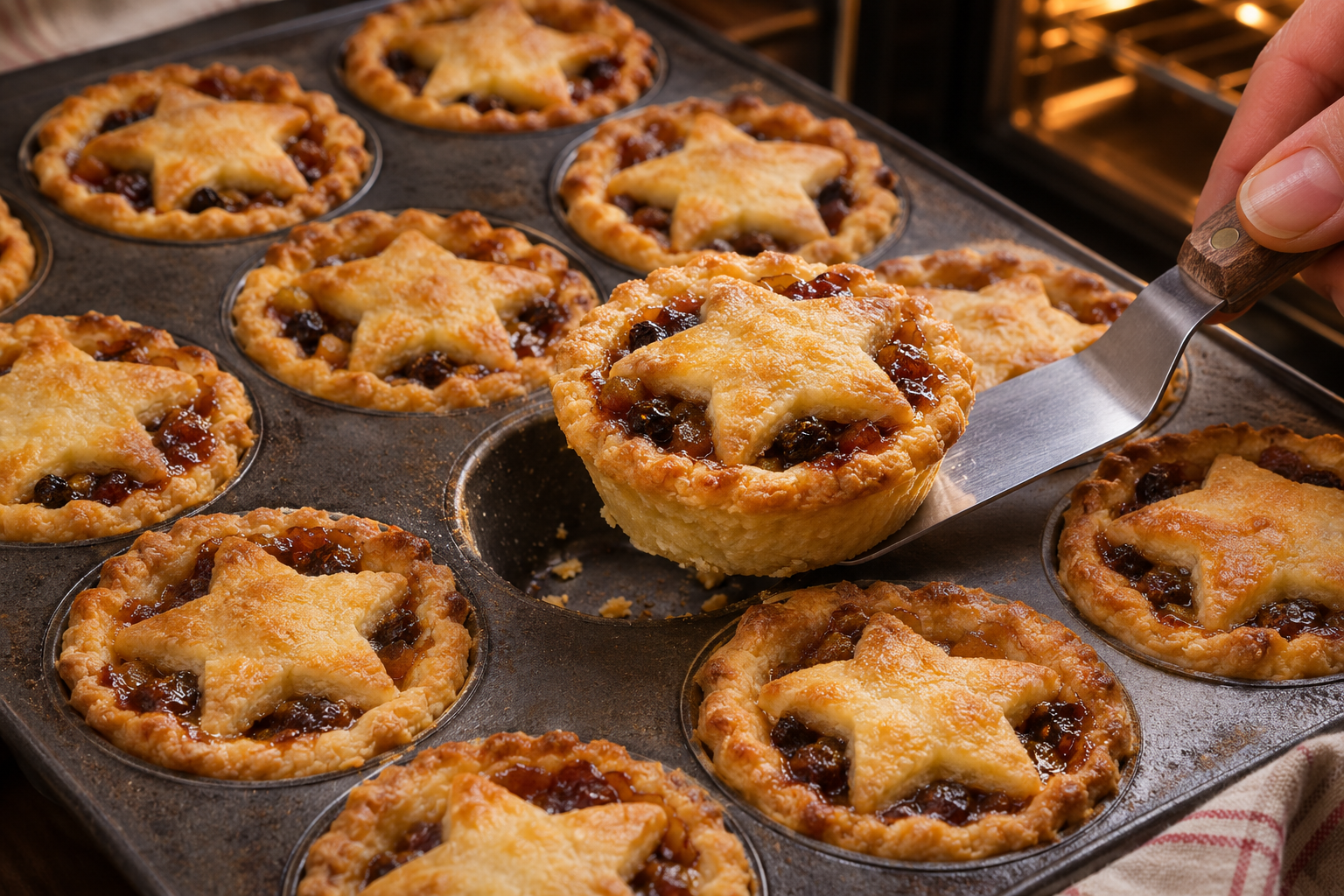
- Bake for 15 to 20 minutes, until golden. Cool in the tin for a few minutes (the filling is molten hot) then lift onto a rack.
- Dust with powdered sugar and serve warm, with tea, coffee, mulled wine, or a dab of brandy butter or cream.
To make your own mincemeat, combine raisins, currants, sultanas, chopped candied peel, grated apple, brown sugar, suet (beef or vegetable), warm spices, citrus zest and juice, and a good slug of brandy; leave it to steep for a few days or weeks before using. It keeps for ages in sterilized jars.

About the Author: Ruben, co-founder of Gamintraveler.com since 2014, is a seasoned traveler from Spain who has explored over 100 countries since 2009. Known for his extensive travel adventures across South America, Europe, the US, Australia, New Zealand, Asia, and Africa, Ruben combines his passion for adventurous yet sustainable living with his love for cycling, highlighted by his remarkable 5-month bicycle journey from Spain to Norway. He currently resides in Spain, where he continues sharing his travel experiences with his partner, Rachel, and their son, Han.