
Of all the healthcare costs that follow a person into retirement, the one most likely to actually come up is not some exotic treatment, it is physical therapy. The knees, the hips, the back, the shoulder, the long recovery after a joint replacement, these are the ordinary mechanical troubles of aging bodies, and the answer to most of them is a course of physical therapy. So it is worth knowing that a session that costs an American around a hundred and fifty dollars out of pocket costs a retiree in Portugal something closer to twenty-five euros, and that physical therapy is never one session but many, which multiplies that gap into real money fast.
For a retiree with bad knees, or any of the aches that physical therapy treats, this is arguably the single most important healthcare cost to compare, because it is the one they are most likely to need, repeatedly, for years. The big dramatic medical bills get the attention, but the recurring cost of keeping an aging body moving is where the money quietly goes, and the gap between American and European prices is enormous. Here is the real size of that gap, why American physical therapy costs so much, and why a retiree with a bad knee should run this bill before almost any other. This piece discusses typical costs that vary and is general information, not medical or financial advice.

The Real Size of the Gap
The per-session numbers are striking on their own. In the United States, a physical therapy session costs, out of pocket and without insurance, commonly in the range of a hundred to two hundred dollars, with a hundred and fifty a fair middle figure, and even with insurance the copays and coinsurance add up over a course of treatment. American physical therapy is priced like the rest of American healthcare, which is to say high, and the cost is borne heavily by patients through gaps in coverage.
In Portugal, and much of Europe, a private physical therapy session costs a fraction of that, often in the range of twenty to forty euros, with public-system options cheaper still where available, so the same treatment costs roughly a fifth to a quarter of the American price. The gap holds across much of Europe, where physical therapy, like most healthcare, is simply priced far lower than in the United States, whether accessed privately or through a public system. For an American used to American physiotherapy bills, European prices can seem implausibly low for the same professional care.
The decisive detail, though, is that physical therapy is not a single visit but a course, typically many sessions over weeks or months, so the per-session gap multiplies. A course of treatment might run ten, fifteen, twenty sessions or more, which turns a hundred-and-fifty-dollar session into a bill of thousands of dollars in the United States and a few hundred euros in Portugal for the same course. It is the multiplication that makes this gap matter so much, because the thing a retiree is most likely to need is also the thing that comes in expensive, repeated doses. The single session is only the beginning of the bill.
Why American Physical Therapy Costs So Much
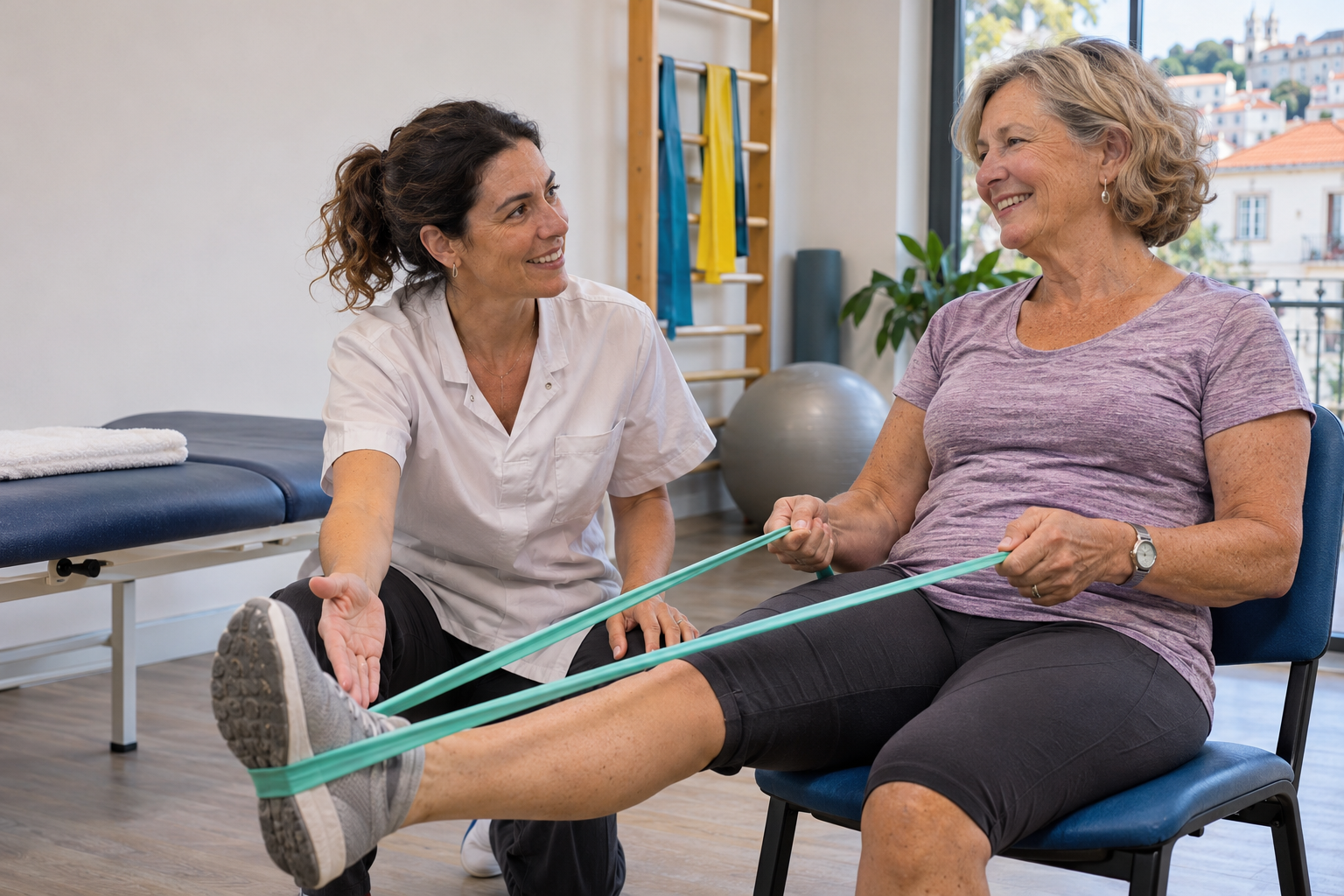
The high cost of American physical therapy is part of the broader story of American healthcare pricing, and the reasons are structural. American healthcare is simply expensive across the board, with prices for services set far higher than in peer countries, and physical therapy is no exception, carrying the high overhead, high labor costs, and high baseline pricing of the whole system. The session costs what it costs because the entire American healthcare economy is priced at that level.
Insurance and coverage gaps make the patient’s experience of the cost worse, because physical therapy is often subject to copays, coinsurance, visit limits, and deductibles, so even insured patients frequently pay a great deal out of pocket, and those without good coverage pay the full high price. A course of therapy can hit a visit cap partway through, leaving the patient to pay the rest directly, or accumulate copays that add up to a substantial sum, so the real cost to the patient is high even when insurance is involved. The system shifts a large share of the price onto the person receiving care.
Europe, by contrast, operates physical therapy within lower-cost healthcare systems, whether through public provision, affordable private care, or a mix, so the baseline price is far lower and the patient’s share smaller. In a place like Portugal, a retiree can access physical therapy privately at low per-session prices or through the public system, and either way the cost is a fraction of the American equivalent, because the whole system is not priced at American levels. The difference is not that European physiotherapists are less skilled, it is that they work in systems that do not price care the way the American one does.
Why Retirees With Bad Knees Should Run This First
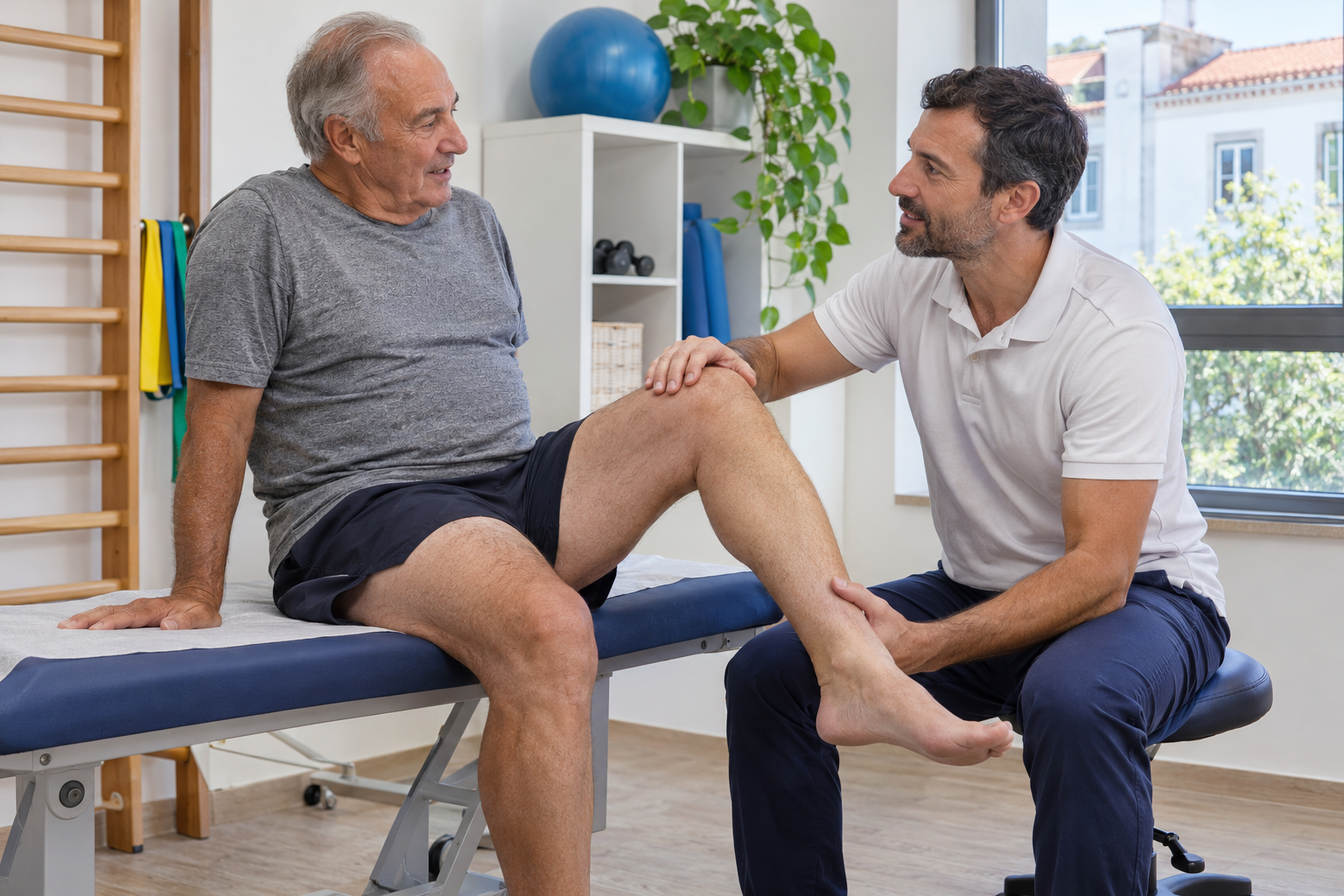
For a retiree, physical therapy deserves to be the first healthcare cost compared, ahead of the rarer and more dramatic ones, for a simple reason: it is the care they are most likely to actually use. The ordinary wear of aging, the arthritic knee, the bad back, the stiff shoulder, the hip that needs replacing and the long rehabilitation afterward, these are the common, near-universal troubles of older bodies, and physical therapy is the standard treatment for most of them. Where exotic treatments are a maybe, physical therapy is close to a when.
The cost also recurs in a way that compounds over a retirement, because an aging body does not need physical therapy once but repeatedly, over years, as one joint after another demands attention and as chronic conditions require ongoing maintenance. A retiree might do a course for a knee this year, a shoulder next year, a back the year after, and rehabilitation after a surgery somewhere in between, so the cost is not a one-time event but a recurring feature of later life. The per-course gap between American and European prices therefore applies again and again, and the cumulative difference over a retirement is very large.
This is why a retiree with bad knees specifically, or anyone with the kind of chronic mechanical trouble that physical therapy treats, should put this bill at the top of their comparison rather than leaving it out. It is the healthcare cost most likely to recur, most likely to come in expensive multi-session courses, and most dramatically cheaper in Europe, which makes it both highly relevant and highly favorable to European life for the many retirees who need it. If you are going to compare one healthcare cost before you decide where to spend your retirement, the physical therapy bill is the one that will probably touch your life the most.
The Multi-Session Reality
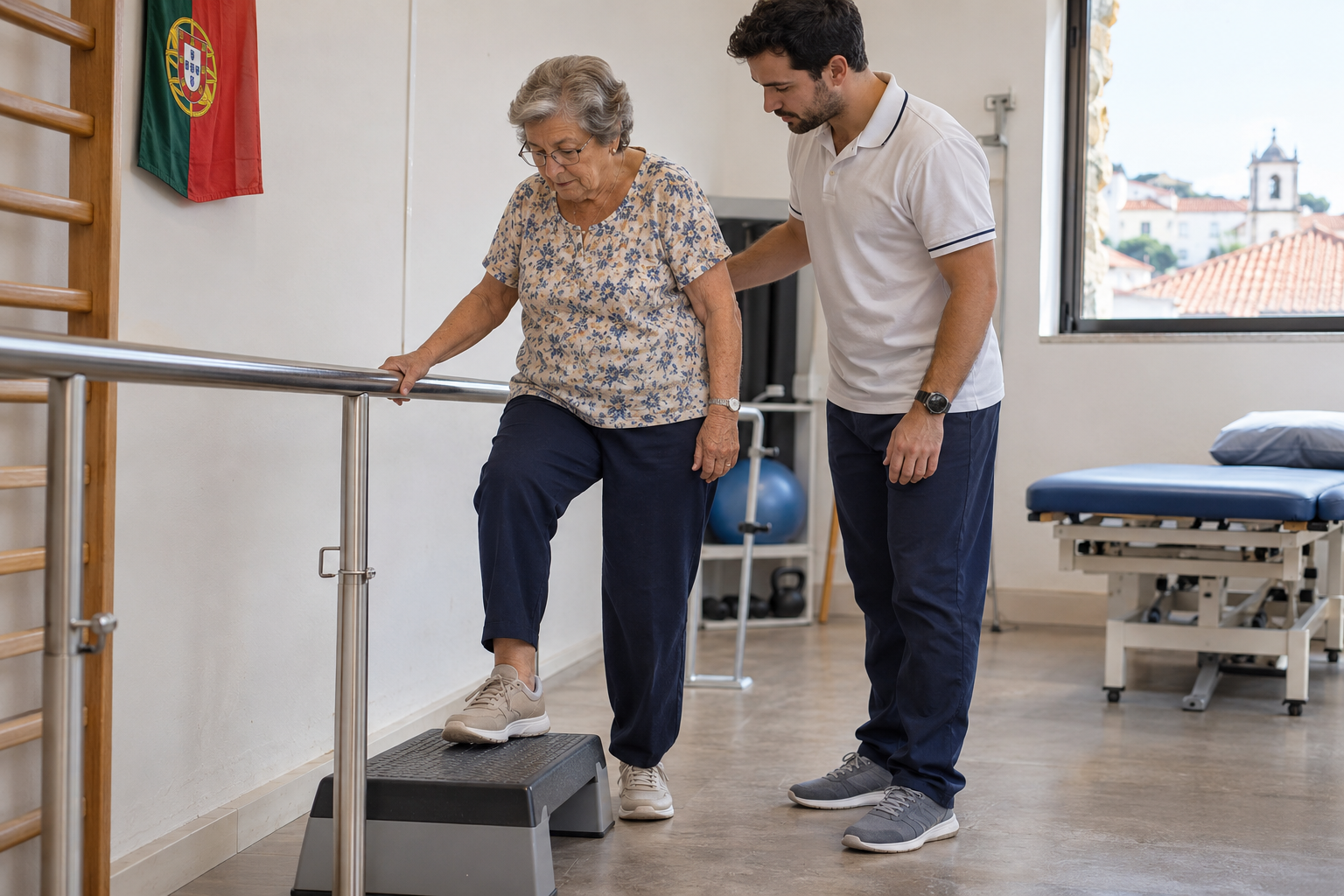
It is worth dwelling on the multiplication, because a single session price hides the true stakes. Suppose a retiree needs a course of physical therapy for a knee, say fifteen sessions, which is well within the normal range for a meaningful course. In the United States at a hundred and fifty dollars a session out of pocket, that is over two thousand dollars for one course of treatment for one joint, and that is before the next joint or the next year. In Portugal at twenty-five euros a session, the same fifteen-session course is a few hundred euros.
Now extend that across a retirement, with its succession of knees, backs, shoulders, and recoveries, each needing its own course, and the gap becomes genuinely large, the difference between physical therapy as an affordable, routine part of staying mobile and physical therapy as a recurring financial burden. The American retiree may find themselves rationing the care, doing fewer sessions than recommended because of the cost, which can mean a worse recovery, while the European retiree can complete the full course without the bill forcing the choice. The multiplication does not just cost money, it can cost mobility.
This is the heart of why the comparison matters so much for quality of life and not just budget. Physical therapy is how older people stay mobile and independent, recovering from the injuries and managing the conditions that would otherwise steal their movement, so care rationed for cost is independence put at risk. The European retiree who can afford the full course of therapy for every joint that needs it is buying not just savings but continued mobility, and for a retiree with bad knees, that is not a small thing. The affordable bill keeps you walking.
What It Means for the Comparison

For the retiree weighing a life in Europe, the physical therapy gap is one of the strongest healthcare arguments in Europe’s favor, precisely because it concerns such a commonly needed, recurring treatment. Alongside the lower cost of doctor visits and other care, the affordability of physical therapy means that the ongoing work of keeping an aging body moving is far less expensive in Europe, which for a retiree with chronic mechanical troubles can be a major and daily relief. It is the kind of care you will likely use a lot, priced in a way you can afford.
For the retiree staying in the United States, the lesson is to plan for this cost honestly and understand how coverage works for physical therapy under their insurance, including visit limits and out-of-pocket shares, because the bills can be large and are easy to underestimate. Knowing in advance that a course of therapy may cost thousands, and that aging will likely bring several such courses, lets a retiree budget realistically and look into the coverage and options available, rather than being blindsided when the first bad knee arrives. The cost is foreseeable, and foreseeing it is the first defense against it.
The practical caveat, as always, is that costs and systems vary and the figures here are illustrative, so a retiree should check the specifics for their own situation, their own insurance, and the particular place in Europe they might consider. Serious conditions and major rehabilitation will cost more anywhere, and access, waiting times, and quality differ between and within countries. But the broad, durable pattern is clear and favors Europe strongly for this particular, commonly needed care, and that pattern is reason enough to put the physical therapy bill near the top of the comparison for any retiree whose knees, back, or hips are likely to need the help.
How You Actually Get It Abroad
For a retiree considering Europe, it helps to know the practical routes to physical therapy, because the low price is only useful if you can access the care. In much of Europe there are two paths, the public health system and private practice, and both are typically far cheaper than American care. The public route, where a retiree qualifies for it, can make physical therapy very low cost or free but may involve waiting times and a referral, while the private route offers quick access at the modest per-session prices described, often without the insurance gymnastics American patients know.
The honest note is that access varies by country and by a retiree’s residency and insurance status, so the specifics matter and should be checked for any particular destination. A newly arrived retiree may rely on private care at first, which even at full price is a fraction of American costs, before any public entitlement applies. Waiting times, eligibility, and quality differ from place to place, so this is something to research for the specific country rather than assume. But across the board, whether public or private, the cost of a course of physical therapy in most of Europe sits far below the American equivalent, which is the durable point.
Prevention Is Cheaper Than Repair
The cheapest physical therapy, on either continent, is the course you never need, which is why the real companion to this cost comparison is staying strong enough to need less of it. Much of the physical therapy that older bodies require follows from weakness, stiffness, and loss of balance that regular activity can help hold off, so the retiree who keeps moving, keeps the legs strong, and protects the joints may face fewer courses of therapy in the first place. Prevention does not eliminate the need, injuries and surgeries still happen, but it reduces it.
This connects the money question to the broader habits of healthy aging, because the walking, the strength work, and the balance practice that keep a body capable are also, in effect, a way of lowering the lifetime physical therapy bill. The retiree who invests in staying active is buying down the future cost of repair, in both countries, and arriving at old age stronger means arriving with fewer of the mechanical troubles that the therapy treats. The affordable European therapy is a relief when you need it, and needing it less often, through staying active, is better still.
The Bottom Line
Physical therapy is the healthcare cost a retiree is most likely to actually run into, because it treats the ordinary mechanical troubles of aging bodies, and it comes in expensive, repeated courses rather than single visits. At a hundred and fifty dollars a session in the United States and twenty-five euros in Portugal, multiplied across the many sessions of a course and the many courses of a retirement, the gap becomes one of the largest and most consequential in the whole comparison of American and European retirement.
For a retiree with bad knees, or any of the chronic troubles that physical therapy addresses, this is the bill to run first, because it is the one most likely to touch your life, most likely to recur, and most dramatically cheaper abroad. The dramatic medical costs get the worry, but it is this ordinary, recurring, mobility-preserving care that a retiree will most often need and most keenly feel the price of.
So whether you are weighing a move to Europe or budgeting a retirement at home, compare the physical therapy bill honestly and early, because it is a foreseeable, recurring, and potentially large cost, and it is the one most likely to decide whether staying mobile is affordable. The knee that needs therapy will need it whether you planned for it or not, and knowing what that care costs, and where it costs a fifth as much, is exactly the kind of homework that makes a retirement work.

About the Author: Ruben, co-founder of Gamintraveler.com since 2014, is a seasoned traveler from Spain who has explored over 100 countries since 2009. Known for his extensive travel adventures across South America, Europe, the US, Australia, New Zealand, Asia, and Africa, Ruben combines his passion for adventurous yet sustainable living with his love for cycling, highlighted by his remarkable 5-month bicycle journey from Spain to Norway. He currently resides in Spain, where he continues sharing his travel experiences with his partner, Rachel, and their son, Han.