
For most of my life I treated eggs the way my generation was taught to, as a small daily danger, the breakfast you were supposed to feel slightly guilty about because of what everyone said they did to your cholesterol. Two eggs a day sounded almost reckless. But the advice on eggs has quietly shifted over the years, and in Spain, where I now spend my time, people eat eggs constantly and without a flicker of worry, fried in olive oil, folded into tortilla, scrambled with whatever is around. So I decided to settle my own curiosity directly: I ate two eggs every single morning for sixty days, cooked the Spanish way, and had my cholesterol tested before and after to see what actually happened.
The result was more interesting than a simple pass or fail, because one number moved and another one did not, and the gap between them is the whole story. I want to report it honestly, with all the caveats, because the value of an experiment like this collapses the moment you turn it into a headline. This is an account of why I did it, what the old egg fear was really about, how I ate for two months, and what a single before-and-after test showed. It is lightly smoothed from my own two months, so read it as one person’s experience, not a study and not medical advice.
The Egg Fear, and Where It Came From
To understand the experiment you have to understand the fear it was testing, because it was not irrational, just outdated. For decades, the standard health message was that eggs, being high in dietary cholesterol, would raise the cholesterol in your blood and therefore your risk of heart disease, so prudent people limited them, ate only the whites, or avoided the yolk altogether. This was serious, mainstream advice for a very long time, and it shaped how an entire generation thought about breakfast.
The science underneath it turned out to be more complicated than the simple message suggested. The key insight that changed things is that the cholesterol you eat and the cholesterol in your blood are not the same thing and are not linked as directly as everyone assumed. For most people, the body regulates its own cholesterol production, making less when you eat more, so dietary cholesterol from food like eggs has a much smaller effect on blood cholesterol than saturated and trans fats do. The yolk you were told to fear is, for the majority of people, far less consequential than the message implied.
This is why egg advice has softened so much in recent years, with many guidelines dropping the old strict limits and treating eggs as a reasonable part of a normal diet for most people. The Spanish, like much of the Mediterranean, never really absorbed the egg panic in the first place, and they eat eggs freely as a cheap, good source of protein. I had absorbed the old fear in my bones, though, and I wanted to test it against my own body rather than just take the newer reassurance on faith.
Why the Spanish Eat Eggs Without a Thought
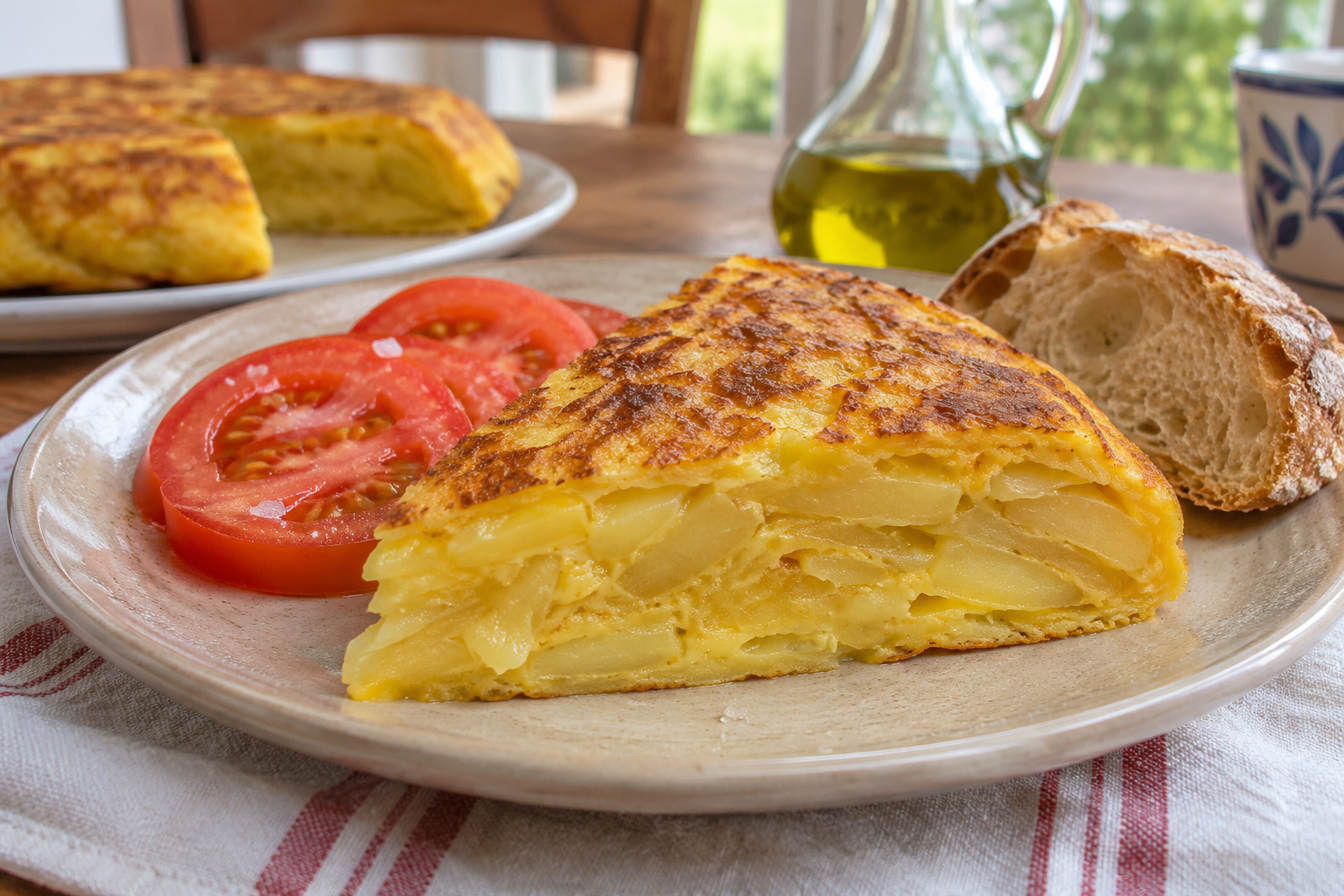
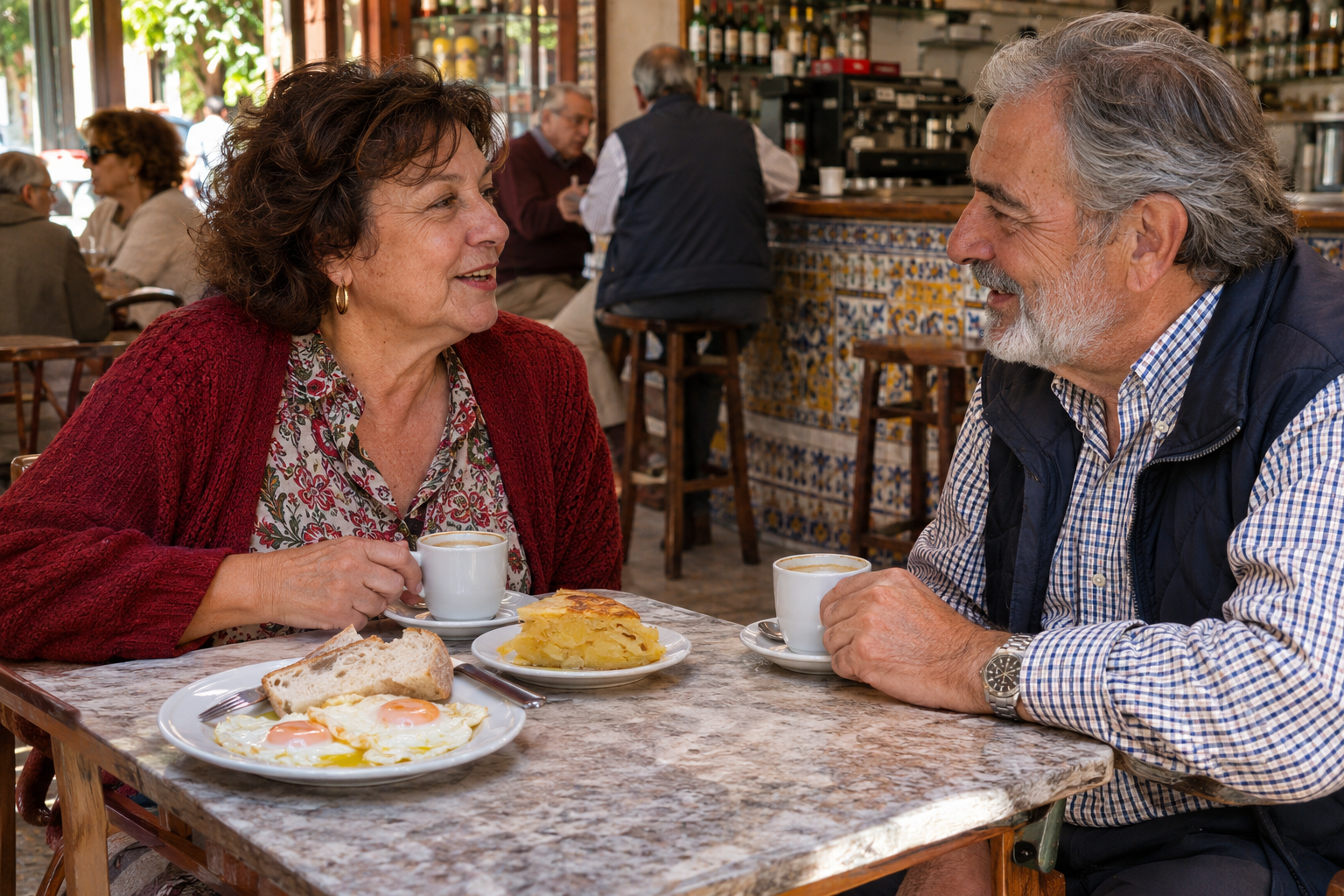
Living in Spain was part of what pushed me to finally test this, because the contrast with the American egg anxiety is so stark. Here, eggs are simply everyday food, cheap, good, and everywhere, with none of the moral weight Americans load onto them. The tortilla espanola, the thick potato and egg omelette, is a national dish eaten at all hours, and a couple of fried eggs over potatoes, huevos rotos, is a standard plate in any bar.
Nobody here orders an egg-white omelette or frets about the yolk, because the egg panic that swept American nutrition advice never took hold in the same way in the Mediterranean. Eggs are treated as what they are, an affordable, nourishing source of protein that has fed ordinary people for centuries. Watching the people around me eat eggs with such easy, guilt-free regularity, and show no sign of the harm I had been taught to expect, was a quiet daily argument against the fear I had grown up with.
That cultural ease was itself part of what I wanted to borrow. There is something freeing about living in a place where a basic, wholesome food is just food, not a calculated risk, and I wanted to see whether I could eat the way my neighbors do, without the inherited dread, and come out fine. The experiment was in some sense just a formal way of giving myself permission to eat like a Spaniard for two months and then checking that nothing bad had happened.
Why I Did It, and How
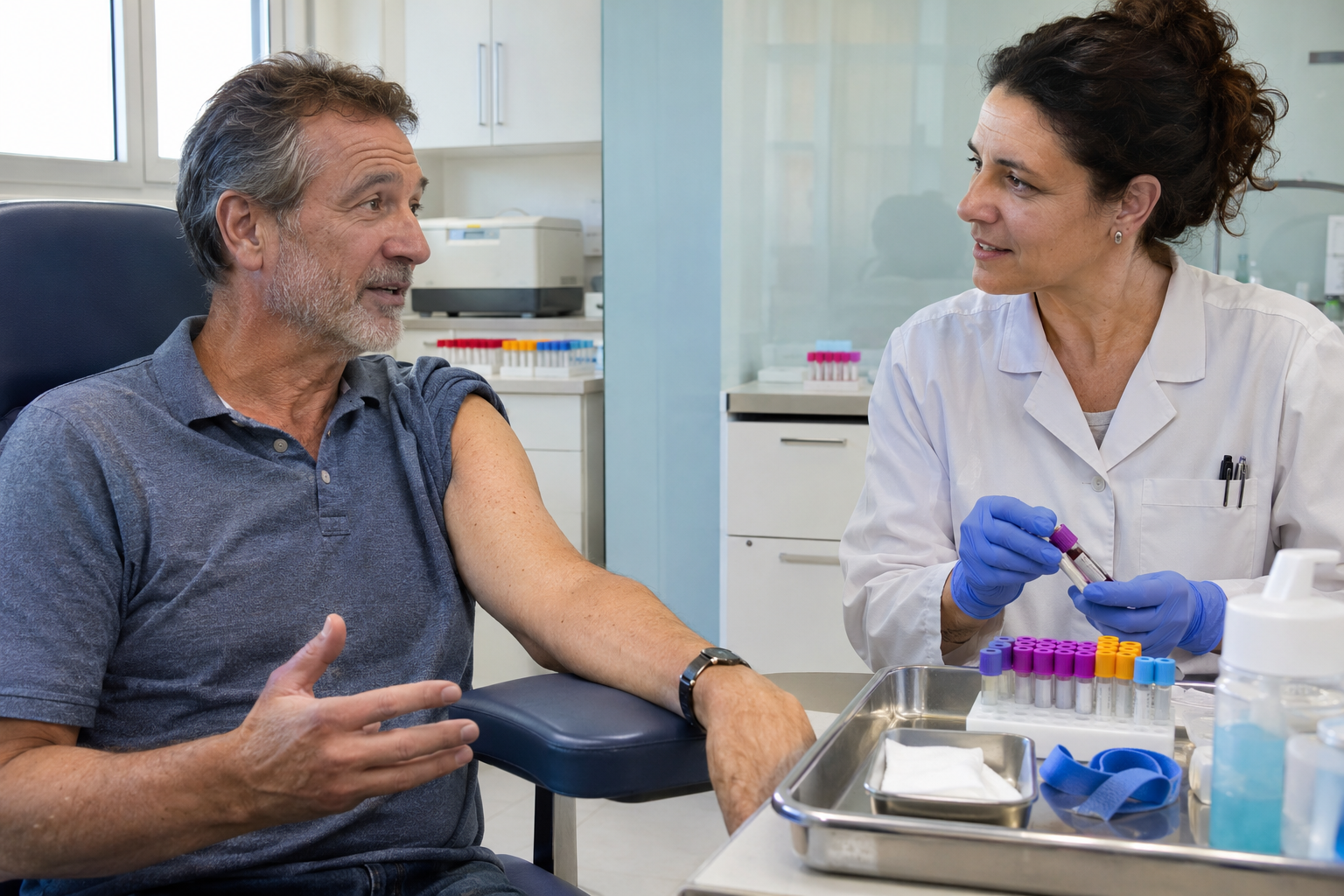
The appeal of the experiment was its directness. Cholesterol is one of the few health markers an ordinary person can actually measure cheaply and clearly, with a simple blood test, so unlike vaguer questions about wellbeing, this one had a real number attached. I could eat the supposedly dangerous food every day for a defined period and then look at the actual figure, which is a far more satisfying way to resolve a worry than endlessly reading conflicting articles about it.
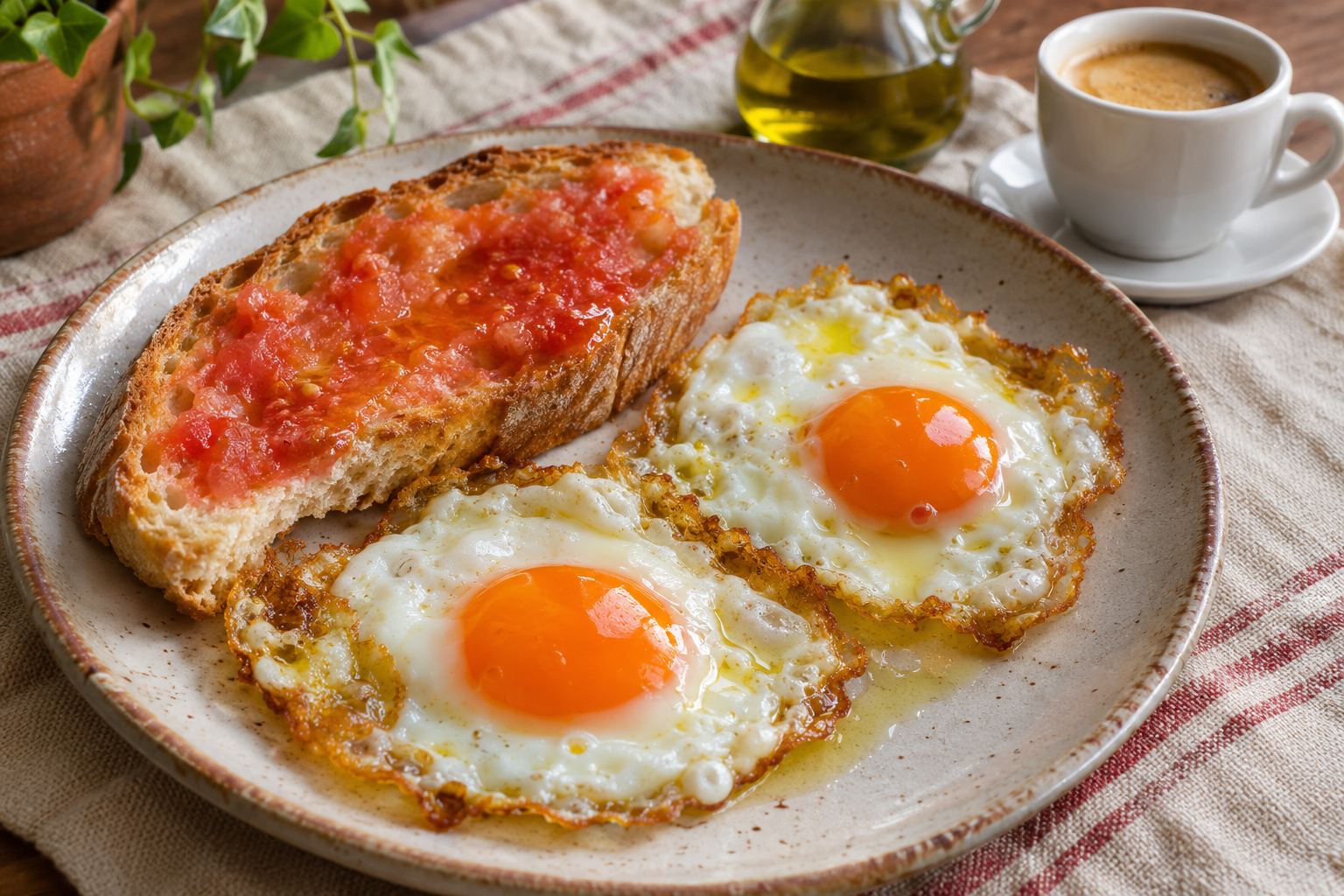
My rule was simple: two eggs every morning for sixty days, cooked the Spanish way, which mostly meant fried in good olive oil, sometimes as a small tortilla, sometimes scrambled into a revuelto. Sixty days, two full months, felt long enough to show a real effect if there was one, longer than the usual thirty-day experiment precisely because I wanted to give any cholesterol change time to appear. I kept the rest of my eating roughly normal so the eggs were the main thing that changed, and I had my cholesterol measured shortly before I started and again at the end.
I chose the Spanish way of cooking them deliberately, because it is how eggs are actually eaten here and because the olive oil is part of the picture. A Spanish fried egg is cooked in a generous pool of olive oil, which is a very different fat from the butter or bacon grease an American egg might meet, and since the fat you cook in matters more to cholesterol than the egg itself, that felt like the honest version of the experiment. If eggs were going to be eaten daily, they would be eaten the way the people around me eat them.
Living on Two Eggs a Morning
The experience of it was, frankly, a pleasure, which is worth saying because not every self-experiment is. Two eggs fried in olive oil, with good bread and maybe a tomato, is a genuinely satisfying breakfast, savory and filling in a way my old cereal-and-toast mornings never were. The protein kept me full well into the day, and I found myself less hungry before lunch and less inclined to snack, which was an unexpected small benefit of a high-protein breakfast.
There was also the simple relief of eating something daily without the low hum of guilt that had always accompanied eggs for me. Once I had decided to run the experiment, I gave myself full permission to enjoy them, and the breakfast became a small daily highlight rather than a worry. Cooking them the Spanish way, in olive oil, with care, turned an ordinary egg into something that felt almost indulgent, and doing it every morning for two months never once got old.
Sixty days is long enough that the novelty wears off and the thing becomes simply your life, and that is the point, because a two-day experiment tells you nothing. By the end, two eggs every morning was just how I ate breakfast, unremarkable and automatic, which is exactly the state you want to be in before you measure anything. Whatever the blood test was going to show, it would be showing the effect of a real, settled habit rather than a brief stunt.
The Breakfast Beyond the Number
Before I get to the cholesterol, it is worth dwelling on a benefit that had nothing to do with the blood test, because it may be the more useful takeaway for most people. A breakfast of two eggs is high in protein, and a high-protein breakfast behaves very differently in the body from the carbohydrate-heavy breakfasts many of us default to, the cereal, the toast, the pastry, the sweetened yogurt. The difference showed up quickly in how I felt through the morning.
With eggs in me, I was genuinely full, and that fullness lasted. The mid-morning hunger that used to send me looking for a snack simply did not arrive, and I reached lunch comfortable rather than ravenous. This is a well-documented effect of protein at breakfast, the way it steadies appetite and reduces the urge to graze, and it was the most immediate, tangible change of the whole experiment, far more noticeable day to day than anything happening with my cholesterol.
That matters because the cholesterol question, for all that it drove the experiment, is somewhat abstract, a number you cannot feel. The appetite effect, by contrast, you feel every single morning, and for many people the real case for a savory, protein-rich breakfast is not about blood markers at all but about not being hungry and cranky by eleven. Whatever the test was going to say, the eggs had already earned their place at breakfast on that basis alone.
The Number That Moved, and the One That Did Not
So, the results, which are the whole reason the piece has the title it does. When I compared the before and after, the striking thing was not a single dramatic change but a split: one part of my cholesterol picture moved, and the part everyone worries about essentially did not.
The number that did not move, to my genuine relief, was my LDL cholesterol, the so-called bad cholesterol that the old egg fear was all about. After sixty days of two eggs every morning, my LDL was essentially where it had started, barely changed, which is the opposite of what the advice of my childhood would have predicted. The daily eggs, the thing I had been taught would drive that number up, simply did not, at least not in me, over two months. That non-event was the most reassuring result of the whole experiment, a direct, personal contradiction of the fear I had carried for years.
The number that did move was my HDL cholesterol, the so-called good cholesterol, which nudged up a little. This also tracks with what research has found, that for many people eggs tend to raise HDL modestly, which is generally regarded as favorable rather than concerning. So the overall picture was mildly positive or neutral, the worrying number flat and the favorable number slightly up, which is a long way from the disaster the old guidance would have forecast. The eggs did something small and benign, not something harmful.
The Caveats That Matter Here
I have to be especially careful with this one, because cholesterol is a real health marker and I do not want anyone misreading my result as a green light to ignore their own. The most important caveat is that people differ, and with eggs they differ in a specific, known way. A minority of people are what researchers call hyper-responders, whose blood cholesterol does rise meaningfully when they eat a lot of dietary cholesterol, and for those individuals eggs may matter more than they do for the average person. I appear not to be one, but I had no way of knowing that in advance, and you have no way of knowing about yourself without testing.
This is exactly why my result is a story and not a recommendation. It was one person, two months, one before-and-after test, with no control for the many other things that shift cholesterol, from exercise to weight to stress to the rest of my diet. My flat LDL is a real data point for me and a meaningless one for you, because your body, your genetics, and your overall diet are different. The only honest takeaway is the general, well-established one, that for most people eggs have a modest effect on blood cholesterol, combined with the practical note that the only way to know your own response is to eat them and get tested, as I did.
And the whole thing sits inside a bigger context that one marker cannot capture. Cholesterol is one piece of cardiovascular health, not the whole of it, and a breakfast is one part of a diet, not the whole of it. My two months of eggs tell me something small and specific about how my own body handled daily eggs over a short period, and nothing at all about anyone’s long-term heart health, which depends on far more than a single food or a single number. I offer the result as an honest, interesting anecdote, not as guidance to act on.
What I Took From It
When the sixty days ended, I kept eating eggs, not two every single morning as a rule, but freely and without the old guilt, because the experiment had done its real job, which was to dissolve a fear rather than to prescribe a diet. I had tested the thing I was afraid of directly, on my own body, and found that for me it was not the danger I had been taught, and that knowledge was worth more than the specific numbers. I eat eggs now the Spanish way, in olive oil, with pleasure, as a normal good food rather than a daily risk.
If there is a broader lesson, it is about the value of testing an inherited fear against reality rather than carrying it unexamined. So much of what we believe about food comes from advice that was mainstream decades ago and has since been revised, and the egg is the clearest example of a food that was wrongly demonized for a generation. I could not have changed the official guidance, but I could run a small, honest experiment on myself and see, and what I saw was reassuring. The number everyone worries about did not move, the favorable one did, and a breakfast I had been taught to fear turned out, for me at least, to be simply a good one.

About the Author: Ruben, co-founder of Gamintraveler.com since 2014, is a seasoned traveler from Spain who has explored over 100 countries since 2009. Known for his extensive travel adventures across South America, Europe, the US, Australia, New Zealand, Asia, and Africa, Ruben combines his passion for adventurous yet sustainable living with his love for cycling, highlighted by his remarkable 5-month bicycle journey from Spain to Norway. He currently resides in Spain, where he continues sharing his travel experiences with his partner, Rachel, and their son, Han.