
An American fried egg is a restrained thing, cooked in a little butter or a thin film of oil, the white set flat and pale, the edges neat. A Spanish fried egg, a proper huevo frito, is something else entirely. It is cooked in a generous pool of hot olive oil, deep enough that the egg half floats in it, and the white erupts at the edges into a frilly, blistered, golden-brown lace, crisp and ruffled, while the yolk stays liquid underneath. Those crispy lace edges, which a careful American cook might think of as a mistake, are in Spain the entire point, the mark of an egg fried the right way.
If you have only ever had eggs fried gently in a pat of butter, the Spanish version is a revelation, because it turns the humble fried egg into something with real texture and a deep, savory flavor from the olive oil. The secret is not complicated, but it is specific, and it comes down to a lot of hot oil and a simple spoon trick that the grandmothers do without thinking. Here is what makes a huevo frito different, why the lace edges matter so much, the spooning technique that creates them, how Spaniards actually eat these eggs, and exactly how to make one yourself.
Not a Gentle Fried Egg
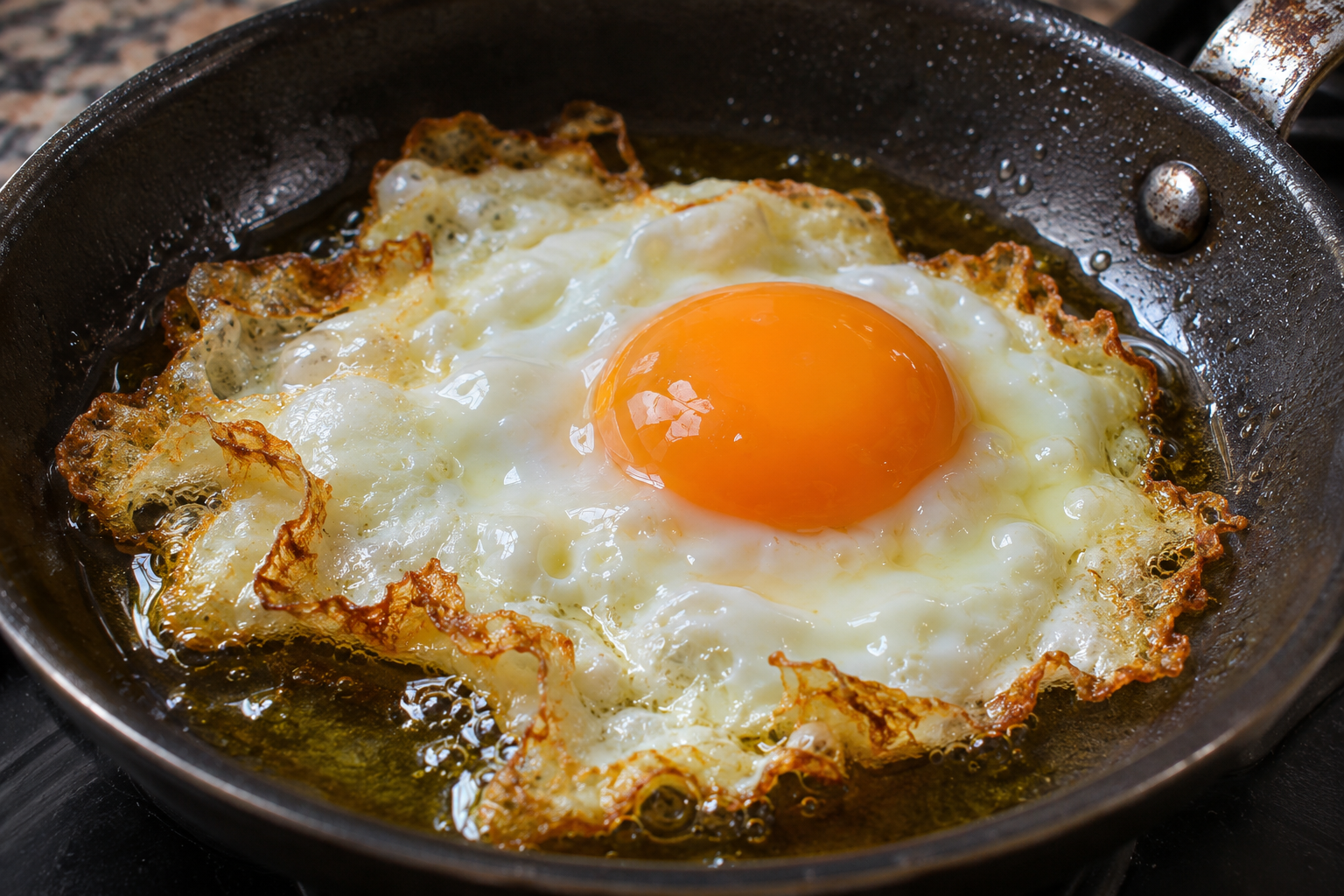
The first thing to understand is that a huevo frito is barely the same dish as the American fried egg, despite sharing a name, because the cooking method is so different. The American approach is gentle and dry, a nonstick pan, a small amount of fat, low to medium heat, the egg coaxed slowly to a soft, even, pale set. It is careful, controlled, and a little timid, aimed at a tidy result with no browning.
The Spanish approach throws all of that out. You heat a generous amount of olive oil, far more than an American would ever use for an egg, enough to form a shallow pool in the pan, and you get it properly hot before the egg goes anywhere near it. When you slip the egg into that hot oil, it does not sit quietly, it sizzles violently, and the edges of the white immediately begin to bubble, blister, and brown in the oil. This is not gentle cooking, it is something closer to shallow frying, and the drama of it is exactly right.
The result is an egg with real contrast, which is the whole appeal. The underside and the edges of the white go crisp, golden, and ruffled, with a texture that genuinely crunches, while the top of the white sets tender and the yolk stays gloriously runny. One egg gives you crisp and soft and liquid all at once, a far more interesting thing to eat than the uniform, tidy American version. It is the difference between an egg that was handled carefully and an egg that was fried with conviction.
The Lace Edges Are the Whole Point
Those frilly, crispy, browned edges have a name in Spanish, the puntilla or the encaje, which means lace, and the word tells you how the Spanish feel about them. They are not an accident or an overcooked flaw, they are the deliberate, prized result of frying an egg properly in hot olive oil, the sign that you did it right. A huevo frito without that lacy, crisp edge is, to a Spanish eye, a slightly sad and underdone thing, an egg that never got the heat it deserved.
The lace is where the texture and much of the flavor live. The crisp, ruffled edges carry the taste of the olive oil and the browning, a savory, almost nutty depth that a pale gently cooked egg simply does not have, and they provide a genuine crunch against the soft white and the liquid yolk. Biting through a crisp lacy edge into a runny yolk is the essential pleasure of the dish, the textural contrast that makes it so satisfying, and it is why Spaniards would never trade their blistered egg for a tidy American one.
This is a small but real example of how a food culture’s idea of the ideal can be the opposite of another’s. Where an American cook aims for an even, unbrowned white and might apologize for crispy edges, a Spanish cook aims directly for those edges and judges the egg by them. Once you taste a proper huevo frito, with its lace crackling against the yolk, you understand the Spanish preference completely, and the pale butter-fried egg starts to seem like the lesser version. The lace is not a bonus, it is the goal.
The Spoon Trick
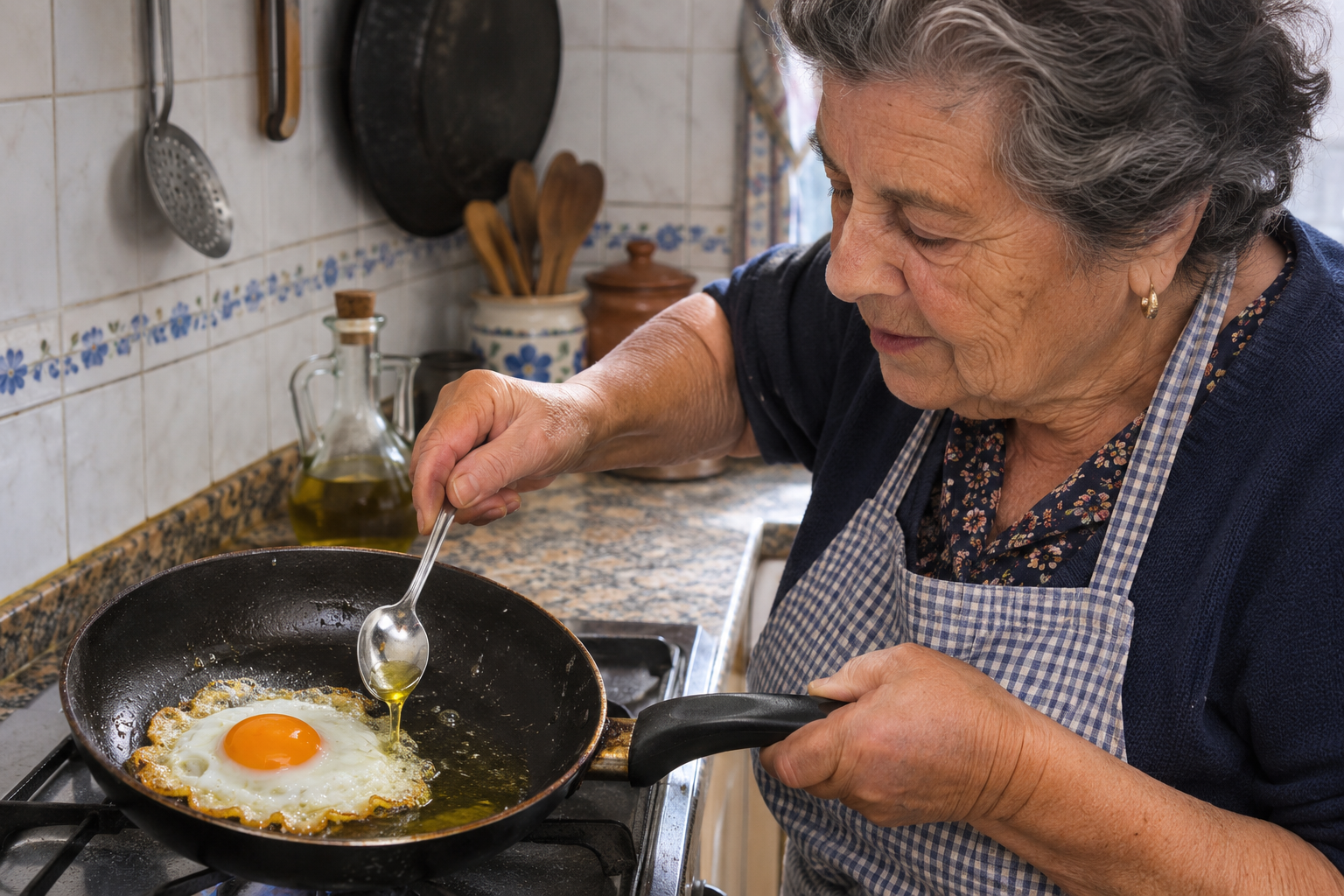
So how do the grandmothers get that lace reliably, every time, while keeping the yolk runny? The answer is a simple technique that is the real secret of the dish, the spooning of the hot oil. As the egg fries in its pool of oil, you tilt the pan slightly so the oil gathers to one side, then use a spoon to scoop up the hot oil and pour it repeatedly over the egg, basting it, especially around the edges of the white.
This basting does two things at once, which is why it is so clever. By spooning the hot oil over the white, you cook the top of the egg from above with the heat of the oil, setting it without having to flip the egg, so you never risk breaking the yolk. And by directing that hot oil at the edges, you encourage them to bubble, crisp, and brown into the prized lace, intensifying exactly the part you want. The spoon lets you set the white and build the lace while leaving the yolk completely untouched and liquid, which is the whole trick of a perfect huevo frito.
It is worth emphasizing how much easier this makes a good fried egg, because the basting removes the single most nerve-wracking part, the flip. There is no flipping, no spatula sliding under a delicate egg, no gamble with the yolk, just the steady spooning of hot oil until the white is set and lacy and the yolk glistens whole in the middle. The grandmothers do it in seconds, almost absent-mindedly, tilting the pan and flicking the hot oil over the egg a few times, and it is the kind of small skill that transforms the dish and that anyone can learn in a single attempt.
How Spaniards Eat Them
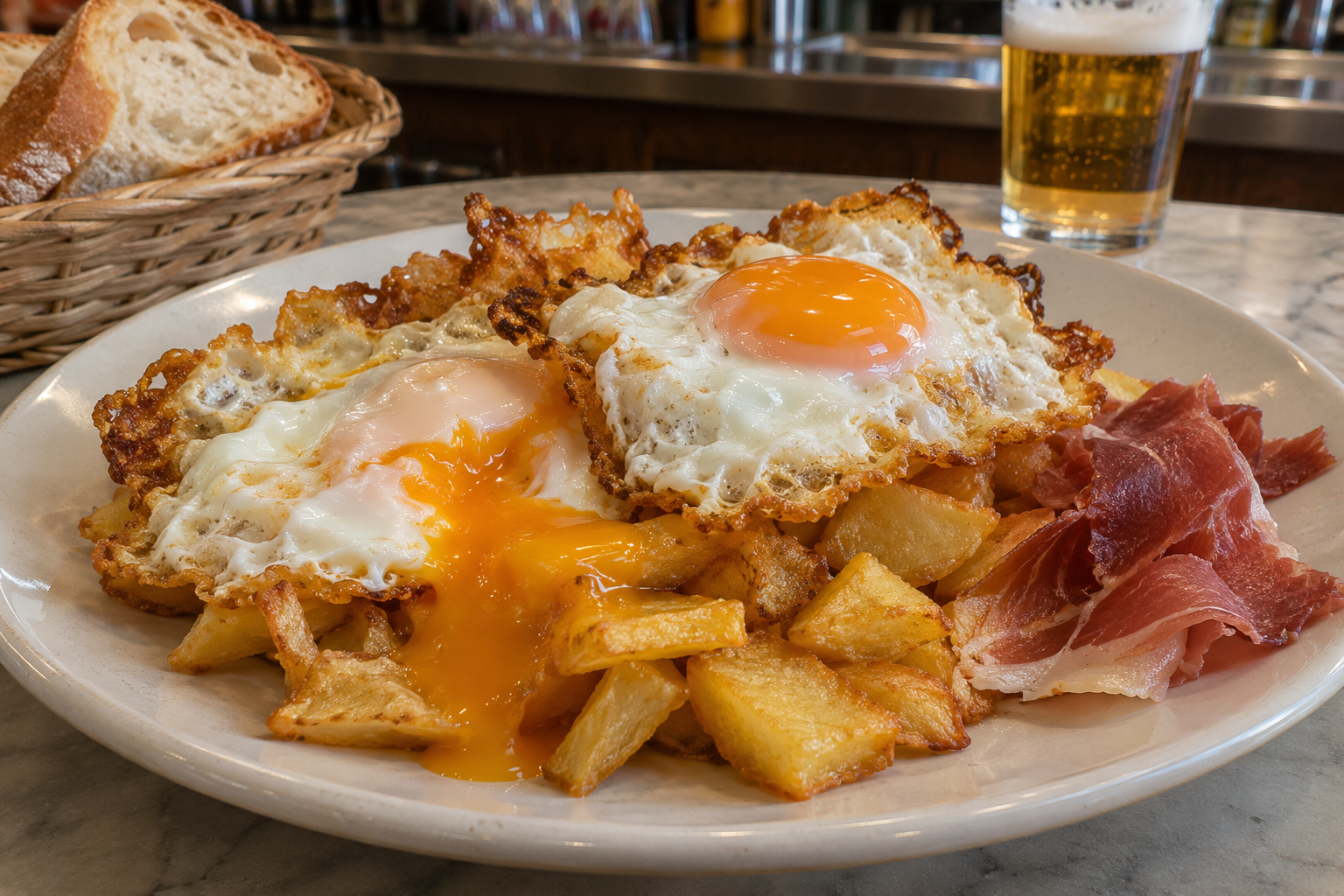
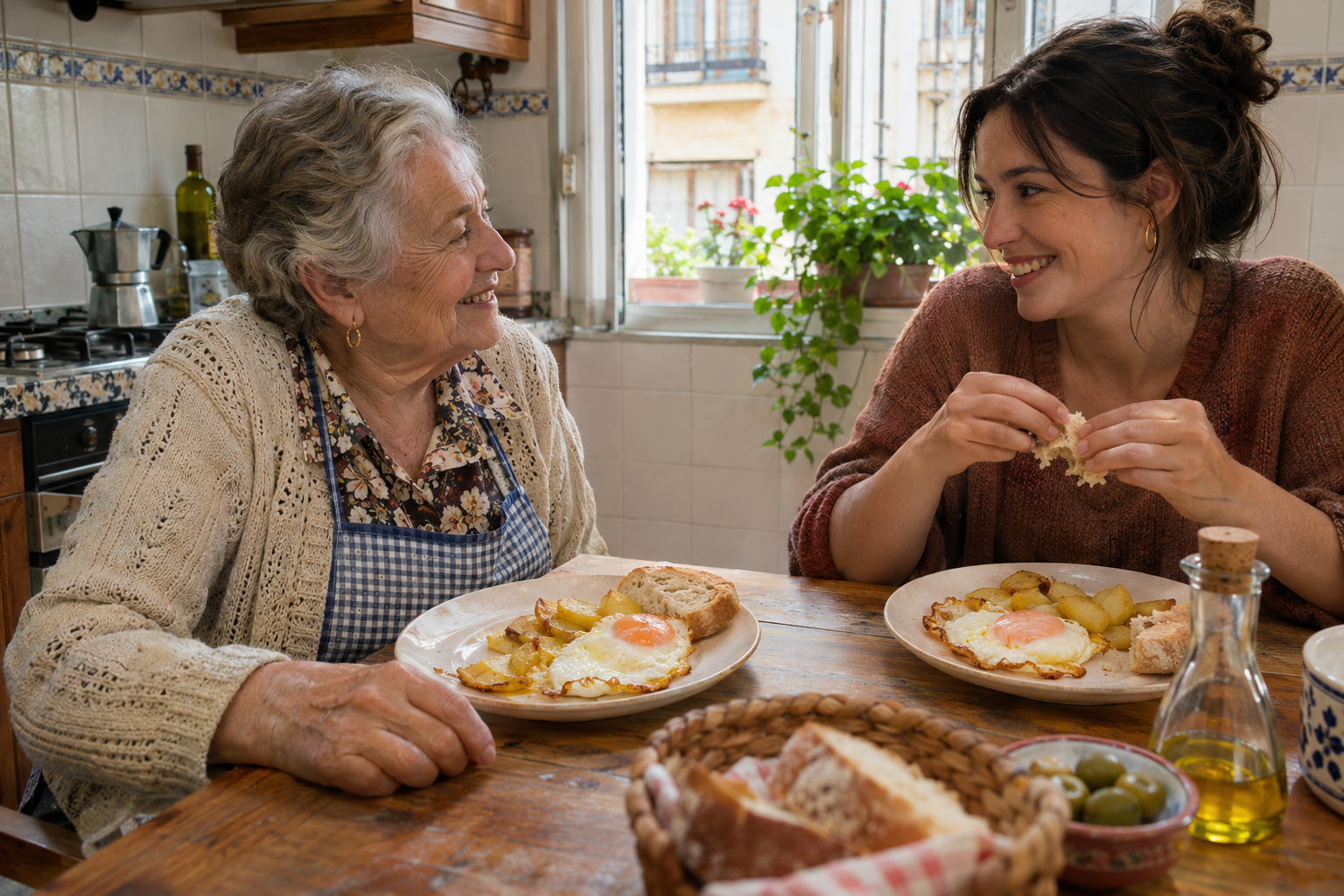
A huevo frito is rarely eaten alone and prim on a plate, because it is built to be broken into and mopped up, and the ways Spaniards serve it are part of the pleasure. The most famous is huevos rotos, broken eggs, where the fried eggs are laid over a bed of fried potatoes and then broken so the runny yolk and the olive oil run down through the potatoes, often with a bit of jamon or chorizo on top. It is one of the great simple dishes of Spain, pure comfort, and the lace edges and runny yolk are what make it work.
Beyond that, the egg turns up over all sorts of things, over rice, over chips, alongside a piece of meat, or simply on its own with good bread for mopping. Because the yolk stays liquid, the fried egg functions almost as a sauce, a rich golden pool to be dragged through with potato or bread or soaked up, and the crisp edges give something to bite against. The olive oil the egg was fried in often comes along too, carrying its flavor into whatever the egg is sitting on.
This is everyday food, the kind of quick, cheap, deeply satisfying thing a Spanish grandmother makes without a second thought, and it is a world away from the careful American breakfast egg. It is eggs fried with generosity and confidence, in plenty of good oil, for texture and flavor rather than tidiness, and eaten with bread and pleasure. Once you start making your eggs this way, the Spanish way, you may find it hard to go back to the pale and gentle version.
Which Olive Oil, and Don’t Fear the Amount
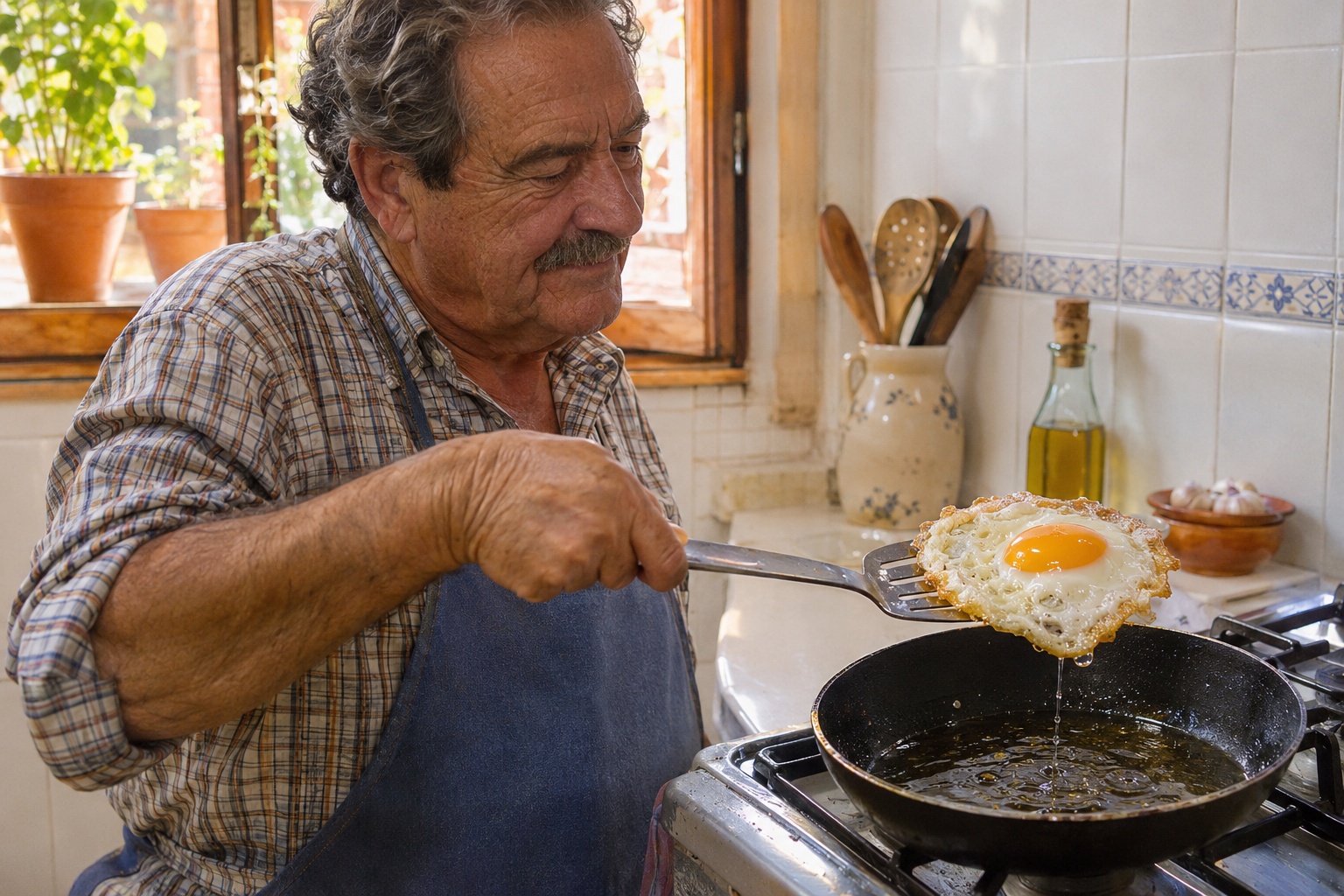
Two practical worries tend to hold Americans back from frying eggs this way, and both are easily answered. The first is the oil itself: yes, you want olive oil, because its flavor is a real part of the dish, carried into the crisp edges and the yolk and whatever the egg sits on. A good everyday olive oil is perfect here; you do not need to pour your most expensive bottle into a frying pan, but you do want real olive oil rather than a neutral one, because the taste is the whole character.
The second worry is the sheer amount of oil, which looks alarming to a cook raised on a thin film of fat. Do not be put off, because the egg does not actually absorb much of it; most of the oil stays in the pan, and you lift the egg out and let it drain. The Spanish, famously careful with their good oil, simply pour the leftover oil back into a jar once it cools, straining it, to use again. Nothing is wasted, and the generous pool is what makes the lace, so it earns its place.
Make It: Huevos Fritos
This makes one egg, and you simply repeat it for more, frying one or two at a time so the pan is not crowded. The two keys are plenty of hot olive oil and the spooning technique. Use the best olive oil you have, since its flavor is central to the dish, and serve the egg at once while the edges are crisp.
Ingredients
- 1 egg, as fresh as possible, at room temperature
- 100ml olive oil, or enough to form a shallow pool in the pan
- flaky salt
To serve, any of:
- fried potatoes (for huevos rotos)
- crusty bread
- jamon or chorizo
Instructions
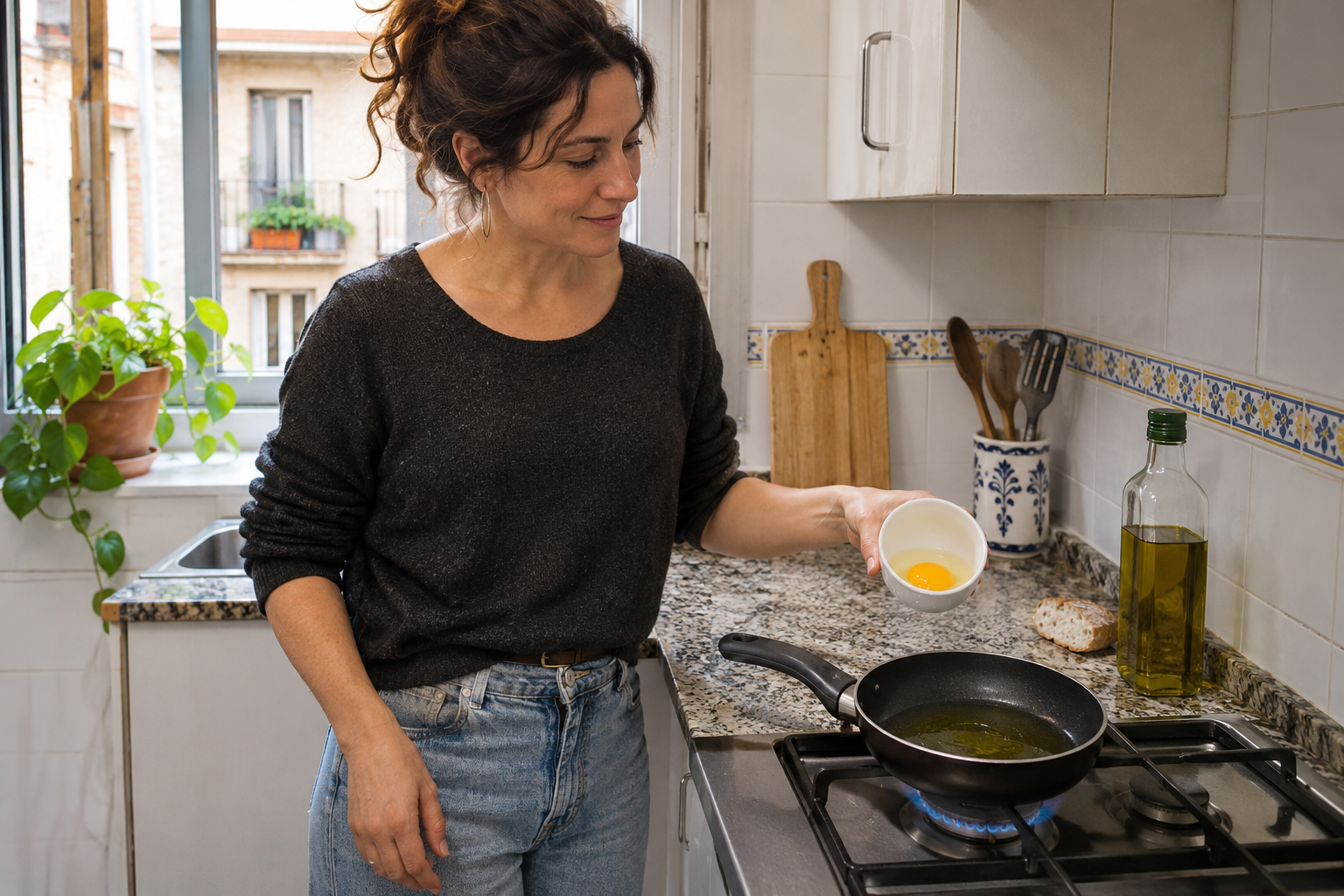
Crack the egg into a small bowl or cup first, rather than straight into the pan, so you can slip it in cleanly and gently. This small step gives you control and avoids a broken yolk or shell in the oil.
Pour the olive oil into a small frying pan, enough to form a shallow pool a few millimeters deep, and heat it over medium-high heat until it is genuinely hot. You can test it with a drop of egg white or a small cube of bread, which should sizzle briskly on contact. The oil must be hot for the lace to form, so do not rush this.
Slip the egg gently into the hot oil. It will sizzle hard immediately, and the edges of the white will start to bubble and set at once. Tilt the pan slightly so the oil pools to one side.
Now the spoon trick. Using a spoon, scoop up the hot oil and spoon it repeatedly over the egg, concentrating on the edges of the white and over the top. Keep basting steadily, and watch the edges turn frilly, golden, and crisp while the top of the white sets from the heat of the oil. Do not flip the egg. The yolk should stay liquid and whole throughout.
The egg is done in well under a minute, as soon as the white is fully set and the edges are lacy and golden brown while the yolk remains runny. Lift it out with a slotted spatula, letting the excess oil drain back into the pan, and set it on your potatoes, bread, or plate. Sprinkle with flaky salt and serve immediately, while the lace is still crisp, breaking the yolk to let it run. For huevos rotos, lay it over fried potatoes and break it so the yolk and oil run through.

About the Author: Ruben, co-founder of Gamintraveler.com since 2014, is a seasoned traveler from Spain who has explored over 100 countries since 2009. Known for his extensive travel adventures across South America, Europe, the US, Australia, New Zealand, Asia, and Africa, Ruben combines his passion for adventurous yet sustainable living with his love for cycling, highlighted by his remarkable 5-month bicycle journey from Spain to Norway. He currently resides in Spain, where he continues sharing his travel experiences with his partner, Rachel, and their son, Han.