
Here is a number that should stop any American approaching retirement in their tracks. According to AAA, the average cost of owning and operating a new car in the United States has climbed to nearly $13,000 a year, once you add up depreciation, insurance, fuel, maintenance, registration, and financing. That is not the sticker price, it is the recurring annual cost of simply keeping a car in your life, and most Americans go right on paying it after they retire, after the commute that justified the car has ended, often for a vehicle that now sits in the driveway most of the day. Across much of Europe, retirees look at that and quietly shake their heads, because a great many of them have retired without a car at all, and they do not miss it.
This is one of the largest and most overlooked differences in the cost of retirement on the two continents, and it is worth examining honestly, because that annual car cost is a staggering drain on a fixed retirement income that Europeans simply do not carry. It is not that Europeans are more virtuous or more frugal by nature, it is that they live in places built so that a car is optional rather than mandatory, and in retirement they take full advantage of that. Here is what that yearly car cost really contains, why Europeans can live so easily without a car, what a car-free retirement actually looks like day to day, the honest limits of the idea, and what it could mean for your own retirement math. This is general information, not financial advice.
The Real Cost of the Car You Keep
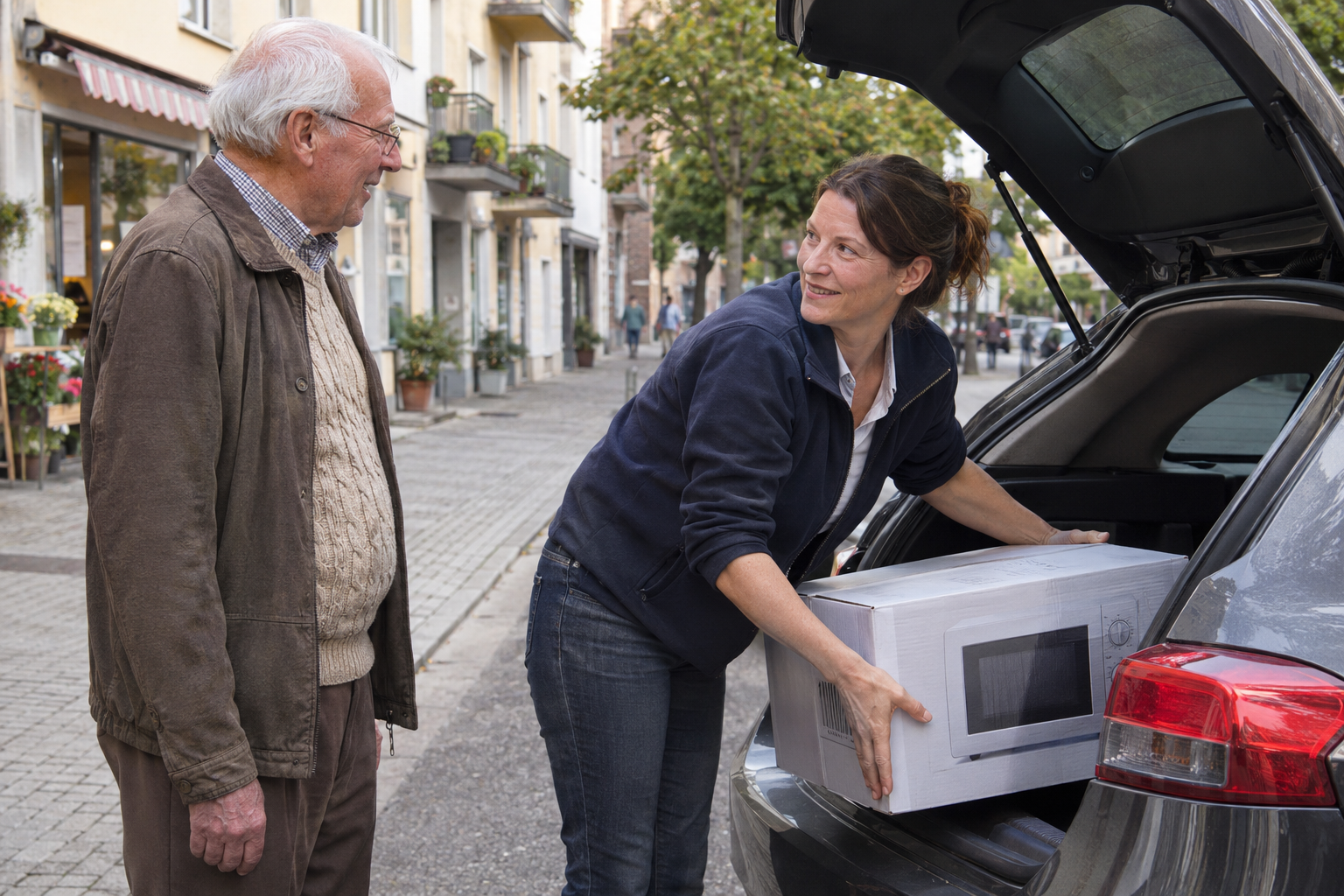
Start with that AAA figure, because the size of it is the whole point and most people have never added it up. The roughly $12,000 to $13,000 a year that AAA calculates for a new vehicle is not fuel alone, which is the cost most people think of, but the full burden of ownership. It includes depreciation, the quiet largest cost as the car loses value, plus insurance, fuel, maintenance and repairs, registration and taxes, and the financing cost if the car is on a loan. Added together across a year, these come to a sum that rivals a major line in any household budget.
Even for a retiree driving an older, paid-off car, which lowers the depreciation and removes the financing, the ongoing costs remain substantial, easily several thousand dollars a year in insurance, fuel, maintenance, registration, and the creeping repair bills that older cars bring. The car is never free to keep, and the costs do not stop when you stop working. If anything, an older car in retirement can bring unpredictable repair bills that make budgeting harder, a transmission or an engine problem landing as a sudden four-figure shock on a fixed income.
The deeper issue is utilization. In working life the car earns its keep by getting you to work every day, but in retirement that daily justification vanishes, and for many retirees the car becomes an expensive machine used for a few errands a week, sitting idle the rest of the time while still costing the full annual amount to insure, register, and maintain. You are paying a commuter-level cost for a car you no longer commute in, which is precisely the inefficiency that a car-free European retiree has eliminated. The money keeps going out whether the car moves or not.
Why Europeans Can Live Without One
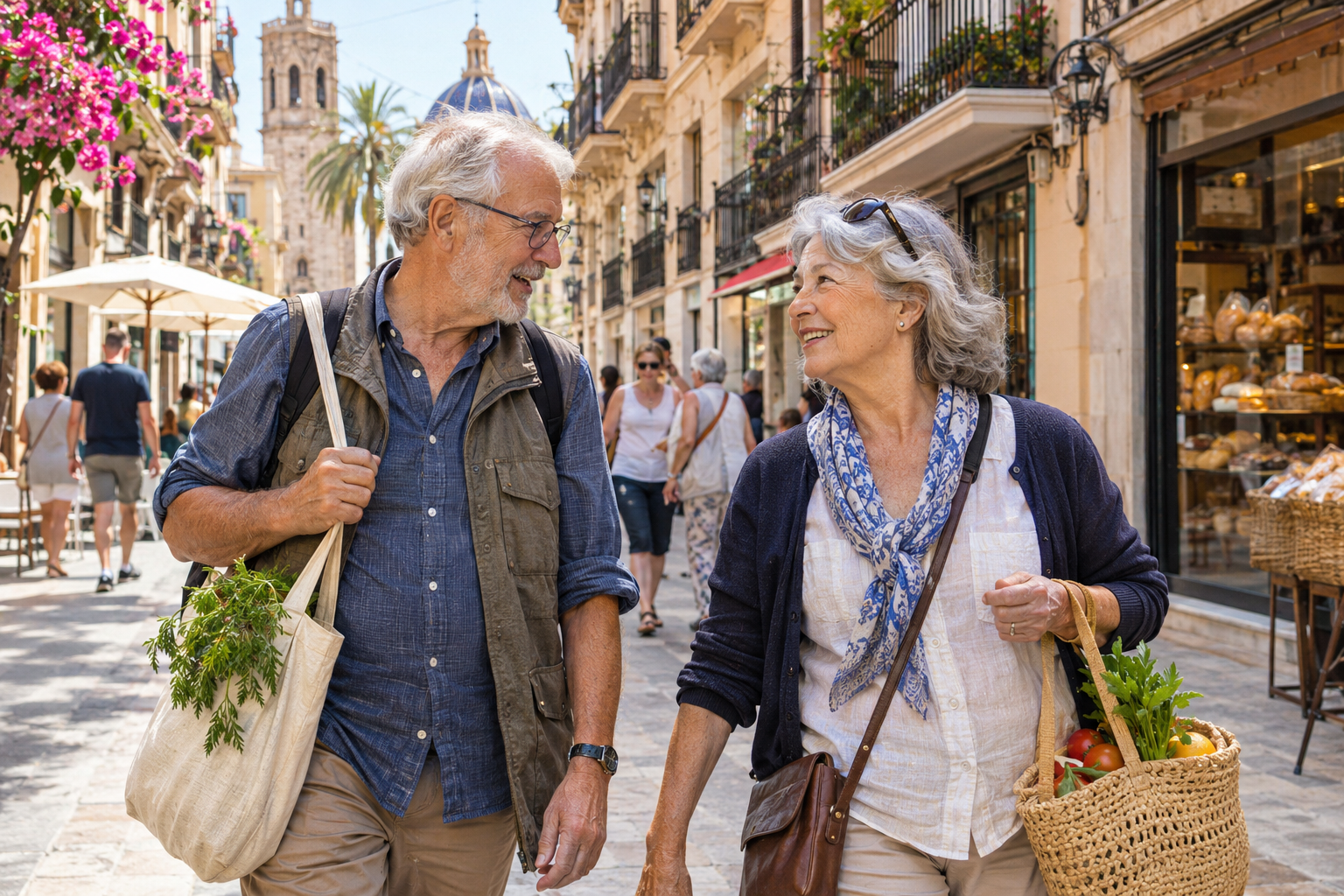
The reason Europeans can retire car-free, and Americans so often cannot, comes down to how the two places are built, and this is the crucial point to understand before anyone imagines simply selling their car in suburban America. European cities and towns are, for the most part, dense, walkable, and served by excellent public transport, designed over centuries around people on foot rather than cars, so that daily life genuinely does not require a vehicle. The car is a convenience in most of Europe, not a necessity, and that changes everything.
Consider what is within reach of an ordinary European home. The shops, the market, the pharmacy, the doctor, the cafe, the bank are typically a short walk away, in the neighborhood, reachable on foot in minutes, because European towns mix homes and services together rather than separating them into distant zones. For anything further, there is public transport, buses, trams, metros, and above all the trains that link towns and cities so well that you can cross a country without a car. The whole environment is built so that a person without a car is not stranded but perfectly mobile.
This is the stark contrast with much of the United States, where car-dependent sprawl makes a vehicle close to essential, with homes set far from shops and services, few sidewalks, little or no public transport, and distances that assume everyone drives. An American in a typical suburb genuinely cannot easily live without a car, which is exactly why they keep paying for one into retirement, not out of preference but out of the design of the place they live. The European car-free retirement is possible because the European built environment permits it, and that permission is the thing Americans lack at home and gain by moving. The difference is not willpower, it is urban design.
What a Car-Free Retirement Looks Like

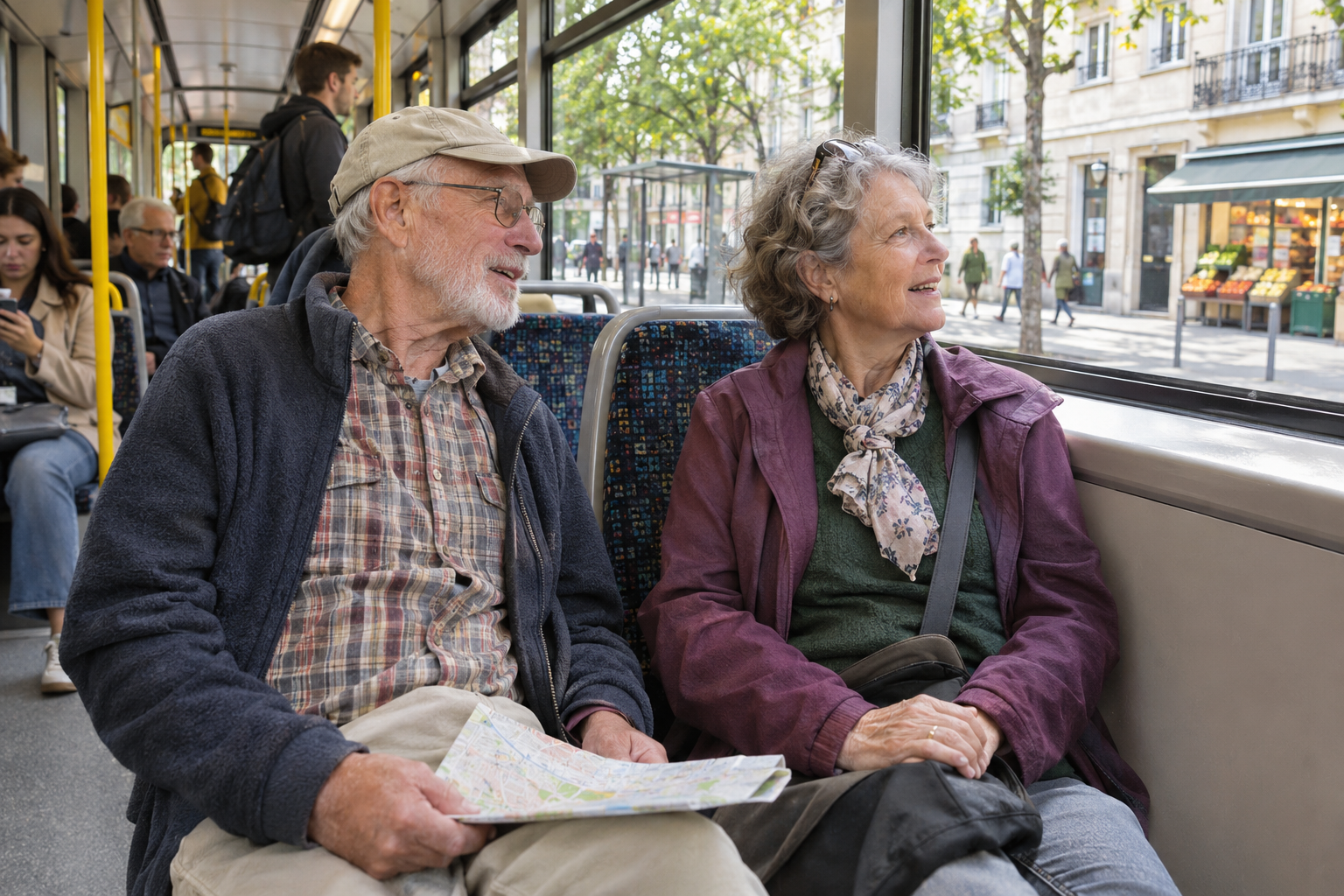
Strip away the abstraction and a car-free European retirement is a pleasant, ordinary daily life, not a hardship, which is the part that surprises Americans most. The day’s errands are done on foot, a walk to the market for the day’s food, a stroll to the pharmacy or the cafe, the small daily outings that double as exercise and as the texture of a sociable life. Far from being a burden, this daily walking is one of the quiet pleasures and health benefits of the lifestyle, keeping retirees moving and connected in a way that climbing in and out of a car does not.
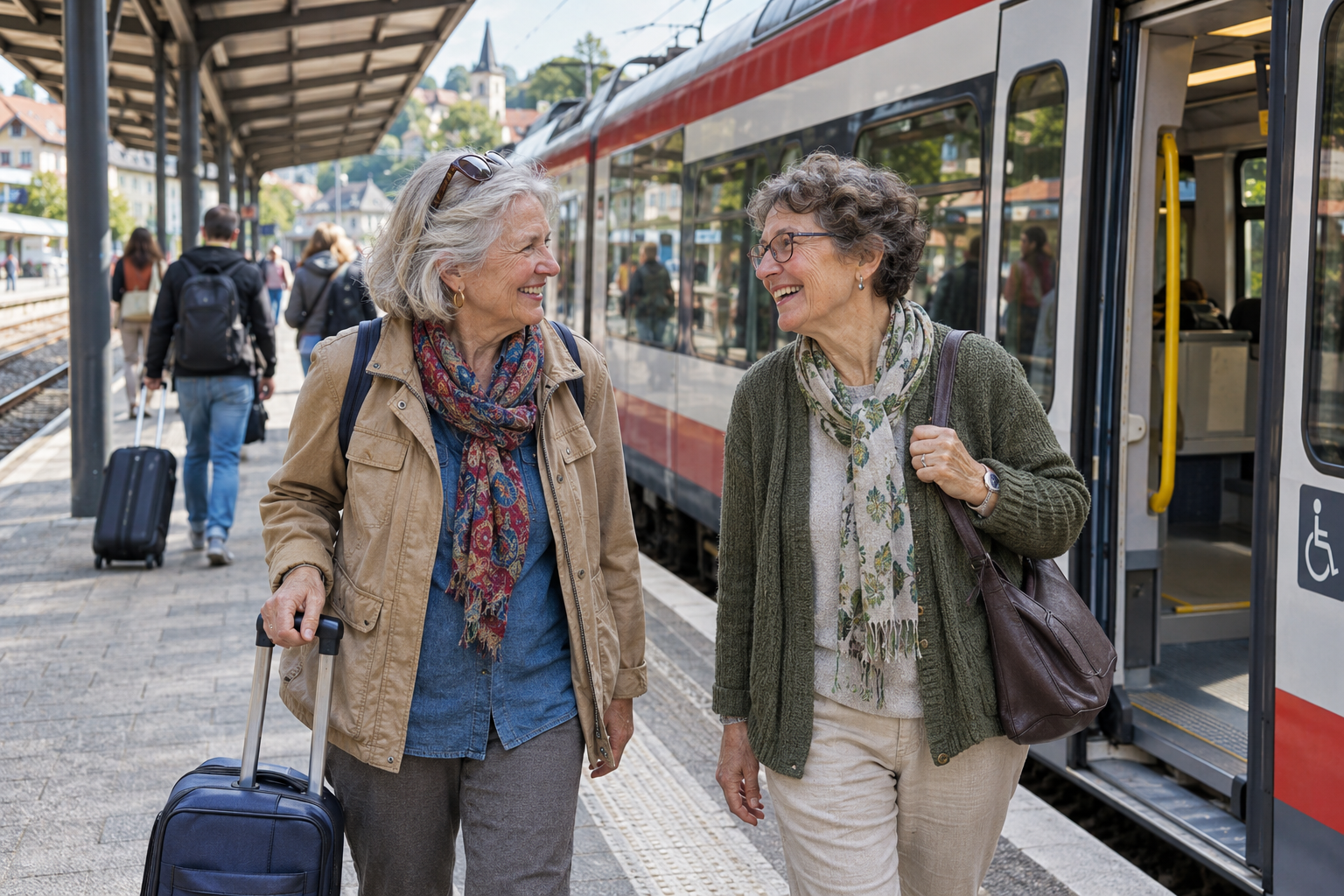
For journeys beyond walking distance, the public transport does the work, the bus or tram across town, the metro, and the train for trips to other cities or regions, often at prices that are a rounding error against the cost of car ownership, and with senior discounts that make them cheaper still. A car-free retiree can visit family in another city, take a holiday across the country, get to a hospital appointment, all by train and transit, without ever owning or insuring a vehicle. The mobility is real and complete, just delivered by a different system.
And for the occasional time when a car genuinely is the best tool, the one big grocery run, the trip to somewhere transit does not reach, the car-free retiree simply rents a car or takes a taxi for that specific occasion, paying only for the use rather than carrying the full cost of ownership all year. A handful of taxi rides and the odd rental car across a year cost a tiny fraction of the twelve thousand dollars that owning a car demands, so even accounting for the times a car is handy, going without one saves enormous sums. You pay for the car only when you actually need one, which turns out to be far less often than owning one implies.
The Money It Frees
The financial effect of all this on a retirement budget is genuinely large, which is why it deserves a place in anyone’s retirement planning. Eliminating a cost of ten thousand dollars or more a year from a fixed retirement income is transformative, the equivalent of a substantial boost to the pension or portfolio that has to fund the rest of life. For a retiree on a modest income, removing the car cost can be the difference between a tight retirement and a comfortable one, freeing money for travel, for grandchildren, for simply living with less anxiety.
Put it in terms of the capital required to generate that income and the figure grows starker still. To safely produce an extra twelve thousand dollars a year from savings, by the common rough guideline, you would need something on the order of three hundred thousand dollars of additional nest egg, so a car-free retirement is, in a sense, worth a few hundred thousand dollars of savings you did not have to accumulate. Seen that way, the humble decision to live without a car is one of the largest single financial moves available to a retiree, dwarfing the small economies people usually fret over.
This is the lens through which the whole thing is worth seeing, not as a lifestyle quirk but as a major financial strategy. The money not spent on a car is money that does not have to be earned, saved, or withdrawn, year after year, for the rest of retirement, and over a twenty or thirty year retirement the cumulative saving runs into the hundreds of thousands of dollars. For an American weighing a move to a walkable European town, the car-free math alone can reshape what their money will support, turning a budget that looked tight at home into a comfortable one abroad. The car is often the single most expensive habit they can shed.
The Dividends Beyond the Dollars
The AAA figure captures the direct costs, but going car-free sheds a set of smaller burdens that never show up in the headline number and that retirees are often happiest to be rid of. There is parking, the hunt for it, the paying for it, the garage or driveway it demands, all of which simply vanish. There is the low-grade administration of car ownership, the renewals, the inspections, the repair appointments, the insurance comparisons, a steady drip of chores and small stresses that a car-free person never thinks about again.
And there is a genuine health dividend that comes free with the lifestyle. A life organized around walking to the shops and the cafe and the station builds gentle daily movement into the ordinary business of living, without anyone having to schedule exercise, and that steady walking is exactly the kind of activity associated with aging well. The car-free retiree tends to move more, simply because getting through the day requires it, and that movement is a bonus sitting on top of the money saved. You lose the costs and the chores and gain the steps, which is a trade most who make it are glad of.
The Honest Limits
Intellectual honesty requires the caveats, because car-free living is not universally possible or desirable, and pretending otherwise would be a disservice. The whole thing depends entirely on location, on living somewhere genuinely walkable and well served by transit, which means a city or a decent-sized town rather than a remote village or the countryside. An American who moves to an isolated rural corner of Europe may find they need a car after all, so the car-free retirement specifically requires choosing a place built for it, which is a real constraint on where you settle.
There are personal factors too. Some people simply love driving or the independence of a car and would not give it up for any saving, which is a legitimate preference, and some have mobility or health conditions that make walking and public transport genuinely difficult, for whom a car remains important. Car-free living suits the reasonably mobile retiree in a walkable place, and it is not a blanket prescription for everyone, so the honest version is that it is a wonderful option for many rather than a rule for all. Nobody should feel they have failed if a car still makes sense for their circumstances.
And the transition itself takes adjustment, because an American who has driven everywhere for sixty years does not instantly become a comfortable transit user, and there is a learning curve to the buses and trains and to organizing a life on foot. Most who make the switch report that the adjustment is quicker and easier than they feared, and that they come to prefer the car-free life, but it is a real change of habit rather than a flip of a switch. Given all these caveats, though, the core point stands for a great many retirees: in the right place, you can live well without a car, you will not miss it, and you will keep an enormous amount of money that Americans go on paying without question.
Rethinking the Default
The largest lesson here is to question a default that most Americans never examine, the unspoken assumption that of course you own a car, that it is simply a fixed fact of adult life like having a roof. For most of American life that assumption is forced by the built environment and is hard to escape, but it is still worth seeing clearly as the enormous recurring cost it is, roughly thirteen thousand dollars a year that is treated as simply the price of existing rather than as a choice. Naming it as a choice is the first step to realizing it can sometimes be unmade.
For the American contemplating retirement, and especially retirement abroad, the car-free option deserves to be on the table as a serious financial and lifestyle strategy rather than an afterthought. Choosing a walkable European town where a car is genuinely optional, and then choosing to live without one, is a decision worth tens or hundreds of thousands of dollars over a retirement, and it comes bundled with the daily walking, the transit, and the human-scaled life that tend to make for a healthier and more connected old age as well. The Europeans who retire car-free are not depriving themselves, they are enjoying a life that happens to cost far less, and that is a combination worth taking seriously.
So when you build your retirement numbers, put the car on the table as the major line it really is, and ask honestly whether, in the place you are considering, you would actually need one. If the answer is no, you may have just found the single biggest saving available to you, one that European retirees have been quietly enjoying for generations while their American counterparts keep paying, year after year, for a car that mostly sits still.

About the Author: Ruben, co-founder of Gamintraveler.com since 2014, is a seasoned traveler from Spain who has explored over 100 countries since 2009. Known for his extensive travel adventures across South America, Europe, the US, Australia, New Zealand, Asia, and Africa, Ruben combines his passion for adventurous yet sustainable living with his love for cycling, highlighted by his remarkable 5-month bicycle journey from Spain to Norway. He currently resides in Spain, where he continues sharing his travel experiences with his partner, Rachel, and their son, Han.