
Back home, Thanksgiving dinner is an afternoon affair. You eat at two, or four, or some other faintly unnatural hour, because the whole day belongs to the holiday and the meal is the day’s single great event. Here in Spain, where we live now, it does not work like that at all. Thanksgiving is not a holiday here; it is an ordinary working Thursday, and so we have had to fold it into the shape of a Spanish day.
Which means we eat at nine. By the time everyone is home from work and school, by the time the ordinary Thursday has run its course, the only sensible hour left for a feast is the hour Spain eats dinner anyway, which is nine at night or later. So our Thanksgiving has become a late, candlelit, grown-up affair, served at the Spanish dinner hour, built from a Spanish pantry, and it is one of our favorite meals of the year.
Here is what an American Thanksgiving looks like when it is assembled entirely from Spanish ingredients and served at the Spanish dinner hour, the substitutions that became our traditions, and a recipe for the one dish that captures the whole thing: a chorizo stuffing that marries the American holiday to the Spanish kitchen. It is Thanksgiving, translated.
We Eat at Nine
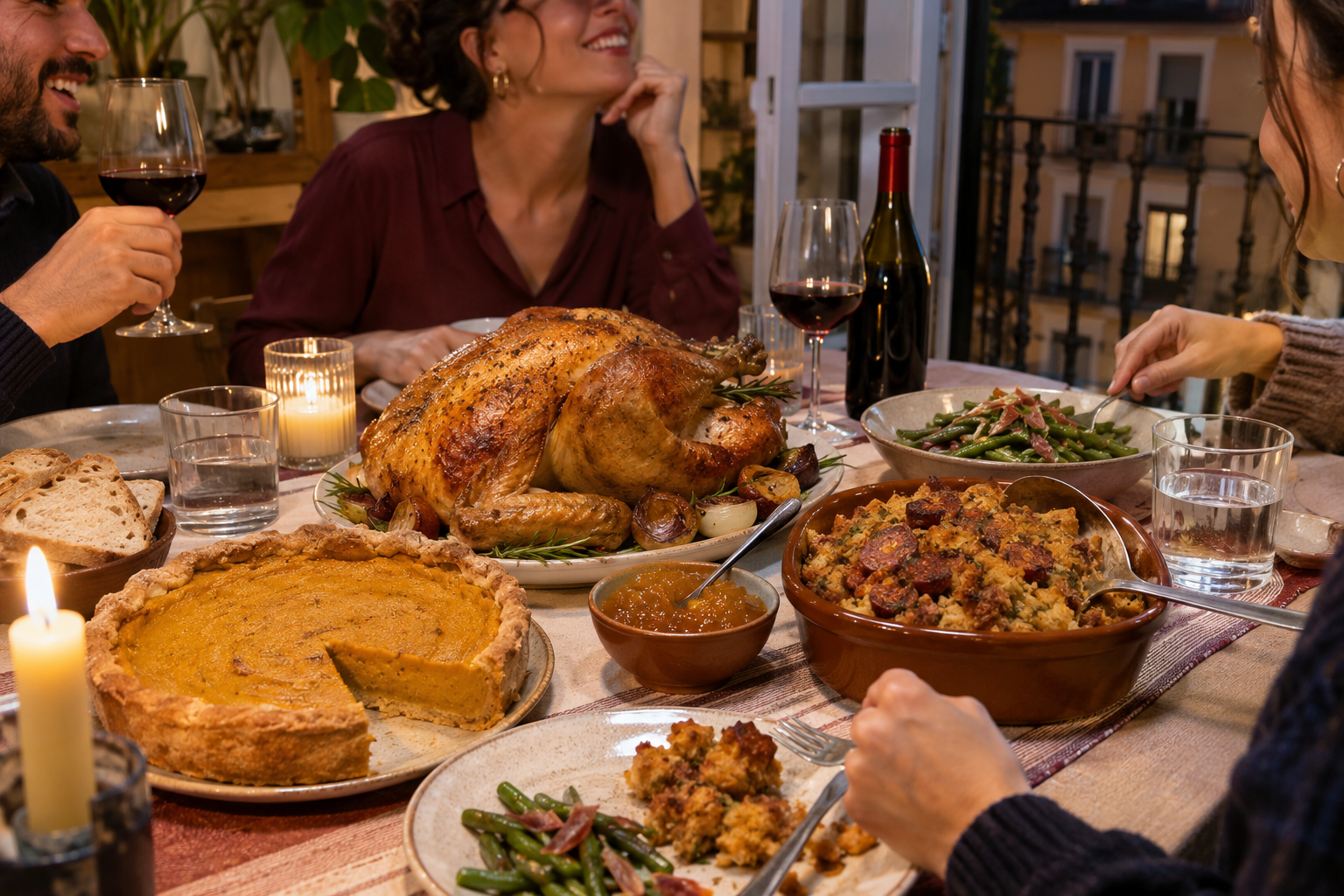
The nine-o’clock Thanksgiving is a direct consequence of the holiday not existing here. Because the fourth Thursday of November is a normal workday in Spain, with everyone at their jobs and the children at school until the usual evening hour, there is simply no afternoon to give over to a feast. The day belongs to ordinary life until ordinary life is done.
So the meal slides to the end of the day, to the Spanish dinner hour, which is already far later than Americans find comfortable. Dinner in Spain routinely happens at nine or ten at night, so once everyone is finally home and free, that is naturally when the Thanksgiving table gets set, long after the sun has gone down. Our Thanksgiving is a night meal, eaten in the dark of a November evening, by candlelight, after a full and unremarkable day, rather than the long, lazy, daytime marathon we grew up with.
And here is the surprising thing: we have come to love it this way. There is something lovely and intimate about the late hour, a calm that the frantic all-day American version never had. The ordinary Thursday gets lived first, and then, when the day is spent, the feast arrives as its gentle, glowing conclusion, a warm and candlelit gathering at the end of a normal day rather than a daylong production. The Spanish dinner hour, which we once found so strange, has given our Thanksgiving a quiet, grown-up loveliness, and we would not go back to eating at two in the afternoon now if we could.
Built From a Spanish Pantry
The other thing that defines our Thanksgiving is that every bit of it comes from a Spanish pantry, because there is no other pantry available to us. We cannot import the American supermarket; we have to build the American table out of what Spain actually sells, and over the years we have learned to do exactly that.
The bones of the meal are Spanish through and through. The turkey comes fresh from our butcher, roasted the simpler local way, and the sides are assembled from the Spanish market: green beans cooked with cured jamon in place of the old casserole, a tart quince sauce where the cranberry would have been, a pie made from fresh roasted squash because canned pumpkin does not exist here.
Even the wine is local, a good Rioja or a bottle of cava to toast with, rather than anything shipped from home. Each of these has its own method and its own small story, worked out over years of Thanksgivings, and together they make a table that is unmistakably Thanksgiving and unmistakably Spanish at once.
This is the real character of our holiday: an American tradition rendered entirely in Spanish ingredients, the familiar shapes of the feast filled in with whatever the local shops and markets provide. It would have felt, once, like making do, like a compromised version of the real thing. It does not feel that way anymore. It feels like our own, a Thanksgiving that belongs to this place as much as to the country we carried it from, grown out of the Spanish pantry the way a transplanted thing grows into new soil.
The Substitutions That Became Traditions
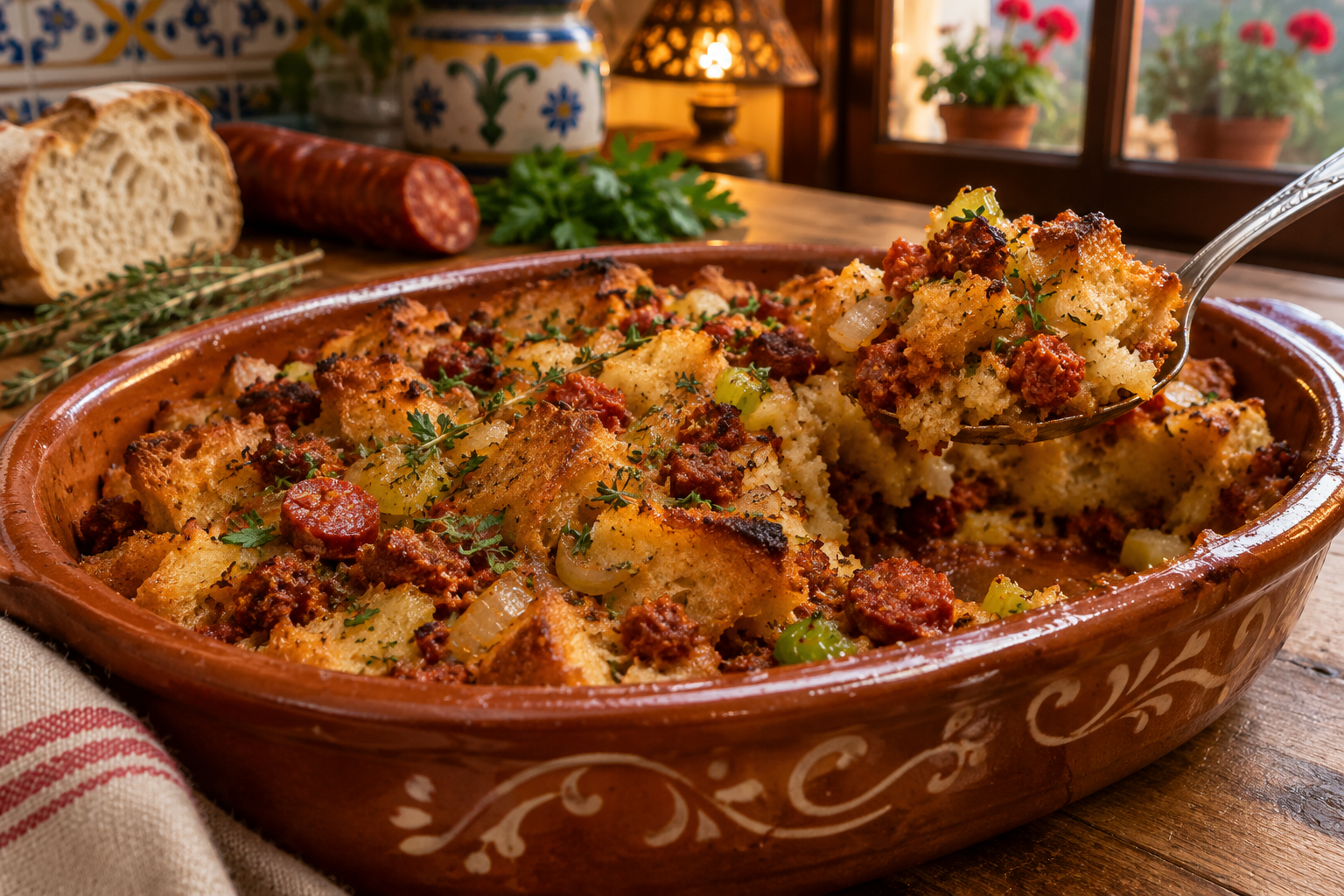
What began as a series of frustrated substitutions, the things we could not find and had to replace, has quietly turned into the set of traditions we now look forward to most. The gaps in the Spanish shops forced us to invent, and the inventions, more often than not, turned out better than the originals.
We did not choose to swap cranberry sauce for quince; Spain simply has no cranberries, and the quinces were there in the market, fragrant and cheap, so we learned to cook them down into a tart amber sauce, and now we prefer it. We did not set out to abandon the green bean casserole; the canned soup it depends on does not exist here, so we learned the Spanish way with green beans and jamon, and now we would not go back. We did not mean to make our pumpkin pie from scratch; there was no can to open, so we roasted fresh squash, and the pie has been better ever since. Every one of our favorite Thanksgiving dishes is now a thing we were forced into and came to love, which is a funny and rather wonderful way for a tradition to be born.
That is the quiet lesson of cooking a foreign holiday from a local pantry: the constraints turn out to be gifts. Being unable to buy the familiar version of each dish pushed us toward fresh, local, from-scratch versions that are genuinely better, and in replacing what we could not find, we ended up with a Thanksgiving that is tastier, more seasonal, and more ours than the one we left behind. The substitutions were never really a loss. They were the making of our Spanish Thanksgiving.
Why the Late Hour Suits It
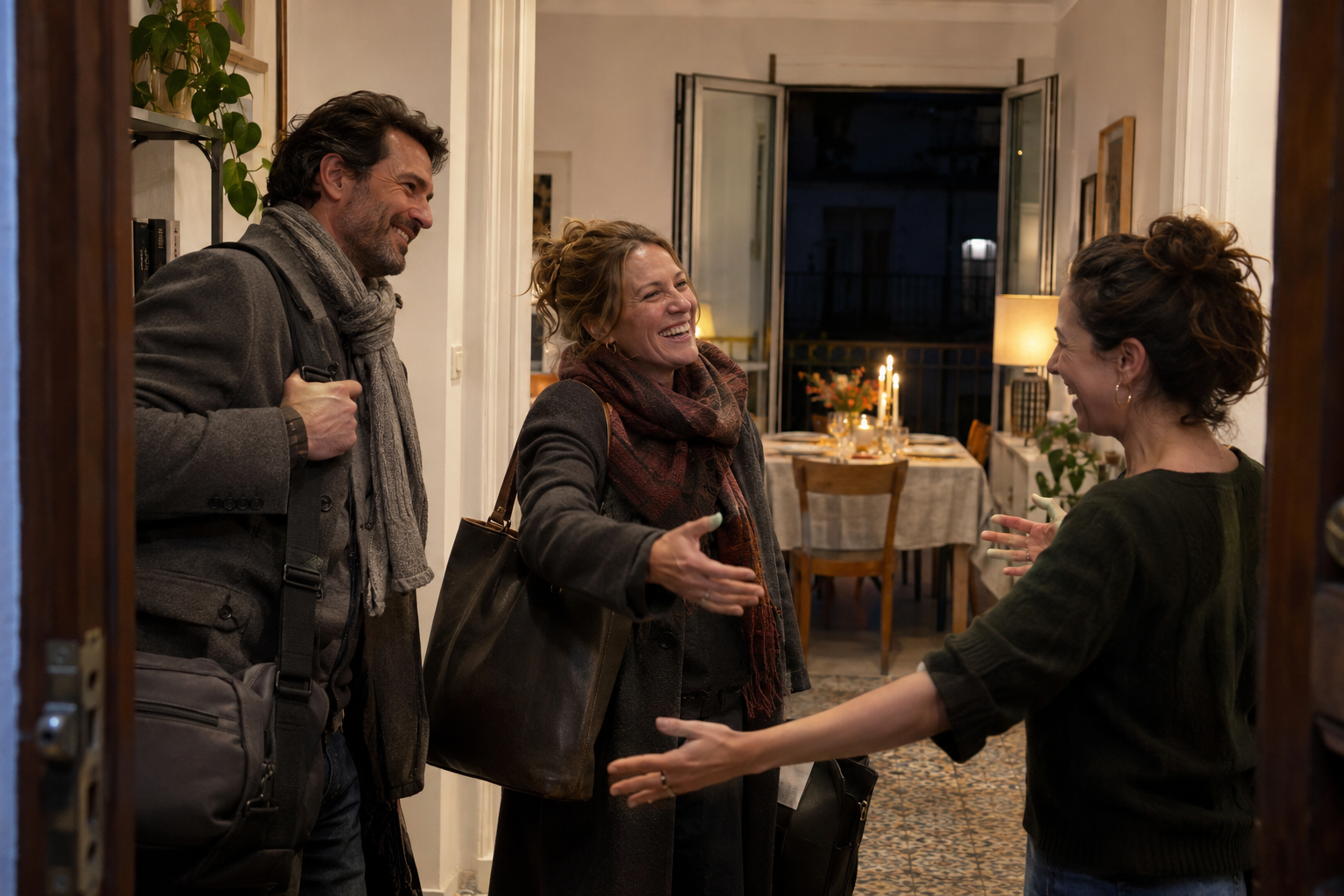
We did not plan to fall in love with the nine-o’clock Thanksgiving, but we have, and it is worth saying why, because it changed how we think about the whole holiday. The late hour, forced on us by an ordinary working day, turned out to suit the meal in ways the afternoon version never did.
An afternoon Thanksgiving is a marathon, hours of cooking colliding with hours of eating in the broad flat light of the day, and it can feel more like an endurance event than a celebration. The late Spanish version is calmer and more intimate. You live your ordinary Thursday, and then, in the evening, the lights go low and the candles come out and the feast arrives as the warm, glowing end of the day rather than its exhausting center. There is a grown-up loveliness to a Thanksgiving eaten at nine by candlelight, unhurried and a little dreamy, that we never knew the holiday could have.
So the thing we once found most disorienting about Thanksgiving abroad, that we had to eat it at a strange late hour because the day belonged to ordinary life, has become one of the things we treasure most. The holiday adapted itself to the rhythm of its new home, and in adapting, it found a gentler, more intimate shape. Our Thanksgiving runs on Spanish time now, and Spanish time, it turns out, rather suits it.
The Dish That Captures It All
If one dish on our table captures the whole spirit of an American Thanksgiving built from a Spanish pantry, it is our stuffing, because we make it with chorizo. Stuffing is about as American a Thanksgiving dish as exists, and ours is married, through that one ingredient, to the Spanish kitchen we now cook in.
The idea came, like all our best dishes, from what Spain had to offer. The seasoned stuffing-cube bags that American recipes assume simply do not exist here, so we make stuffing from scratch with a good Spanish rustic loaf, and once you are building it from local ingredients anyway, the Spanish larder starts making suggestions. Chorizo, Spain’s magnificent smoky, paprika-rich cured sausage, is the one we could not resist, and it belongs in stuffing as though it had always been there, lending the bread its deep red oil, its smokiness, and its savory heart. The result is a stuffing that is recognizably the Thanksgiving dish we grew up with and yet shot through with the unmistakable flavor of Spain, the two cuisines meeting in a single baking dish.
It has become the dish our guests ask about first, and the one that best tells the story of our holiday: an American classic, reinvented out of necessity and affection from the Spanish pantry around us, better for the marriage than either tradition alone. It is Thanksgiving and it is Spain, on one fork, and it is the thing we would tell any American abroad to make first. Here is how. This is our own recipe, worked out over years of Spanish Thanksgivings; adjust it to your taste and your pantry.
Make It: Chorizo Stuffing
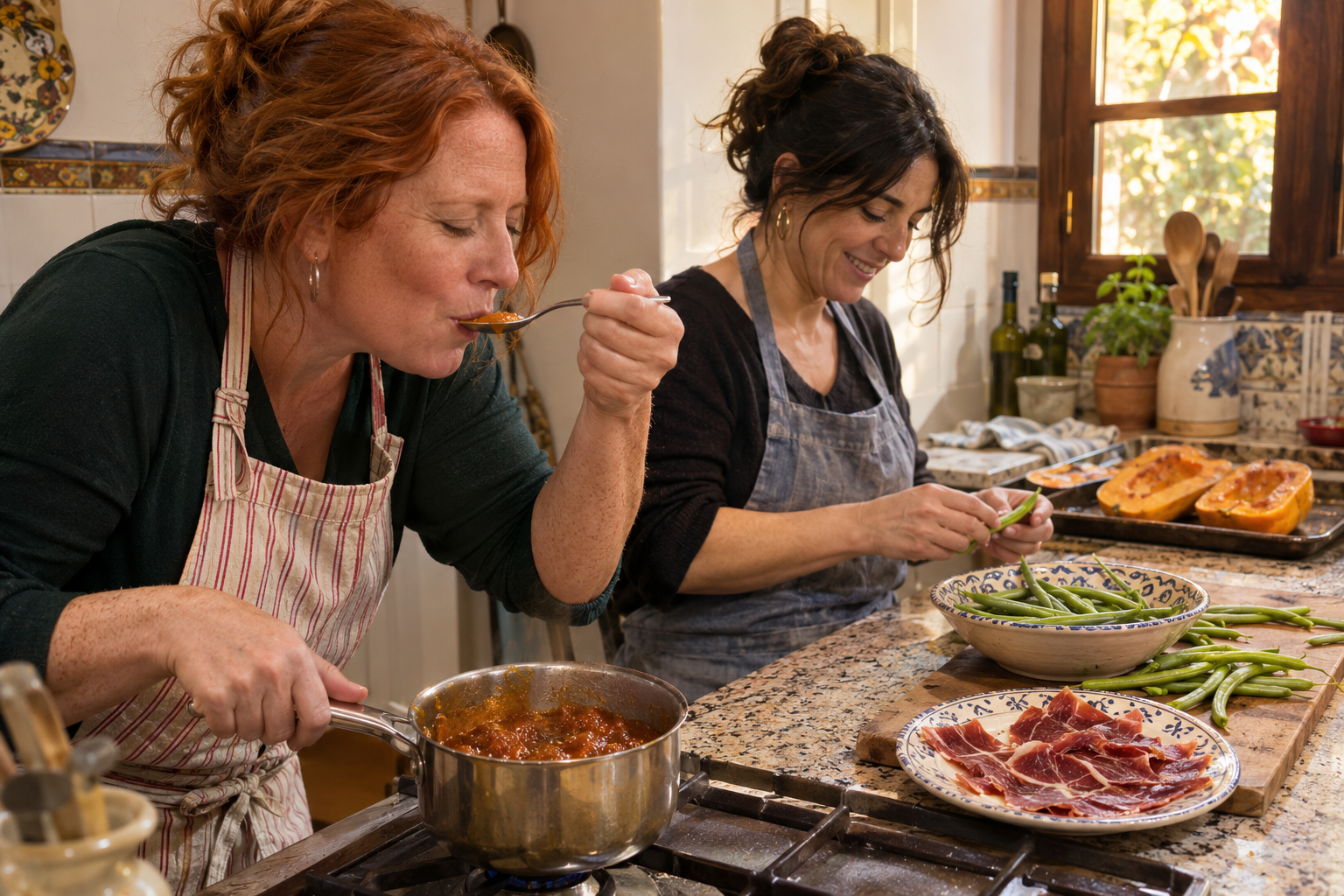
Here is our chorizo stuffing, the American Thanksgiving classic built from a Spanish pantry, serving about eight as a side. Make it a day ahead if you like, and bring it out to bake while the turkey rests.
Ingredients
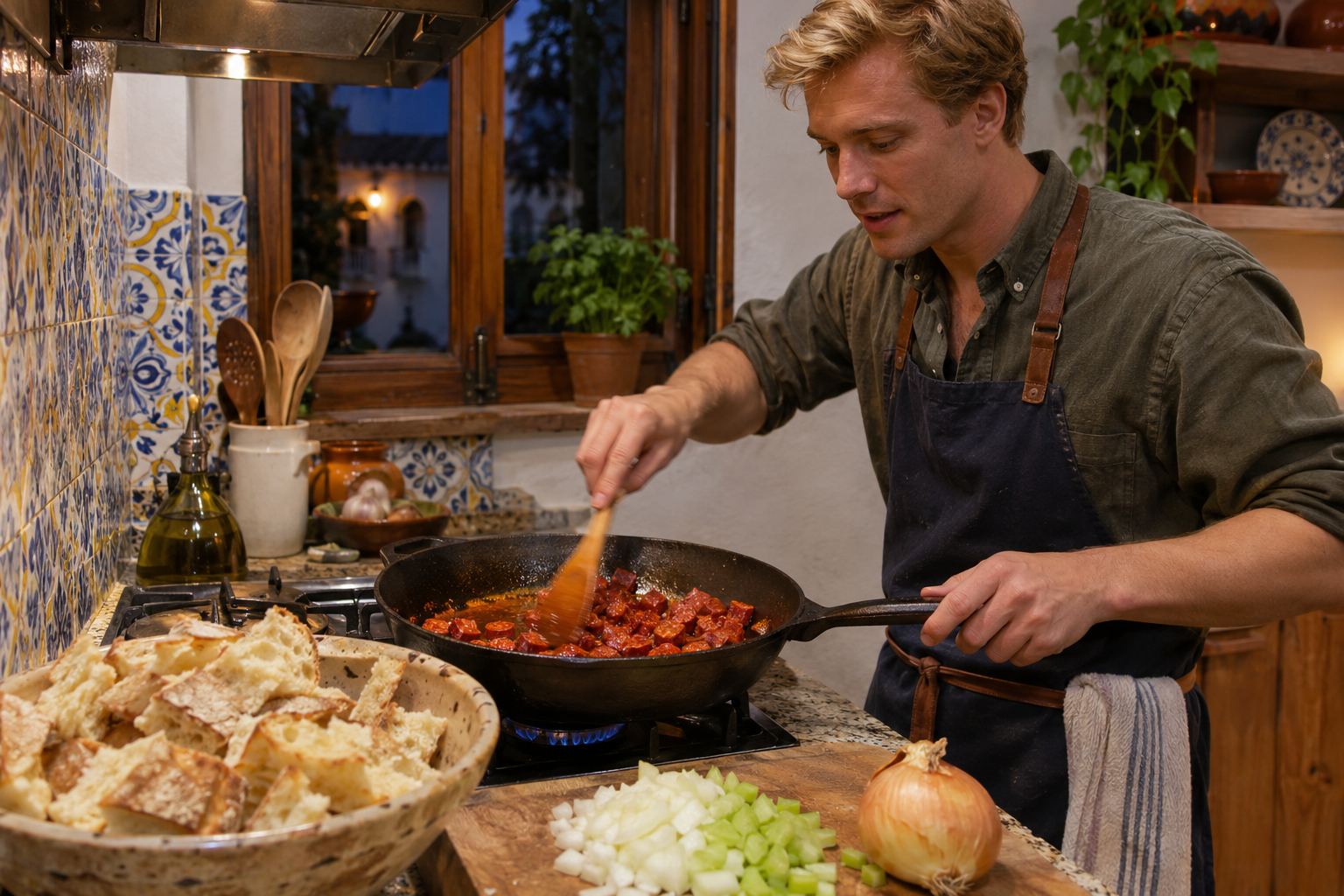
- 1 large rustic Spanish loaf (about 500g), a day or two old, torn into bite-sized pieces
- 200g cooking chorizo, skin removed and crumbled or diced
- 2 onions, finely chopped
- 3 celery stalks, finely chopped (or a small fennel bulb)
- 3 cloves garlic, minced
- 50g butter or 3 tablespoons olive oil
- a generous handful of fresh herbs (parsley, thyme, a little sage), chopped
- about 500ml chicken stock, warm
- 2 eggs, beaten
- salt and black pepper
Instructions
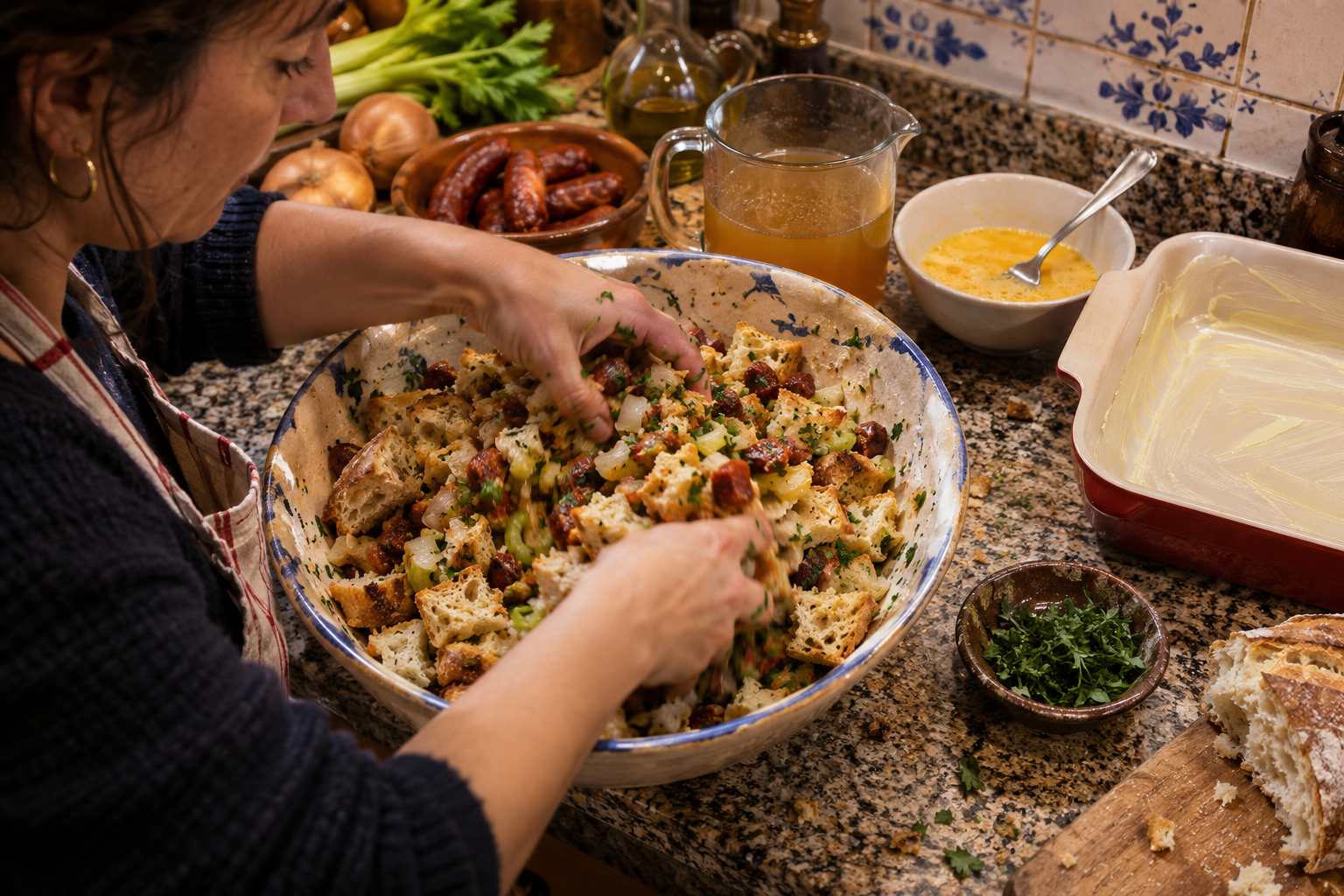
- If the bread is not already stale, dry it out: spread the pieces on a tray and leave overnight, or bake in a low oven (about 150 degrees Celsius / 300 Fahrenheit) for 15 to 20 minutes until dry but not browned. Put the dried bread in a large bowl.
- In a large pan over medium heat, cook the crumbled chorizo for a few minutes until it releases its deep red, paprika-rich oil and starts to crisp. Scoop it out and add it to the bread, leaving the oil in the pan.
- Add the butter or olive oil to the chorizo oil, then the onions and celery, and cook gently for about 10 minutes until soft. Add the garlic and cook a minute more, then tip the lot over the bread.
- Add the chopped herbs to the bowl and season well with black pepper and a little salt, remembering the chorizo is already salty. Toss everything together.
- Pour the warm stock over a little at a time, tossing as you go, until the bread is evenly moistened but not soggy. Stir through the beaten eggs to bind it.
- Transfer to a buttered baking dish (cover and refrigerate here if making ahead). Bake at about 180 degrees Celsius (350 Fahrenheit) for 35 to 45 minutes, until the top is golden and crisp and the inside is set. Serve warm, ideally at nine at night.

About the Author: Ruben, co-founder of Gamintraveler.com since 2014, is a seasoned traveler from Spain who has explored over 100 countries since 2009. Known for his extensive travel adventures across South America, Europe, the US, Australia, New Zealand, Asia, and Africa, Ruben combines his passion for adventurous yet sustainable living with his love for cycling, highlighted by his remarkable 5-month bicycle journey from Spain to Norway. He currently resides in Spain, where he continues sharing his travel experiences with his partner, Rachel, and their son, Han.