
Sit in a cafe in Paris, or on a train through Italy, or at a museum in Madrid, and you will see them everywhere once you start looking. Women in their sixties, seventies, even eighties, alone. Reading a book over a coffee, watching the world from a train window, eating a proper lunch at a table for one, traveling solo through a continent. And here is the thing American women notice first: nobody blinks.
Nobody asks if they are okay. Nobody assumes something must be wrong. Nobody offers a pitying glance or wonders aloud why a woman that age is out by herself. She is simply a person enjoying her day, and the world lets her be exactly that.
For a great many American women, especially older ones who have absorbed a lifetime of quiet messaging that a woman alone is a woman to be worried about, this is a revelation that can bring a lump to the throat. It looks like freedom, because it is. Here is what that freedom actually is, why Europe makes it feel so natural, the fear it quietly answers, and why it is far more available to you than the fear has let you believe. If you have ever longed to go somewhere and talked yourself out of it, this one is for you.
The Woman Alone at the Cafe
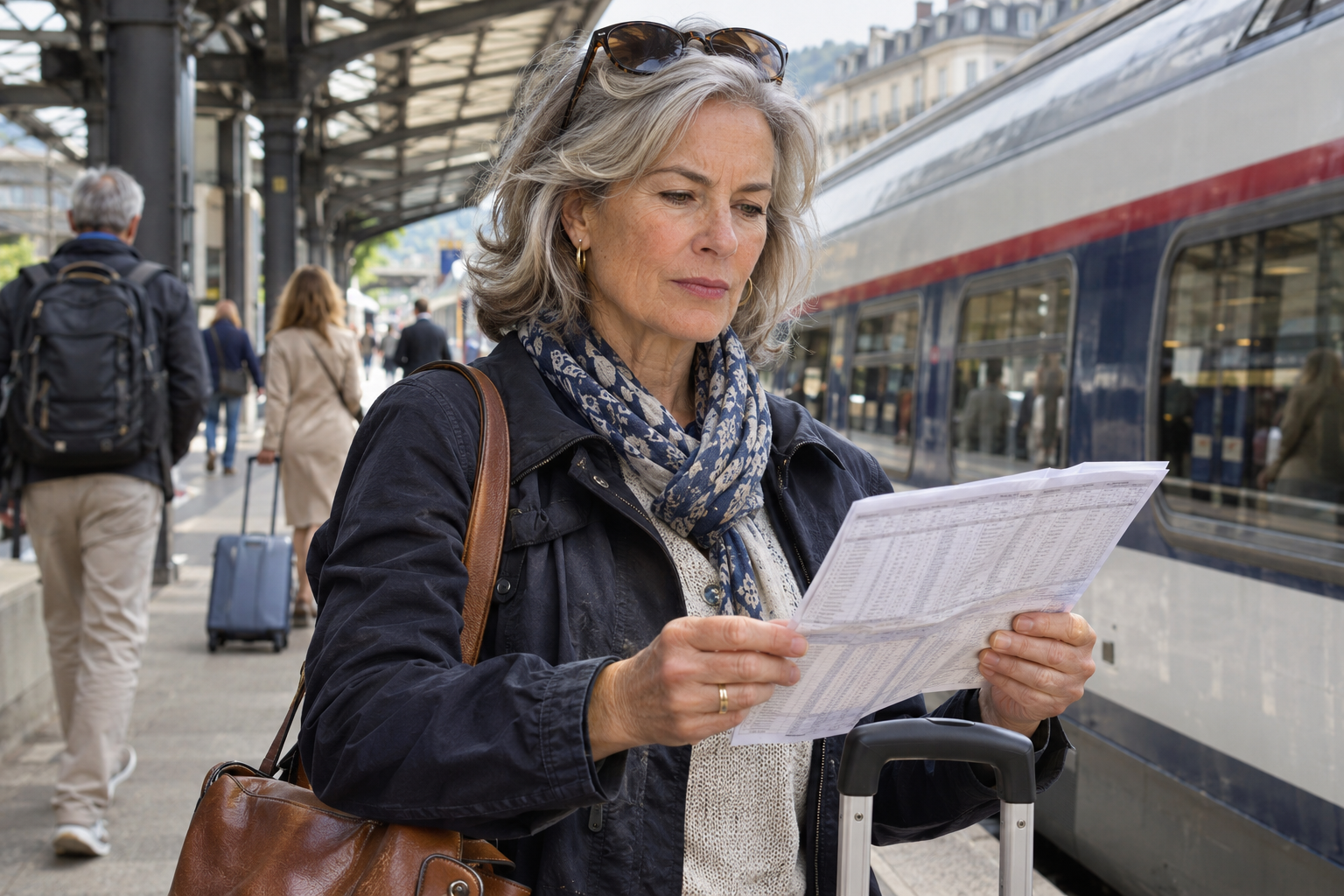
The image is worth sitting with, because its very ordinariness is the point. Across Europe, an older woman dining alone, traveling alone, or spending a day out by herself is an utterly unremarkable sight, woven into the normal texture of public life.
She orders her meal without apology and eats it slowly, perhaps with a glass of wine and her book. She takes herself to the gallery, the park, the spa, the seaside, and moves through all of it at her own pace. She boards trains and buses and wanders unfamiliar streets, and at no point does her solitude register as a problem to be solved or a sadness to be pitied. It is just a woman living her life, which happens, today, to be a solo endeavor.
What makes this striking to an American eye is precisely that nobody treats it as striking. There is no running commentary, spoken or unspoken, about her being on her own. The waiter is as attentive as he would be to any table, strangers mind their own business, and the whole scene carries no charge of concern. The absence of fuss is the entire gift, and it is a gift so complete that locals do not even notice they are giving it.
To them, there is nothing to notice. An older woman out on her own is so ordinary a sight that it does not register as anything at all, which is exactly why it feels so freeing to someone unused to it. The freedom is invisible to the people providing it and overwhelming to the person receiving it, and that gap is the whole story.
The Fear American Women Carry
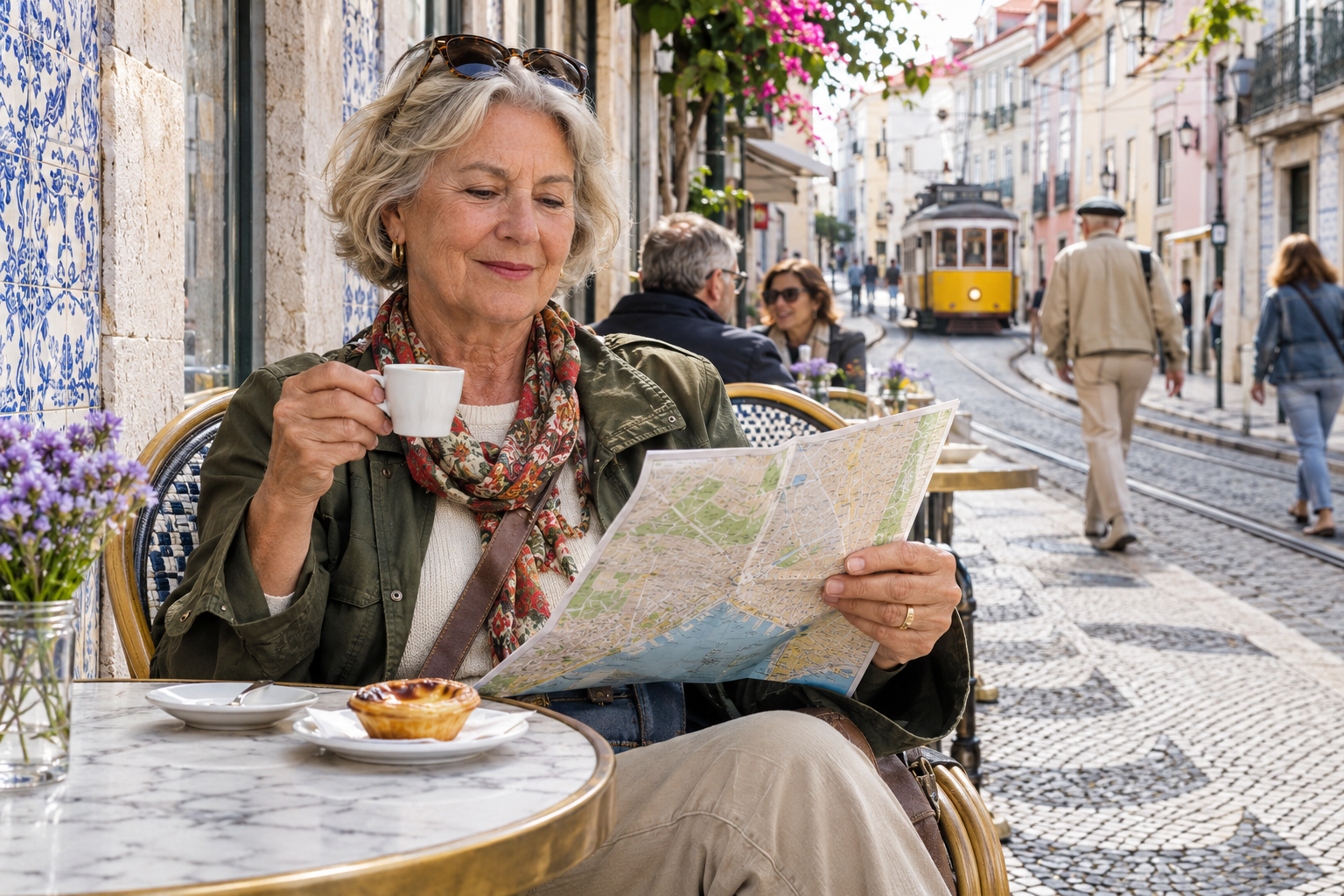
To understand why this lands so hard, you have to name the thing it answers, which is a particular fear that many American women carry, often without quite realizing it. It is the deep, half-conscious belief that a woman alone is vulnerable, conspicuous, or somehow to be pitied.
It shows up in small ways and large. It is the hesitation to eat alone in a restaurant for fear of the imagined stares, and the assumption that solo travel is for the young, the brave, or the unattached, not for a woman in her sixties who perhaps lost a partner or never had one.
It is the worry that people will wonder what is wrong with her, that being alone announces some failure or loss. For many women, this fear quietly shrinks the world, turning trips not taken and meals eaten at home into a life made smaller by the dread of being seen alone.
This fear is not foolish, and it deserves to be taken seriously rather than brushed aside. It comes from real cultural conditioning, from genuine safety concerns that women are taught from girlhood, and sometimes from real experiences. But it is worth noticing how much of it is about perception and judgment rather than actual danger, about the imagined eyes of others rather than any real threat, because that is exactly the part that Europe quietly dissolves.
Why Europe Feels Different
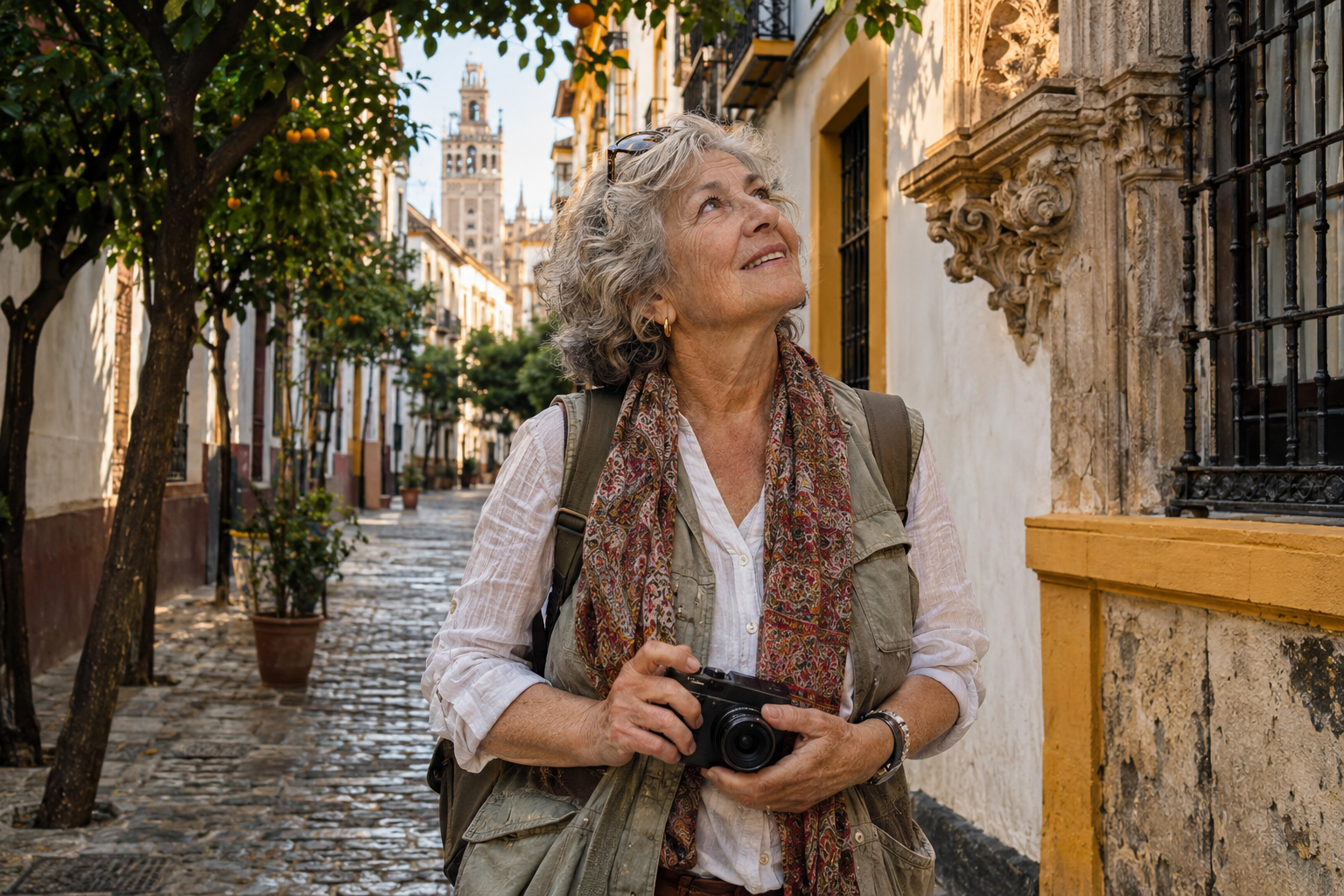
A lot of what makes solo travel feel so natural in Europe comes down to the simple shape of daily life there, which is built in ways that happen to suit a woman on her own beautifully. The infrastructure does half the work before culture even enters the picture.
European cities are overwhelmingly walkable, with life arranged around pedestrians rather than cars, so a woman alone can get almost everywhere on foot or by a short ride. The public transport is excellent and widely used, which means she is never stuck driving herself down a dark highway or navigating alone in a car; she steps onto a train or a tram among other people and is carried where she needs to go. And the deep cafe culture means that sitting alone at a table, nursing a coffee for an hour, is not just tolerated but entirely normal, a thing people of every age do every day.
Add to this that many European destinations have relatively low rates of violent crime, and that daily life tends to happen in public, sociable, well-populated spaces, and you have an environment that feels, and largely is, hospitable to a person traveling solo. None of it was designed for older women traveling alone, but all of it serves them, almost by accident. The result is a place where the practical business of being out in the world by yourself is simply easy.
That ease compounds over a day in ways that quietly build confidence. You get yourself to the museum, you manage lunch alone, you navigate the train, and each small competent act proves to you that you can do this, until by evening the whole notion that you needed help or company has started to look a little silly. Europe does not just permit solo travel; its everyday design gently teaches you that you are capable of it.
Nobody Is Watching
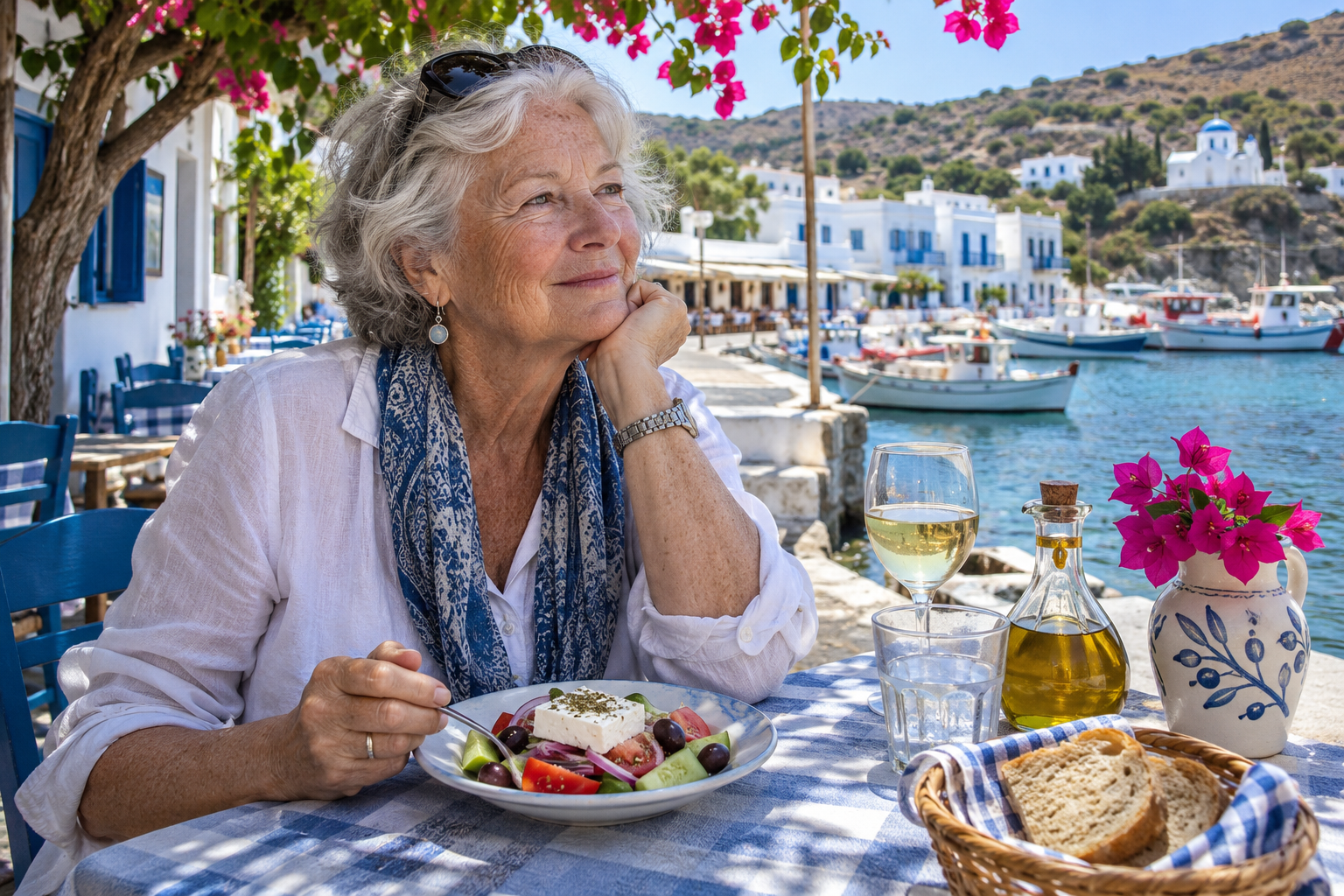
Beyond the infrastructure, there is a social difference that matters just as much, and it is the one that American women tend to feel most keenly: in Europe, nobody is watching you, and nobody is judging you for being alone. The pressure of imagined scrutiny, which does so much to keep women home, simply lifts.
There is a broad cultural tendency across much of Europe to mind one’s own business in public, to let people be. A woman alone at a restaurant is not an object of curiosity; she is a customer.
Nobody approaches to ask, with that particular note of concern, whether she is waiting for someone, or expecting anyone, or quite all right. The intrusive, pitying attention that American women so often dread, and that genuinely does sometimes greet them at home, is largely absent. You are left alone, in the best possible sense of the phrase.
It is hard to overstate how liberating this absence is until you have felt it. So much of the fear of doing things alone is really a fear of being seen doing things alone, of the assumed judgment of others.
Remove that judgment, let the woman move through the world unremarked and unbothered, and the fear loses most of its power. What is left is just the pleasure of the day itself, undiluted by any anxiety about how it looks. For women who have spent years quietly managing that anxiety, the relief of simply not being watched can be profound.
Some describe it almost as a physical loosening, a tension in the shoulders they did not know they were holding until it let go. Years of subtle self-consciousness, of monitoring how one appears, fall away in a place that has simply decided none of it is interesting. In that unwatched space, many women find they can finally just be, which is a rarer and more valuable experience than it sounds.
It Is Safer Than the Fear Suggests
A word about safety is essential here, handled honestly, because this is the hard core of the fear and it deserves a straight answer rather than either dismissal or alarm. The reality is that many popular European destinations are, by most measures, quite safe, particularly for the kind of travel older women actually do.
The typical solo trip is not a reckless adventure into danger; it is days spent in cities, in daylight, in museums and cafes and parks, moving around on public transport among crowds of ordinary people. That kind of travel, in well-trodden European destinations, carries far less risk than the fear tends to suggest. The usual sensible precautions that apply anywhere in the world, keeping an eye on your belongings against pickpockets, trusting your instincts, not wandering alone into unfamiliar areas late at night, are worth following, and following them is simply ordinary prudence rather than a reason to stay home.
None of this is a promise that nothing can ever go wrong, because no honest account of travel could offer that, anywhere. But it is a plea to let the fear be proportionate to the actual risk rather than wildly exceeding it. For most women, in most places, the danger is far smaller than the dread, and the dread is doing most of the work of keeping them home. Recognizing that gap, between what feels dangerous and what actually is, is often the single thing that sets a hesitant traveler free.
It can help to talk to women who have actually done it, rather than to the anxious voice in your own head.
Their stories are almost never tales of near-misses and regret. They are stories of lovely, uneventful, deeply satisfying trips, which is precisely the sort of evidence the fear works hard to keep you from hearing, and precisely the sort worth seeking out before you decide you cannot go.
Starting Smaller Than You Think
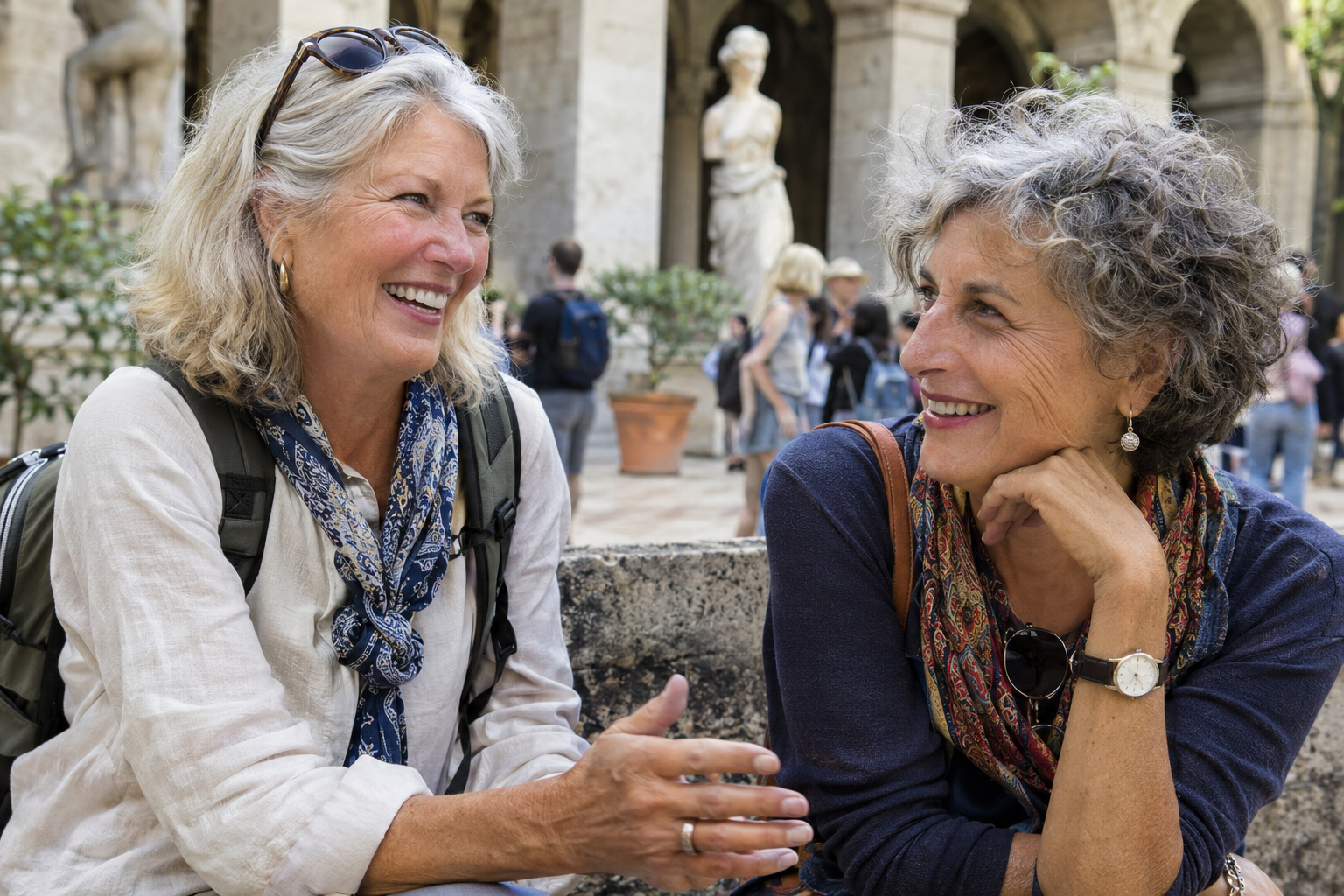
If all of this stirs something in you but the leap still feels enormous, here is the reassuring part: you do not have to start with a grand solo odyssey across a continent. The muscle of being comfortable alone is built in small, gentle steps, and the first ones can be tiny.
It might begin at home, with something as modest as taking yourself out for a solo coffee or a lunch, just to feel what it is like and to notice that the world does not end. From there it might grow to a solo day trip, then a short stay in a nearby city, then a proper trip somewhere easy and welcoming. The best first destinations are the forgiving ones: walkable, served by good public transport, where English is widely spoken, and where solo visitors are common, which describes a great many European cities. A guided group tour can be a lovely bridge too, offering the safety and company of a group while you build your confidence toward going fully independent.
The point is that there is no single brave leap required, only a series of small steps, each one slightly bigger than the last.
Each small success quietly dismantles the fear, replacing the imagined catastrophe with the lived reality of a pleasant day handled perfectly well on your own. Start far smaller than feels impressive, and let the confidence accumulate. By the time you are ready for the bigger trip, it will no longer feel like a leap at all, just the next natural step. That is how courage usually works: not as a single dramatic act, but as a quiet accumulation of small ones.
The Freedom on the Other Side
The women who make it through to the other side of the fear tend to describe the same thing, and it is worth hearing, because it is the whole reward: a freedom they had not known they were missing. The freedom to go exactly where you want, when you want, at your own pace, answering to no one and compromising with no one.
They talk about the particular pleasure of a day shaped entirely by your own wishes, lingering where you like and leaving when you choose, with no need to negotiate or accommodate. They talk about discovering, often to their surprise, that they are far better company for themselves than they had feared, that solitude in a beautiful place is not lonely but rich. And they talk about the quiet pride of having proved to themselves that they could do it, that the fear had been bigger than the thing it warned against. Far from being the sad, diminished experience the dread predicted, solo travel turns out to be one of the most expansive and self-affirming things a woman can do.
So if you are the kind of woman who has watched those European women at their solo cafe tables with a pang of longing, hear this plainly: that freedom is not reserved for them.
It is available to you, more easily than you think, and the main thing standing between you and it is a fear that is larger than the reality it guards against. Take sensible precautions, start smaller than you think you need to, and go. The world is far more willing to let you move through it alone, and unbothered, than you have been led to believe, and the version of your life that includes solo adventures is waiting on the far side of a smaller leap than it appears.

About the Author: Ruben, co-founder of Gamintraveler.com since 2014, is a seasoned traveler from Spain who has explored over 100 countries since 2009. Known for his extensive travel adventures across South America, Europe, the US, Australia, New Zealand, Asia, and Africa, Ruben combines his passion for adventurous yet sustainable living with his love for cycling, highlighted by his remarkable 5-month bicycle journey from Spain to Norway. He currently resides in Spain, where he continues sharing his travel experiences with his partner, Rachel, and their son, Han.