
An American woman spends her first winter week in Europe and keeps noticing the same thing on every woman around her. Not the coats, though those are lovely too. The scarves. Enormous, generous, beautifully draped scarves, wrapped and looped and tossed, and worn not as a small afterthought but as the most striking thing about the whole outfit.
Back home, a scarf is an accessory, a little extra you might add if you remember, a thin strip of fabric that does not change much. In Europe, the scarf is the outfit, the centerpiece, the piece that pulls everything together and that your eye goes to first. And American women tend to come home from that first trip quietly converted, having discovered the single easiest way to look instantly more put-together in winter. It is the kind of lesson that, once learned, you cannot unlearn, and you find yourself eyeing every thin little scarf back home with faint disappointment.
It is a small revelation with an outsized payoff, because a scarf is cheap compared to a coat and transforms clothes you already own. Here is what the European scarf actually is, how women there wear it, why it keeps you warm as well as chic, and how to make it your own winter uniform too. It may be the best value in all of dressing: a single piece that changes everything.
Not a Little Add-On

The first thing to understand is the sheer scale of the difference, because the European scarf is a fundamentally different object from the American one. The typical American scarf is modest, a thin, narrowish length of fabric, often an afterthought grabbed on the way out the door, adding a dash of color but not much presence.
The European scarf is big. It is generous, substantial, and voluminous, a large square or a long, wide wrap of wool or cashmere, with enough fabric to loop several times, drape in soft folds, and sit with real weight and volume at the neck and chest. It is not a thin ribbon of a thing; it is a proper garment in its own right, and when a European woman puts it on, it becomes the dominant feature of her silhouette.
That scale is the whole secret, and it is why American scarves so often disappoint by comparison. A small, thin scarf can only ever be a minor accent, a little pop of color that reads as optional. A big, soft, abundant scarf commands attention, frames the face, and transforms the proportions of an outfit, and it is simply doing a different and much bigger job. Once you see the two side by side, the American scarf looks like a sample and the European one looks like the real thing.
The weight matters as much as the width. A substantial scarf has a drape and a presence that a flimsy one simply cannot, falling into soft, deliberate folds and staying where you put it rather than fluttering limply. You can feel the difference the moment you put one on, a reassuring heft at the shoulders that a thin scarf never gives, and it reads immediately in how the whole outfit hangs.
The Scarf Does the Work
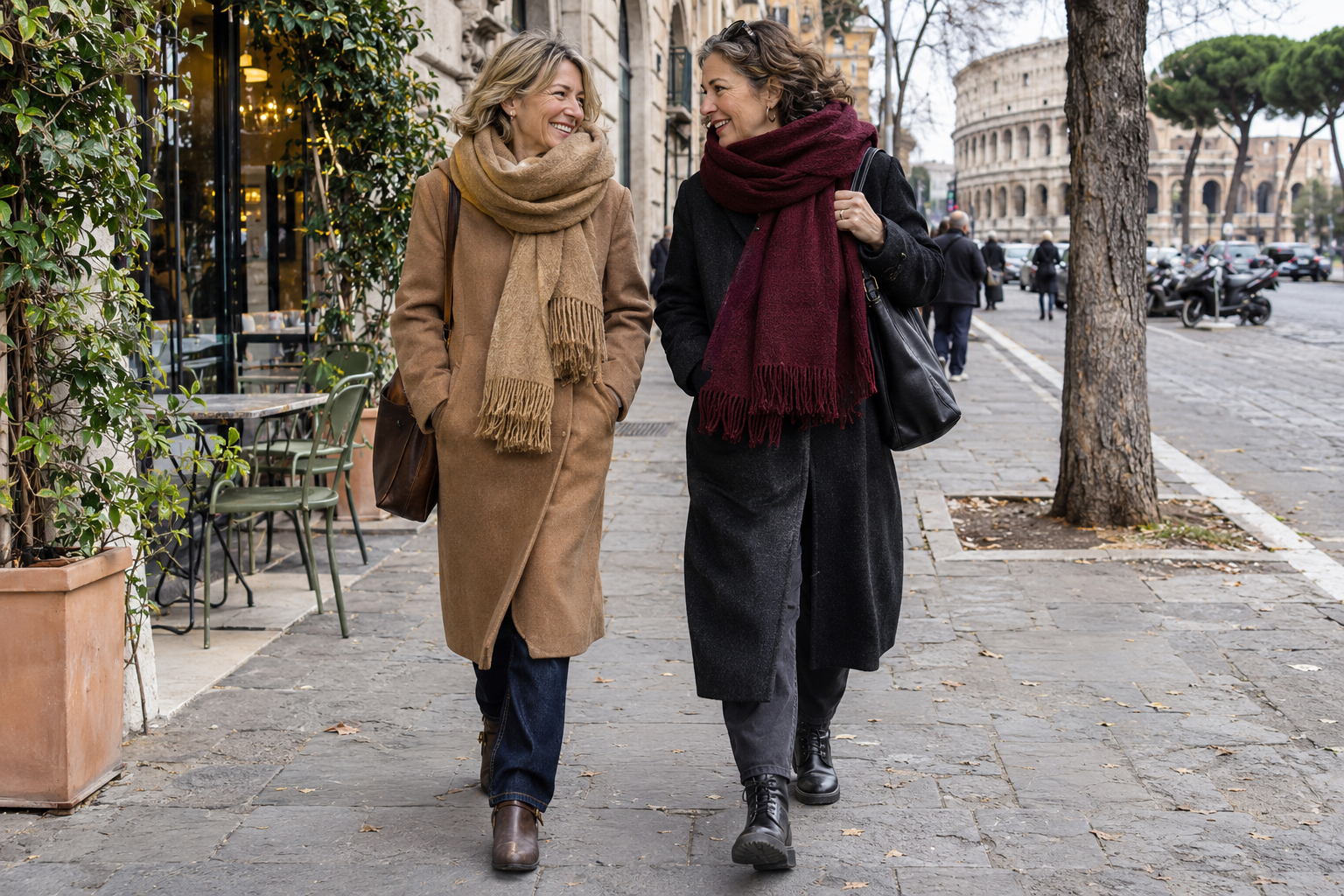
Here is why this matters so much, and why European women lean on the scarf the way they do: a great scarf does the heavy lifting of an outfit almost single-handedly. It is the one piece that can make everything else simple and still leave you looking chic.
Picture the formula, because it is the same one on women all over Europe in winter. A plain dark coat, ordinary jeans or trousers, simple boots, and then one gorgeous, oversized, richly colored or beautifully textured scarf wrapped at the neck. The rest of the outfit is deliberately quiet, neutral, and unremarkable, and the scarf carries all the interest, all the color, all the sense of style.
The effect is a woman who looks thoroughly pulled-together while wearing, underneath, the plainest possible clothes. Strip the scarf away and the same outfit would look a little drab; add it back and the whole thing lifts into something that looks considered and chic.
This is the genius of the scarf-as-outfit approach, and it is wonderfully practical. You do not need an elaborate wardrobe or a different ensemble every day; you need good basics and a few great scarves, and the scarf does the work of looking stylish so the rest of your clothes do not have to. It concentrates all the effort and expense into one versatile, high-impact piece, which is exactly the kind of efficiency that elegant dressing, done well, tends to run on.
There is a confidence in it, too, that is worth noticing. Letting one bold piece carry the whole look, and keeping everything else deliberately plain, takes a certain assurance, a trust that less really is more. The American instinct can run the other way, toward adding more pieces and more detail to feel dressed, where the European instinct is to strip the outfit back and let a single beautiful thing speak. The scarf is the perfect vehicle for that quieter kind of confidence.
How Europeans Actually Wear It
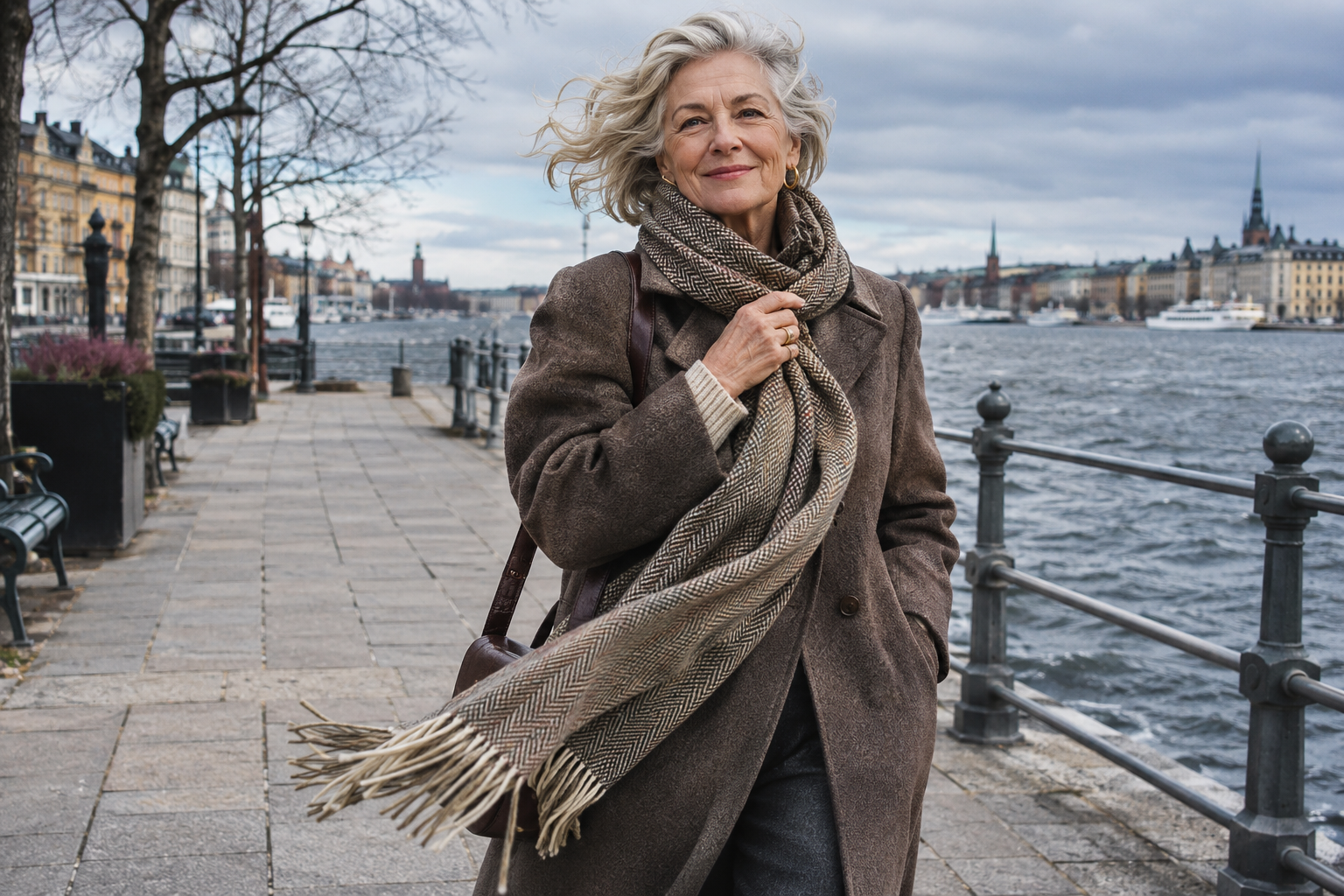
Part of what makes the European scarf look so good is not just the scarf itself but the way it is worn, which is with a particular blend of volume and nonchalance. It is draped, not fussed over, arranged to look effortless even though the effect is clearly intentional.
The techniques are simple once you see them. There is the easy loop, where a long scarf is folded in half, draped around the neck, and the loose ends pulled through the loop for a neat, snug knot that sits with volume at the throat.
There is the big blanket wrap, where an oversized scarf is simply flung around the shoulders and neck in soft, generous folds, and the nonchalant toss, a long scarf hung around the neck and left to fall, with one end thrown back over a shoulder. None of these is complicated, and none is done with any great precision.
That studied looseness is the point. A European scarf is not arranged with tweezers and a mirror; it is looped once or twice and left to settle, which is exactly why it reads as effortless rather than precious. The volume frames the face flatteringly and adds a soft fullness at the chest that balances a long coat beautifully, and the slight carelessness of the drape keeps it from looking stiff or overdone. It is meant to look like something you threw on, even though the throwing-on is a small art in itself.
It Keeps You Warm, Which Is the Secret
For all the talk of style, there is a deeply practical reason the scarf became a European winter uniform, and it is the same reason as always: it works. A big wool or cashmere scarf is not just decorative; it is genuinely, seriously warm.
The neck and chest are where a great deal of body heat escapes, and a substantial scarf wrapped there traps that warmth remarkably well, making a surprising difference to how cold you feel. This is why a European woman can wear a relatively light, elegant wool coat rather than a bulky padded one and still be perfectly comfortable in the cold: the scarf is doing a real share of the insulating. The style and the warmth are not in competition; the scarf delivers both at once, which is precisely why it earned its central place.
This is the quiet engineering behind the whole look. The European winter uniform of a tailored coat and a huge scarf is not a triumph of fashion over sense; it is a genuinely warm system that also happens to look wonderful. The scarf lets the coat stay slim and chic because the scarf is handling the warmth the coat is not, and the two together keep you cozy while looking far better than a single heavy jacket ever could. Form and function, once again, turn out to be on the same side.
There is a lovely practicality in how adjustable it is, as well. On a bitter day you wind it tighter and higher, right up over the chin; as the afternoon warms you loosen it, or let it hang open; stepping into a heated cafe you unwind it entirely and drape it over the chair. One piece flexes across a whole range of temperatures in a way a zipped-up coat never can, which is part of why it suits the in-between chill of a European winter so perfectly.
Quality Over Quantity, Again
As with the wool coat, there is a buying philosophy underneath the European scarf, and it is the familiar one: a few beautiful, good-quality scarves rather than a drawer full of thin, cheap ones. The scarf is treated as a piece worth investing in, not a throwaway.
A genuinely good scarf, in wool, cashmere, or a soft blend, large and well-made, feels completely different from a cheap one and looks it too. It drapes better, holds its shape, keeps you warmer, and lasts for years, and because it is doing so much work in your outfit, it earns the spend in a way few garments do. A European woman might own only a handful of scarves, but each one is lovely, and each one can anchor an entire winter look, which is far more useful than a tangle of flimsy ones that add nothing.
This is the same cost-per-wear logic that runs through so much of European style. One great scarf, worn constantly all winter for many winters, and capable of turning the plainest outfit into something chic, is a small purchase that pays off enormously. It is perhaps the single highest-value piece a woman can buy for her winter wardrobe, which is exactly why it rewards buying well rather than buying many.
This is also forgiving advice for anyone building a wardrobe slowly or on a budget. You do not need the good coat and the good boots and the whole considered look all at once; you can start with the scarf, the cheapest piece of the puzzle, and get most of the visible benefit immediately. It is the entry point precisely because it asks the least of you while giving back the most.
The One-Trip Conversion
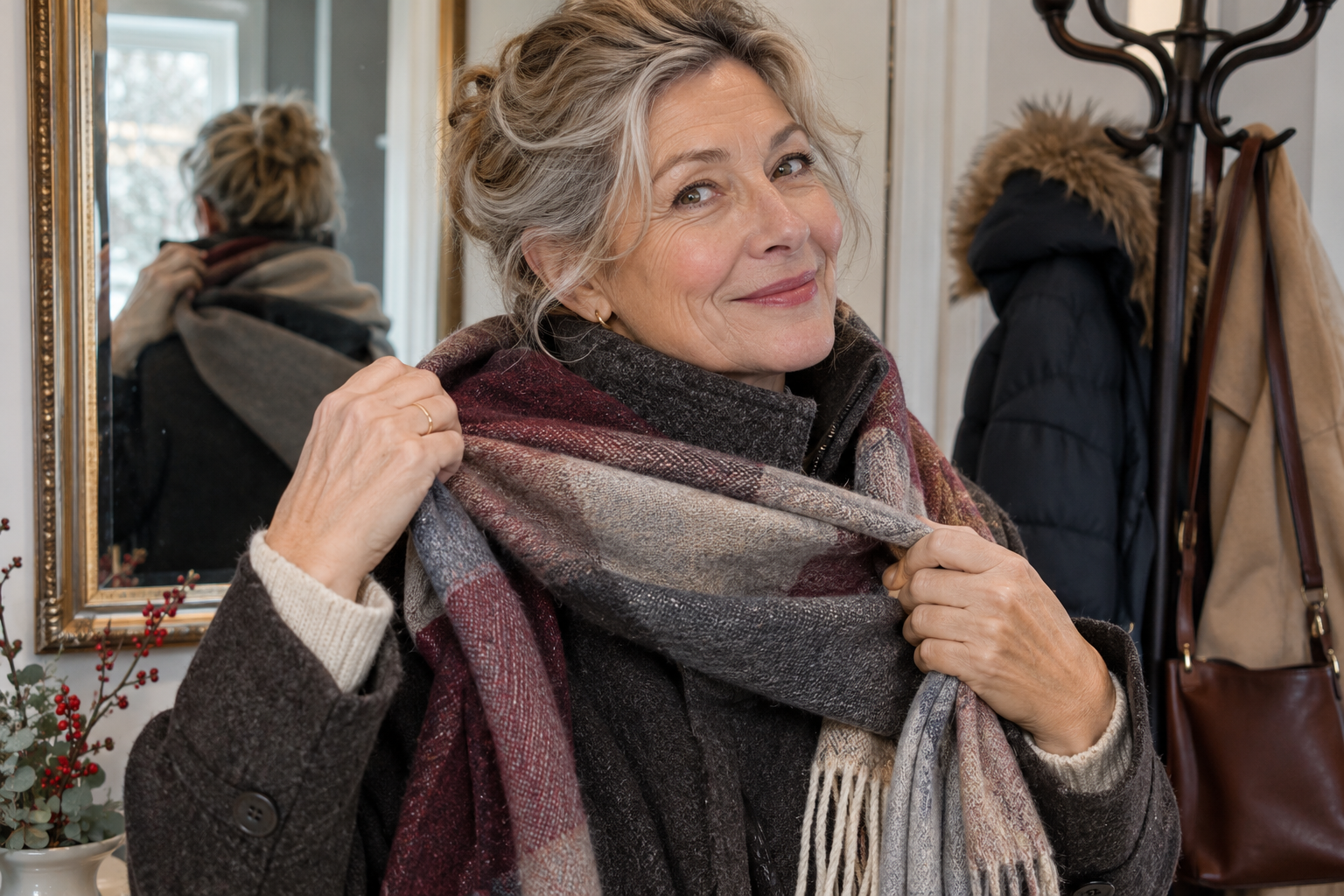
All of this is why the scarf tends to convert American women so completely, and so fast. It is not a subtle, slow-dawning lesson; it is usually a single, vivid realization, had somewhere around day three of a European trip, that the women here all look effortlessly polished and the scarf is a huge part of how.
The conversion sticks because the barrier to entry is so low. A new coat is a real investment and a real decision; a great scarf is comparatively cheap, requires no sizing or deliberation, and instantly elevates every piece of winter clothing a woman already owns. It is the rare style upgrade that is affordable, foolproof, and immediate, which is exactly the combination that turns a passing admiration into a permanent habit. Women do not just admire the European scarf; they buy one, wrap it on, look in the mirror, and are sold on the spot.
And once it clicks, it tends to reshape the whole way a woman dresses for winter. The scarf becomes the first thing she reaches for, the piece she builds the outfit around, the easy answer to looking good on a cold day. It is the gateway drug to the entire European winter aesthetic, the single accessible entry point through which a woman discovers that looking pulled-together in winter is far easier, and far cheaper, than she had assumed.
Building Your Own Scarf Habit
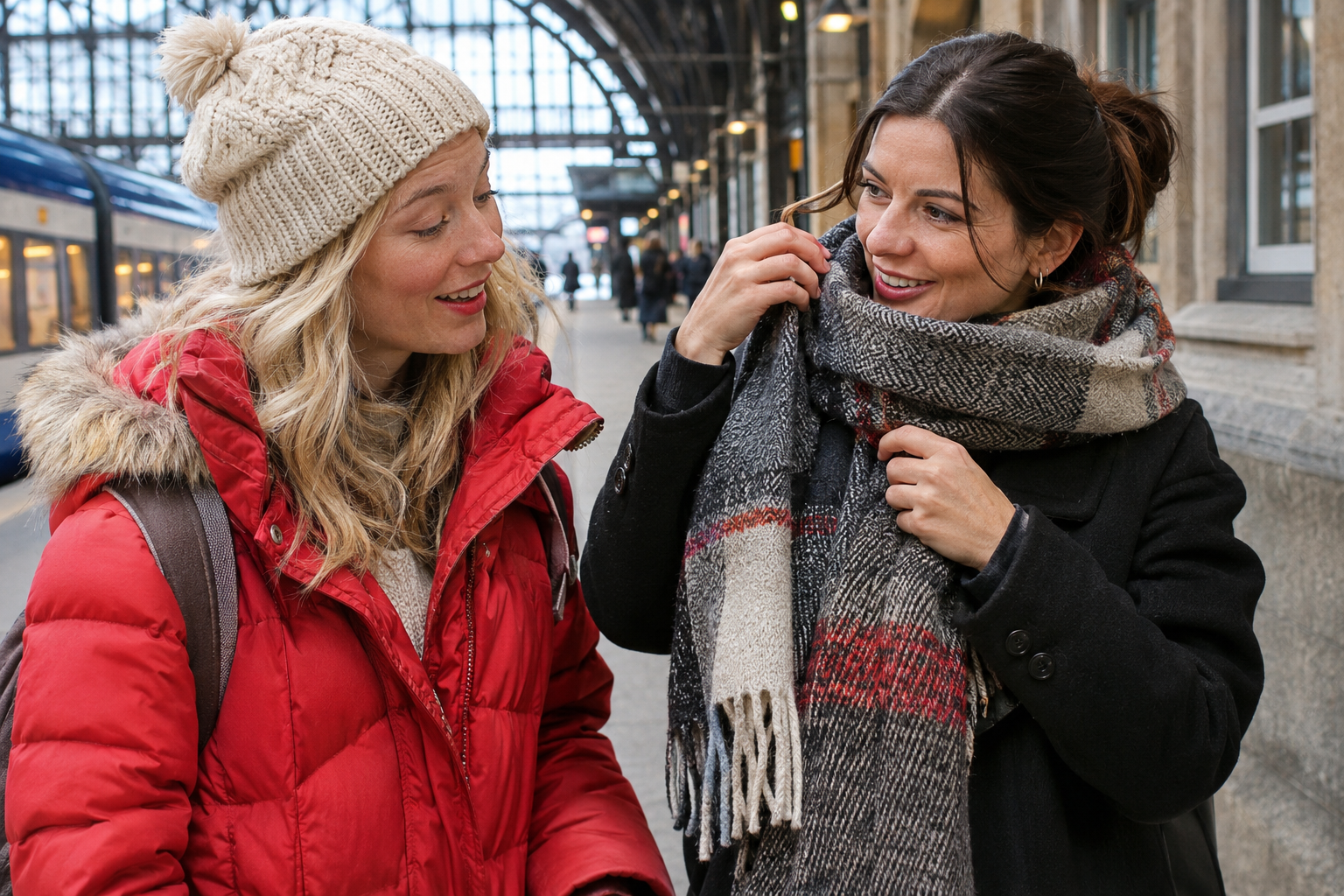
Starting your own version of this is genuinely simple, which is the best thing about it. You do not need to overhaul your wardrobe or spend a fortune; you need one or two good scarves and a little practice.
Begin by buying one large, good-quality scarf, in wool or cashmere, in either a rich color that will carry an outfit or a versatile neutral that will go with everything, and make it a generous size, because the volume is what makes it work. Learn one easy drape, the simple loop is the most useful, and practice it a couple of times until it feels natural. Then wear it as the statement piece over your simplest basics, a plain coat, a sweater, and jeans, and let it do the work of making you look put-together.
Do not overthink the drape, either, because the slight imperfection is part of the charm. Loop it on, give it one adjusting tug, and leave it; a scarf that looks a little lived-in always reads better than one arranged to death. The goal is ease, not precision, and the sooner you stop fussing with it the more naturally European it looks. That is the entire method.
From there, the habit builds on its own, because the results are so immediate and so reliable. Once you have felt the difference a great scarf makes, warm, chic, and effortless, you will find yourself reaching for it every cold day.
You may well add one or two more over time, but even one does the trick. It really is the easiest, highest-impact change you can make to your winter style, the one American women learn in a single trip and keep for the rest of their lives. One beautiful scarf, worn as though it were the whole outfit, because in Europe, delightfully, it is.

About the Author: Ruben, co-founder of Gamintraveler.com since 2014, is a seasoned traveler from Spain who has explored over 100 countries since 2009. Known for his extensive travel adventures across South America, Europe, the US, Australia, New Zealand, Asia, and Africa, Ruben combines his passion for adventurous yet sustainable living with his love for cycling, highlighted by his remarkable 5-month bicycle journey from Spain to Norway. He currently resides in Spain, where he continues sharing his travel experiences with his partner, Rachel, and their son, Han.