
Walk into almost any neighborhood bar in Spain at nine in the morning and you will find them: a cluster of older men, coffee in hand, newspaper folded on the counter, arguing cheerfully about football or politics with the same faces they argued with yesterday and will argue with tomorrow. Some have a small brandy with the coffee. Most have been coming to this exact spot, at this exact hour, for years.
To an American eye it looks like nothing much, just retired men killing time. But it may be one of the quietly healthiest habits in the Western world, and it is one that most American men never learned to build.
The ritual is so ordinary to Spaniards that nobody thinks of it as a health practice at all. Yet underneath the coffee and the chatter sits a structure that researchers on aging would recognize immediately as protective, the kind of thing we now spend money and effort trying to recreate. Here is what these men are actually doing every morning, why it matters more than it looks, what American men lost, why it is not quite the fairy tale it seems, and how to build your own version of it wherever you live. It is a small daily habit that quietly does the work of a whole health program.
The Morning That Looks Like Nothing
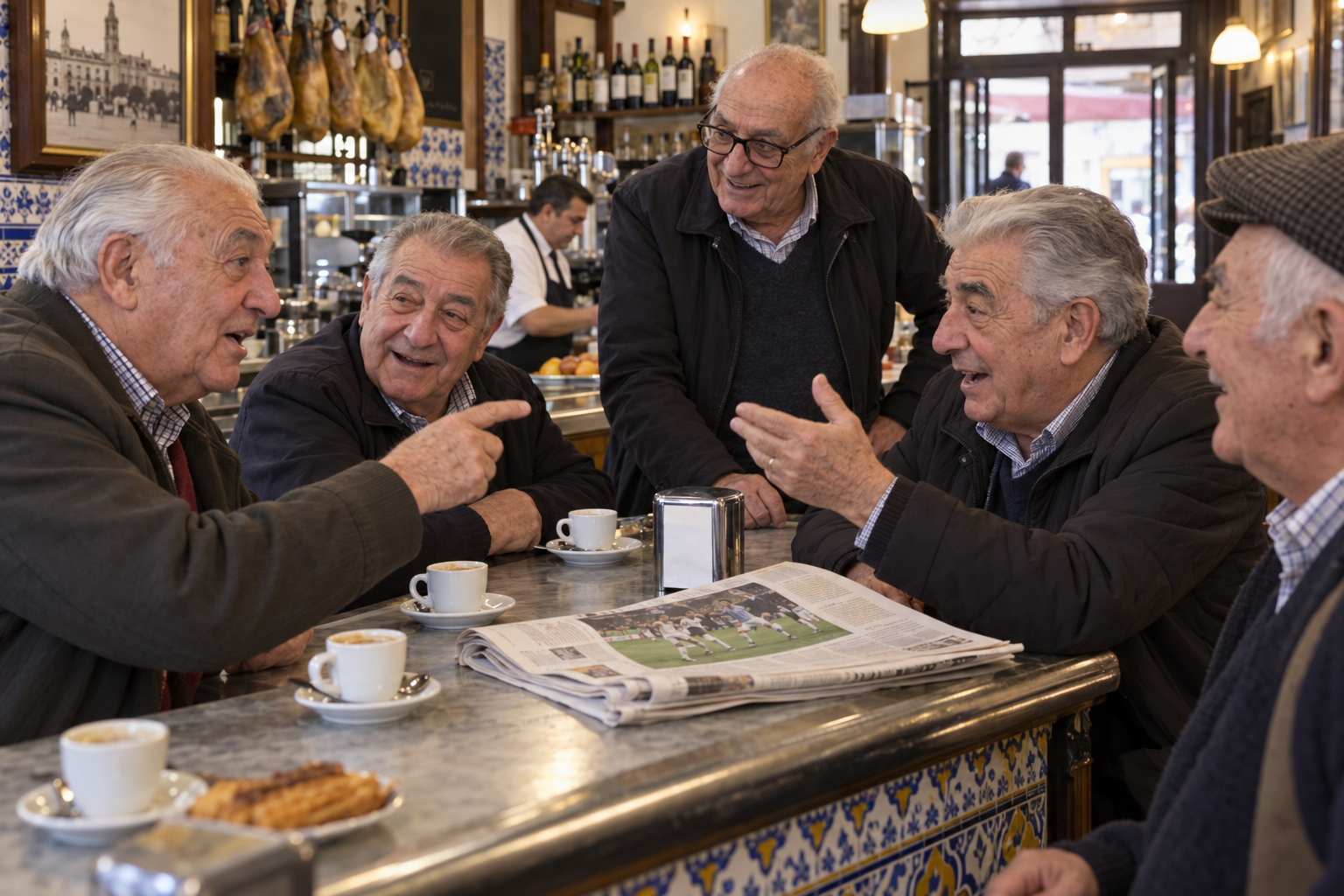
The ritual itself could not be simpler. Each morning, the older men of a Spanish neighborhood drift down to the local bar, not a pub in the American sense but a cafe that serves coffee, breakfast, and a drink at any hour, and they settle in. They order a coffee, maybe a pastry or a small brandy, open the paper, and talk.
It is the sameness that makes it work. It is the same bar, the same hour, and largely the same group, so nobody has to organize anything or send an invitation. You simply go, and the others are there, because they always are. The bar functions as a kind of communal living room, a place that belongs to the neighborhood rather than to any one person.
The conversation is low-stakes and endless. They argue about the football, grumble about the government, tease each other, pass on the local news, and complain about their knees. None of it is important, and that is precisely the point. The ritual asks nothing of anyone beyond showing up, and it gives back daily human contact without anybody having to make an effort to arrange it.
This is, incidentally, part of why the slow disappearance of these traditional bars matters so much in Spain. When a neighborhood loses its bar, it does not just lose a business; it loses the one place where this daily gathering happened, and the men who depended on it lose their structure with it.
Why It Matters More Than It Looks
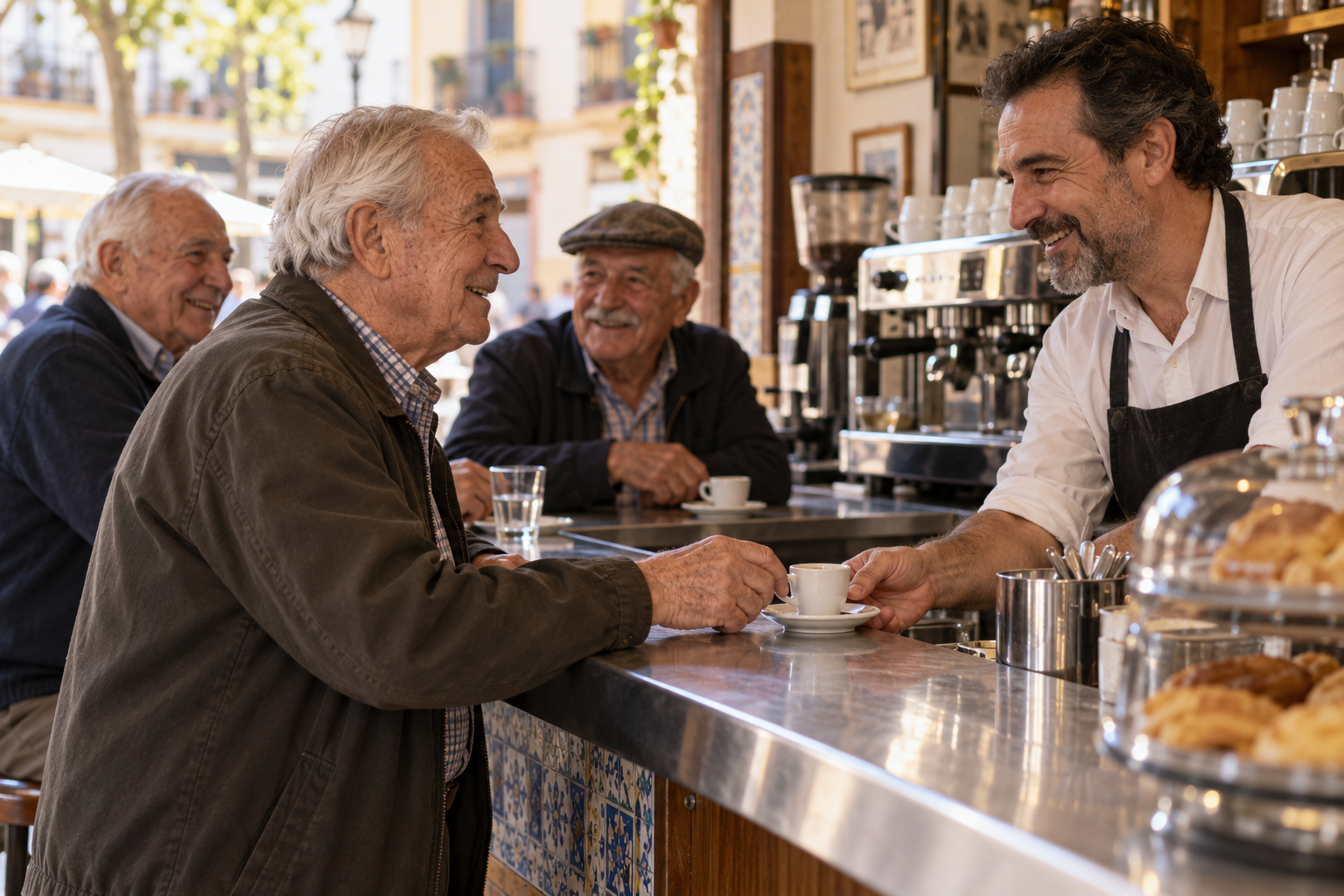
Here is where the ordinary ritual turns out to be quietly powerful, because of what decades of research keep telling us about aging. Social connection is one of the strongest predictors of healthy aging there is, on a par with the things we usually worry about far more, like diet and exercise.
The flip side is the danger. Social isolation and loneliness in older age are consistently linked to a range of poor outcomes, including cognitive decline, depression, worse physical health, and even higher mortality. Loneliness is not just sad; it is, by the measures researchers use, genuinely bad for the aging body and brain.
Seen against that, the morning bar ritual is a steady, daily drip of exactly the thing that protects against all of it. Every single morning, these men get regular, face-to-face, familiar human contact, woven so deeply into their routine that it happens automatically. They are not scheduling social time; they are simply living inside a structure that delivers it by default.
It is worth being careful here and not overselling the science. The research shows associations, not guarantees, and nobody can promise that going to a bar will add years to your life. But the link between staying socially connected and aging well is about as solid as these things get, and the Spanish morning ritual is one of the most effortless connection-delivery systems any culture has ever built.
The Problem It Solves Without Naming It
What makes the ritual especially clever is the particular problem it quietly solves, because older men are exactly the group that needs it most and is least likely to ask for it. Research consistently finds that older men tend to have smaller, less varied social networks than older women, and that they are more vulnerable to isolation as they age.
Worse, men are notoriously reluctant to name the problem. Studies of older men find that many will not describe themselves as lonely even when they clearly are, because loneliness feels like an admission of failure or dependency that cuts against how they were raised to see themselves. The result is a group quietly at risk and culturally unable to reach out for help.
The bar ritual sidesteps all of that beautifully. No Spanish man goes to the morning bar because he is lonely or because a doctor told him to connect more; he goes because that is simply what you do, and the connection arrives as a side effect of the coffee. The structure does the work that the man himself would never consciously seek out.
That is the real genius of it. It is a mental-health and social intervention disguised as a cup of coffee, requiring no self-awareness, no admission of need, and no effort beyond habit. It protects the men who would never accept protection if it were offered to them directly.
What American Men Lost
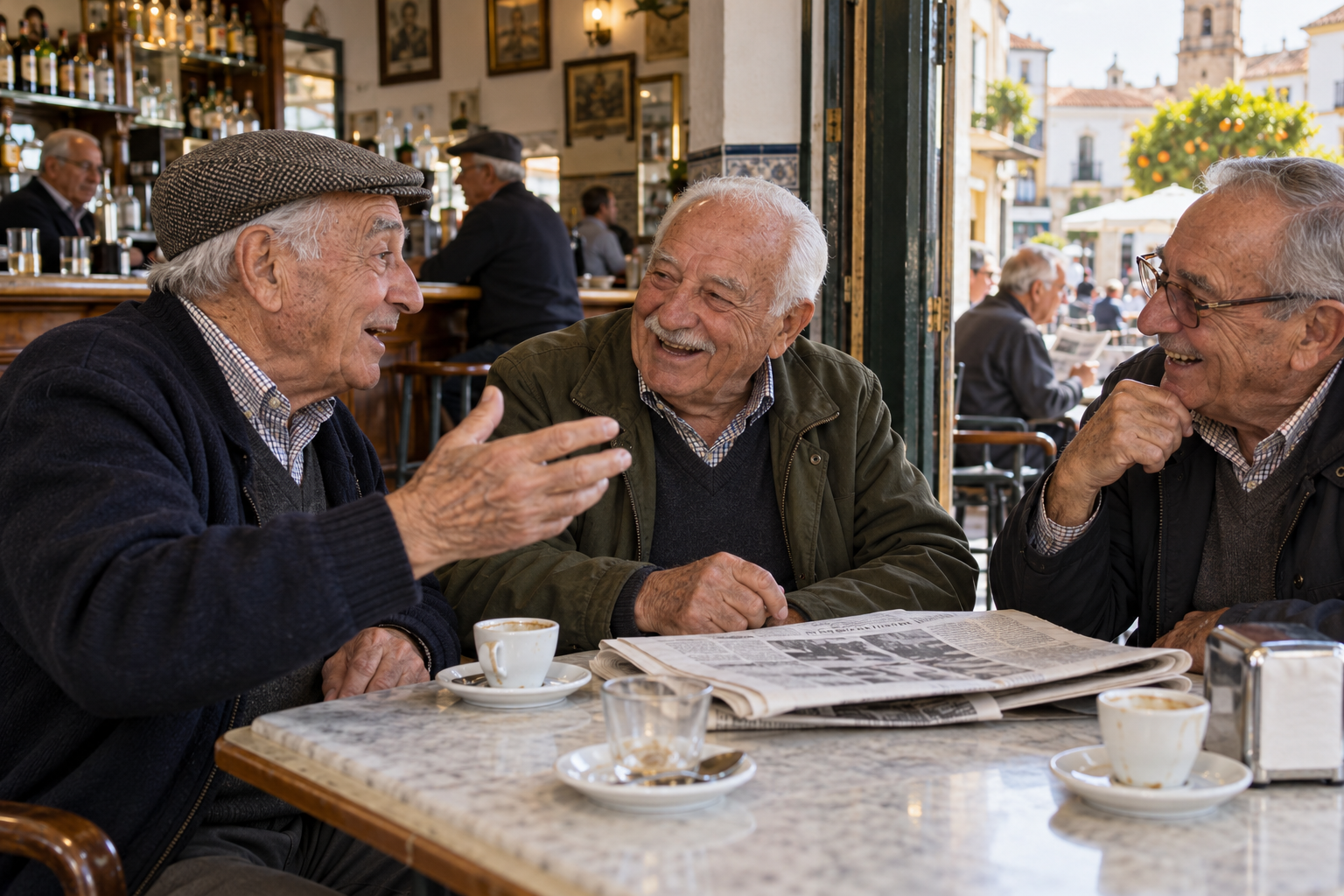
Set this against the typical American experience and the contrast is stark, and a little sad. For a great many American men, their primary source of daily social connection throughout adult life was work, the colleagues, the routines, the built-in reasons to be around other people five days a week.
Then they retire, and that entire structure vanishes overnight. The office emptied of its people, the daily rhythm gone, and very often nothing waiting to replace it. There is no neighborhood institution that pulls a retired American man out of his house every morning to sit with the same familiar faces, because the culture never built one.
The physical shape of American life makes it worse. Car-dependent suburbs, homes set apart from one another, few places within walking distance, and a general expectation that socializing is something you schedule rather than something that simply happens. A retired man can easily go days seeing almost no one outside his own household, not because anything is wrong, but because nothing in his environment makes connection automatic.
The result shows up in the research. American rates of loneliness among older adults are strikingly high, and much of it traces back to this structural gap: a way of living that, for all its comforts, quietly leaves aging men without a daily reason to be among other people.
So American men did not fail to value friendship; they were simply never handed the structure that makes it effortless in later life. Spanish men were, and most of them have no idea how lucky they are, because to them it is just the bar.
Social and Sharp
Beyond the emotional benefit, there is a case to be made for the mental one, and it is worth making carefully. The morning ritual is not passive; it is hours of active conversation, argument, memory, humor, and keeping up with the news and with other people’s lives.
That kind of regular social and mental engagement is associated, in the research on aging, with better cognitive health and a slower rate of decline. A brain that spends every morning following a fast, teasing, multi-person argument about football is a brain getting a genuine workout, not sitting idle in front of a screen.
Here again, the honest framing matters. The evidence connecting social engagement to cognitive health is real but associational, the specifics are debated, and none of it promises that any one person will stay sharp because they went to the bar. This is a hopeful pattern, not a prescription.
But even held loosely, the pattern is encouraging, and it costs nothing to act on. Staying socially and mentally engaged is one of the few aging interventions that is pleasant, free, and entirely within reach, and the Spanish have stumbled into a near-perfect delivery mechanism for it without ever trying.
It Is Not a Fairy Tale
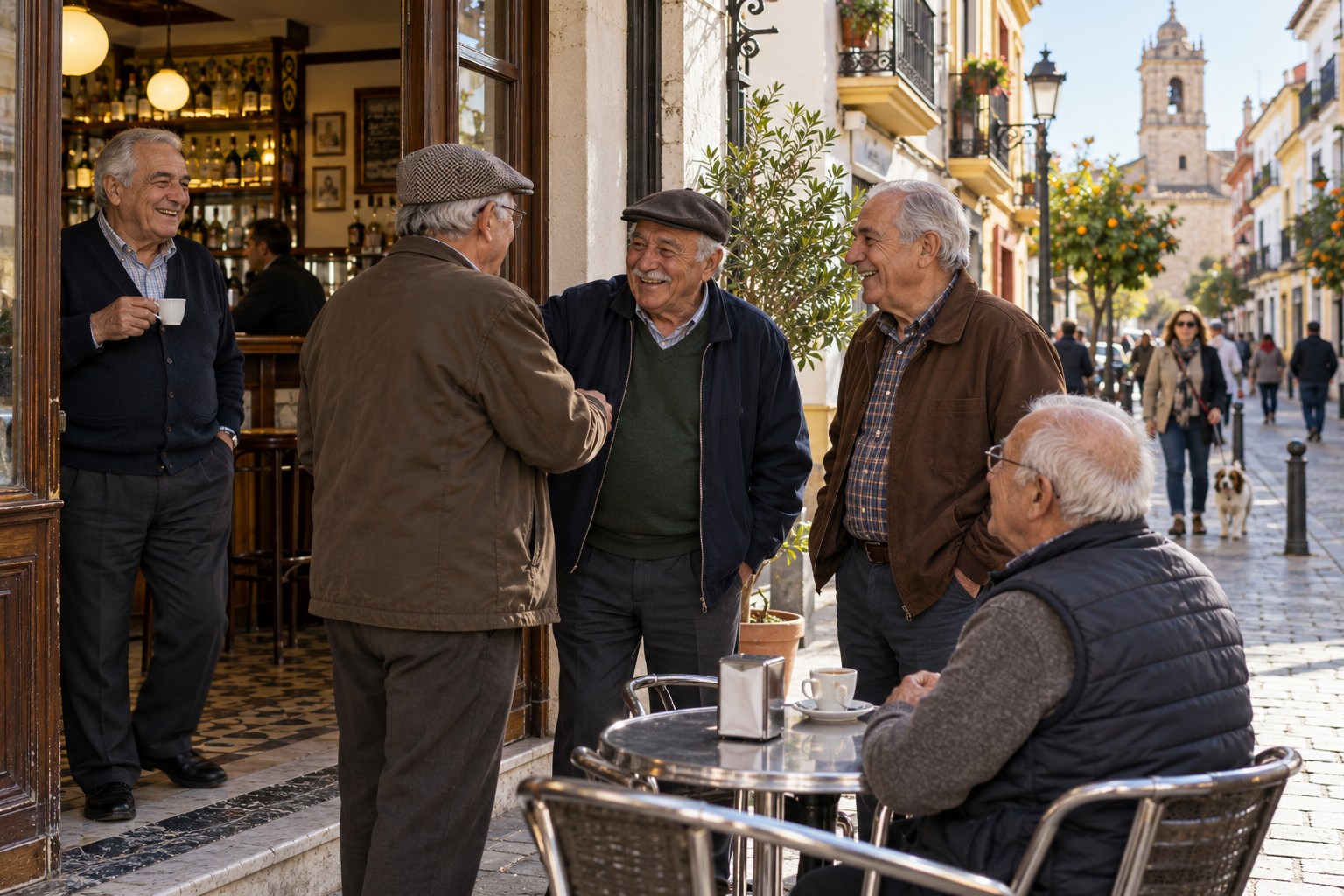
It would be easy to romanticize all this, so it is worth being honest: Spain is not a country where every old man is happily connected. Loneliness among the elderly is a real and serious problem there too, and the figures are sobering, with a large share of Spain’s over-sixty-fives reporting unwanted loneliness, and rates in Mediterranean countries that often run higher, not lower, than in northern Europe.
The ritual is not universal, either. Not every man has a bar, a group, or the health to get there, and those who fall outside the structure can be just as isolated as anyone in a American suburb, perhaps more so for being surrounded by a connection they cannot access. The bar is a protective institution for those inside it, not a blanket that covers everyone.
So this is not a story about a magic culture where nobody is ever alone. It is a story about one particular structure that genuinely helps the people it reaches, and about what happens to those who have it versus those who do not. The lesson is not “Spain has solved loneliness,” because it has not. The lesson is narrower and more useful than that.
The lesson is simply that a daily, automatic, low-effort social ritual is one of the most protective things an aging person can have, and that some cultures build these structures into ordinary life while others leave each person to construct their own or go without. That is a difference worth noticing, and worth acting on.
How to Build Your Own Version
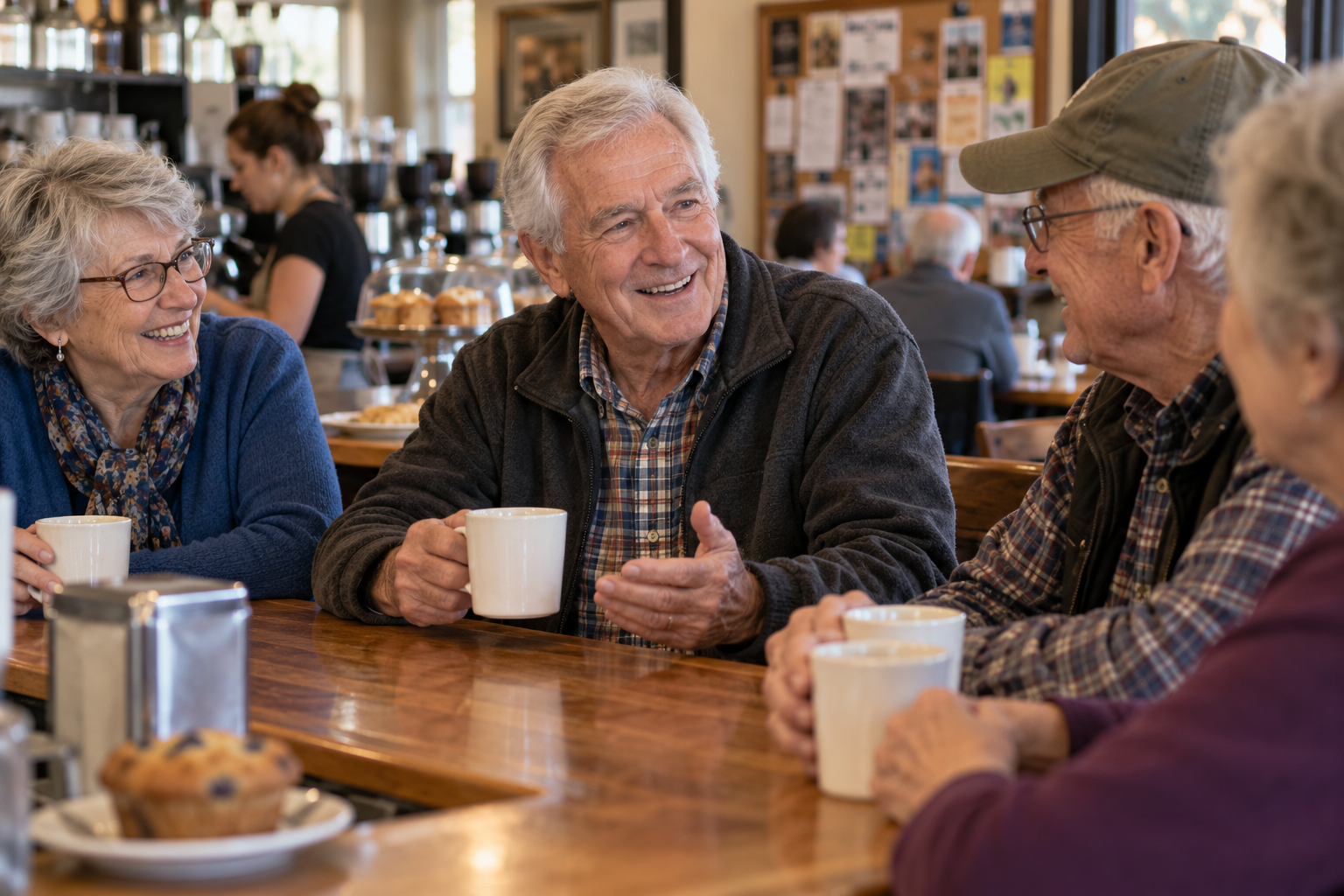
The good news is that you do not need a Spanish bar to get the benefit; you need the principle underneath it, and the principle travels anywhere. The key features are that it is daily, local, in-person, with familiar people, and automatic enough that you do not have to organize it each time.
That can take many shapes. It might be the same coffee shop every morning, where you and a handful of regulars have quietly become a group. It might be a daily walk with a neighbor, a standing table at a diner, a morning at the gym with the same faces, a regular spot at the community center, or a dog park where the same owners gather at the same hour. What matters is not the venue but the pattern.
The two things to protect are the dailiness and the automaticity. A social event you have to arrange each time will eventually lapse, because arranging things is work and energy fades; a ritual that simply happens, in the same place at the same time, survives because it asks nothing of you. Build something you can fall into without deciding to, and it will hold.
It also helps to attach the ritual to something you were going to do anyway, the way the Spanish attached it to morning coffee. Hook your social time onto an existing daily anchor, the walk you already take, the coffee you already drink, and it becomes nearly impossible to skip, because skipping it would mean skipping the thing it is bolted to.
If you take one thing from the old men in the Spanish bar, let it be this: do not wait until you feel isolated to build your structure, because by then it is harder, and men especially tend not to act on it. Put the ritual in place while it is easy, keep it daily, and let it quietly do its protective work for decades. And if you or someone you love is already struggling with isolation in later life, treat that as worth taking seriously and worth reaching out about, because connection is not a luxury in aging; it is close to a medicine.

About the Author: Ruben, co-founder of Gamintraveler.com since 2014, is a seasoned traveler from Spain who has explored over 100 countries since 2009. Known for his extensive travel adventures across South America, Europe, the US, Australia, New Zealand, Asia, and Africa, Ruben combines his passion for adventurous yet sustainable living with his love for cycling, highlighted by his remarkable 5-month bicycle journey from Spain to Norway. He currently resides in Spain, where he continues sharing his travel experiences with his partner, Rachel, and their son, Han.