
An American woman meets her Spanish partner’s family for the first time. His mother folds her into a warm hug, beams at her, and says, with total tenderness, something that includes the word gordita. Little fat one. The American woman freezes, her stomach drops, and she spends the rest of the evening quietly wounded, certain she has just been insulted by her future mother-in-law.
She has not. In Spain, she has just been told she is loved.
This is one of the great cross-cultural shocks of life in the Spanish-speaking world, and it lands hardest on American women, for whom the word fat is just about the cruelest thing a person can say. In Spain, a whole vocabulary of what sound like insults are in fact the warmest terms of affection, scattered freely among family and lovers. Here is what these words actually mean, why they are kind rather than cruel, the whole vocabulary of affectionate insults they belong to, and why they horrify so many Americans on day one. It is one of the most jarring and, once understood, most endearing culture shocks Spain has to offer.
Gorda, Gordita, and the Shock

The words at the center of it are gordo and gorda, which literally mean fat, and their diminutives gordito and gordita, little fat one. In much of the Spanish-speaking world, these are used as ordinary terms of endearment, said to partners, children, and loved ones with complete warmth.
A Spanish or Latin American man might call his wife mi gorda, my fat one, the way an American might say honey or babe. A grandmother might coo gordita at a beloved granddaughter, or mi gordi at a chubby-cheeked grandson, the word practically synonymous with cuddling. Crucially, this has little to do with the person’s actual size; slim women, children, and even babies get called gordita all the time, because the word has drifted away from its literal meaning into pure affection.
But none of that is obvious to an American hearing it for the first time, and the shock is real and immediate. In American culture, where weight is one of the most sensitive subjects there is and fat is a genuine insult, being called any version of it by someone who supposedly loves you is bewildering and hurtful. The warmth in the speaker’s voice and the sting of the word seem to contradict each other completely, and it takes a moment, or a long evening, to work out that the warmth is the real message and the word is just the vessel.
Women tend to feel it most sharply, and understandably so. A lifetime of being told, implicitly and explicitly, that thinness is to be pursued and fatness to be dreaded does not switch off at a border, and hearing the dreaded word spoken with a smile scrambles every signal at once. The brain hears an insult; the heart is being offered love; and the two take a while to reconcile.
It Is Not About Your Body

The key to understanding all of this is to grasp that, used this way, these words are not actually about your body at all. Gordita, in the mouth of someone who loves you, is not an observation about your weight; it is simply an affectionate nickname, as emptied of literal meaning as calling someone sweetie or pumpkin.
English does this too, when you think about it. We call people honey without meaning they are made of honey, and pumpkin without any comment on their shape or color. The word has been hollowed out by affection until only the warmth remains. Gordita works exactly the same way in Spanish; the literal meaning has faded into the background, and what is left is tenderness.
This is why it gets applied so freely to people who are not remotely fat. A doting husband calls his slender wife gorda; parents call their newborn gordito; friends use it for each other regardless of size. If the word were really a comment on weight, none of that would make sense. Once you understand that it has become a pure endearment, detached from any judgment about the body, the horror starts to dissolve, and you can hear it for what it is.
It can help to think of how a Spaniard would actually describe someone they considered overweight, because it is not with these cozy little words at all. There are plain, clinical, or unkind ways to comment on a body in Spanish, just as in English, and gordita is pointedly not one of them. The affectionate nickname and a genuine criticism live in completely different registers, and native speakers never confuse the two.
The Whole Vocabulary of Love
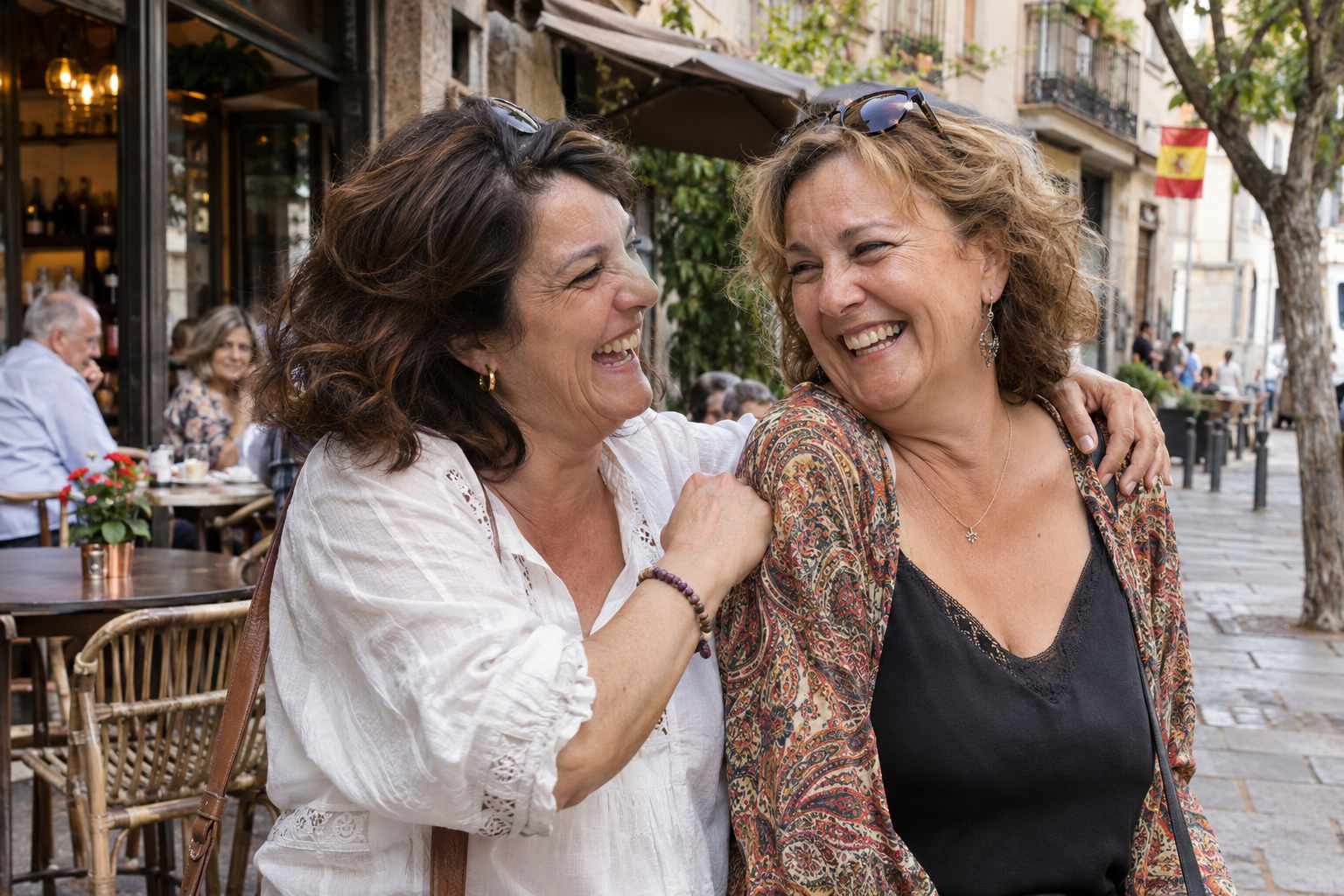
Gordita is only one entry in a rich and physical vocabulary of Spanish affection, and much of it sounds strange or even insulting to an English speaker at first. Spanish simply wears its tenderness more openly, and more playfully, than English does.
Alongside the straightforwardly sweet ones, carino for darling, mi amor for my love, mi vida for my life, cielo for sky or heaven, corazon for heart, there is a whole playful tradition of affectionate teasing-words. A loved one might be called feo or fea, ugly, or tonto or tonta, silly, with exactly the fond, teasing warmth of the gordita. Said with a smile to someone you adore, ugly means something close to you adorable fool, the opposite of its literal sense.
What ties it all together is that Spanish affection tends to be warm, physical, and a little cheeky. It reaches for the body and for gentle mockery as readily as for grand romantic words, and it does so without anxiety. To an American raised to handle all of these topics with extreme care, this openness can feel shocking at first and then, once understood, rather wonderful. It is a culture that is simply more relaxed and more playful about love, and about bodies.
The playfulness is the part that most surprises people, because English reserves teasing-names mostly for insults, while Spanish uses them for love. To call someone feo with affection is to say, in effect, that you are so fond of them you can tease them about anything, that your bond is secure enough to joke. The mock-insult is a kind of intimacy, a sign that the two of you are close enough to drop all formality, which is precisely why it is used among family and lovers rather than acquaintances.
Why Fat Is Not the Insult It Is in America

To really understand the gap, you have to look at how differently the two cultures treat weight itself, because that is the root of the shock. In the United States, weight is extraordinarily loaded. It carries moral weight, health anxiety, and deep personal pain for many people, and commenting on anyone’s body is close to taboo. Fat is not a neutral descriptor; it is a wound.
In Spain, bodies and food are, broadly, less fraught subjects. People talk more openly and matter-of-factly about appearance, food is central and joyful rather than guilt-laden, and a round baby or a soft, comfortable partner can be noted with affection rather than alarm. A certain plumpness has historically been associated with health, prosperity, and being well cared for, which is part of why a word for it could become a compliment at all.
This older association runs deep across many cultures, not just Spain. For most of human history, when food was scarce, a little softness signaled that someone was fed, loved, and safe, and the language absorbed that meaning long before modern diet culture reversed it. A word like gordita carries a faint echo of that older world, in which being a little round was a happy thing to be, not a shameful one.
None of this is to say one culture has it right and the other wrong, and it is worth being clear about that. American sensitivity around weight comes from real places, including genuine cruelty and genuine pain, and it is not foolish.
The Spanish ease comes with its own blind spots, too. They are simply two different relationships with the same words and the same subject, and the clash between them is exactly what produces the day-one shock. Neither is better; they are different, and understanding the difference is what turns offense into insight.
The Diminutive Does the Work
There is a piece of Spanish grammar quietly doing a lot of the emotional labor here, and it is worth knowing about, because it explains why these words land softly to Spanish ears. It is the diminutive, the little -ito and -ita endings that Spanish attaches to almost anything.
The diminutive makes things small, yes, but much more than that, it makes them sweet, affectionate, and dear. A perro is a dog; a perrito is a cute little doggy, and a momentito is just a tiny sec, said kindly.
The ending wraps whatever it touches in warmth and tenderness, shrinking it and softening it at once. This is why gordito feels so different from gordo; the diminutive has sweetened it from fat into something more like my cuddly little round one.
So when a Spaniard reaches for gordita rather than gorda, the grammar itself is carrying the affection, turning a blunt word into a caress. English has nothing quite like this built into it, which is part of why these endearments are so hard to translate and so easy to mishear. The warmth is baked into the shape of the word, in a way an English speaker simply is not trained to hear. Once you learn to listen for the diminutive, a great deal of Spanish affection suddenly makes sense.
You start to notice it everywhere, sprinkled through ordinary conversation like sugar. A coffee becomes a cafelito, a short walk a paseito, a quick favor a favorcito, each one softened and made friendlier by that little ending. Spanish is, in this sense, a language built for warmth, with tenderness stitched right into its grammar, and the body-nicknames are just the most startling example of a tendency that runs through the whole language.
When It Still Stings

Honesty requires a caveat, because none of this means the words are always and automatically fine, and you are allowed your own feelings about them. Context and tone are everything. The same word that is pure love from your partner or your abuela can genuinely be rude from a stranger, or cutting if said coldly, and Spanish speakers know the difference perfectly well.
And even when it is meant with total affection, you do not have to love being called gordita, and that is completely legitimate. If a term lands badly for you, especially given a lifetime of American conditioning around that particular word, it is entirely reasonable to gently let your Spanish family know that you would prefer a different nickname. Most will understand, laugh, and happily switch to carino or mi amor, because the affection was the point, not the specific word. Spanish families tend to be warm and accommodating about exactly this kind of thing, and a gentle word from you is far better than silently enduring a nickname that stings.
The thing to hold onto is the separation between intent and impact. The intent, in the family context, is almost always pure warmth, and understanding that frees you from the hurt of thinking you have been insulted. But your own comfort still matters, and you are allowed to shape how people speak to you. Hearing the love and setting a gentle boundary are not in conflict; you can do both at once.
It is also worth giving yourself time rather than expecting the feeling to flip overnight. Understanding intellectually that gordita is affectionate does not instantly undo a lifetime of flinching at the word, and that is fine. For many people the warmth seeps in slowly, over months of hearing it said with love, until one day they realize the flinch is gone and only the fondness remains. You are allowed to get there gradually.
Hearing the Love in It
In the end, learning to hear the affection rather than the literal word is one of the small, lovely rites of passage of becoming part of a Spanish family or a Spanish life. The horror of day one, if you let it, slowly turns into something warm, even treasured.
Because here is the quiet truth of it: being called gordita by your Spanish mother-in-law is a sign that you have been taken in, folded into the family, granted the same teasing tenderness she gives her own children. The affectionate insult is a mark of belonging, reserved for the people close enough to tease. Far from a rejection, it is one of the surest signs that you have been accepted and loved, which is the exact opposite of how it felt on that first bewildering evening.
That reversal, from wound to welcome, is one of the quiet pleasures of learning a culture from the inside. The things that shocked you on arrival slowly reveal themselves as expressions of warmth you simply did not have the ears for yet, and the discomfort fades as the understanding grows. The affectionate insult is a perfect small example: baffling and even hurtful at first, and then, once you truly understand it, genuinely touching.
So if you find yourself in Spain, newly and lovingly called some word you were raised to dread, try to hear past it to the warmth underneath. It is a window into a culture that carries its affection openly, physically, and playfully, unembarrassed by bodies and unafraid of teasing the people it adores. Learn to hear the love in it, and a word that once stung becomes, improbably, one of the sweetest things anyone has ever called you.

About the Author: Ruben, co-founder of Gamintraveler.com since 2014, is a seasoned traveler from Spain who has explored over 100 countries since 2009. Known for his extensive travel adventures across South America, Europe, the US, Australia, New Zealand, Asia, and Africa, Ruben combines his passion for adventurous yet sustainable living with his love for cycling, highlighted by his remarkable 5-month bicycle journey from Spain to Norway. He currently resides in Spain, where he continues sharing his travel experiences with his partner, Rachel, and their son, Han.