
In the small inland villages of Portugal, where the houses are stone and the population skews old, you can set your watch by the men in their eighties and nineties. They rise with the light, they are out of the house early, and they move through almost exactly the same morning, day after day, year after year.
There is no app involved, no supplement, no special diet with a clever name. It is just a routine, worn smooth by decades of repetition. And it turns out to be the kind of routine that researchers studying how people age well keep circling back to, because it quietly bundles together several of the things most strongly linked to a long, healthy old age.
It is also, almost point for point, the morning that modern life has talked most of us out of. Here is what these village men actually do each morning, the four things hiding inside that simple routine, why it keeps catching the attention of people who study aging, why it is not quite as magical as it sounds, and how to build the shape of it back into your own day wherever you live. It is the opposite of a life hack: slow, unglamorous, and genuinely powerful.
The Routine That Barely Changes
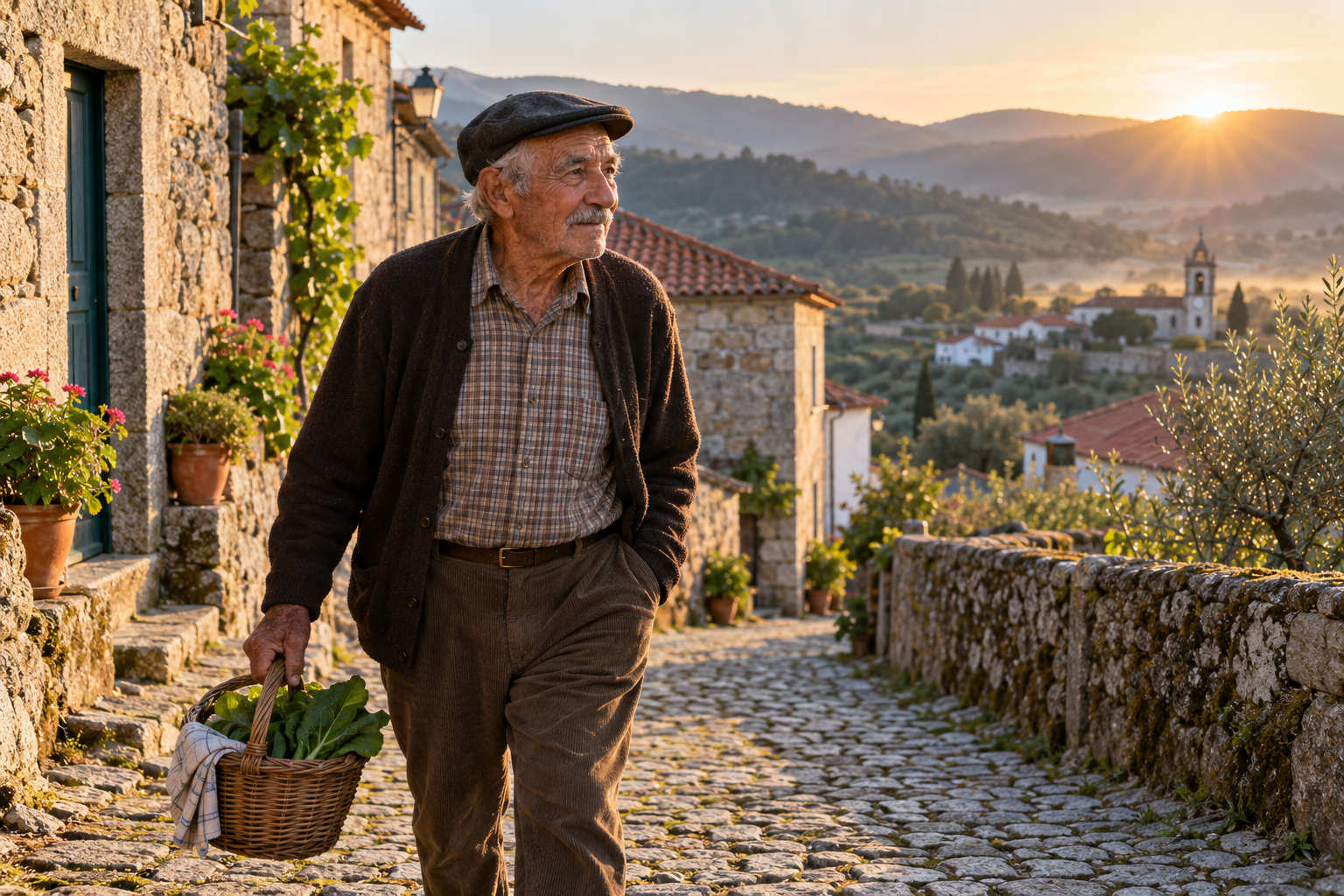
The morning follows a pattern so consistent it is almost a ceremony. The old man wakes early, with the daylight rather than an alarm, and he does not linger in bed or in the house. He gets up, gets dressed, and gets out.
What comes next is some combination of movement and purpose. He walks, often to tend a small patch of garden or a few animals, to run an errand on foot, or simply to make his rounds of the village. There is physical work in it, the real kind, bending and carrying and walking on uneven ground, not an exercise class but the ordinary labor of keeping a small rural life going.
Woven through it is the social part. He stops at the cafe or the little shop, he pauses in the square, and he greets the same neighbors he greets every day, trading news and complaints and small talk. Everyone knows everyone, and the morning is stitched together with these brief, familiar human contacts.
And it is anchored by something simple to eat and the shape of a day ahead. A modest breakfast, a coffee, and then the hours laid out in their usual order. The whole thing barely changes from one day to the next, and that sameness, far from being dull, is a large part of what makes it work.
The Four Things Hiding Inside It
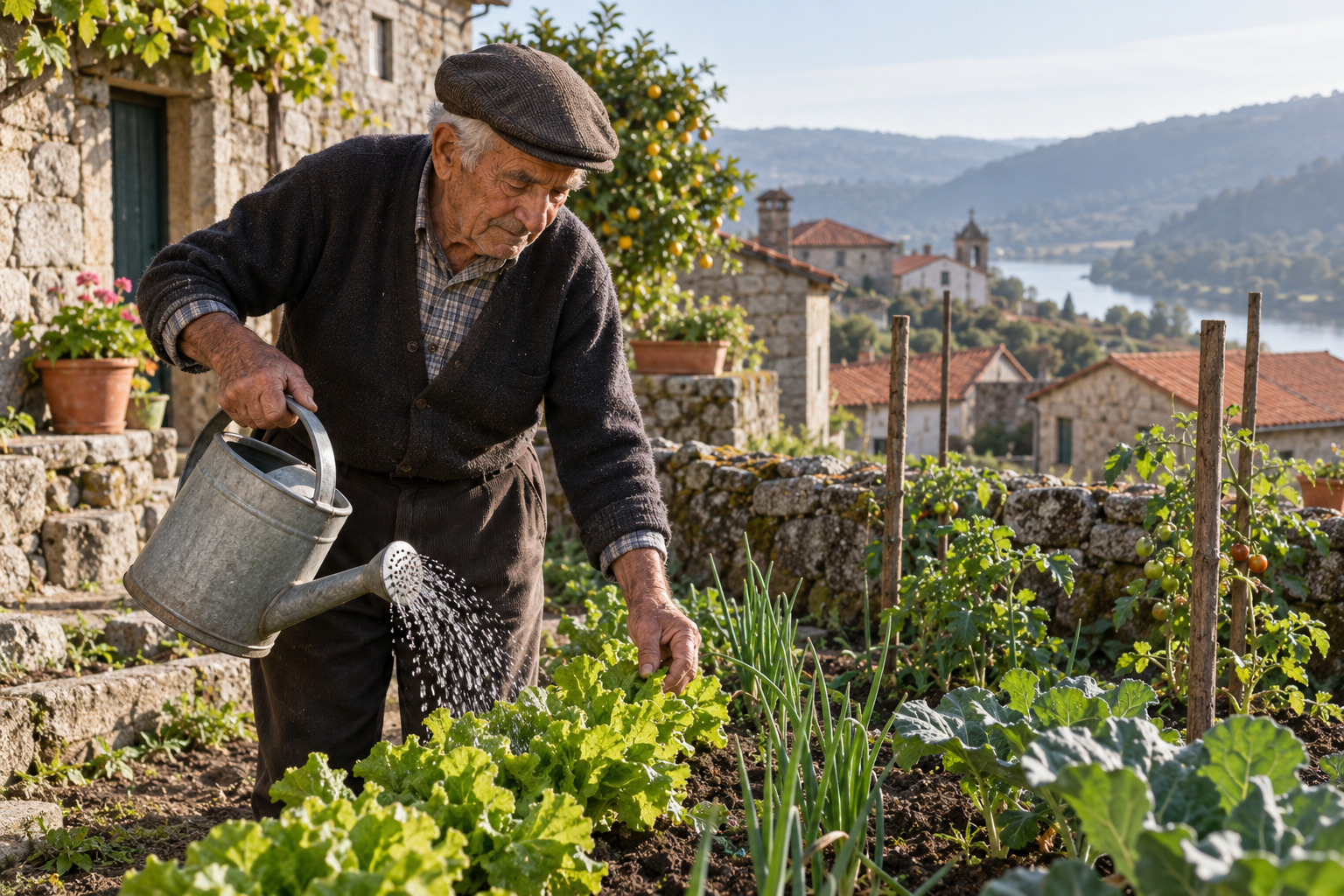
What looks like a quaint village habit is, on closer inspection, a near-perfect package of things that research associates with aging well. There are at least four of them, and the old man is doing all four before most people have checked their phones.
The first is movement, the steady, low-intensity, all-day physical activity of walking and working with his hands and body, which keeps the muscles, the balance, and the heart working without anyone calling it exercise. The second is social connection, the daily greetings and conversations that protect against the isolation so strongly linked to poor aging. The third is routine and structure, the body running on a predictable rhythm of rising, moving, eating, and resting that keeps everything regulated. And the fourth is being outdoors in natural light, which supports sleep, mood, and the body’s internal clock.
None of these four is dramatic on its own. Nobody is running marathons or meditating for an hour or taking a dozen supplements. But together, done every single day for decades, they add up to something that the wellness industry spends enormous effort trying to recreate, and that these men get for free simply by living the way they have always lived.
That is the quiet elegance of it. The village morning does not require willpower or discipline or a plan, because the four protective ingredients are baked into the ordinary business of the day. The man is not trying to age well; he is just living, and the aging-well comes along for the ride.
Why Doctors Keep Noticing
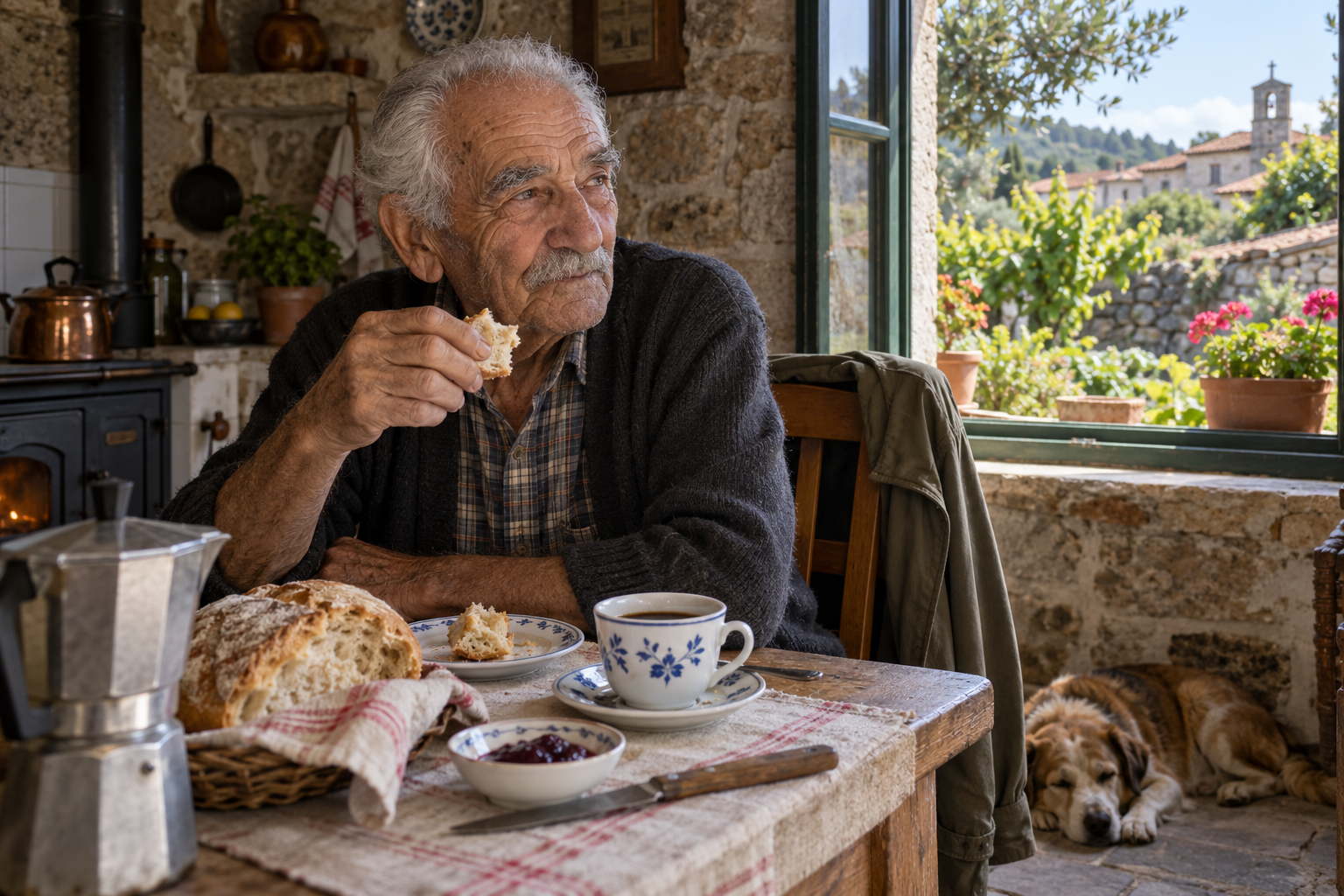
The reason this keeps drawing the attention of people who study aging is that it lines up so neatly with what the research points to. When scientists look at the places and the people who reach old age in good shape, the same handful of factors keep appearing, and they are largely the ones packed into this village morning.
Regular physical activity, strong social connection, a sense of routine and purpose, time outdoors, a simple traditional diet, and tight community ties show up again and again in the study of healthy aging and longevity. The famous long-lived communities around the world, the ones endlessly written about, tend to share exactly this profile: not heroic health behaviors, but a daily life that happens to contain all the right ingredients.
The Portuguese village morning is a small, unglamorous version of that same pattern. It is worth being careful and honest about the science, though, because this is a matter of association rather than proof. Researchers observe that these elements tend to go with healthier aging; they cannot promise that any one routine will lengthen any one life, and genes, luck, healthcare, and much else all play their part.
But even held at that honest, cautious level, the pattern is striking and consistent, and it points in a clear direction. The things that seem to help people age well are not exotic or expensive; they are mostly simple, daily, and structural, and the village man has been doing all of them, without thinking about it, his whole life.
The Purpose Nobody Prescribes
There is one ingredient in the village morning that deserves its own attention, because it is the hardest to bottle and the easiest to lose, and that is purpose. The old man has reasons to get up, and they are concrete ones.
The garden needs watering, the animals need feeding, the errand needs running, and the neighbors half-expect to see him. His day has demands in it, small obligations that give it shape and pull him out of bed and out of the house. He is still needed, in the modest daily way that matters, and that sense of being needed is itself linked to living longer and better.
This is quietly one of the biggest things, because purpose and routine are strongly associated with healthy aging, and their absence with decline. A life with nothing that must be done, no reason to rise at any particular hour, no one expecting you, is a life that tends to contract, and the research on retirement and aging bears out how dangerous that emptying-out can be.
The village keeps purpose built in, almost by accident. There is always something small that needs doing and someone who notices if you are not around, and that web of tiny obligations and connections is, it turns out, a kind of life support. Nobody prescribes it, and nobody could; it simply comes with the life.
What Americans Stopped Doing
Now picture the typical modern American morning, especially in retirement, and notice everything the village morning has that it lacks. A slow start with no particular reason to rise, coffee alone, a screen.
Then the car for anything that needs doing, little walking, few neighbors, and no particular structure to the hours once work is gone.
Almost every one of the four protective ingredients has quietly dropped out. The movement is gone, replaced by sitting and driving. The daily social contact is gone, with no square to cross and no cafe where the regulars gather. The routine dissolves without a job to impose it, and the time outdoors shrinks to the walk from the door to the car.
This is not anyone’s fault, exactly. It is the shape of modern life, built around convenience, cars, and privacy, and it quietly strips out the very things that the old village life delivered as a matter of course. We did not decide to stop moving, connecting, and keeping a routine in our later years; our environment simply stopped requiring any of it of us.
The cruel part is that it feels like comfort. A quiet morning at home with coffee and a screen and nowhere you have to be looks like the reward for a lifetime of work. But over years, that comfortable emptiness is close to the opposite of what the village morning provides, and the difference shows up slowly, in bodies that move less, days that contain less, and lives that connect less.
It Is Not Magic, and It Is Not Only Portugal
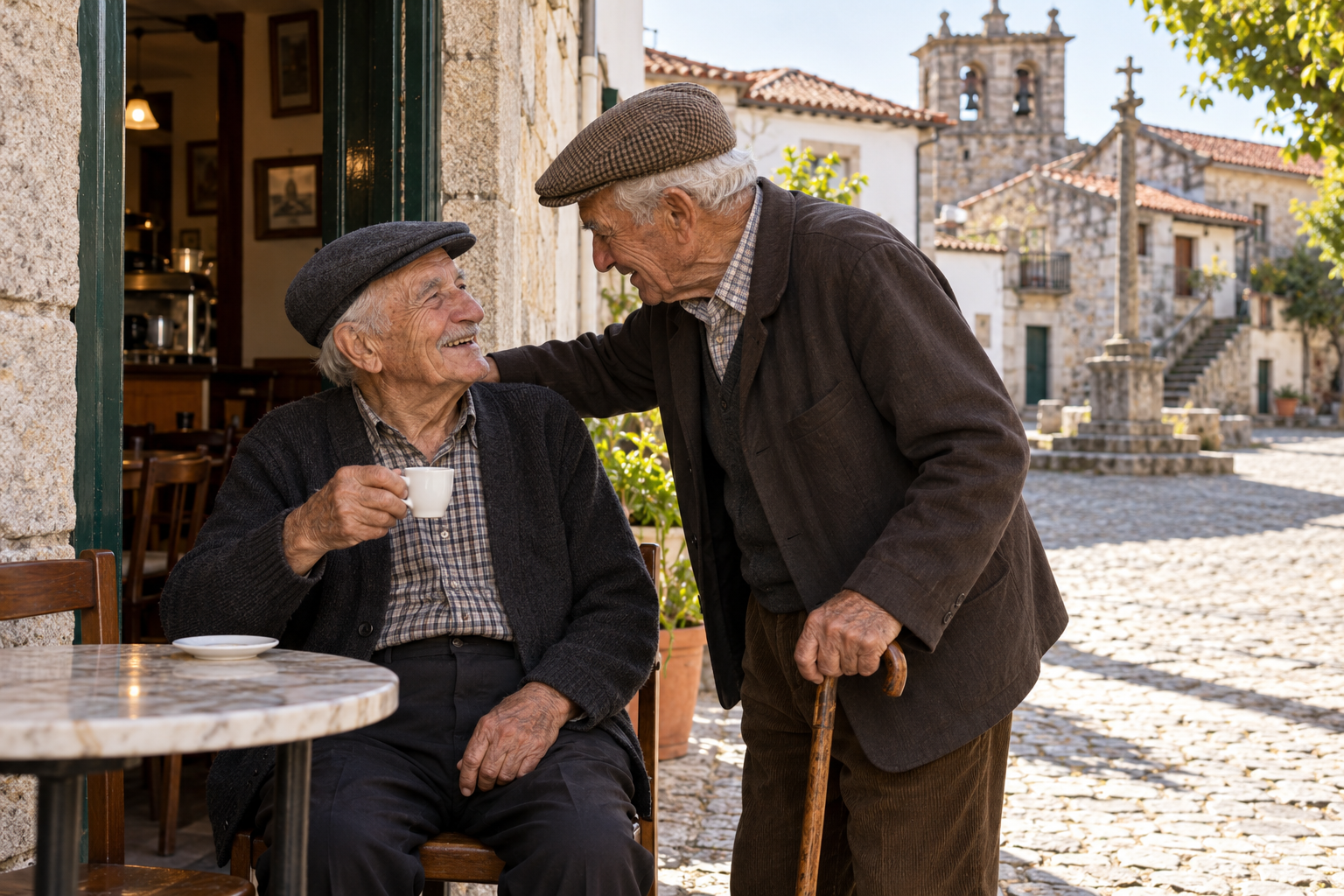
A fair bit of honesty is needed before anyone starts romanticizing village life, because the postcard version leaves a lot out. These villages are often poor, aging, and emptying, and rural old age can be isolating and hard, with its own real loneliness for those who outlive their friends or cannot get around anymore.
None of the four ingredients is unique to Portugal, either. The same pattern of movement, connection, routine, and purpose turns up wherever people age well, from Mediterranean islands to mountain villages to tight urban neighborhoods. Portugal is one example among many, not a secret, and singling it out risks turning a general truth into a travel fantasy.
And the science, to repeat the important caveat, is associational. We see these elements alongside healthy aging; we cannot prove that adopting them will deliver it, and anyone promising that a village morning guarantees a long life is overselling. Genes, medical care, and plain luck all have their say, and no routine overrides them.
So take this not as a magic formula but as a direction. The specific village does not matter, and neither does the country. What matters is the bundle of simple, daily, structural things that keep turning up wherever people grow old in good shape, and the recognition that modern life has quietly removed most of them from the ordinary day.
Building the Morning Back In

The genuinely useful news is that the bundle is portable, and you do not need to move to a Portuguese village to rebuild it. You can put the same ingredients back into an ordinary modern morning, deliberately, where they used to arrive on their own.
Get up with the light rather than lingering, and get out of the house early, because the whole thing starts with leaving. Move first, before anything else, with a real walk rather than a token one, ideally one with a small purpose attached, to the shop, around a route, somewhere you are actually going. Make it social where you can, by walking with a neighbor, greeting the same people, or folding in a morning stop where familiar faces gather. And give the day some structure and some small obligations, a reason to rise and things that must be done, because an empty calendar is not a reward but a risk.
The principle is to recreate the old village morning out of modern parts: movement, connection, routine, purpose, and daylight, assembled on purpose since your environment no longer assembles them for you. It takes a little intention at first, and then, like the village man’s morning, it becomes simply what you do.
If there is a single lesson in those old men who have been starting their days the same way for eighty years, it is that aging well is less about any one dramatic intervention than about the quiet shape of an ordinary day, repeated. Build a good morning and repeat it, and you have built the most important part. The old men of the Portuguese villages did not set out to do anything clever; they simply kept living the same good morning for eighty years, and the living did the rest.

About the Author: Ruben, co-founder of Gamintraveler.com since 2014, is a seasoned traveler from Spain who has explored over 100 countries since 2009. Known for his extensive travel adventures across South America, Europe, the US, Australia, New Zealand, Asia, and Africa, Ruben combines his passion for adventurous yet sustainable living with his love for cycling, highlighted by his remarkable 5-month bicycle journey from Spain to Norway. He currently resides in Spain, where he continues sharing his travel experiences with his partner, Rachel, and their son, Han.