
Ride the subway in most big cities and you expect a certain amount of grime. Wrappers on the floor, the smell of someone’s lunch, a sticky seat, the general background mess of a space that thousands of people pass through and nobody quite owns. Then you ride the U-Bahn in Vienna, and it is spotless, quiet, and oddly pleasant.
Part of the reason is a rule that catches a lot of visitors off guard: you are not supposed to eat on it. No unwrapping your kebab on the train, no snacking your way across the city. In Vienna, the metro is for riding, not for eating, and the city is genuinely serious about it.
It sounds like a small, fussy thing, and in a way it is. But it is also a window into why Vienna’s public transport is consistently rated among the best in the world, and into a whole civic attitude that Americans tend to find surprising. Here is what the rule actually is, the smell that caused it, why Vienna cares so much, how the city actually enforces it, and the spotless metro it protects. It is one of those small rules that explains an entire city once you look at it closely.
The Rule: No Eating on the Train
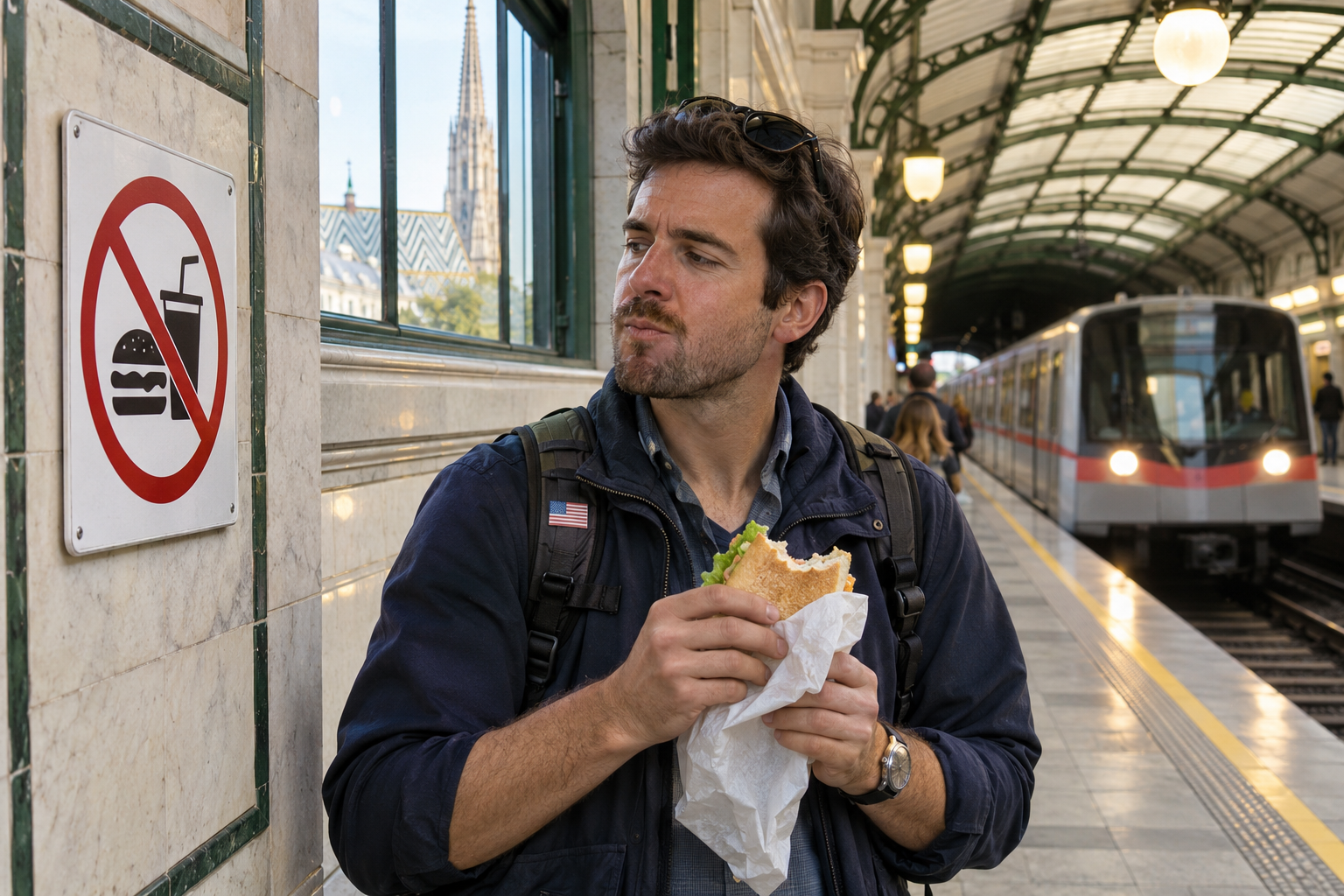
The rule is simple and official: eating is not permitted on the U-Bahn trains. It is not an urban legend or a vague bit of etiquette; it is stated plainly by Wiener Linien, the company that runs Vienna’s transport, and echoed by the city’s own tourism information, which tells visitors flatly that eating is not allowed on the subway.
The emphasis falls especially hard on strong-smelling food. Wiener Linien’s own guidance puts it politely but clearly, noting that strongly scented food is not appreciated and asking passengers to enjoy their meals outside public transport wherever possible. The target is obvious to anyone who has ridden a metro: the hot, pungent, fast-food meal eaten in a sealed carriage.
So while the broad rule is no eating, the real spirit of it is no stinking up the train for everyone else. A quiet sip of water or a discreet mint is not what anyone is worried about. The thing the rule exists to stop is the full hot meal unwrapped at rush hour, filling the whole carriage with its smell.
That distinction matters for a nervous visitor, because it means the rule is far less draconian than no eating at all sounds. Nobody is going to challenge you over a cough sweet or a sip of water. The rule is aimed squarely at the thing that genuinely bothers people, which is smell and mess, not at policing every crumb.
It Started With the Smell
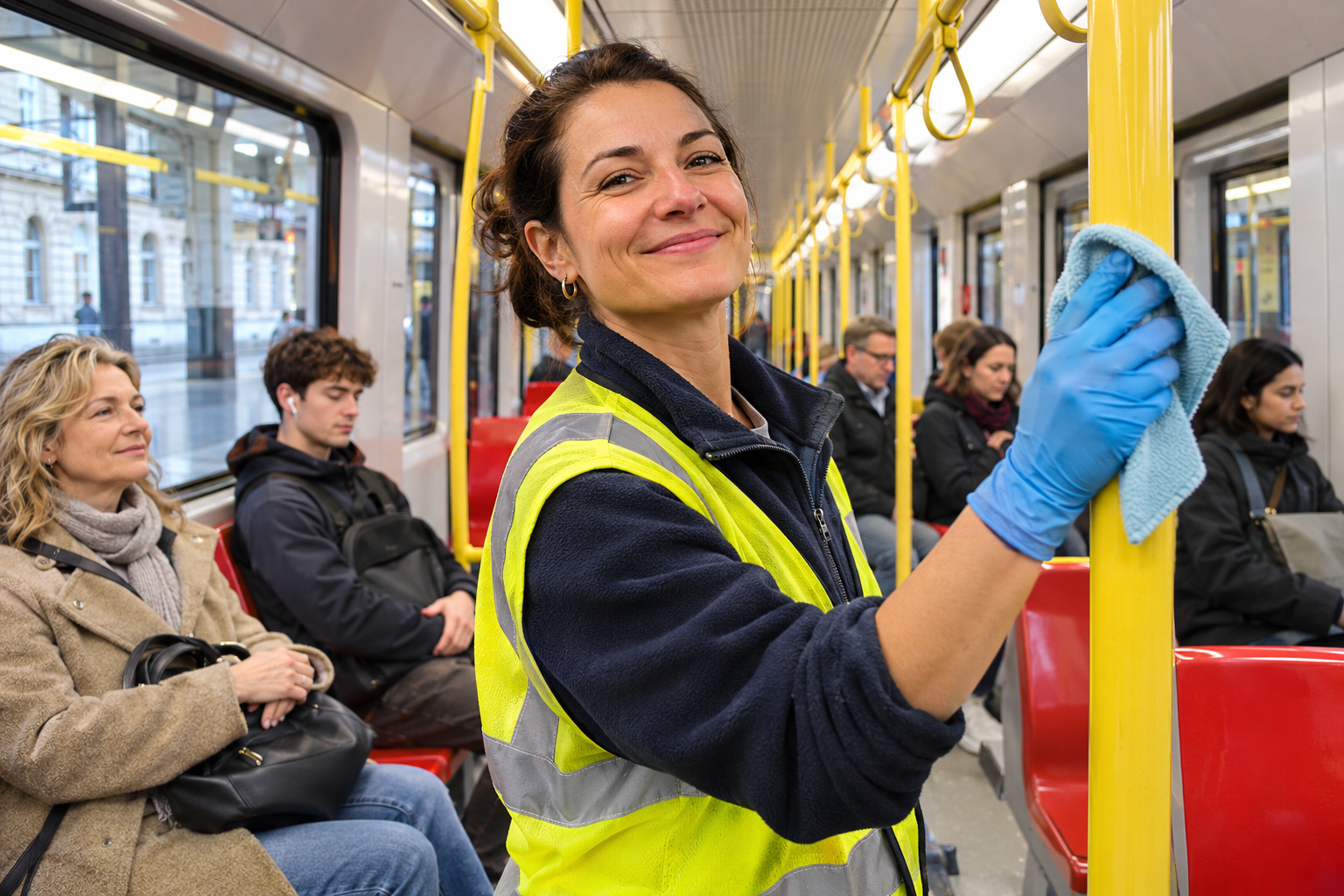
The ban did not come from nowhere. It grew directly out of the complaints of Viennese riders who were sick of their commutes smelling like a fast-food stall, and the specific culprits are almost comically precise.
The offenders were the hot, aromatic foods that people liked to eat on the move: the doner kebab, the Kasekrainer sausage, the pizza, the box of fried noodles. Eaten in the open air these smell wonderful; eaten in a closed, crowded metro carriage, trapped and mingling, they become something else, and passengers had had enough of arriving at work or home smelling of someone else’s dinner.
Vienna being Vienna, the city actually consulted its riders about it, and the response was clear enough that the authorities acted, bringing in the food ban to clear the air, literally. It was a small piece of municipal responsiveness, a city noticing that a specific, petty, daily annoyance was making life slightly worse for millions of people, and simply deciding to fix it. The smelly-kebab problem became the no-eating rule.
There is something very Viennese about the whole episode. Rather than shrugging and accepting that metros smell of food, the city treated a minor daily unpleasantness as a problem worth solving, asked its citizens what they thought, and then quietly fixed it. It is municipal government operating at the scale of ordinary annoyances, which is exactly the scale at which quality of life is actually lived.
Why Vienna Cares So Much
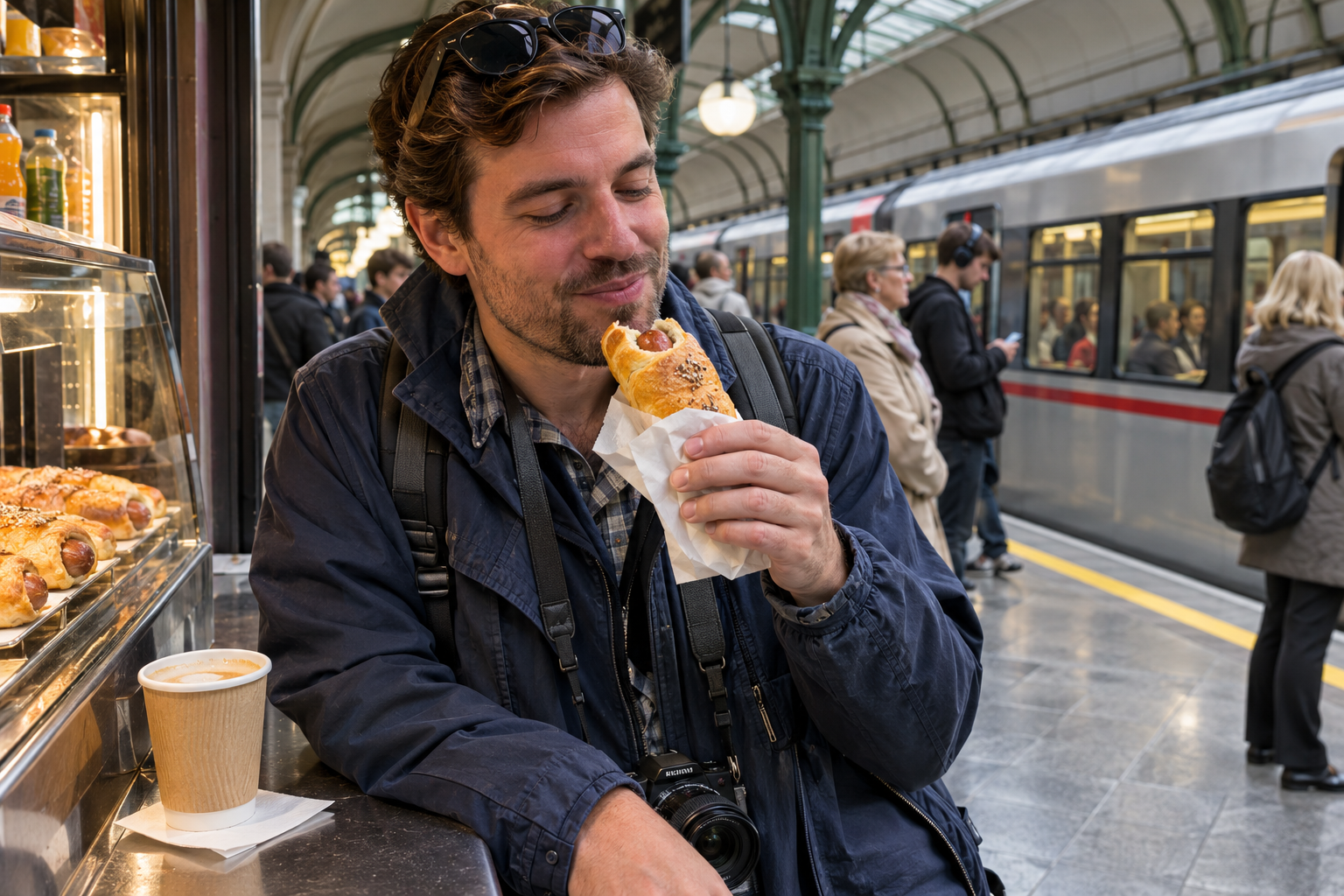
To understand why a city would bother legislating snacks, you have to understand how seriously Vienna takes its public spaces, and its public transport in particular. This is a city with a deep cultural attachment to order, cleanliness, and consideration for others, the kind of place where things are expected to work and to be kept nice.
The U-Bahn is a point of real civic pride. It is clean, punctual, cheap, and comprehensive, the sort of system where a yearly pass costs a famously modest sum and more people hold one than own a car. Vienna regularly tops the global rankings of the world’s most livable cities, and its transport is a genuine part of that reputation, not an afterthought.
In that context, keeping the trains free of food smells is of a piece with everything else: the quiet carriages, the absence of loud phone calls, the general expectation that you will behave considerately in a shared space. The eating ban is not an isolated quirk but one expression of a whole philosophy, which holds that a public space stays pleasant only if everyone agrees to small restraints for the common good. To a Viennese, eating a smelly meal on the train is not a harmless personal choice; it is imposing on everyone else, and that is simply not done.
This instinct runs deep enough that it shapes behavior far beyond food. Viennese transport is notably quiet, with people keeping their voices and their phone calls low, their bags off the seats, and their general footprint small, all out of the same underlying idea that a shared carriage belongs to everyone and should be left as you found it. The eating ban is just the most explicit rule in a whole unwritten code.
How the City Means It
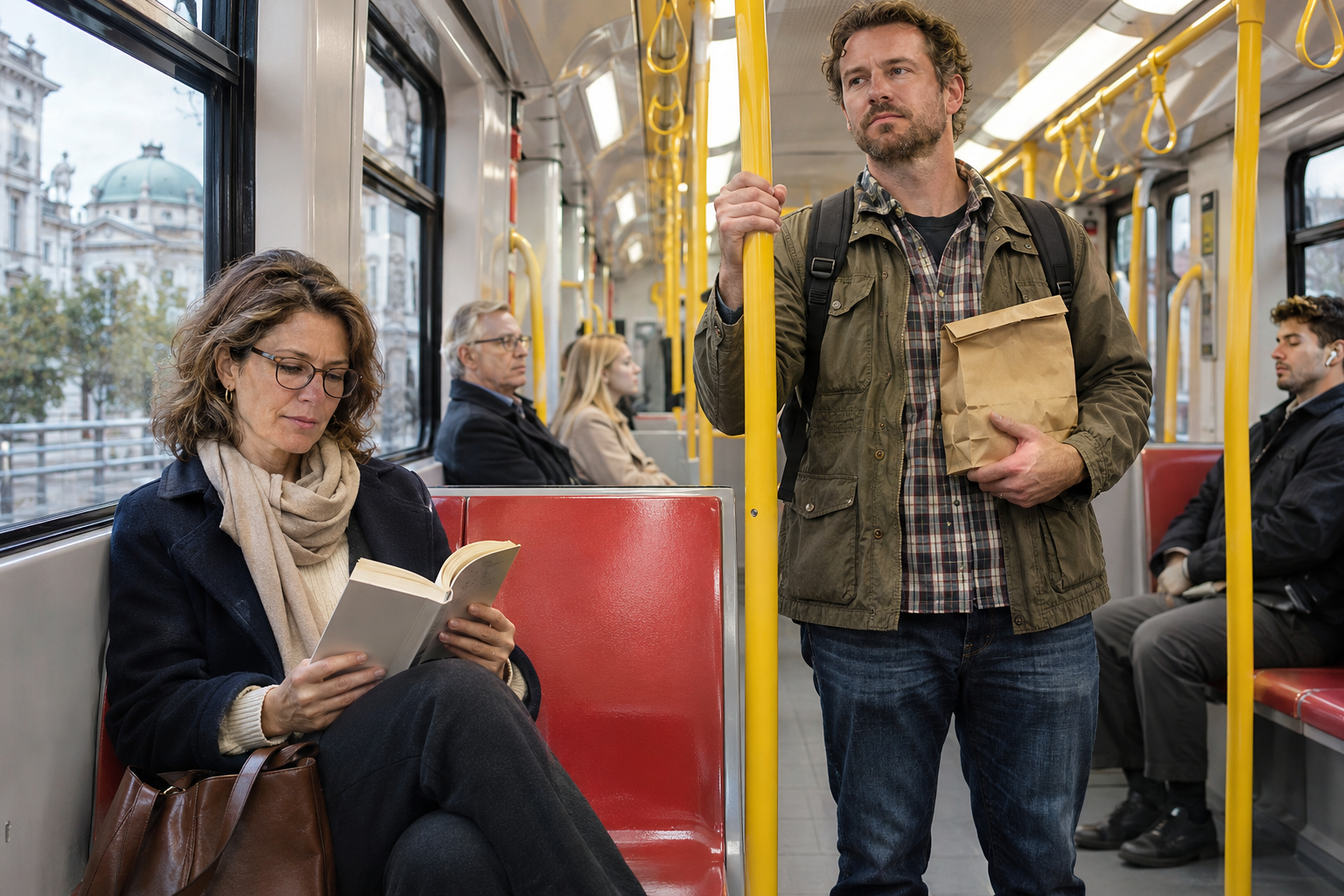
Now, honesty is required about enforcement, because this is not Hvar with its seven-hundred-euro fines. The Vienna eating rule functions less as a dramatic financial penalty and more as a firmly established house rule backed by powerful social norms, and it is the social part that really does the work.
In practice, the thing that stops a Viennese from unwrapping a kebab on the U-Bahn is not fear of a warden but the certain knowledge that the entire carriage will quietly disapprove. The disapproving looks, the sense of having breached a shared expectation, the simple weight of everyone knowing you are not supposed to do this, these are the real enforcement, in much the way that Japan polices its own no-eating-while-walking custom without any fines at all.
That does not make the rule toothless. It is an official rule of the transport system, staff can and do ask people to stop, and persistent antisocial behavior on public transport is not something Austrian authorities treat lightly. But for the most part, the rule holds because the culture holds it, because nearly everyone agrees with it and acts accordingly, which is a far more durable kind of enforcement than any fine. When the city says it means it, what that really means is that the city, collectively, has decided this is simply how things are done.
The Spotless Metro It Protects
The payoff for all this restraint is sitting right there in front of every rider: one of the cleanest, most pleasant metro systems in the world. Step onto a Vienna U-Bahn train and there is no grease on the seats, no drift of wrappers on the floor, and no stale smell of a hundred past meals baked into the upholstery.
It is a genuinely nicer way to travel, and the difference is immediately obvious to anyone used to grimier systems elsewhere. The trains feel cared for because they are cared for, not only by the cleaners but by the passengers themselves, who treat the carriage as a shared space worth keeping decent rather than as somewhere to drop their lunch. The absence of food is a big, quiet part of why the whole thing feels so civilized.
This matters more than it might seem, because the state of a city’s transport shapes daily life profoundly. Millions of people spend a chunk of every day on the U-Bahn, and the fact that those minutes are clean, calm, and smell-free rather than grubby and unpleasant is a small daily gift repeated across an entire population. The eating ban is one modest rule, but multiplied across every carriage and every commute, it helps produce something genuinely valuable: a public space that stays nice.
It is the kind of benefit that is almost invisible until you lose it. People rarely notice a clean, pleasant commute, because nothing about it demands attention; you only notice the grimy, smelly version, because it grates. Vienna has engineered the unremarkable good version and made it the default, which is a quiet civic achievement most riders never consciously register.
What You Can and Cannot Do
For a visitor, the practical boundaries are easy to learn and easy to respect. The line is essentially the train itself: eating is off-limits on the carriages, but not everywhere in the system.
You can perfectly well eat on the platforms and in the stations, where there are often snack stands precisely for this, and nobody minds you finishing something before you board. What you should not do is carry your hot food onto the train and eat it there. Drinking alcohol is separately banned across the system, and while a sip of water is fine, the spirit of the rule is to keep food, and especially food smells, off the trains. The same considerate instinct extends to other behaviors, with rules against things like using e-cigarettes and riding scooters on the platforms.
The simplest guide is to think about smell and mess. If what you are about to do would make the carriage smellier or messier for the people around you, Vienna would rather you did it elsewhere. Eat your kebab on the platform, or wait the few minutes until you are off the train, and you will be behaving exactly as a local would.
It helps that Vienna’s trains come so often that the wait is trivial. With services every few minutes, you are rarely more than a short ride from your stop, so holding off on your food until you are above ground is no real hardship. The efficiency of the system quietly makes its own rule easy to follow.
A Small Rule, a Bigger Lesson
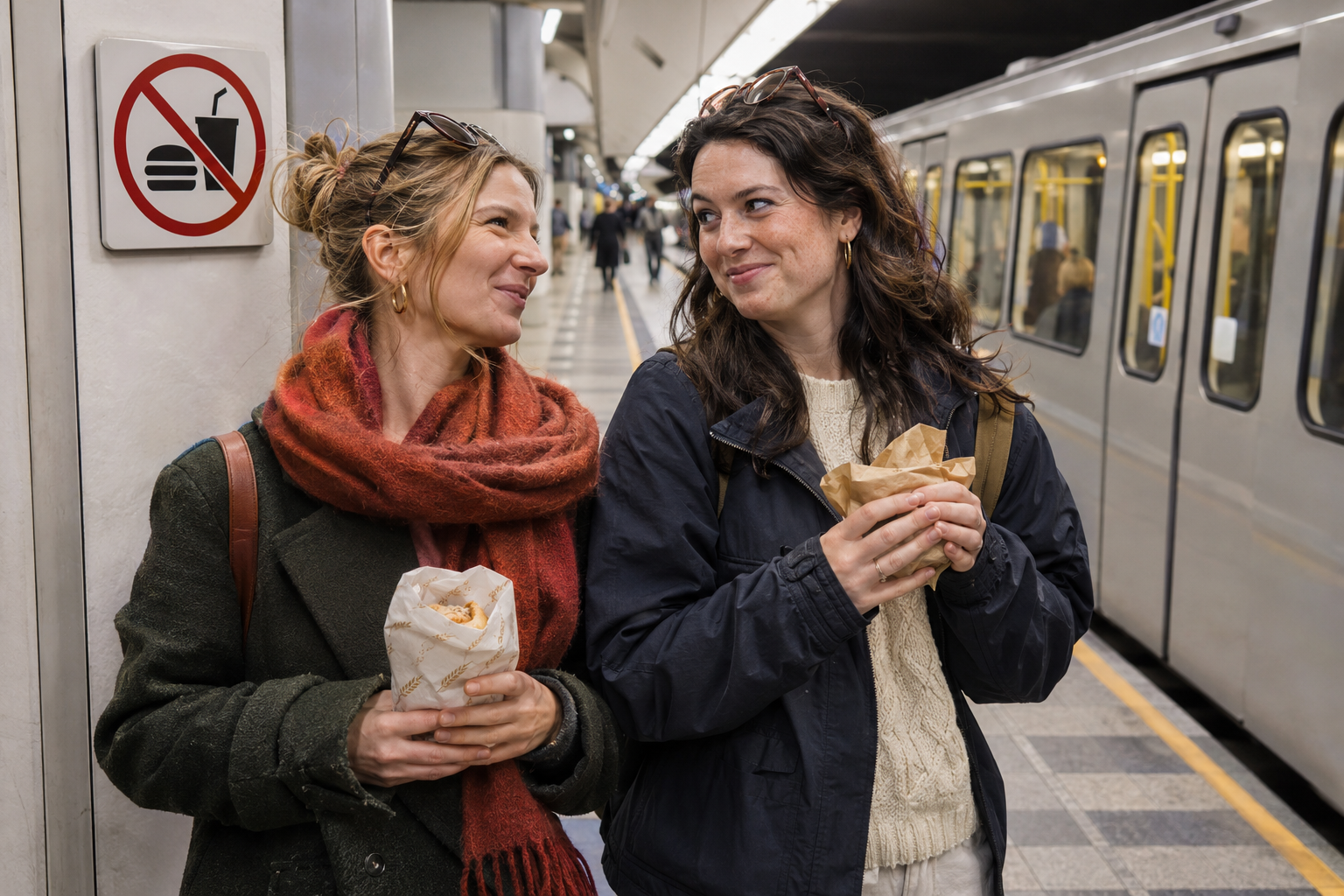
In the end, the Vienna eating ban is a tiny thing that points at something much larger, which is a whole way of thinking about shared space. The rule rests on a civic bargain that Americans often find striking: the idea that everyone gives up a small personal freedom, the right to eat wherever they please, in exchange for a collective good, a clean and pleasant ride for all.
It is a different trade than the one most American transit makes, where people eat and drink freely and the systems are often grimier for it. Neither choice is simply right or wrong, but they produce very different daily experiences, and Vienna’s bet is that the small restraint is more than repaid by the pleasant result. Given how beloved and well-used the U-Bahn is, it is hard to argue the city bet wrong. The spotless, calm carriage is what that bargain buys.
For a visitor, the takeaway is pleasantly simple: eat before you board, keep the train clean, and enjoy one of the best metro systems on earth the way the locals do.
And the broader lesson is worth carrying home, because it applies far beyond Vienna: the nicest shared spaces are almost always the ones where everyone has quietly agreed to a little restraint. The clean train is not an accident. It is a choice, made every day, by everyone on it.

About the Author: Ruben, co-founder of Gamintraveler.com since 2014, is a seasoned traveler from Spain who has explored over 100 countries since 2009. Known for his extensive travel adventures across South America, Europe, the US, Australia, New Zealand, Asia, and Africa, Ruben combines his passion for adventurous yet sustainable living with his love for cycling, highlighted by his remarkable 5-month bicycle journey from Spain to Norway. He currently resides in Spain, where he continues sharing his travel experiences with his partner, Rachel, and their son, Han.