
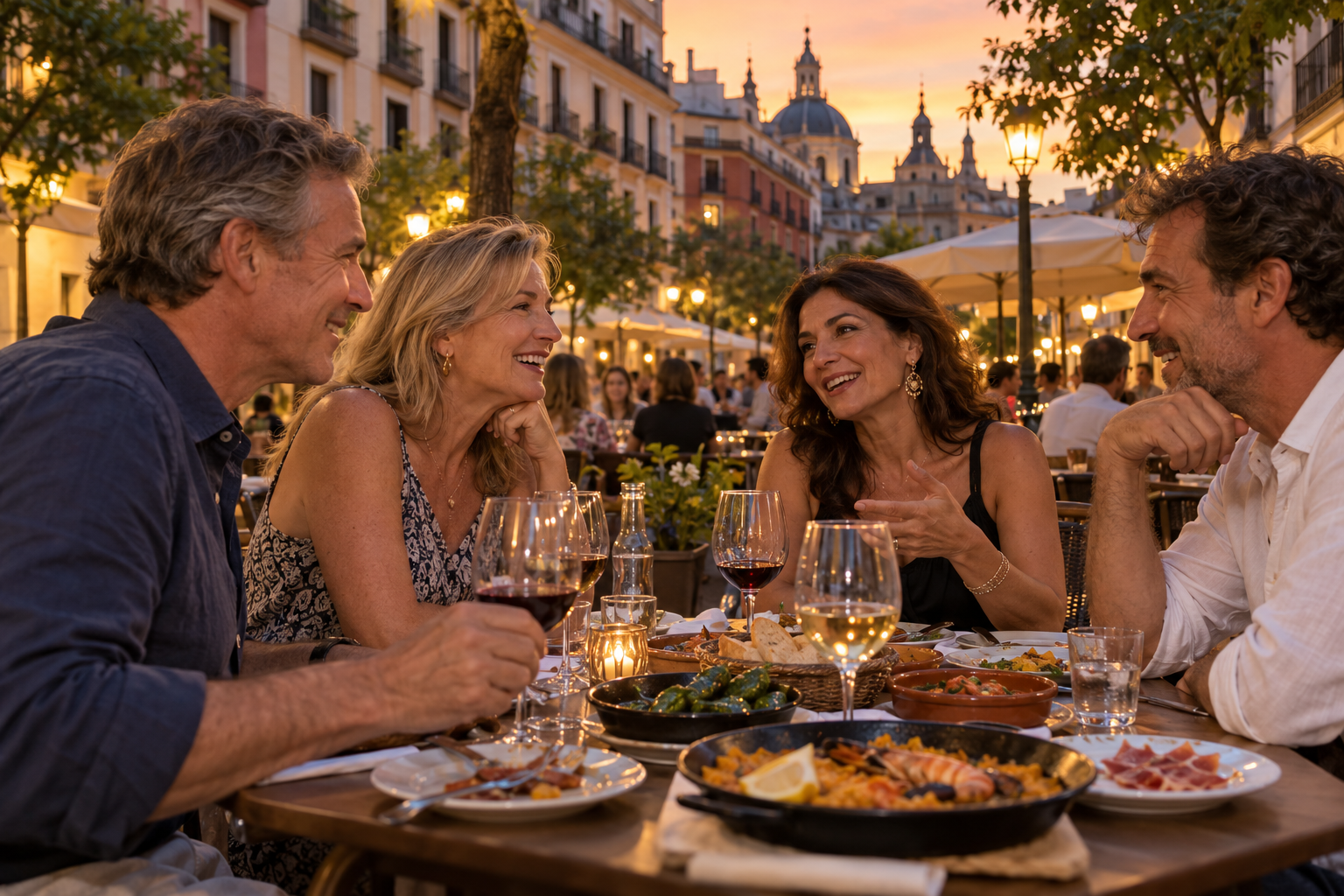
One of the first things that disorients visitors to Spain is the clock. Dinner at ten at night. The sun still blazing at nine thirty in summer.
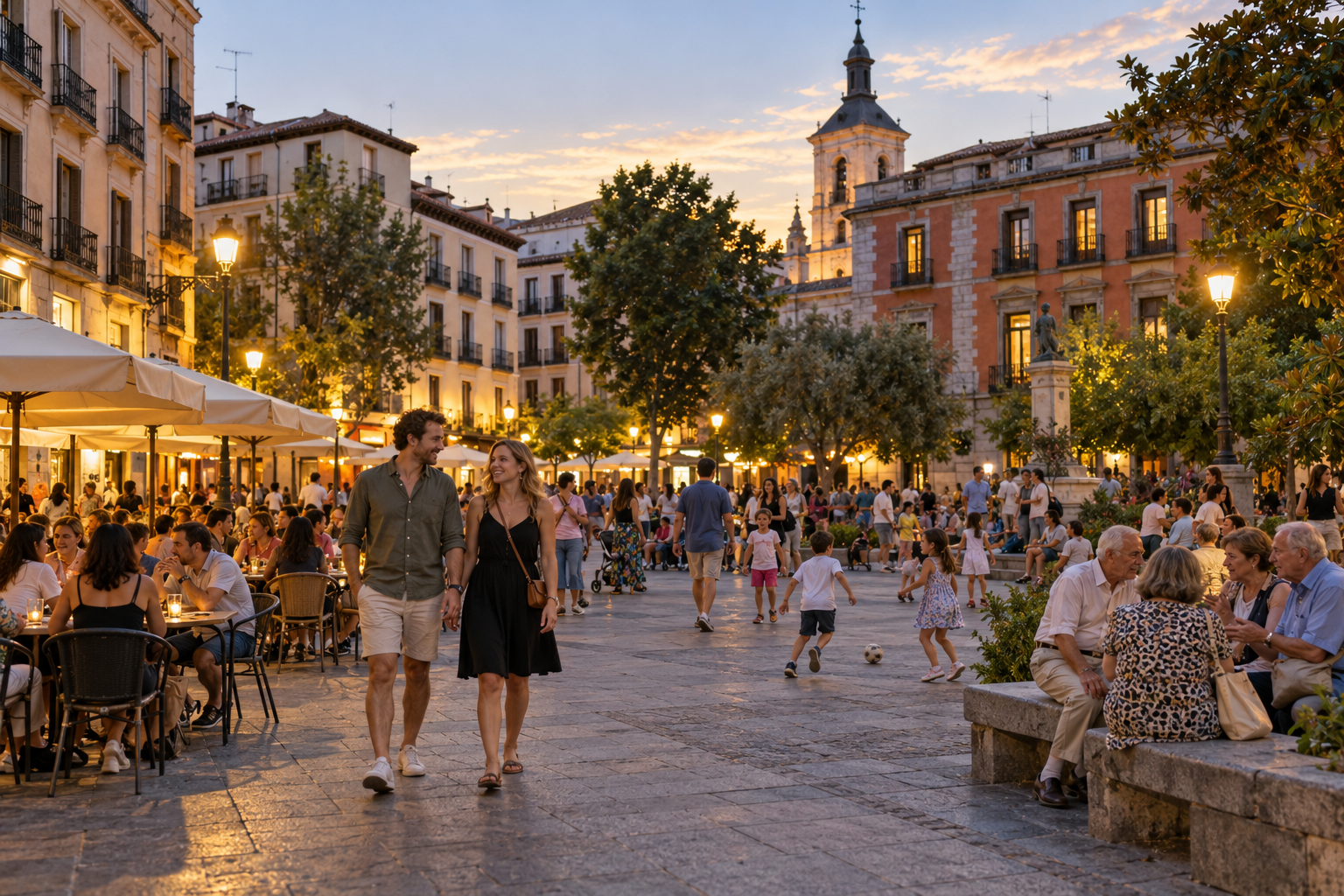
Children playing in the square long after an American bedtime. Prime-time television that does not begin until after ten.
It is tempting to chalk it all up to Spanish culture, to some Mediterranean love of the late hour. Culture is certainly part of it. Spain really does love a long evening.
But there is a stranger explanation underneath, one most Spaniards can tell you themselves. Spain is, quite literally, on the wrong time zone. It runs an hour ahead of where the sun says it should be, and it has done so since a decision made by a dictator in 1940.
Here is how Spain ended up there, what the missing hour feels like, why it never changed back, and why the famously Spanish schedule is really only half Spanish.
It is one of the most surprising pieces of hidden history in all of European daily life. And it is sitting quietly inside every clock in the country.
The Time Zone Spain Should Be On
Start with a fact of geography that surprises most people. Spain sits, by longitude, in line with Britain, Portugal, and Morocco.
It is a western country, out on the Atlantic edge of Europe. By the logic of the sun, it belongs in the same time zone as those neighbors: Greenwich Mean Time, the zero-meridian time that Portugal still keeps right next door.
The sun rises and sets over Madrid and Lisbon at almost the same solar moments, because the two cities sit at almost the same longitude. By every natural measure, Spain is a GMT country.
And yet it does not run on GMT. It keeps Central European Time, the clock of countries far to its east.
Germany, Poland, Hungary, places more than a thousand kilometers away. Spain’s clock agrees with theirs, and disagrees with its own sky.
So Spanish clocks are set a full hour ahead of the time the sun would give them. Solar noon, when the sun is highest, does not fall at twelve on a Spanish clock but closer to one, or later still in the far west.
Spain lives an hour ahead of its own daylight. That single displaced hour is the hidden engine behind so much of what makes Spanish life look so strikingly late to an outsider.
An Hour Ahead of the Sun
The strangeness becomes vivid the moment you cross a border. Drive west into Portugal and you set your clock back an hour, even though you have barely moved and the sun has not shifted at all.
Portugal keeps the GMT that matches the geography both countries share. Spain does not.
That one-hour jump, at a border where nothing about the daylight has changed, is the clearest proof that Spain’s clock is a political artifact, not a natural one. The sun does not know you crossed into Portugal. Only the clocks do.
You feel the consequences most in the extremes of the country and the year. The further west you go, and the deeper into winter or summer, the stranger the clock looks against the sky.
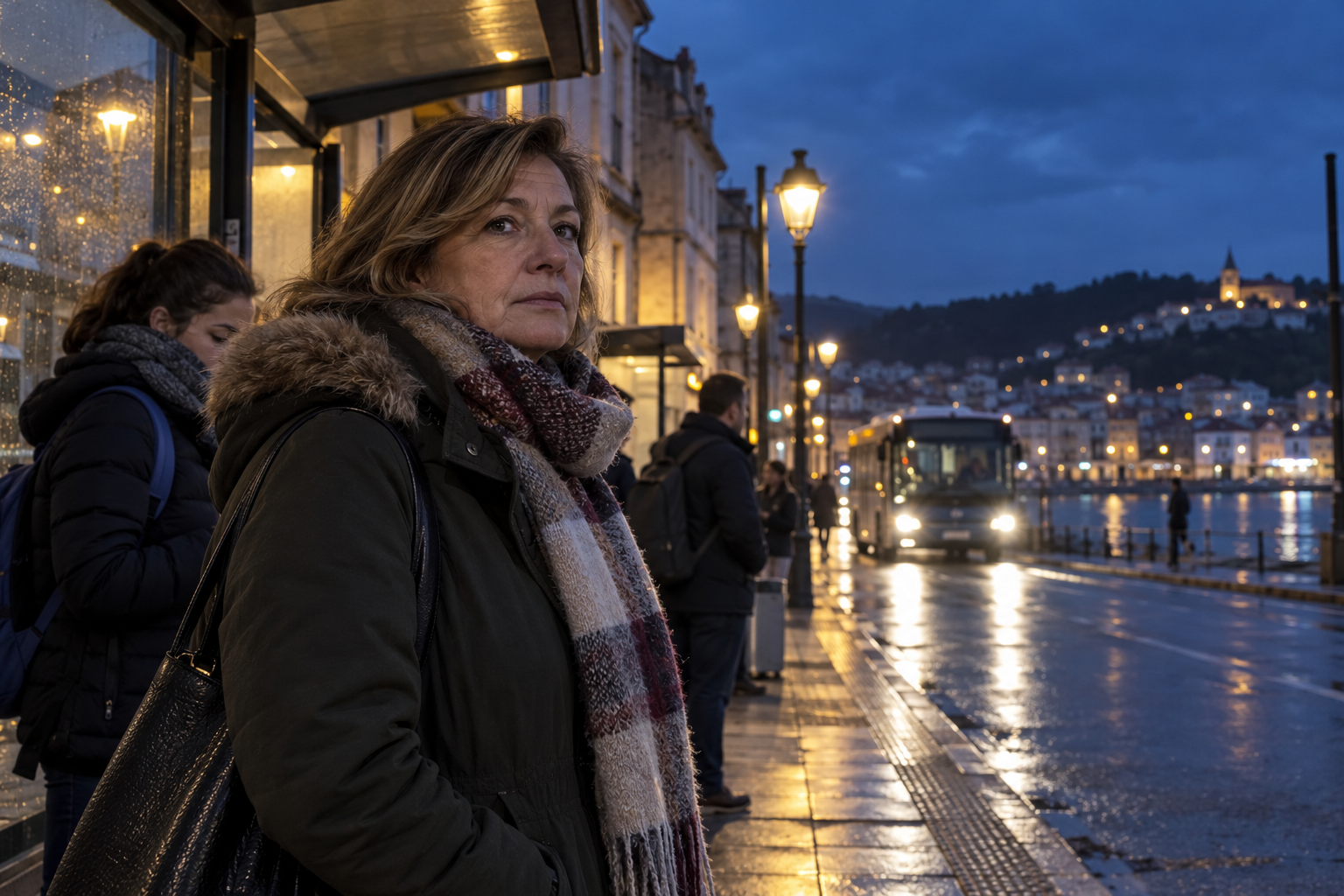
In the far northwest, in Galicia, the winter sun can fail to rise until around nine in the morning. Workers and schoolchildren set out in real darkness, their day beginning under a sky that has not yet lit up.
At the other end of the calendar, the summer sun lingers extravagantly late. The light holds past ten at night across much of the country.
In the far northwest you can still read a book outdoors at half past ten in June. It is magical, and it is entirely artificial, a gift of the misplaced hour.
These are not quirks of weather or latitude. They are the direct, visible result of running the clock an hour ahead of the sun.
The Dictator Who Changed the Clock
Spain did not always live out of step with the sun. For the first decades of the twentieth century, it kept Greenwich Mean Time, in natural harmony with its geography.
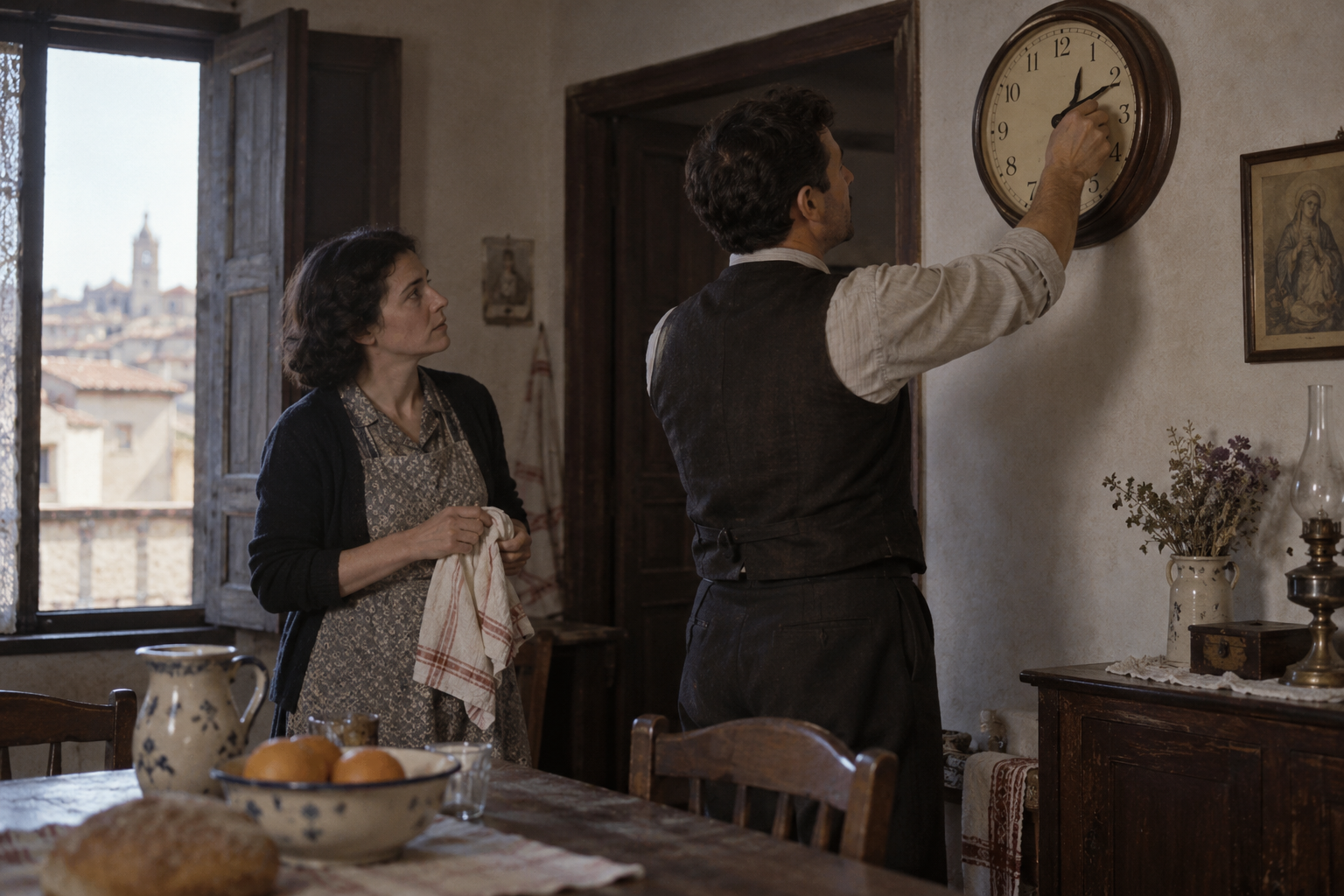
The change came in the middle of the Second World War, and it came for political reasons. In March 1940, the dictator Francisco Franco moved the clocks forward one hour, shifting Spain from GMT to Central European Time, specifically to align with Nazi Germany.
It was a gesture of solidarity with Hitler, whose forces were then sweeping across Europe and occupying France along Spain’s northern border. Franco’s regime wanted to fall into step, quite literally, with the fascist powers it felt close to.
Spain stayed officially neutral in the war. But the clocks took sides.
Franco never joined Hitler’s war. He did, however, move an entire nation’s time to match Berlin’s, and then left it there for good.
Much of Western Europe was also pushed onto German time during those years. The crucial thing about Spain is what happened afterward: when the war ended and the Nazis were defeated, Spain simply never changed back.
The temporary wartime alignment became permanent. The clocks were left an hour ahead, where Franco had set them, and there they remain.
It is the kind of historical accident that hardens into normal life. A wartime decree becomes a mealtime, a bedtime, the shape of a whole country’s day, long after anyone remembers why.
Every Spaniard checking the hour today is reading a clock set by a dictator to please Hitler. It sounds like a myth. It is sober, documented history, hiding in plain sight.
Why Dinner Is at Ten
Here the abstract business of time zones turns into the texture of daily life. When your clock runs an hour ahead of the sun, the sun does everything an hour later by the clock.
It rises later in clock terms, it sets later, and the whole arc of daylight shifts forward against the numbers. A summer evening when the light is still golden reads as nine or ten at night, where in an aligned zone it would read as eight or nine.
Human schedules follow daylight at least as much as clocks. So the rhythm of the whole day slides later.
Spaniards eat lunch at two, which by the sun is really one, the ordinary European lunchtime. They eat dinner at nine or ten, which by the sun is really eight or nine. As the saying goes, by the position of the sun Spaniards eat at the same time as the rest of Europe. Only the clock makes it look late.
There is culture layered on top, of course. The long midday break, the old habits of a society that worked split shifts around the heat, all of it pushes the day late too. The late schedule is not purely a matter of the time zone.
But the wrong time zone is the hidden structural reason the clock and the sun disagree in Spain. The country’s famous late hours are built into its clocks, not only into its character. Pull the hour back to where the sun puts it, and a Spanish ten o’clock dinner becomes an ordinary nine.
Why It Never Changed Back
The obvious question is why. Eighty years after the war, nearly fifty after Franco’s death, why does Spain still keep the dictator’s time?
Part of the answer is sheer inertia. A whole society has been built around the late clock for generations, with work, school, television, and social life all arranged to fit it. Unwinding it would mean rearranging the rhythm of an entire nation.
People adapt to the time they are given. After several generations, the schedule simply feels normal, not like an hour imposed by a long-dead dictator.
Ask most Spaniards why they dine at ten and they will tell you it is just how things are done. Few connect it to a decree from 1940 quietly shaping their evening.
It has not gone unquestioned, though. The matter has been debated seriously and often.
A parliamentary commission raised it. At least one prime minister floated switching back to GMT, promising shorter, saner, better-rested days.
Each time, there were headlines, studies on sleep and productivity, earnest debate. Supporters pointed to a chronically sleep-short country working long, late, and inefficiently, out of sync with its own daylight and with the rest of Europe.
And each time, the proposal stalled and nothing changed. It has become almost a ritual: Spain wonders aloud whether to fix the clock, then shrugs and returns to the familiar late evening.
Will It Ever Change
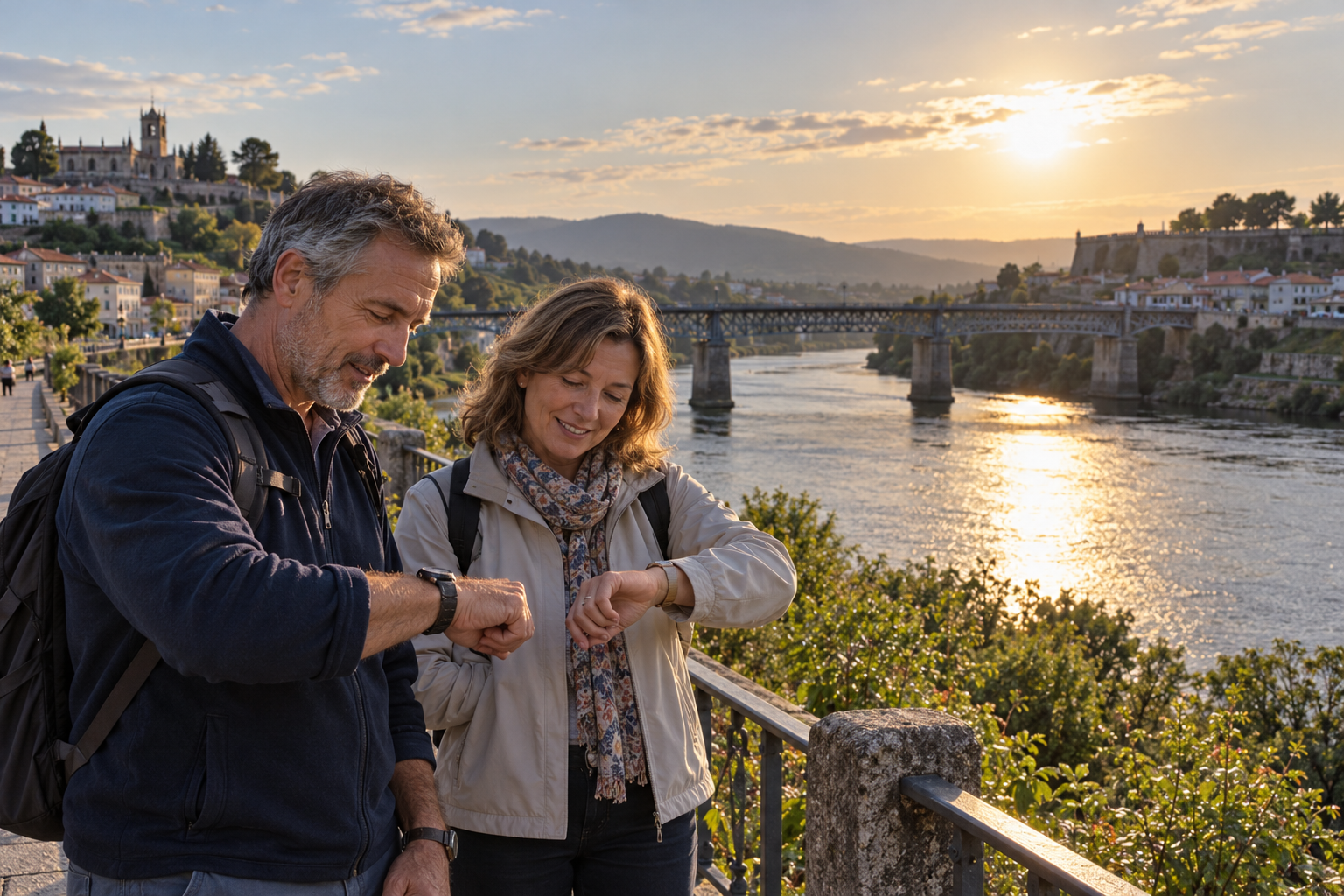
So will it ever change? For now, nobody knows, and the smart money is on the clocks staying where Franco left them.
The debate flares up every few years, reliably. Fresh studies on sleep, think-pieces on the strangeness of living ahead of the sun, and then silence, with not a single clock touched.
For a visitor or a new arrival, the practical upshot is simple. Accept the late Spanish clock and adjust to it, because it is not changing any time soon.
And there is, in the end, something to be said for leaning into it. The displaced hour also gives Spain those long, luminous summer evenings. The plazas full of families dining outdoors deep into the night, the light refusing to go, are one of the loveliest things about the country.
The wrong time zone is a historical accident, and arguably a real burden on the nation’s sleep. The case for fixing it is serious.
But it has also become woven into a way of life with its own beauty, the famous Spanish evening that so many visitors fall for. Knowing it is the strange legacy of a dictator’s wartime gesture does not make the light any less golden. It just adds a fascinating layer of history to every ten o’clock dinner you will ever eat in Spain.

About the Author: Ruben, co-founder of Gamintraveler.com since 2014, is a seasoned traveler from Spain who has explored over 100 countries since 2009. Known for his extensive travel adventures across South America, Europe, the US, Australia, New Zealand, Asia, and Africa, Ruben combines his passion for adventurous yet sustainable living with his love for cycling, highlighted by his remarkable 5-month bicycle journey from Spain to Norway. He currently resides in Spain, where he continues sharing his travel experiences with his partner, Rachel, and their son, Han.