
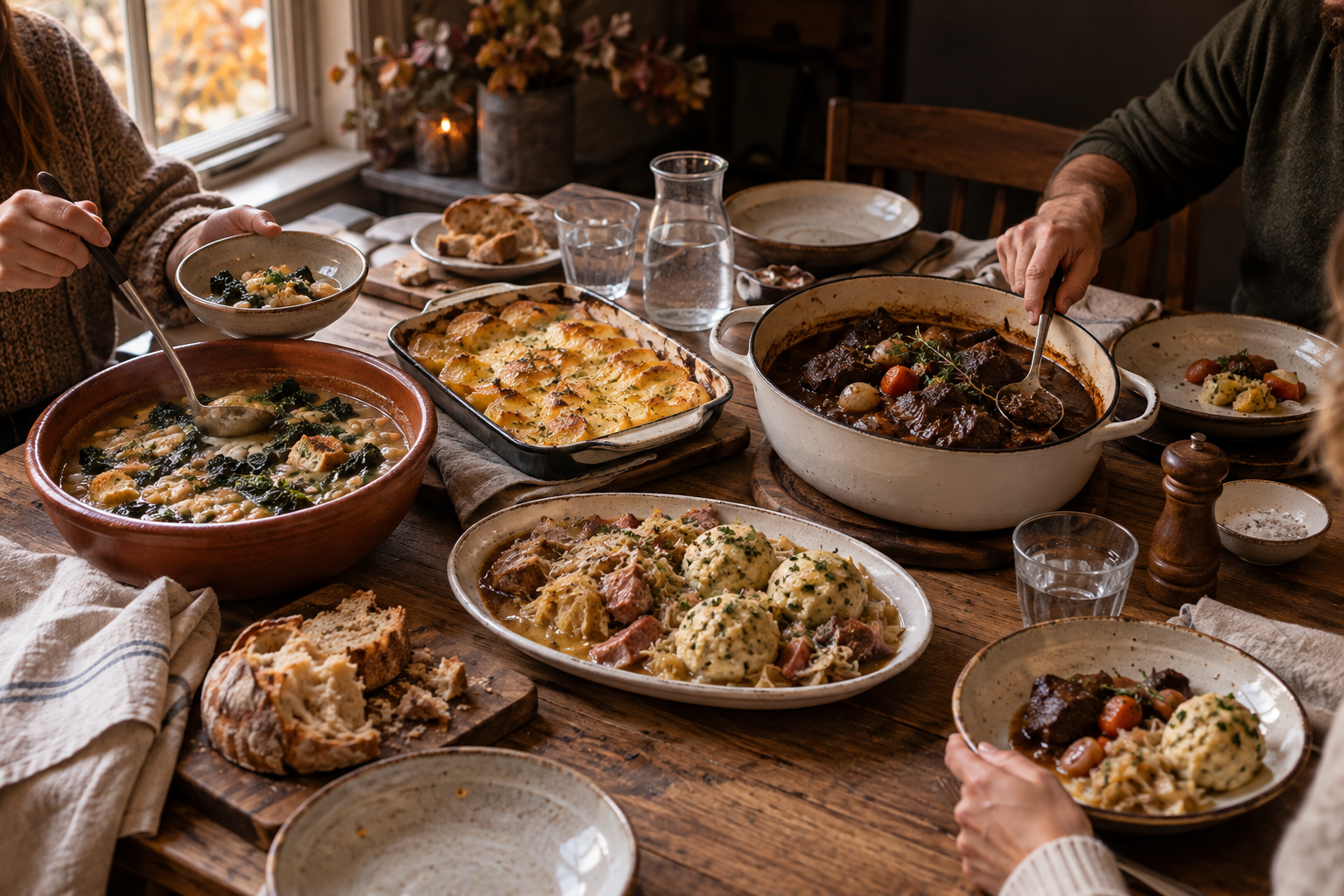
Autumn does not arrive the same way everywhere in Europe, and neither, it turns out, does the food that greets it. As the light shortens and the first cold evenings settle in, kitchens across the continent turn toward warmth, but what warmth means depends entirely on where you are standing. It tastes of olive oil and beans on a Tuscan hillside, of melted cheese in an Alpine valley, of slow-braised beef in a Belgian town, of cabbage and caraway in a Polish kitchen. The same season, the same instinct to warm up and hunker down, expressed in four completely different culinary languages. Rather than rank these against each other, which only starts arguments, it is more rewarding to lay them out as they truly exist, grouped by the landscapes and climates that shaped them. Food, after all, is geography you can eat, and nowhere is that clearer than in how a continent feeds itself against the cold.
So here is the taste of a European autumn, set out across four tables rather than ranked one against another: the Mediterranean, the Alpine, the Atlantic, and the North. Each has its own logic, its own ingredients, its own way of meeting the cold.
What follows is the Mediterranean table, the Alpine table, the Atlantic table, the Northern table, and what all four, for all their differences, quietly share.
The Mediterranean Table
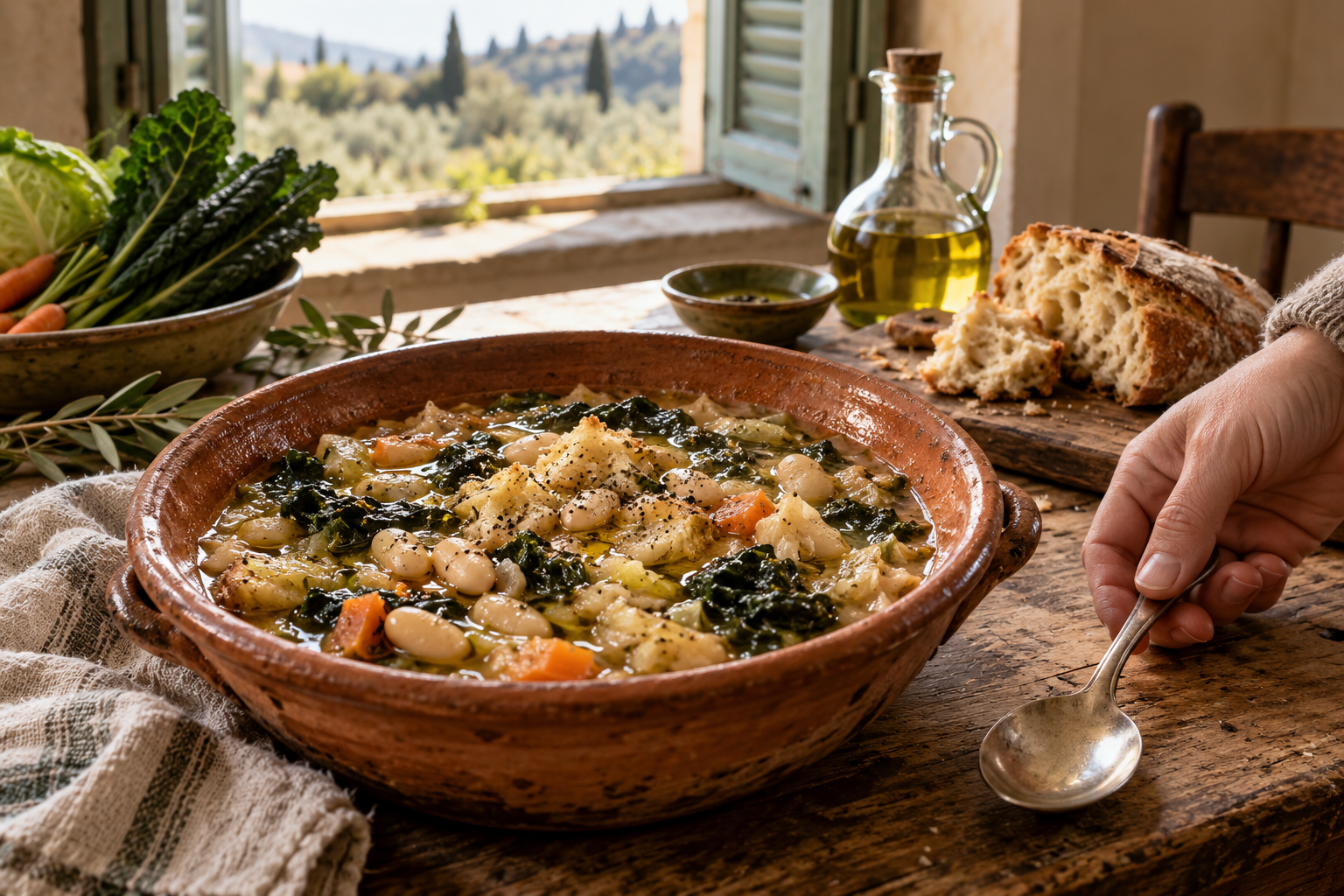
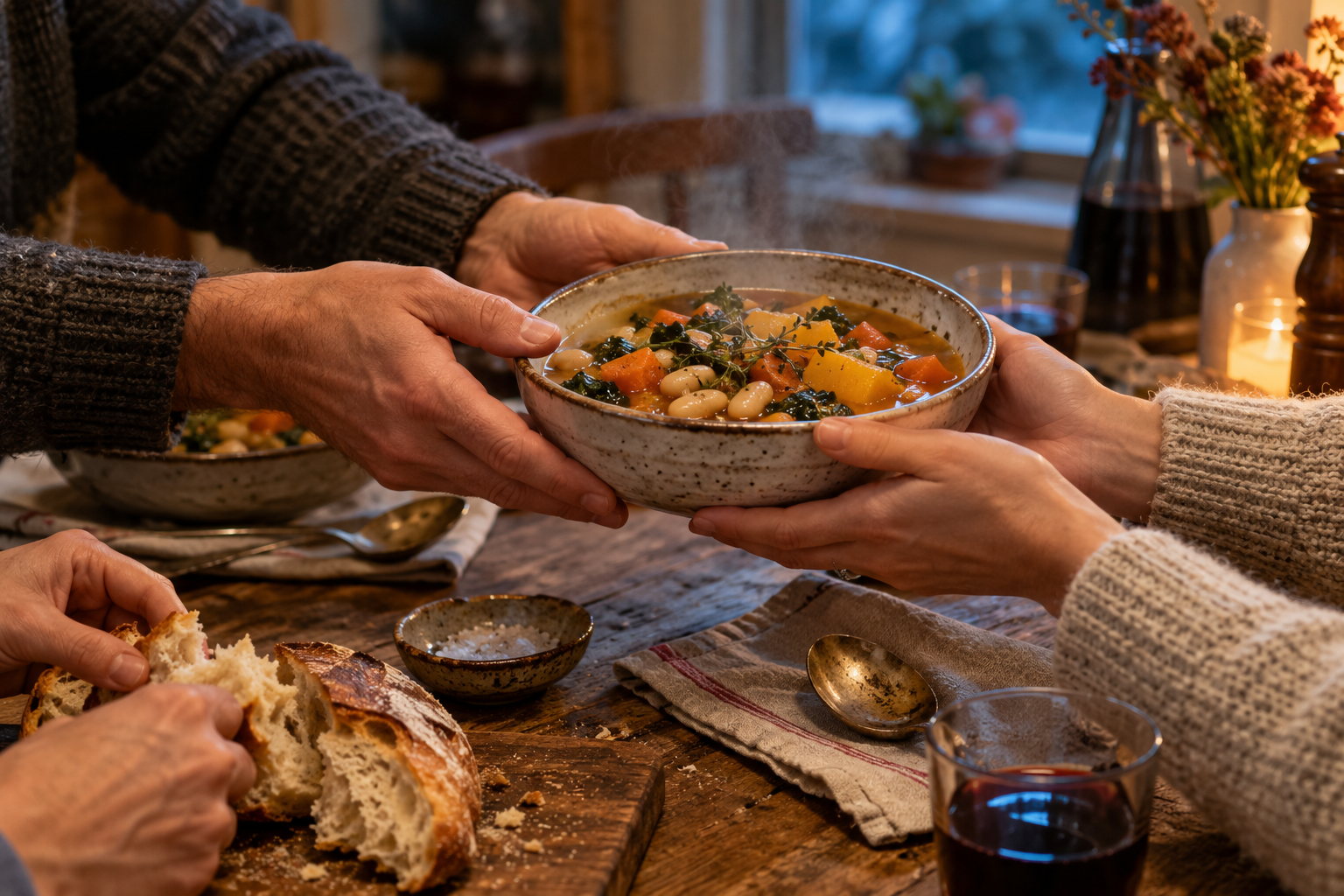
The first table is the warmest in climate and the most surprising to those who think of the Mediterranean only as a summer place of salads, tomatoes, and seafood eaten in the sun. When autumn comes to the European south, the cooking turns hearty in its own sun-washed way, built on beans, bread, olive oil, and the last of the harvest. In Italy, the Tuscan kitchen brings out ribollita, the thick soup of bread, beans, and cabbage that locals say belongs with the first cold weather, a dish literally built from leftovers and all the better for it, alongside creamy risottos and polenta in the north, hearty pasta e ceci in Rome, and, for the sweet tooth, castagnaccio, the dense chestnut-flour cake of the season. Spain answers with its great cold-weather pots, cocido and fabada, deep stews of chickpeas or beans and pork that anchor a Spanish autumn and leave a kitchen fragrant all afternoon, and with humble lentils simmered on an ordinary Tuesday and crema de calabaza, the simple pumpkin soup that appears on tables across the country the moment the evenings cool.
Portugal brings caldo verde, the green soup of kale, potato, and smoky sausage that warms the whole country as the weather turns, and its hearty cozido, a boiled dinner of meats and vegetables. Greece contributes fasolada, the ancient bean soup that many Greeks call the true national dish, put on the table easily once a week as the weather turns, along with rich meat stews like stifado, slow-cooked with onions and spice, and the comforting lemon-and-egg soup avgolemono. And the southern reaches of France offer cassoulet, the slow white-bean and sausage and duck casserole that is pure autumn comfort, a dish of the Languedoc that takes the beans and preserved meats of a Mediterranean larder and turns them into one of the richest pots in Europe. The Mediterranean table, then, is not light at all in fall; it is a table of beans and pulses, of soups thickened with bread, of pork and olive oil and the deep flavors that come from long, slow cooking, proof that the sunny south knows exactly how to eat when the sun goes in. The ingredients are humble, a handful of beans, stale bread, a little sausage, a lot of time, but the results are profound, and they carry the particular warmth of a cuisine that spends most of the year in the heat and knows how to savor the few months it does not.
The Alpine Table
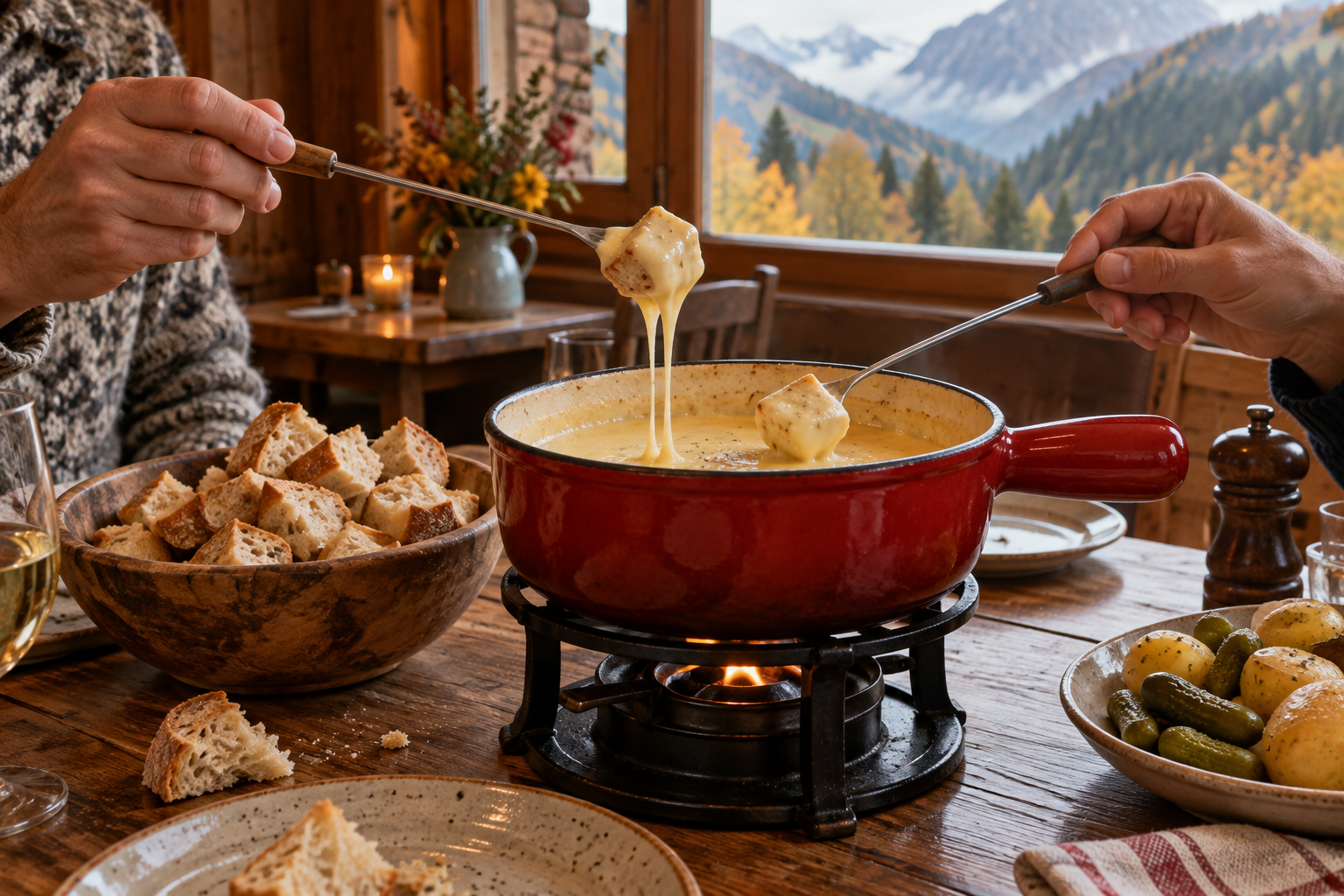
Climb into the mountains and the table changes entirely, because the Alpine kitchen is the kitchen of cold, of high valleys and long winters and short days, and of the simple need for food that is rich, warming, and built to fuel a body against genuine, bone-deep cold. Here, above all, is the realm of cheese and potato and cured meat, of dishes designed to restore you after a day in thin mountain air. Switzerland sets the tone with fondue, the communal pot of melted cheese into which everyone dips bread, and raclette, its scraped-cheese cousin, along with rosti, the crisp potato cake, and alplermagronen, the Alpine macaroni of pasta, potato, cheese, and onion that is mountain comfort in a single dish.
Austria brings its dark Viennese goulash, its own paprika-rich take simmered for a rainy afternoon, and the golden crust of Wiener Schnitzel, and finishes with kaiserschmarrn, the torn, sugar-dusted pancake that is dessert as celebration, best eaten in a warm cafe while it sleets outside. Bavaria and the German Alps add kasespatzle, the cheese-drenched egg noodles that are Germany’s answer to macaroni and cheese, along with roast pork and hearty potato soups.
The French Alps contribute tartiflette, the gratin of potato, bacon, onion, and melting Reblochon that may be the single most indulgent dish on any of these four tables, and their own versions of fondue and raclette. Northern Italy, straddling the mountains, offers its polenta and risotto here too, golden and slow-stirred, the comfort food of the Alpine foothills where Italy meets the cold. The Alpine table is unapologetic: it is rich, it is cheesy, it is built for cold the way few cuisines are, and it does not pretend otherwise. This is the food of people who genuinely need the calories, and it tastes like it, in the best possible way. There is no apology in Alpine cooking, no lightening or prettifying; it is cheese and potato and cured pork turned into something glorious, the honest food of a place where winter is not a metaphor but a long, cold fact of life, and where a rich, molten dinner is less an indulgence than a sensible response to the altitude and the snow.
The Atlantic Table
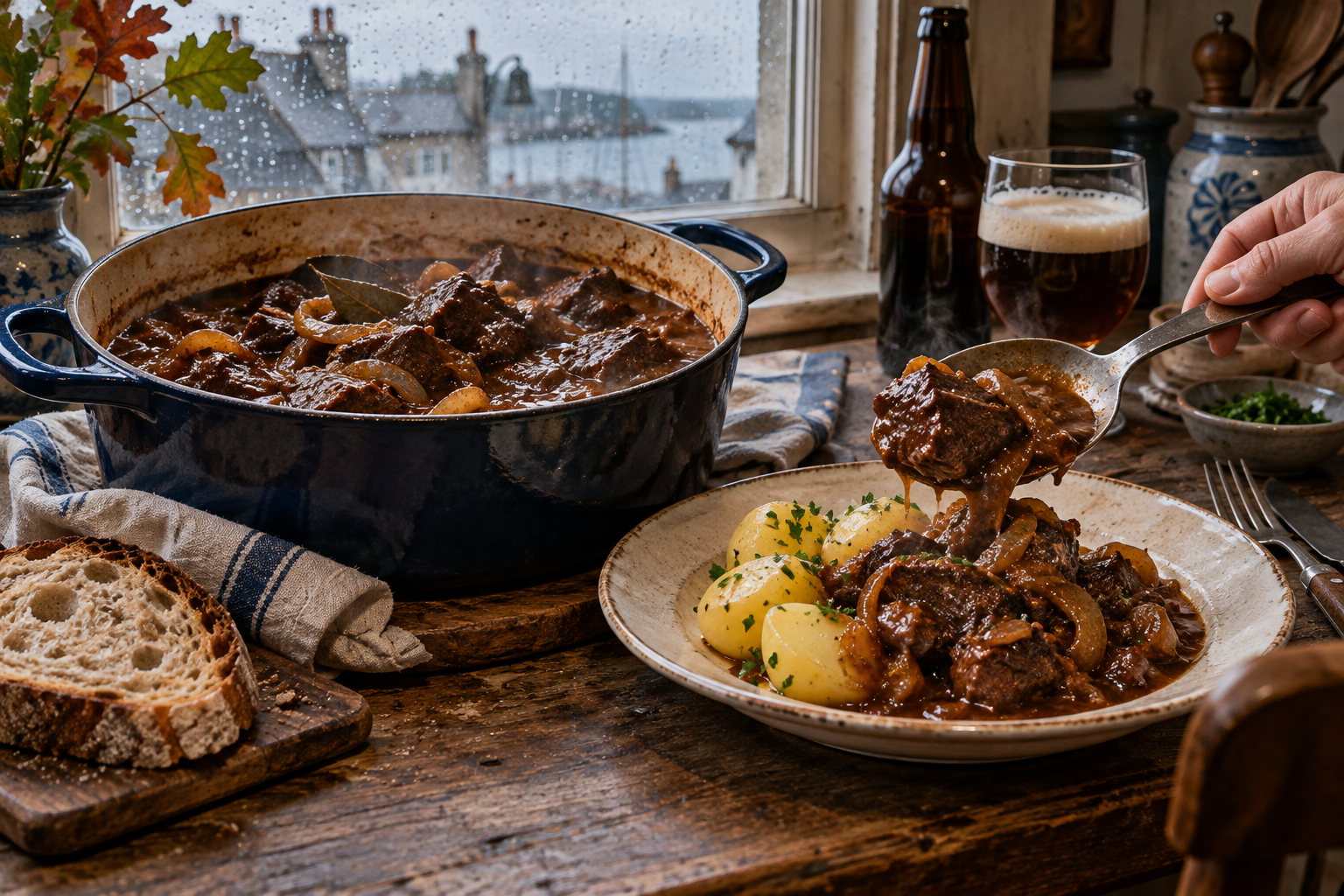
Move west, to the lands facing the grey Atlantic, and the food turns toward the slow-braised and the deeply savory, the cooking of damp, cool, maritime climates where a long braise on the stove is the natural answer to a cold, wet afternoon. France anchors this table with its roster of classics, the dishes that fill French kitchens from the first cold week onward: pot-au-feu, the simmered beef and vegetables that is the very soul of French home cooking, a dish so fundamental it borders on the sacred; boeuf bourguignon, the Burgundian beef braised in red wine; soupe a l’oignon, the onion soup capped with melted cheese; and hachis parmentier, the French cousin of shepherd’s pie. Belgium offers carbonnade flamande, beef braised slowly in dark beer until it turns glossy and deep, sweetened often with a little spiced bread, and waterzooi, its gentle creamy chicken or fish stew, a reminder that Belgium quietly cooks as well as any of its louder neighbors.
Across the water, Ireland brings Irish stew, the humble lamb-and-potato pot that is comfort itself, and colcannon, the mash of potato and cabbage. Britain sets out shepherd’s pie, the Sunday roast, and the great tradition of stews and crumbles that carry it through a long, damp autumn.
The Netherlands contributes stamppot, the mash of potato and vegetables topped with sausage, and snert, the thick pea soup eaten when the canals begin to freeze. The Atlantic table is the table of the braise and the stew pot, of beef and lamb and root vegetables cooked low and slow, of food that fills a cold, wet kitchen with steam and the whole house with the smell of dinner. It is comfort food in its most unpretentious, deeply satisfying form, the cooking of grey skies and warm hearths. The Atlantic kitchen does not dazzle; it comforts, filling the long wet evenings with the smell of something braising, turning the cheapest cuts and the plainest roots into dinners that taste of patience and home. It is the food you want when the rain is sideways and the dark comes at four, and it has been perfected over centuries of exactly that weather.
The Northern Table
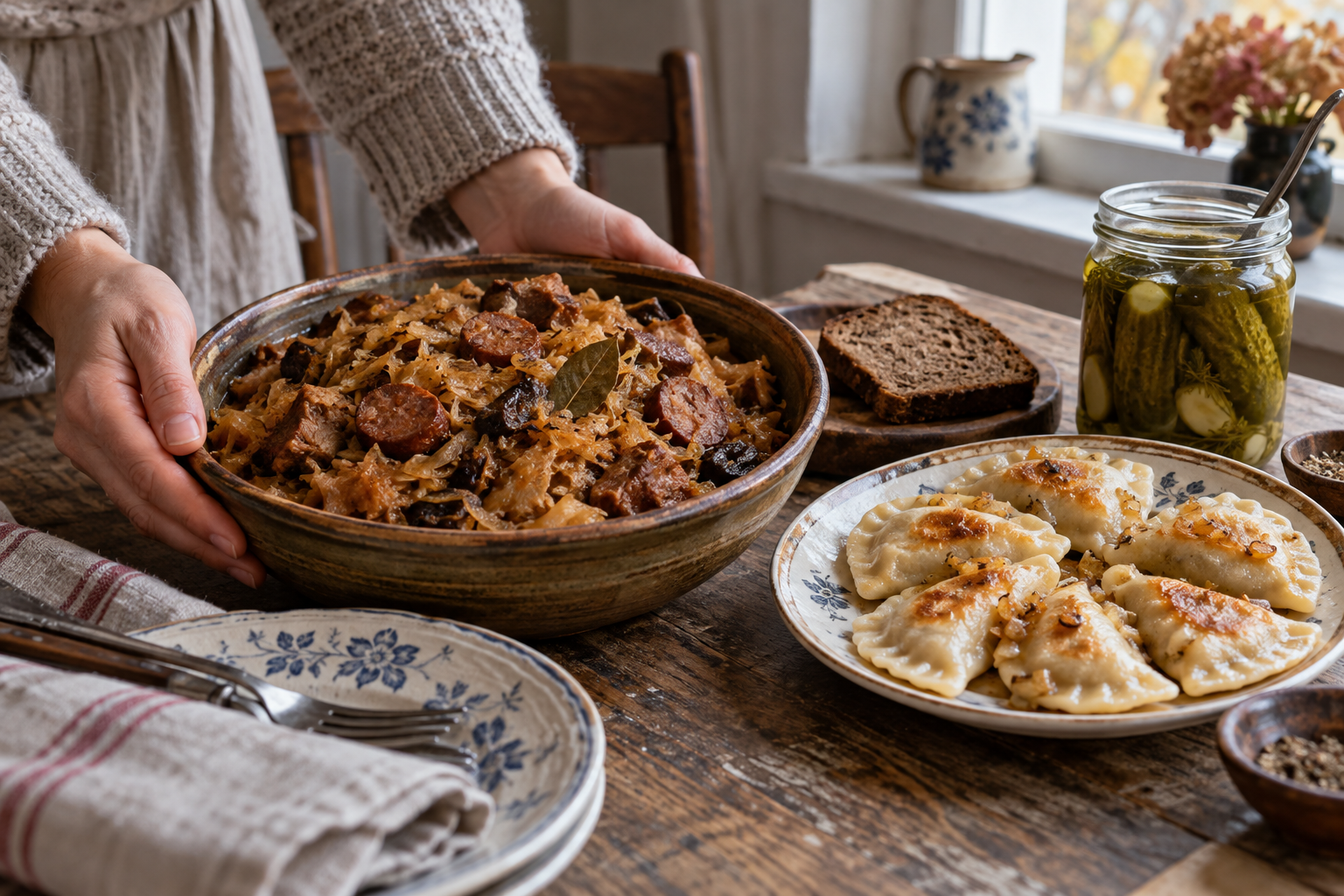
Finally, to the north and east, where winters are longest and the table reflects a landscape of cabbage, root vegetables, pork, and the arts of preservation that long winters demanded. This is hearty, frank, sustaining food, built to last and to warm, with a particular genius for cabbage and for the sweet-and-sour notes that cut through all that richness. Germany leads with sauerbraten, the sweet-sour slow-braised beef that one traveler called autumn in a bowl, served with red cabbage and dumplings, alongside its one-pot eintopf stews and the whole world of sausage and sauerkraut. Poland brings bigos, the great hunter’s stew of meat and cabbage and sauerkraut that deepens over days, along with pierogi, the beloved filled dumplings, and zurek, the sour rye soup.
The Czech kitchen offers svickova, braised beef in a creamy root-vegetable sauce, and its own goulash and bread dumplings.
Hungary, the home of goulash itself, sends that paprika-stained stew out across the whole region, each country certain its version is best. And Scandinavia contributes its own autumn comforts, from Norway’s farikal, the mutton-and-cabbage pot that is the national dish of fall, to the meatballs and preserved fish and dark breads of the far north. The Northern table is the table of the long winter, of food that had to keep and had to sustain, heavy on cabbage and pork and dumplings and the clever sourness that keeps richness from cloying. It is the most frankly cold-climate cooking on the continent, unbothered by prettiness, entirely devoted to keeping a person warm and fed through months of dark.
Where the south has olive oil and the Alps have cheese, the north has cabbage and pork and the deep wisdom of preservation, the pickling and souring and slow-stewing that turned a hard climate’s limited larder into a cuisine of real soul. It is food built for endurance, and there is a quiet dignity in how well it does that job.
Where the Tables Blur
A fair word before the summing-up: these four tables are a map, not a border control, and the lines between them are soft and often crossed. France alone sprawls across three of them, with its Mediterranean cassoulet in the south, its Alpine tartiflette and fondue in the mountains, and its Atlantic braises in the heart of the country, which is part of why France seems to turn up at every table on the continent. Germany straddles the Alpine and the Northern, cheesy and potato-rich in the Bavarian south, cabbage-and-pork frank in the north. Italy belongs to both the Mediterranean and the Alpine, beans and olive oil in Tuscany, polenta and melted cheese in the mountains.
Dishes migrate, too, carried by trade and empire and simple deliciousness, which is why goulash turns up on Austrian and Czech and German tables as readily as Hungarian ones, and why melted-cheese dishes appear wherever the mountains rise. The tables, in other words, are a way of seeing the logic of a continent’s autumn cooking, not a set of rules anyone actually follows. Treat them as four moods of the same season rather than four sealed rooms, and the map does its job, which is to help you taste your way across Europe with some sense of why each place cooks the way it does when the cold comes.
What the Four Tables Share
Lay the four tables side by side, and for all their differences, the same deep logic runs beneath every one of them, which is perhaps the truest thing about a European autumn. Everywhere, as the cold arrives, the cooking turns to slowness, to the long braise and the simmered pot and the baked gratin, because time is the ingredient that cold weather asks for, the patience that turns tough cuts and humble beans into something tender and deep. Summer cooks fast and bright; autumn cooks slow and low, and the whole continent seems to exhale into that rhythm at once. Everywhere, the food turns to warmth and richness, to the dishes that heat you from within and leave you fortified against the dark. And everywhere, autumn food is the food of home and family, of the pot on the stove and the table shared, of comfort in its most literal and ancient sense, the food you make for the people you love when the nights draw in.
The regional differences are real and glorious, the beans of the south and the cheese of the mountains and the braises of the Atlantic and the cabbage of the north, each shaped by its own land and climate and history. But the impulse underneath is one and the same across the whole continent: when the light goes and the cold comes, Europe reaches for the slow, the warm, the rich, and the shared, and sets a pot on the stove. That is what fall tastes like across Europe, in four tables and a hundred dishes, all of them saying the same thing in different accents, which is simply, come in from the cold, sit down, and eat something warm. Whichever table you find yourself at this autumn, that is the sentence being spoken, and it needs no translation. It is the continent’s oldest and kindest instinct, and it tastes, wherever you are, like being taken care of.

About the Author: Ruben, co-founder of Gamintraveler.com since 2014, is a seasoned traveler from Spain who has explored over 100 countries since 2009. Known for his extensive travel adventures across South America, Europe, the US, Australia, New Zealand, Asia, and Africa, Ruben combines his passion for adventurous yet sustainable living with his love for cycling, highlighted by his remarkable 5-month bicycle journey from Spain to Norway. He currently resides in Spain, where he continues sharing his travel experiences with his partner, Rachel, and their son, Han.