
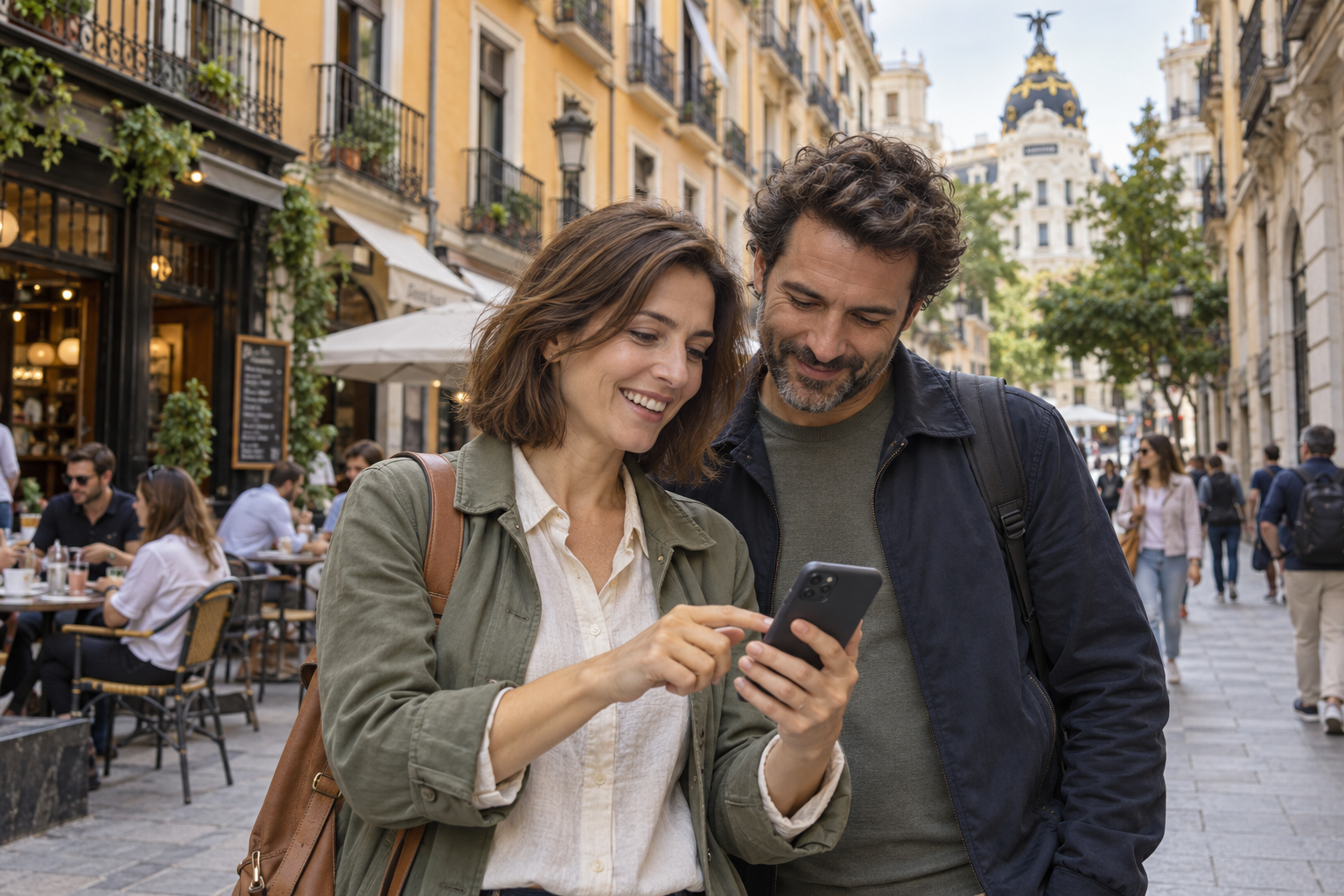
We live in Madrid, and we travel a lot, and for years the least glamorous part of any trip was the same small knot in the stomach the night before we left. Will we have data when we land. Will the maps load before we are standing on a strange platform at night, with a rolling bag and a tired child and no idea which of four exits leads to the hotel. For a family that is half Filipino and half Spanish, with people we love on two different continents, staying connected is not a luxury. It is how we check in on a mother back home and how we send the grandparents a photo of the kids before the moment passes.
Solution: A reliable eSIM.
If you are planning your first real European trip, or your fifth, the fear we hear about most from readers is this exact one. Not the flights. Not the money. The quiet worry that you will step off the plane and be cut off, fumbling with a phone that will not cooperate, in a place where you cannot read the signs and cannot ask anyone for help. It is a small fear, and a very common one, and it has nothing to do with how brave or seasoned a traveler you are. We want to tell you how that stopped being a worry for us, because the fix turned out to be smaller and cheaper than we ever expected, and because it quietly changed something we did not anticipate at all, something that had nothing to do with maps or money.
See Maya Mobile’s Europe plans here and get started on with a headache-free travel.
The Way We Used to Do It

For a long time we did what most people do. We leaned on our regular Spanish plan and hoped the roaming would hold, and inside the EU it mostly did, until it did not. On a longer trip, with four devices all pulling maps and messages and the odd video call, that home-plan roaming data runs out faster than you think, and then you are rationing. No photos to the family group chat. No translation app at the pharmacy counter. Just you, squinting at a paper map, feeling about ten years older than you are.
The whole promise of a holiday, the lightness of it, drains away the moment you are standing on a corner trying to work out which way is which with a phone that has given up on you.
The other option was the airport kiosk SIM, which meant standing in a line after a long flight, handing over a passport, popping out your own tiny SIM and praying you did not lose it down the side of an airport seat, and ending up with a local number that works in one country and dies the moment you cross a border. For a trip that touches more than one country, which most European trips do, that is a genuinely bad deal, and it eats the first hour of a trip you waited all year for.
You land exhausted, you queue, you fiddle, you worry about the SIM you just pocketed, and the holiday has not even started. So the data question sat there before every single trip like a chore we kept putting off, a small grey cloud over the excitement of going anywhere at all. We told ourselves it was just part of travel, the price of going anywhere. It was not. We simply had not found the better way yet, and once we did, we could not believe we had put up with the old one for so long.
Get your Maya unlimited plan here.
What Changed When We Tried Maya
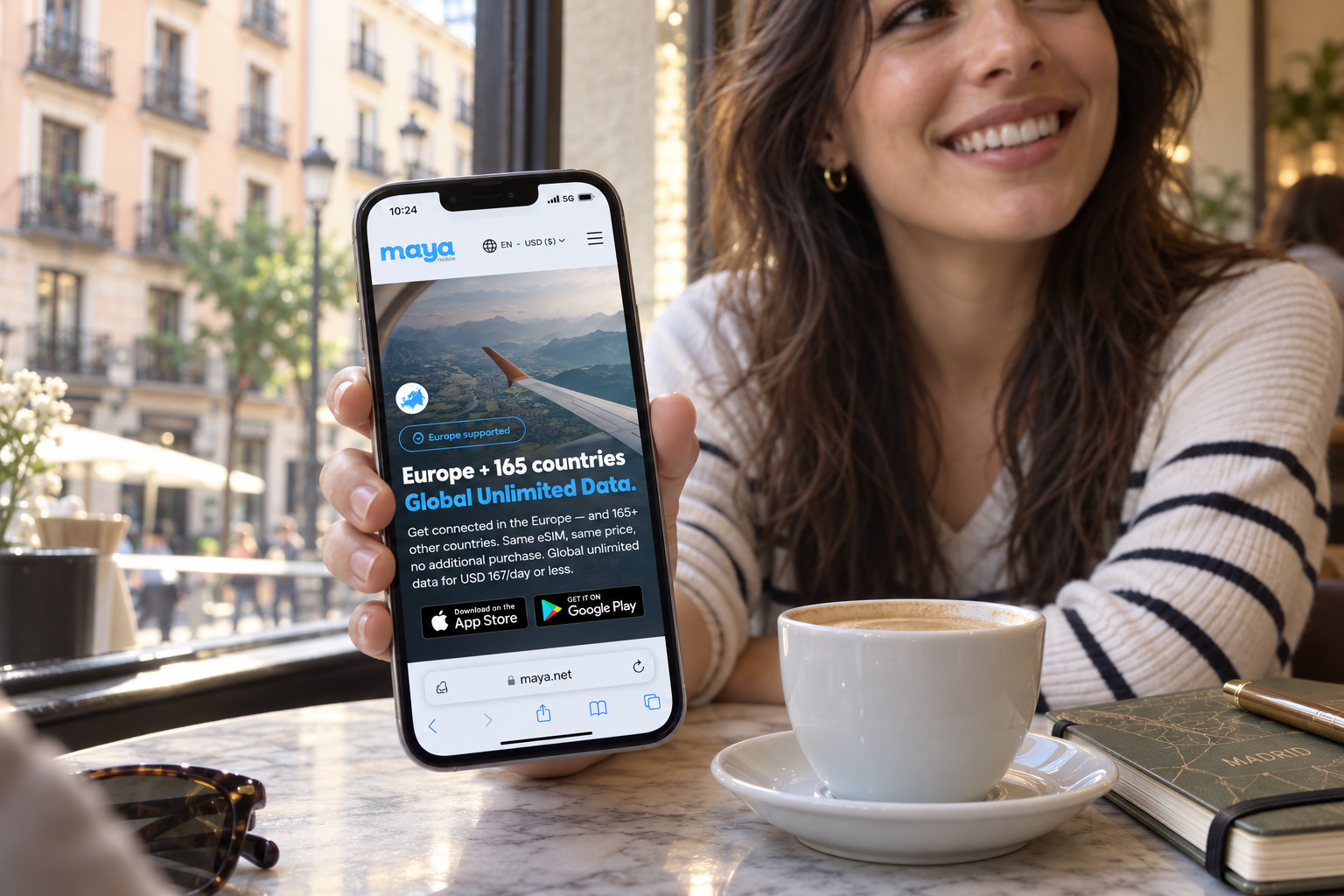
In September we tried something different for our week in Italy. Instead of a physical SIM, we bought a Maya eSIM before we even left the apartment, sitting at the kitchen table with a coffee the night before we flew.
An eSIM is just a SIM card that lives inside your phone as software, so there is nothing to insert and nothing to lose. You buy the plan online, you get a QR code, you scan it with your phone’s camera, and the data is ready to switch on the second you land. No kiosk. No line. No passport.
The whole thing took a few quiet minutes at home, which is exactly where you want to be doing it, rather than in an airport with a dying battery and a queue. We had it installed and waiting, switched off, before we had even finished packing, which meant the setup was done and forgotten long before we needed it.
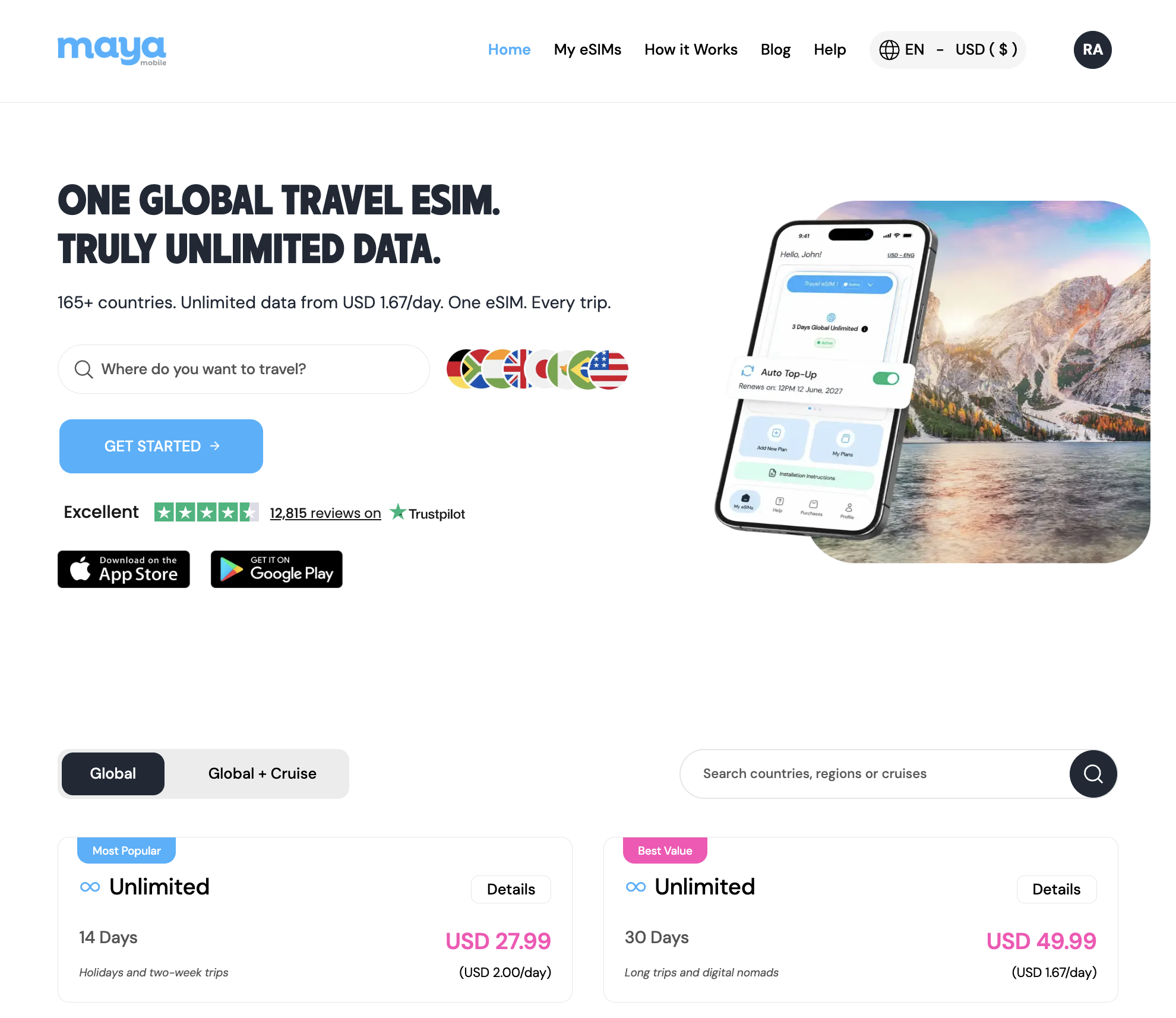
We bought Maya’s unlimited Europe plan, which covers around 35 European countries on one plan at one flat price.
That last part is the quiet magic of it. One eSIM, one price, and it keeps working whether you are in Spain on Monday and somewhere else entirely by the weekend. No new SIM at the border. No new anything. You just keep moving, and the data moves with you, which for a family that likes to string a couple of countries together on one trip turned out to matter more than we expected.
When we landed, the data came on before we had even finished walking to baggage claim. The maps loaded. We found the right exit on the first try, bags and children and all. And that small knot in the stomach was simply not there. We stood in a foreign airport, fully connected, and realized we had spent years treating a solved problem as an unsolvable one. All that low-grade dread, trip after trip, for something that turned out to cost a few dollars and a few minutes at the kitchen table the night before.
Grab a Maya Europe plan here and get fast internet wherever you are, uncapped.
The Moment It Stopped Being About Convenience
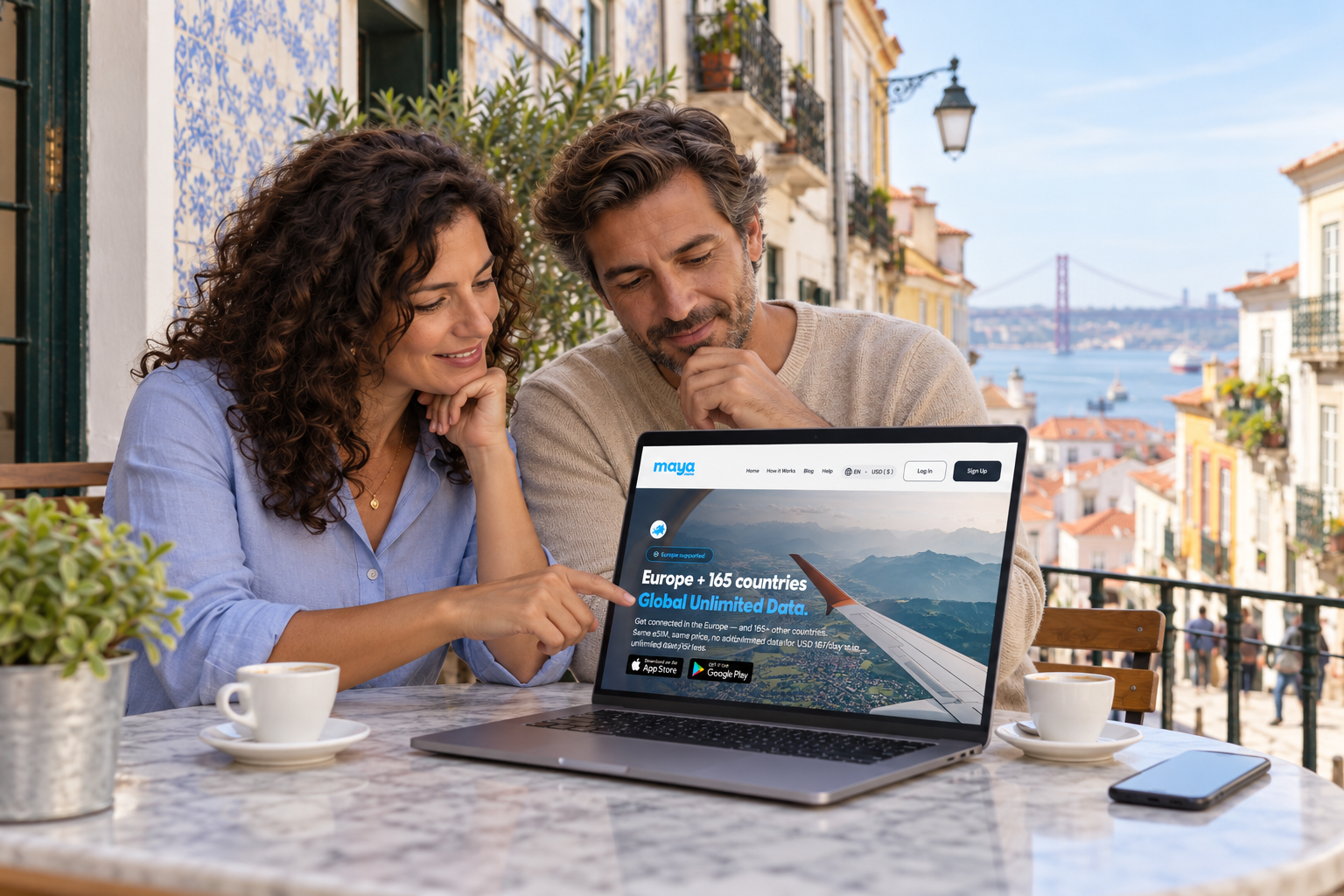
Here is the thing nobody tells you about staying connected abroad. It is not really about the maps, or the restaurant reviews, or even the translation apps, useful as all of those are. It is about something quieter and much larger, and we did not fully understand it until one particular, completely ordinary moment on that first trip in Italy, the kind of moment you do not see coming and never forget.
It was an ordinary afternoon at a cafe table, the kids tired and happy and sticky with pastry, when we made an unplanned video call home to my mother in the Philippines, half a world and many time zones away. There she was on the little screen, in her kitchen where it was already dark and late, and there were the grandchildren waving pastry-covered hands at her from a sunlit square in Europe, all of them talking over each other across eight thousand miles. It lasted ten minutes. Nobody said anything important. She saw the kids, the kids saw her, and for those ten minutes the enormous distance between us was simply not there. We hung up and sat quietly for a second, the kids already onto the next thing, and that was when it quietly stopped being about convenience for us, and started being about something we would gladly pay for on every trip we ever take.
Get your Maya unlimited plan here.
That is the part worth paying for. Not the maps. Not the convenience.
The connection. The fact that distance stopped meaning disconnection, and that we could be genuinely present with the people we love at home even while we were a continent away from them. A working data plan sounds like the most unromantic thing in the world, and then one afternoon it hands you a moment with your mother you would otherwise have lost, and you understand what it was really for all along. That is the trade we had been missing for years, paying in little lost moments to save ourselves a few dollars and a few minutes of setup.
The Practical Bits, Woven In
By the second trip, a longer loop that took us through France and the Netherlands, we did not even think about it. We bought the same Maya unlimited Europe plan again, the same way, at the same kitchen table, because it had quietly earned the repeat, and buying something a second time with your own money, freely, before anyone offered us a thing, is the most honest review a product can get. We are telling you we kept choosing it when no one was paying us to, which is the only recommendation we really trust ourselves.
A few things we noticed across both trips, the small practical wins that add up. The hotspot worked, which meant one plan could feed the tablet and a second phone, so the whole family was online without everyone buying their own separate data, which is a real saving when you are a household of several devices.
We never once had to touch our home number, so our regular Spanish line stayed free and reachable for the one call you always get from the school or the bank at the worst possible moment. And because the plan covered the whole region at one price, crossing a border was a complete non-event; the data just kept going, with no scramble for a new SIM and no sudden silence on the far side of a frontier. None of these are dramatic. Together they are the difference between a trip where your phone is a quiet, reliable helper and one where it is a running source of low-grade stress. On a holiday, which is supposed to be the opposite of stress, that difference is worth a great deal more than the small price of the plan.
Get your Maya unlimited plan here.
The Honest Part
We are not going to pretend it is magic, because you have read enough glowing reviews to distrust the ones with no flaws. Here is the honest wrinkle. Maya’s plans are unlimited, but unlimited comes with the asterisk the entire travel-eSIM industry shares: there is a generous amount of high-speed data each day, and once you pass it, the speed slows for the rest of that day before resetting the next morning. In our personal experience on a long train ride where we were streaming to keep our kid happy, we did, once, without really noticing the speed slowing down. This is with 2 full time online computer work and several hours of games and series.
For everything a trip actually asks of your phone, finding your way, staying in touch, translating a menu, sending the photos, calling the people who want to see your face, it did the job twice and we did not think twice. The limit is real and the limit is also, for the way most families travel, almost entirely theoretical. An honest small limit you can plan around beats a glossy promise that falls apart in the fine print, every single time, and we would far rather tell you about the one real wrinkle than pretend there is none and lose your trust the moment you hit it yourself.
Get your Maya unlimited plan here.
If the Language Barrier Is Your Real Fear
A lot of readers tell us the deepest worry about a European trip is not the data at all. It is the feeling of being helpless in a country where you do not speak the language, of standing mute and anxious at a counter, of a whole trip shadowed by the dread of not being understood. We know that feeling well, and here is the quiet truth we have learned: data is what dissolves it. With a live connection in your pocket, the menu translates, the directions appear, the pharmacy conversation becomes possible, the ticket machine stops being a wall, the train announcement you did not catch becomes a quick search, and the museum you were nervous about becomes a morning you will remember for the right reasons rather than a source of anxiety you talked yourself into enduring.
The confidence you are hoping to feel on this trip, the ease, the sense that you can handle whatever the day throws at you in a place where you cannot read the signs, does not come from being braver or more experienced. It starts, far more than anyone admits, with something as unglamorous as a working data plan in your pocket. Get that one part right and a surprising amount of the fear quietly goes with it, and what is left is the trip you actually came for. We stopped dreading the data question a couple of trips ago, and with it, to our surprise, we stopped dreading a good deal of the rest of travel too. You can too, and it costs less than one nice dinner out.
Set up your Maya eSIM for Europe in this link and be ready for your travel. Scan the code before you fly, switch it on when you land, and spend your first morning abroad enjoying the place instead of fighting your phone.

About the Author: Ruben, co-founder of Gamintraveler.com since 2014, is a seasoned traveler from Spain who has explored over 100 countries since 2009. Known for his extensive travel adventures across South America, Europe, the US, Australia, New Zealand, Asia, and Africa, Ruben combines his passion for adventurous yet sustainable living with his love for cycling, highlighted by his remarkable 5-month bicycle journey from Spain to Norway. He currently resides in Spain, where he continues sharing his travel experiences with his partner, Rachel, and their son, Han.