
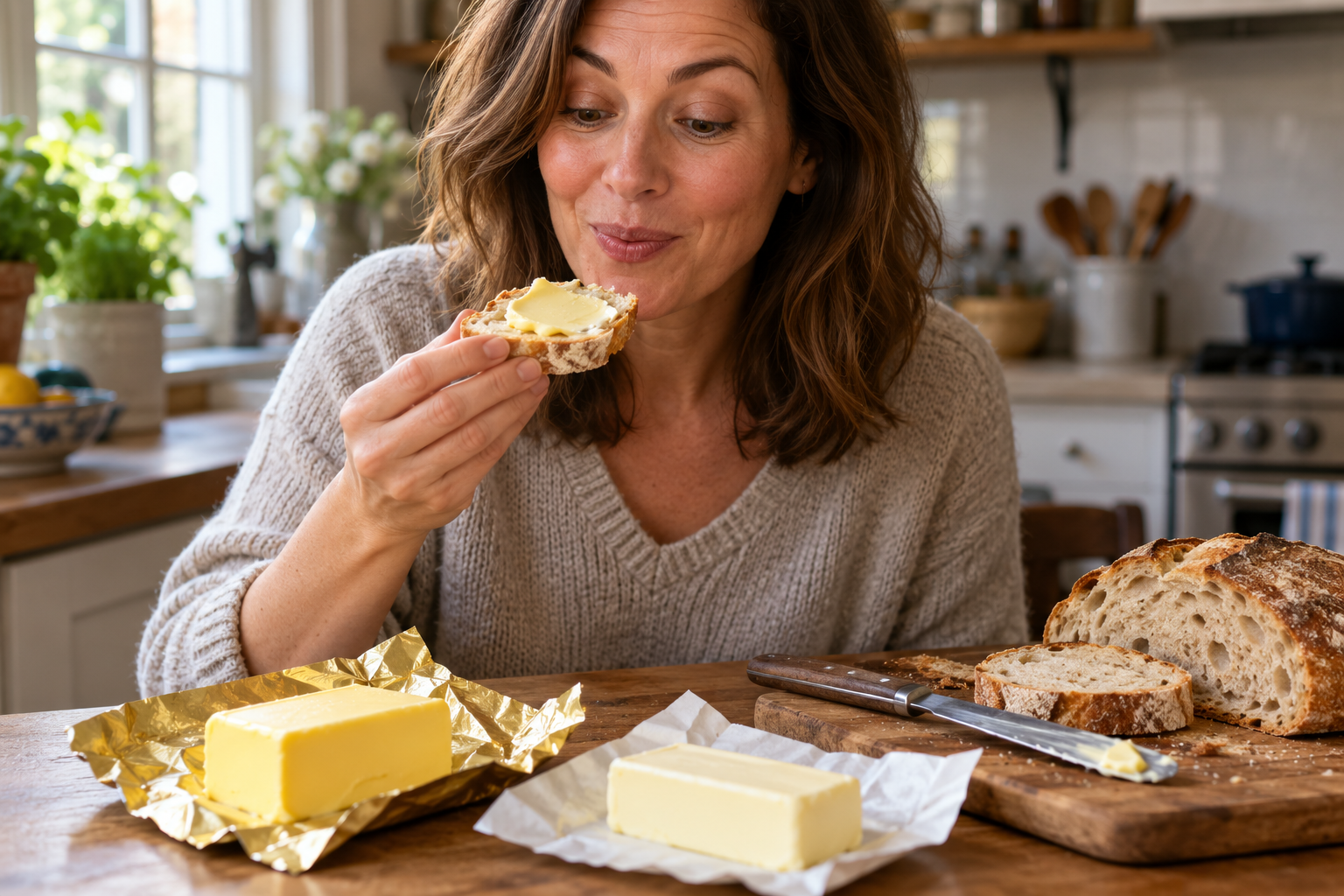
There is a particular kind of American who speaks about Kerrygold the way others speak about a good wine, or a single-origin coffee, with a reverence that can seem faintly excessive for a block of dairy. That gold foil, that deep yellow block, that Irish butter with the cult following, is held up as living proof that Europe simply does butter better than America, and the price, noticeably higher than the ordinary supermarket brick, is paid gladly by its devotees. I had always used whatever butter was cheapest and never thought about it, but the claims wore me down, so I decided to settle the question the only honest way I could: I switched entirely to European butter for thirty days, cooking with it, baking with it, and above all eating it plain, to find out whether the difference is real or just marketing. I went in genuinely undecided, half expecting to conclude that it was all packaging and snobbery, and prepared to say so. So here is what actually makes European butter different, what I noticed over the month, and my honest answer to the Kerrygold question. It is a small experiment, but butter is one of those everyday things that, once you pay real attention to it, quietly divides into good and ordinary.
What follows is what makes European butter different, the first thing I noticed, where the difference actually mattered, the honest verdict on Kerrygold, and what I kept doing after the thirty days were up.
What Makes European Butter Different
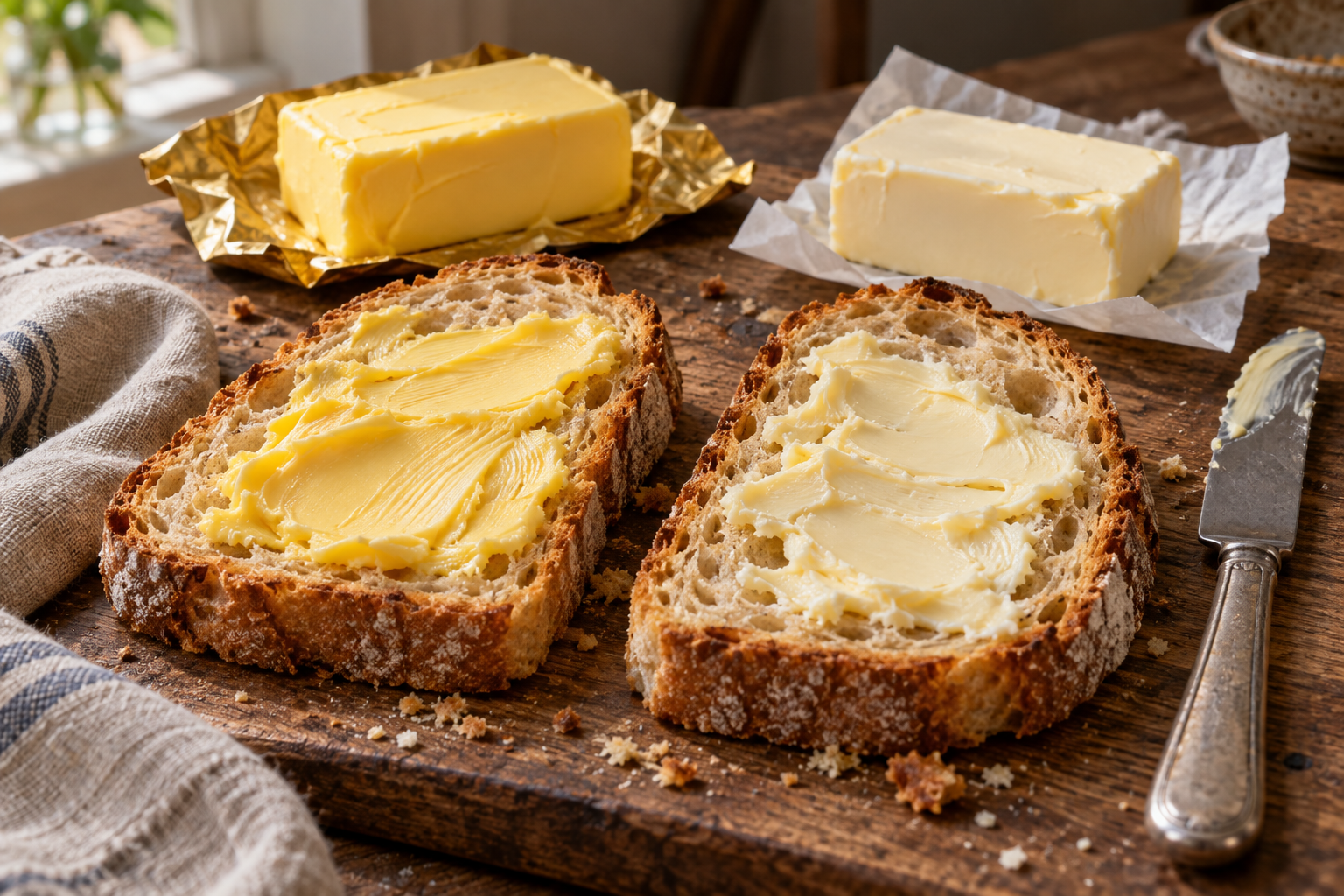
Before the experiment, it helped to understand what I was actually comparing, because the difference between European and American butter is not marketing but a matter of real, measurable distinctions. The headline one is fat. American butter must contain at least eighty percent butterfat, the European standard at least eighty-two percent, and many European butters run higher still, into the mid-eighties. That may sound like a trivial gap, but butterfat is where the flavor and the richness live, and less butterfat means more water, so the couple of percentage points translate into a noticeably richer taste, a more tender result in baking, and better browning in the pan.
There are two other differences that matter as much as the fat. The first is culturing: much European butter is made from cultured cream, meaning the cream is fermented with live bacterial cultures before it is churned, the same basic process that makes yogurt or creme fraiche, which gives the butter a tangy, complex, slightly sour depth that plain sweet-cream American butter lacks. The second is what the cows eat: European butter, Irish butter like Kerrygold above all, often comes from grass-fed cows, and a grass diet is rich in beta-carotene, which turns the butterfat a deep, sunny yellow and lends a distinctive grassy, almost savory richness. So “European butter” really bundles three things together, more fat, often a cultured tang, and often a grass-fed yellowness and depth, and any given block may have some or all of them. Kerrygold, the famous one, is high-fat and grass-fed, its character coming more from the grass than from culturing, which is why it tastes the particular way it does, and why it looks so much yellower than the pale block beside it in the dairy case.

The Water You Are Paying For
It is worth dwelling for a moment on that butterfat gap, because once I understood it, a lot of the difference made sense, and it reframed the whole comparison in a way I found oddly clarifying. Butter is essentially fat, water, and milk solids, and since the fat is the good part, the flavor and the richness, the percentage that is not fat is mostly water. American butter at eighty percent butterfat is therefore carrying around eighteen percent water, while European butter at eighty-two or higher carries less. Put starkly, when you buy the cheaper butter, a slightly larger share of what you are paying for is water.
That extra water does more than dilute the flavor; it changes how the butter behaves, especially in the oven. When butter heats, its water turns to steam, and in baking that steam is not always your friend: more water can mean a soggier, less tender result, while the higher-fat European butter, with less water to boil off, browns better, crisps better, and produces the flakier pastry and more tender crumb that bakers prize. This is why serious bakers seek out the highest-fat butter they can find, and why the two-percent difference that sounds so trivial on paper shows up as a real, visible difference in a finished pie crust or a batch of shortbread. So the fat content is not a marketing abstraction but the single number that drives most of what makes good butter good, and learning to look for it, rather than for the country of origin or the pretty foil, is the most useful thing the whole experiment taught me before I had even tasted anything.
The First Thing I Noticed

The experiment started, sensibly enough, with the simplest test there is: butter on bread, eaten plain, where there is nowhere for a butter to hide. And here the difference was immediate and, honestly, a little startling. Spread on a slice of good bread, the European butter was richer, creamier, and more full-flavored than the everyday American butter I was used to, in a way I noticed instantly rather than having to search for. The grass-fed block was visibly, deeply yellow next to the pale American stick, and it carried that faint grassy, almost nutty note; the cultured European butter I also tried had a gentle tang, a complexity, that made ordinary butter taste flat and slightly bland by comparison. It was the kind of side-by-side difference you cannot argue with once you have tasted it, because it is right there on your tongue.
This was the moment the whole thing stopped feeling like a marketing claim and started feeling like a real, tasteable fact. It was not a subtle, squint-and-you-might-detect-it difference; on plain bread, side by side, it was obvious, and once I had noticed it I could not unnotice it. Ordinary butter, which I had always found perfectly pleasant, suddenly tasted like the background it had always secretly been, while the European butter tasted like something you might actually pay attention to.
If the experiment had ended after the first morning, I would already have understood why the devotees are devotees. Butter eaten plain, it turned out, is exactly the situation where the extra fat and the culturing and the grass all show up most clearly, and it is a genuinely different, better experience. There is nothing else on the plate to distract from it, so every one of the differences the label promised was right there on the bread. The question that remained was whether that difference held up everywhere else, or only on bread.
Where the Difference Actually Mattered

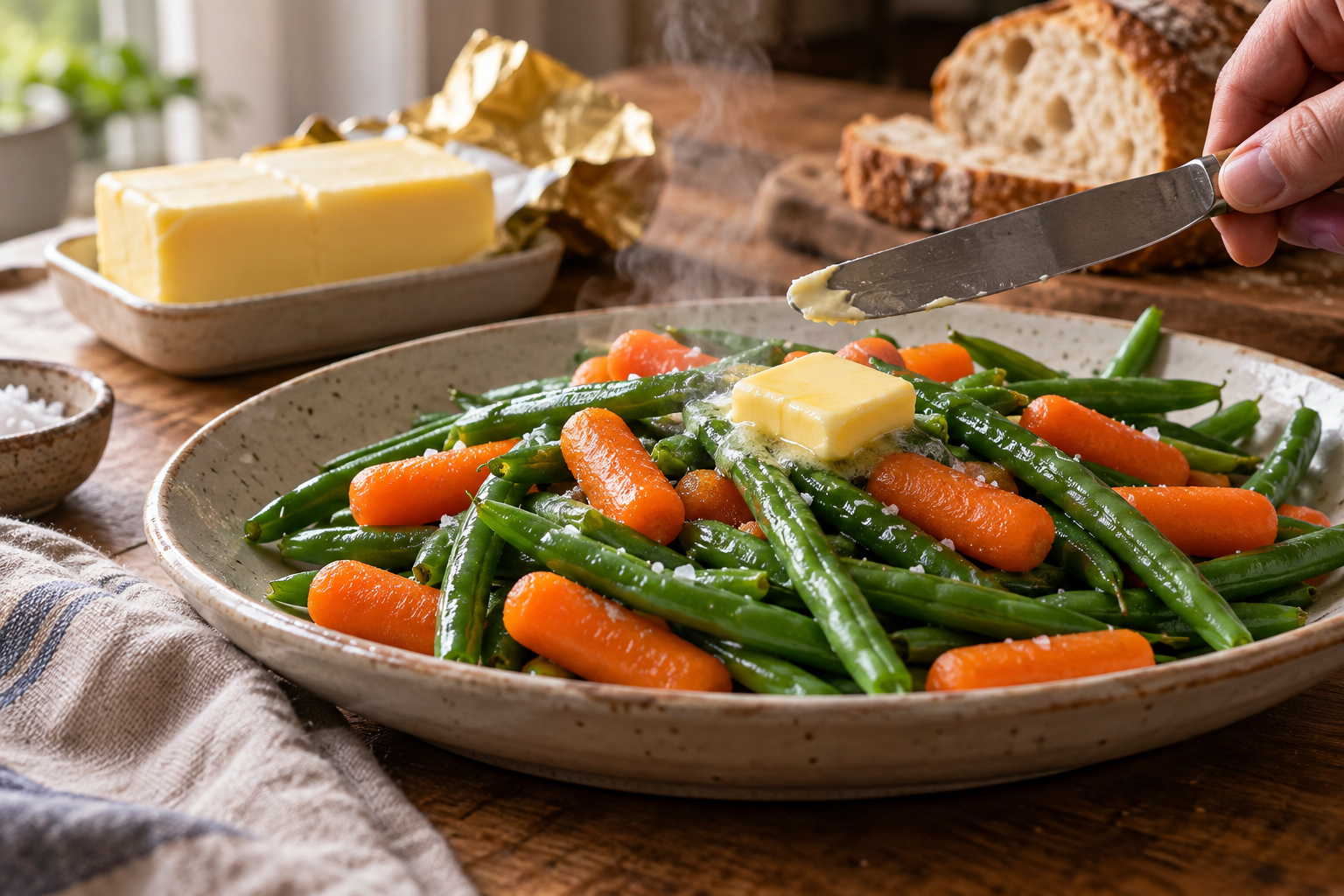
Over the rest of the month, testing the European butter across everything I normally use butter for, the honest finding was that the difference was dramatic in some uses and nearly invisible in others, and knowing which is which turned out to be the whole practical point. Where butter is the star, the difference was real and worth it every time. On bread and toast, as already discovered, it was transformative. Melted over vegetables or a steak, or stirred into a sauce at the end, its richness came through. And in baking where butter is front and center, shortbread, good cookies, pastry, a simple pound cake, the higher fat produced a richer flavor and a more tender, flakier texture that I could genuinely taste in the finished result. Shortbread, which is essentially butter with just enough flour and sugar to hold it together, was the clearest case of all, tasting unmistakably better made with the good stuff.
Where butter is merely a medium, the difference all but vanished, and this is the part the enthusiasts tend to skip. Used to grease a pan, to fry an egg destined for a busy plate, to sautee onions that would then disappear into a stew, the expensive European butter performed no better than the cheap stuff, because whatever subtlety it carried was lost in the cooking and buried under other flavors. Once it had been through high heat and mingled with garlic or stock or a dozen other ingredients, its carefully cultured tang and grass-fed depth simply did not survive to reach the plate. Paying a premium for butter I was going to melt into the bottom of a pan was, I concluded, simply waste, the culinary equivalent of using good wine to deglaze when the cheap bottle would do exactly the same job unnoticed. The clear lesson of the month was that the value of good butter is entirely situational: it shines precisely where you taste the butter itself, and it is pointless precisely where you do not. That distinction, obvious once you notice it, is the key to spending on butter sensibly, and it is the thing no amount of cult enthusiasm had told me.
The Honest Kerrygold Verdict
So, the Kerrygold question, put plainly: is it worth the premium? My honest answer is a qualified yes, with the qualification mattering as much as the yes. For the uses where you taste the butter, on your morning toast, on a good piece of bread, finishing a dish, baking something butter-forward, Kerrygold and its European kin are genuinely, noticeably better, and the modest premium buys a real, daily-life improvement that I think most people would happily pay for once they have tasted the difference side by side. It is one of the rare cases where the premium product actually delivers the premium experience it promises, rather than merely charging for the promise. In that role it earns its price and its reputation, and I understood the devotion I had previously found a little baffling. A person who eats good butter on good bread every morning is buying a small, repeated daily pleasure, and that is a perfectly sensible thing to spend a little extra on.
Two honest caveats keep it from being an unqualified rave. The first is that grass-fed Kerrygold carries that distinctive grassy note, which most people love but a few find slightly off-putting, faintly too savory or barnyardy for their taste, so it is not universally adored, and a cultured European butter with its cleaner tang might suit some palates better. The second, and more useful, is that you do not actually have to buy imported Kerrygold to get most of this, because European-style butters made in America, higher-fat and often cultured, sit on the same shelves at similar or lower prices and deliver much the same richness. The Kerrygold question, in other words, is really two questions: is high-fat, European-style butter worth it, to which the answer is a clear yes for the right uses, and must it specifically be imported Kerrygold, to which the answer is no, since the style matters more than the brand or the country of origin. Kerrygold is excellent and deserves its fame, but it is famous partly because it got to American shelves early and marketed itself well, and there are quieter blocks on the same shelf doing the same job. Buy the butterfat, not the flag.
What I Kept After Thirty Days
When the month ended, I did not go back to buying only the cheapest butter, but neither did I convert wholesale to buttering everything with imported gold. What I kept was the distinction the experiment taught me, and it has quietly reorganized how I buy butter ever since, in a way that costs me almost nothing extra overall but noticeably improves the moments that matter. I now keep two butters in the house: a good, high-fat, European-style block for the things where butter is the point, the toast, the finishing, the butter-forward baking, and an ordinary, inexpensive butter for everything else, the greasing and frying and melting where no one could tell the difference. The good block lasts a while, because it is reserved for the occasions that deserve it, so the total extra cost across a month is genuinely small. It is a small two-tier system that gets me the genuine pleasure of good butter exactly where it counts, without wasting money on it where it does not, and it is, I think, how anyone who has actually done the taste test ends up buying butter once the novelty wears off.
That, in the end, is the honest resolution of the whole Kerrygold business. The enthusiasts are right that European butter is genuinely better, and the difference is real, obvious, and worth paying for, but only in the specific situations where the butter itself is something you taste, which is a narrower set of uses than the devotion implies. The devotees tend to butter everything with the good stuff as a matter of principle; the sensible move is to reserve it for the moments that reward it, which turns their extravagance into a small, well-aimed pleasure.
Learn to read a butter label for the things that actually matter, the higher fat content, the words cultured or grass-fed, rather than the country on the wrapper, and you can get the real thing, from Ireland or from down the road, and deploy it where it earns its keep. Thirty days of good butter did not make me a purist, but it did make me a better shopper, and it did make my morning toast, which I had never given a second thought, into a small daily pleasure I would now not want to give up. That, for a couple of extra dollars a block used wisely, is a genuinely good trade.

About the Author: Ruben, co-founder of Gamintraveler.com since 2014, is a seasoned traveler from Spain who has explored over 100 countries since 2009. Known for his extensive travel adventures across South America, Europe, the US, Australia, New Zealand, Asia, and Africa, Ruben combines his passion for adventurous yet sustainable living with his love for cycling, highlighted by his remarkable 5-month bicycle journey from Spain to Norway. He currently resides in Spain, where he continues sharing his travel experiences with his partner, Rachel, and their son, Han.